Form of Bucephalandra sp.
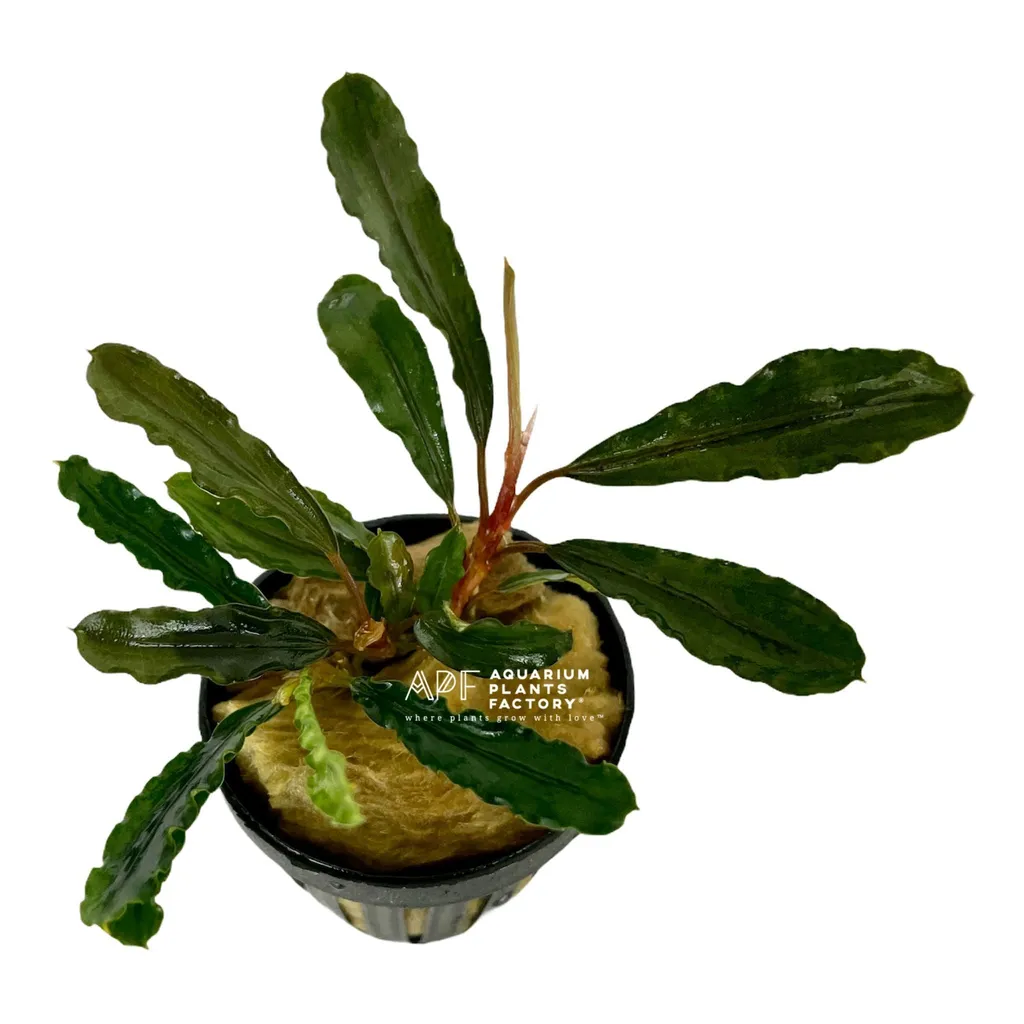
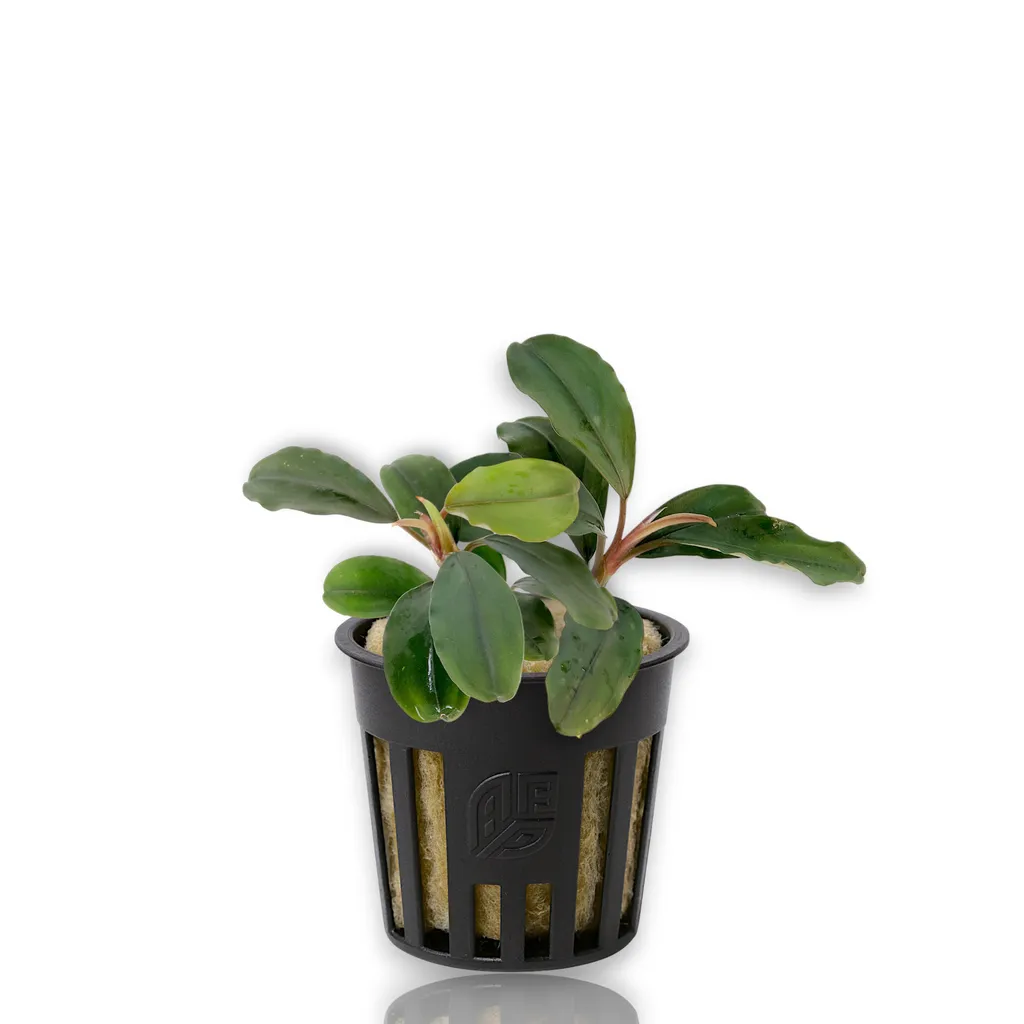
Bucephalandra brownie ghost
Bucephalandra sp. 'Brownie Ghost'
One of 17 forms of Bucephalandra sp. · See all forms →
Also known as Buce Brownie Ghost, Brownie Ghost 2011, Bucephalandra sp. Brownie Ghost
FreshwaterRhizomeRhizome division
Forms · Bucephalandra sp.
See all 17 →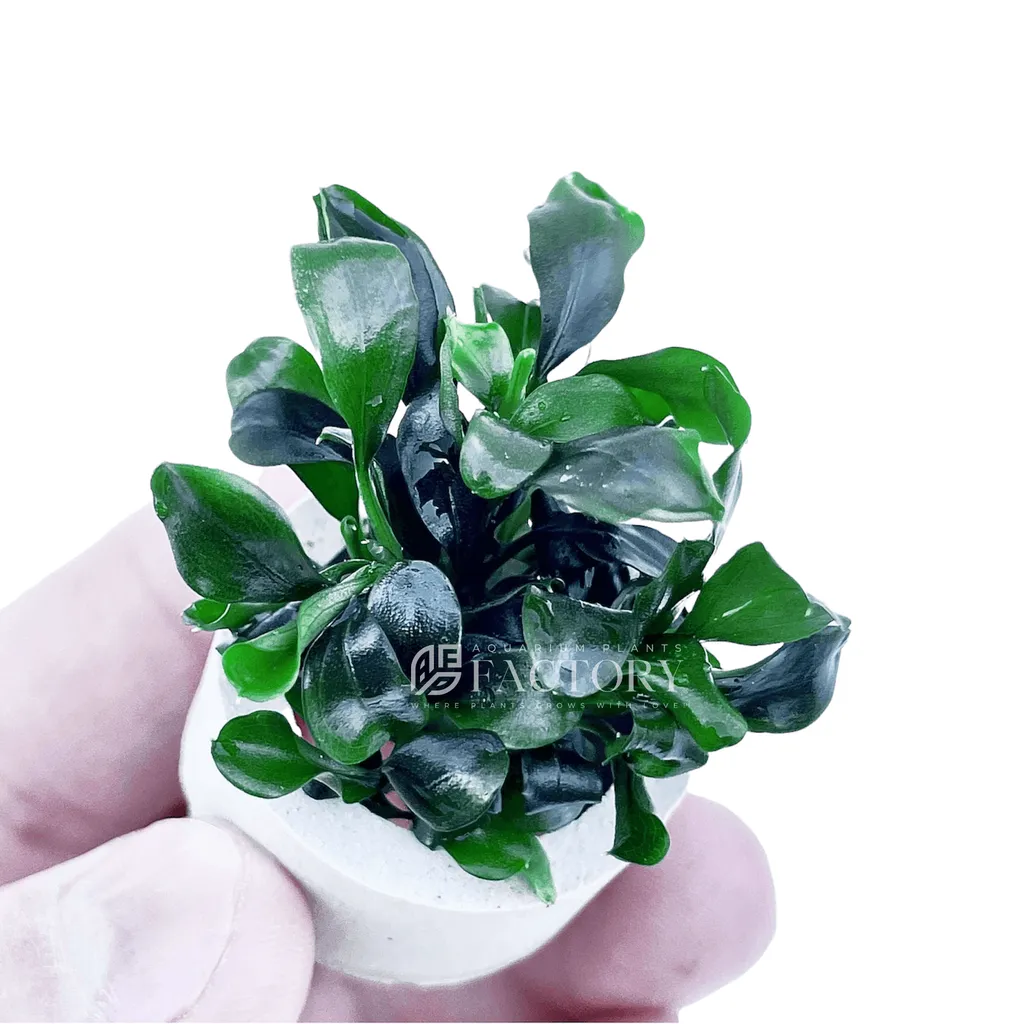
Care at a glance
- Light
- Medium light
- CO2
- CO₂ beneficial
- Temperature
- 68–82°F
- 20–28°C
- Max height
- 2.4 in
- 6 cm
- Growth rate
- Slow
- Placement
- Epiphyte
- Type
- Rhizome
- pH
- 6.0–7.5
- Hardness
- 2–12 dGH
- Spread
- 3.9 in (10 cm)
- Nutrient uptake
- Root + water column
- Growth region
- Submersed or emersed
- Difficulty
- Easy
- Family
- Araceae
- Origin
- Borneo (Kalimantan, Indonesia)
Overview
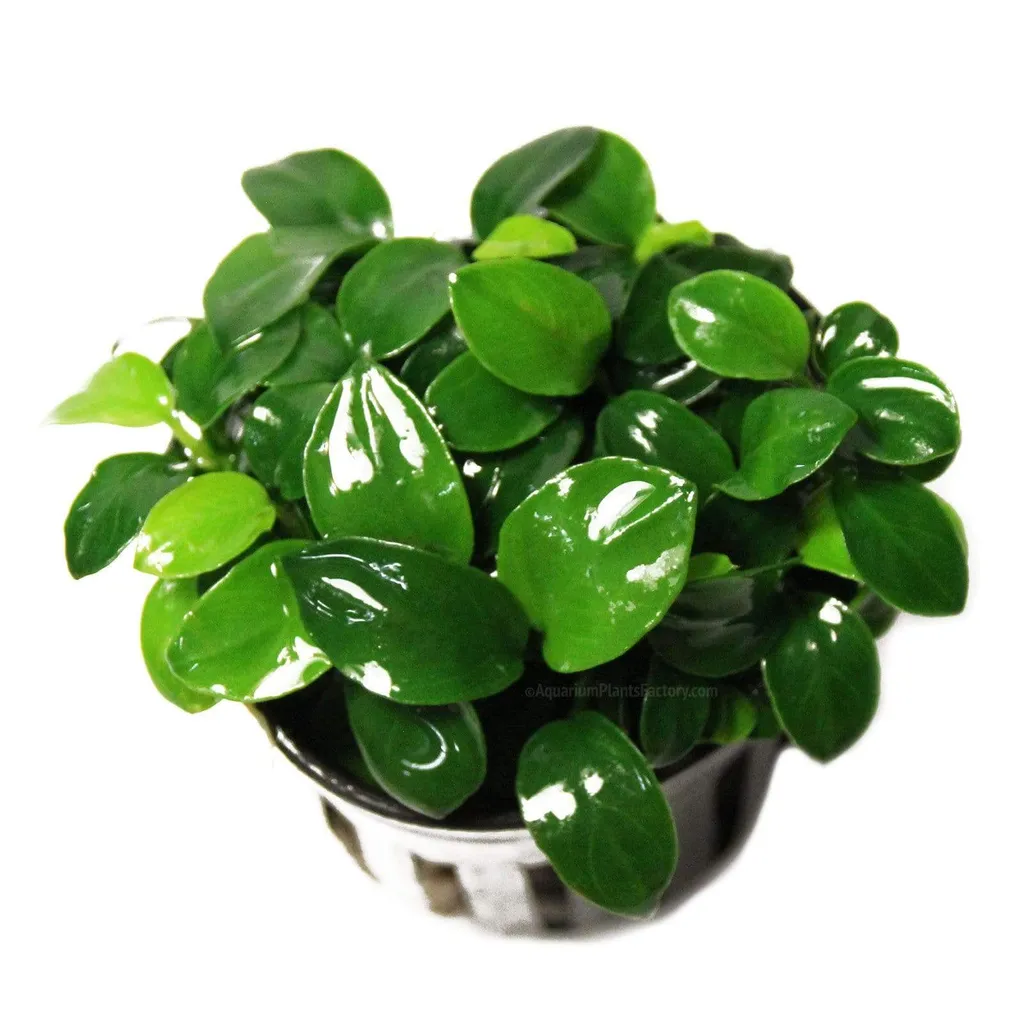
A darker, more collectible Buce grown for the brown-to-black leaves and ghostly iridescent flush, best shown on wood or stone in the midground. Attach the rhizome with glue or thread and keep it above the substrate so it does not rot. It handles low to fairly high light, but moderate light without CO2 keeps it healthiest while still pulling out color; pushing high light on such a slow grower invites algae on the leaves. CO2 and a steady micronutrient-rich liquid fert give better color and slightly faster, denser growth. Expect some melt on newly converted emersed plants, then new submersed leaves from a firm rhizome. Divide the rhizome to make more.
In the wild
Brownie Ghost is a named Bucephalandra variety from Kalimantan on Borneo, originating from the same fast-flowing rheophytic streams as the rest of the genus. The wild plants cling to rock and submerged wood in current, living emersed along the banks at low water and submersed when the streams rise. Native water is soft, slightly acidic, and oxygen-rich.
Good to know
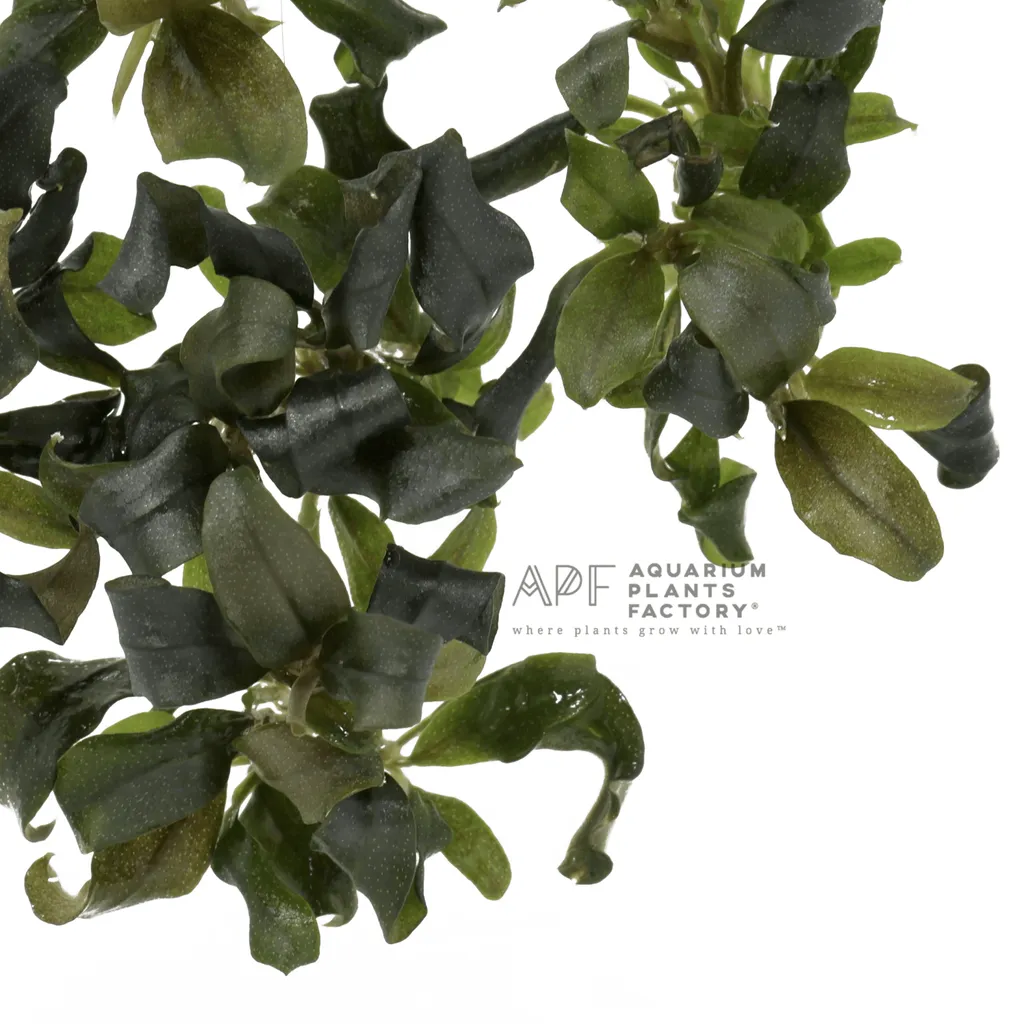
Brownie Ghost is a hobby trade name, not a described species, sitting within Bucephalandra (family Araceae, tribe Schismatoglottideae) and usually filed under the B. motleyana complex. The leaves are broad and slightly wavy, ranging from deep brown-green to near black with a ghostly iridescent sheen and paler veins, and good specimens hold purple tones even on older leaves. It is propagated almost entirely by tissue culture and rhizome division in the trade rather than from seed.
Did you know
Did you know the ghostly look that names this plant comes from a thin reflective film on the leaf, so the same cutting can look almost black in low light and shimmer purple under brighter, angled light?
Related plants
 Low lightEpiphyte2.4 in (6 cm)
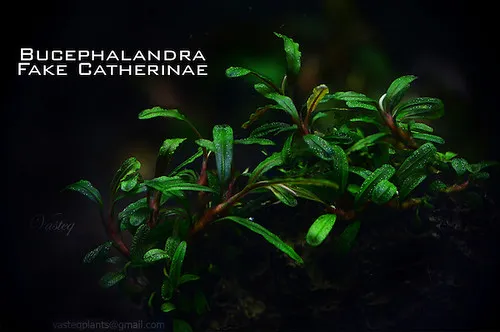
Bucephalandra catherinae
Low light · Epiphyte
 Low lightEpiphyte3.9 in (10 cm)
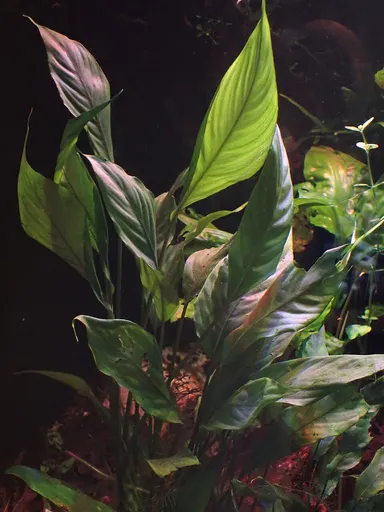
Bucephalandra motleyana
Low light · Epiphyte
- Low lightEpiphyte3.9 in (10 cm)
Bucephalandra sordidula
Low light · Epiphyte
 Low lightEpiphyte2 in (5 cm)
Anubias petite
Anubias barteri var. nana 'Petite'
Low light · Epiphyte
- Low lightEpiphyte2 in (5 cm)
Anubias Chili
Anubias barteri var. nana 'Chili'
Low light · Epiphyte
- Low lightEpiphyte3.1 in (8 cm)
Anubias Petite Round
Anubias barteri 'Petite Round'
Low light · Epiphyte