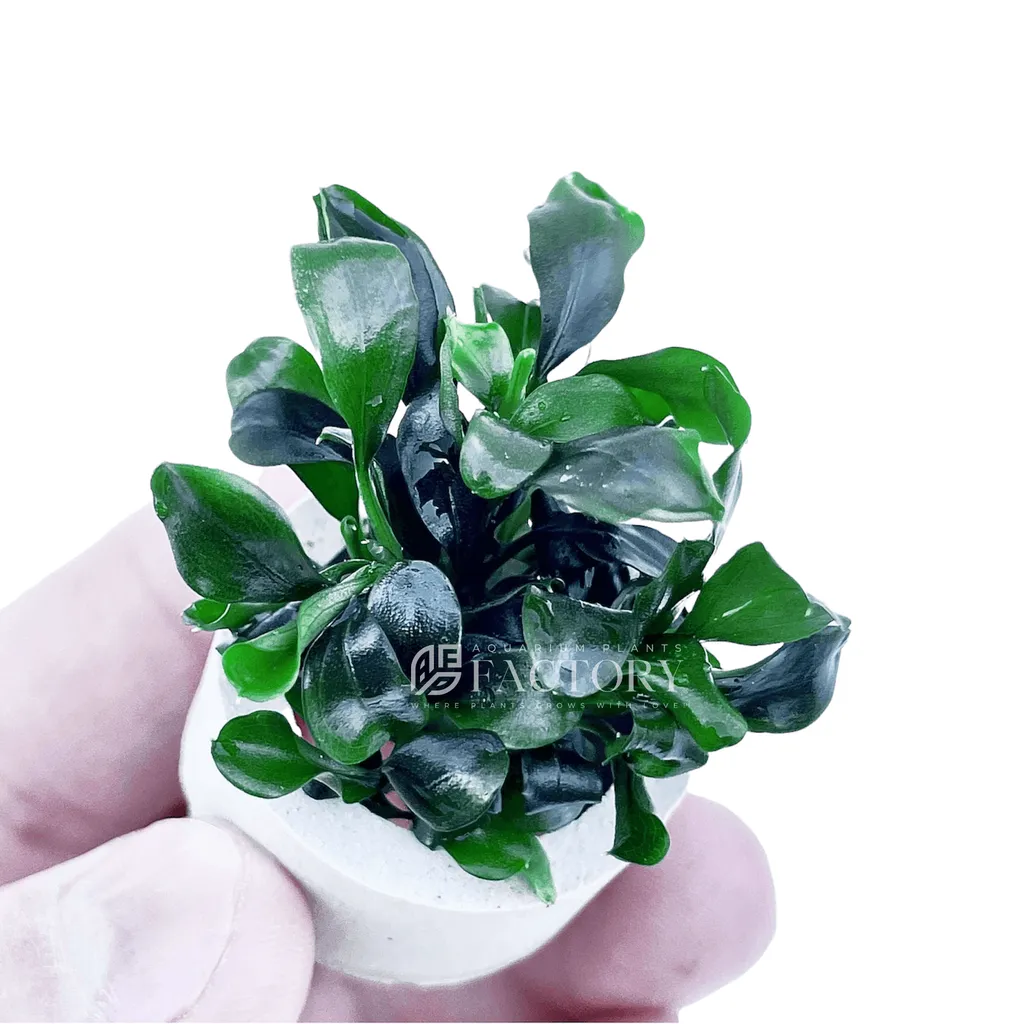
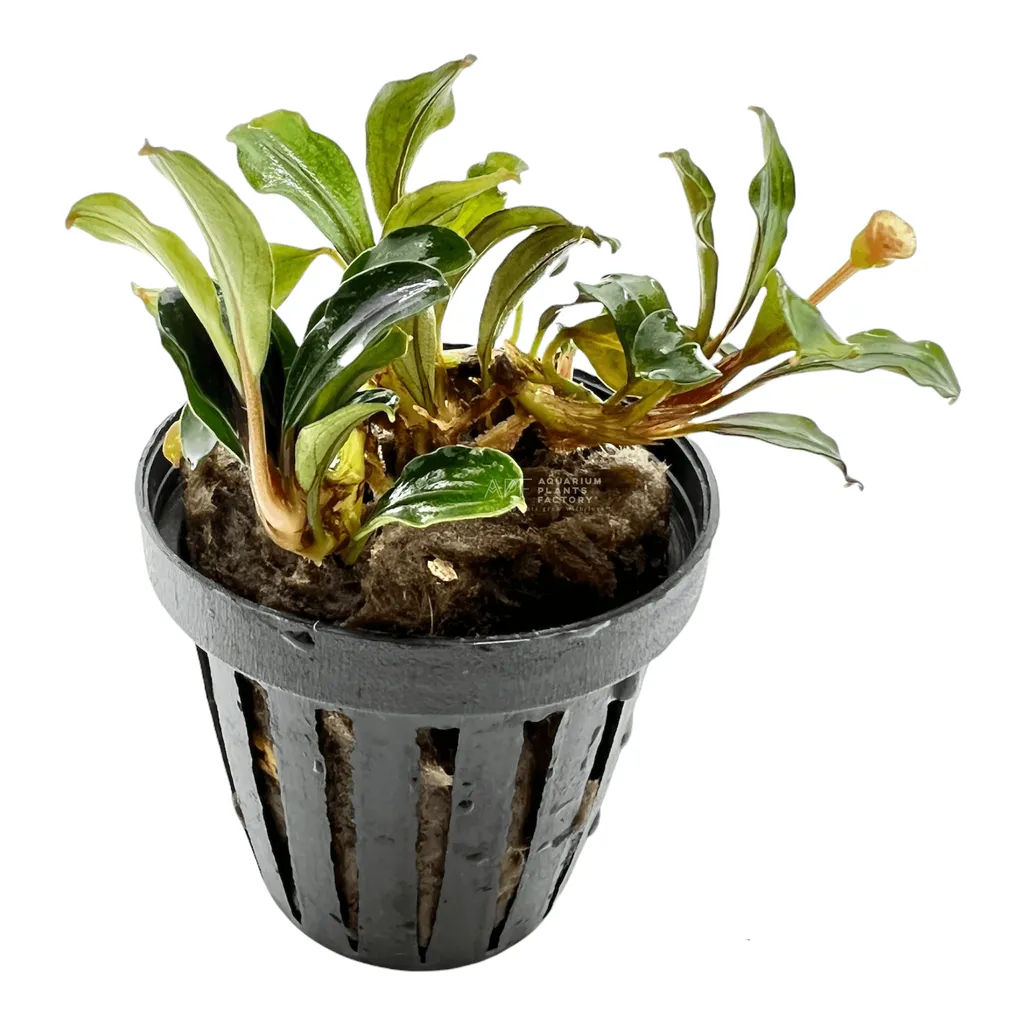
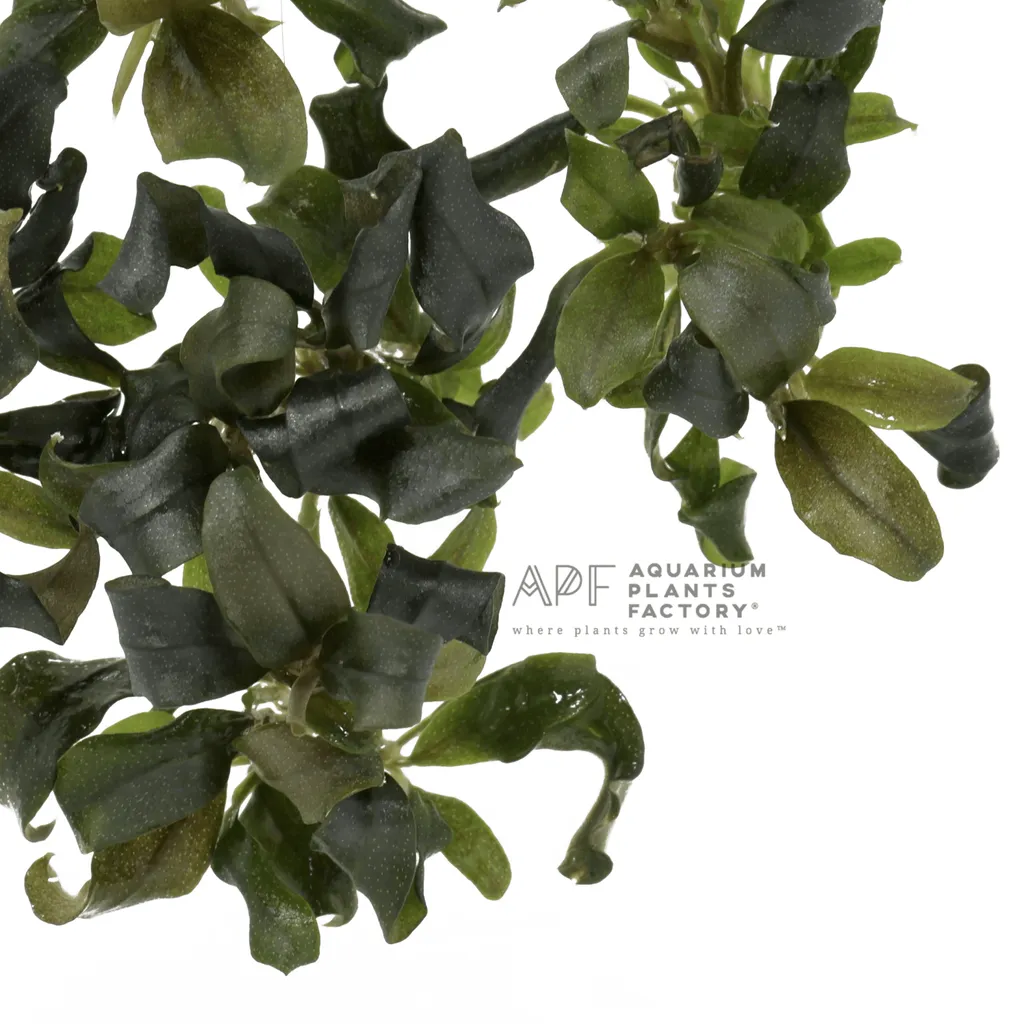
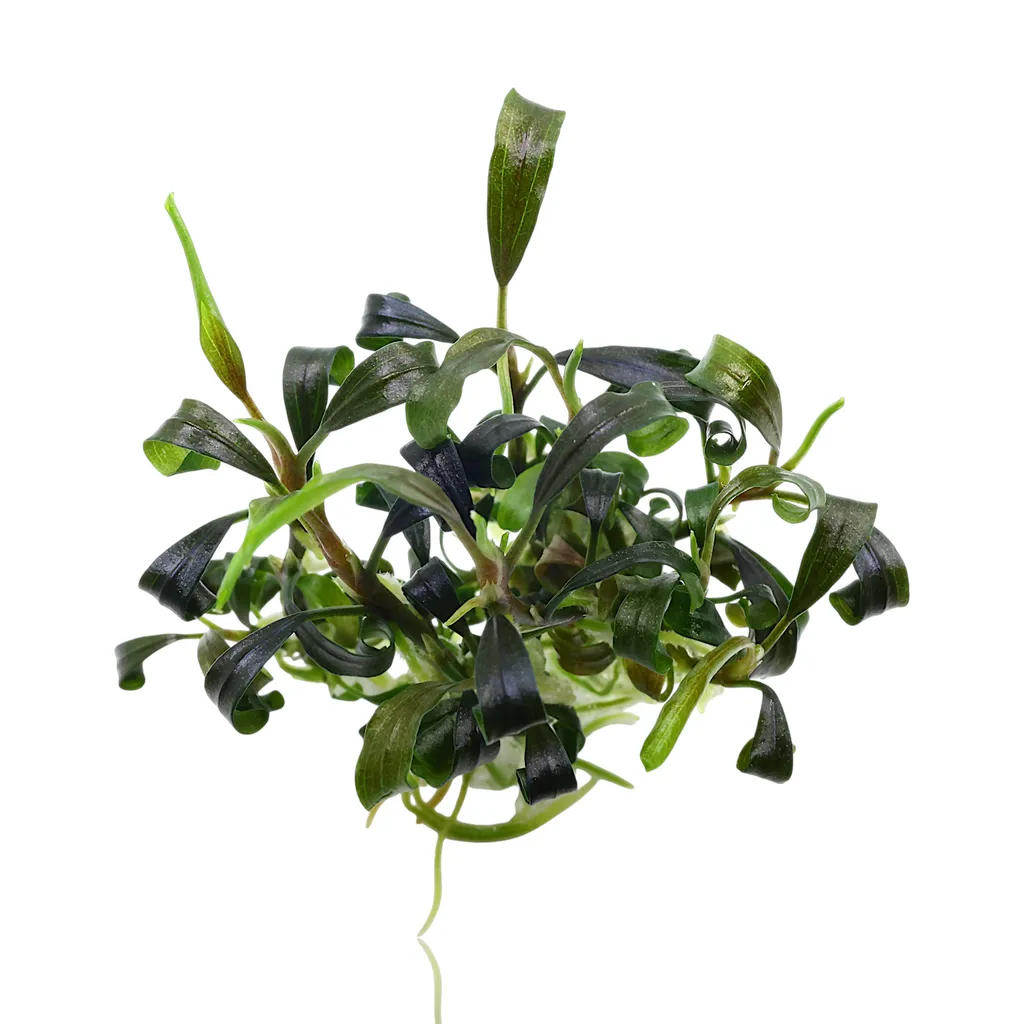
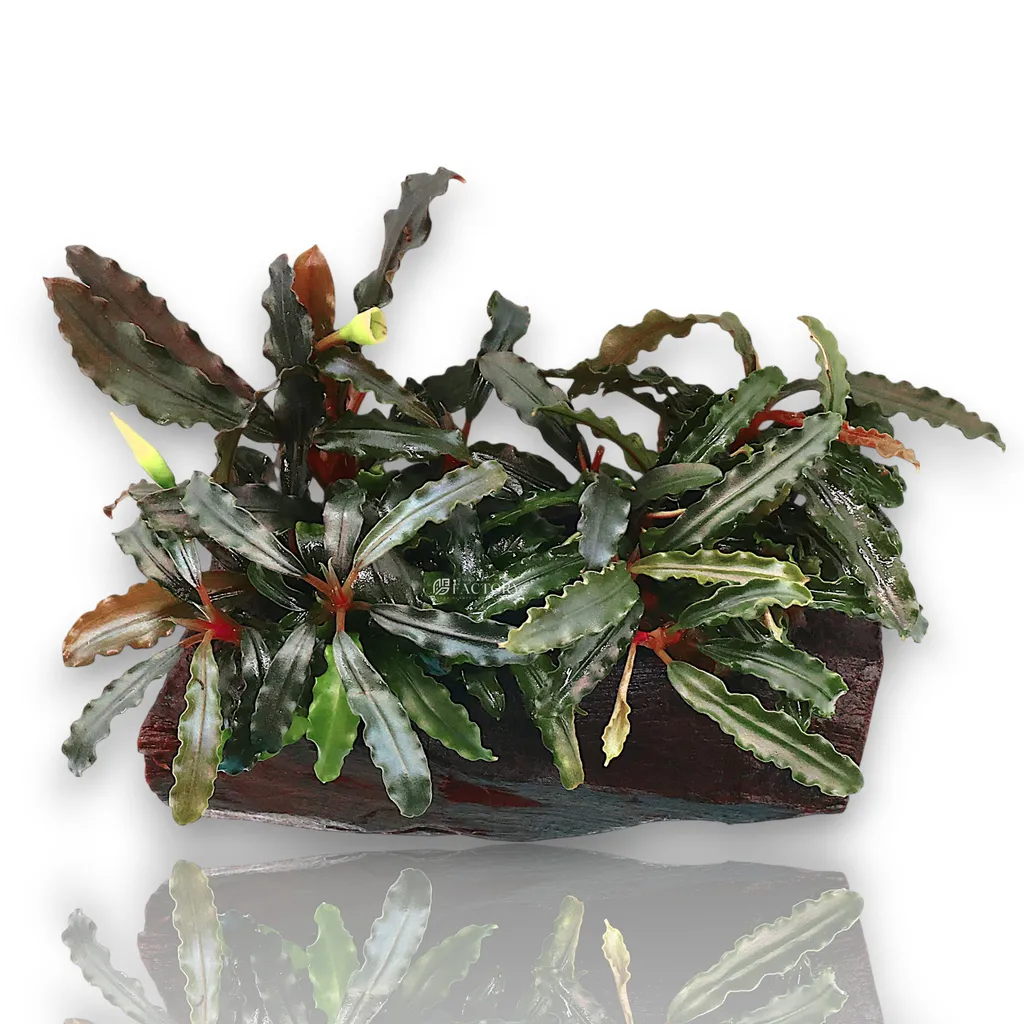
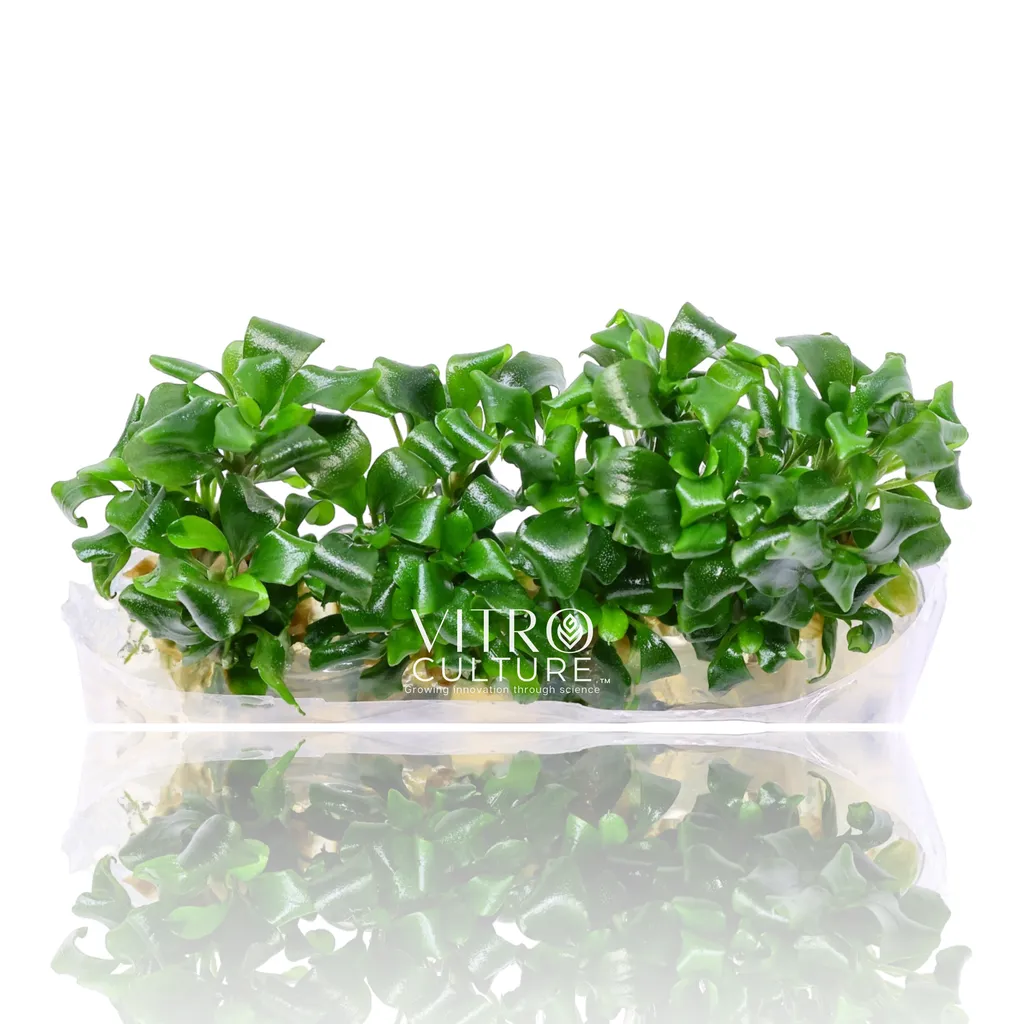
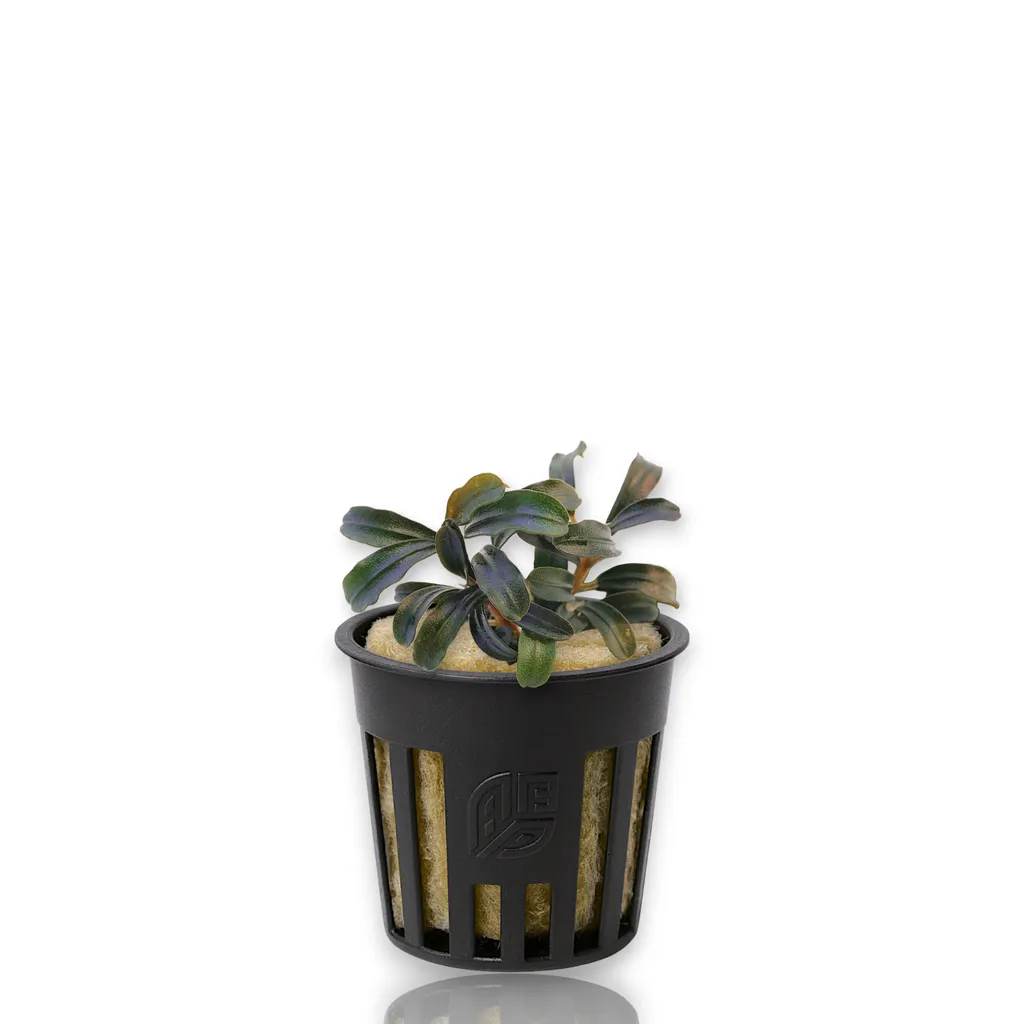
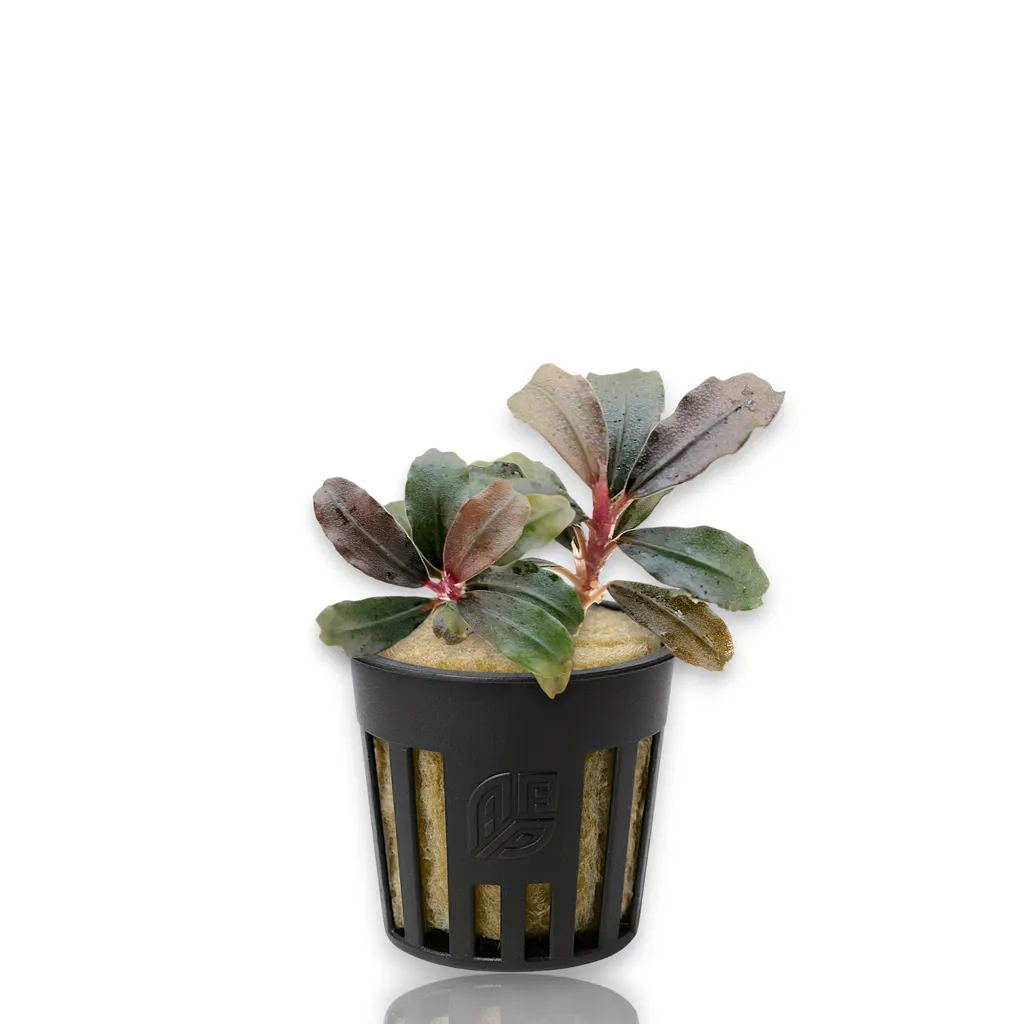
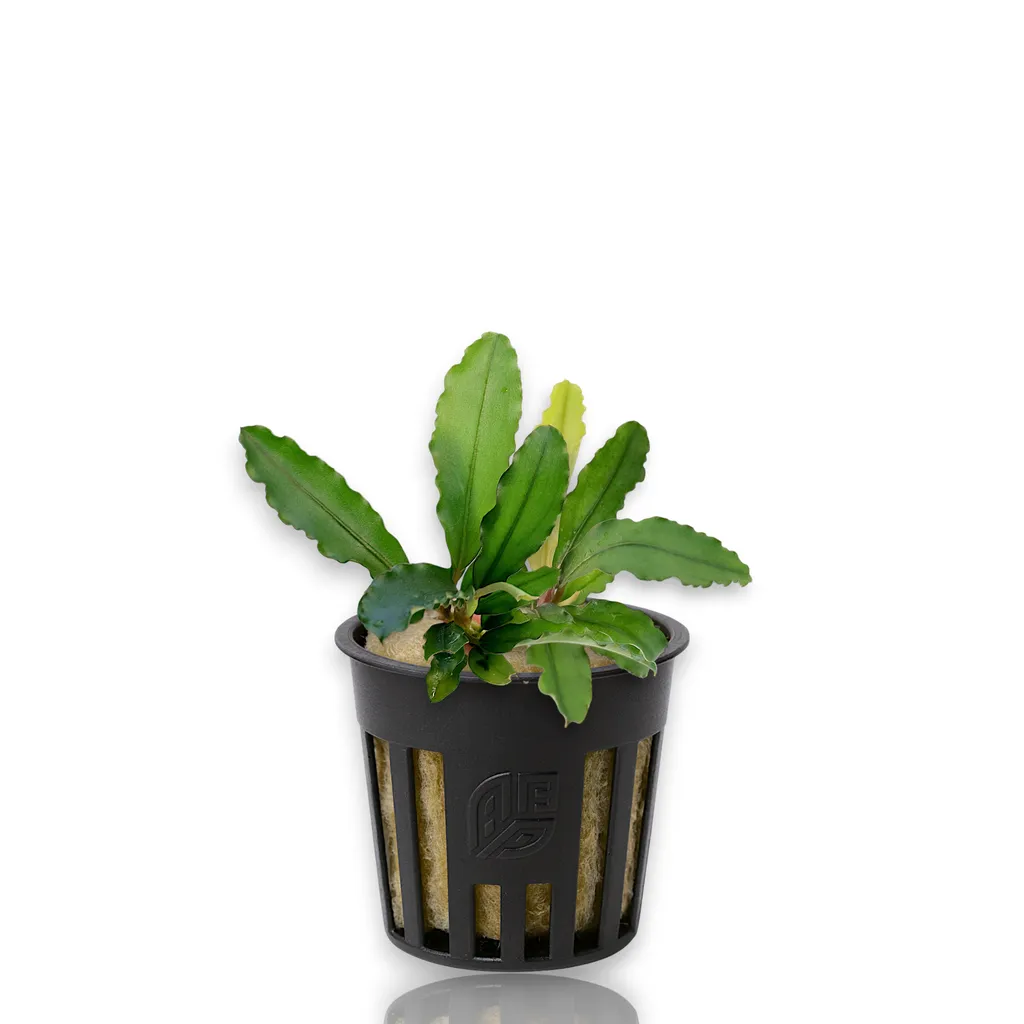
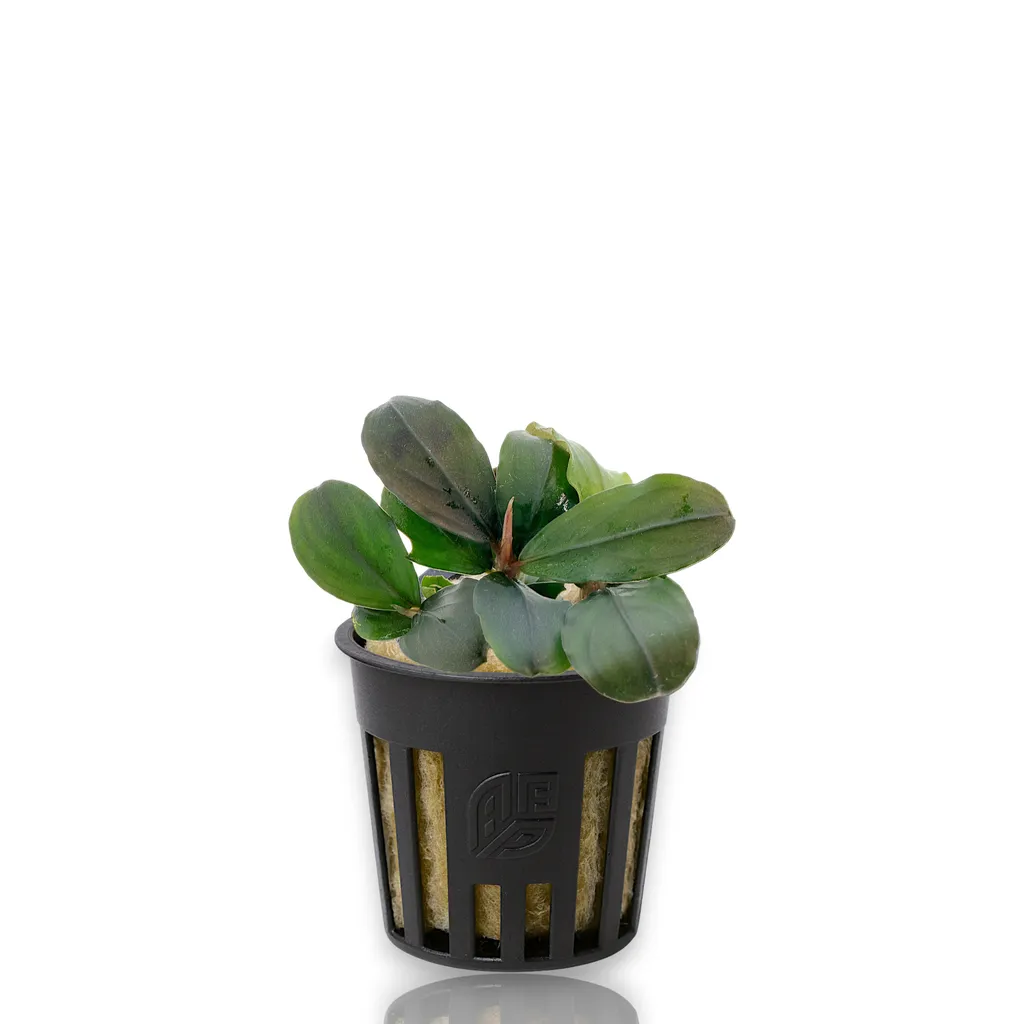
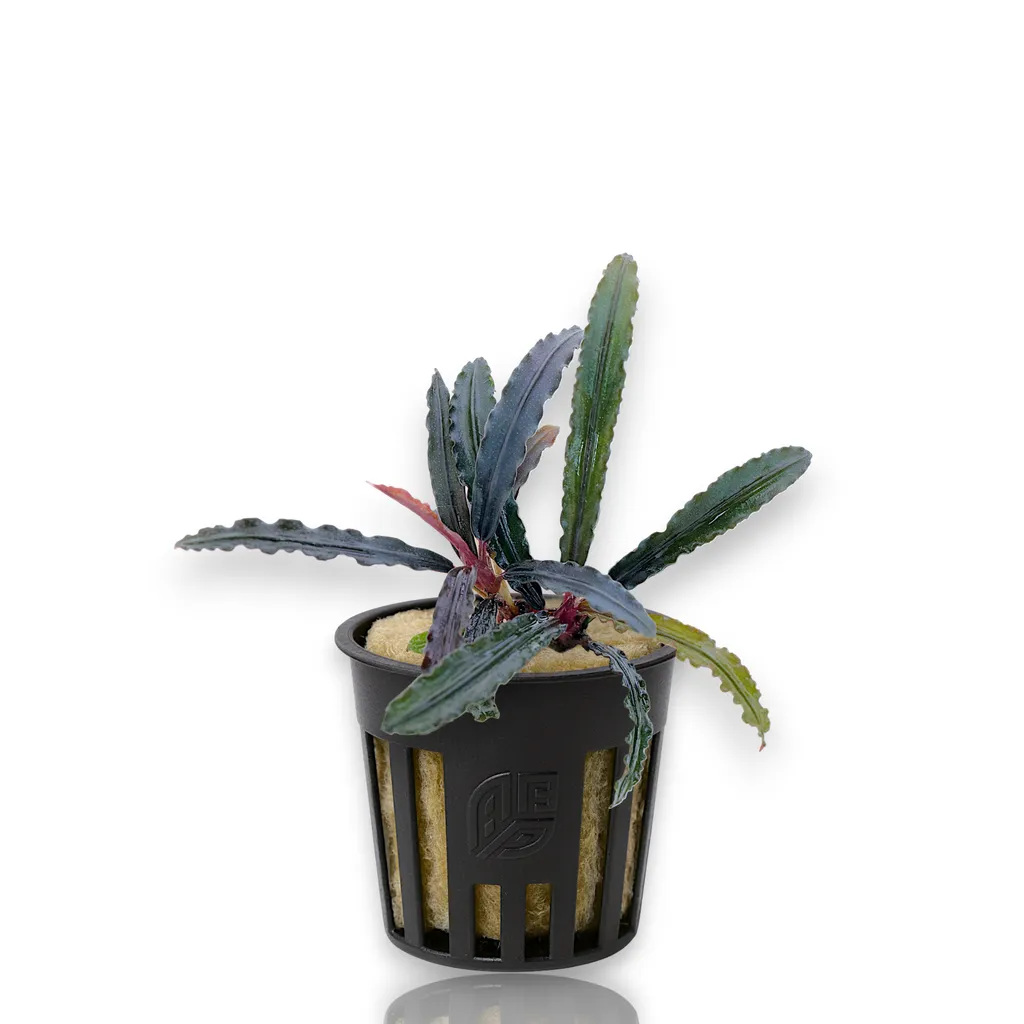
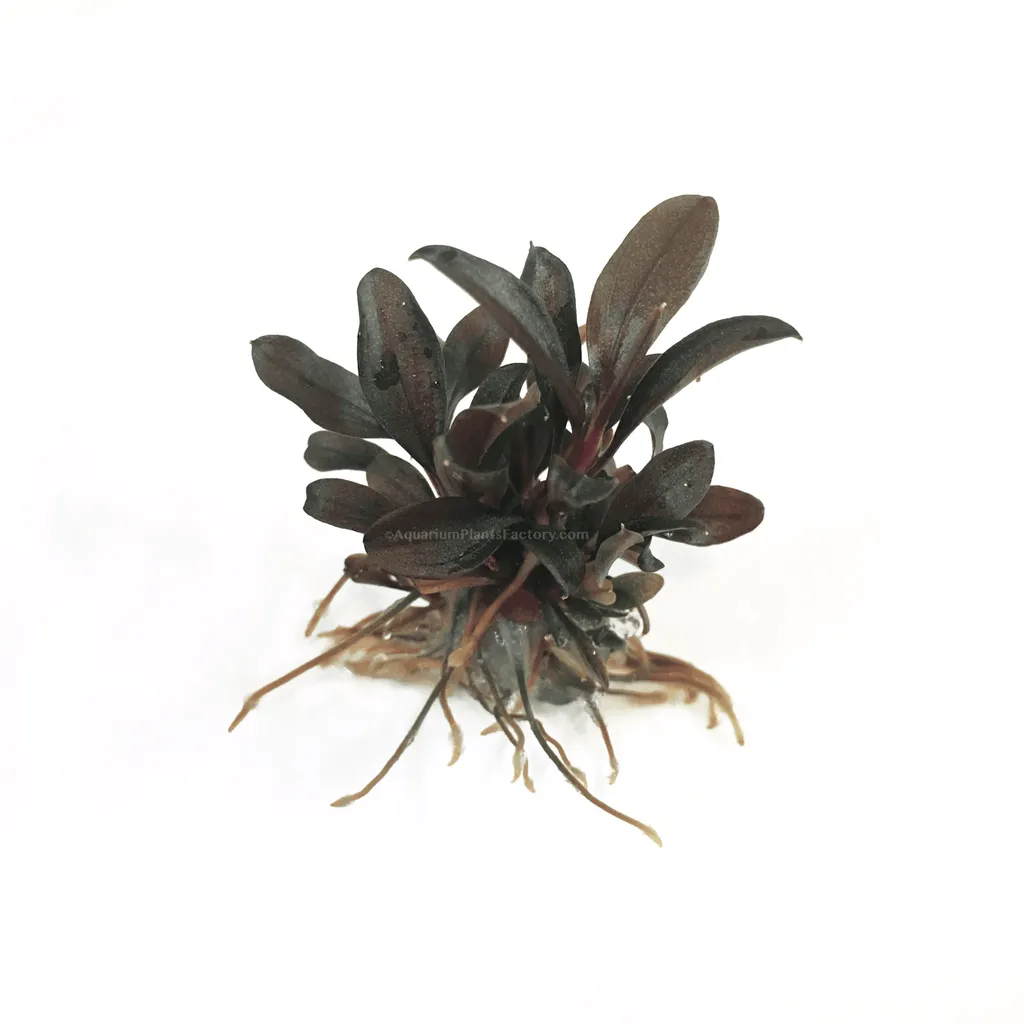
Red Catherine often arrives green, especially from tissue culture, and reddens as it adapts to life underwater. Give it about three months before judging the color. The plant stays greener under low light, and medium light brings out the red and bronze. Keep the light at medium or below, since brighter light grows algae on the slow leaves. The short stalks keep Red Catherine low for the foreground or a midground stone. Attach it to stone or wood with glue or thread, keeping the rhizome above any substrate.
In the wild
Red Catherine is sold as a red form of Bucephalandra catherineae, a species label that remains unconfirmed. Wong and Boyce (2014) know B. catherineae only from basalt boulders along a river in Apo Kayan, North Kalimantan, at about 600 m. They treat similar plants from riverside granite near Nanga Pinoh, about 450 km southwest, as unconfirmed. Red Catherine's own collection site is unknown, and shop stock is farmed or tissue cultured.
Good to know
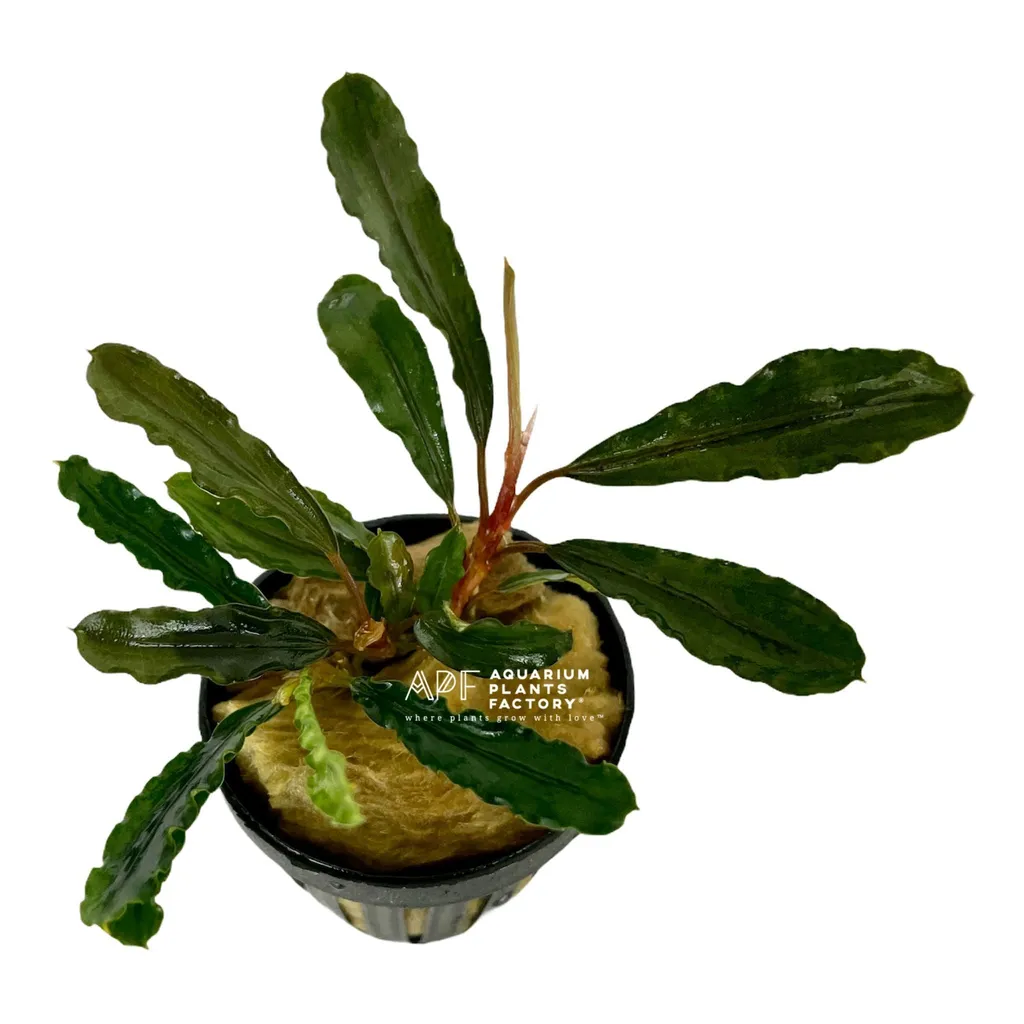
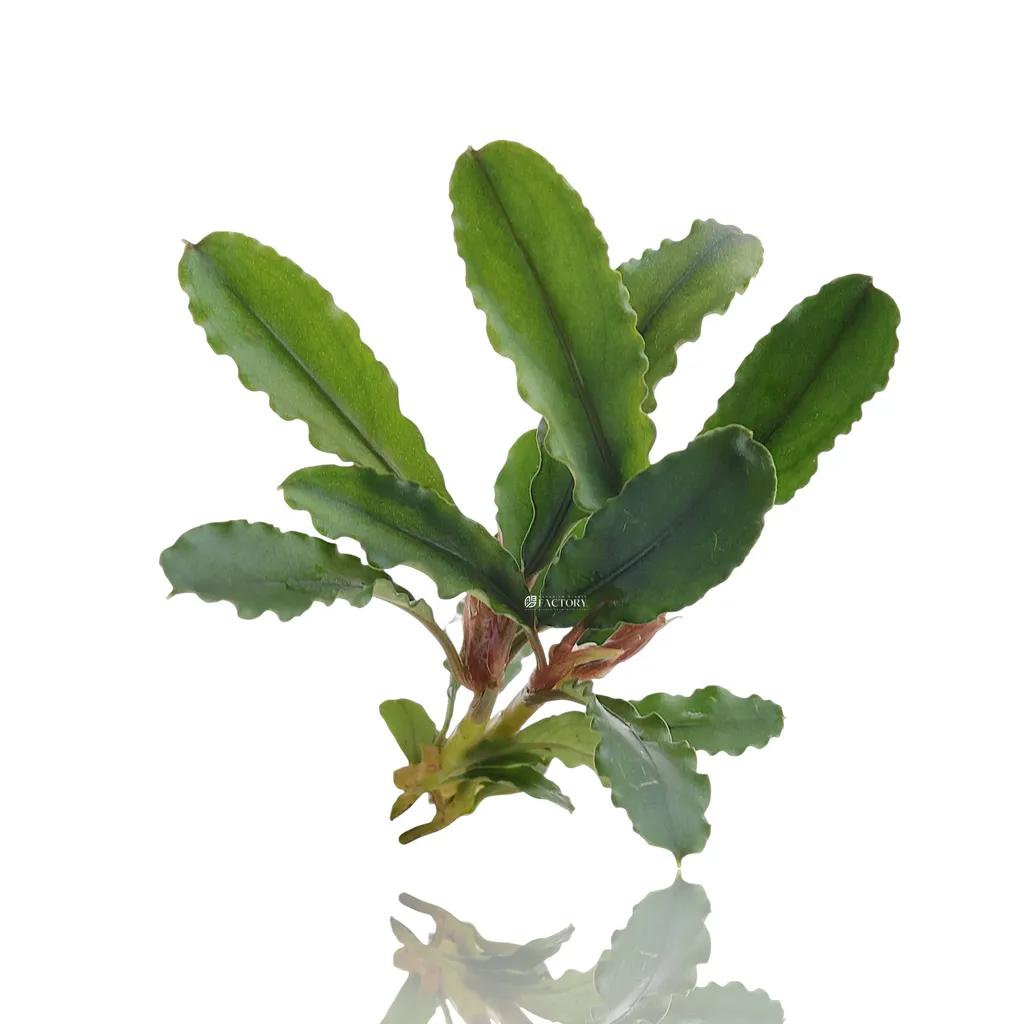
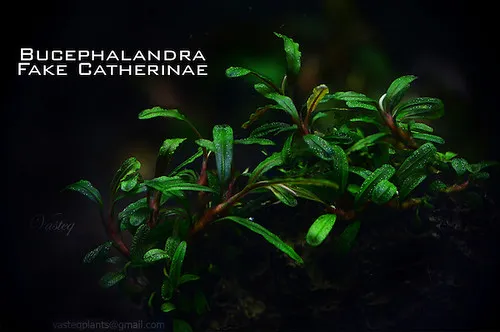
Red Catherine is an Araceae trade clone listed as Bucephalandra sp. until its species is confirmed. Its trade name points to Bucephalandra catherineae, which Boyce, Bogner and Mayo described in 1995 and shops usually spell catherinae. Red Catherine has the narrow, crinkled leaves and short stalks of the green Catherinae, but turns red-bronze to purple underwater. APF notes the red is pigment in the leaf, so it reads red from more angles than the iridescent Buce.
Did you know
Red Catherine borrows its name from Bucephalandra catherineae, a species Wong and Boyce (2014) tied to no trade plant. The same authors gave the trade name 'Fake Catherinae' to a look-alike species, Bucephalandra belindae, from granite cascades near Nanga Pinoh.
 Low lightEpiphyte3.9 in (10 cm)
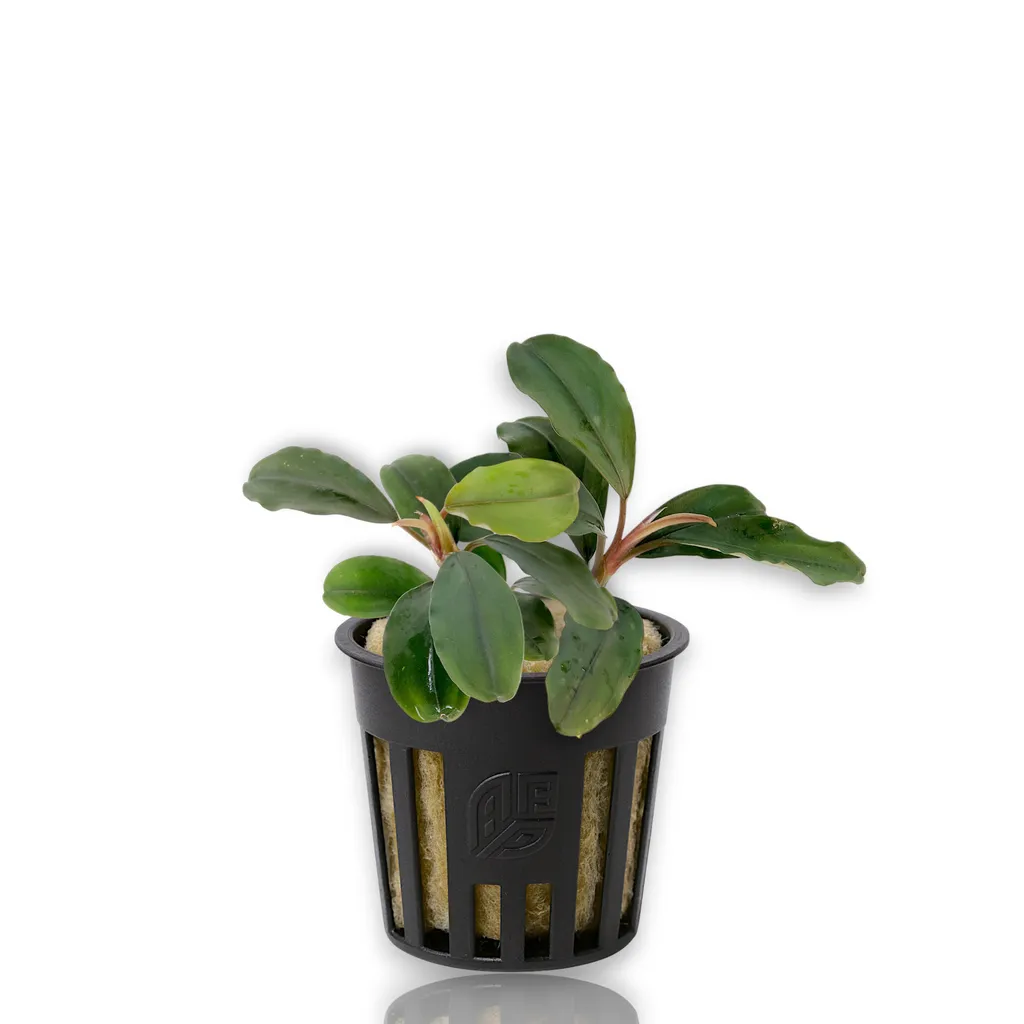
 Low lightEpiphyte2.4 in (6 cm)