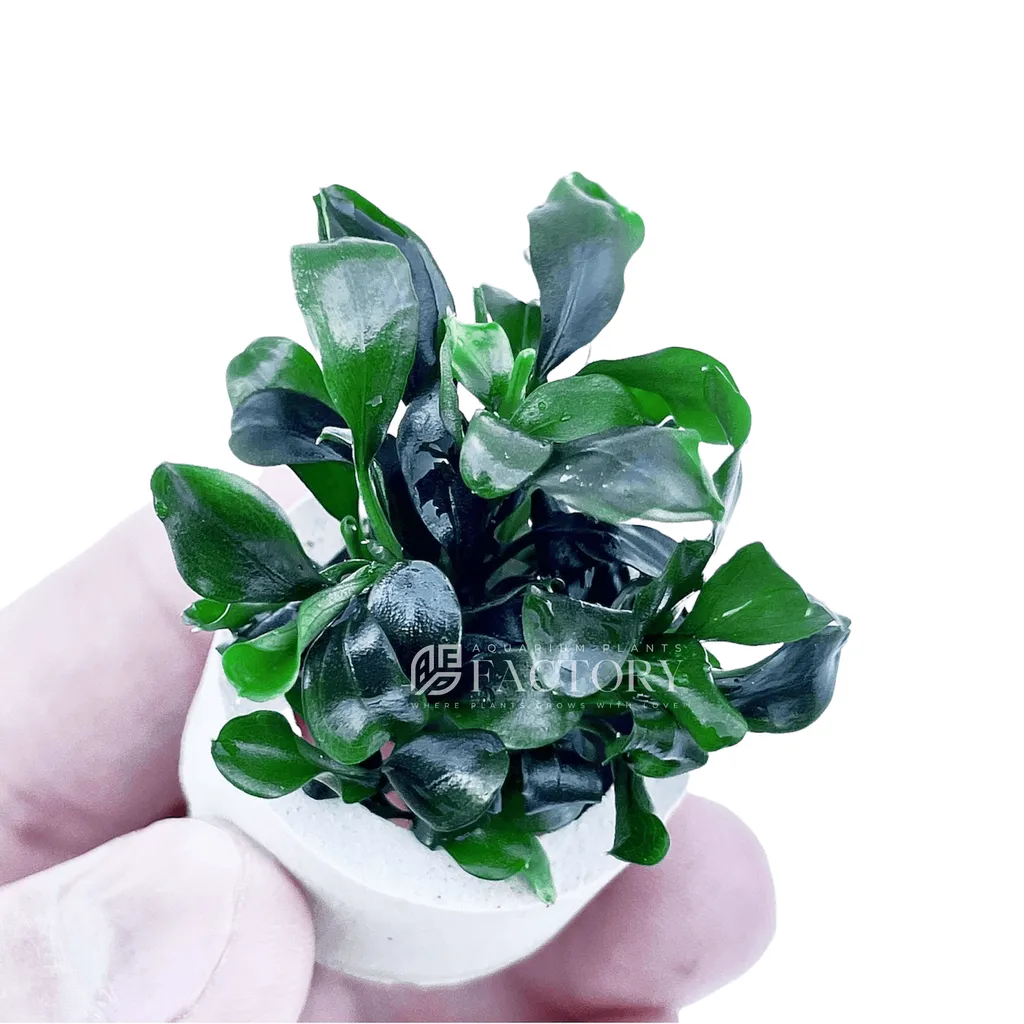
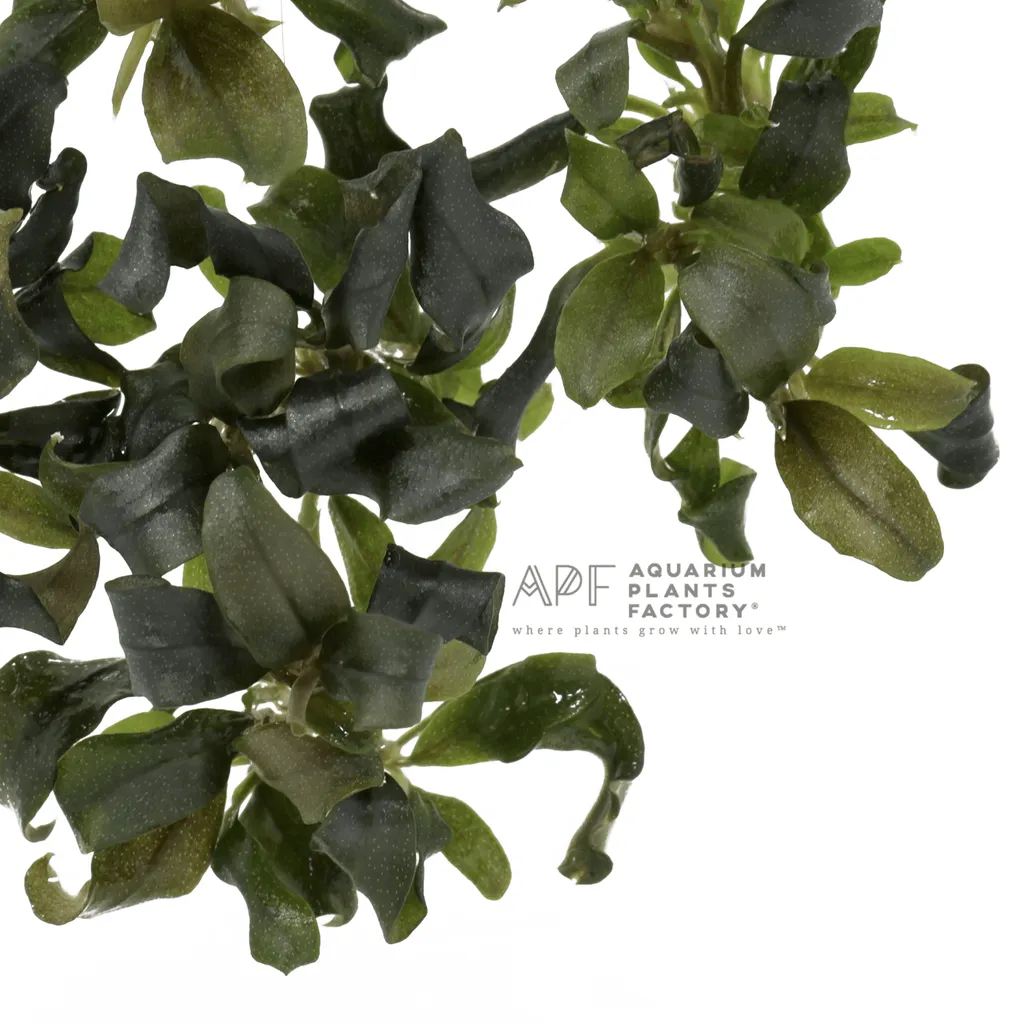
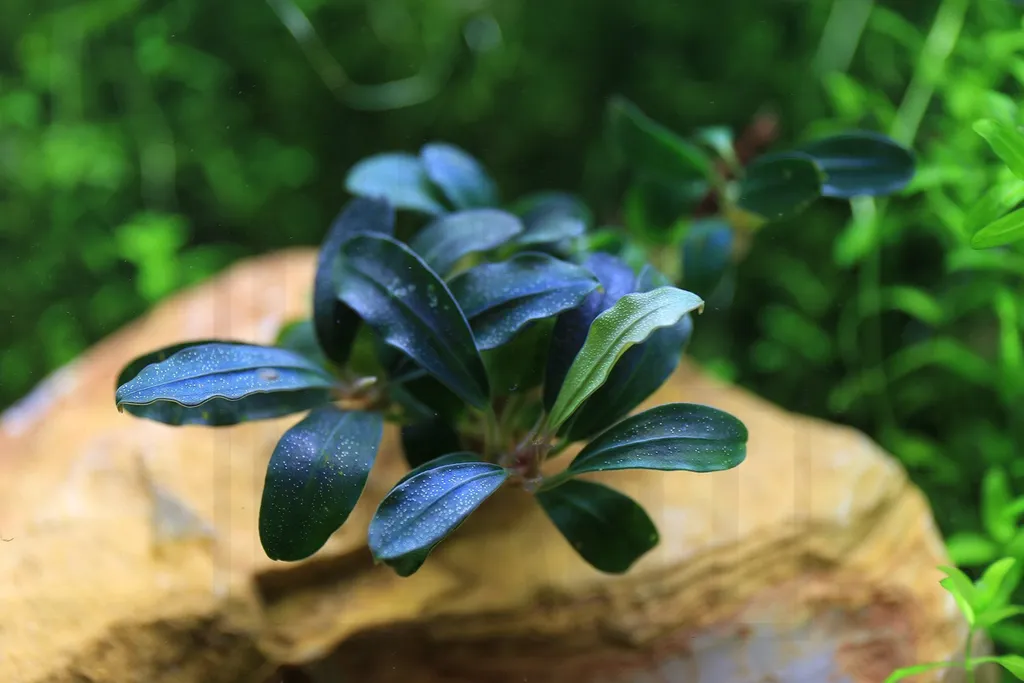
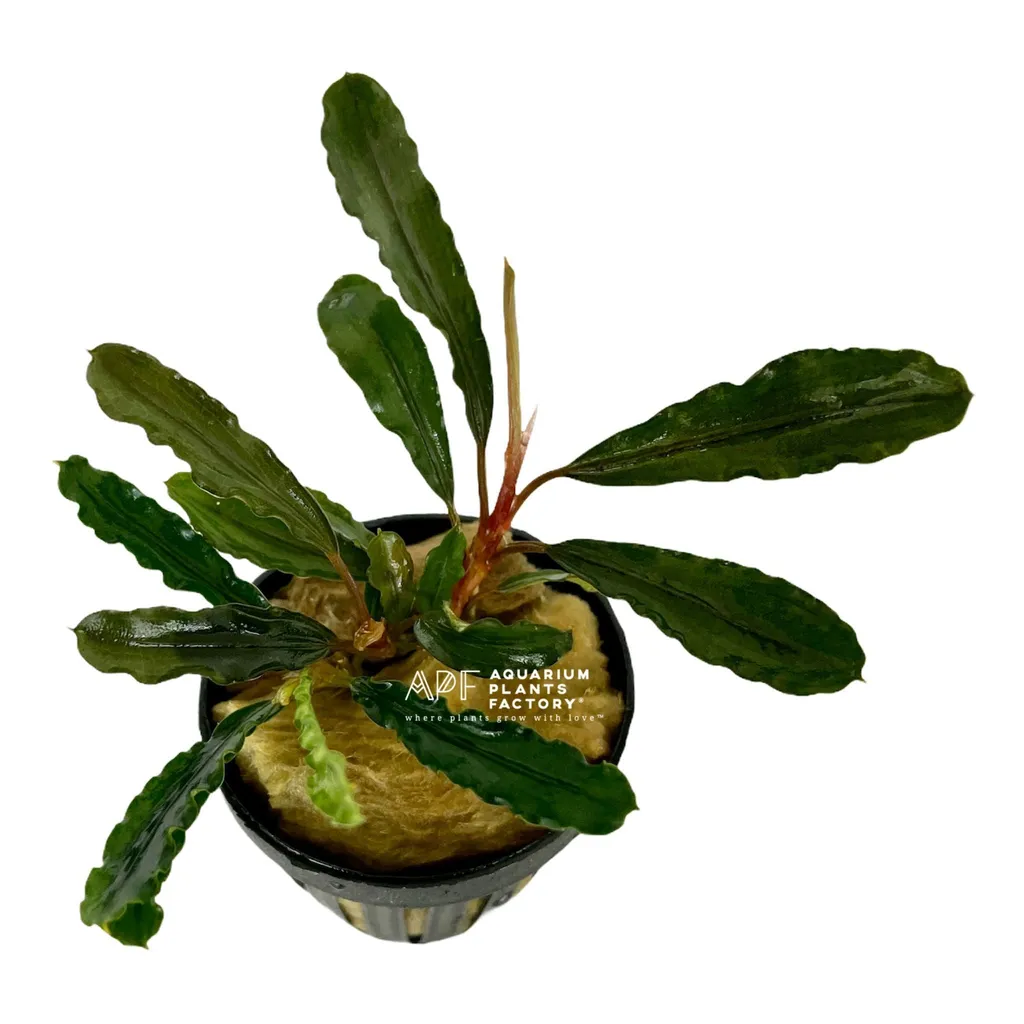
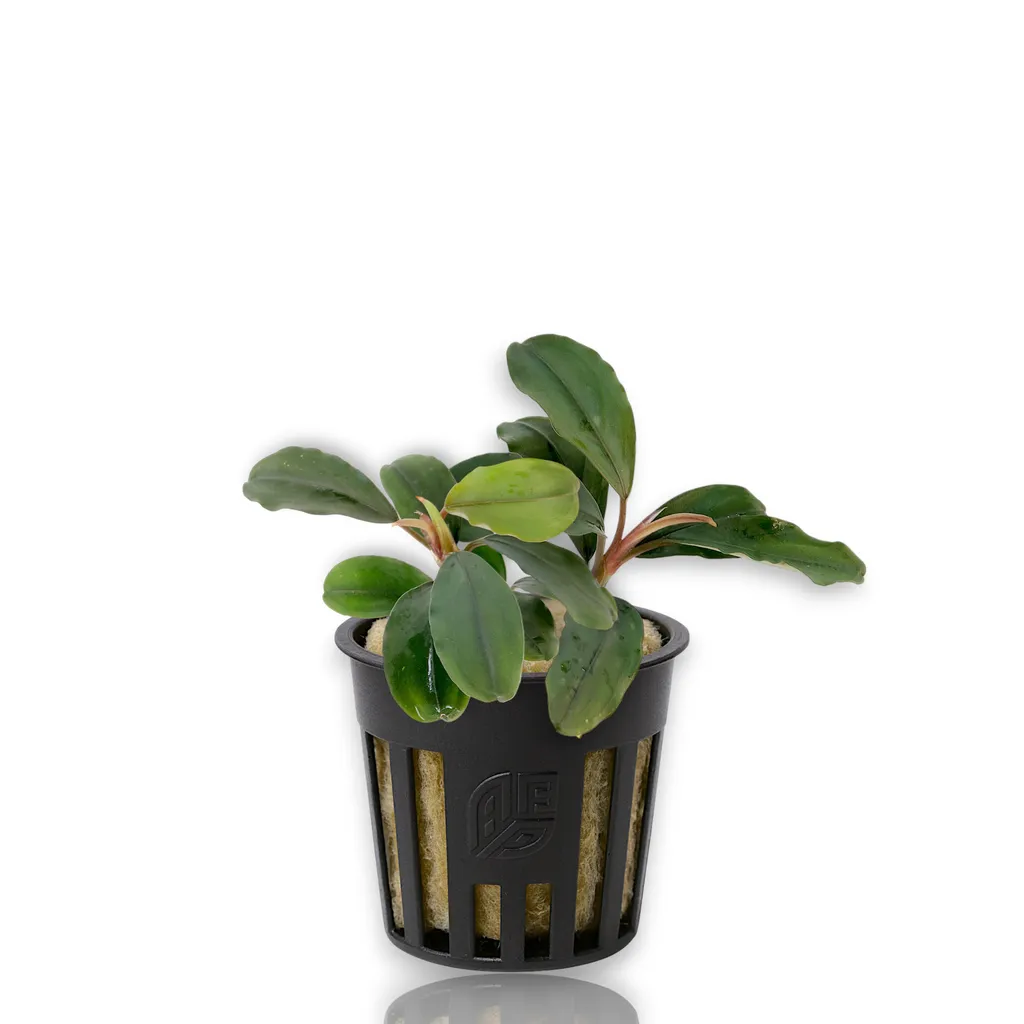
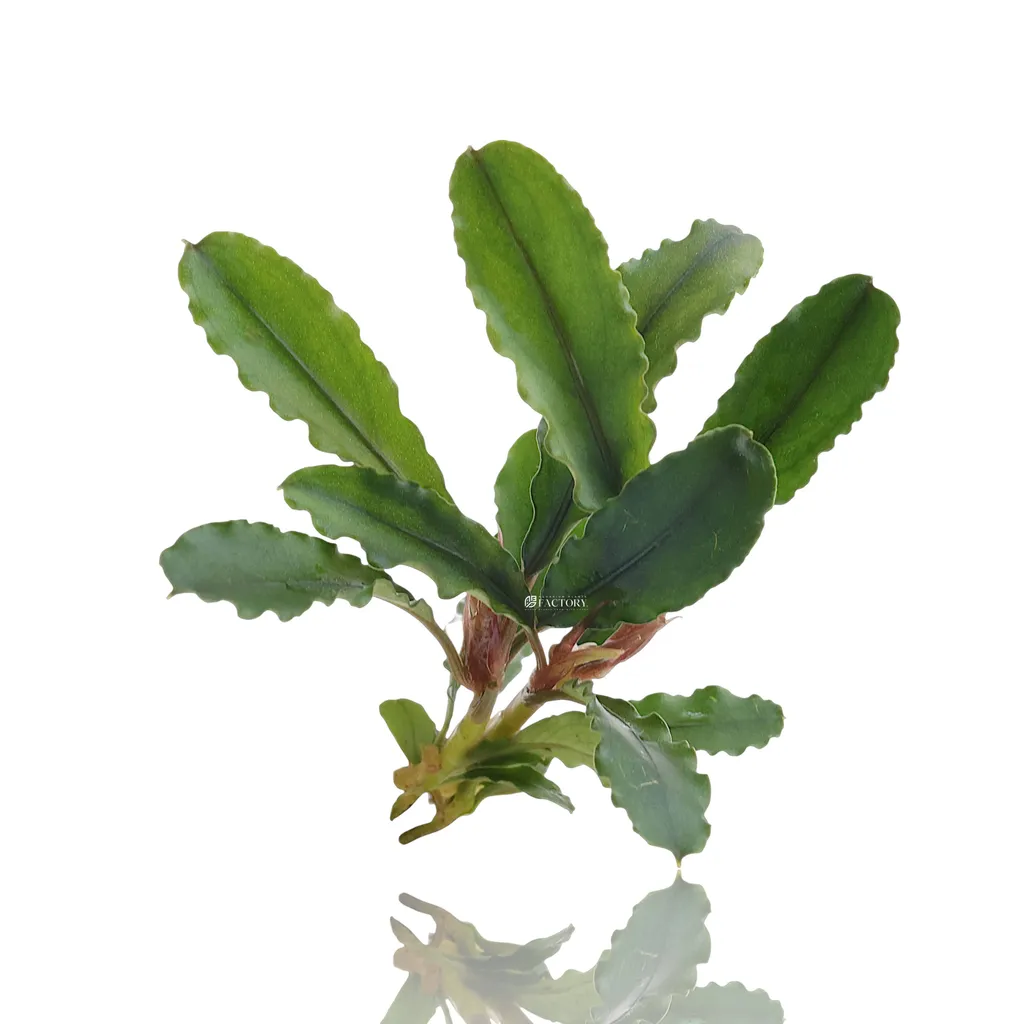
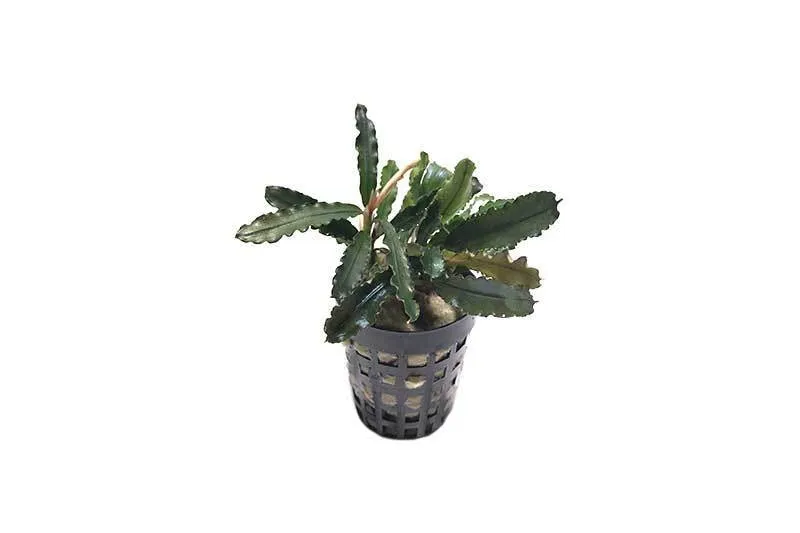
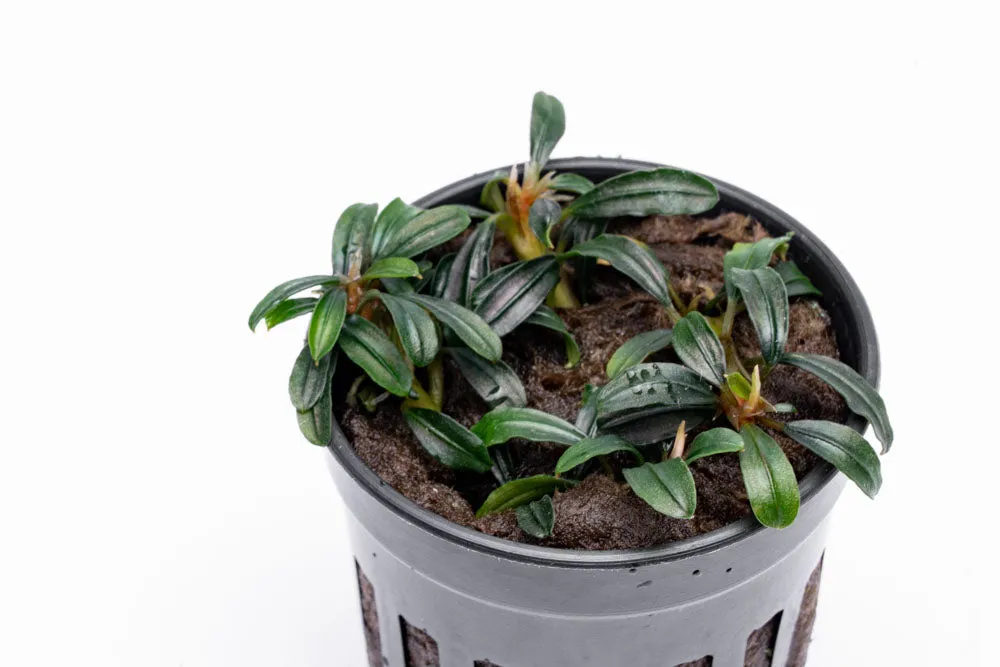
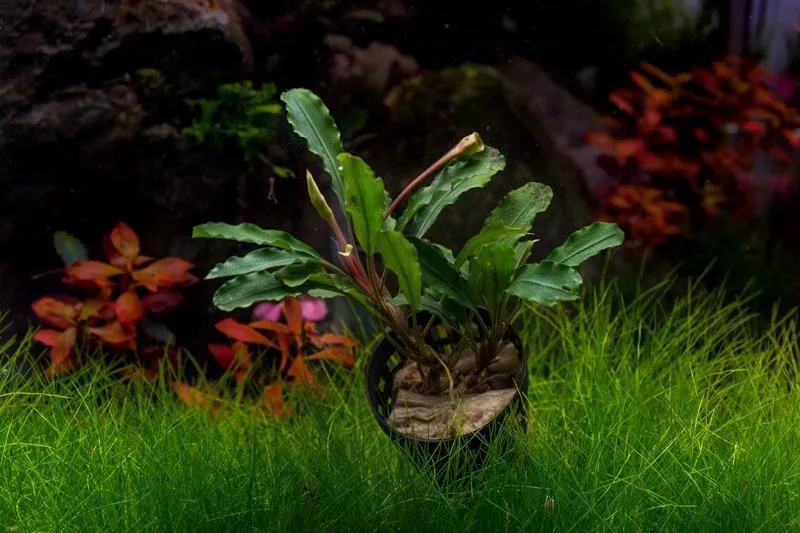
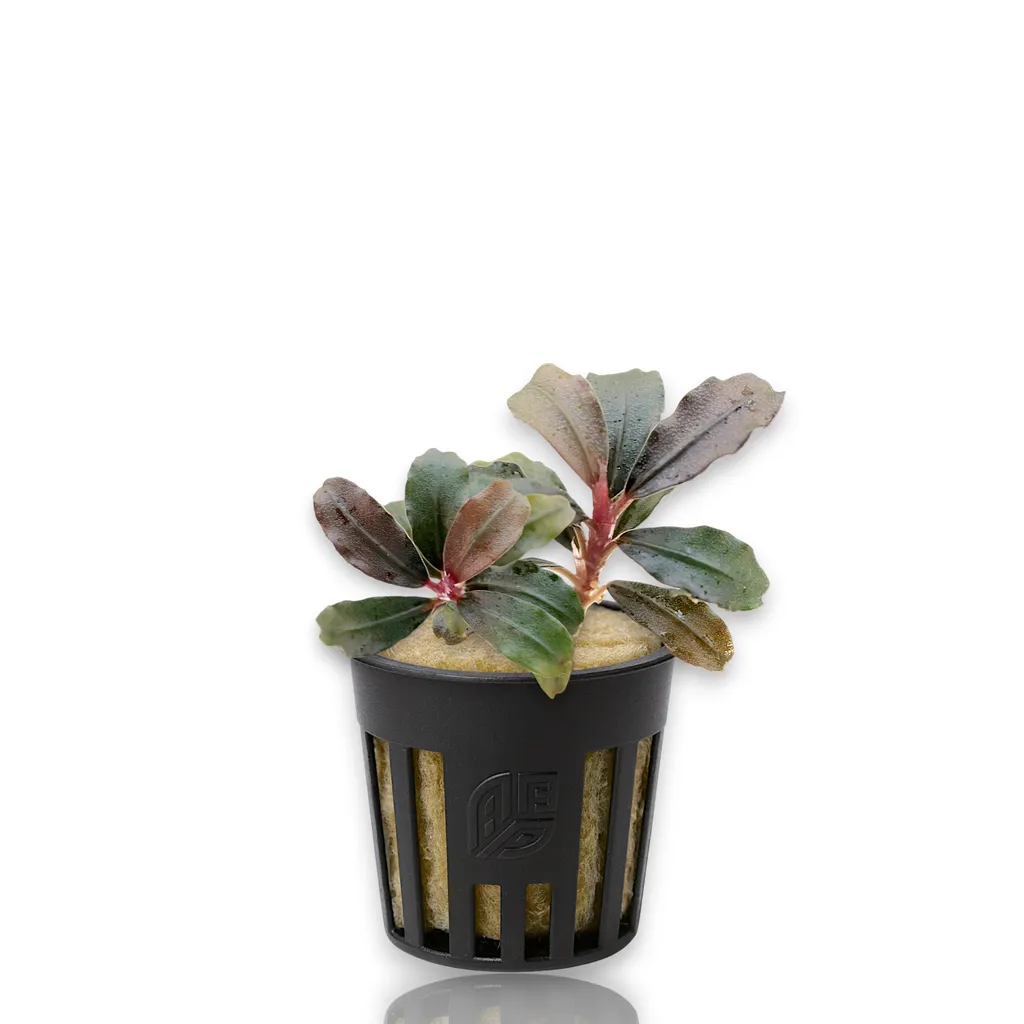
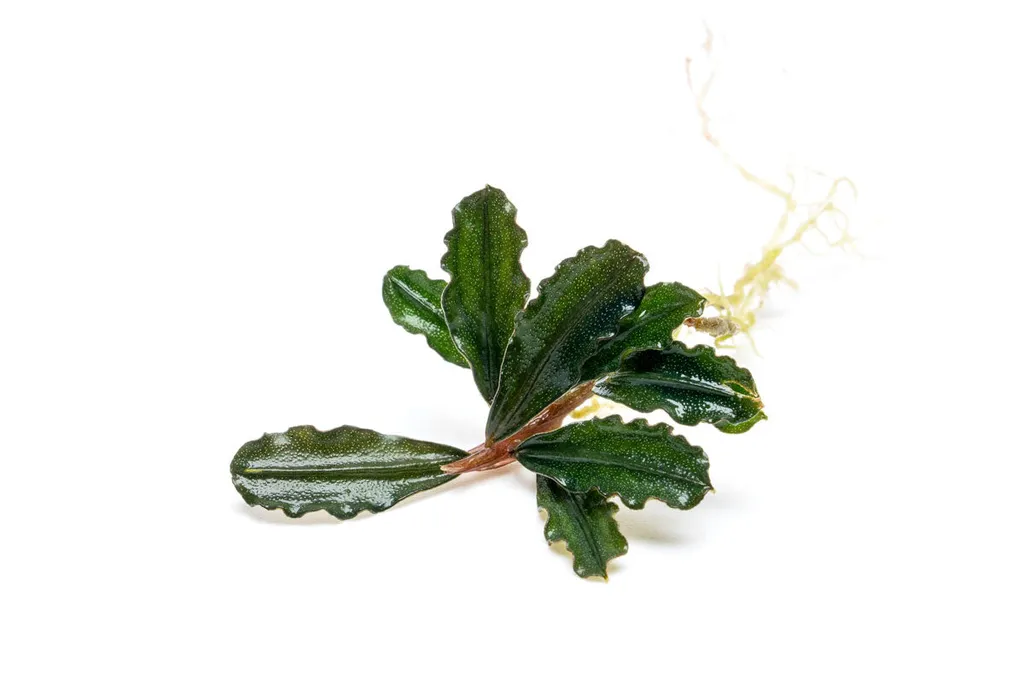
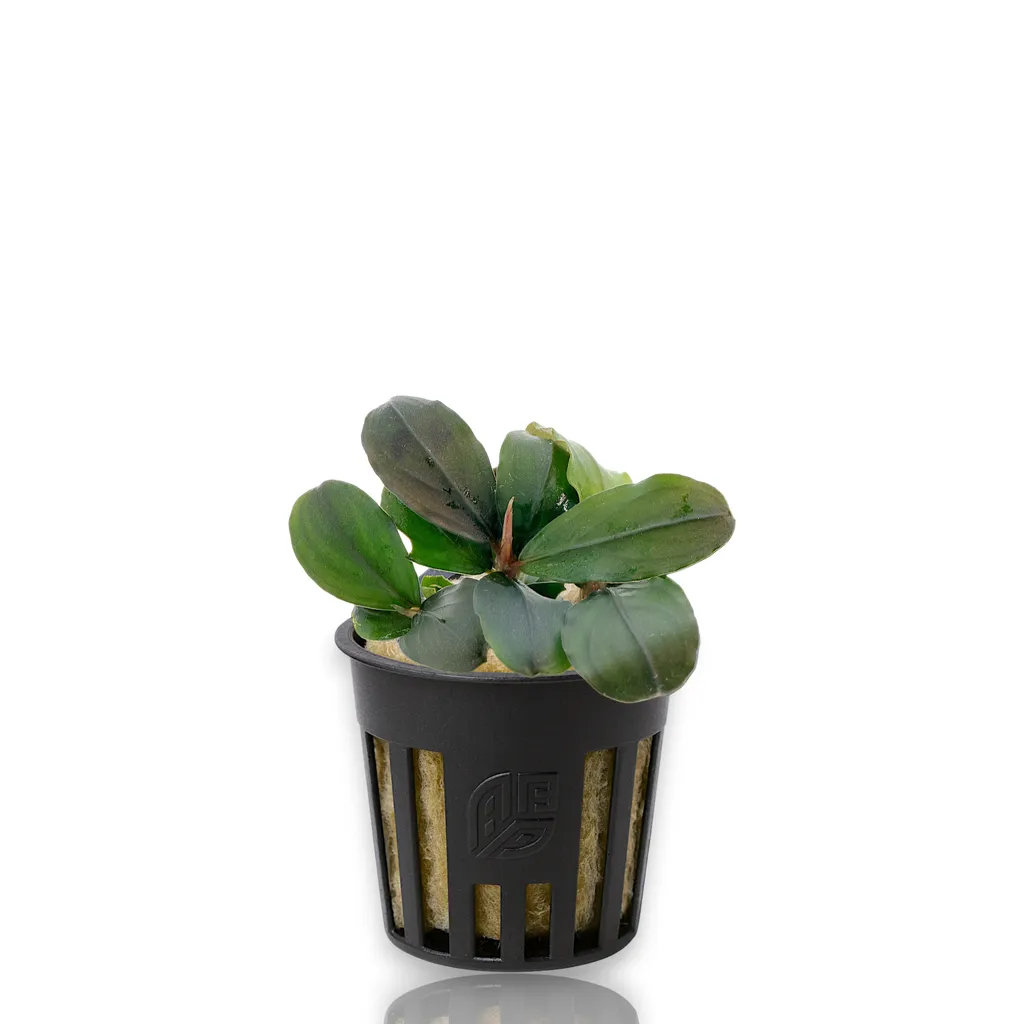
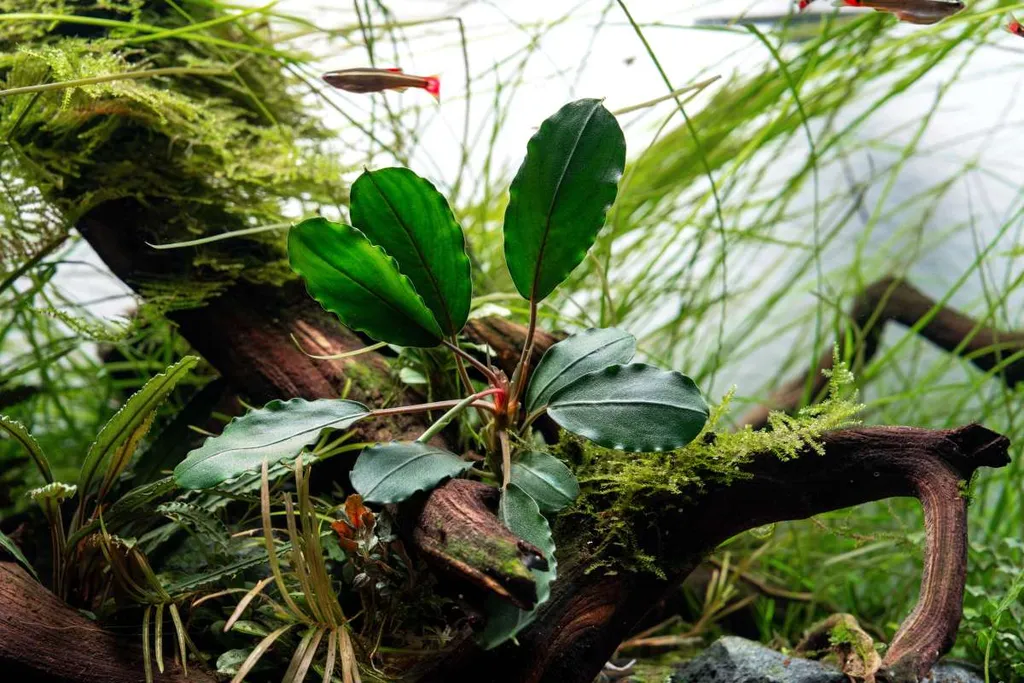
Bucephalandra Dark Velvet is a slow-growing, dark-leaved Buce for rock or wood. It is an easy plant that grows without CO2.
Did you know
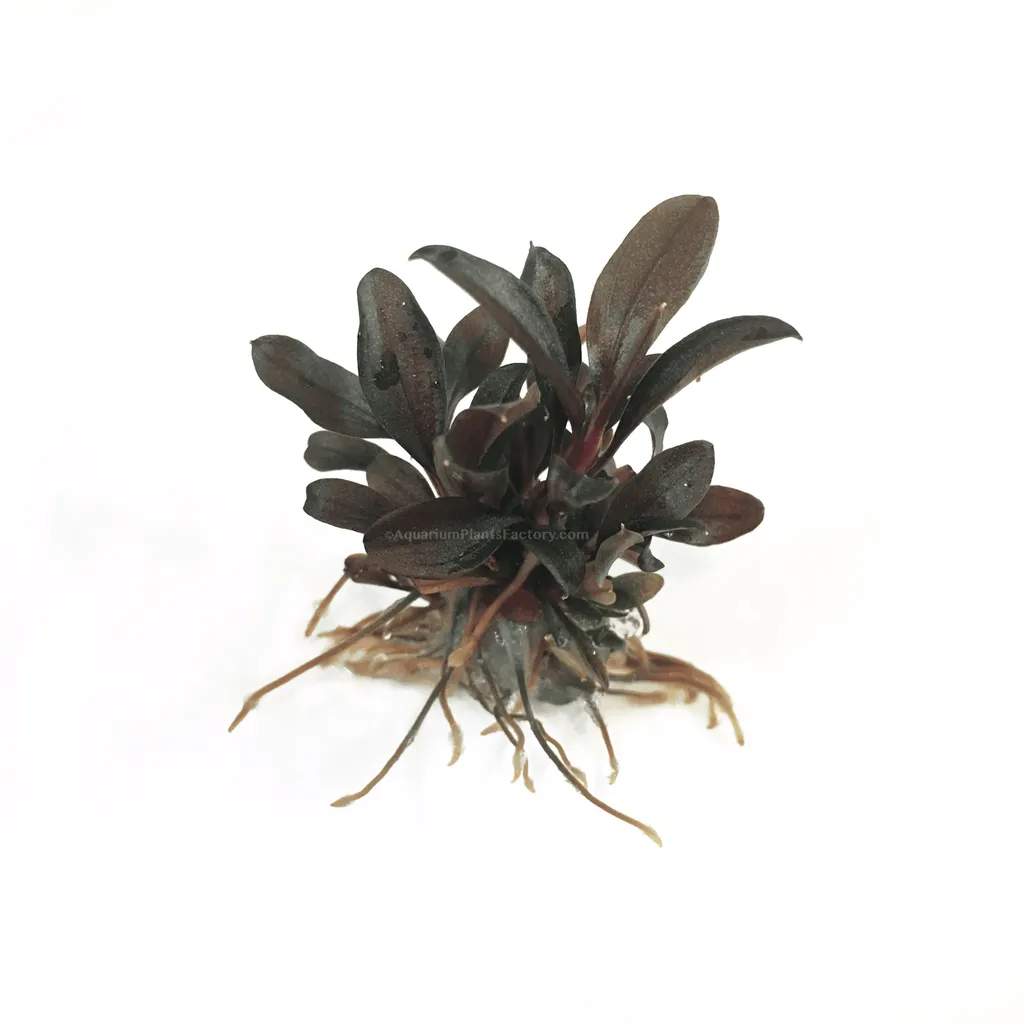
Dark Velvet works backwards from red stem plants. Its near-black color is deepest under modest light rather than strong light.
Caring for Bucephalandra Dark Velvet
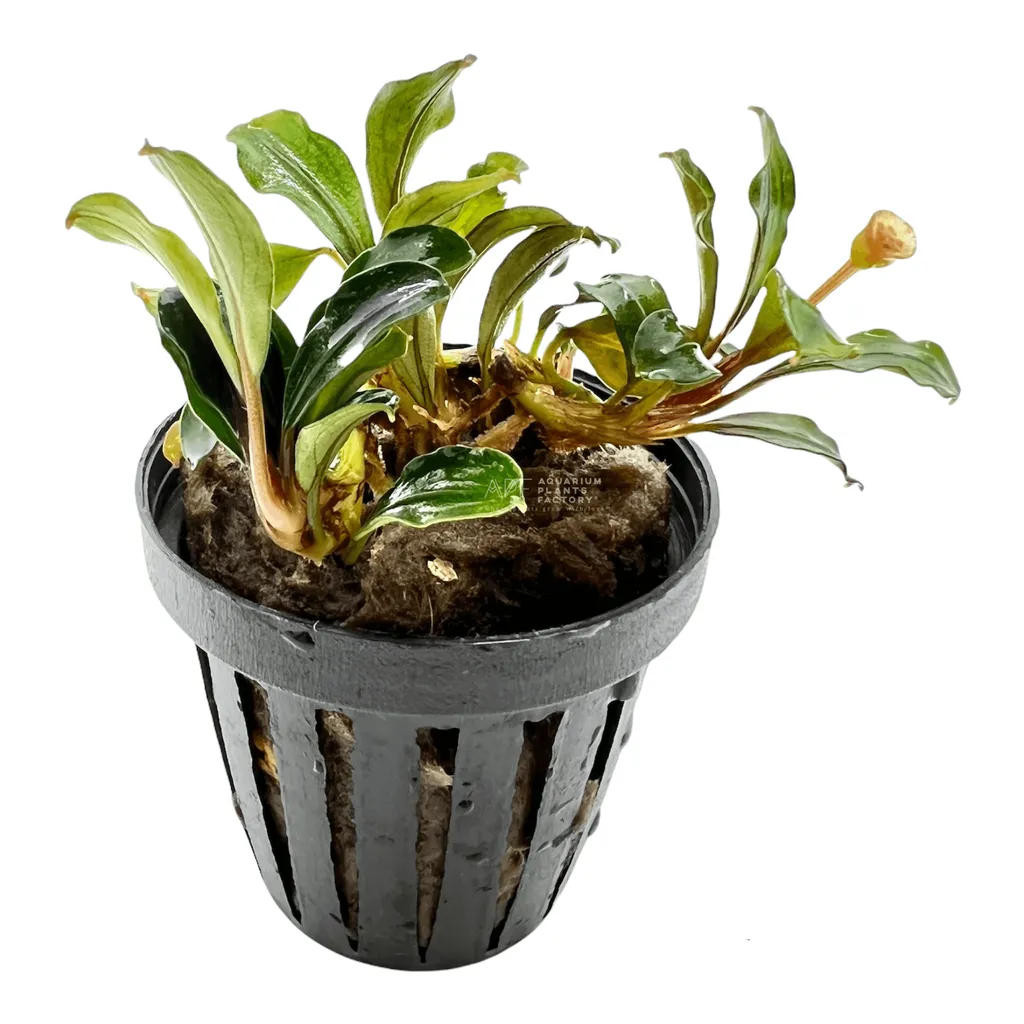
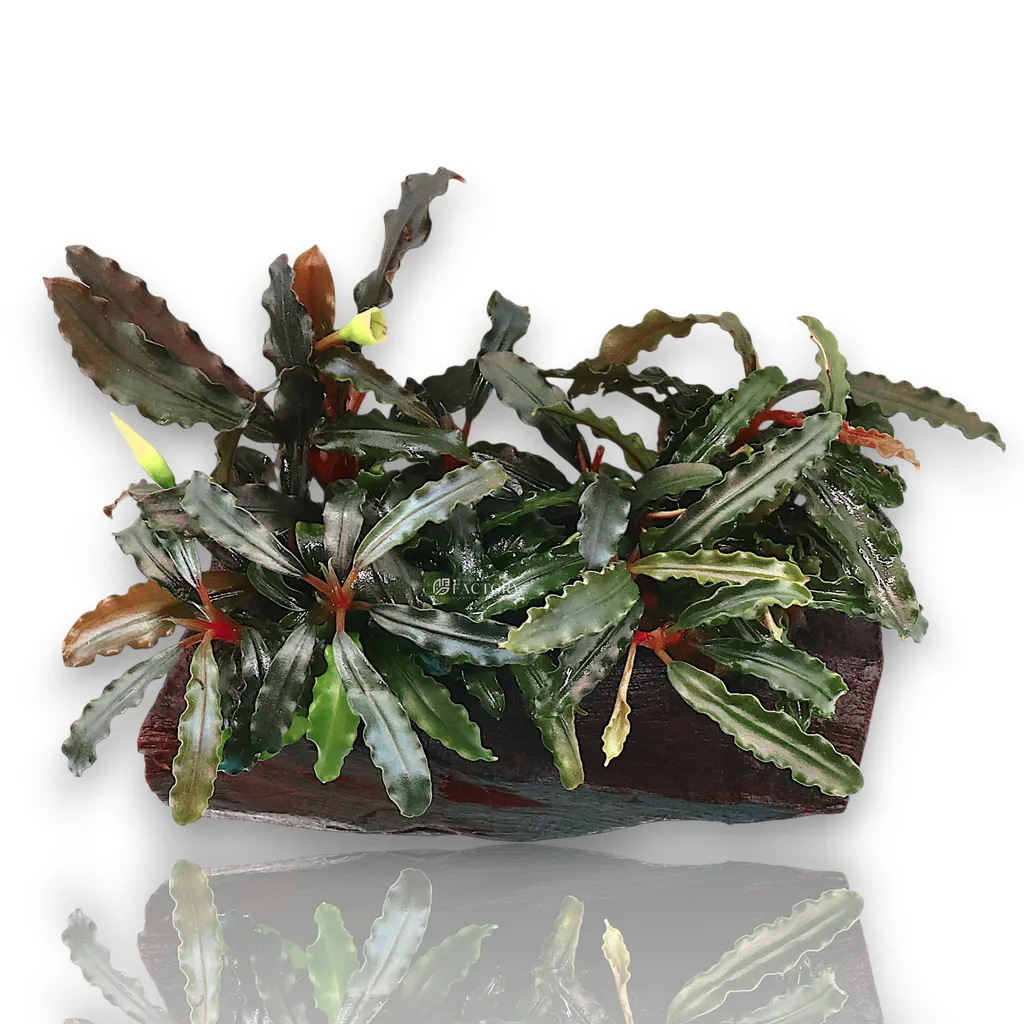
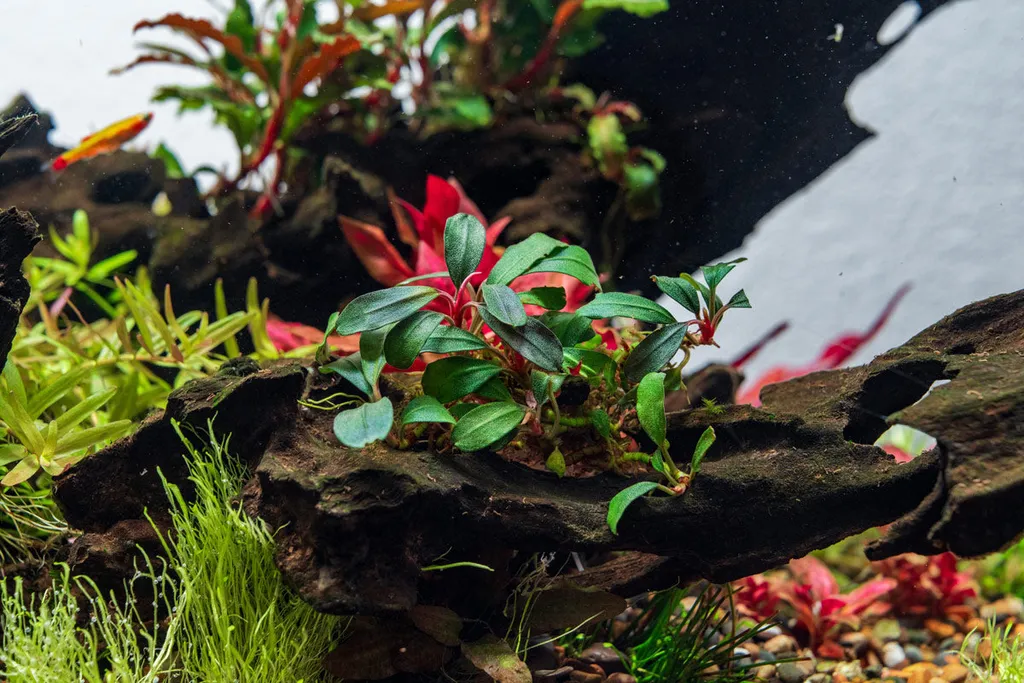
Glue or thread the rhizome onto rock or wood, and never bury it or it rots. Dark Velvet is slow, and its leaves grow only a few millimeters a month.
Low light is enough for it and keeps the leaves clean. More light with CO2 brings out the iridescence and a few extra leaves, but it also invites algae on foliage this slow. Keep the balance conservative. It takes nutrients through its roots and from the water, so dose a liquid fertilizer, and keep it at 70 to 82°F (21 to 28°C).
Hold conditions stable rather than chasing a target number, since a sharp swing in temperature or pH can melt a whole clump. Divide the rhizome into pieces with several leaves each to propagate it.
Good to know
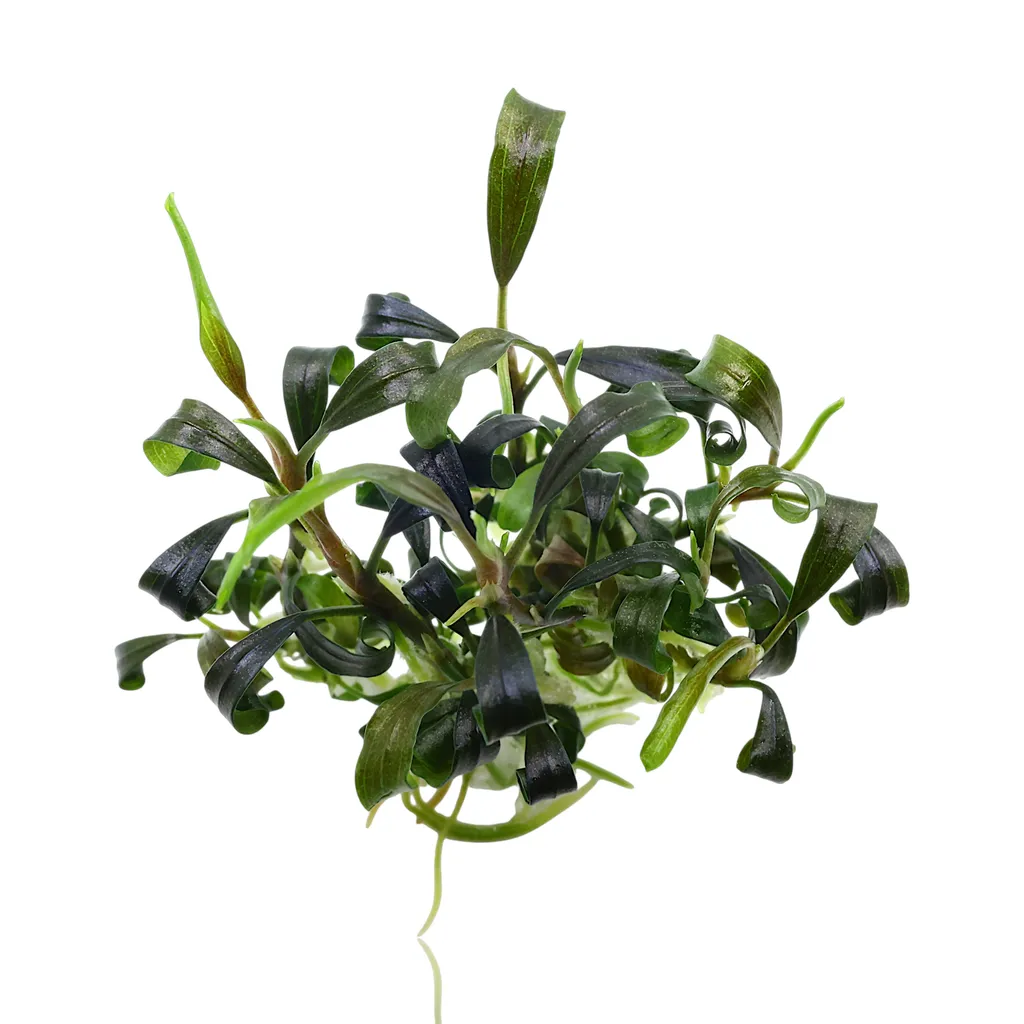
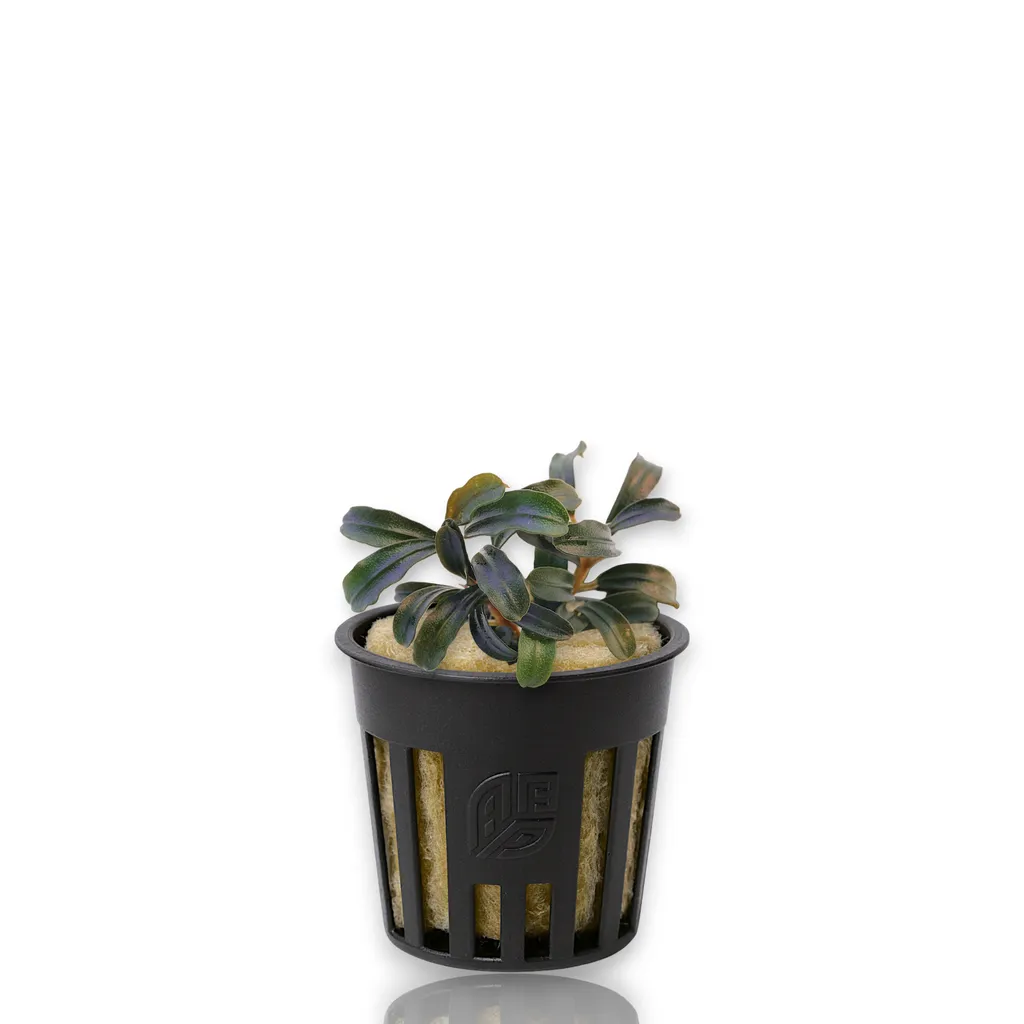
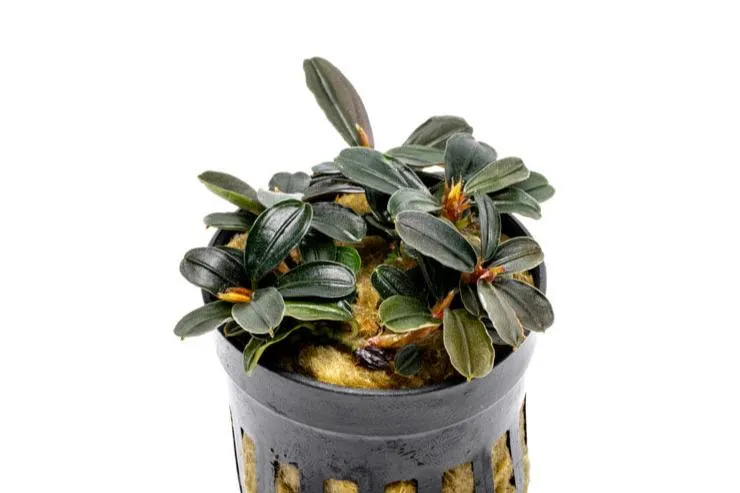
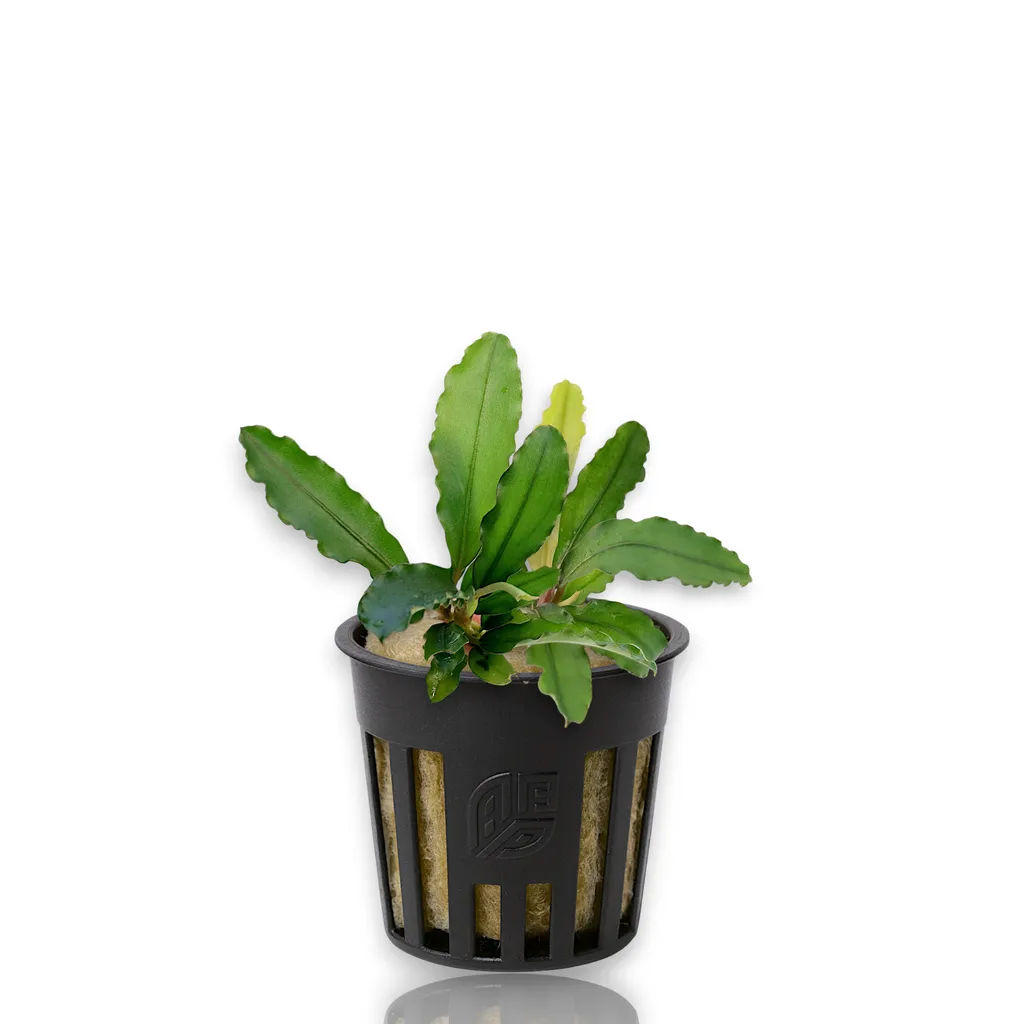
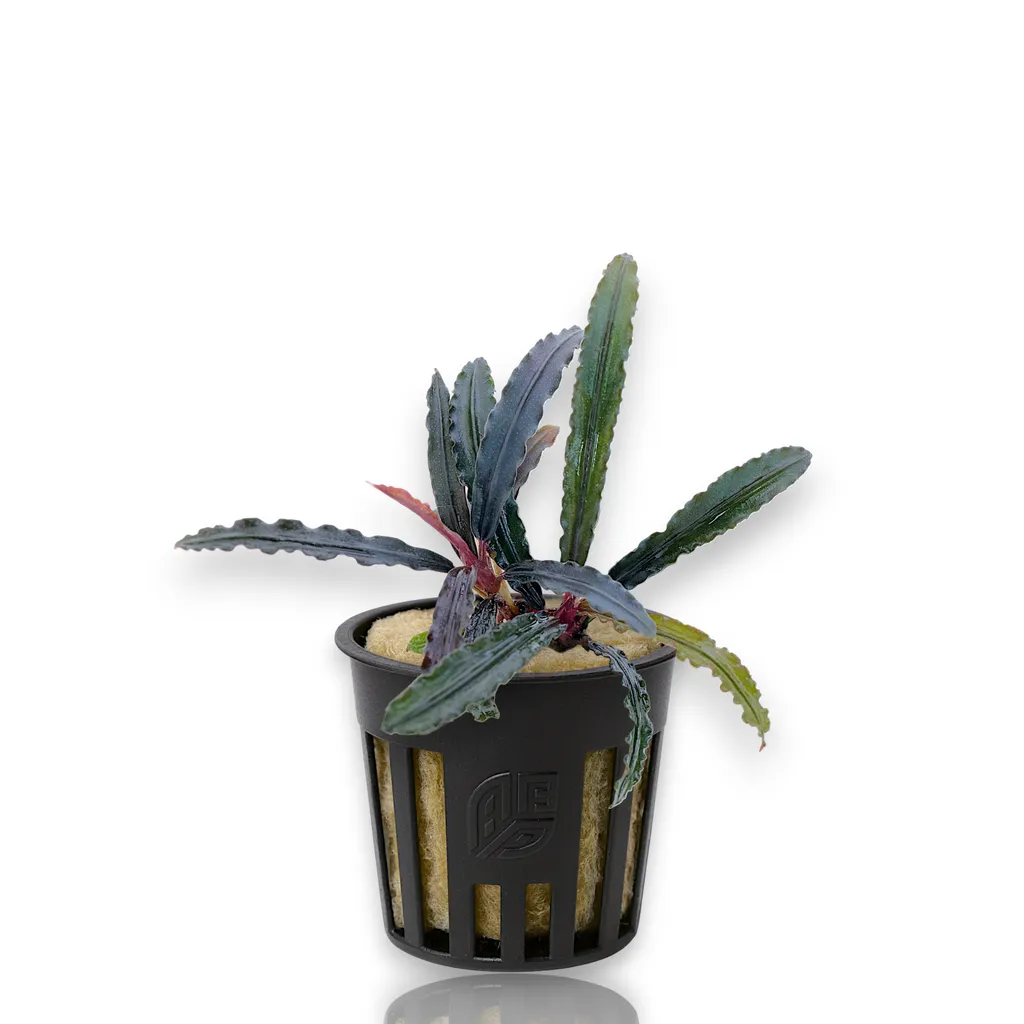
Dark Velvet is a commercial name, not a taxon. Its genus, Bucephalandra (family Araceae, tribe Schismatoglottideae), has trade names that rarely map onto described species. It is sold as the darker end of the Velvet line, with slender, slightly wavy leaves in deep green to near black. Under aquarium light the leaves flash blue, purple and bronze iridescence.
In the wild
Dark Velvet is a trade variety of Bucephalandra from Borneo. The genus grows there as rheophytes, gripping rock in fast, clean forest streams. The plants sit fully submersed in the wet season and emersed along the banks as levels drop. Hobby stock is farmed or tissue cultured rather than wild collected.
Common questions
Does Bucephalandra Dark Velvet need to be planted in the substrate?
No. Bucephalandra Dark Velvet grows attached to rock or wood, so tie or glue the rhizome in place. If you plant its roots, keep the rhizome above the substrate, since a buried rhizome rots.
Does Bucephalandra Dark Velvet need CO2?
No, but it helps. Bucephalandra Dark Velvet can grow without injected CO2, and added CO2 makes it grow faster.
How much light does Bucephalandra Dark Velvet need?
Bucephalandra Dark Velvet is a low-light plant, and the light that comes with a standard tank kit is enough for it.
Does Bucephalandra Dark Velvet need root tabs?
No. Bucephalandra Dark Velvet feeds from the water, so a liquid fertilizer suits it better. Root tabs only help if its roots reach into the substrate.
How do you propagate Bucephalandra Dark Velvet?
Bucephalandra Dark Velvet propagates by rhizome division. Cut the rhizome into pieces with several leaves each, then tie or plant each piece.
How tall does Bucephalandra Dark Velvet grow?
Bucephalandra Dark Velvet grows to about 3.1 in (8 cm) tall. It grows slowly and rarely needs trimming.
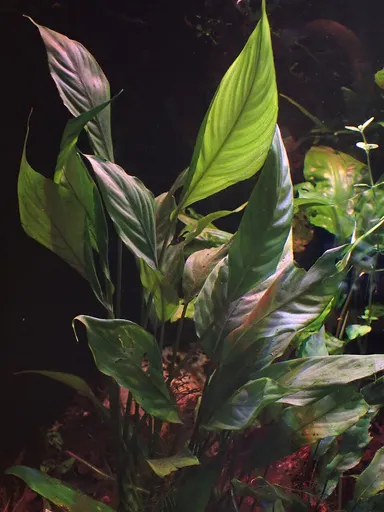 Low lightEpiphyte3.9 in (10 cm)
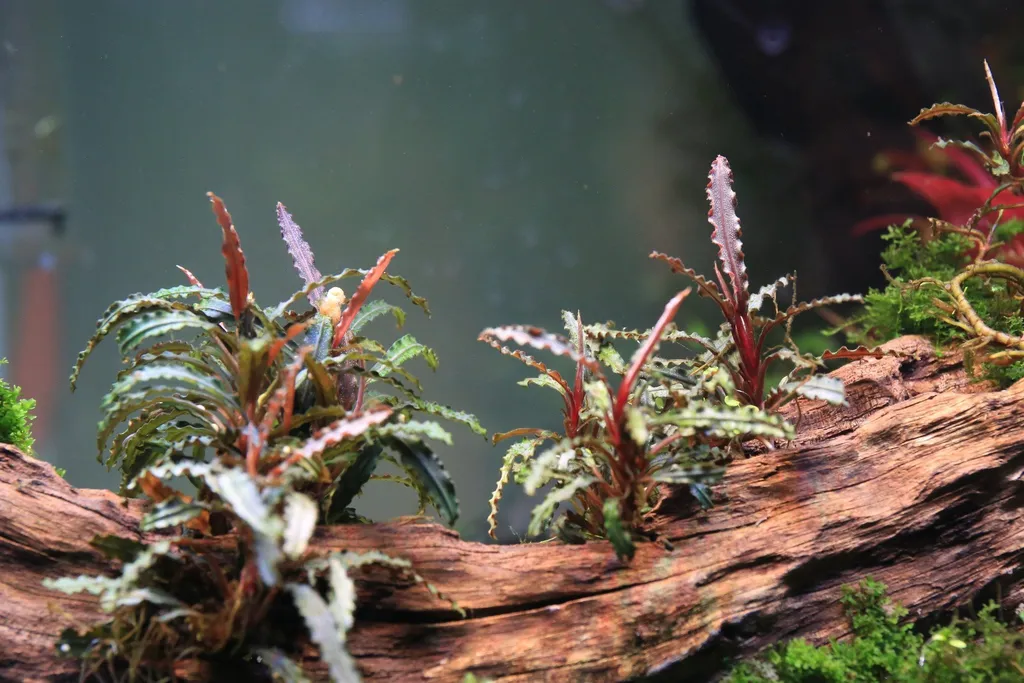 Low lightEpiphyte2.4 in (6 cm)
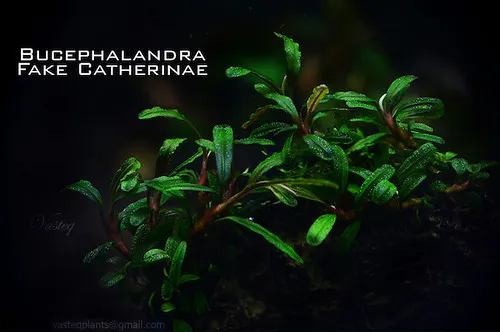 Low lightEpiphyte2.4 in (6 cm)