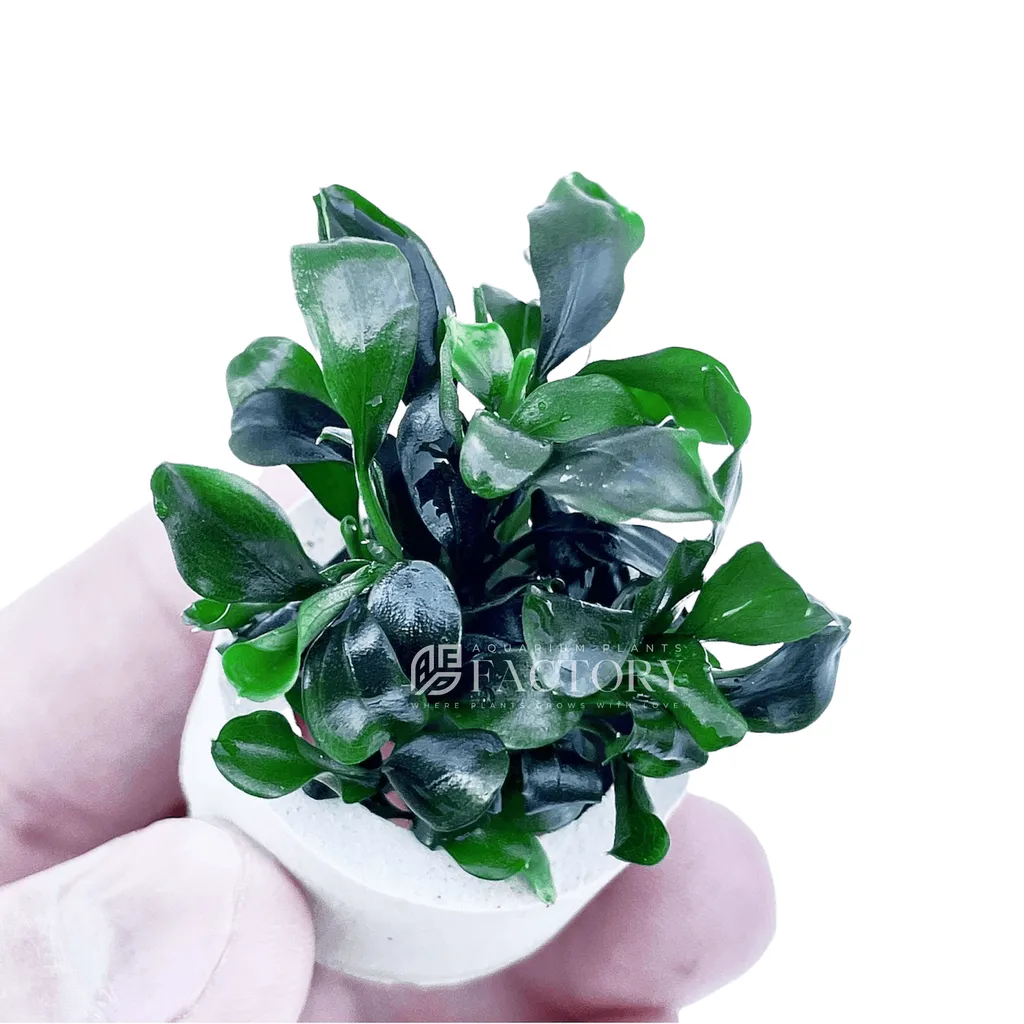
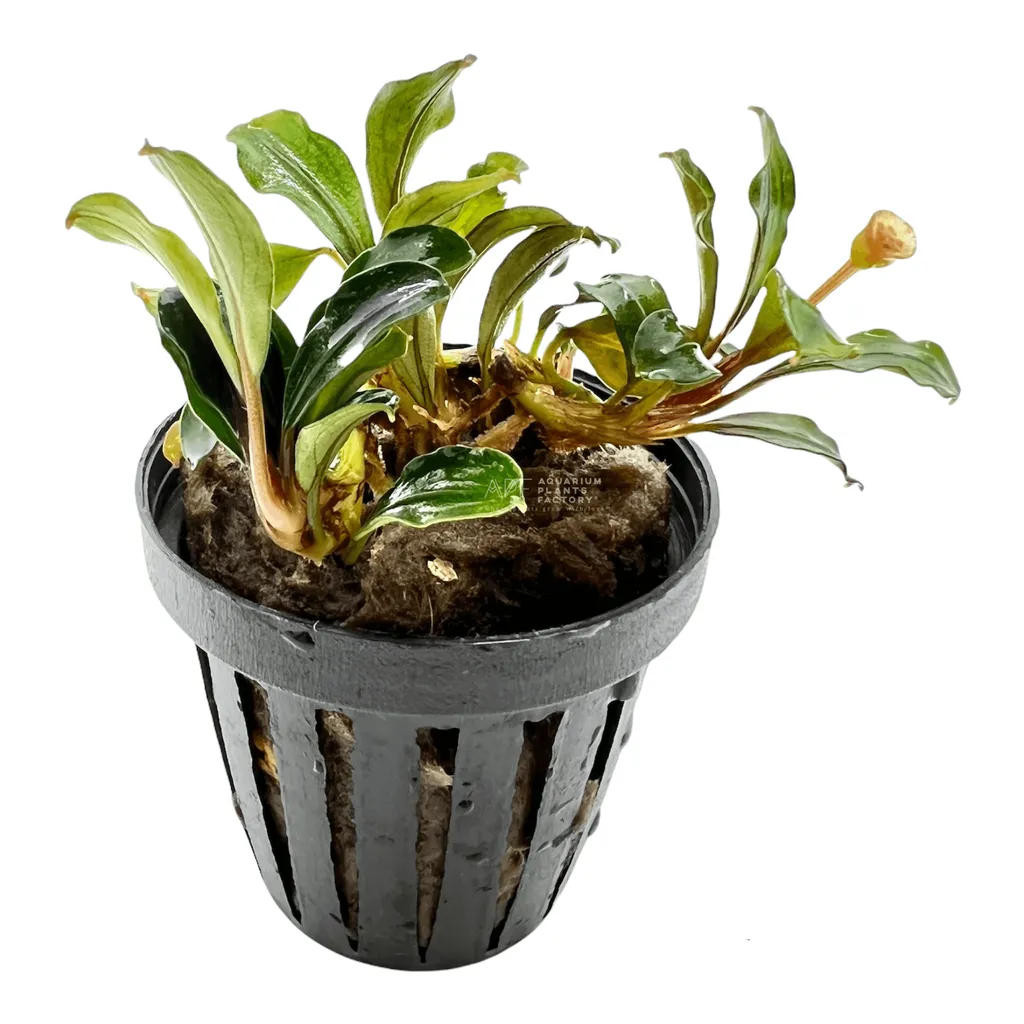
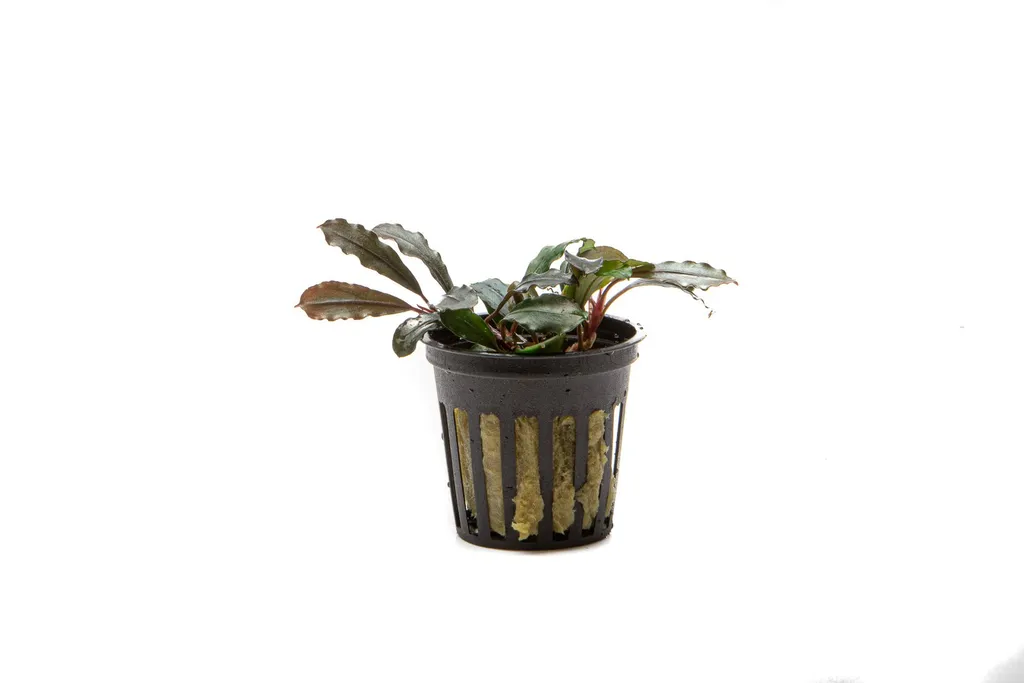
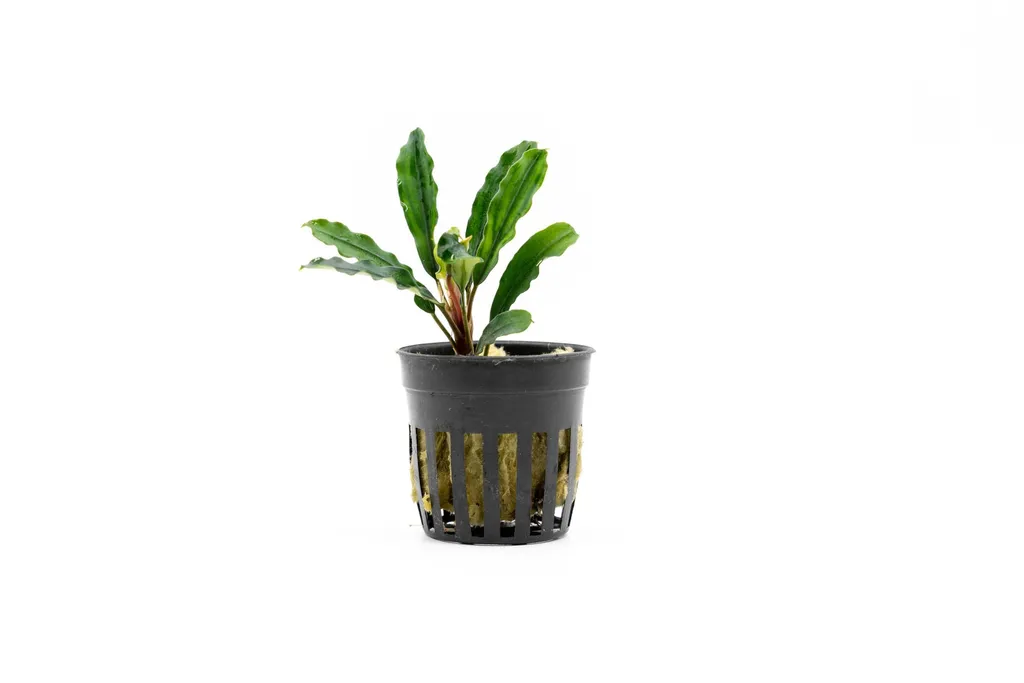
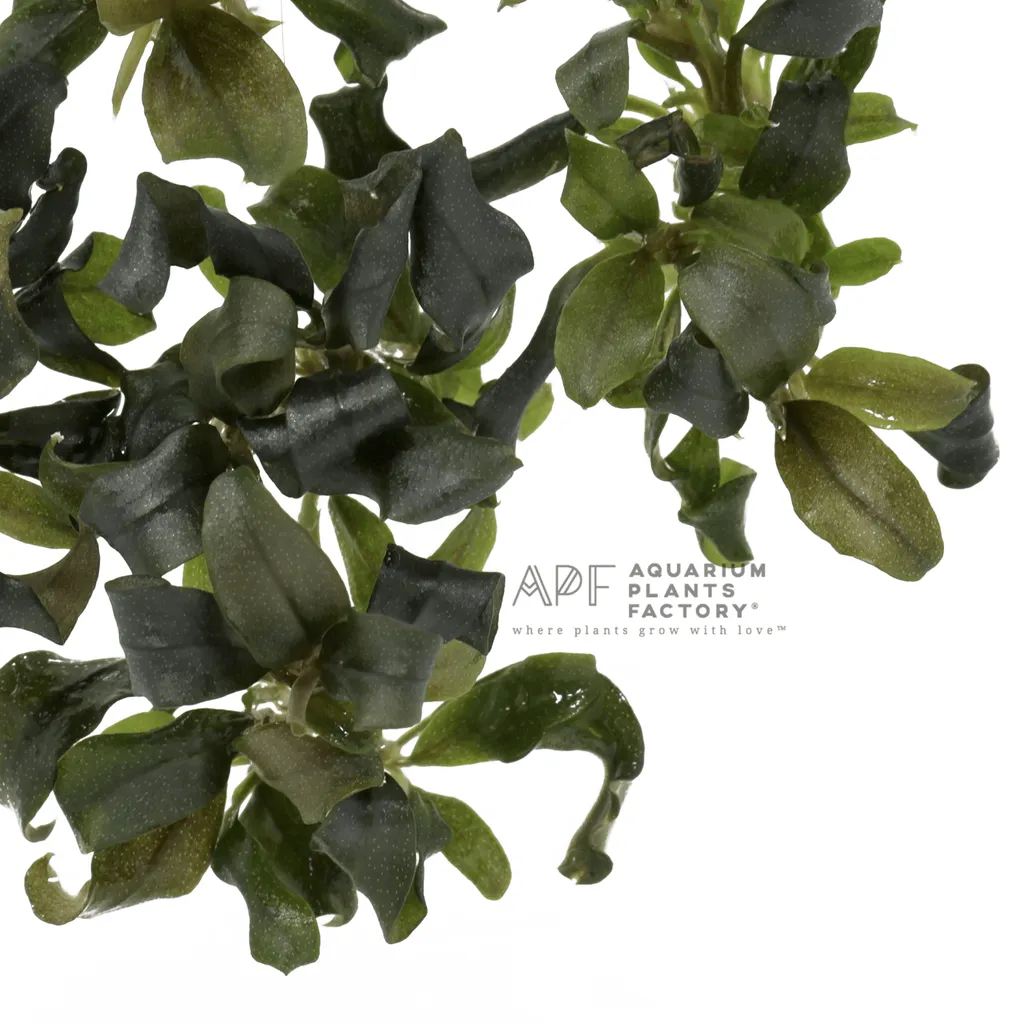
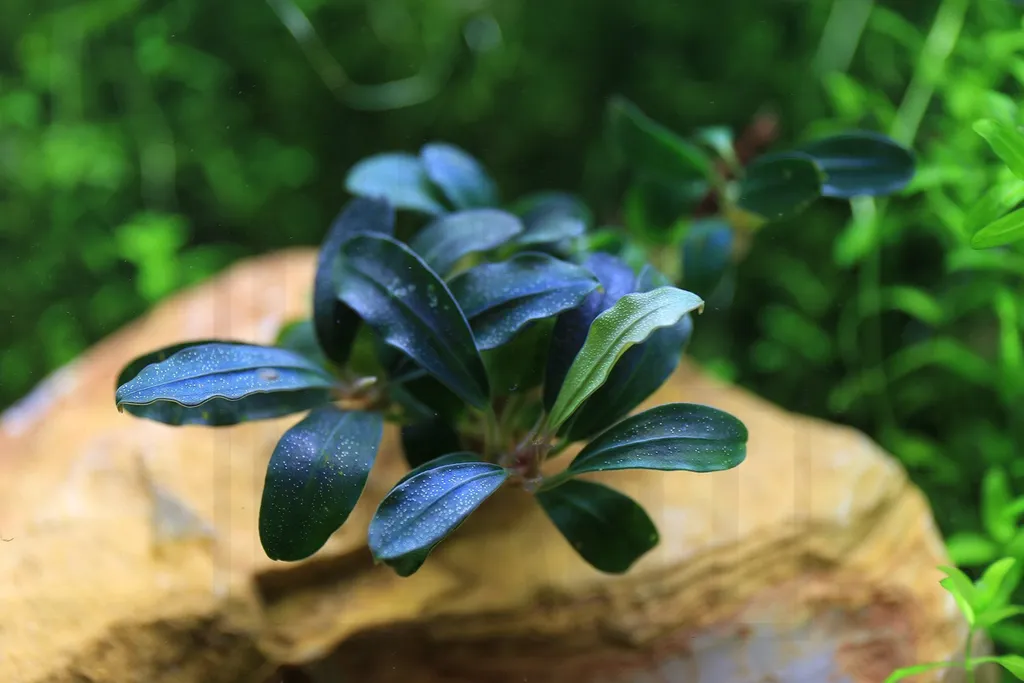
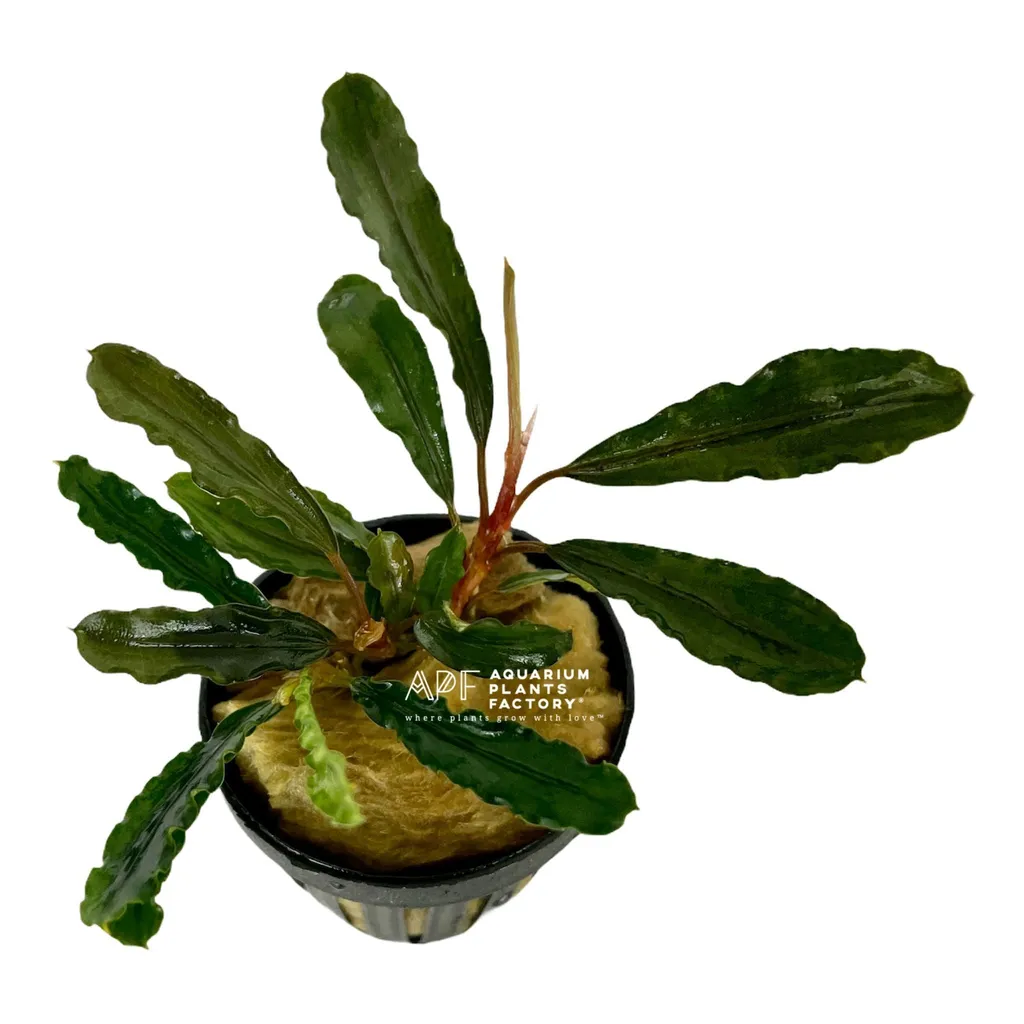
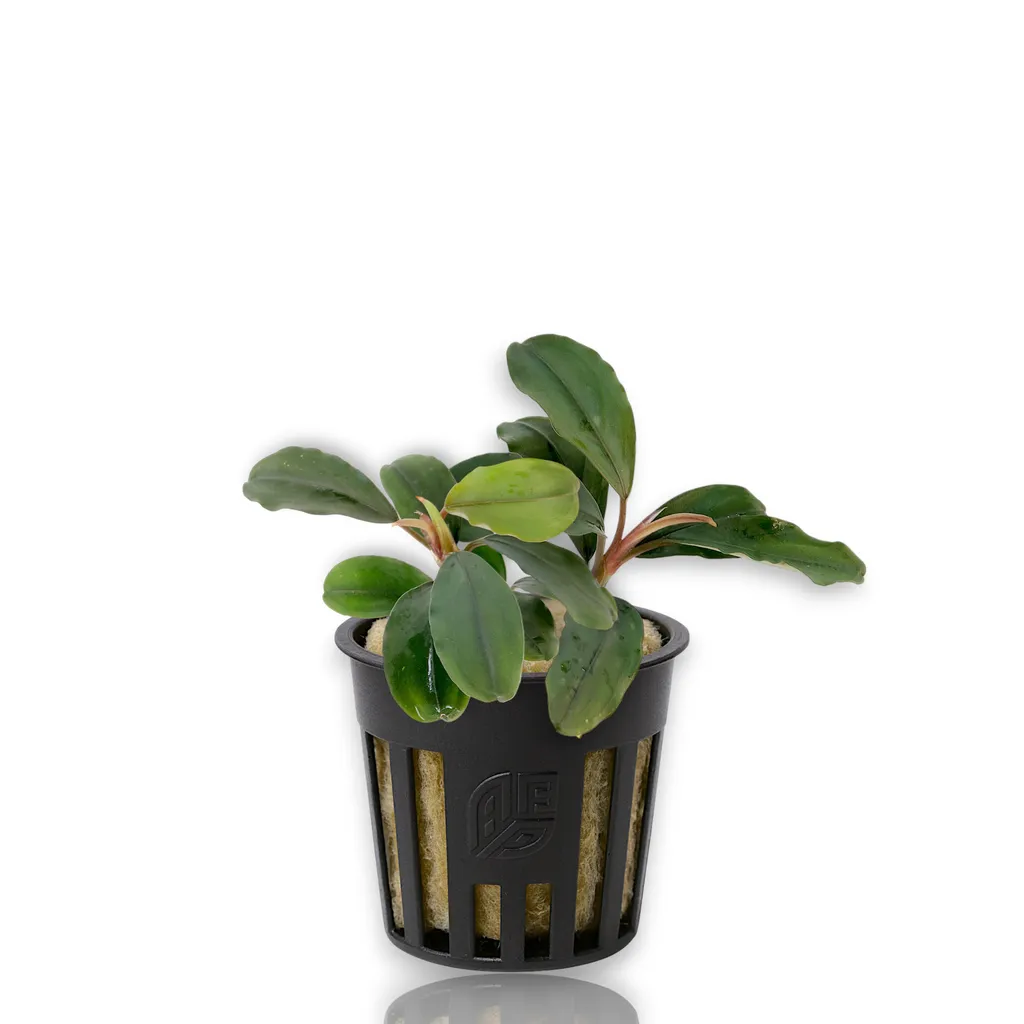
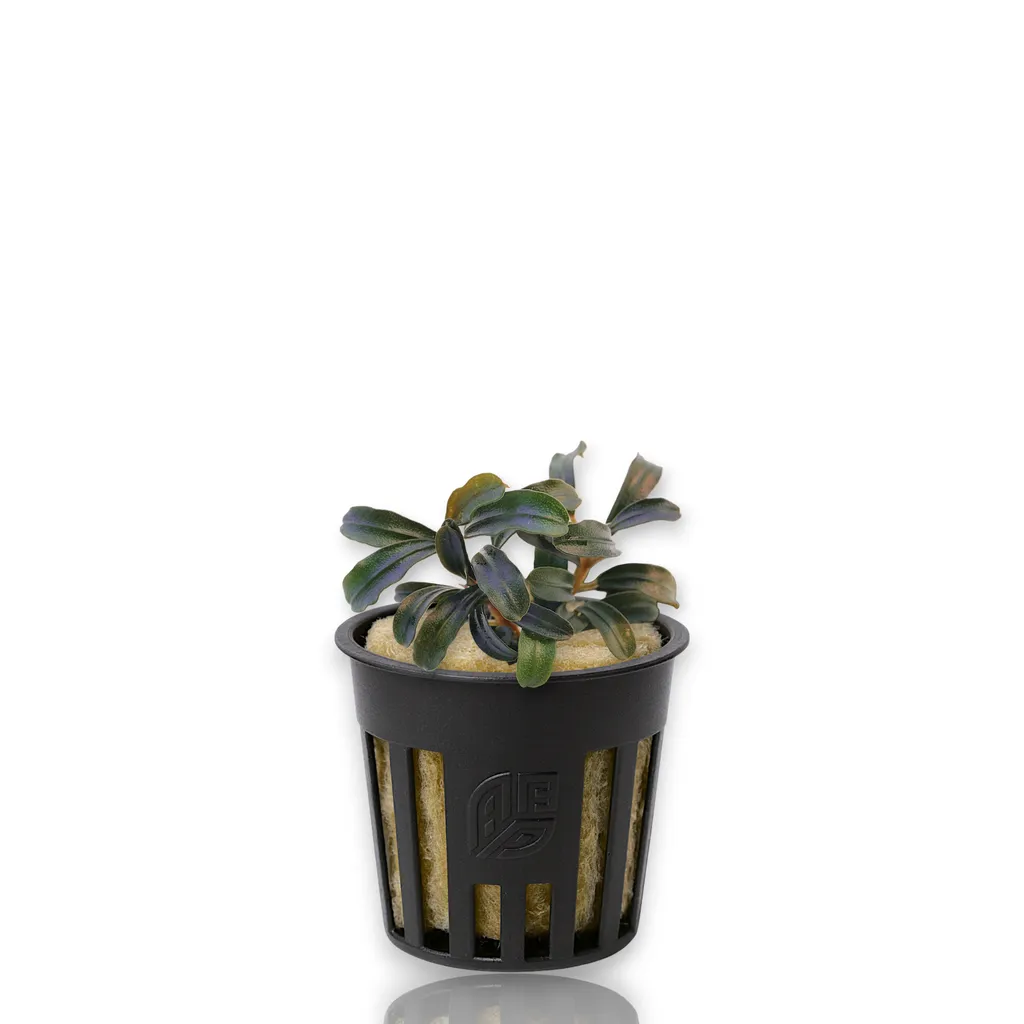
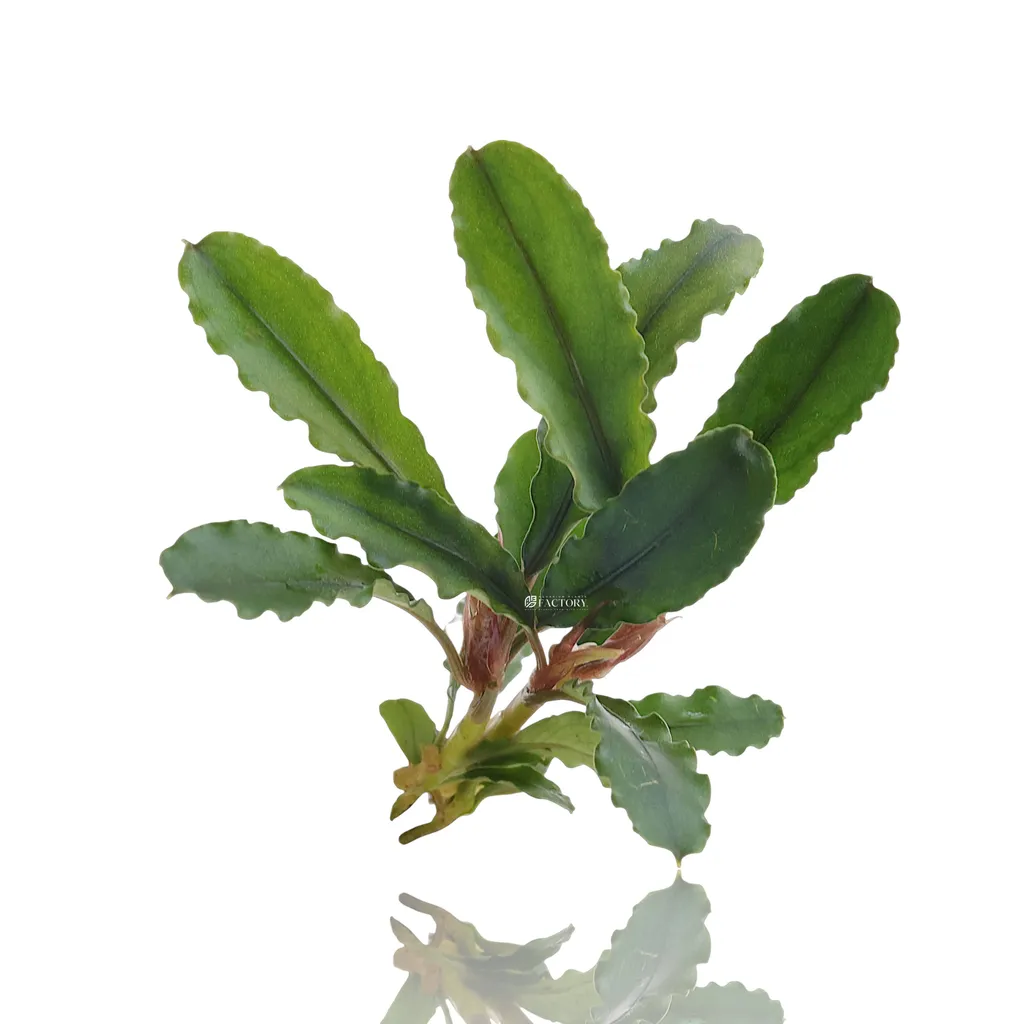
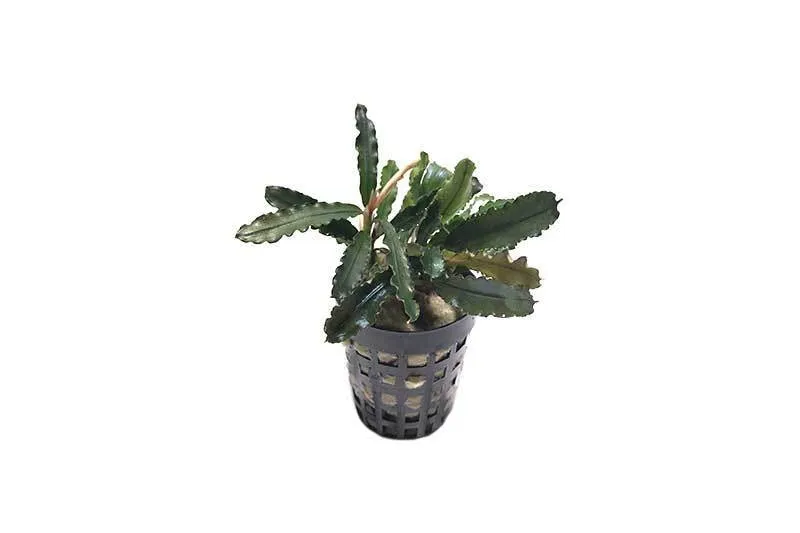
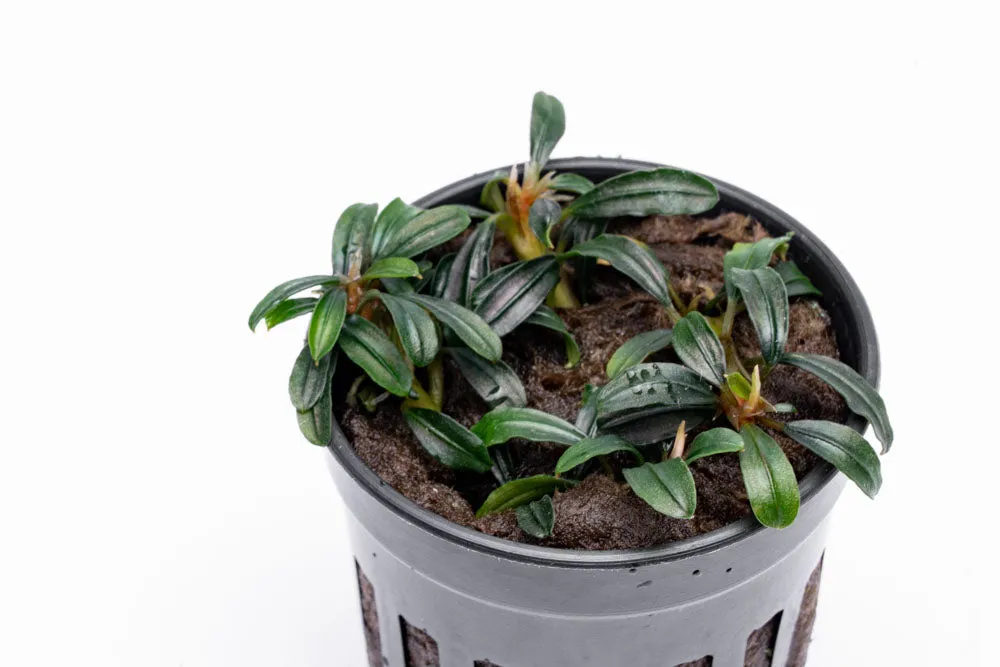
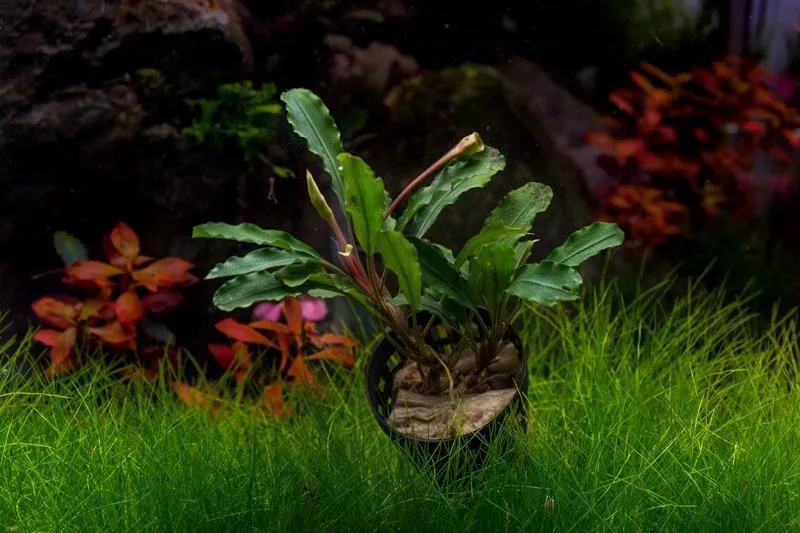
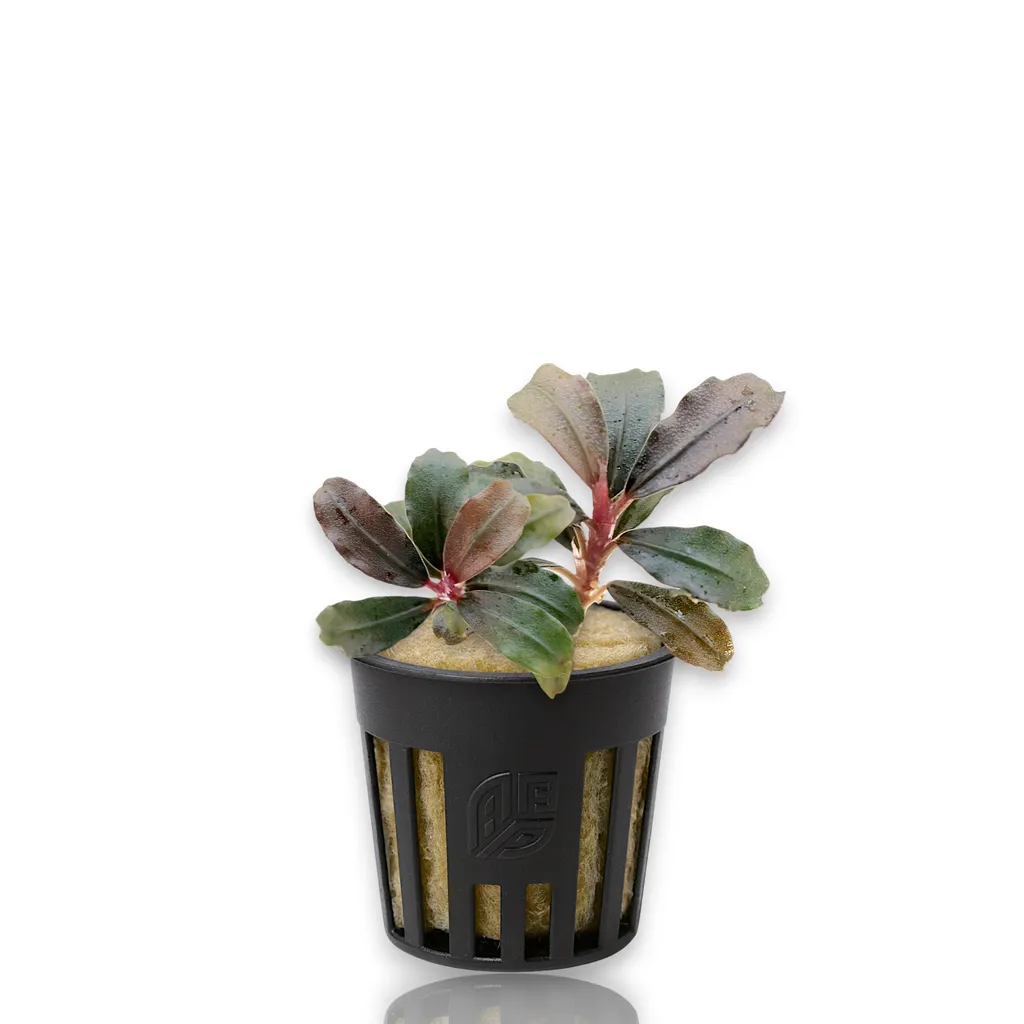
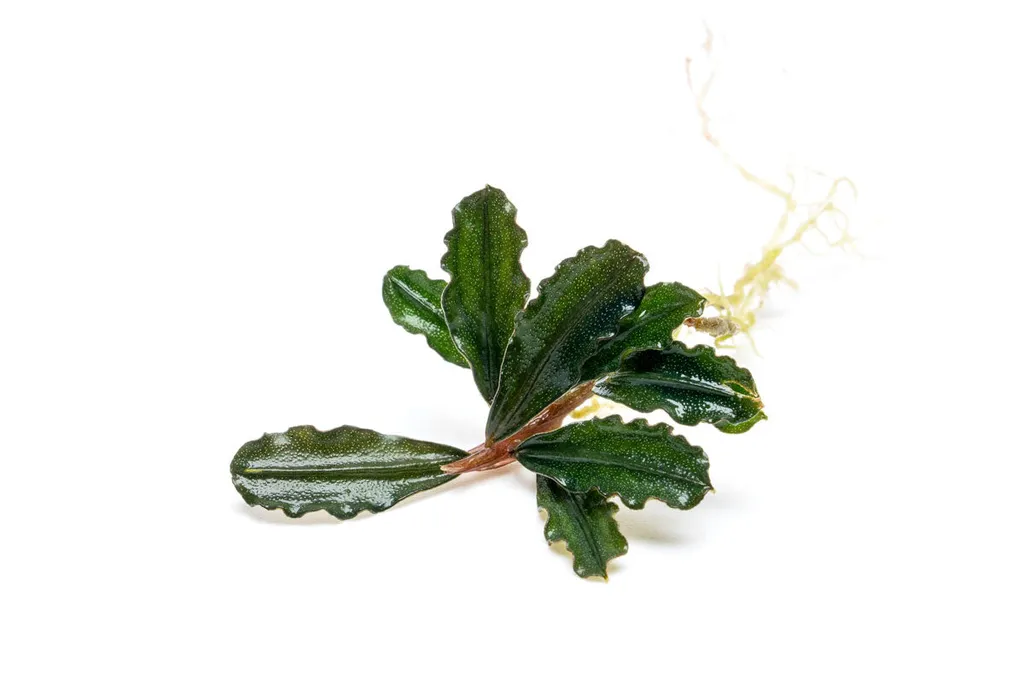
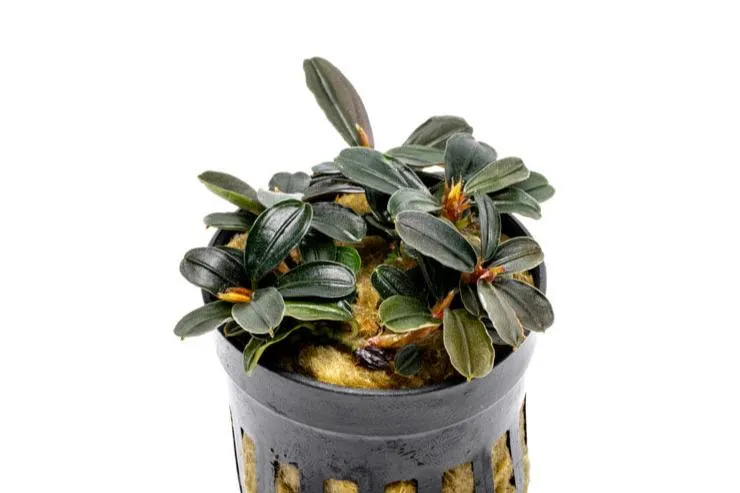
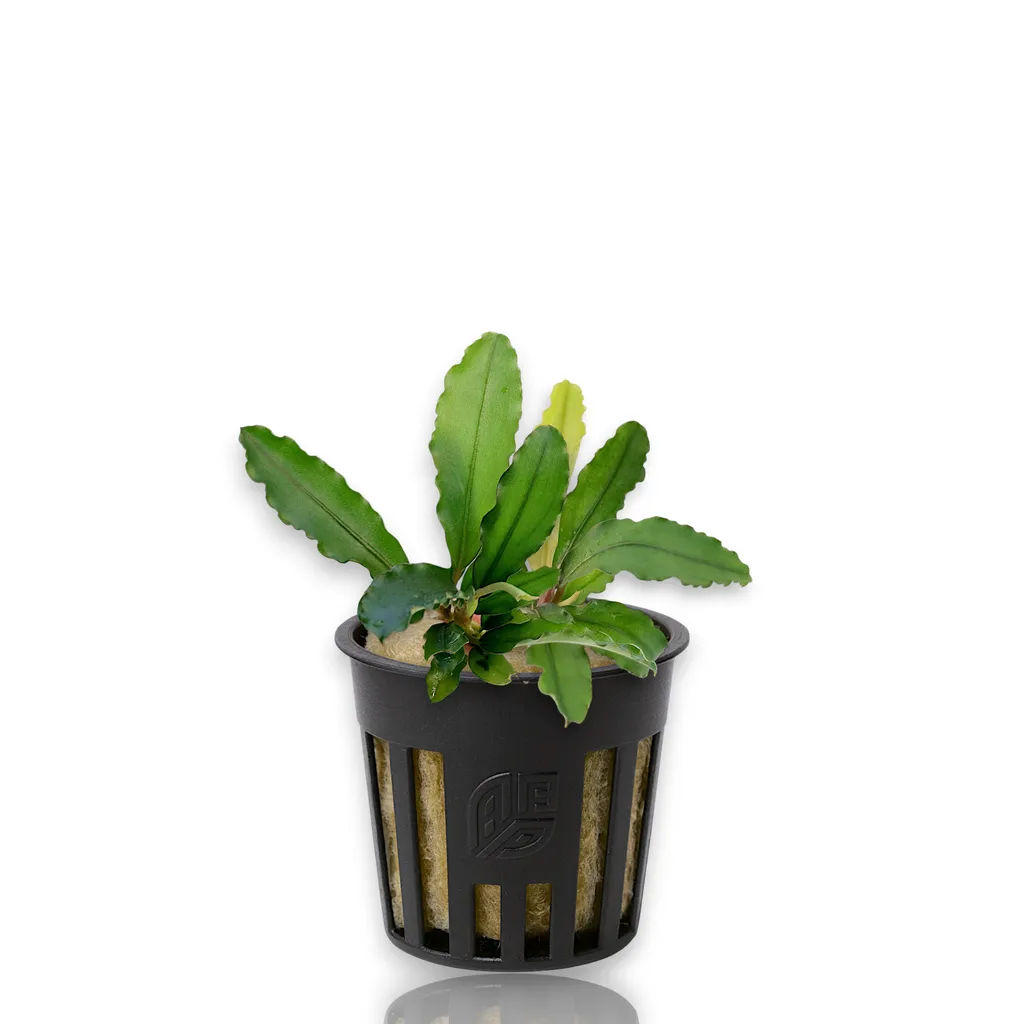
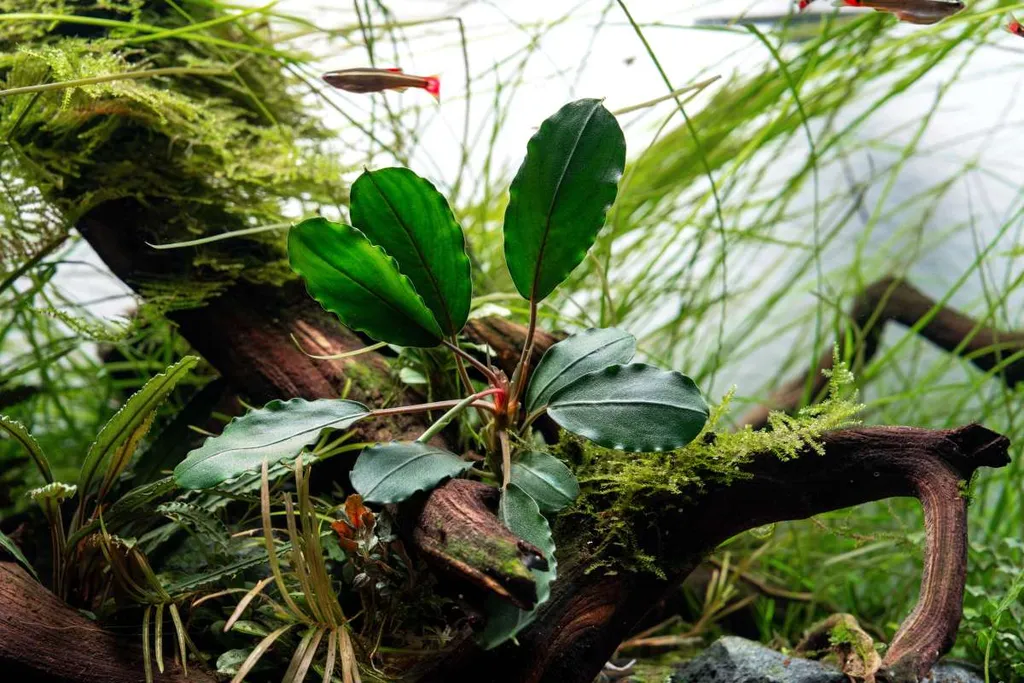
Bucephalandra Apple Leaf is a small Buce with rounded leaves roughly 1.5 cm long, a softer look than the narrow-leaved forms. It is an easy plant for rock or wood.
Did you know
Despite its name, Apple Leaf has nothing to do with apples. The name refers only to its rounded leaf outline, and the plant is an aroid, a distant cousin of peace lilies and philodendrons.
Caring for Bucephalandra Apple Leaf
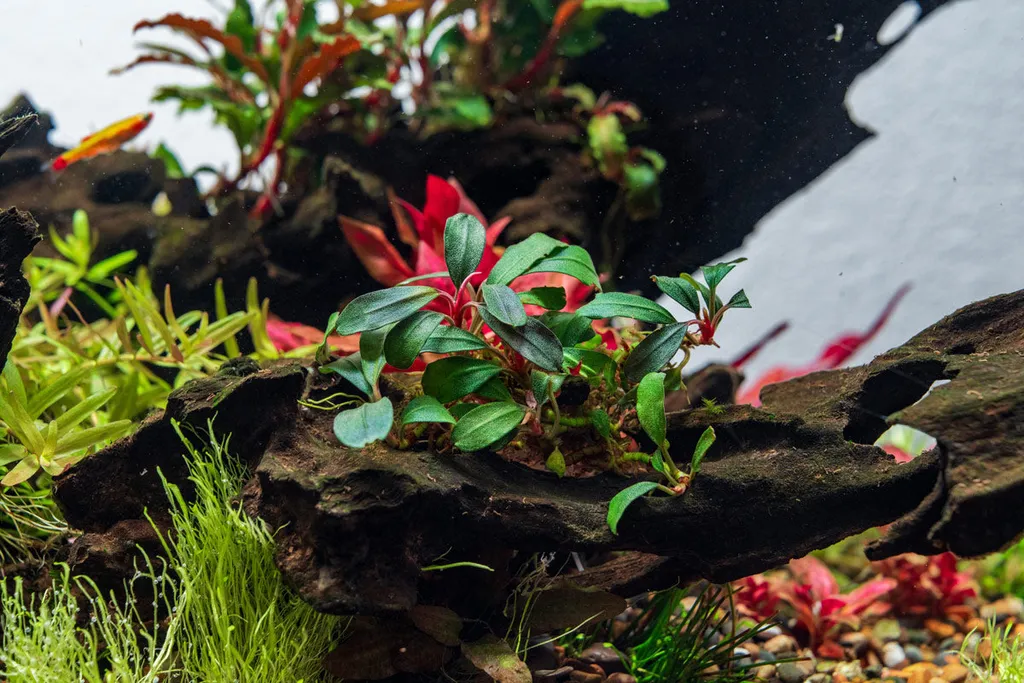
Tie or glue the rhizome to rock or wood and leave it uncovered, since a buried rhizome rots. Over time the plant spreads across the hardscape on its creeping rhizome.
Bucephalandra Apple Leaf grows in low to medium light without CO2, and it is one of the more durable and forgiving Buce. Injected CO2 makes it grow faster. It takes nutrients through its roots and from the water, so a liquid fertilizer suits it on hardscape. Keep it at 70 to 82°F (21 to 28°C).
It grows slowly and rarely needs trimming. New leaves come in lighter and darken with age. Divide the rhizome into pieces with several leaves each to make new plants.
Good to know
Apple Leaf is an undescribed cultivar rather than a formal species, so it keeps its trade name. Its leaves have a slightly speckled surface that shows up well under quality LEDs. Bucephalandra is an aroid genus in the family Araceae, and its members are very small to medium rheophytes. They ripen berries inside a persistent, funnel-shaped lower spathe that works as a splash cup. When water droplets strike it, the cup ejects the seeds onto nearby rock.
In the wild
Apple Leaf is a Bucephalandra trade form from Borneo, the only home of the genus. There Bucephalandra grows as an obligate rheophyte on rocks in shaded, fast-moving streams. The plants stay small, suited to the shaded niches they occupy in the wild.
Common questions
Does Bucephalandra Apple Leaf need to be planted in the substrate?
No. Bucephalandra Apple Leaf grows attached to rock or wood, so tie or glue the rhizome in place. If you plant its roots, keep the rhizome above the substrate, since a buried rhizome rots.
Does Bucephalandra Apple Leaf need CO2?
No, but it helps. Bucephalandra Apple Leaf can grow without injected CO2, and added CO2 makes it grow faster.
How much light does Bucephalandra Apple Leaf need?
Bucephalandra Apple Leaf is a low-light plant, and the light that comes with a standard tank kit is enough for it.
Does Bucephalandra Apple Leaf need root tabs?
No. Bucephalandra Apple Leaf feeds from the water, so a liquid fertilizer suits it better. Root tabs only help if its roots reach into the substrate.
How do you propagate Bucephalandra Apple Leaf?
Bucephalandra Apple Leaf propagates by rhizome division. Cut the rhizome into pieces with several leaves each, then tie or plant each piece.
How tall does Bucephalandra Apple Leaf grow?
Bucephalandra Apple Leaf grows to about 3.9 in (10 cm) tall. It grows slowly and rarely needs trimming.
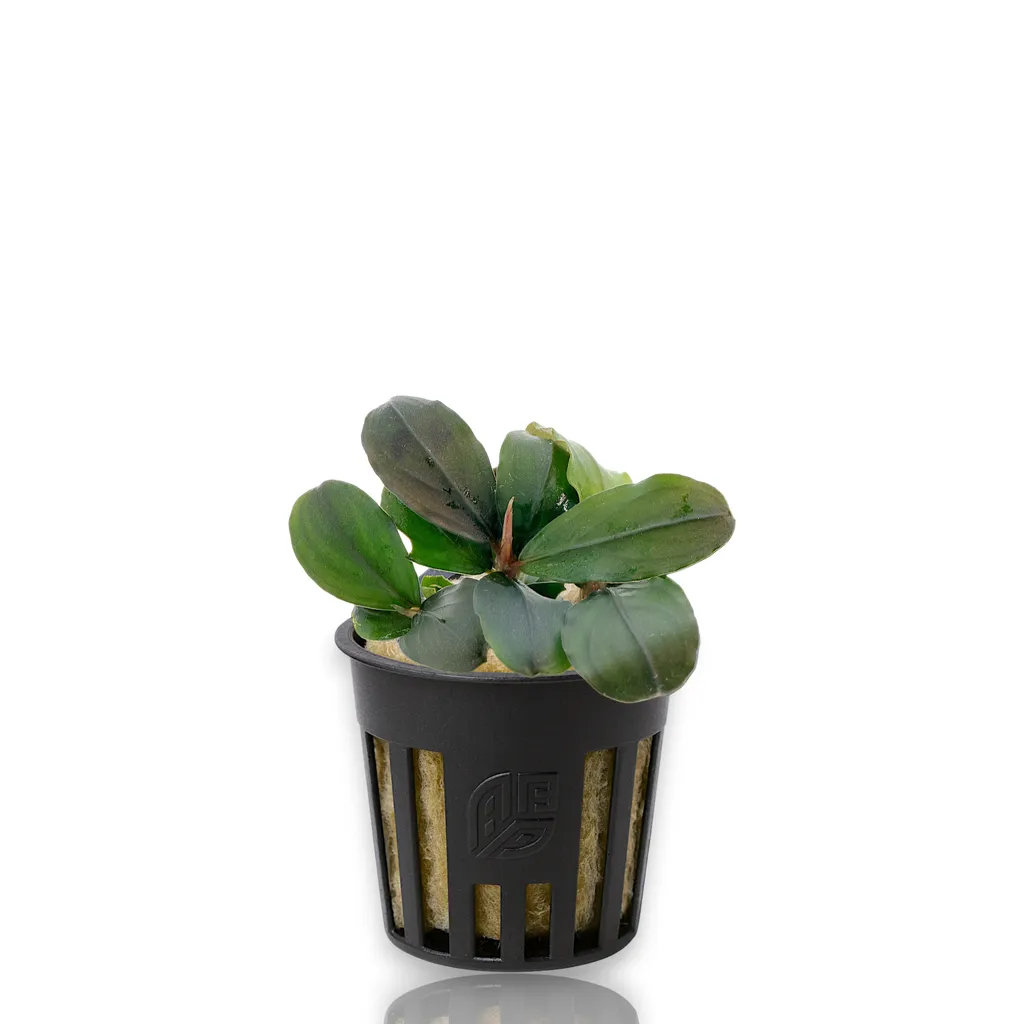
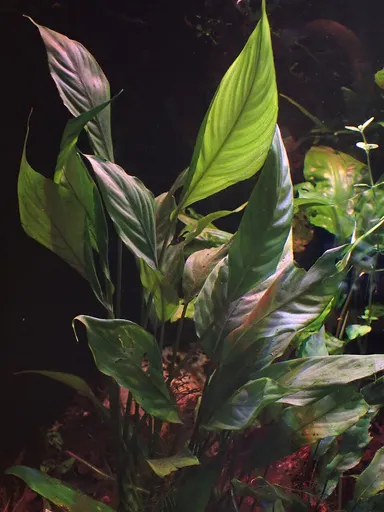 Low lightEpiphyte3.9 in (10 cm)
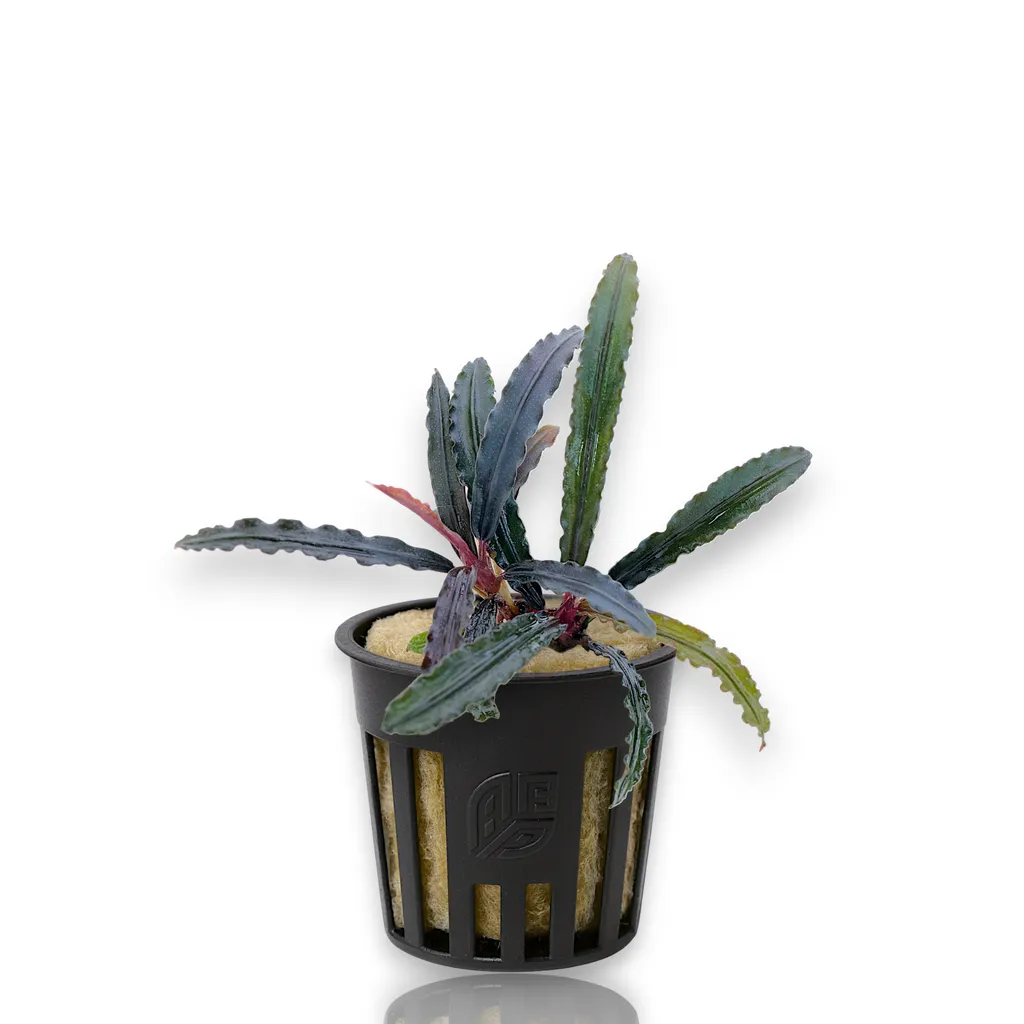
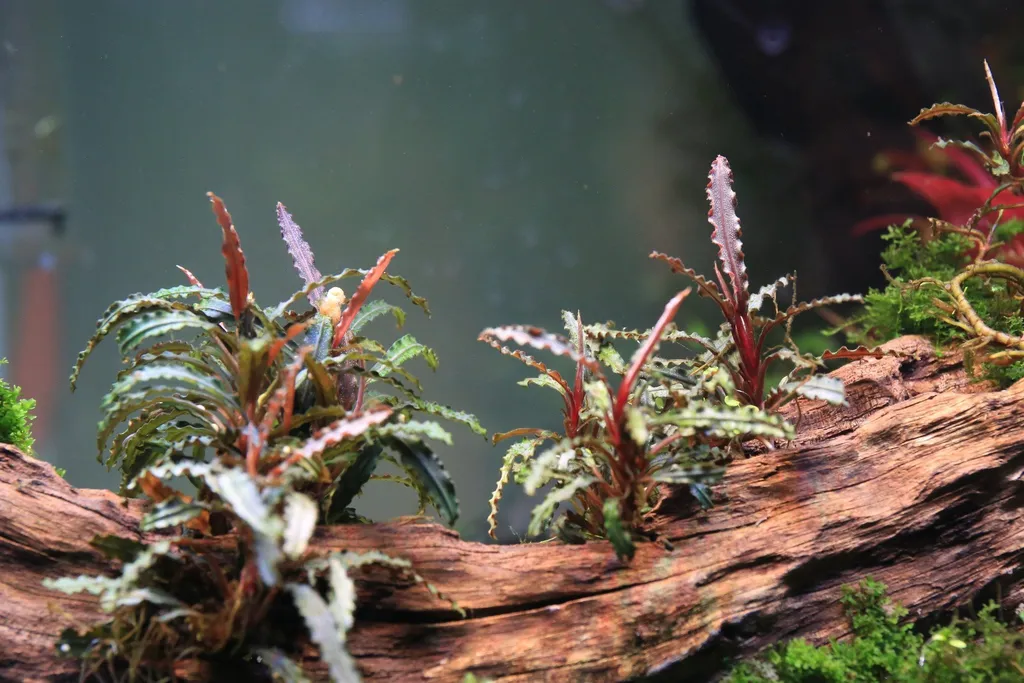 Low lightEpiphyte2.4 in (6 cm)
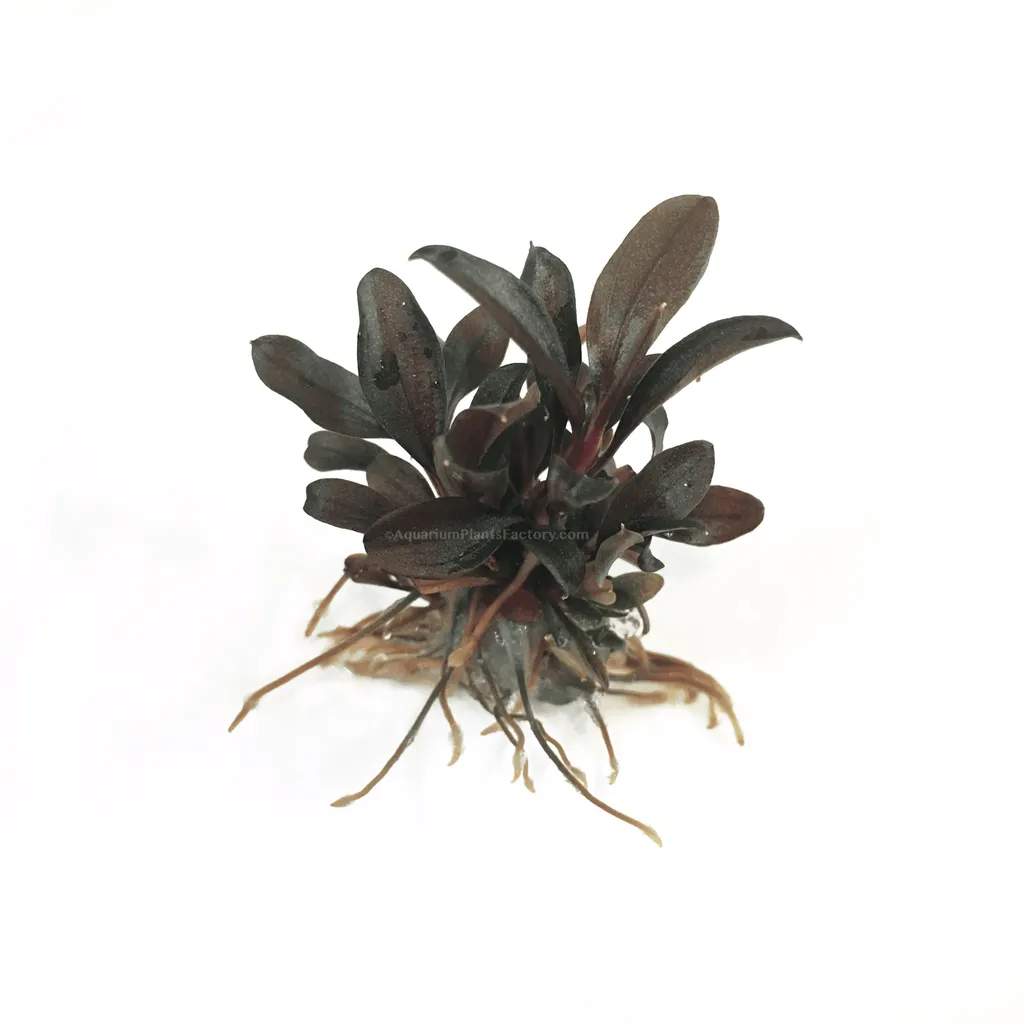
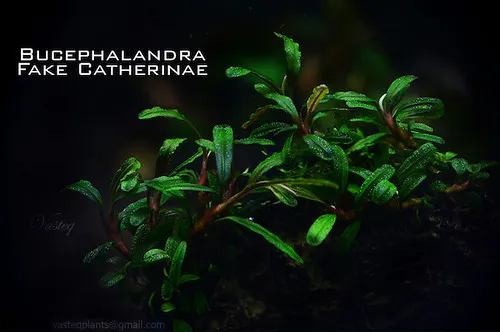 Low lightEpiphyte2.4 in (6 cm)