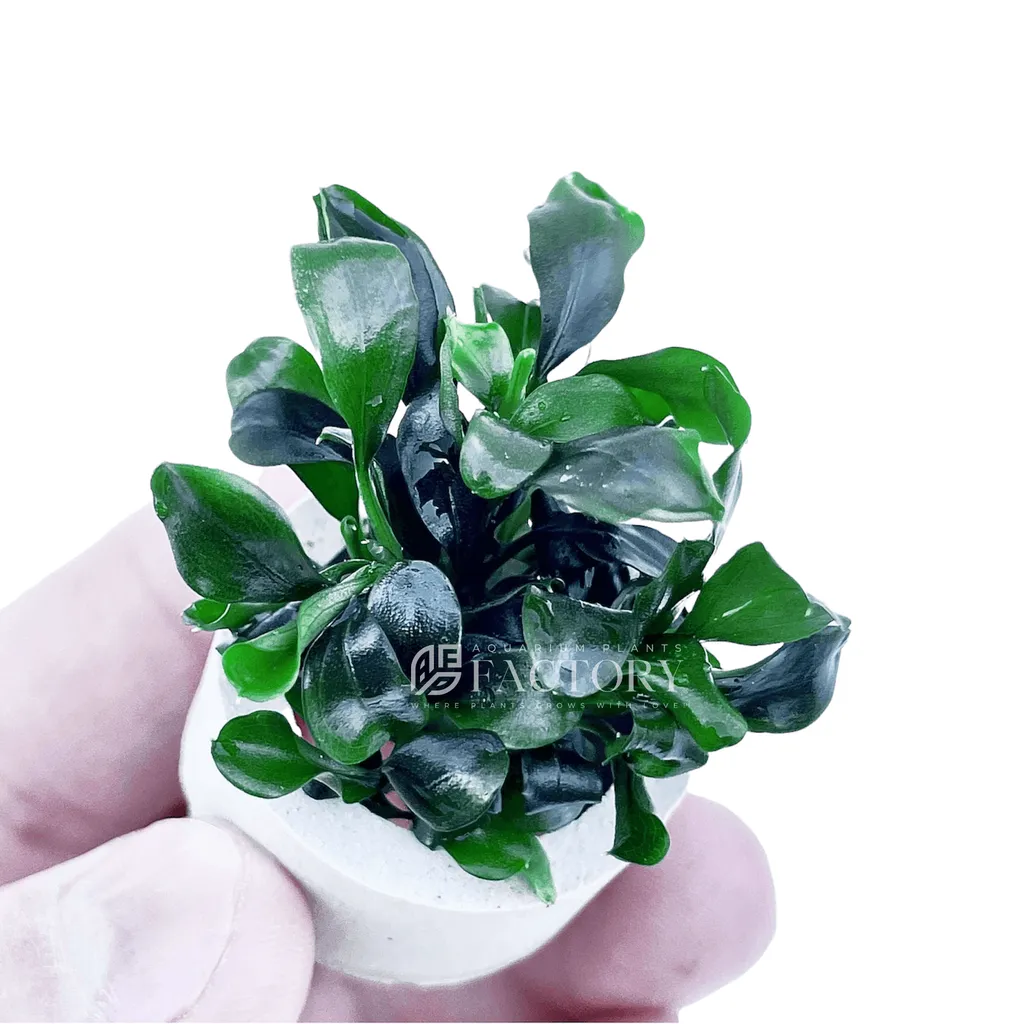
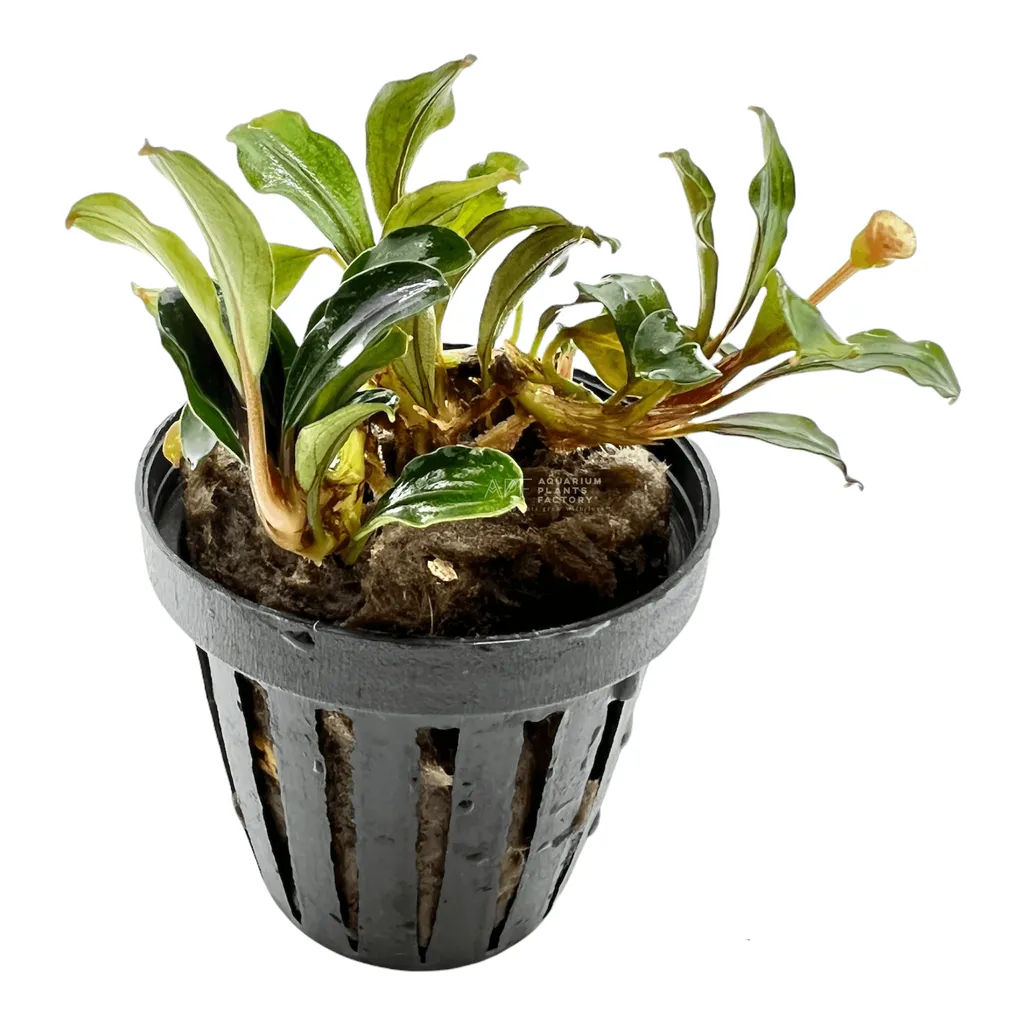
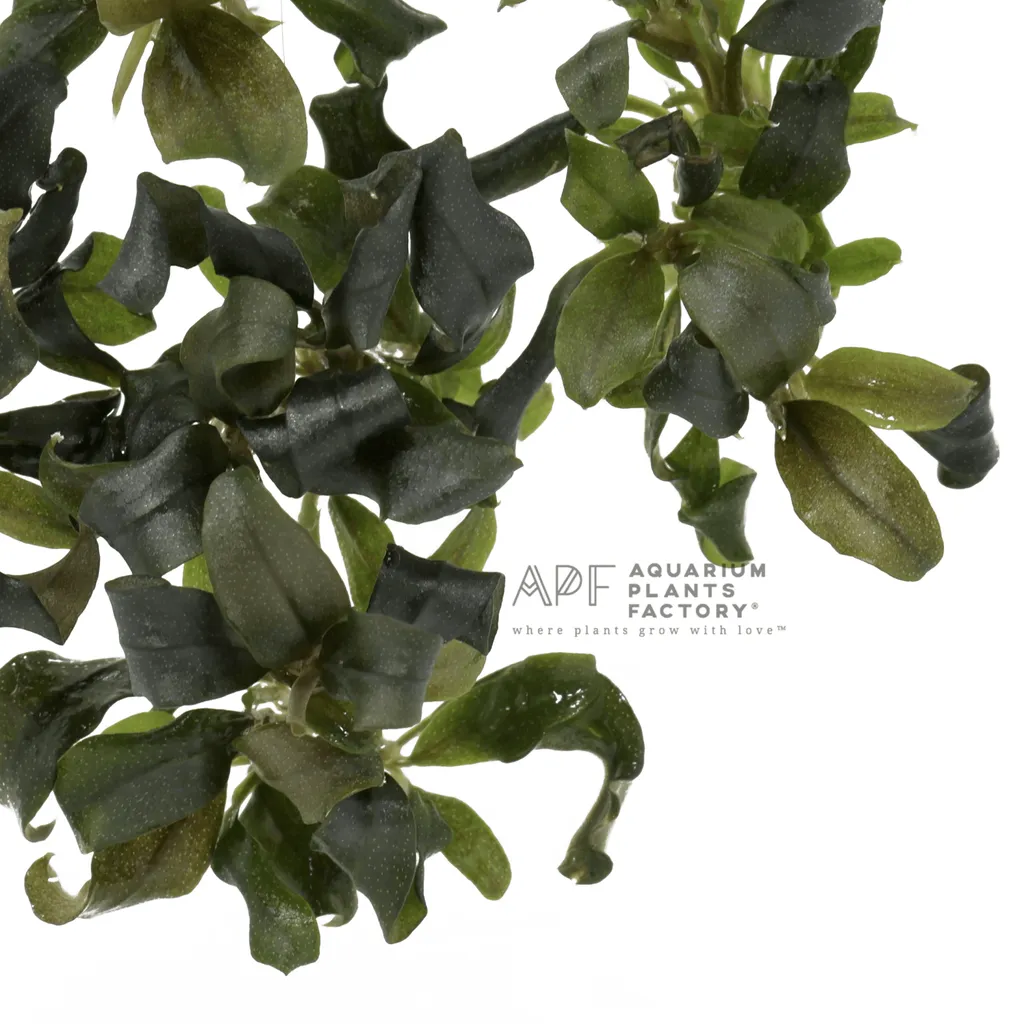
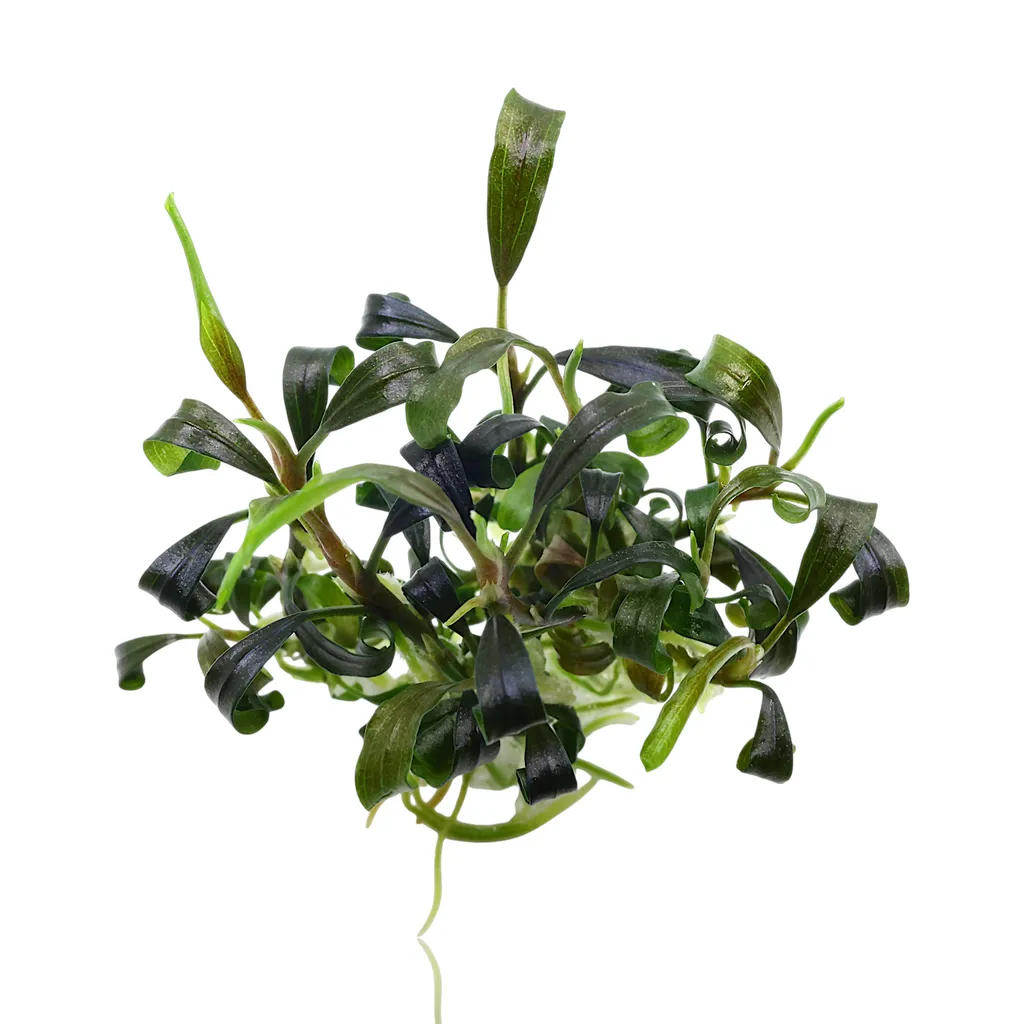
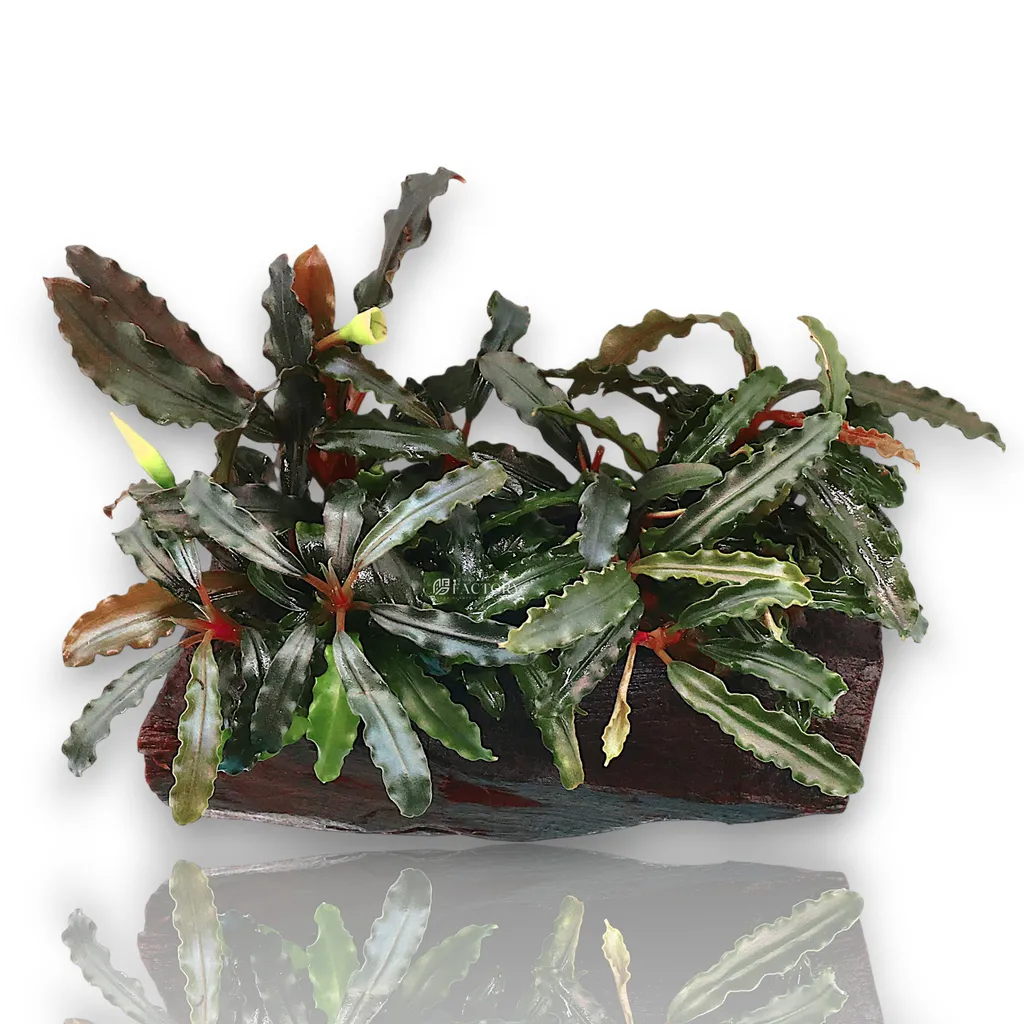
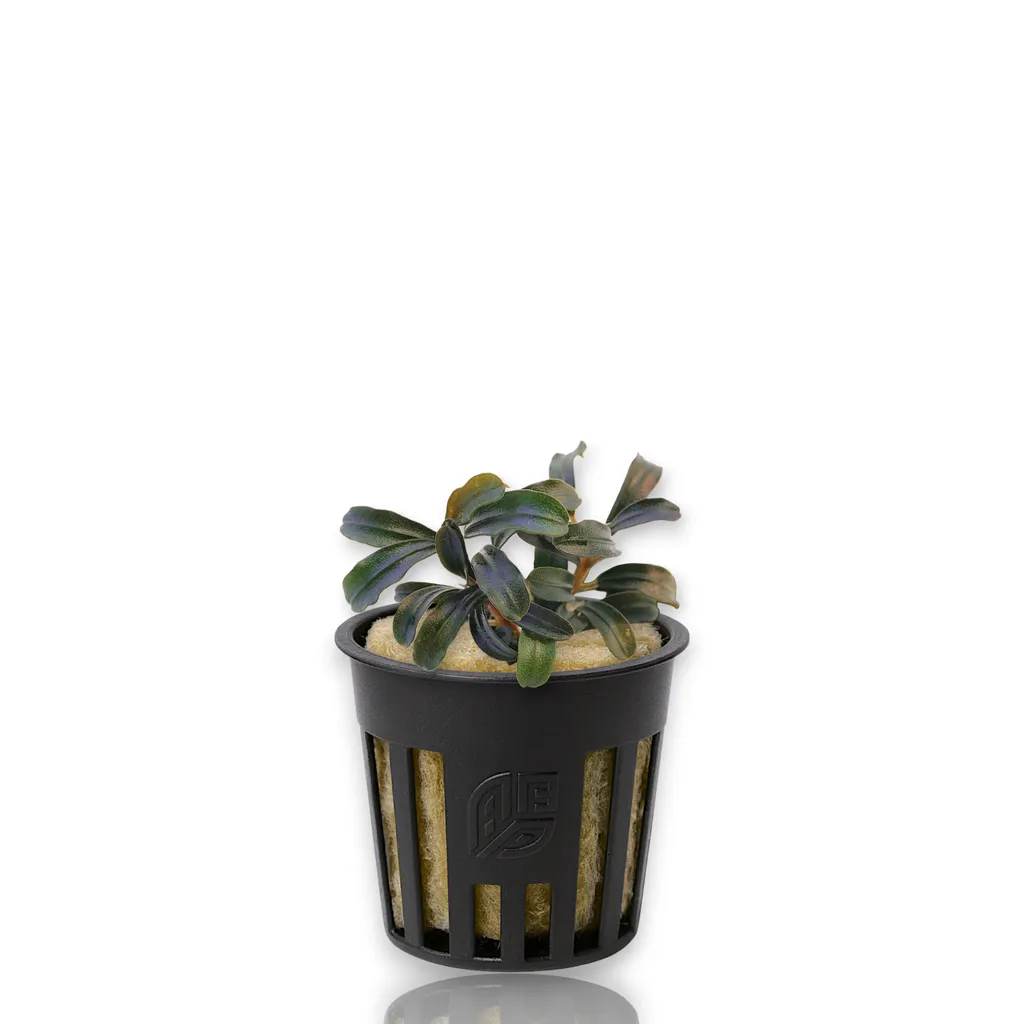
Rainbow Marble's marbling is unstable, and plants may arrive with dark leaves and little pattern. Each new leaf can carry more or less mottling than the last. Moderate light shows the most color, while bright light lets algae settle on the slow leaves. Tuck Rainbow Marble into stone crevices or the foreground, where the small curly leaves show up close. Glue or tie the rhizome in place and leave it uncovered. CO2 is optional, and steady temperature and pH limit melt after planting.
In the wild
Rainbow Marble has no published collection site, and its species is unknown. Wet Spot Tropical Fish sells it as Bucephalandra sp. nov., marking it as a new, undescribed species. The genus is native only to Borneo, where wild plants cling to boulders in rainforest streams. Shop stock of Rainbow Marble is farmed and sold potted or bare-root.
Good to know
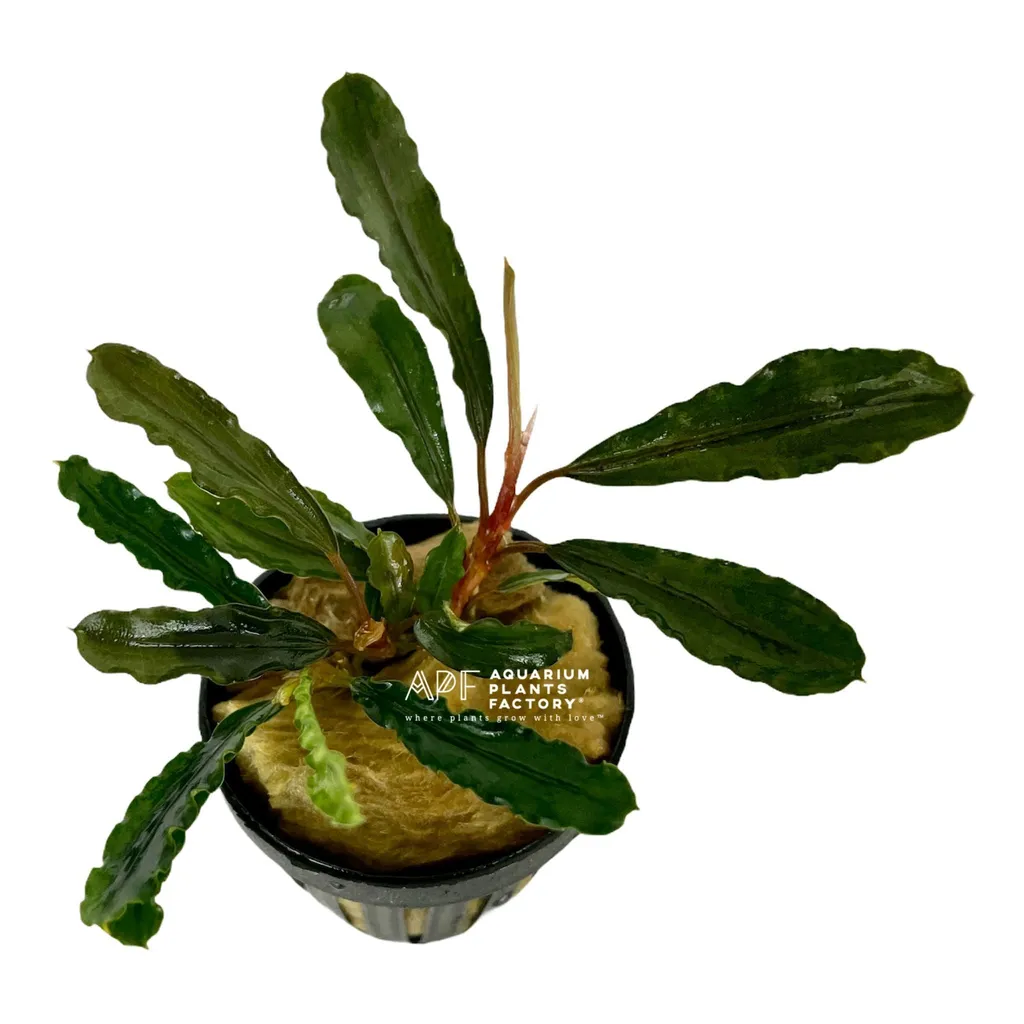
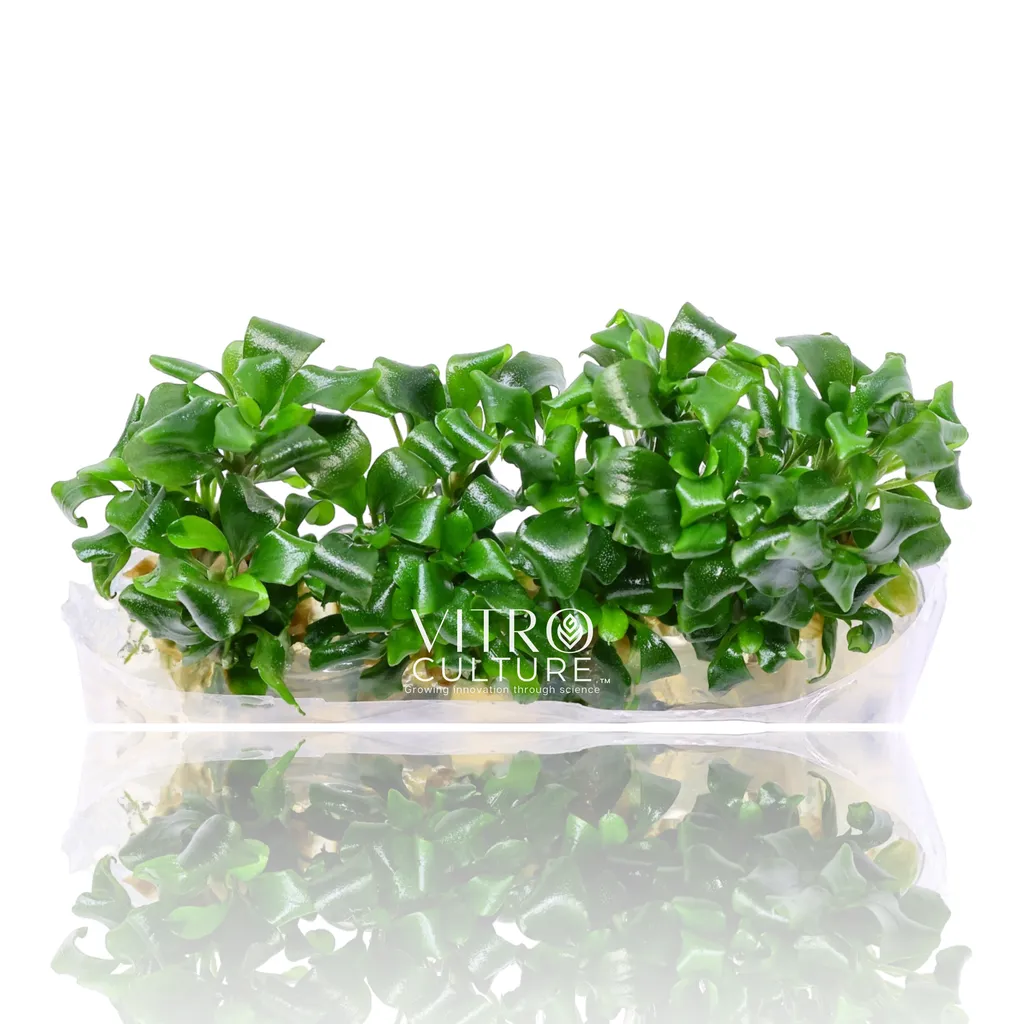
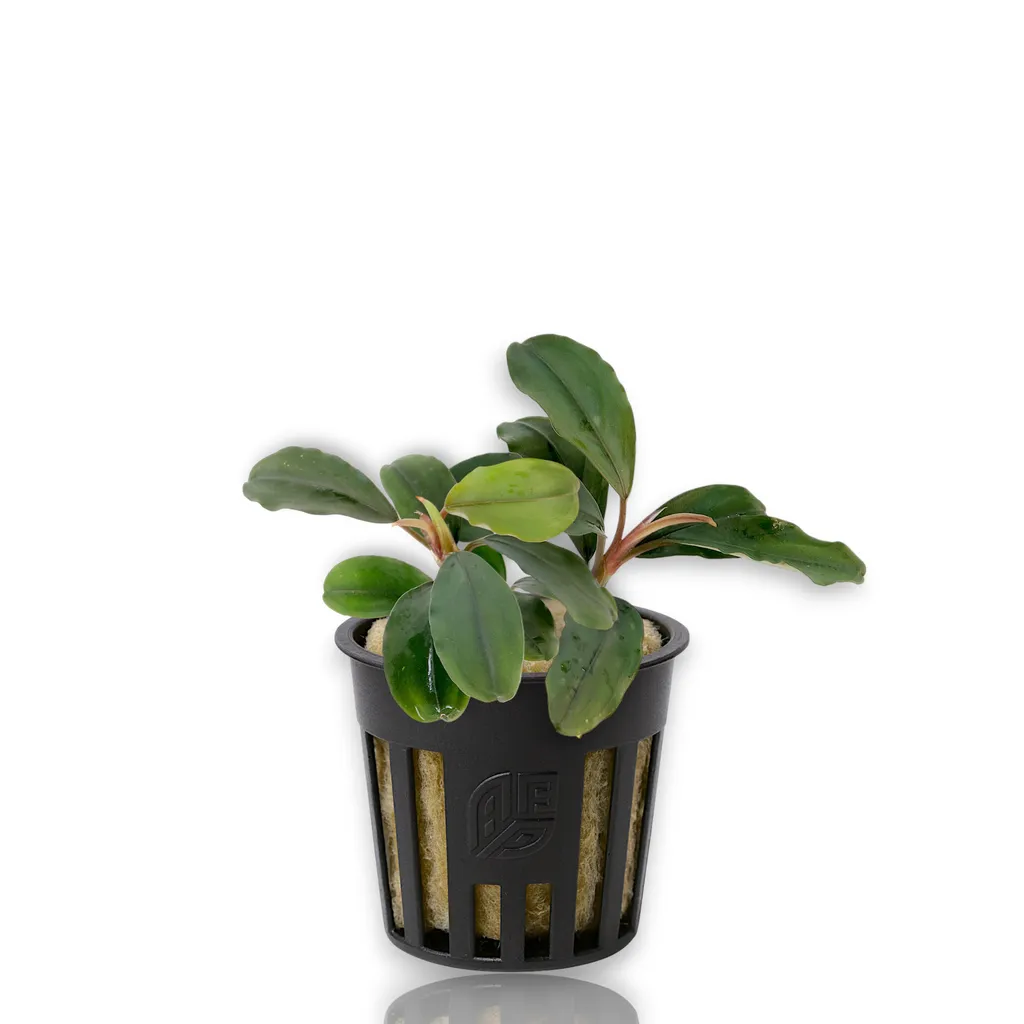
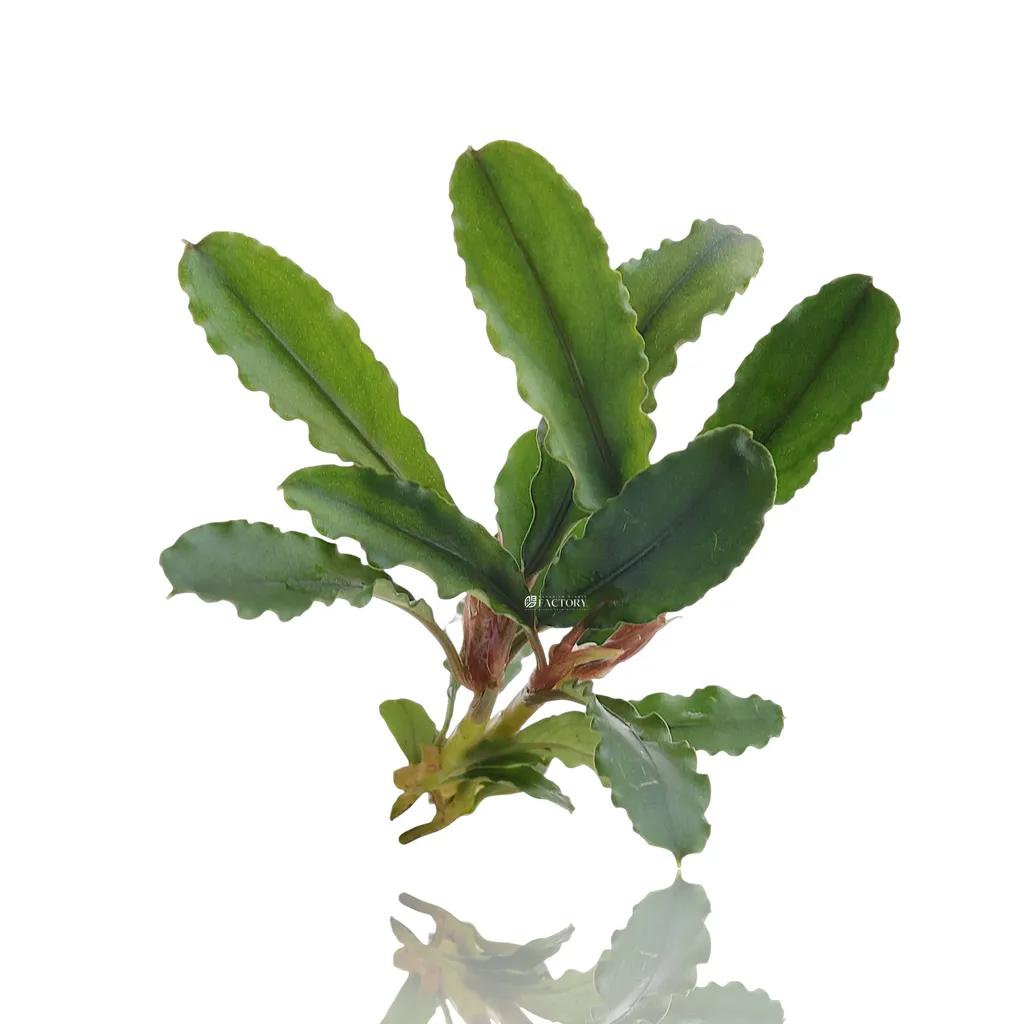
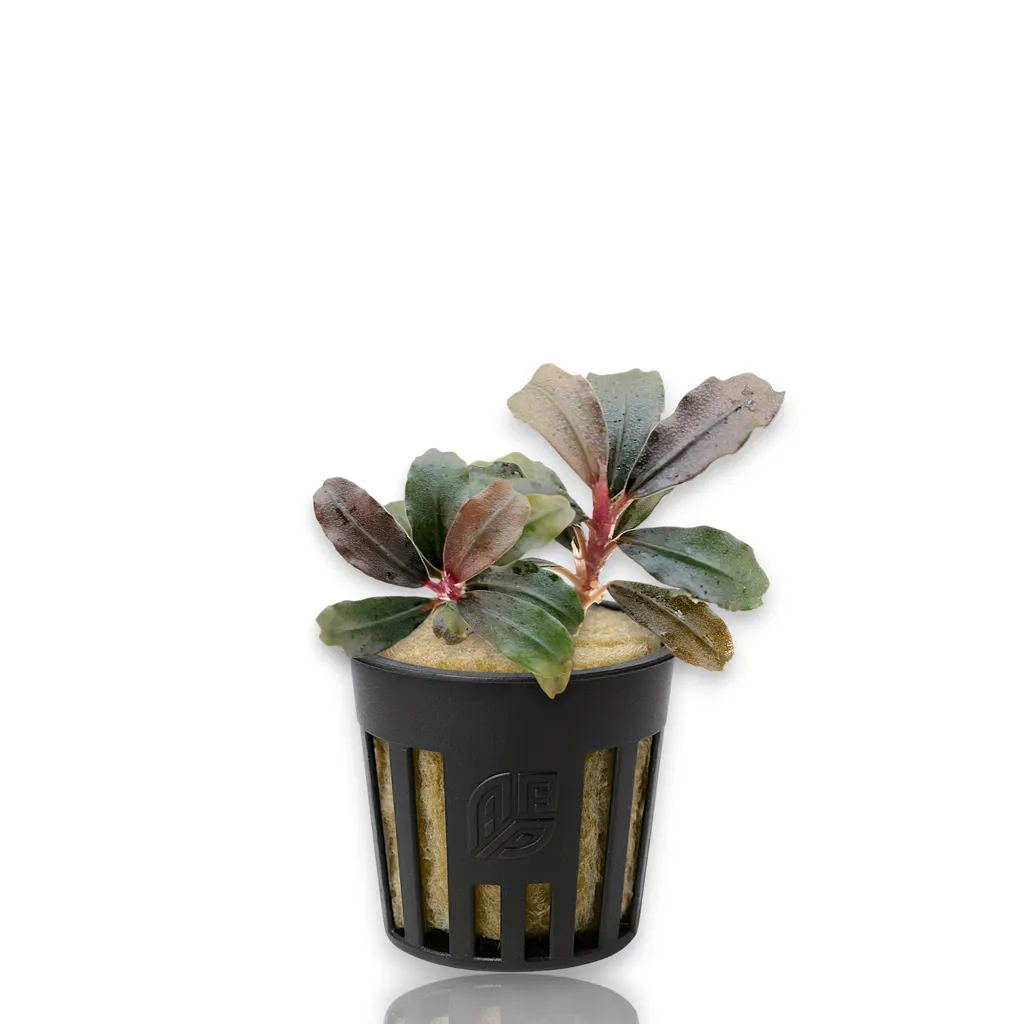
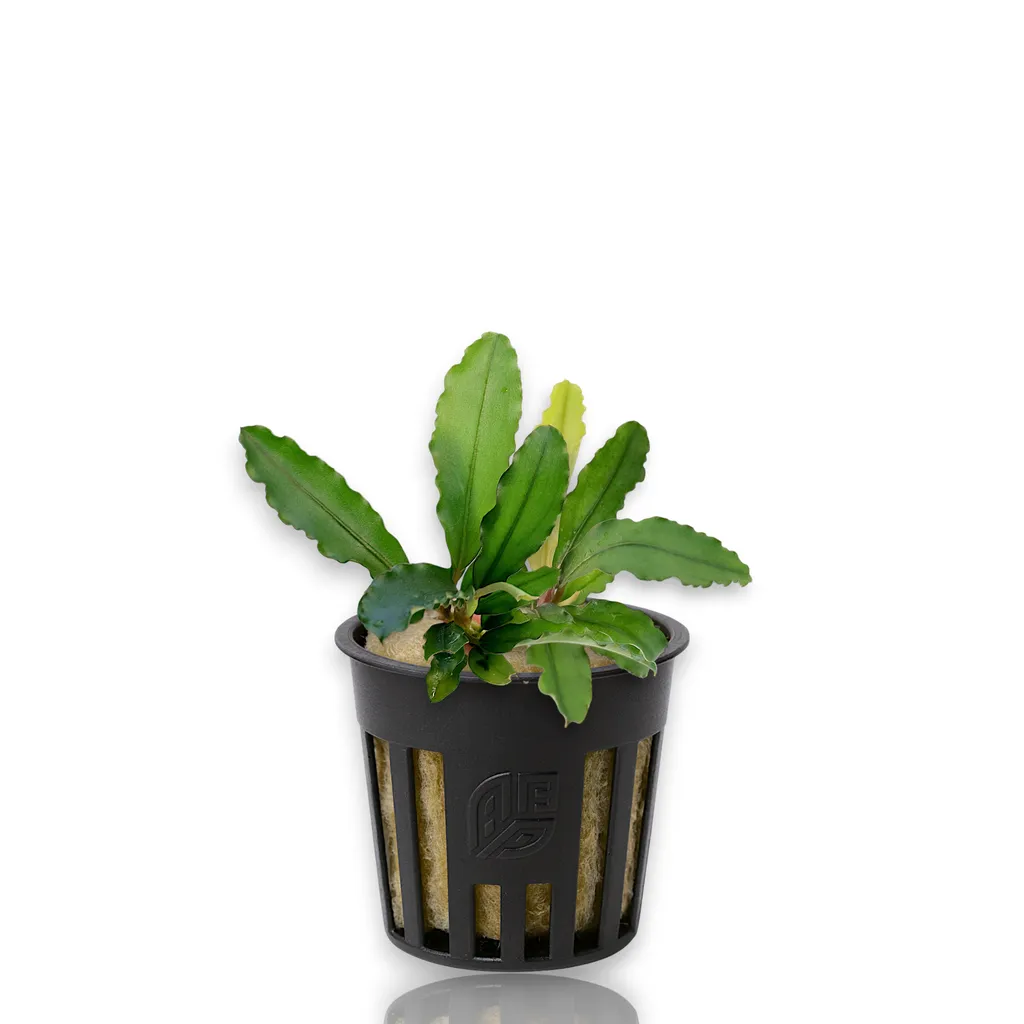
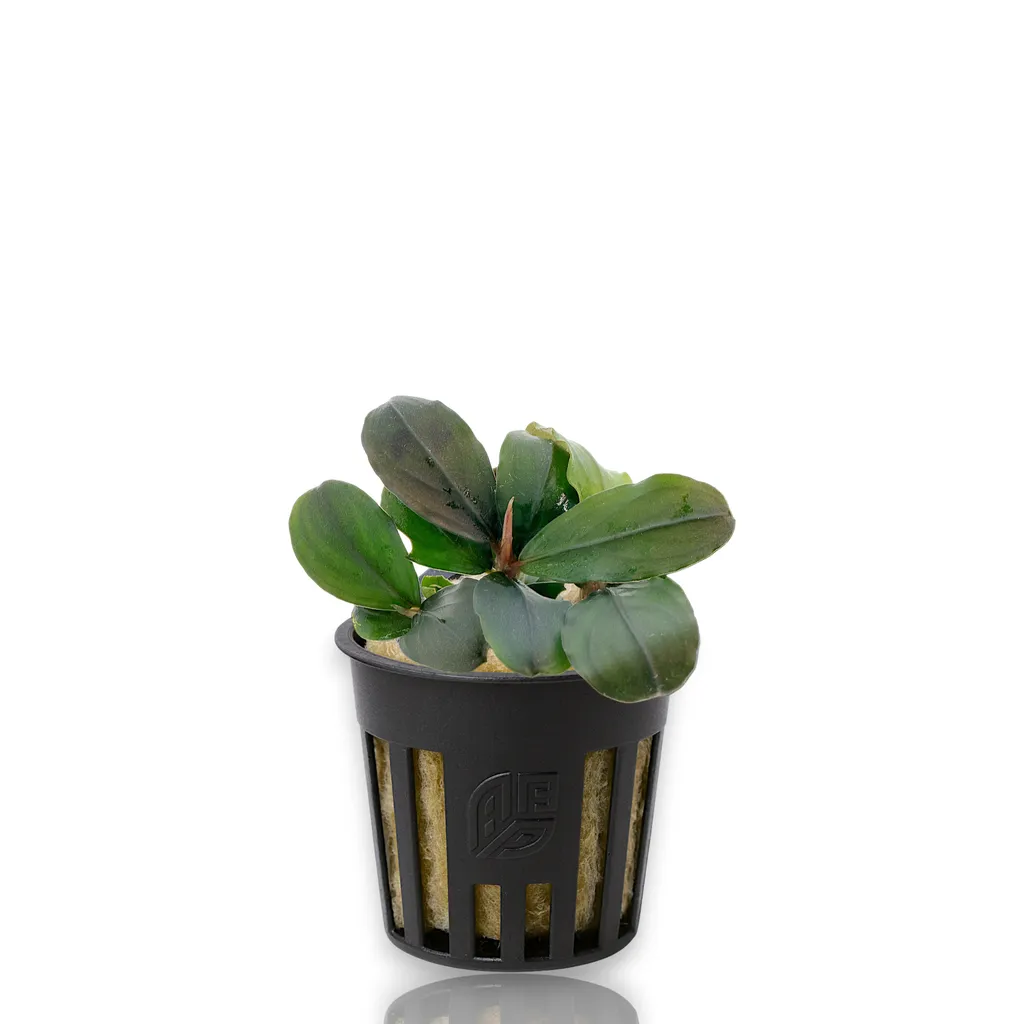
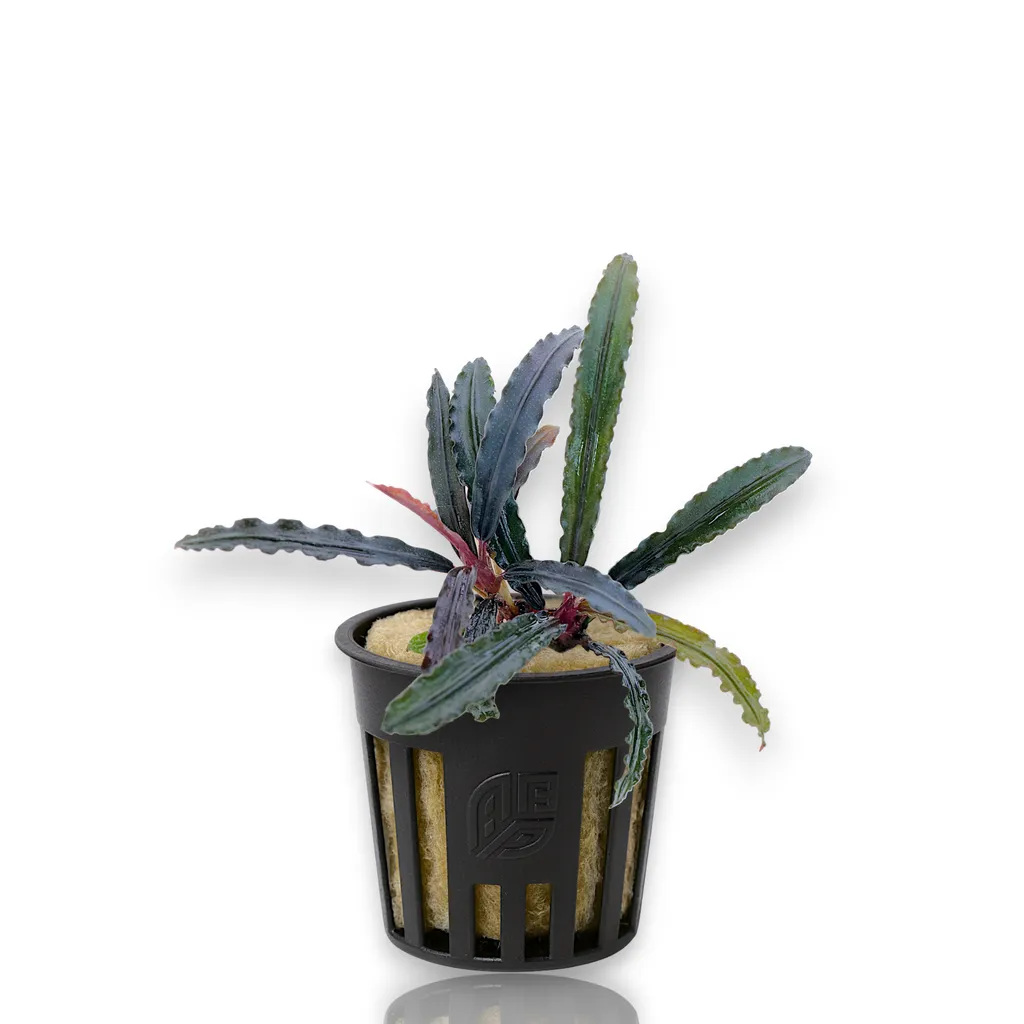
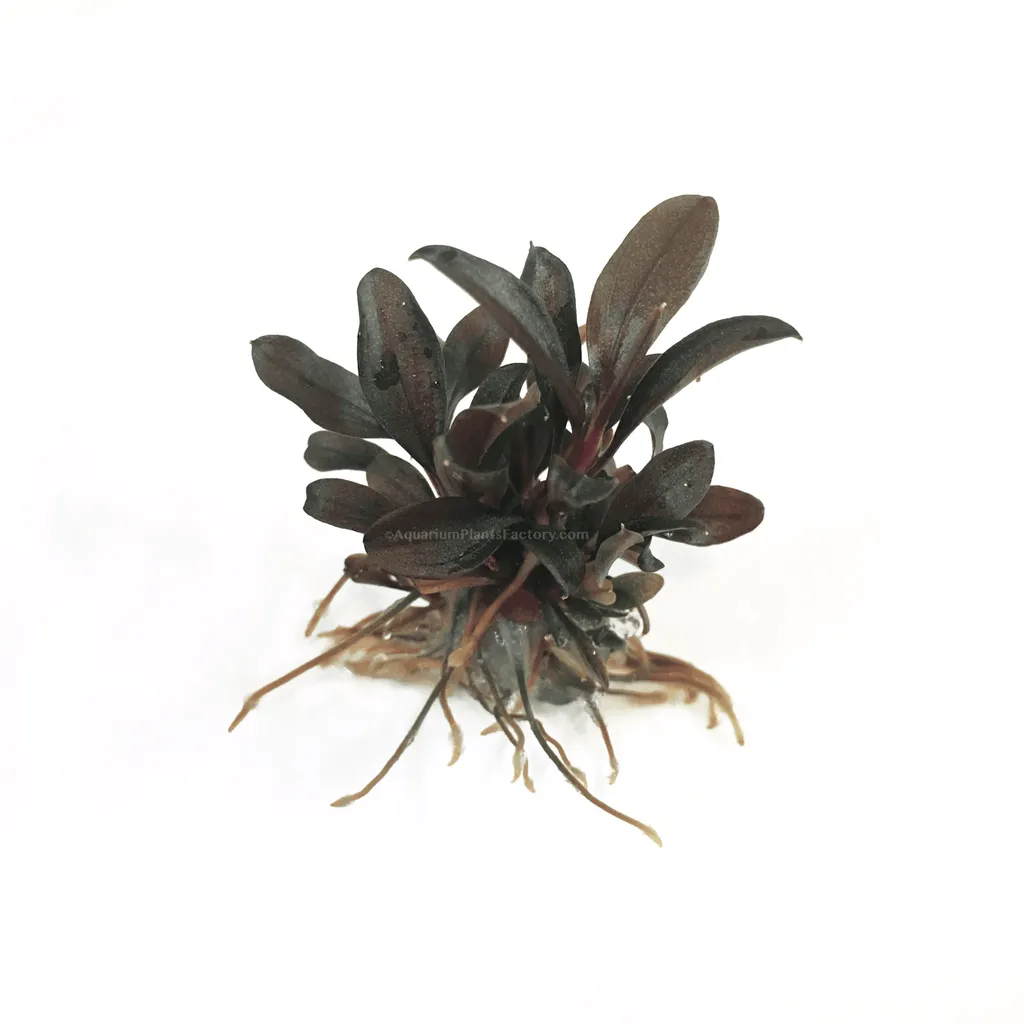
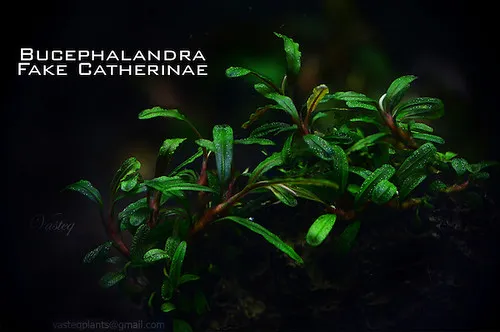
Rainbow Marble belongs to Bucephalandra, a Bornean genus of aroids in the family Araceae. Its small, elongated leaves have wavy, curling edges and run dark green to bronze. Patches of pink-red, purple or pale yellow mottle the surface, and the pattern changes from leaf to leaf. Variegated Marble is a separate plant, a Green Wavy sport with cream marbling on green leaves.
Did you know
Rainbow Marble is sold by APF on a color range, and the shop warns that no plant will match its photo exactly. Two rhizomes from one batch can carry different mottling.
 Low lightEpiphyte3.9 in (10 cm)
 Low lightEpiphyte2.4 in (6 cm)