Bucephalandra Red Blade suits the midground of a nano tank or foreground detail in a bigger one. It is an easy, slow-growing Buce.
Did you know
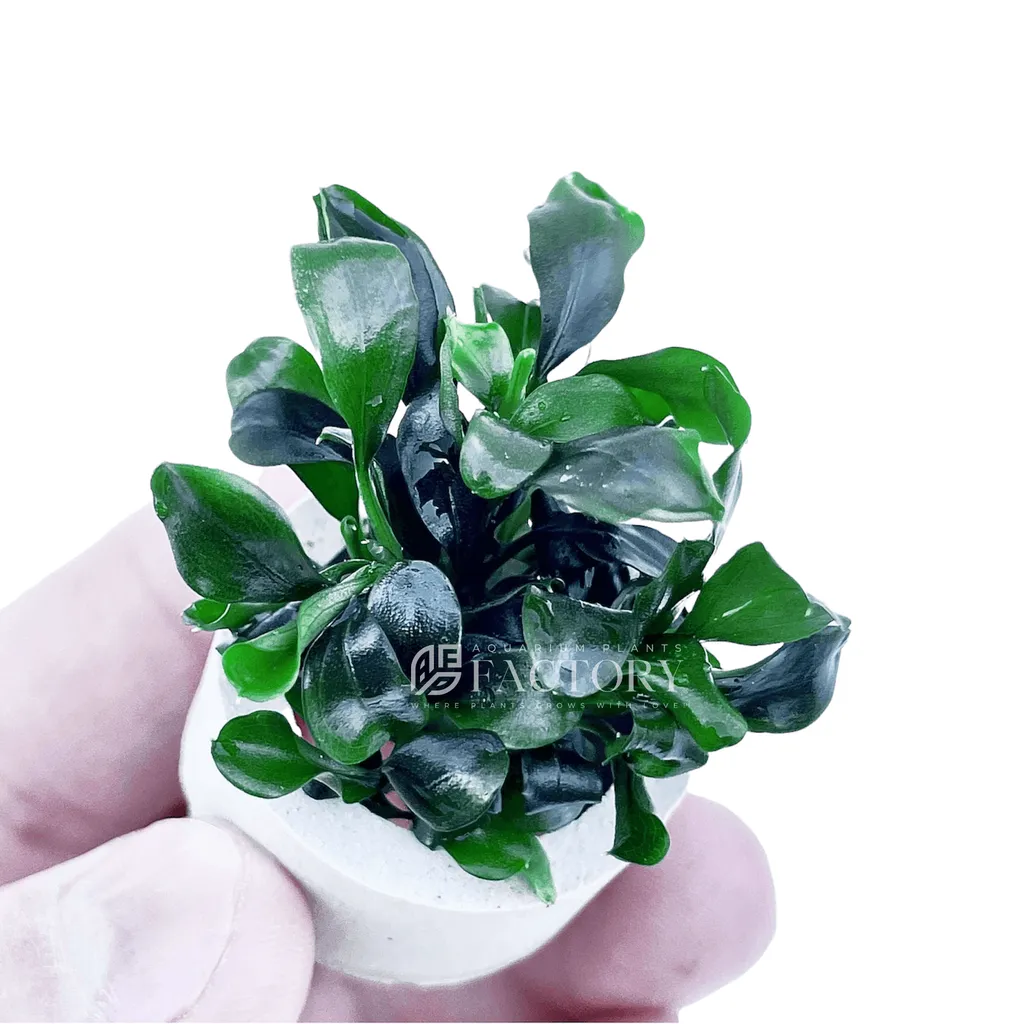
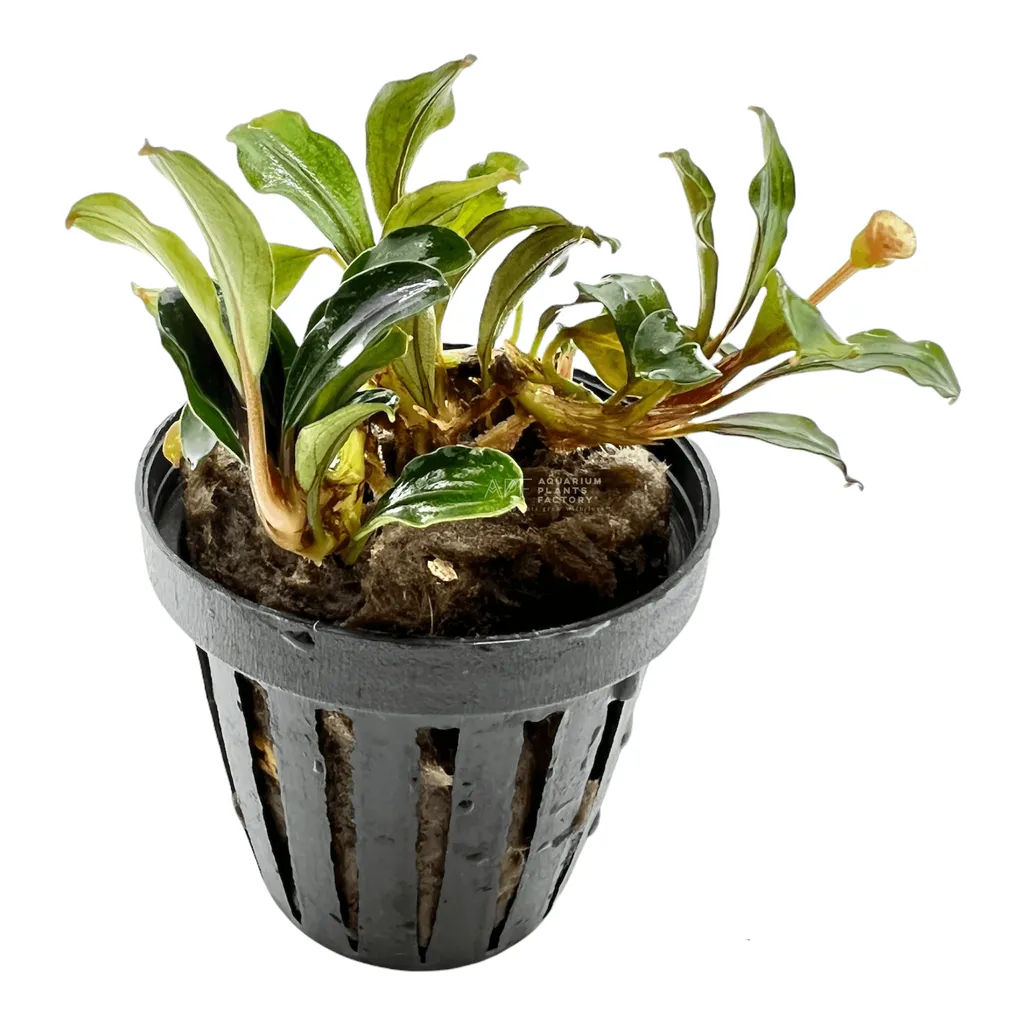
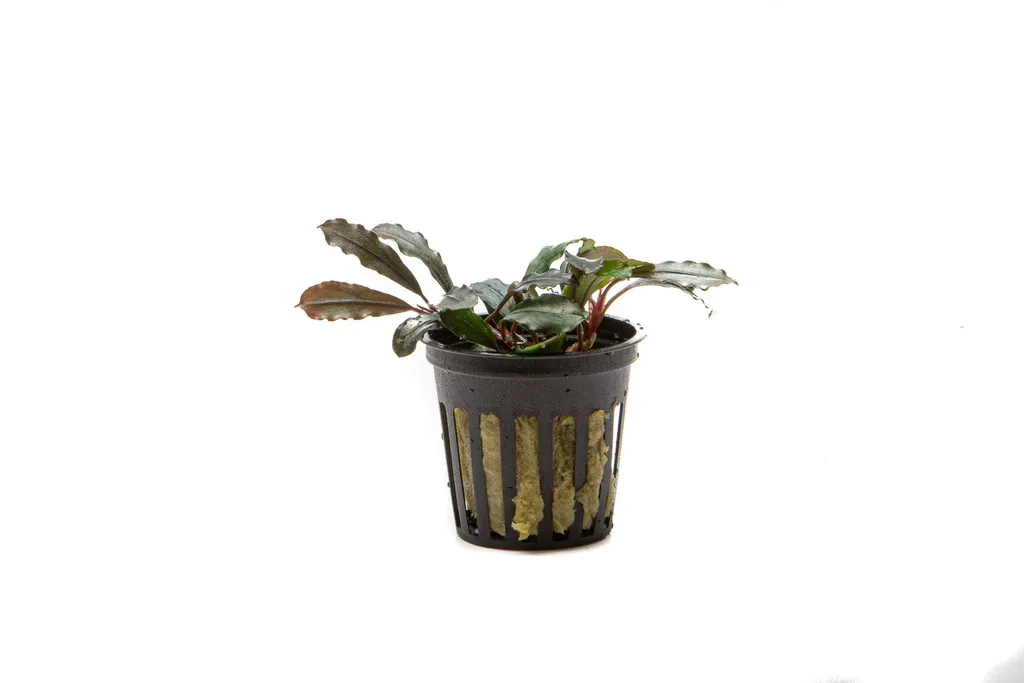
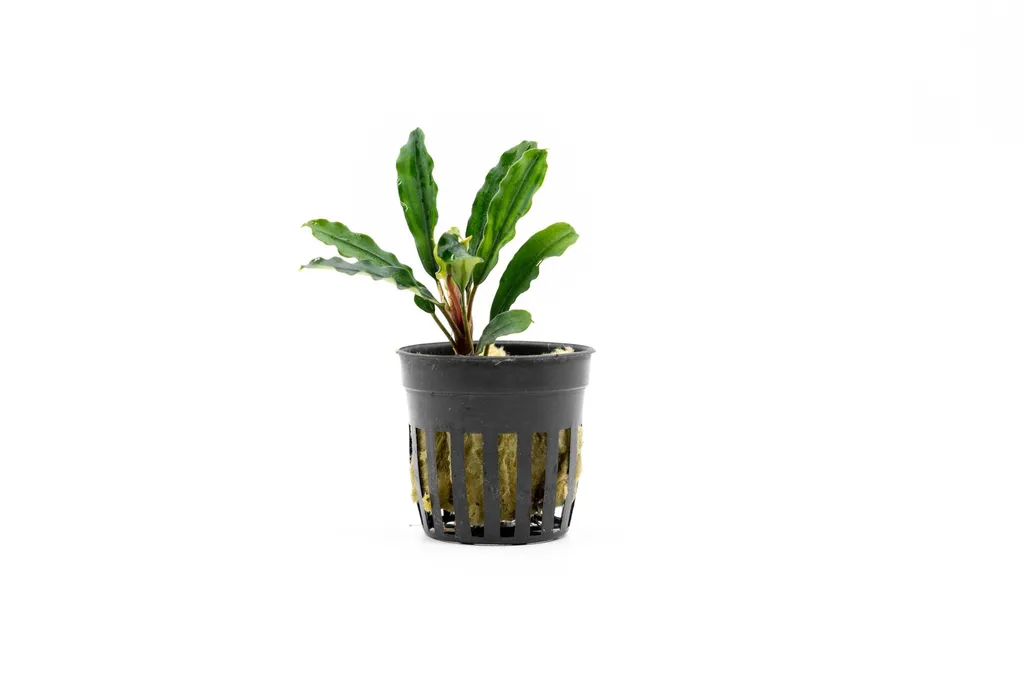
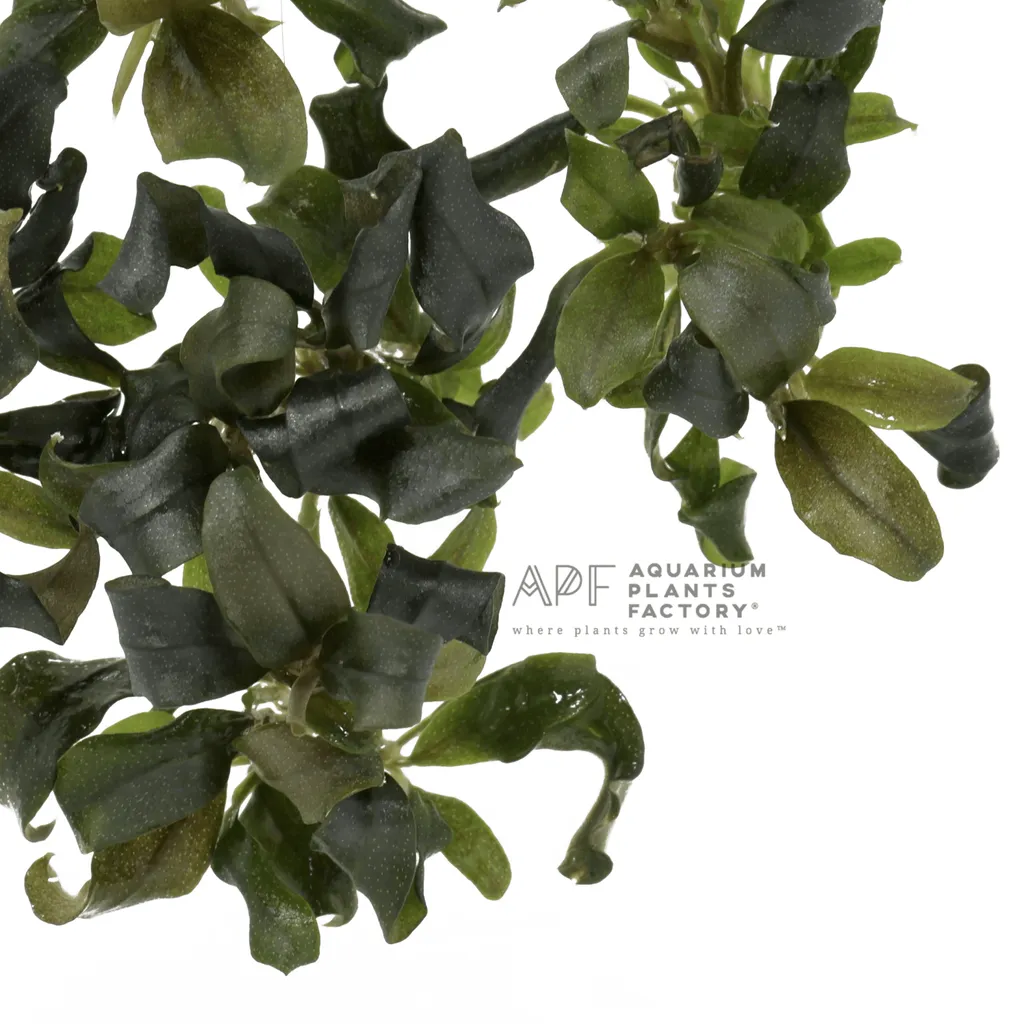
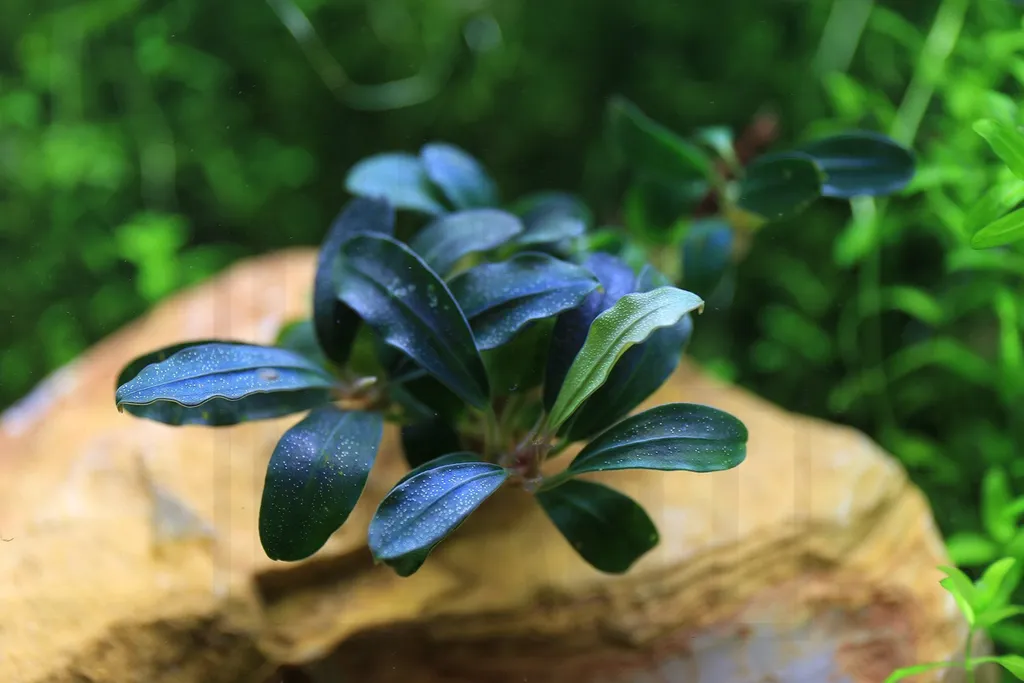
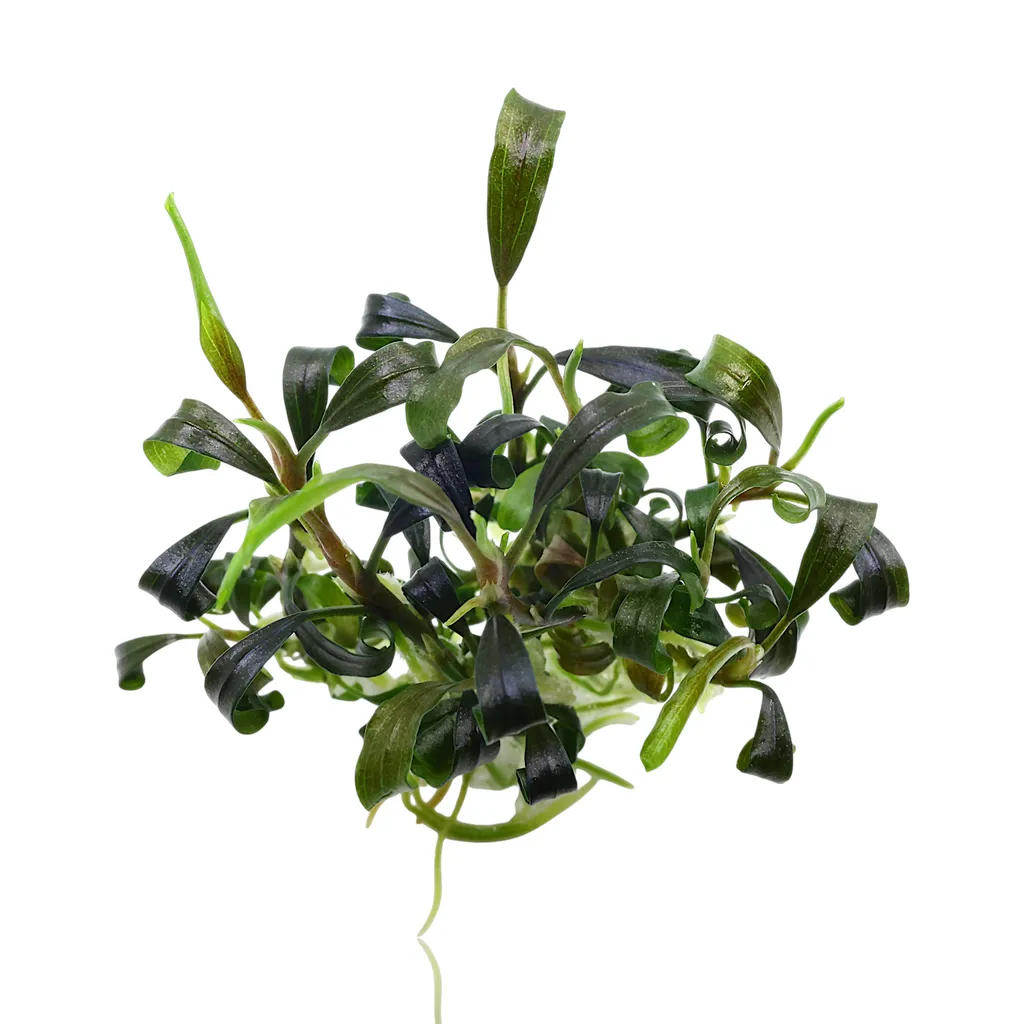
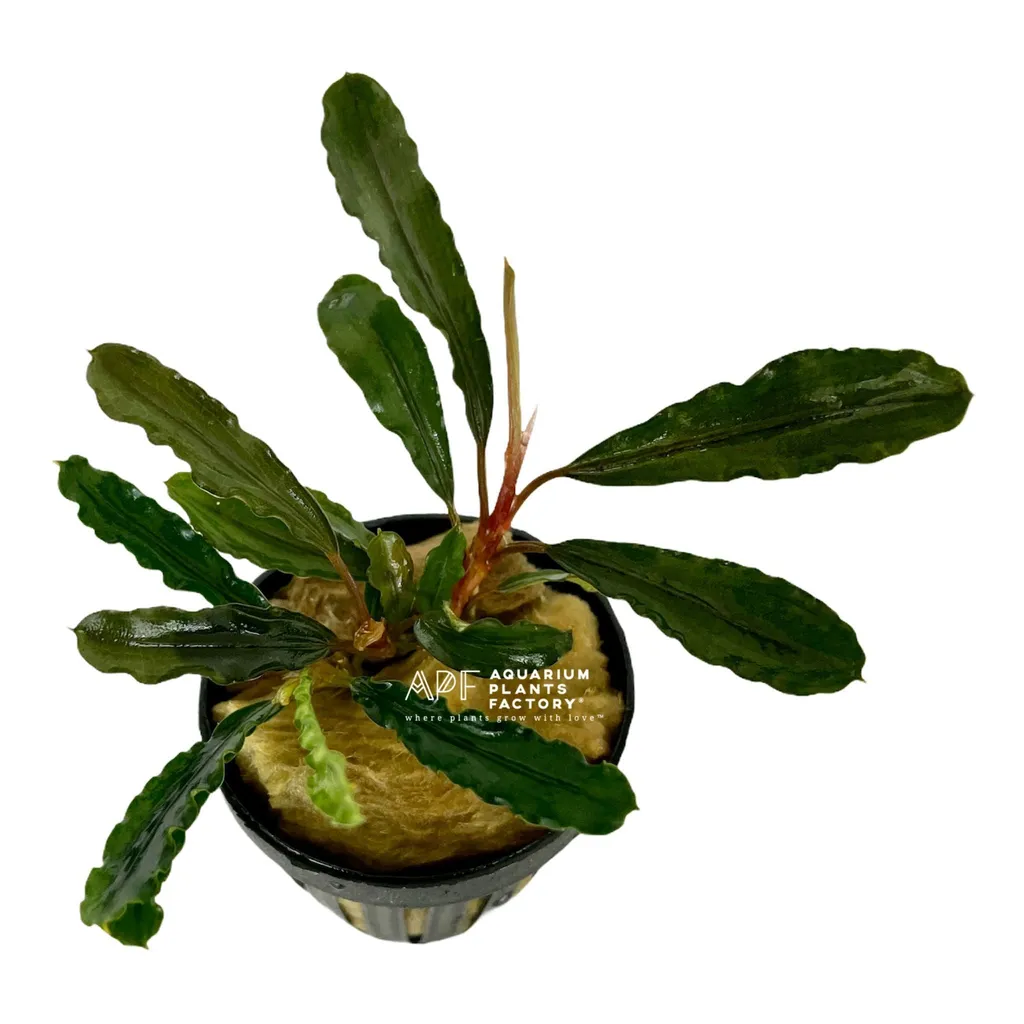
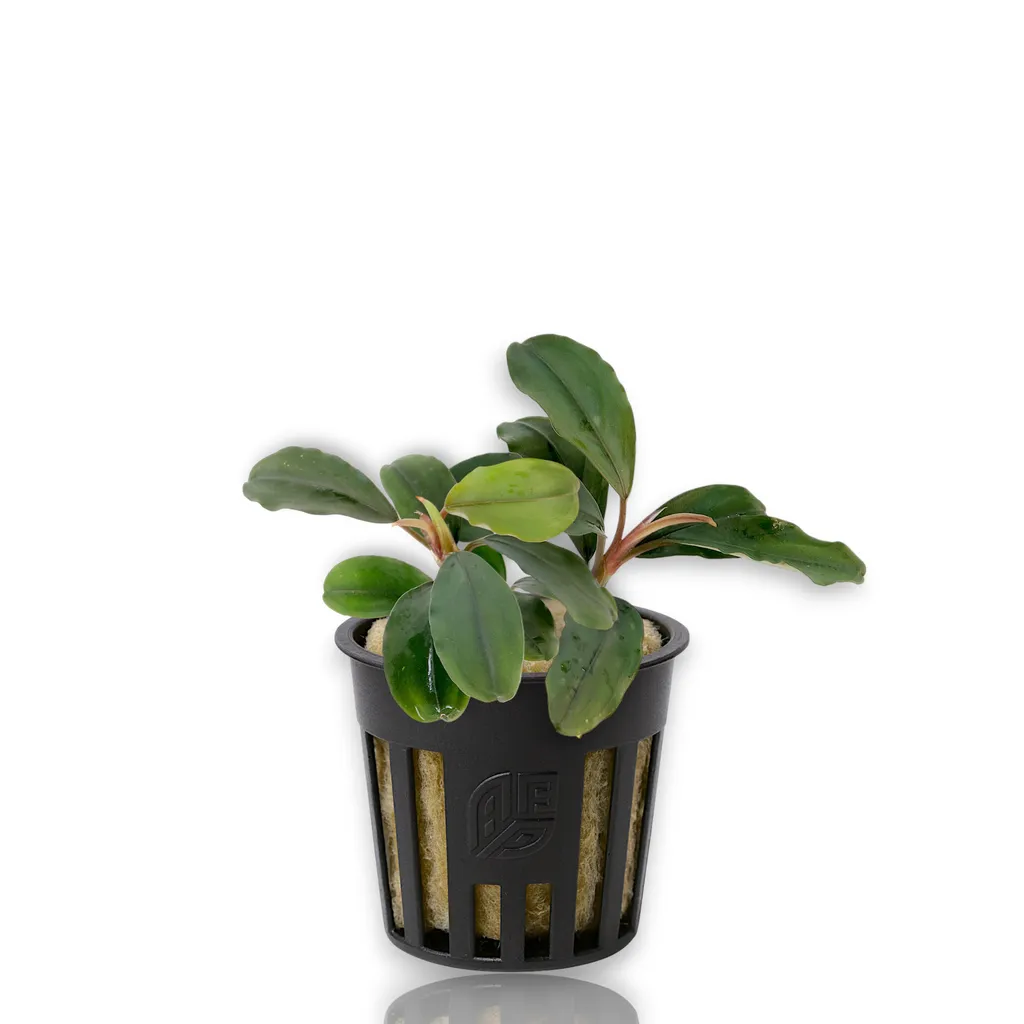
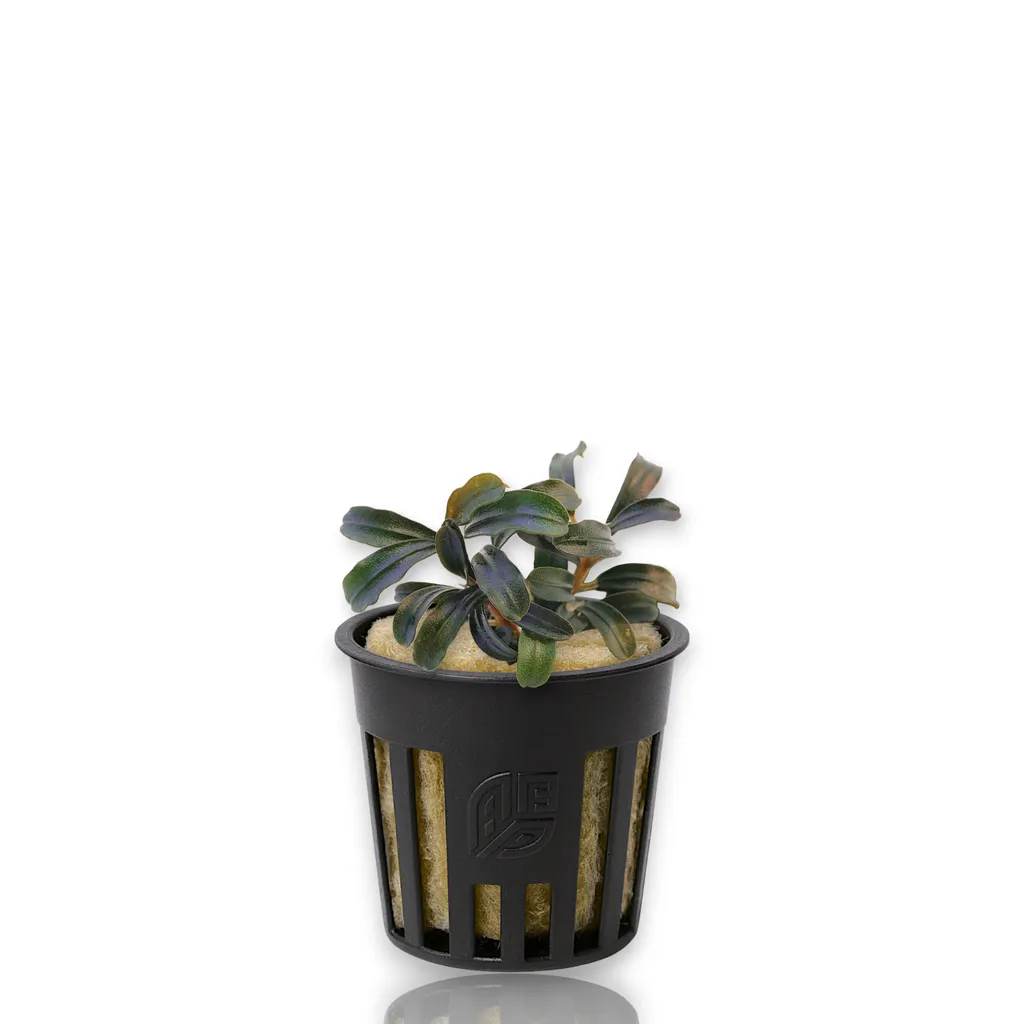
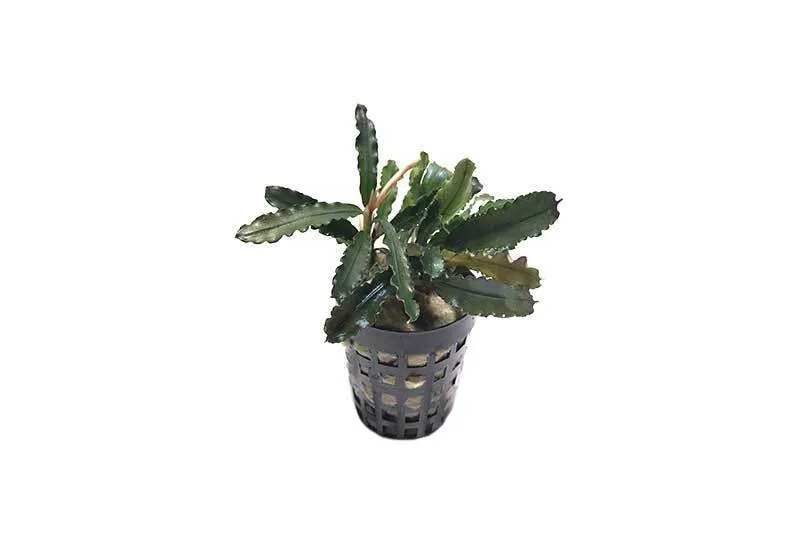
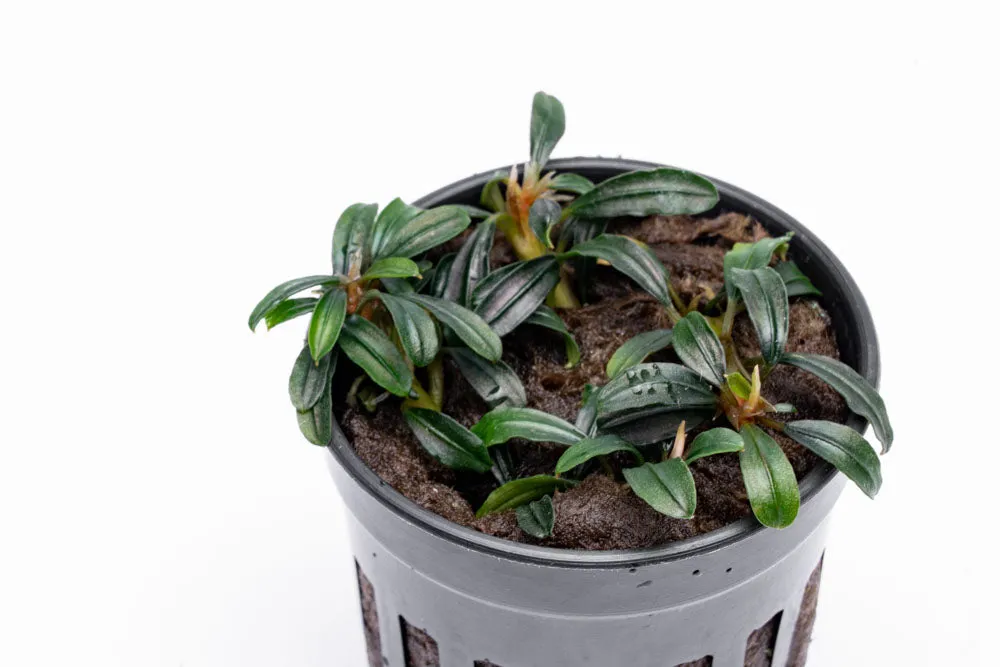
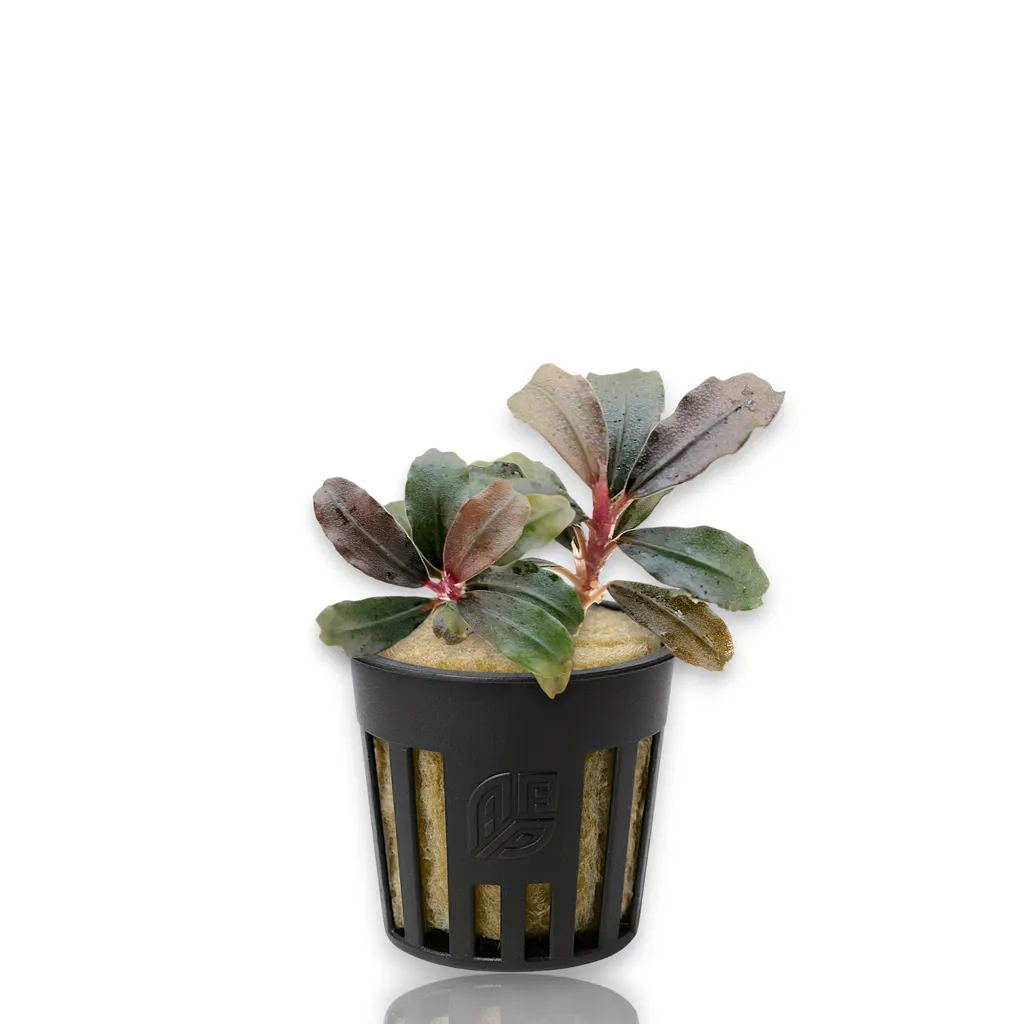
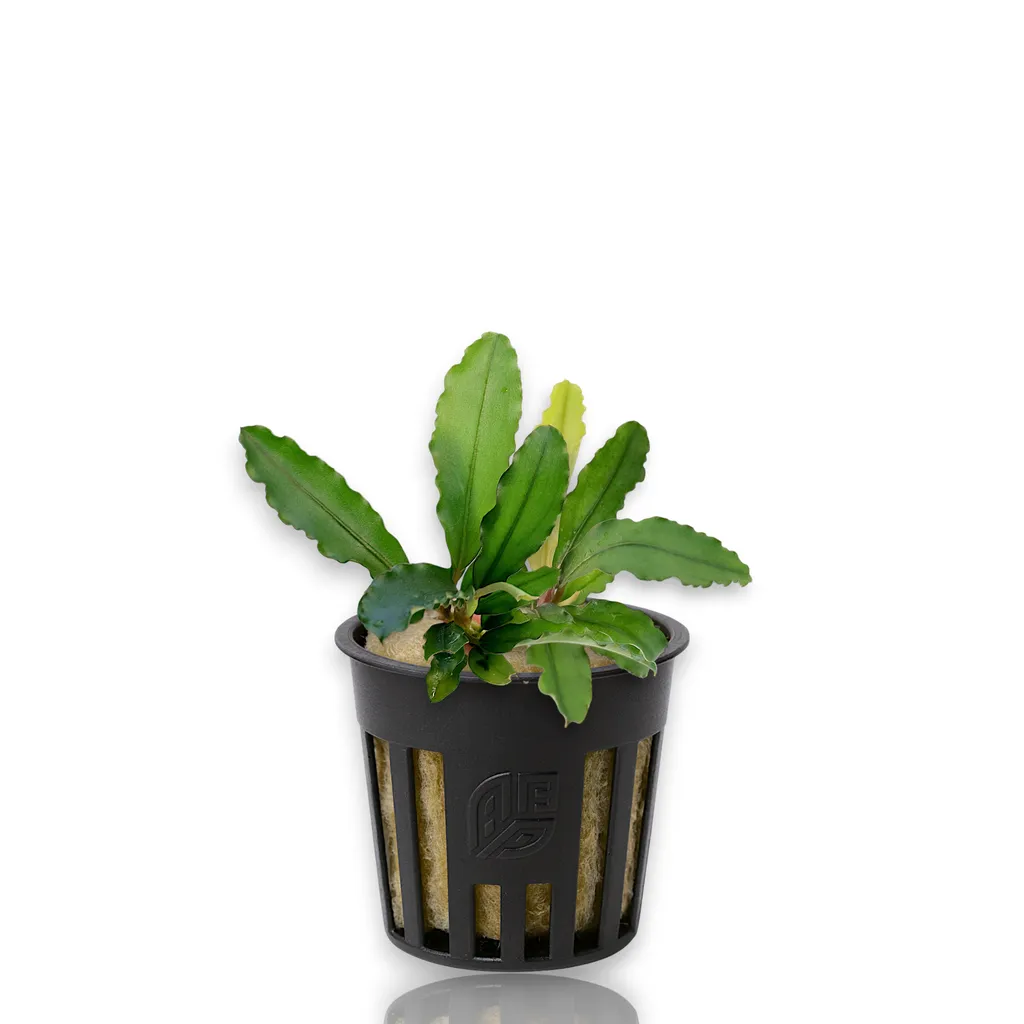
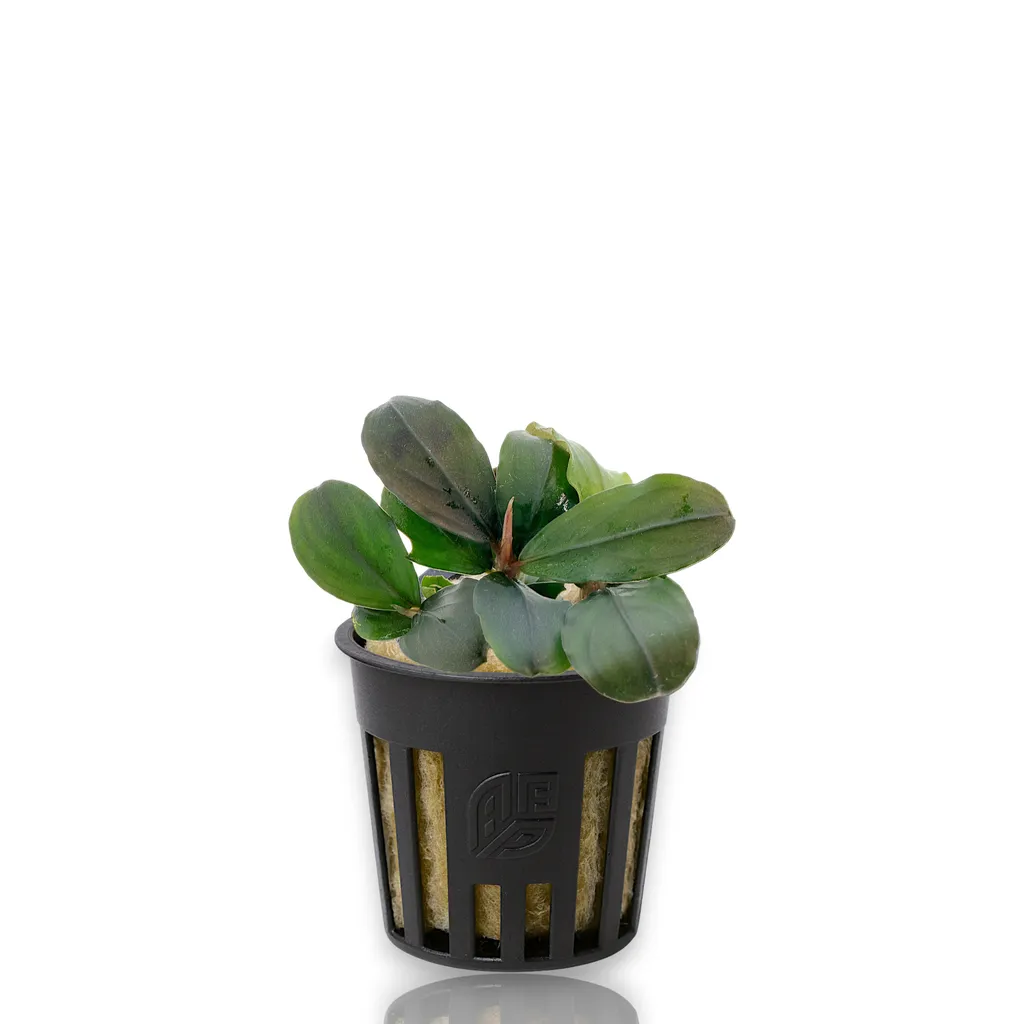
Red Blade usually arrives plain green, because shop stock is grown emersed. The namesake red develops over weeks as new submersed leaves replace the old ones.
Caring for Bucephalandra Red Blade
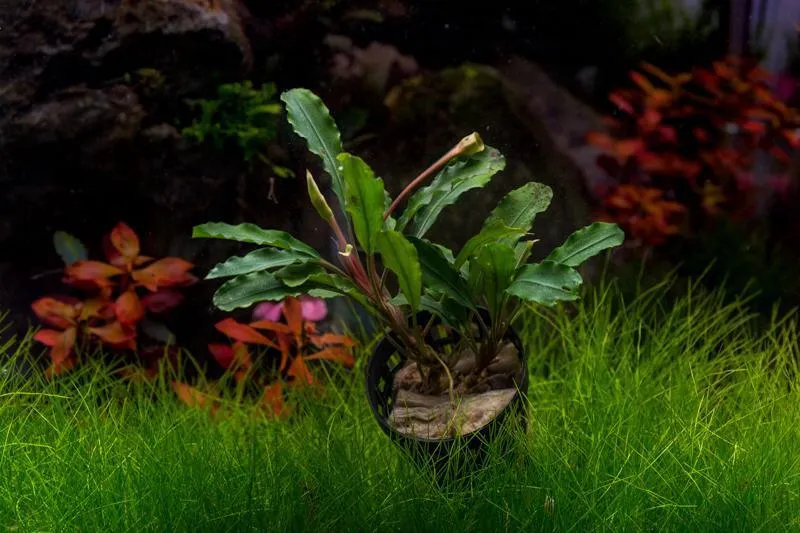
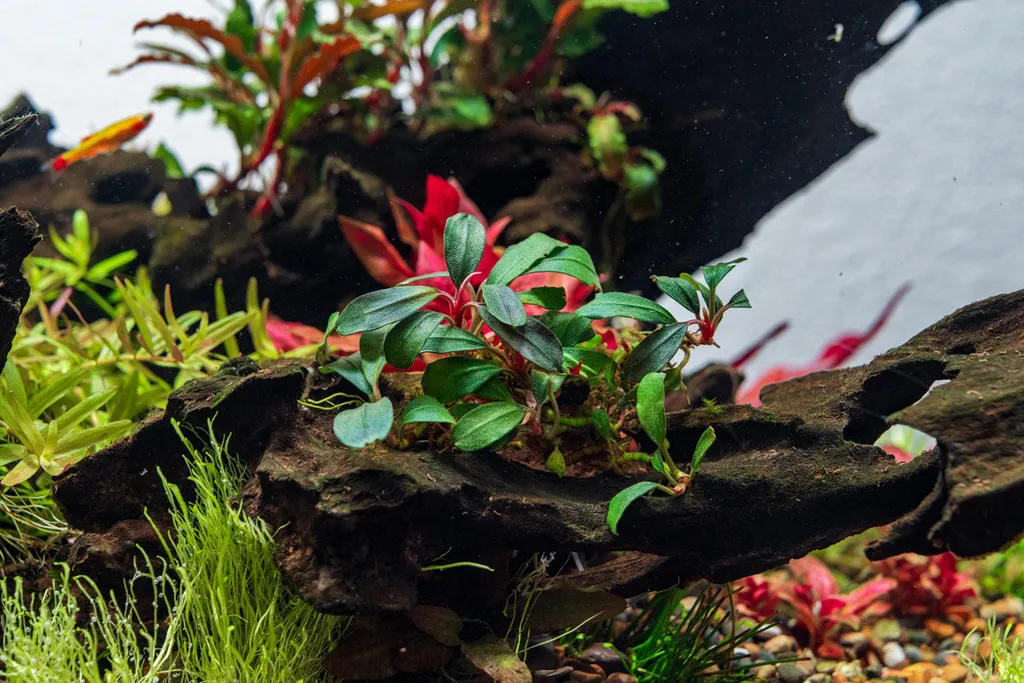
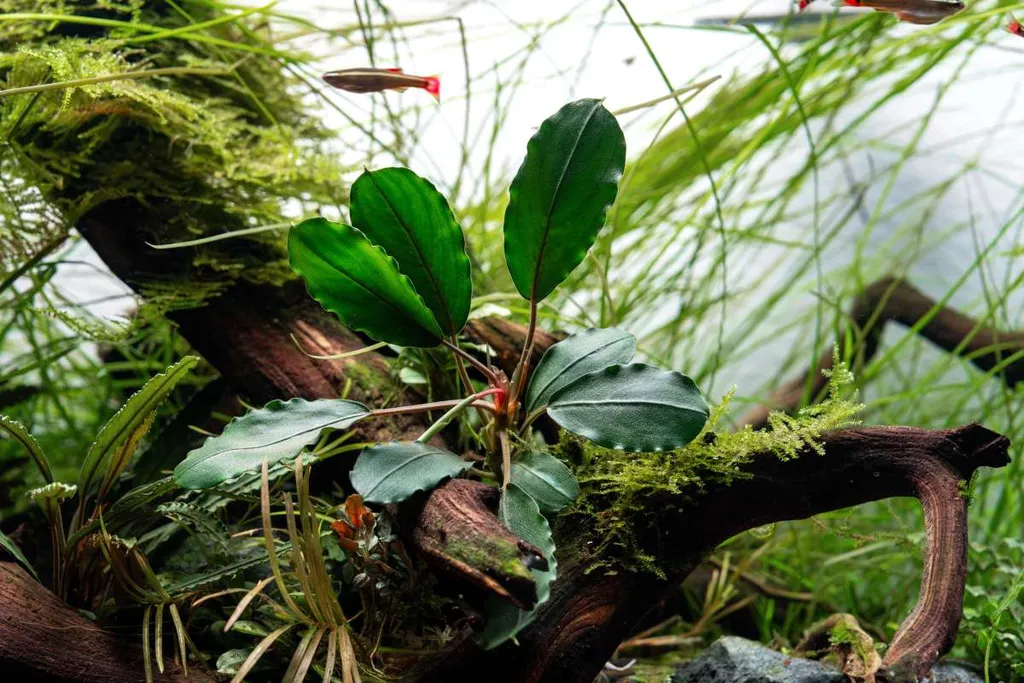
Attach the rhizome to rock or driftwood with glue or thread, and never bury it. A covered rhizome rots.
Bucephalandra Red Blade needs only low to medium light, and restrained light keeps algae from settling on its slow leaves. CO2 and liquid fertilizer are optional, but they speed up growth and bring the red tint in sooner. Liquid dosing suits it better than root tabs, since it feeds from the water column as well as its roots.
Growth is slow, and it rarely needs trimming. Divide the rhizome to propagate. Expect some melt if parameters swing after import, and keep the water at 72 to 82°F (22 to 28°C).
Good to know
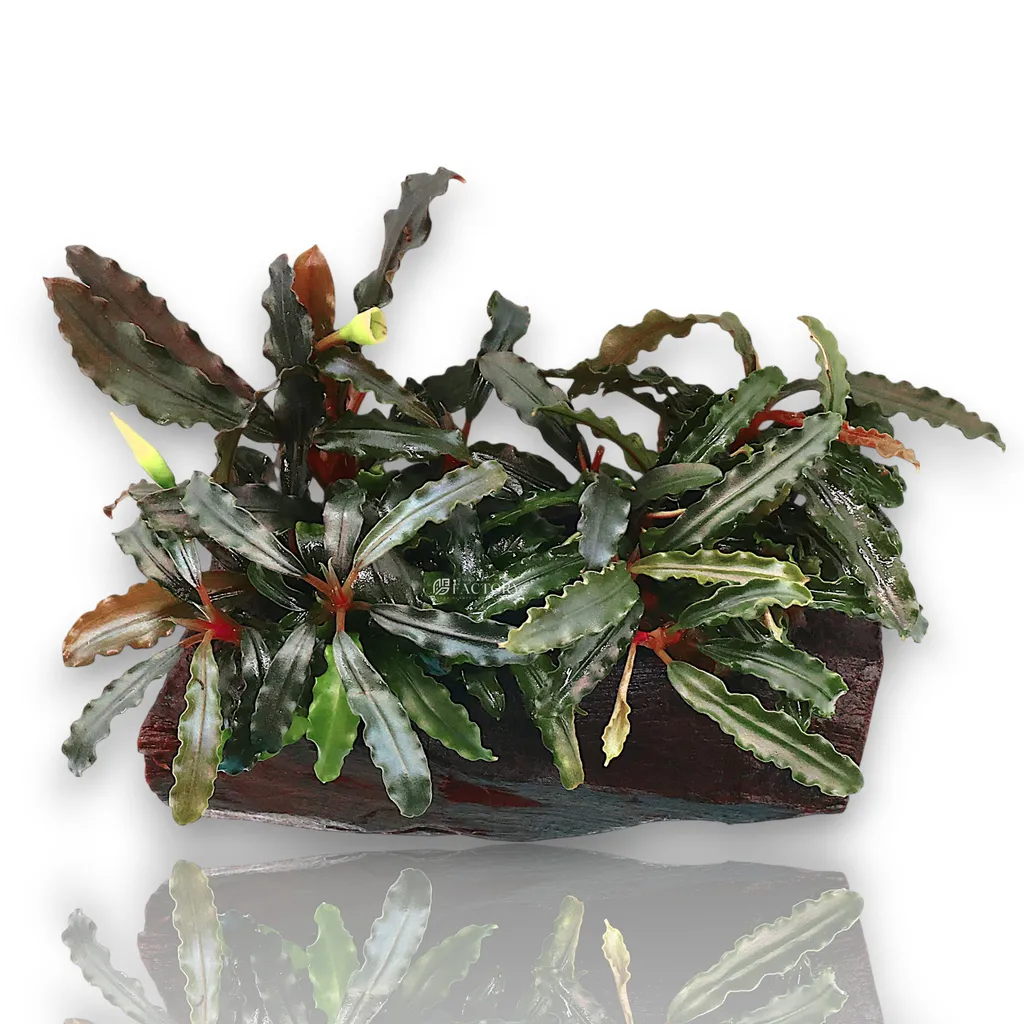
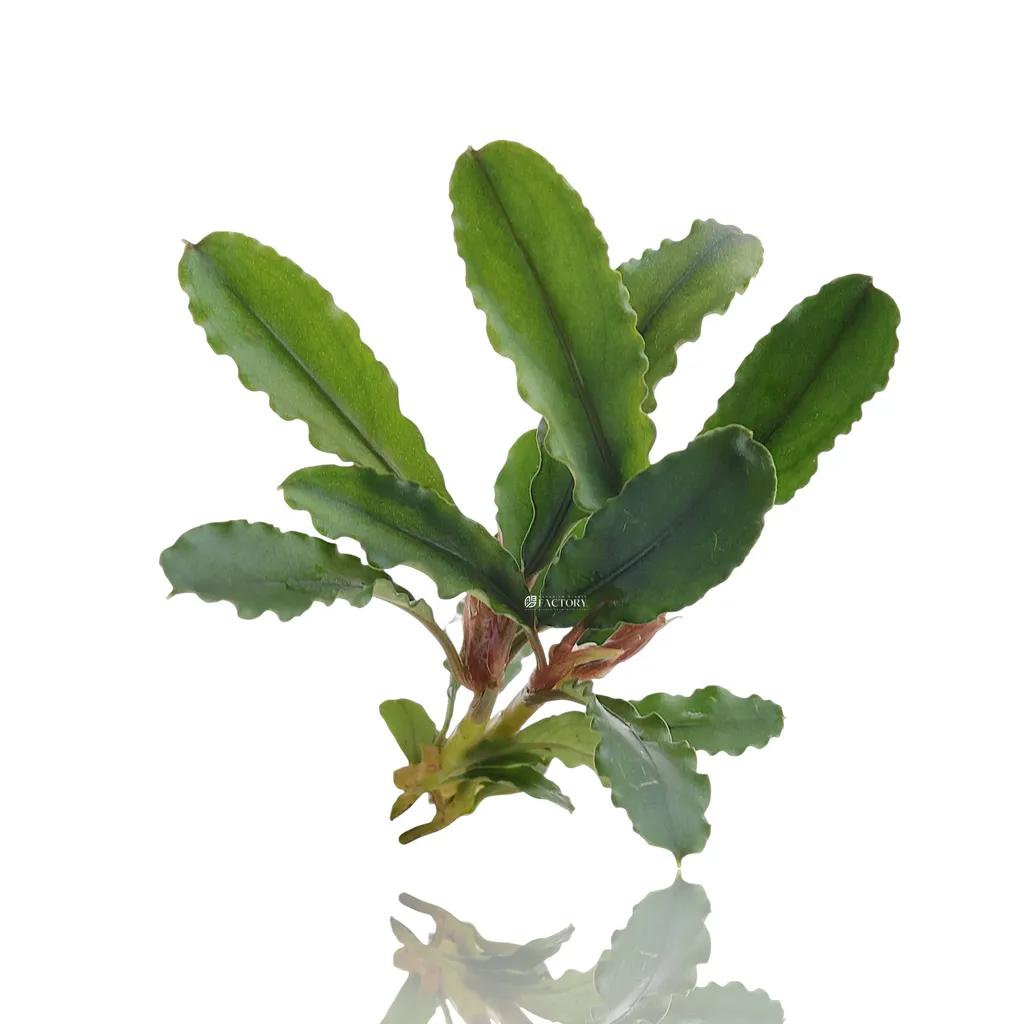
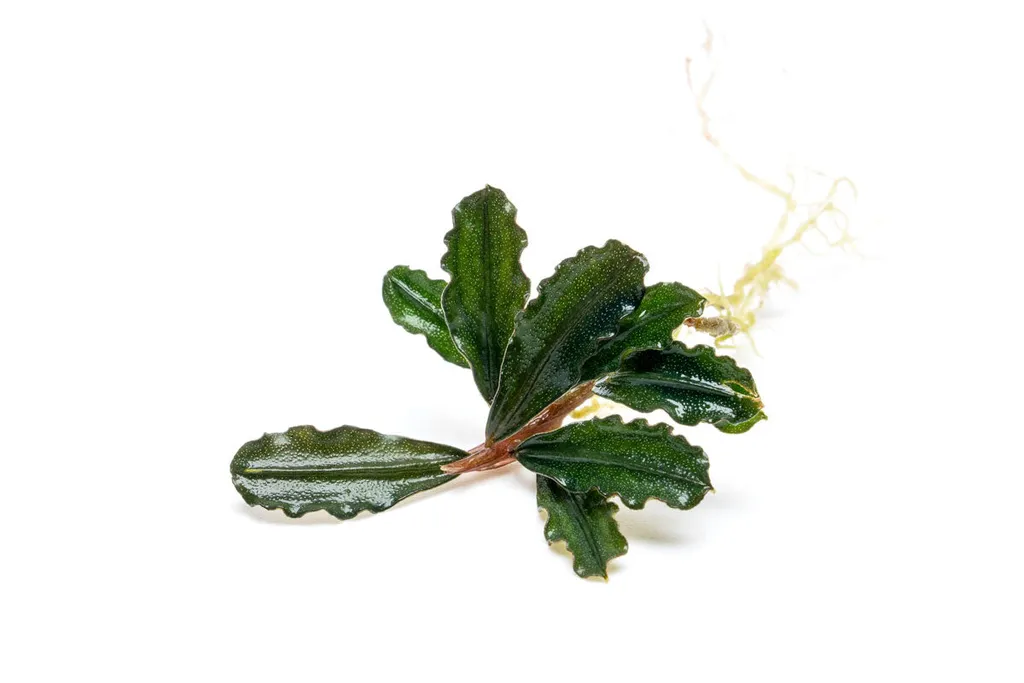
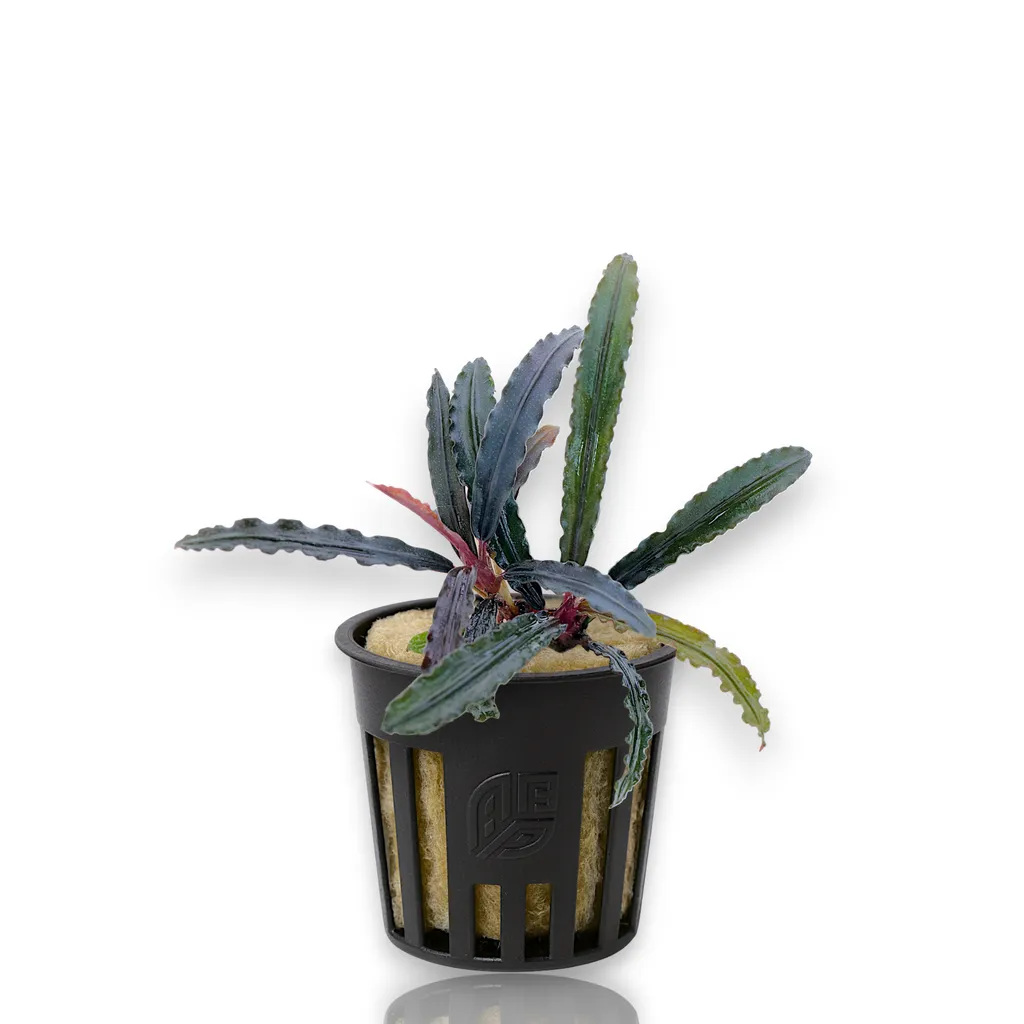
Red Blade is a commercial cultivar name within Bucephalandra, family Araceae, tribe Schismatoglottideae. Most of the genus's trade forms are referred to the variable Bucephalandra motleyana complex. The name describes the leaf, which is narrow and blade-like with slightly ruffled margins, a sharp tip and a pale, prominent midrib. Fully converted submersed leaves run red to maroon. It runs a little larger than the coin-leaved Buce varieties.
In the wild
Red Blade is a trade selection of Bucephalandra rather than a described species, and no collection site is published for it. The genus grows only on Borneo, where its rheophytes grip rock and wood in fast, clean forest streams. They sit emersed along the margins in the dry season and submersed when the rivers rise. Like the rest of the trade, this form is now propagated on farms and in tissue culture.
Common questions
Does Bucephalandra Red Blade need to be planted in the substrate?
No. Bucephalandra Red Blade grows attached to rock or wood, so tie or glue the rhizome in place. If you plant its roots, keep the rhizome above the substrate, since a buried rhizome rots.
Does Bucephalandra Red Blade need CO2?
No, but it helps. Bucephalandra Red Blade can grow without injected CO2, and added CO2 makes it grow faster.
How much light does Bucephalandra Red Blade need?
Bucephalandra Red Blade is a low-light plant, and the light that comes with a standard tank kit is enough for it.
Does Bucephalandra Red Blade need root tabs?
No. Bucephalandra Red Blade feeds from the water, so a liquid fertilizer suits it better. Root tabs only help if its roots reach into the substrate.
How do you propagate Bucephalandra Red Blade?
Bucephalandra Red Blade propagates by rhizome division. Cut the rhizome into pieces with several leaves each, then tie or plant each piece.
How tall does Bucephalandra Red Blade grow?
Bucephalandra Red Blade grows to about 4.7 in (12 cm) tall. It grows slowly and rarely needs trimming.
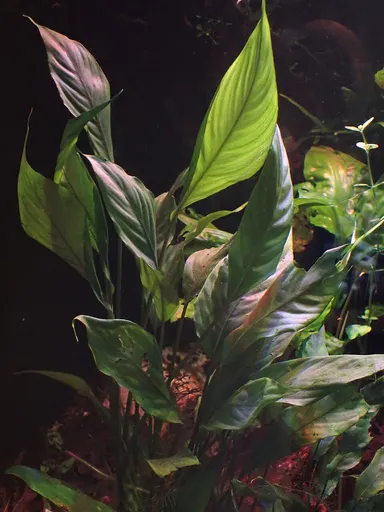 Low lightEpiphyte3.9 in (10 cm)
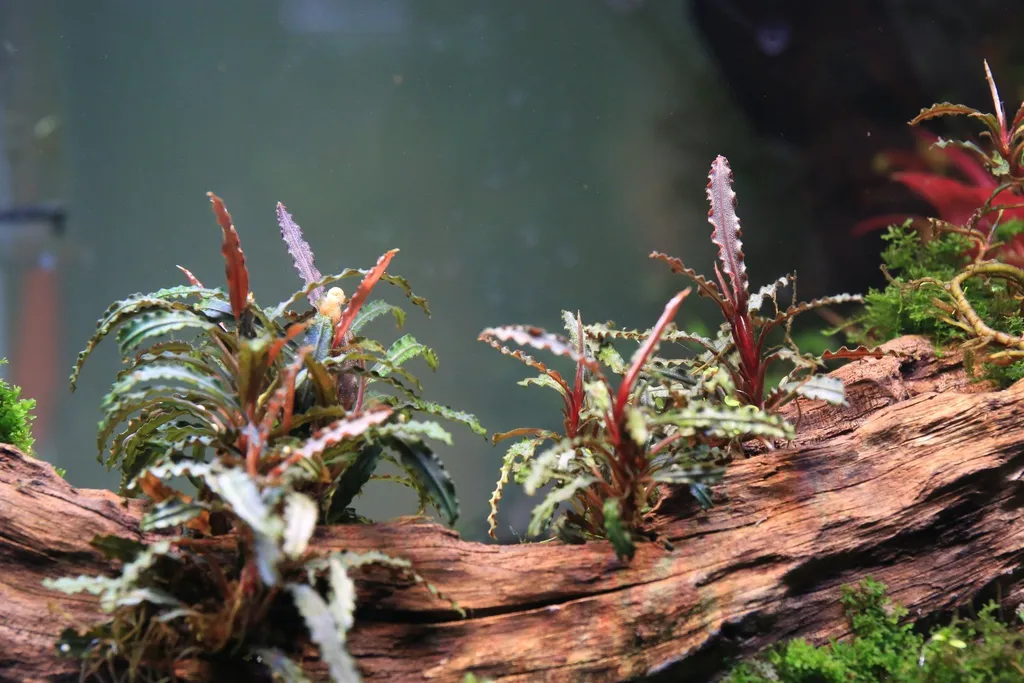 Low lightEpiphyte2.4 in (6 cm)
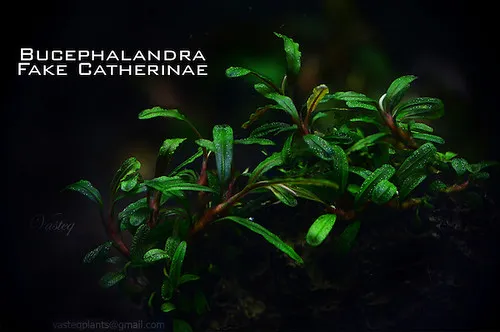 Low lightEpiphyte2.4 in (6 cm)