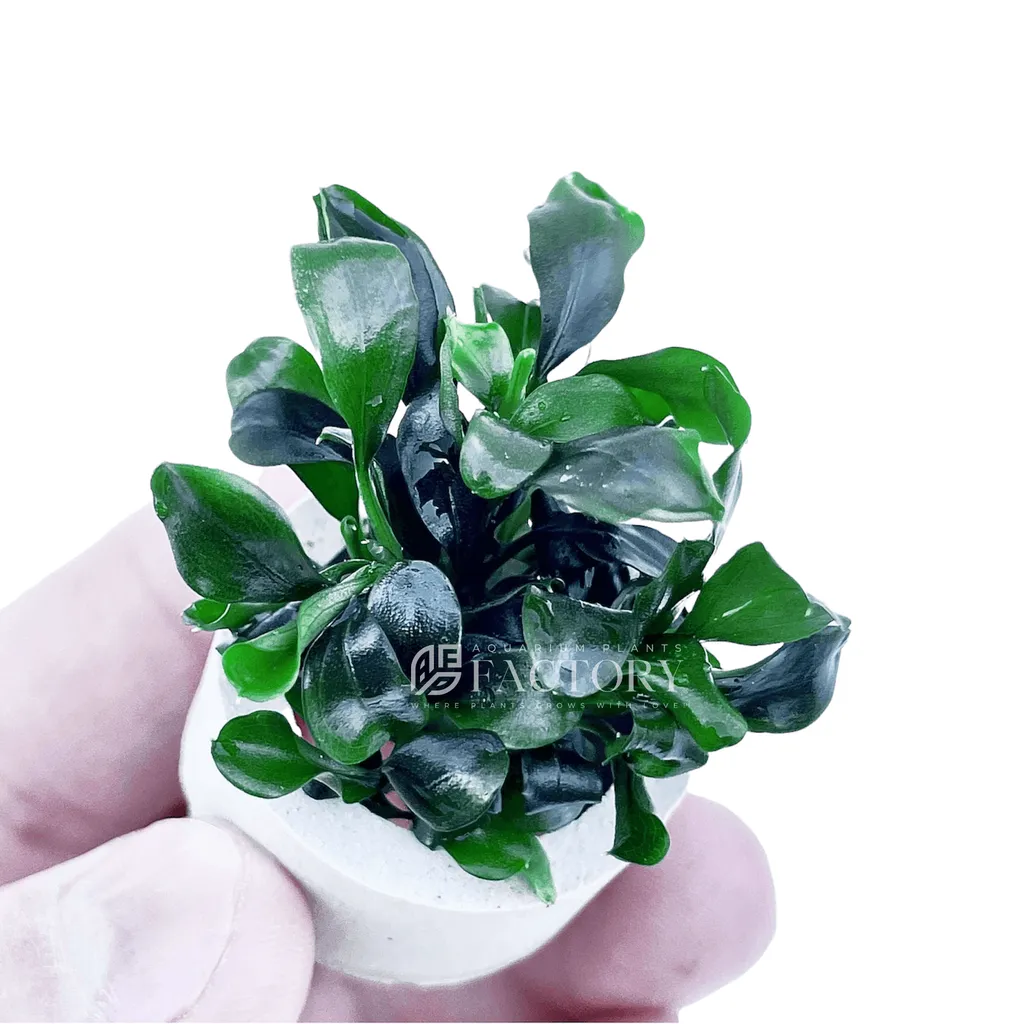
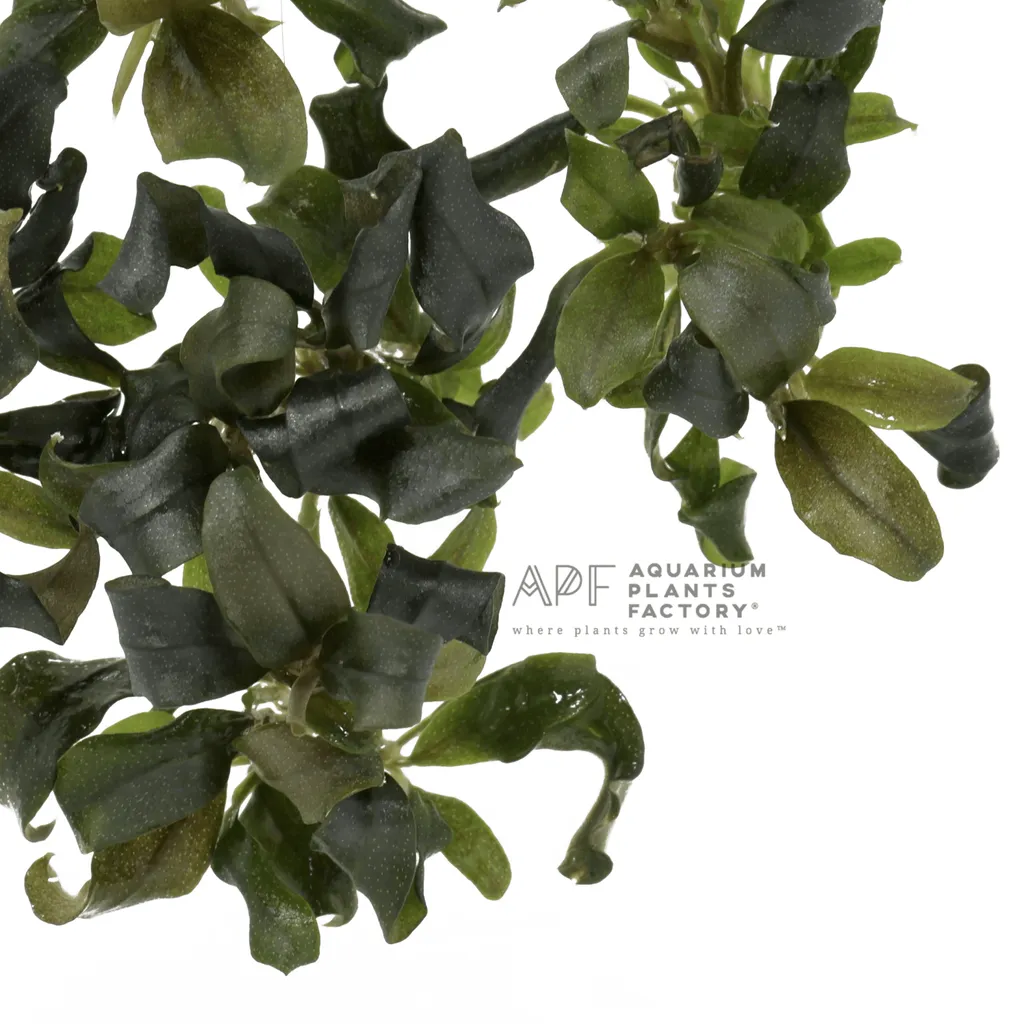
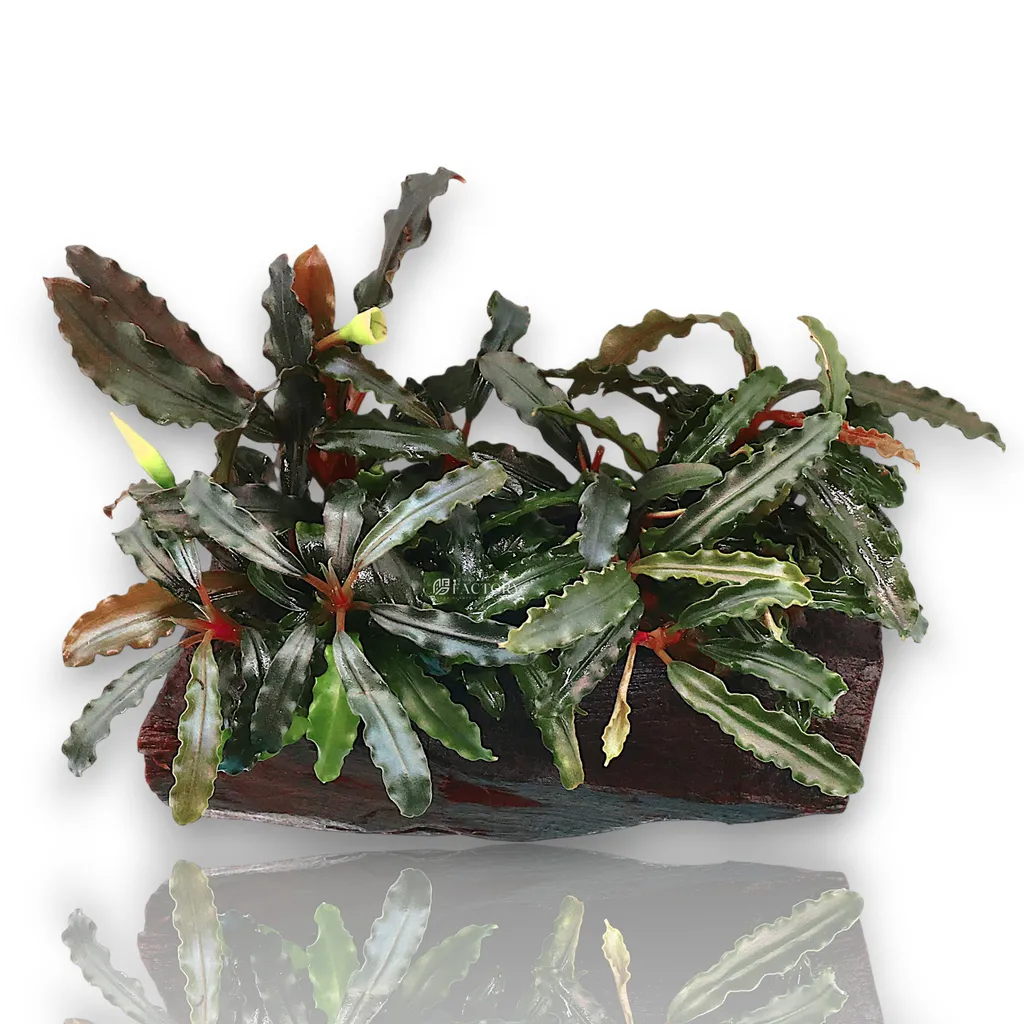
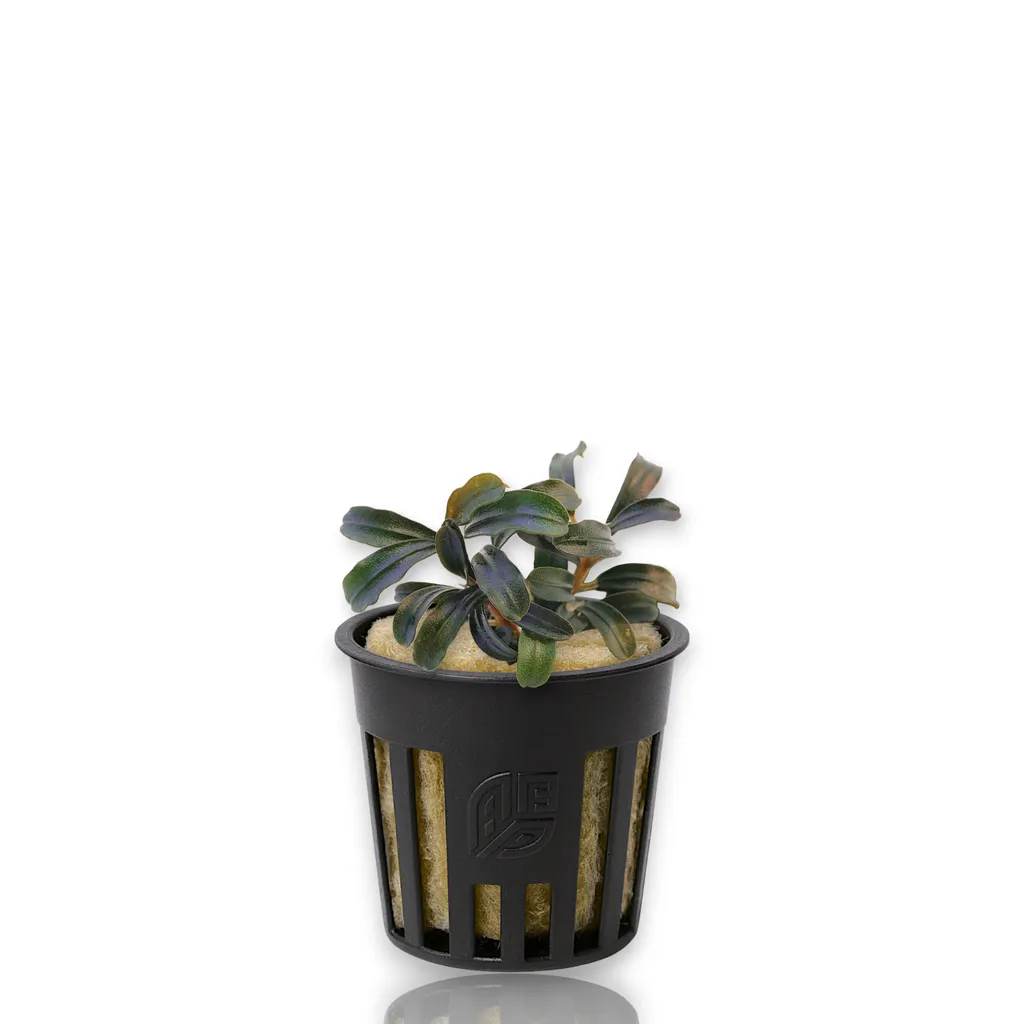
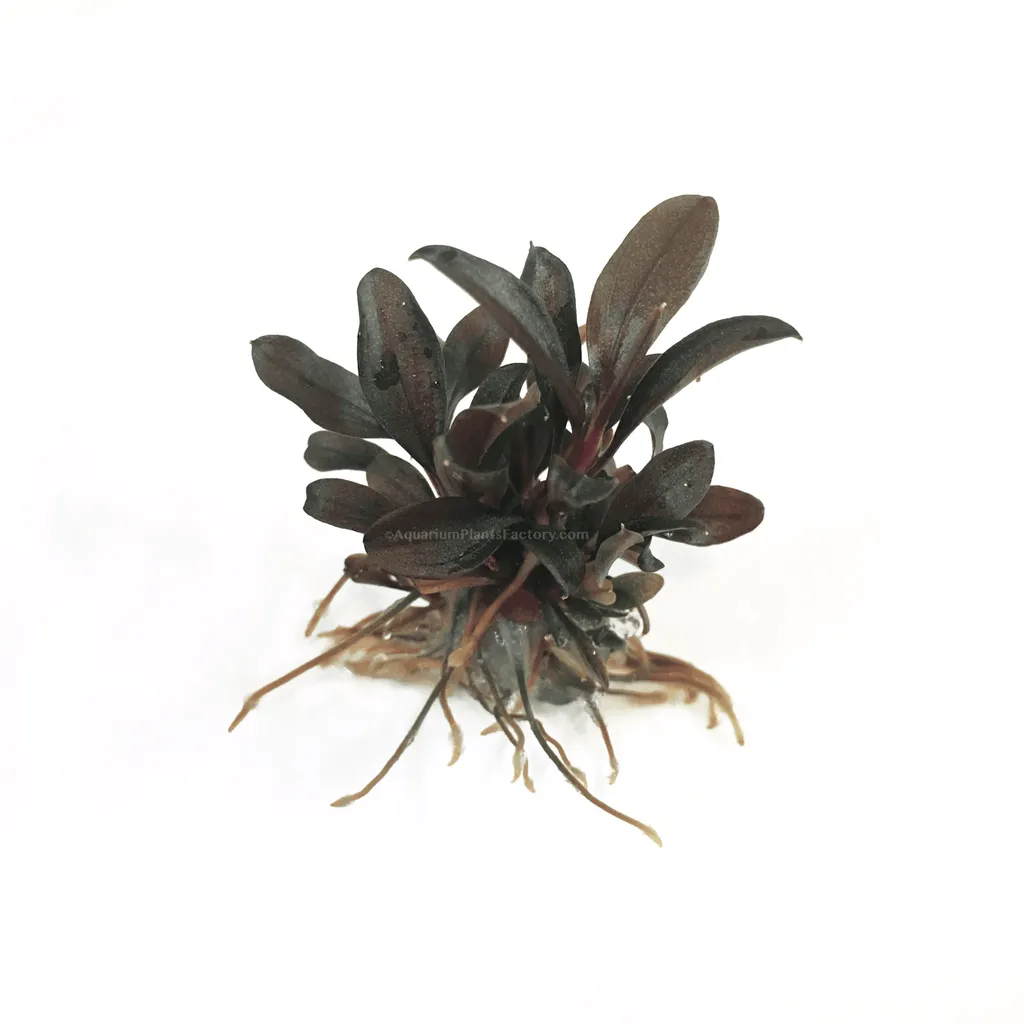
Maestro Blue reaches 5 to 10 cm, and its longer leaves fill gaps along midground wood and stone. Set it where light strikes the leaves at an angle, which shows the sheen best. New leaves open lighter and darken as they age. Wedge the rhizome into a crack in wood or rock, since a buried rhizome rots. Low to medium light is plenty, since brighter light mostly feeds algae on such a slow plant. CO2 is optional, though it deepens the color if your tank already runs it.
In the wild
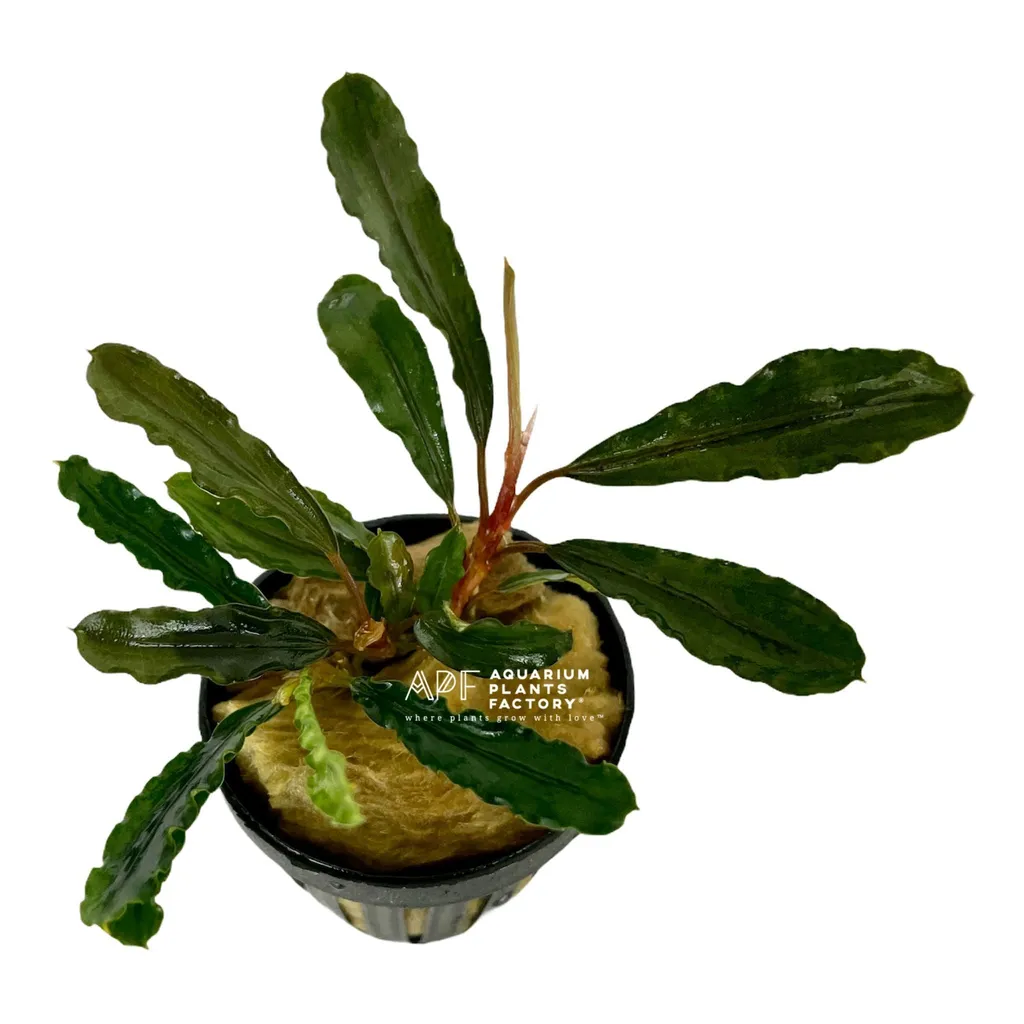
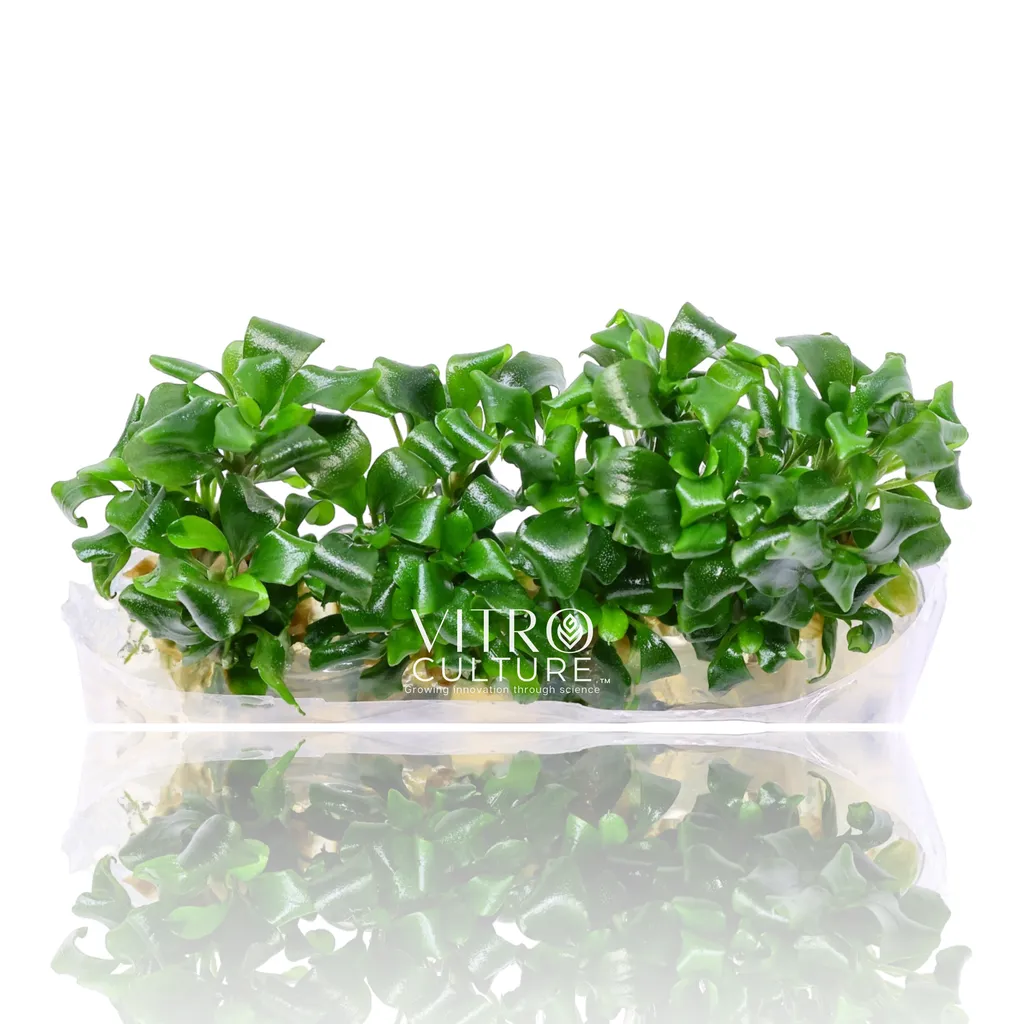
Maestro Blue's wild source is unknown, and the shops name neither a species nor a collection site. Wet Spot labels it Bucephalandra cf. pygmaea, the tag it also gives Green Wavy. Wild Bucephalandra live only on Borneo, where they cling to rock in fast forest streams. APF farms it and also sells a lab-grown vitro culture version.
Good to know
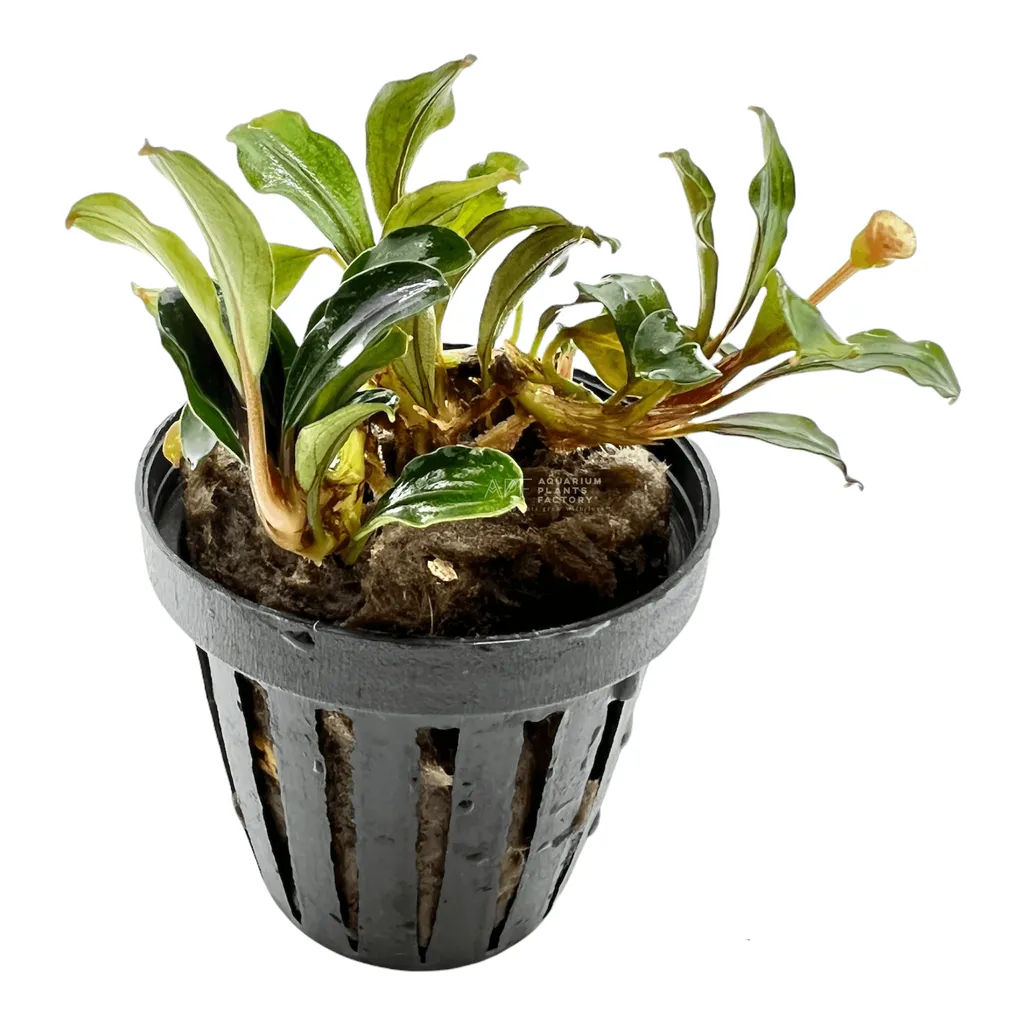
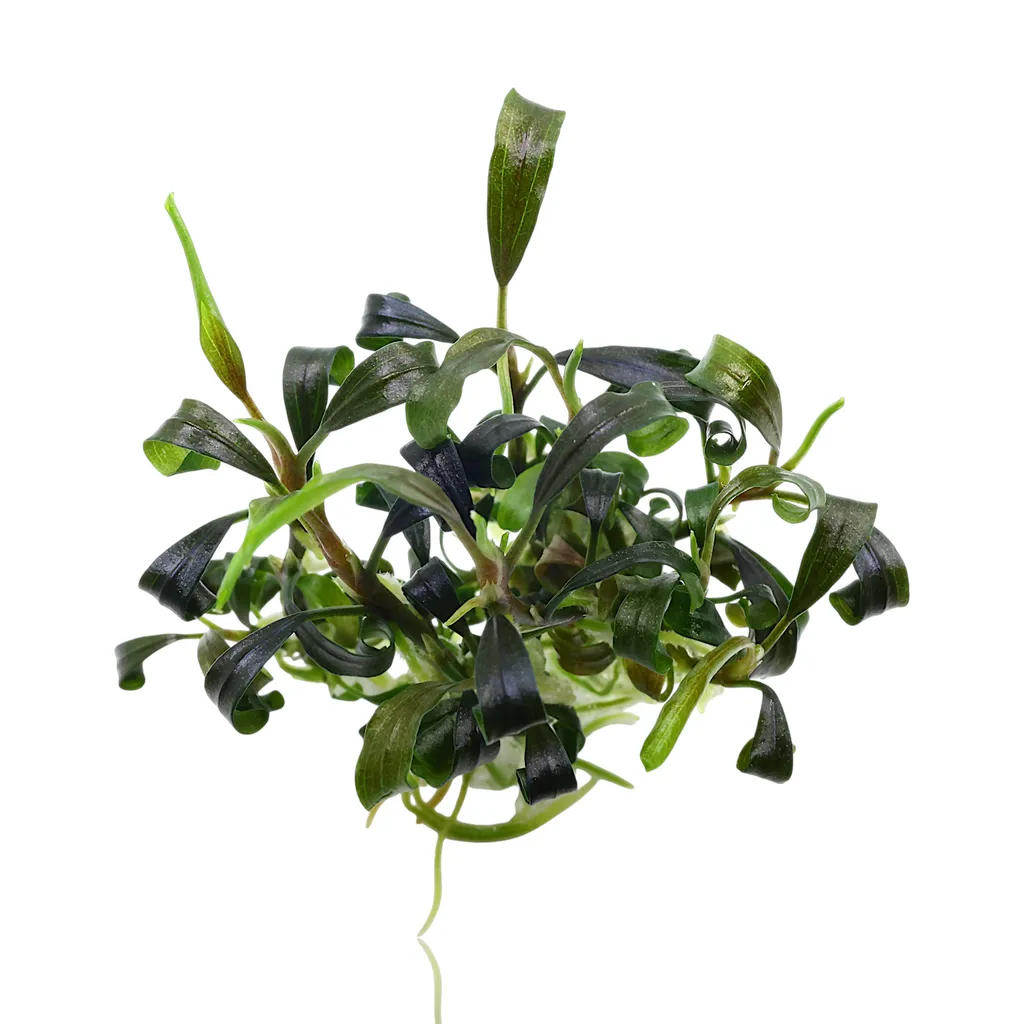
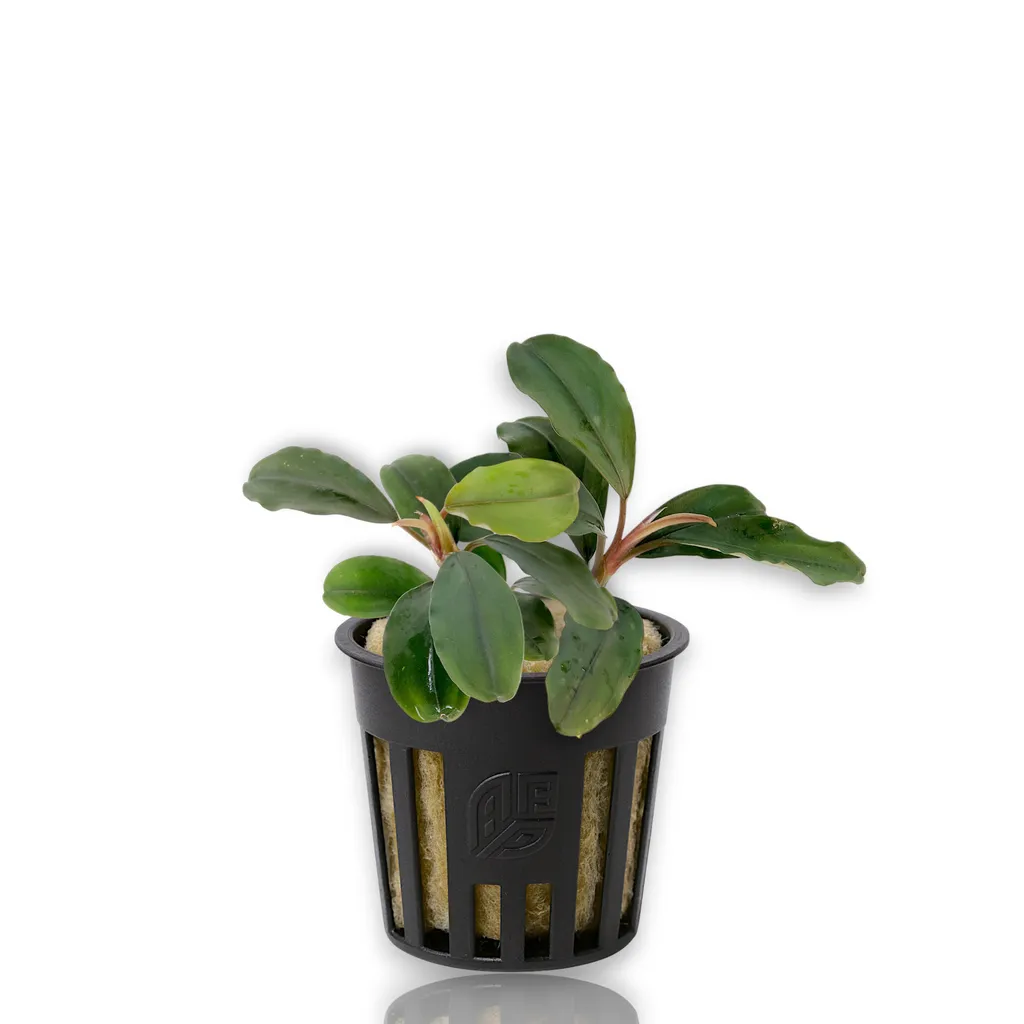
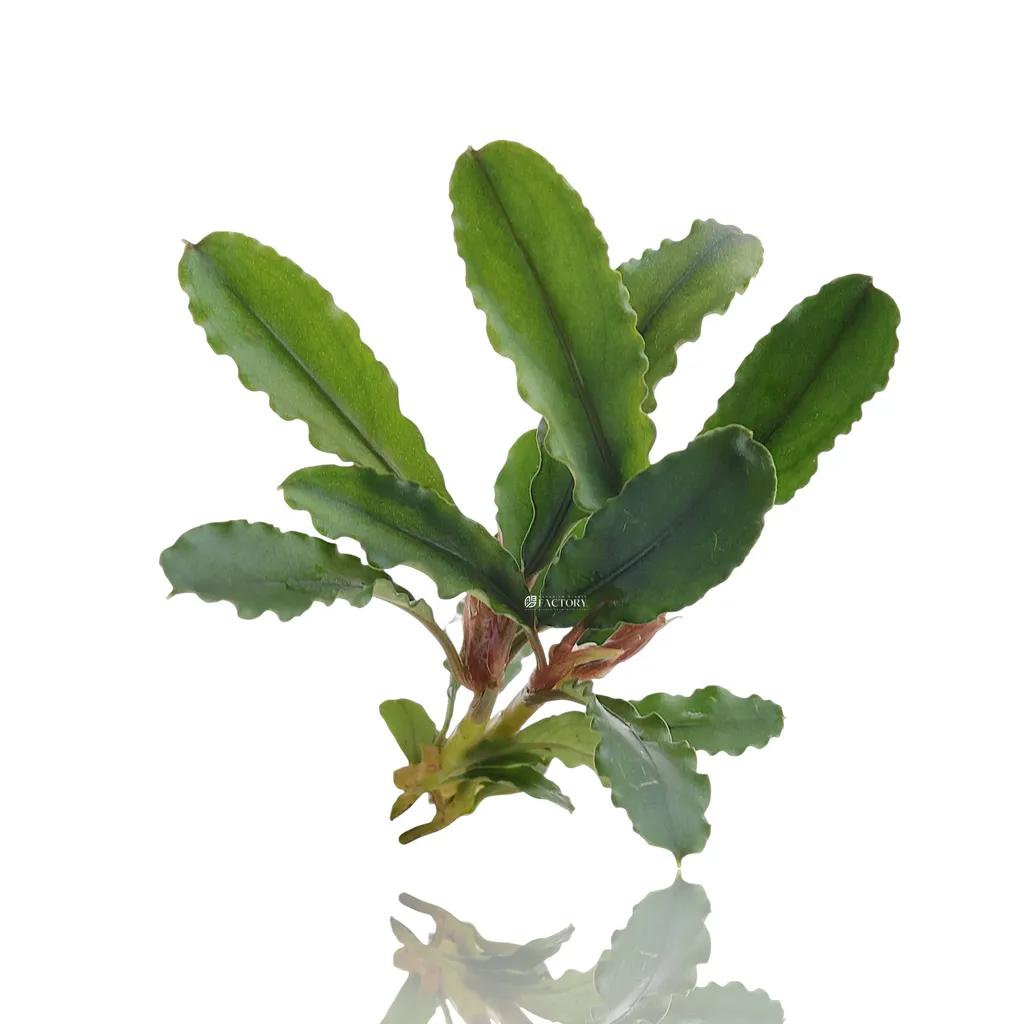
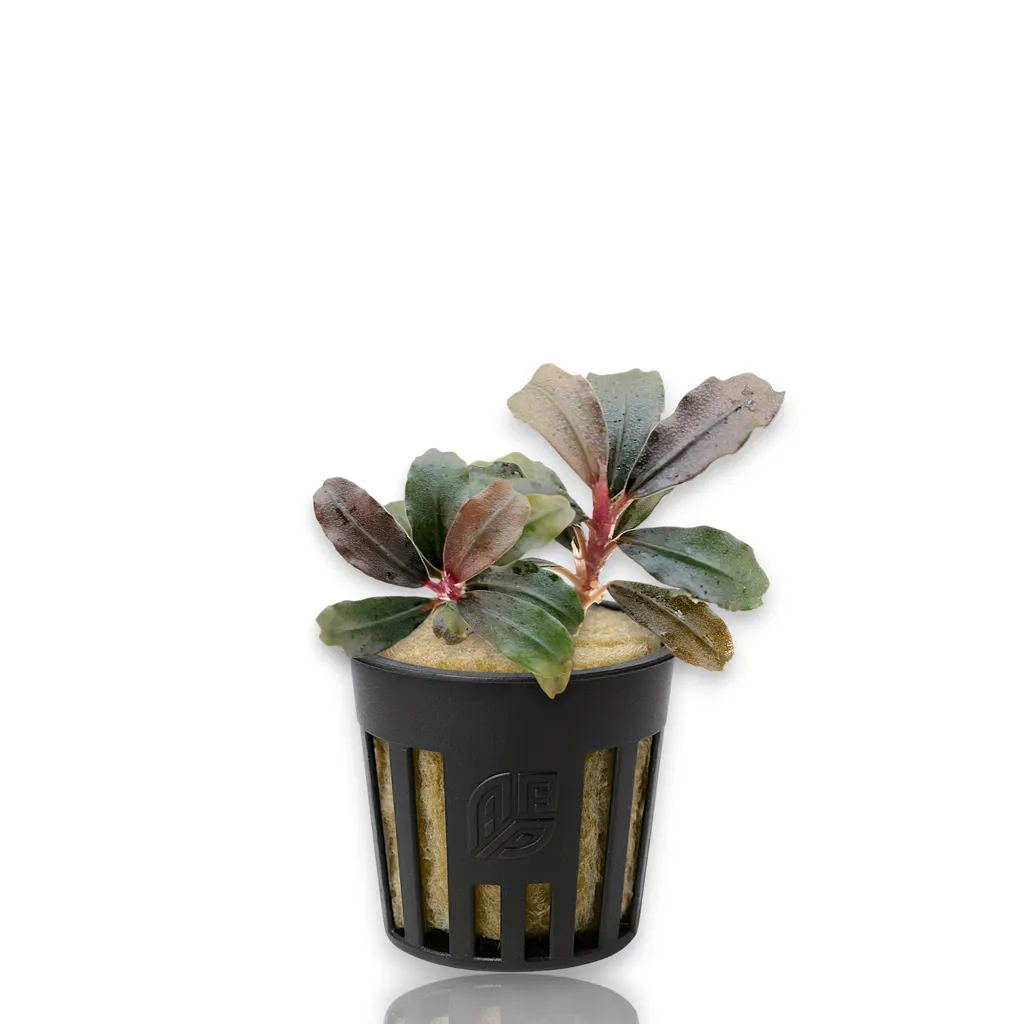
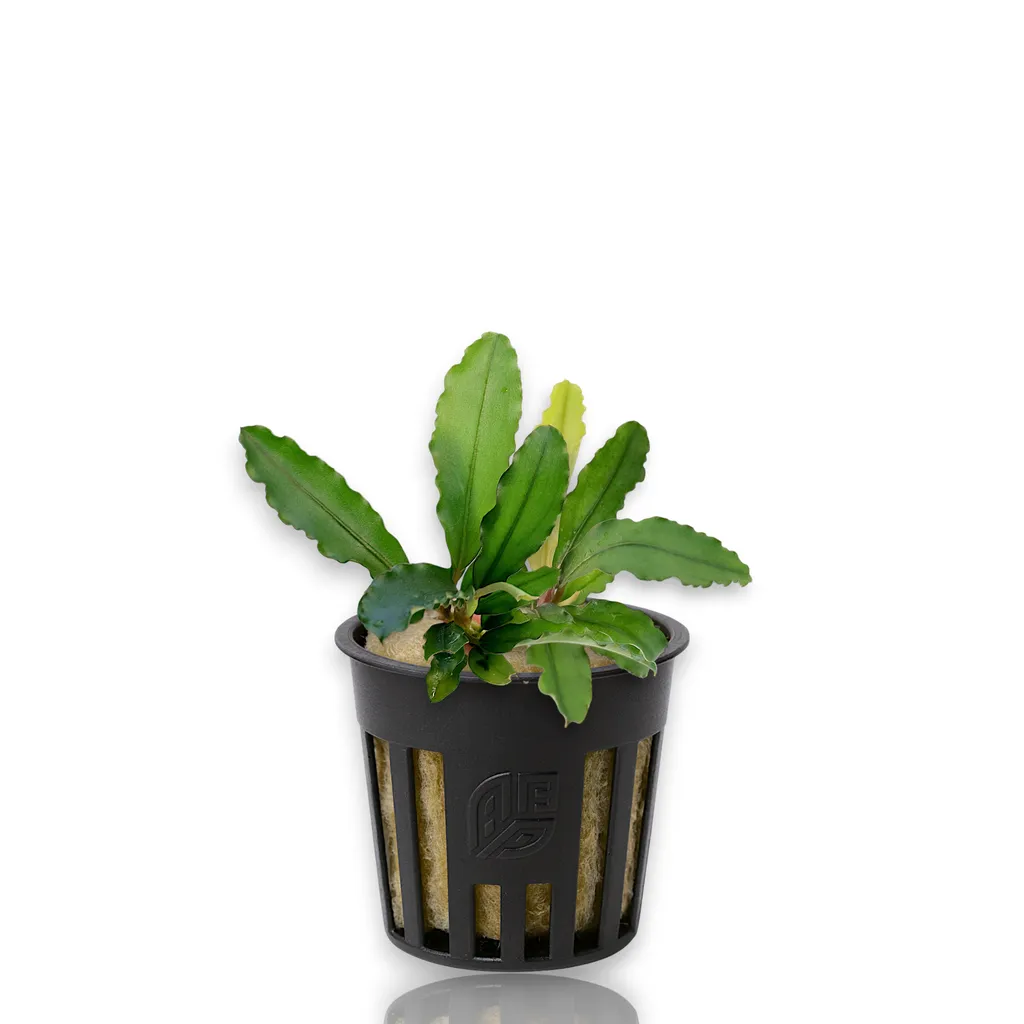
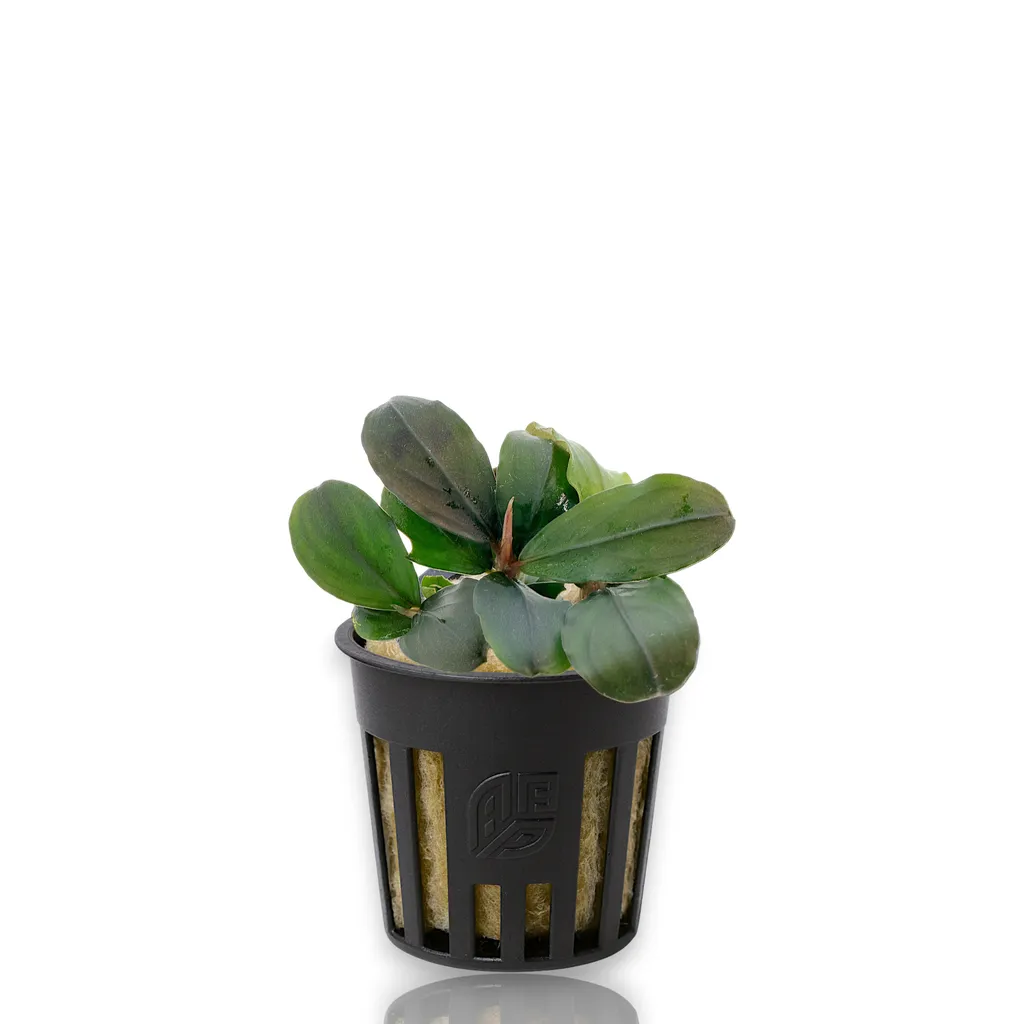
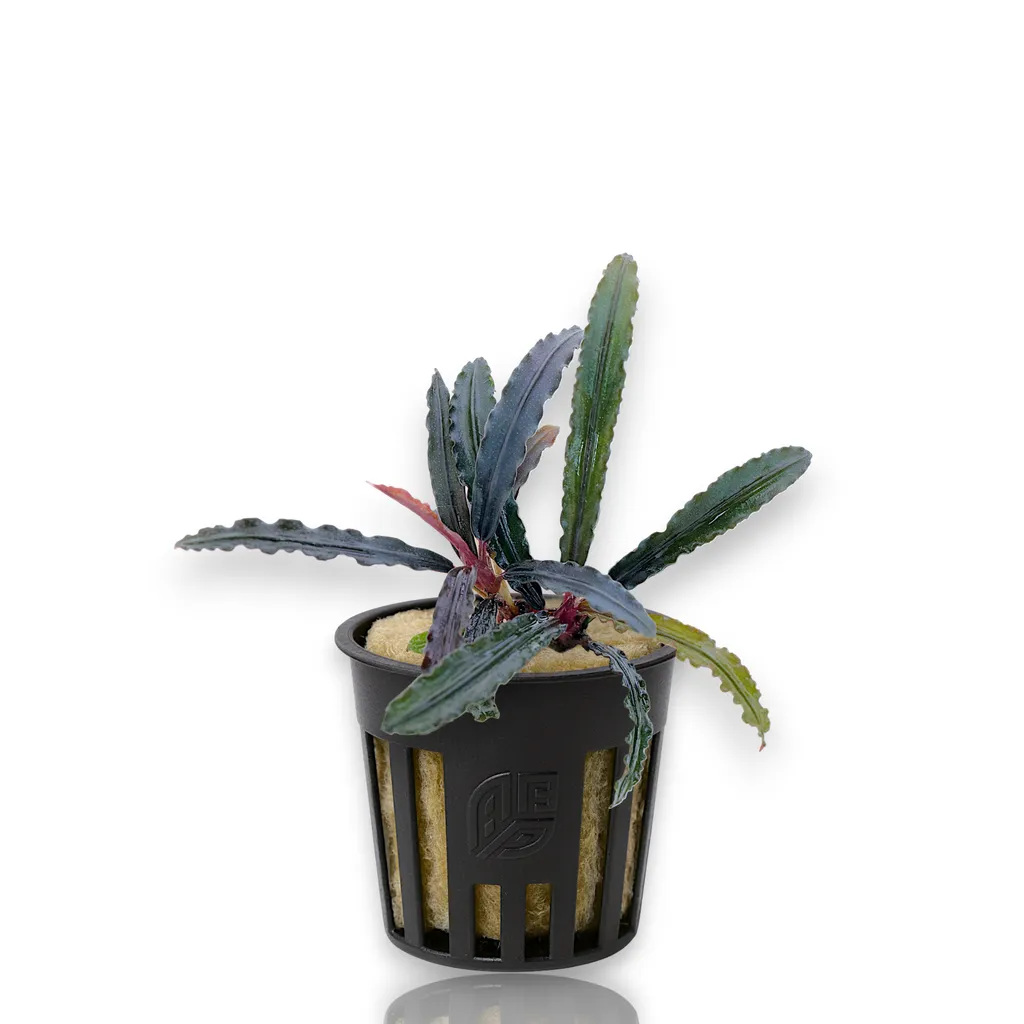
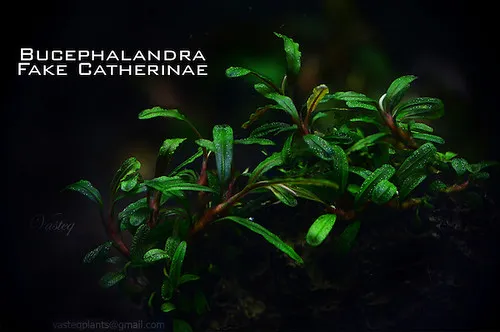
Maestro Blue is a Bucephalandra, an aroid genus (Araceae), with slender oval to lance-shaped leaves and wavy edges. Leaves grown underwater take on a metallic sheen that shifts from blue-green to violet with the light. Emersed pot plants look much like Green Wavy, but the leaves are longer and narrower. BucephalandraEU lists Maestro Blue as its own variety.
Did you know
Maestro Blue can look plain dark green under warm white light. The blue and violet appear under RGB or full-spectrum LEDs, so a green-looking new plant may only need different lighting.
 Low lightEpiphyte3.9 in (10 cm)
 Low lightEpiphyte2.4 in (6 cm)