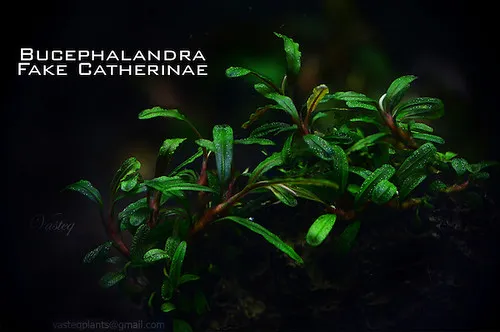
Bucephalandra catherinae
Also known as Buce Catherinae, Bucephalandra catherineae
FreshwaterRhizomeRhizome divisionSide shoots
Care at a glance
- Light
- Low light
- CO2
- CO₂ beneficial
- Temperature
- 72–82°F
- 22–28°C
- Max height
- 2.4 in
- 6 cm
- Growth rate
- Slow
- Placement
- Epiphyte
- Type
- Rhizome
- pH
- 6.0–8.0
- Hardness
- 4–15 dGH
- Spread
- 3.9 in (10 cm)
- Nutrient uptake
- Root + water column
- Growth region
- Submersed or emersed
- Difficulty
- Easy
- Family
- Araceae
- Origin
- Borneo (West Kalimantan), Indonesia
Overview
One of the more compact Buce, so it can be used low in the layout as a foreground-to-midground accent, glued or wedged onto rock and hardscape with the rhizome left exposed. It is undemanding in low light and needs no CO2, though injected CO2 and steady dosing improve growth and colour. As always with the genus, never bury the rhizome or it will melt, and expect slow, steady leaf production.
In the wild
Bucephalandra catherineae is a described species endemic to Borneo, occurring on rocks in and along streams in West Kalimantan, Indonesia. It grows submersed when rivers are high and emersed on exposed stone when levels drop. Wild plants cling to rock with tough roots in the same way as Anubias.
Good to know
Unlike most Buce in the trade, catherineae is a validly published species, described by P.C. Boyce, J. Bogner and S.J. Mayo in 1995 in Curtis's Botanical Magazine, in the family Araceae. It is a short, densely tufted, low-growing plant with narrow, wavy, deep emerald leaves on short stalks that can flush red or purple under brighter light. Both green and red-selected clones circulate under the catherineae name in the hobby, often spelled 'catherinae'.
Did you know
Did you know that although the aquarium hobby sells hundreds of Bucephalandra trade names, only around thirty are formally described species, and catherineae is one of the few you can actually put a real scientific name to.
Related plants
 Medium lightEpiphyte2.4 in (6 cm)
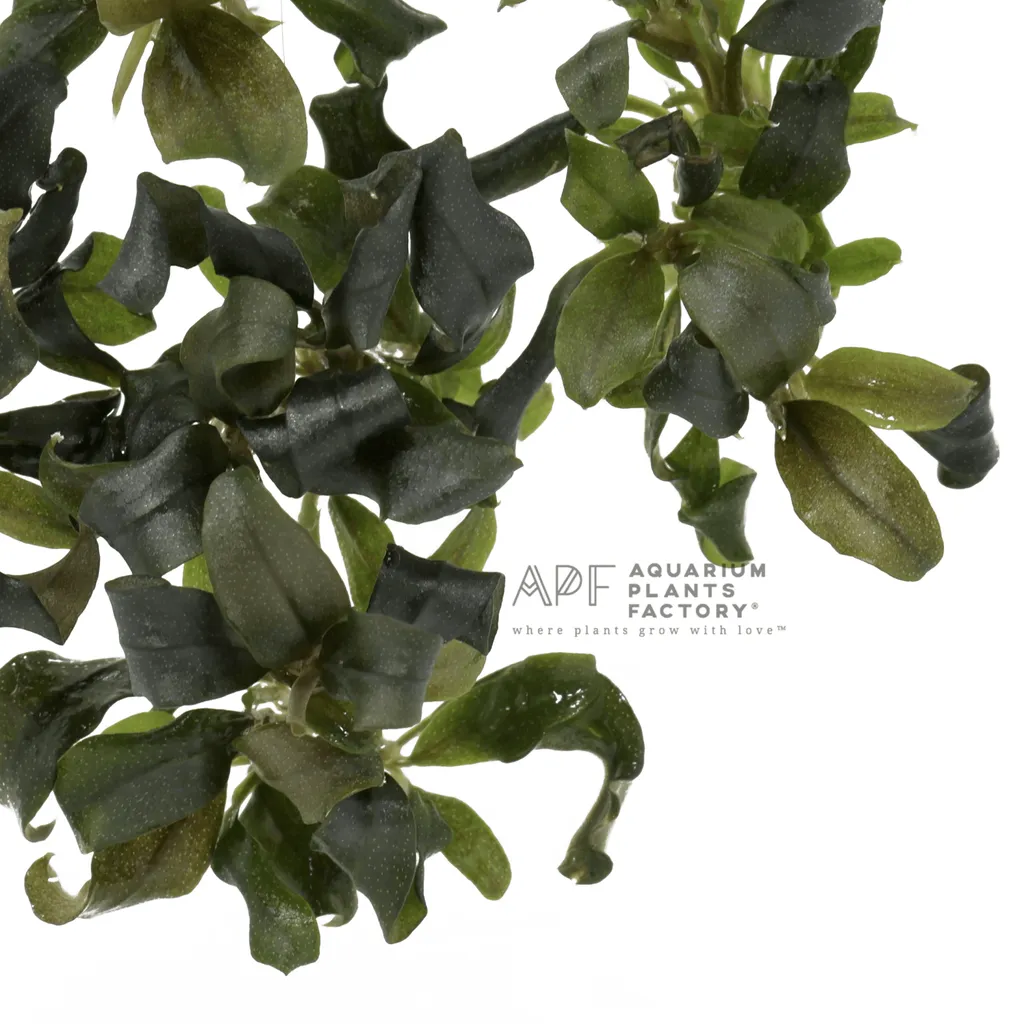
Bucephalandra brownie ghost
Bucephalandra sp. 'Brownie Ghost'
Medium light · Epiphyte
 Low lightEpiphyte3.1 in (8 cm)
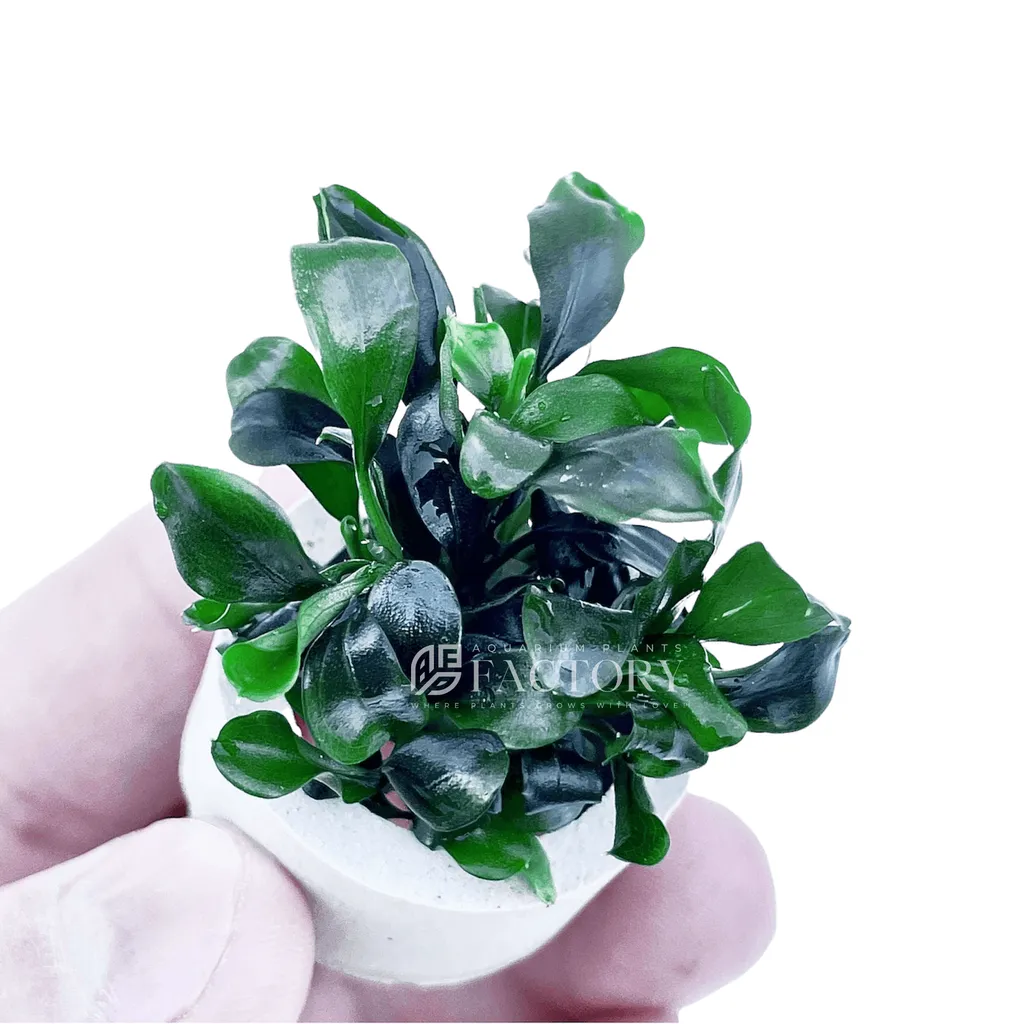
Bucephalandra Wavy Green
Bucephalandra sp. 'Wavy Green'
Low light · Epiphyte
- Low lightEpiphyte3.1 in (8 cm)
Bucephalandra Brownie Blue
Bucephalandra sp. 'Brownie Blue'
Low light · Epiphyte
- Low lightEpiphyte3.1 in (8 cm)
Bucephalandra Dark Velvet
Bucephalandra sp. 'Dark Velvet'
Low light · Epiphyte
- Low lightEpiphyte3.1 in (8 cm)
Bucephalandra Deep Purple
Bucephalandra sp. 'Deep Purple'
Low light · Epiphyte
- Low lightEpiphyte3.1 in (8 cm)
Bucephalandra Grappa Red
Bucephalandra sp. 'Grappa Red'
Low light · Epiphyte