Bucephalandra motleyana
Also known as Bucephalandra sp., Buce, Bucephalandra Motley
FreshwaterRhizomeRhizome division
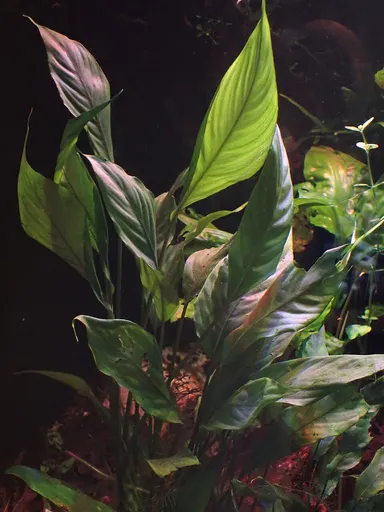
Care at a glance
- Light
- Low light
- CO2
- CO₂ beneficial
- Temperature
- 70–82°F
- 21–28°C
- Max height
- 3.9 in
- 10 cm
- Growth rate
- Slow
- Placement
- Epiphyte
- Type
- Rhizome
- pH
- 6.0–8.0
- Hardness
- 2–12 dGH
- Spread
- 4.7 in (12 cm)
- Nutrient uptake
- Root + water column
- Growth region
- Submersed or emersed
- Difficulty
- Easy
- Family
- Araceae
- Origin
- Borneo (Indonesia and Malaysia)
Overview
Treat it like Anubias: glue or tie the rhizome to wood or rock and never bury the rhizome, or it will rot (roots can go into substrate, the rhizome cannot). It is undemanding, doing fine in low to medium light without CO2, though added CO2 and a steady all-in-one liquid fert speed growth and deepen color. Growth is very slow, so keep light moderate to avoid algae settling on the old leaves. Newly bought plants are usually grown emersed and may shed a few leaves (buce melt) when first submerged, but the rhizome pushes new submersed growth as long as it stays firm. Propagate by snapping or cutting the rhizome into pieces, each with a few leaves and roots.
In the wild
Bucephalandra motleyana is endemic to Borneo, where it grows as a rheophyte clinging to rocks and wood in and beside fast-flowing forest streams and waterfalls, usually in shade or partial shade. It lives emersed when water levels drop and fully submersed during the wet season, so it grows happily either way. The native water is soft, slightly acidic, and well oxygenated by current.
Good to know
This is the type species of the genus Bucephalandra, described by Heinrich Wilhelm Schott in 1858 from plants the naturalist James Motley collected in Borneo. The genus sits in the family Araceae (the aroids, alongside Anubias and Cryptocoryne) within the tribe Schismatoglottideae. Bucephalandra is told apart from related genera by the small, motile, shield-shaped white staminodes that separate the male and female flower zones on the spadix. The name motleyana is also used loosely in the trade as an umbrella label for many unidentified Buce varieties.
Did you know
Did you know the entire genus is found only on the island of Borneo? Every Bucephalandra in the hobby traces back to streams there, and the species was named for James Motley, the 19th-century collector whose specimens Schott used to first describe the plant.
Related plants
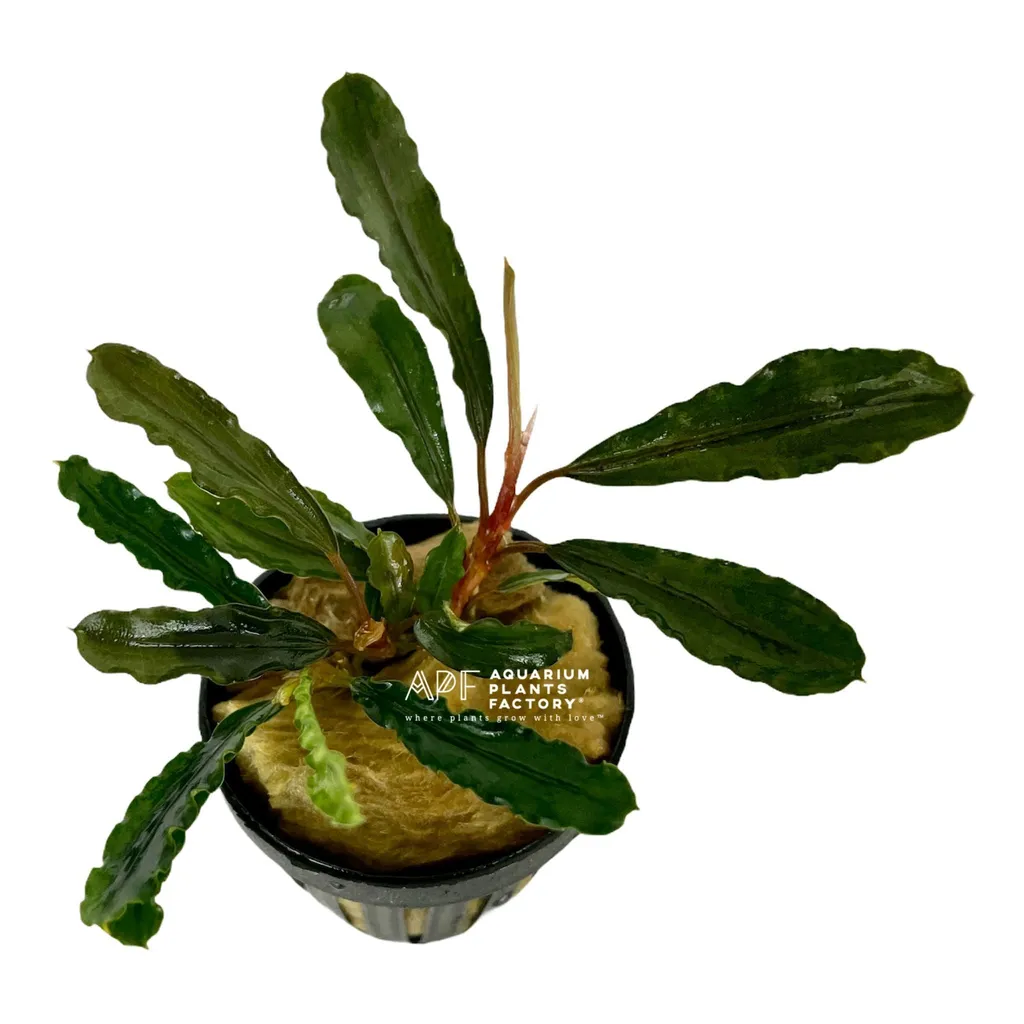 Medium lightEpiphyte3.9 in (10 cm)
Bucephalandra Godzilla
Bucephalandra sp. 'Godzilla'
Medium light · Epiphyte
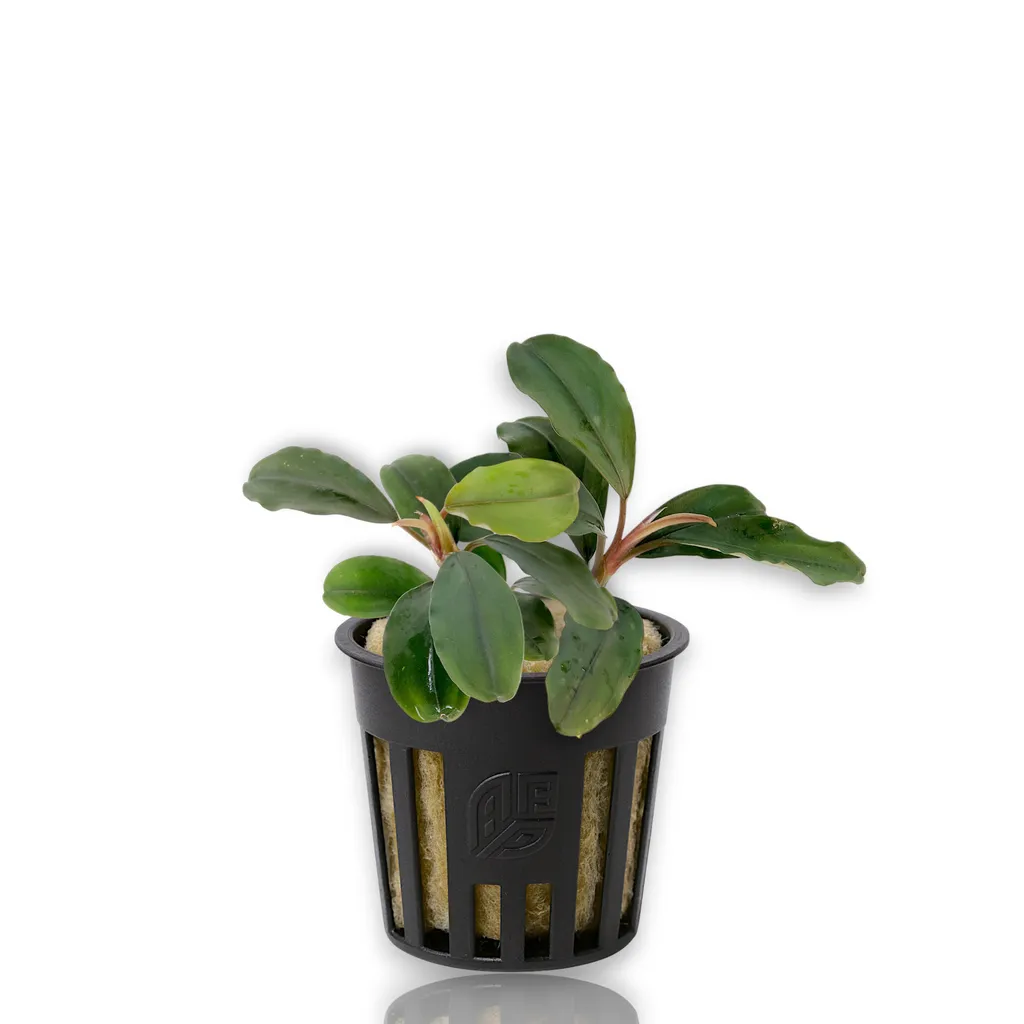 Low lightEpiphyte3.9 in (10 cm)
Bucephalandra Theia
Bucephalandra sp. 'Theia'
Low light · Epiphyte
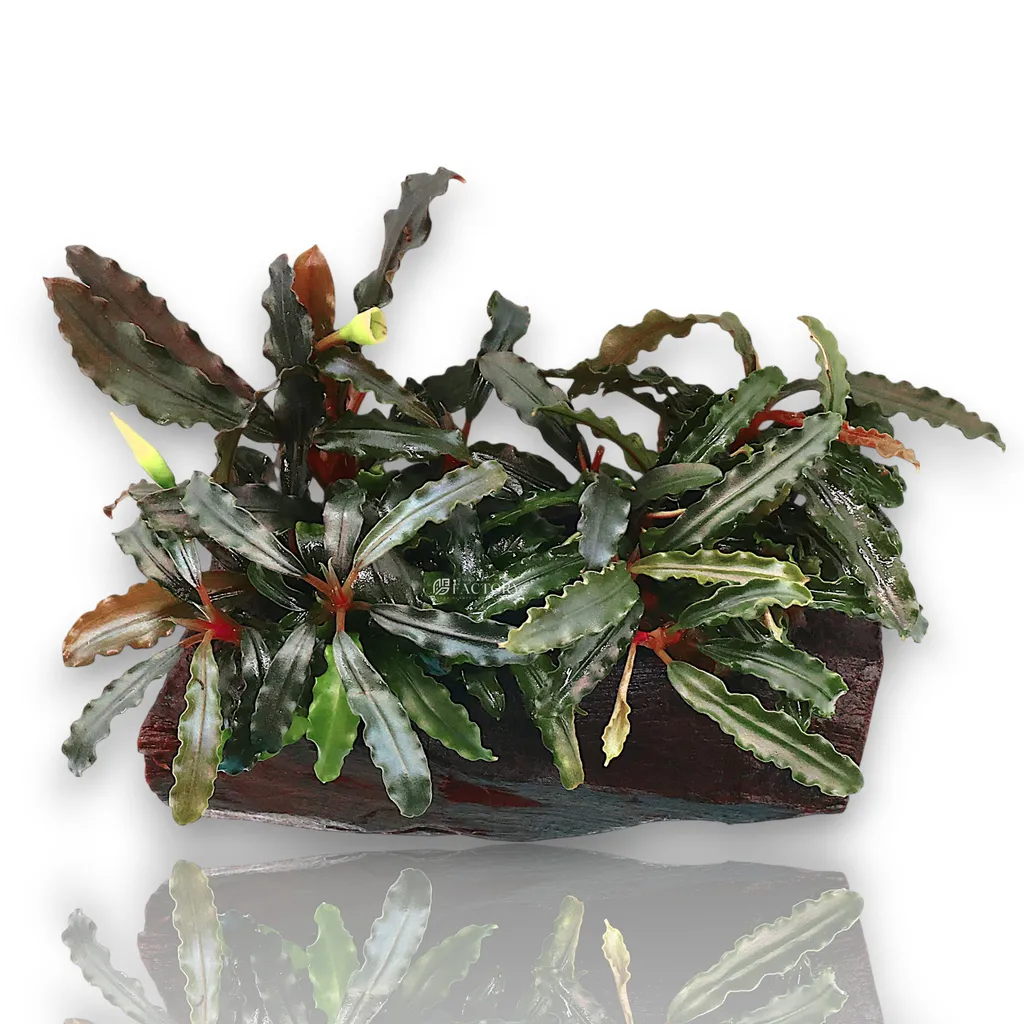 Low lightEpiphyte3.9 in (10 cm)
Bucephalandra Velvet
Bucephalandra sp. 'Velvet'
Low light · Epiphyte
- Low lightEpiphyte3.9 in (10 cm)
Bucephalandra Apple Leaf
Bucephalandra sp. 'Apple Leaf'
Low light · Epiphyte
- Low lightEpiphyte3.9 in (10 cm)
Bucephalandra Red
Bucephalandra sp. 'Red'
Low light · Epiphyte
- Low lightEpiphyte3.9 in (10 cm)
Bucephalandra Sintang
Bucephalandra sp. 'Sintang'
Low light · Epiphyte