Pearl moss
Plagiomnium cf. affine
Also known as Plagiomnium affine
FreshwaterMossDivisionFragmentation
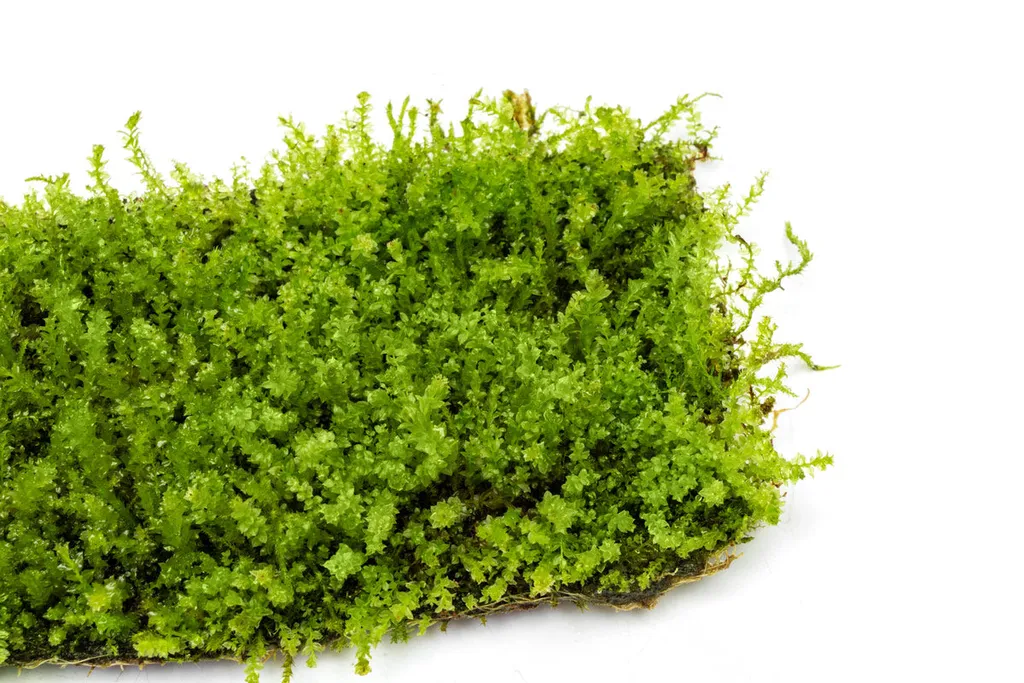
Care at a glance
- Light
- Medium light
- CO2
- CO₂ beneficial
- Temperature
- 50–82°F
- 10–28°C
- Max height
- 3.9 in
- 10 cm
- Growth rate
- Slow
- Placement
- Epiphyte
- Type
- Moss
- pH
- 5.0–8.0
- Hardness
- 0–18 dGH
- Spread
- 3.9 in (10 cm)
- Nutrient uptake
- Water column
- Growth region
- Submersed or emersed
- Difficulty
- Medium
- Family
- Mniaceae
- Origin
- Unknown for the aquarium stock (shops name Europe or temperate Asia)
Overview
Pearl moss is a slow-growing moss for wood and stone, where it builds small upright cushions. It is rated medium in difficulty.
Did you know
The name pearl moss has covered several different plants. In 2009 the bryologist Gradstein identified the pearl moss then sold in Europe as Heteroscyphus zollingeri, a leafy liverwort. Tropica sells the liverwort Solenostoma tetragonum as Pearl Moss today, while US shops use the name for this true moss.
Caring for pearl moss
Tie small portions of pearl moss to wood or stone with dark thread, glue them on, or tuck them into crevices. Rinse the gel off tissue culture portions before you attach them.
Give it medium light. It grows without CO2, only more slowly, and Dennerle doses CO2 at 20 to 30 mg/L. It feeds from the water, so a liquid fertilizer suits it. It handles 50 to 82°F (10 to 28°C), but Buce Plant advises keeping the water below about 25°C to prevent browning.
It grows slowly and reaches about 10 cm tall. Slow growth leaves it more prone to algae than faster mosses, so siphon debris out of the cushion. Trim lightly, and split clumps to spread it, since pieces that break off keep growing.
Good to know
Pearl moss is a true moss in the family Mniaceae. The cf. in its name means compare with, since it looks like Plagiomnium affine but no specialist has confirmed the species. Each small, round leaf has a midrib running to the tip, and the leaves sit around upright or arching shoots like beads on a string. Leafy liverworts carry their leaves in two flat rows, and those leaves lack a midrib. The clear midrib on pearl moss rules out a liverwort.
In the wild
Pearl moss has no recorded wild origin. Shops trace it to Europe or temperate Asia, and most stock now comes from tissue culture labs such as Aquatic Farmer and Dennerle. Plagiomnium affine, the moss it resembles, grows on moist but not wet ground in woodland and turf across Europe and northern Asia. Pearl moss is a land moss that adapts to life underwater.
Common questions
Does pearl moss need to be planted in the substrate?
No. Pearl moss grows on rock or wood rather than in the substrate. Tie it on with cotton thread or fishing line, or use gel superglue, until it anchors itself.
Does pearl moss need CO2?
No, but it helps. Pearl moss can grow without injected CO2, and added CO2 makes it grow faster.
How much light does pearl moss need?
Pearl moss wants medium light. A light sold for planted tanks covers it.
How do you propagate pearl moss?
Pearl moss propagates by division and fragmentation. Pull a clump apart into smaller pieces and tie each one down. Pieces that break off keep growing, so pulling a clump apart spreads it.
How tall does pearl moss grow?
Pearl moss grows to about 3.9 in (10 cm) tall. It grows slowly.
Related plants
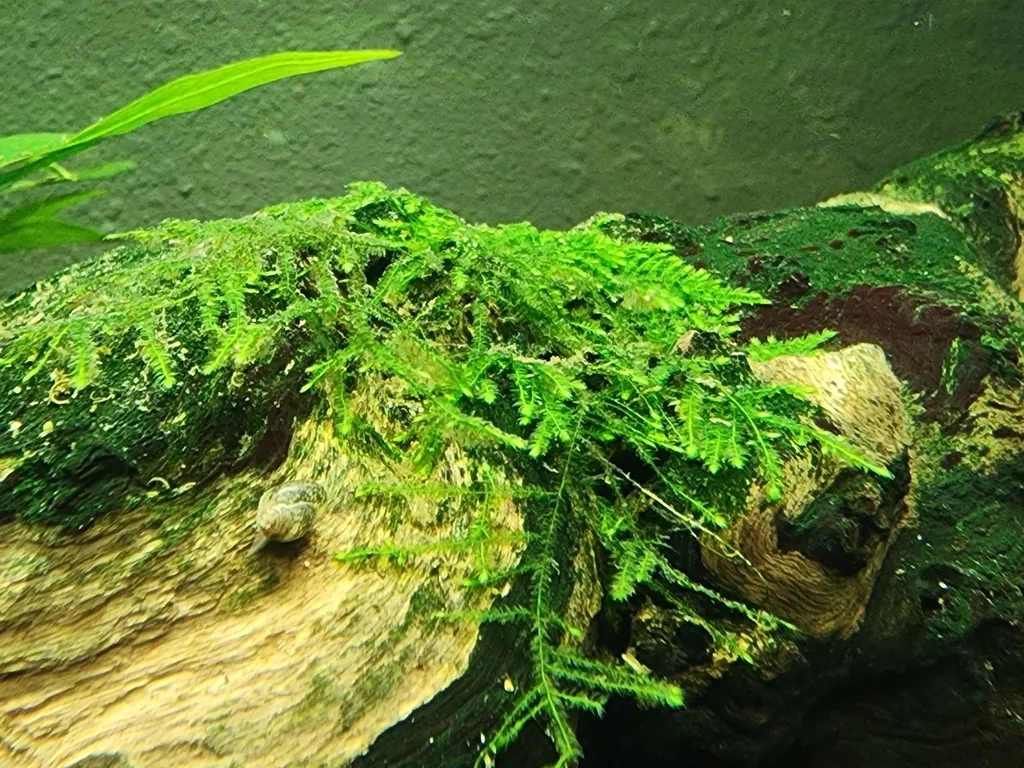 Low lightEpiphyte3.9 in (10 cm)
Java moss
Taxiphyllum barbieri
Low light · Epiphyte
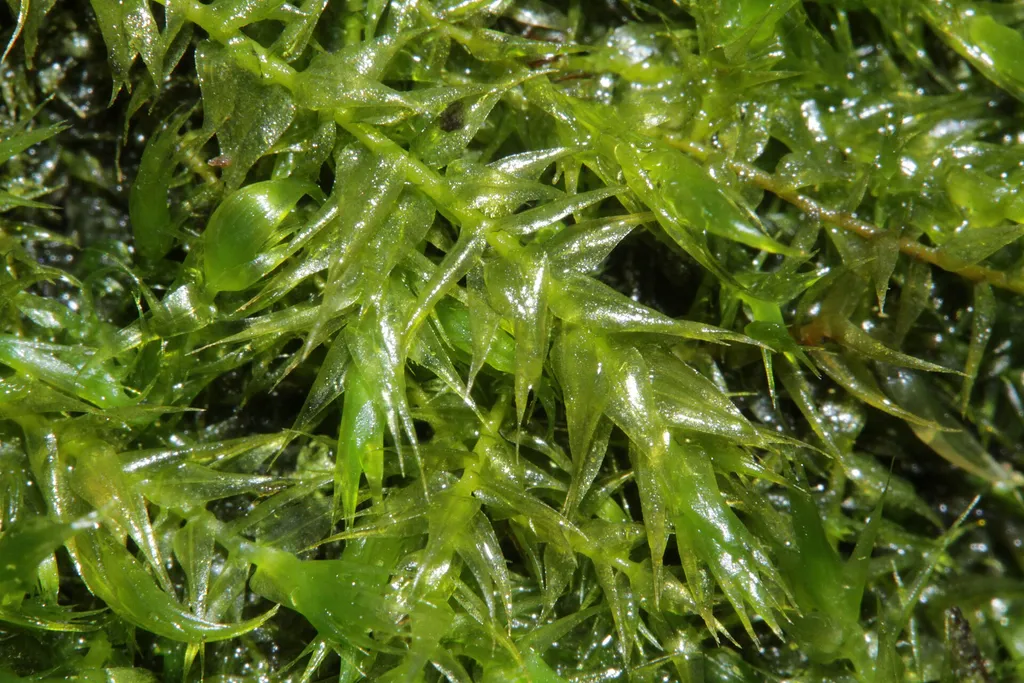 Low lightEpiphyte3.9 in (10 cm)
Stringy moss
Leptodictyum riparium
Low light · Epiphyte
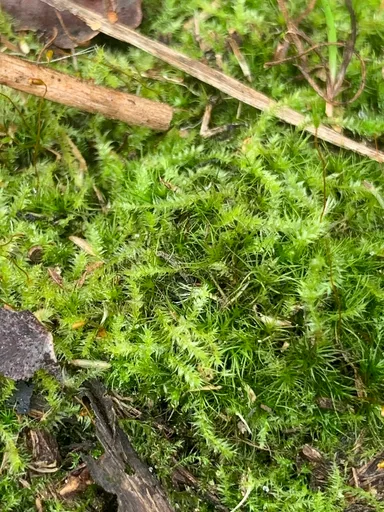 Low lightEpiphyte3.9 in (10 cm)
Taiwan moss
Taxiphyllum alternans
Low light · Epiphyte
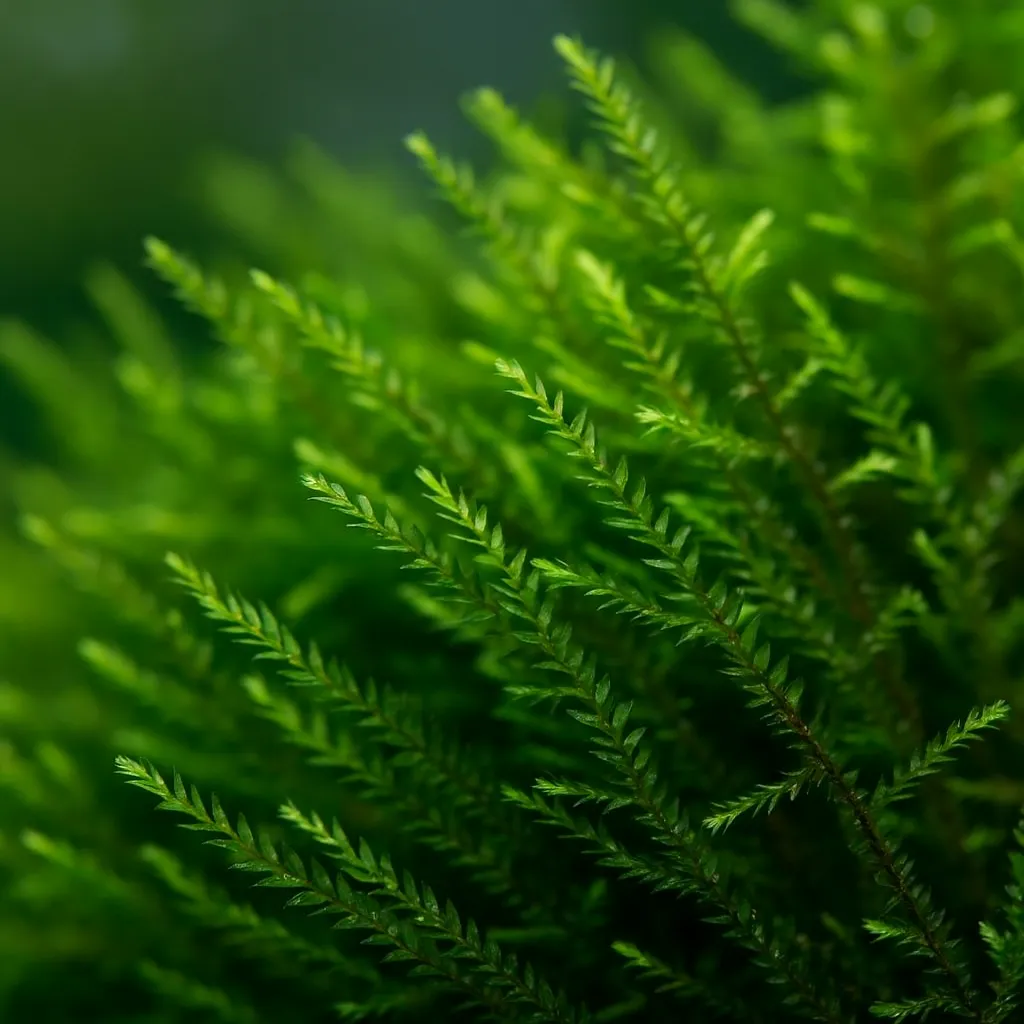 Low lightEpiphyte4.7 in (12 cm)
Willow moss
Fontinalis antipyretica
Low light · Epiphyte
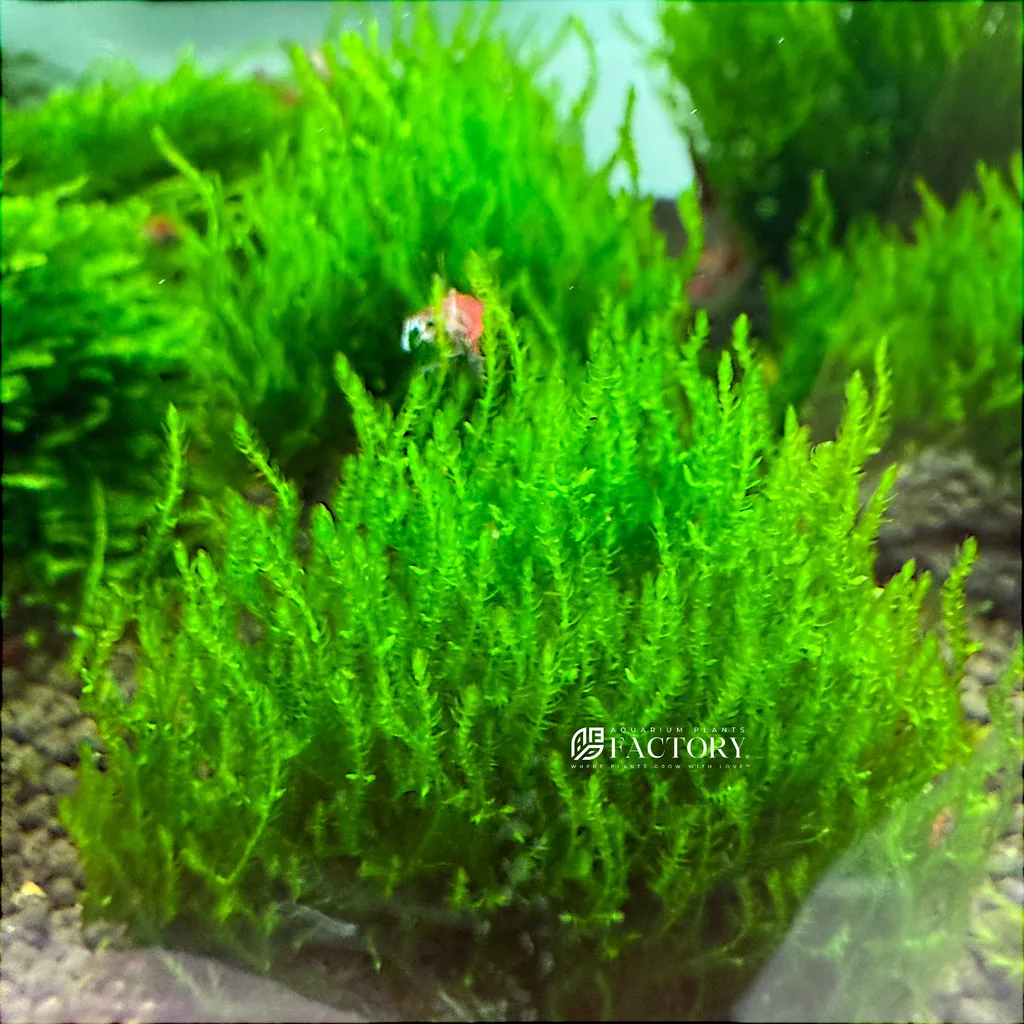 Low lightEpiphyte3.1 in (8 cm)
Flame moss
Taxiphyllum sp. 'Flame'
Low light · Epiphyte
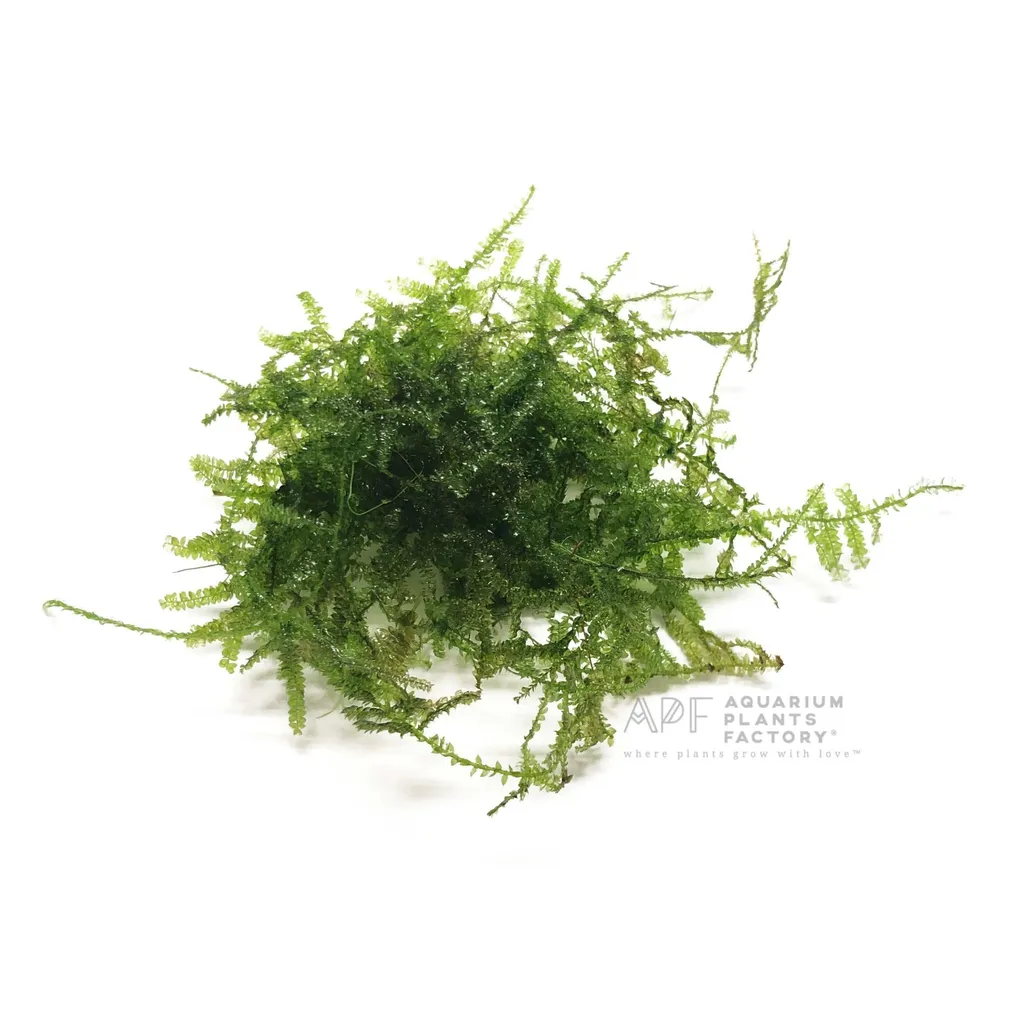 Low lightEpiphyte2 in (5 cm)
Christmas moss
Vesicularia montagnei
Low light · Epiphyte