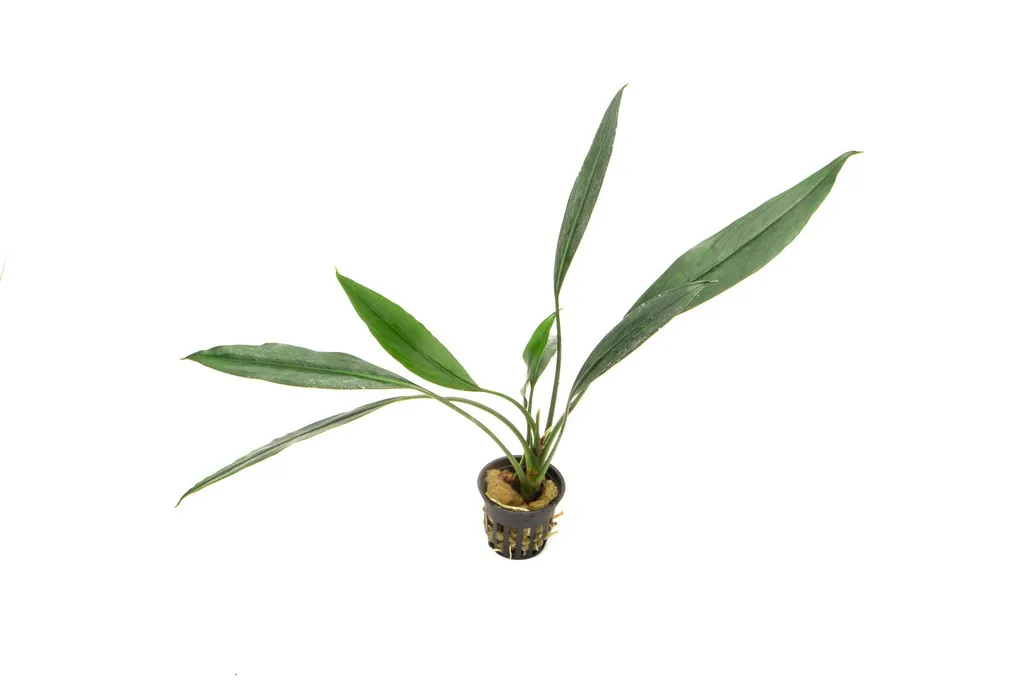
Aridarum caulescens
Burttianthus caulescens
Also known as Aridarum caulescens Sabertooth, Aridarum caulescens White Fang
FreshwaterRhizomeRhizome division
Care at a glance
- Light
- Low light
- CO2
- CO₂ beneficial
- Temperature
- 72–82°F
- 22–28°C
- Max height
- 5.9 in
- 15 cm
- Growth rate
- Slow
- Placement
- Epiphyte
- Type
- Rhizome
- pH
- 6.0–7.5
- Nutrient uptake
- Root + water column
- Growth region
- Submersed or emersed
- Difficulty
- Medium
- Family
- Araceae
- Origin
- Borneo (Sarawak and Brunei)
Overview
Aridarum caulescens is a slow epiphyte for mature, quiet tanks, kept much like Bucephalandra but with less forgiveness. It is rated medium difficulty.
Did you know
Aridarum caulescens is one of the slowest plants in the trade. A stem may add only a handful of leaves in a year, which is why even small portions sell at collector prices.
Caring for Aridarum caulescens
Glue or tie the creeping stem, which is its rhizome, to rock or wood. Never bury it, since a buried rhizome rots.
Give Aridarum caulescens low to medium light and decent flow. CO2 is optional but helps the sparse growth along. Because it feeds from the water column as well as its roots, a liquid fertilizer suits it better than root tabs.
Regrowth is extremely slow, so trimming is almost never needed. To propagate, cut a piece from the creeping stem and glue it down. It does equally well emersed in a humid paludarium.
Keep conditions stable above all. Parameter swings are the classic trigger for melt.
Good to know
Aridarum caulescens is an aroid of the tribe Schismatoglottideae in Araceae, described in 1965. In 2018 Low, Wong and Boyce moved this and several other Aridarum species into the new genus Burttianthus. Shops still sell it as Aridarum caulescens. The epithet caulescens means developing a stem, after the elongated creeping stem that sets it apart from most of its cushion-forming relatives.
In the wild
Aridarum caulescens is a rheophyte endemic to Borneo, recorded from Sarawak and Brunei. It grips shaded rock in and beside waterfalls and fast forest streams. Its narrow, thick, waxy leaves are built to take the current. Plants sit emersed in the spray zone or fully submersed as water levels swing with the rains.
Common questions
Does Aridarum caulescens need to be planted in the substrate?
No. Aridarum caulescens grows attached to rock or wood, so tie or glue the rhizome in place. If you plant its roots, keep the rhizome above the substrate, since a buried rhizome rots.
Does Aridarum caulescens need CO2?
No, but it helps. Aridarum caulescens can grow without injected CO2, and added CO2 makes it grow faster.
How much light does Aridarum caulescens need?
Aridarum caulescens is a low-light plant, and the light that comes with a standard tank kit is enough for it.
Does Aridarum caulescens need root tabs?
No. Aridarum caulescens feeds from the water, so a liquid fertilizer suits it better. Root tabs only help if its roots reach into the substrate.
How do you propagate Aridarum caulescens?
Aridarum caulescens propagates by rhizome division. Cut the rhizome into pieces with several leaves each, then tie or plant each piece.
How tall does Aridarum caulescens grow?
Aridarum caulescens grows to about 5.9 in (15 cm) tall. It grows slowly and rarely needs trimming.
Related plants
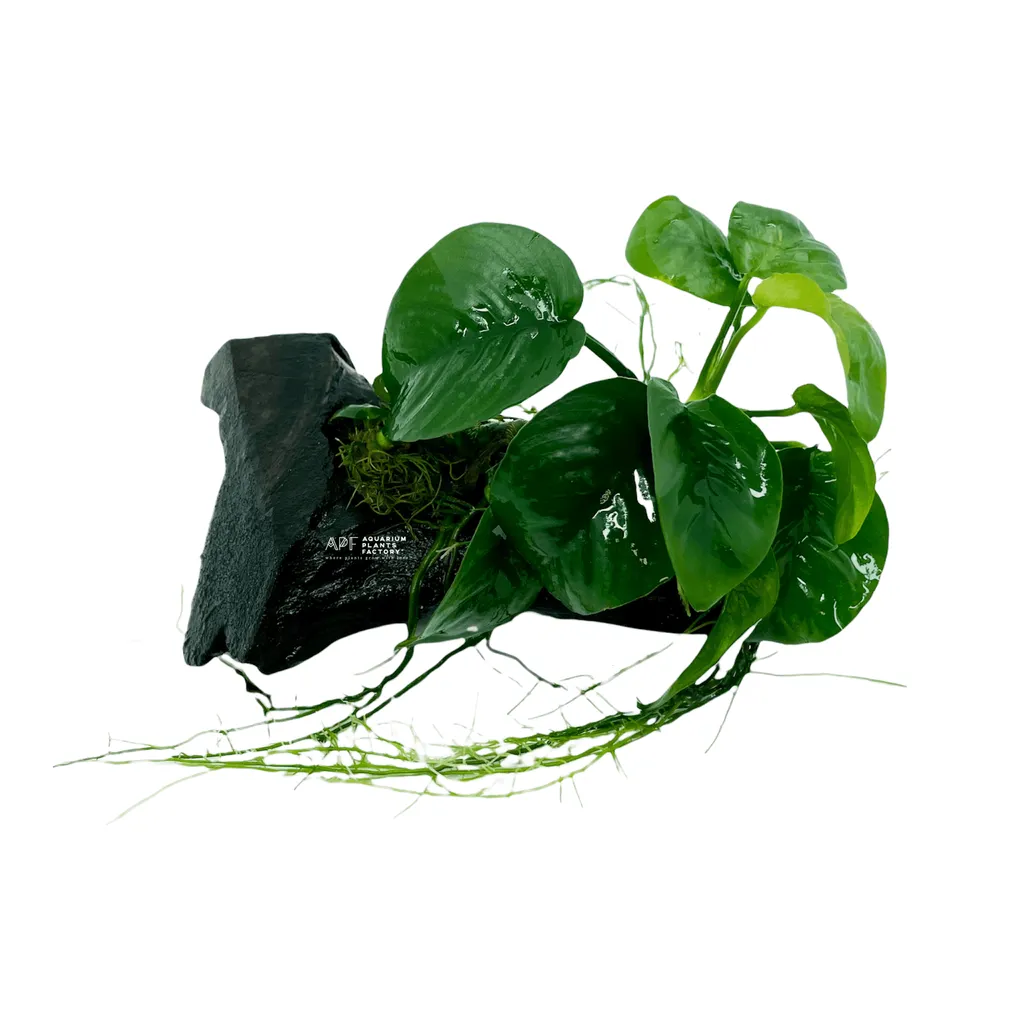 Low lightEpiphyte5.9 in (15 cm)
Anubias Butterfly
Anubias 'Butterfly'
Low light · Epiphyte
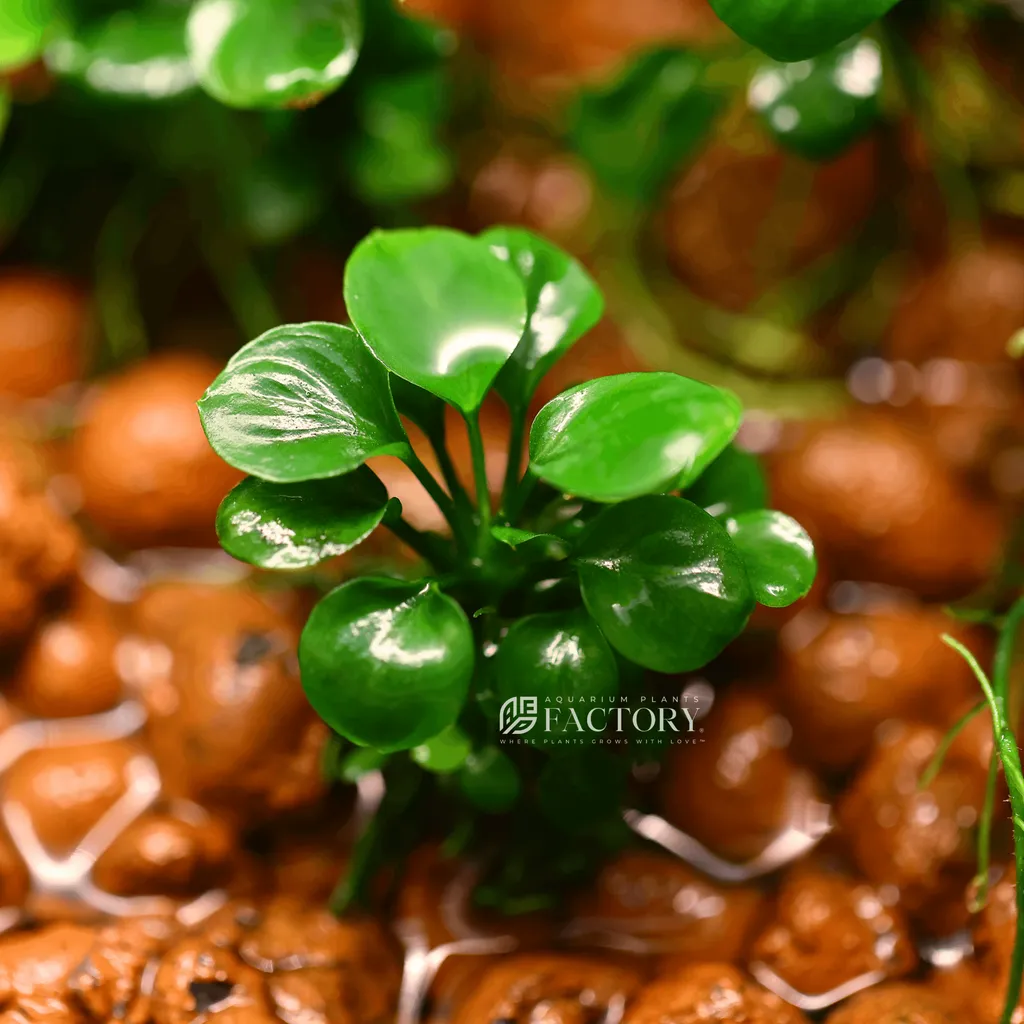 Low lightEpiphyte5.9 in (15 cm)
Anubias Coin Leaf
Anubias barteri 'Coin Leaf'
Low light · Epiphyte
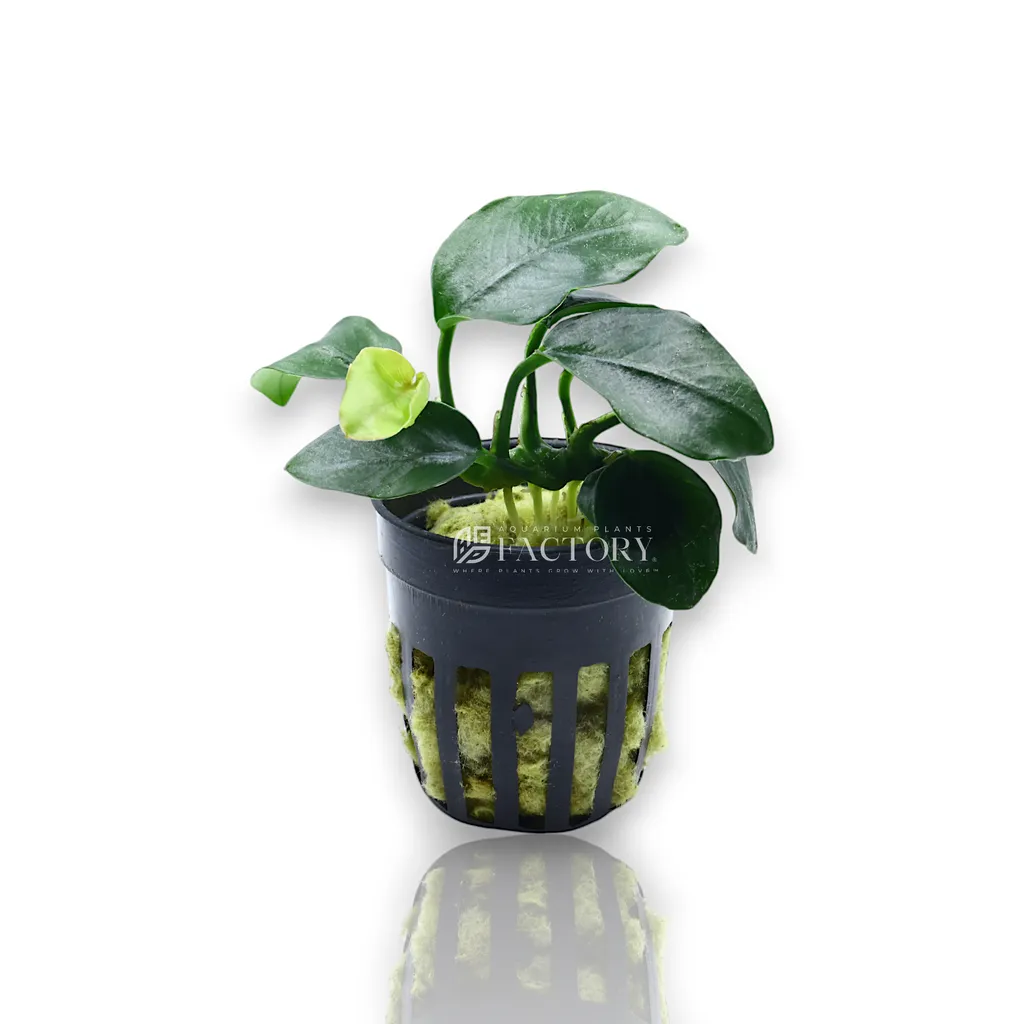 Low lightEpiphyte5.9 in (15 cm)
Anubias nana Thick Leaf
Anubias barteri var. nana 'Thick Leaf'
Low light · Epiphyte
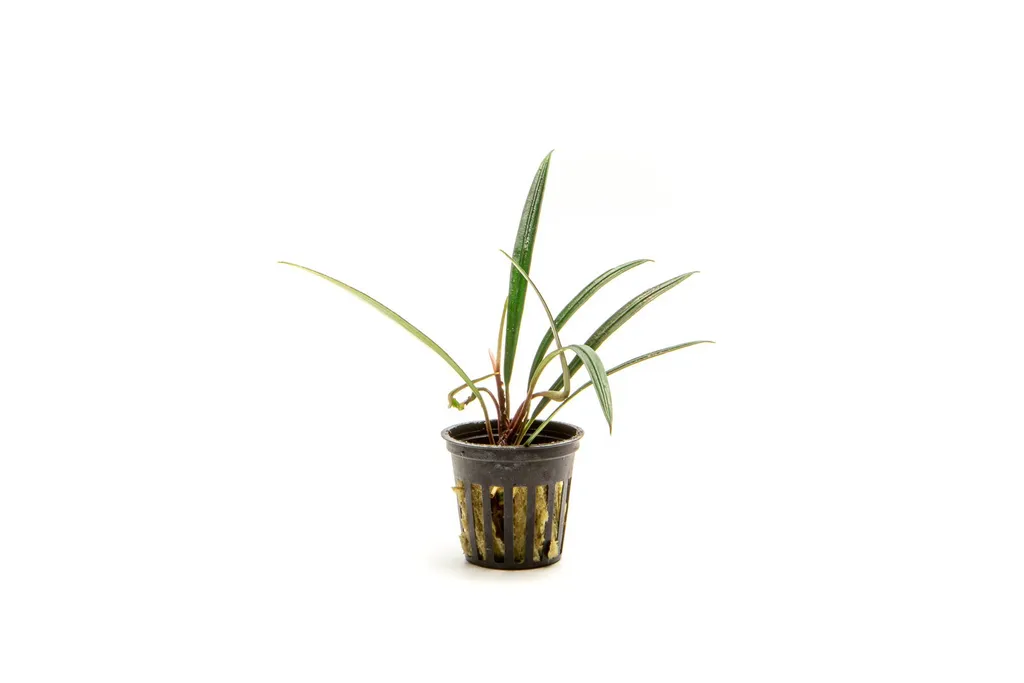 Low lightEpiphyte5.9 in (15 cm)
Aridarum Narrow
Aridarum sp. 'Narrow'
Low light · Epiphyte
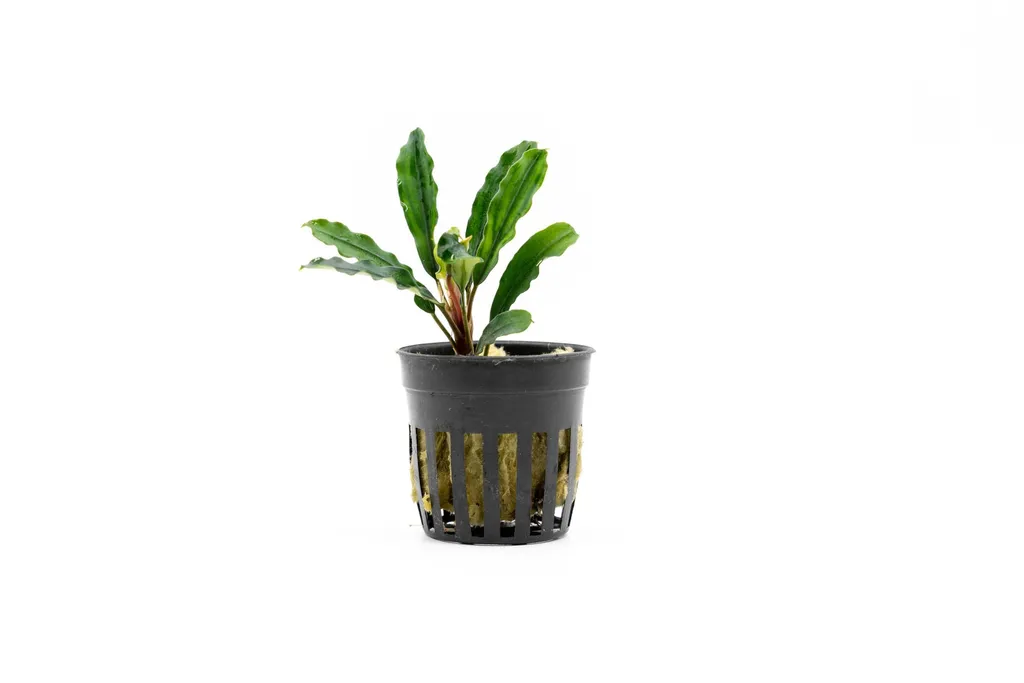 Low lightEpiphyte5.9 in (15 cm)
Bucephalandra Kedagang Long
Bucephalandra sp. 'Kedagang Long'
Low light · Epiphyte
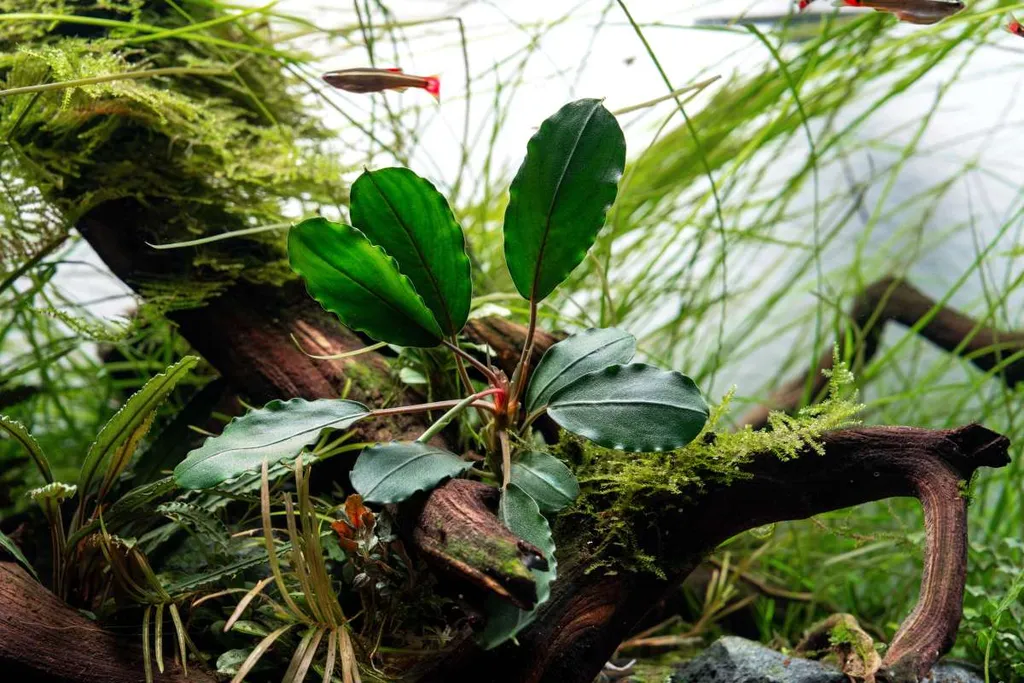 Low lightEpiphyte5.9 in (15 cm)
Bucephalandra Pearl Grey
Bucephalandra sp. 'Pearl Grey'
Low light · Epiphyte