Aridarum Narrow
Aridarum sp. 'Narrow'
Also known as Aridarum sp. 'Long Leaf', Burttianthus veluntandrus, Aridarum velutandrum
FreshwaterRhizomeRhizome division
Care at a glance
- Light
- Low light
- CO2
- CO₂ beneficial
- Temperature
- 72–82°F
- 22–28°C
- Max height
- 5.9 in
- 15 cm
- Growth rate
- Slow
- Placement
- Epiphyte
- Type
- Rhizome
- pH
- 6.0–7.5
- Spread
- 5.9 in (15 cm)
- Nutrient uptake
- Root + water column
- Growth region
- Submersed or emersed
- Difficulty
- Medium
- Family
- Araceae
- Origin
- Borneo (probably Sarawak, near Bintulu)
Overview
Glue or tie Aridarum Narrow to rock or wood, with the rhizome in open water. Low to medium light suits it, and CO2 helps a plant that grows very slowly. Keep water chemistry and light steady, since sudden changes can start melt and rot. Buce Plant, Glass Aqua and PremiumBuces sell it for aquariums, but Jungle Leaves warns that it declines when kept fully underwater for long. A plant that keeps melting may do better in a humid paludarium or on a drip wall. Cut the rhizome into pieces and fix each one to hardscape to propagate it.
In the wild
Aridarum Narrow comes from Borneo, and the German nursery Jungle Leaves traces its plants to the Bintulu area of Sarawak. The species it probably belongs to, Burttianthus veluntandrus, is known wild only from Similajau National Park near Bintulu. That species grows on very hard sandstone along the Sungai Anchau, under humid lowland forest at 30 to 60 m. Jungle Leaves says the wild plants sit above water for most of the year.
Good to know
Aridarum Narrow is a Bornean aroid in the family Araceae, sold under a trade name with no confirmed species. Its probable identity is Burttianthus veluntandrus, the name Jungle Leaves sells it under. Wong, Low and Boyce described that species from Sarawak in 2014 as Aridarum velutandrum, and a 2018 revision moved it to Burttianthus. The dark green leaves are linear, up to about 15 cm long and 5 to 8 mm wide, on reddish stalks. Sabertooth and White Fang, sold as Aridarum caulescens, have much wider blades.
Did you know
Aridarum Narrow shifts color with light. Jungle Leaves reports light green leaves in bright light and dark green to almost black leaves in shade.
Related plants
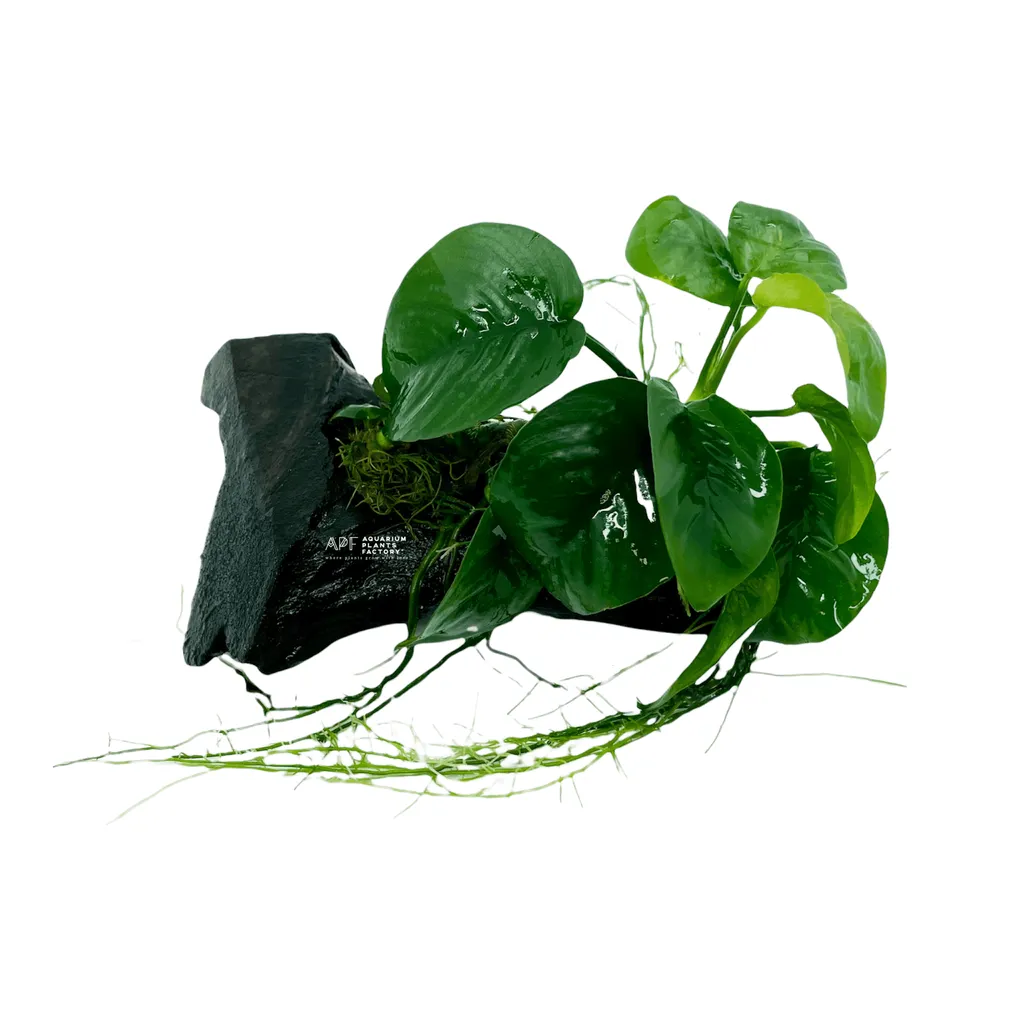 Low lightEpiphyte5.9 in (15 cm)
Anubias Butterfly
Anubias 'Butterfly'
Low light · Epiphyte
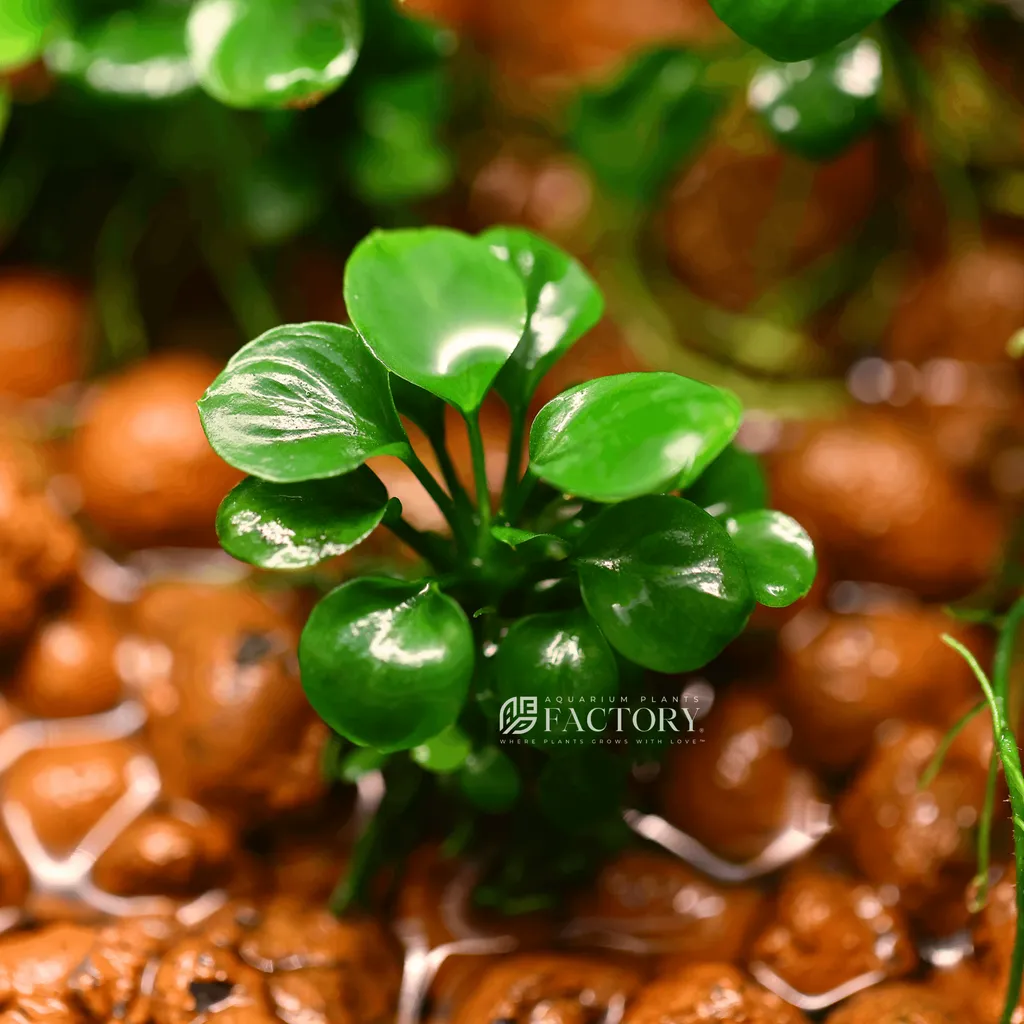 Low lightEpiphyte5.9 in (15 cm)
Anubias Coin Leaf
Anubias barteri 'Coin Leaf'
Low light · Epiphyte
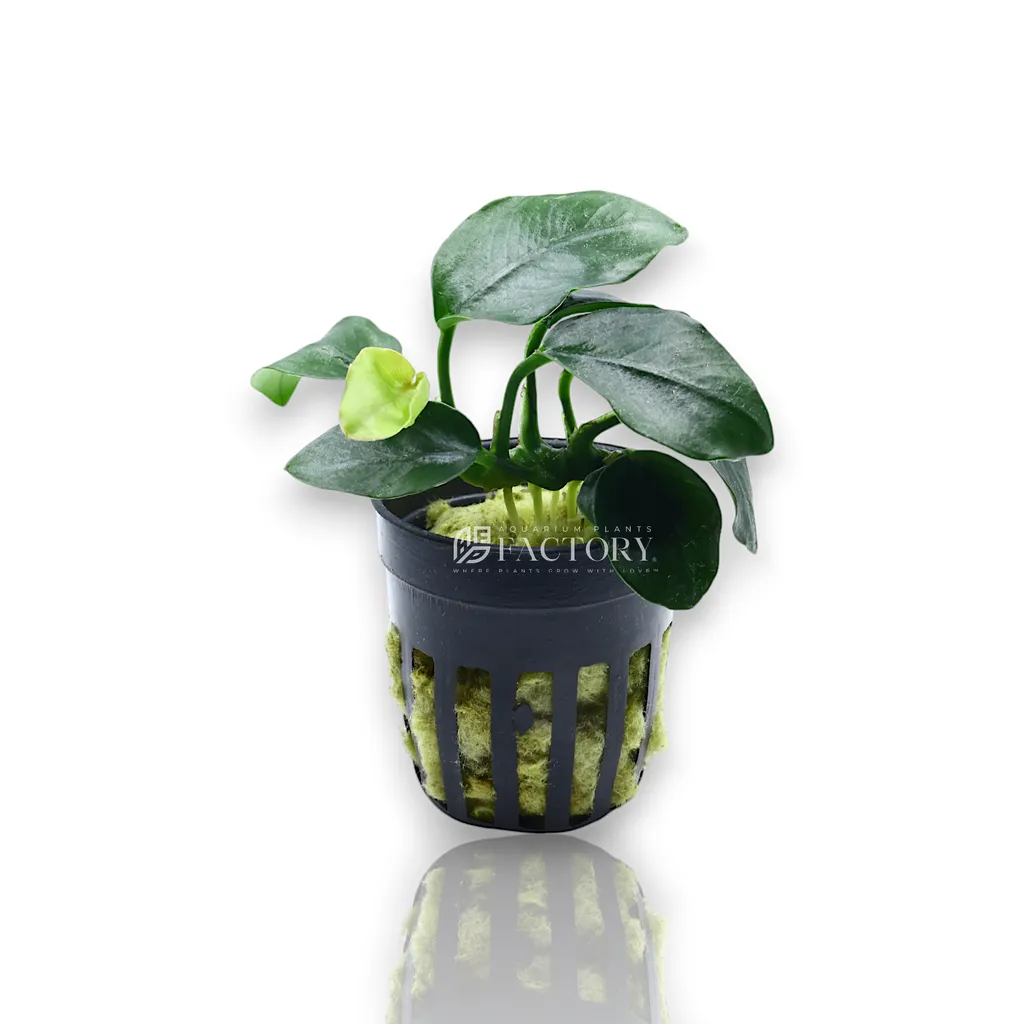 Low lightEpiphyte5.9 in (15 cm)
Anubias nana Thick Leaf
Anubias barteri var. nana 'Thick Leaf'
Low light · Epiphyte
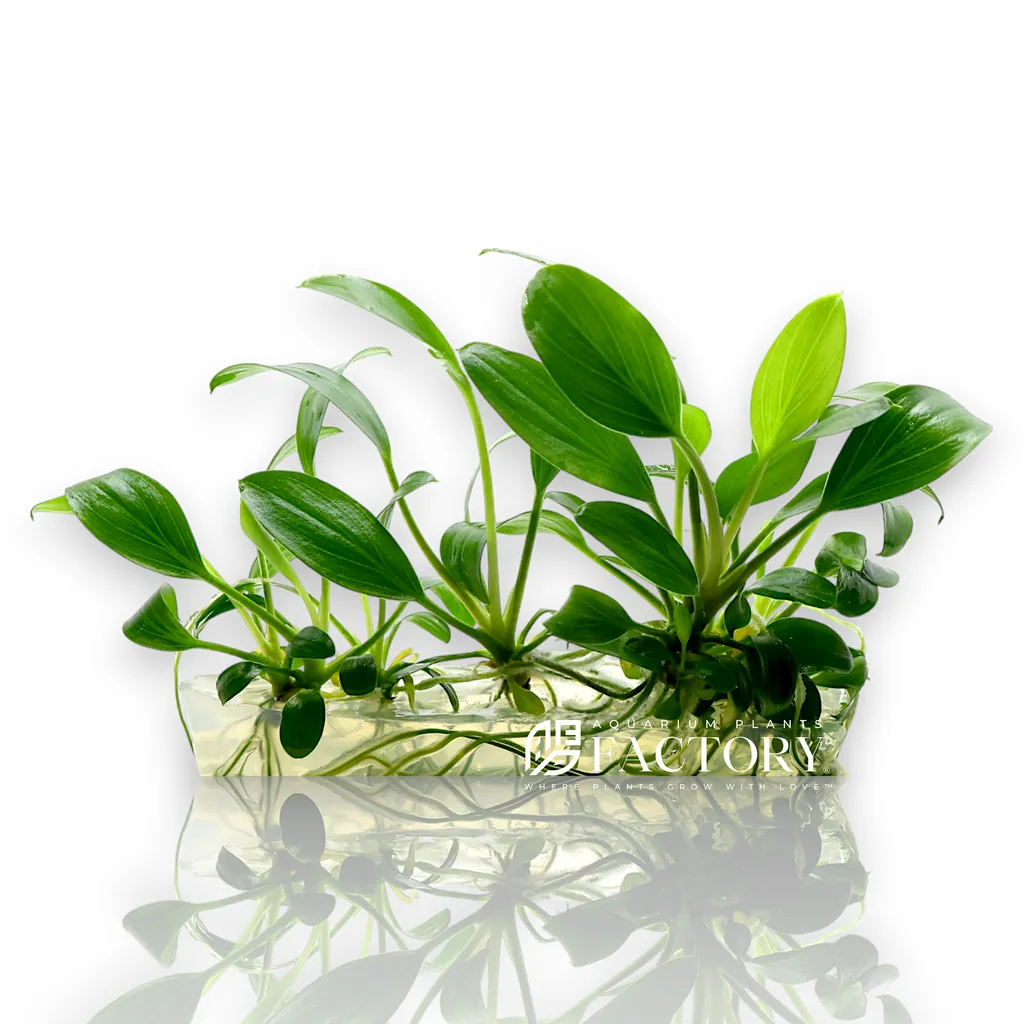 Low lightEpiphyte5.9 in (15 cm)
Homalomena Sekadau South
Homalomena sp. 'Sekadau South'
Low light · Epiphyte
- Low lightEpiphyte5.9 in (15 cm)
Bucephalandra Kedagang Long
Bucephalandra sp. 'Kedagang Long'
Low light · Epiphyte
- Low lightEpiphyte5.9 in (15 cm)
Bucephalandra Pearl Grey
Bucephalandra sp. 'Pearl Grey'
Low light · Epiphyte