Fissidens nobilis
Also known as Giant Fissidens, Fissidens japonicus, Fissidens sp. Japan
FreshwaterMossRhizome division
Care at a glance
- Light
- Low light
- CO2
- CO₂ beneficial
- Temperature
- 64–79°F
- 18–26°C
- Max height
- 1.6 in
- 4 cm
- Growth rate
- Slow
- Placement
- Epiphyte
- Type
- Moss
- pH
- 5.0–7.0
- Hardness
- 0–10 dGH
- Spread
- 3.9 in (10 cm)
- Nutrient uptake
- Water column
- Growth region
- Submersed or emersed
- Difficulty
- Difficult
- Family
- Fissidentaceae
- Origin
- Subtropical and tropical Asia and Oceania (China, Japan, Korea, India, Southeast Asia, Pacific Islands)
Overview
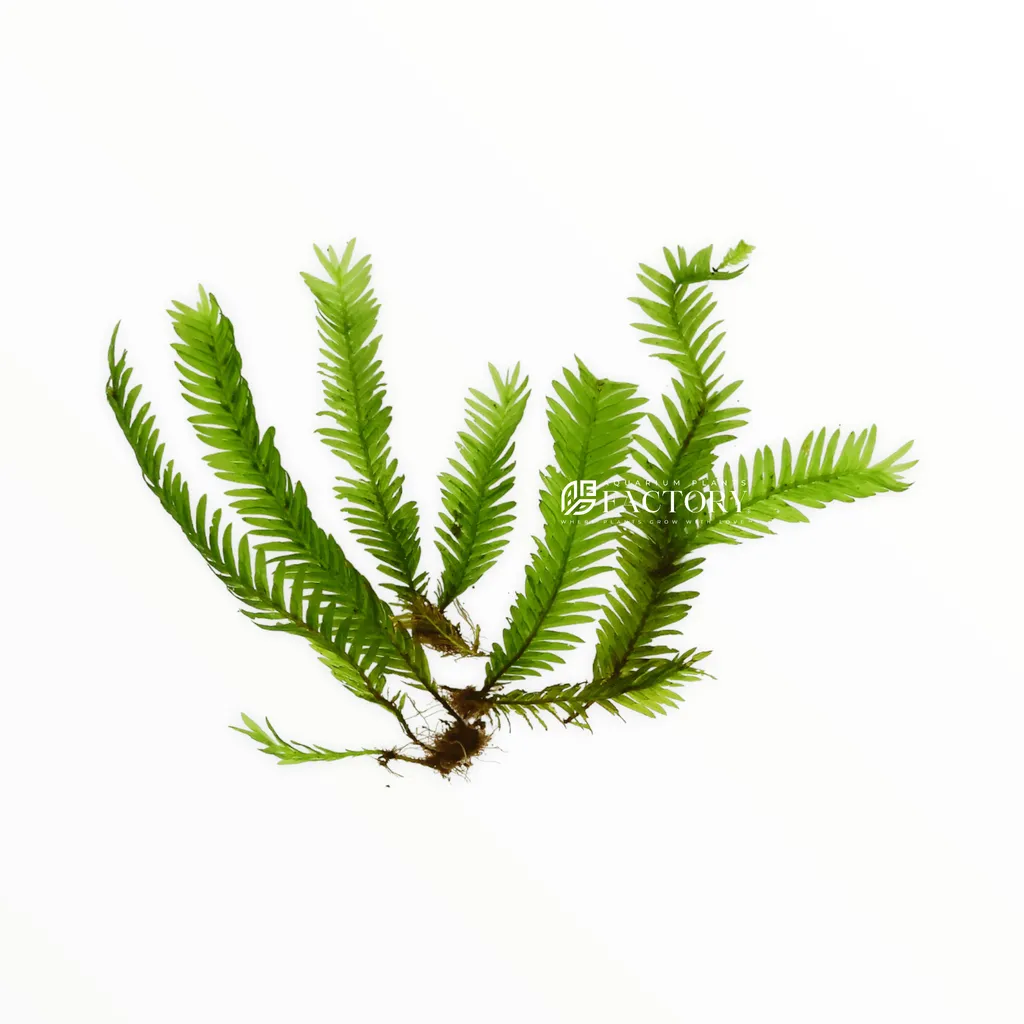
Attach it in a thin layer to rock or wood with thread or a dab of superglue, never plant it in substrate. It is genuinely demanding: it wants soft acidic water, cooler stable temperatures (it sulks above about 27C), and although it is a shade-dwelling moss that only needs low to moderate light, it does much better with added CO2. Growth is very slow, and because the dense fronds trap detritus you need to baste them clean during water changes to keep hair algae from smothering it. Propagate by splitting a patch and reattaching the pieces.
In the wild
Fissidens nobilis is a moss from the subtropical and tropical parts of Asia and Oceania, ranging across China, Japan, Korea, India, Southeast Asia and out to the Pacific islands. In the wild it grows on wet rock and wood beside streams and waterfalls, either partly submerged or in constantly damp emersed conditions. It is one of the larger, more robust Fissidens species, which is why the trade often calls it giant Fissidens.
Good to know
It is a true moss (division Bryophyta) in the family Fissidentaceae, a genus known for its distinctive two-ranked leaves that give the fronds a flat, fern-like appearance rather than the tangled look of Java or Christmas moss. It has been sold under the names Fissidens japonicus and Fissidens sp. Japan, which are considered the same plant in the hobby. Being a moss it has no true roots and clings by rhizoids, absorbing water and nutrients directly through its surface.
Did you know
Under good conditions Fissidens nobilis can flower, in a manner of speaking, by pushing up tiny reddish spore capsules on stalks, something most aquarists never see because the moss so rarely reaches that stage underwater.
Related plants
 Medium lightEpiphyte1.2 in (3 cm)
Phoenix moss
Fissidens fontanus
Medium light · Epiphyte
- Medium lightEpiphyte0.6 in (1.5 cm)
Mini fissidens
Fissidens sp. 'Mini'
Medium light · Epiphyte
 Low lightEpiphyte2 in (5 cm)
Christmas moss
Vesicularia montagnei
Low light · Epiphyte
 Low lightEpiphyte2 in (5 cm)
Peacock moss
Taxiphyllum sp. 'Peacock'
Low light · Epiphyte
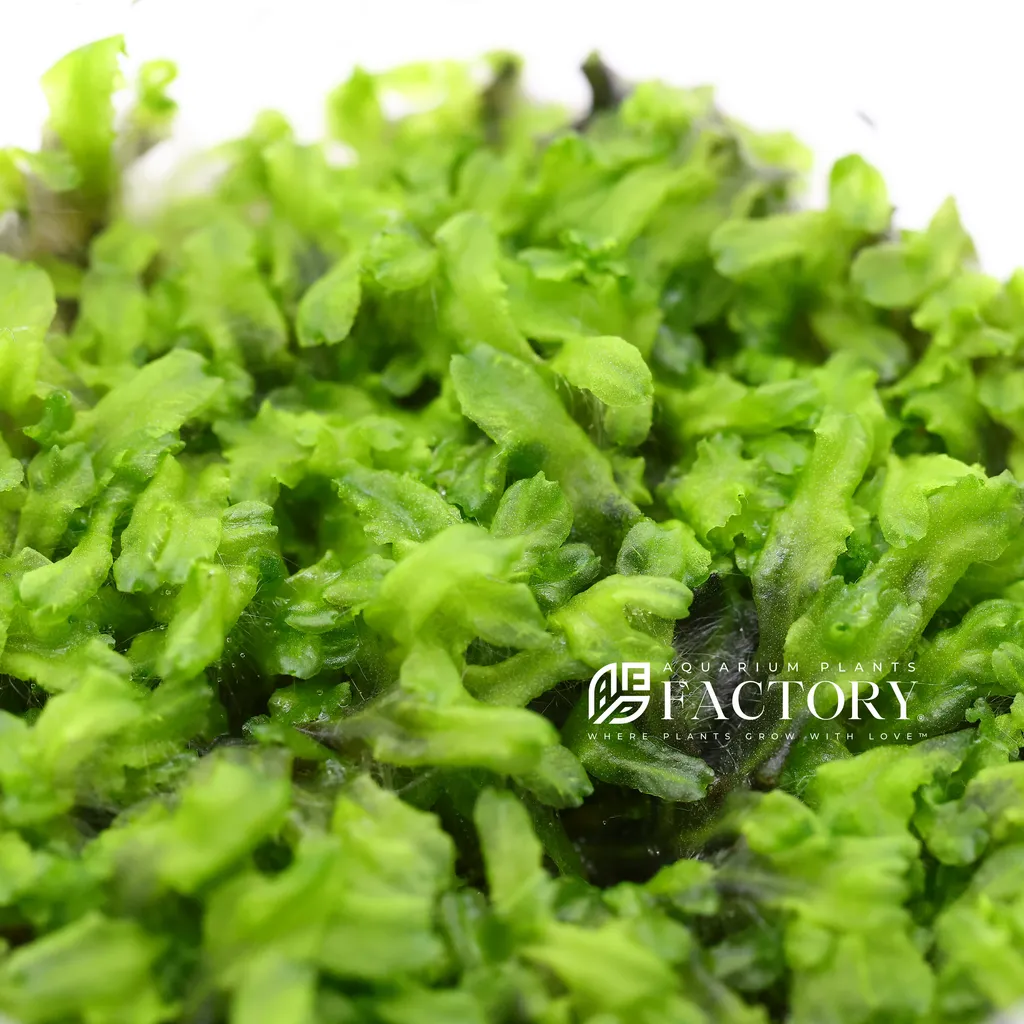 Low lightEpiphyte2 in (5 cm)
Pellia
Monosolenium tenerum
Low light · Epiphyte
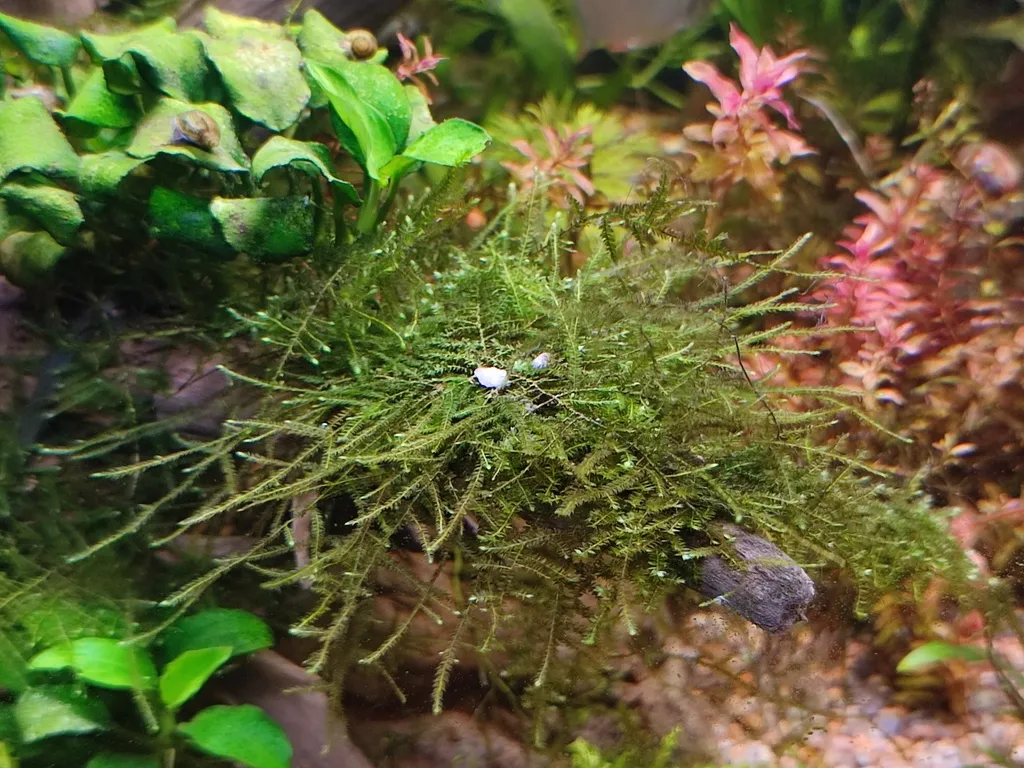 Low lightEpiphyte2 in (5 cm)
Singapore moss
Vesicularia dubyana
Low light · Epiphyte