Piptospatha ridleyi
Kiewia ridleyi
FreshwaterRhizomeRhizome division
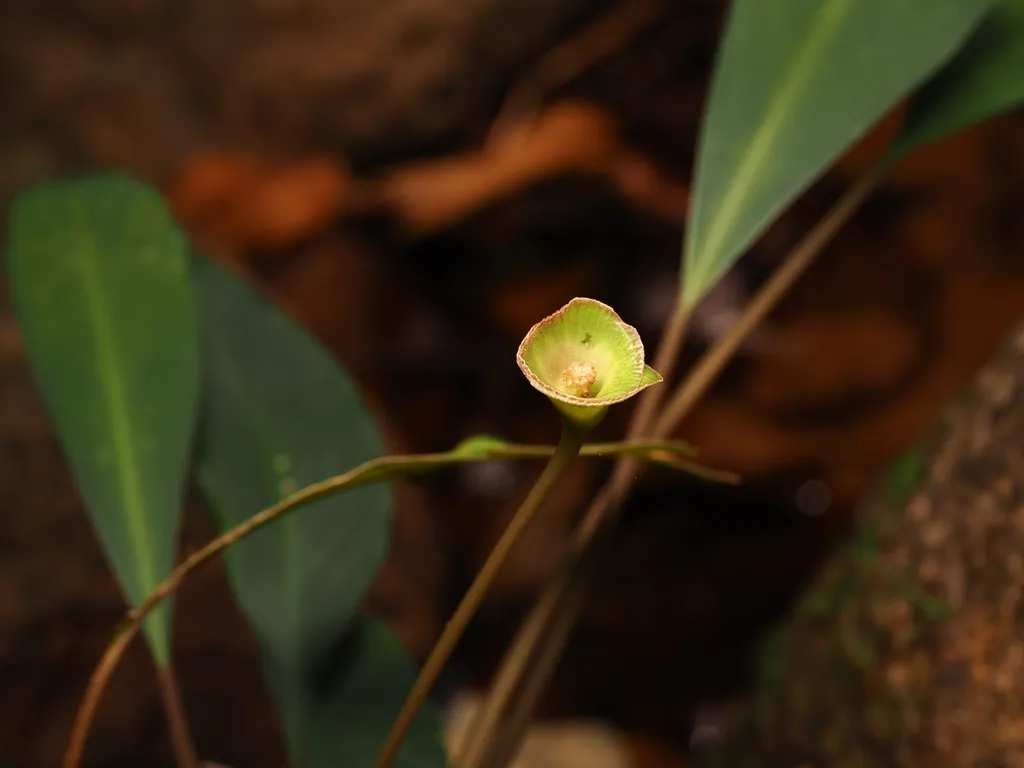
Care at a glance
- Light
- Low light
- CO2
- CO₂ beneficial
- Temperature
- 72–82°F
- 22–28°C
- Max height
- 11.8 in
- 30 cm
- Growth rate
- Slow
- Placement
- Epiphyte
- Type
- Rhizome
- pH
- 6.5–7.5
- Nutrient uptake
- Root + water column
- Growth region
- Submersed or emersed
- Difficulty
- Medium
- Family
- Araceae
- Origin
- Peninsular Malaysia (Johor, Pahang and Selangor)
Overview
Piptospatha ridleyi is a slow rhizome plant for rock or wood, best treated like a fussier Bucephalandra. It rates medium in difficulty and also grows well emersed in a humid paludarium.
Did you know
Piptospatha ridleyi gives itself away by smell when it flowers. The inflorescence releases a distinct banana scent, an aroid trick for calling in its insect pollinators along the stream banks.
Caring for Piptospatha ridleyi
Glue or tie the rhizome to rock or wood, and never bury it. Piptospatha ridleyi wants decent flow, and once it is attached it is best left alone.
Low light is enough, and high light mostly buys you algae on the old leaves. It grows without injected CO2, though CO2 speeds things up. It takes nutrients through its roots and leaves, so a liquid fertilizer suits a plant on hardscape.
Growth is slow, and new leaves come one at a time. Stable water matters more than any target number, since swings trigger melt. Keep it within 72 to 82°F (22 to 28°C) and pH 6.5 to 7.5. To propagate it, cut the rhizome into pieces with several leaves each.
Good to know
Piptospatha ridleyi is an aroid of tribe Schismatoglottideae in the family Araceae. It was described in 1895 and named for Henry Ridley, the botanist who ran the Singapore Botanic Gardens. The 2018 revision of the tribe by Wong and Boyce broke Piptospatha apart and moved this species into the new genus Kiewia. That name honors the botanist Ruth Kiew, though the trade has stayed with Piptospatha ridleyi. Its dark green leaves carry a pale mottling that sets it apart from Bucephalandra at a glance.
In the wild
Piptospatha ridleyi is a rheophyte from Peninsular Malaysia, recorded in Johor, Pahang and Selangor. It does not come from Borneo, as retail listings often claim. It grows anchored to granite boulders in and along forest streams between roughly 100 and 900 m. It sits emersed in spray-wet air for much of the year and goes fully submersed when rains raise the stream.
Common questions
Does Piptospatha ridleyi need to be planted in the substrate?
No. Piptospatha ridleyi grows attached to rock or wood, so tie or glue the rhizome in place. If you plant its roots, keep the rhizome above the substrate, since a buried rhizome rots.
Does Piptospatha ridleyi need CO2?
No, but it helps. Piptospatha ridleyi can grow without injected CO2, and added CO2 makes it grow faster.
How much light does Piptospatha ridleyi need?
Piptospatha ridleyi is a low-light plant, and the light that comes with a standard tank kit is enough for it.
Does Piptospatha ridleyi need root tabs?
No. Piptospatha ridleyi feeds from the water, so a liquid fertilizer suits it better. Root tabs only help if its roots reach into the substrate.
How do you propagate Piptospatha ridleyi?
Piptospatha ridleyi propagates by rhizome division. Cut the rhizome into pieces with several leaves each, then tie or plant each piece.
How tall does Piptospatha ridleyi grow?
Piptospatha ridleyi grows to about 11.8 in (30 cm) tall. It grows slowly and rarely needs trimming.
Related plants
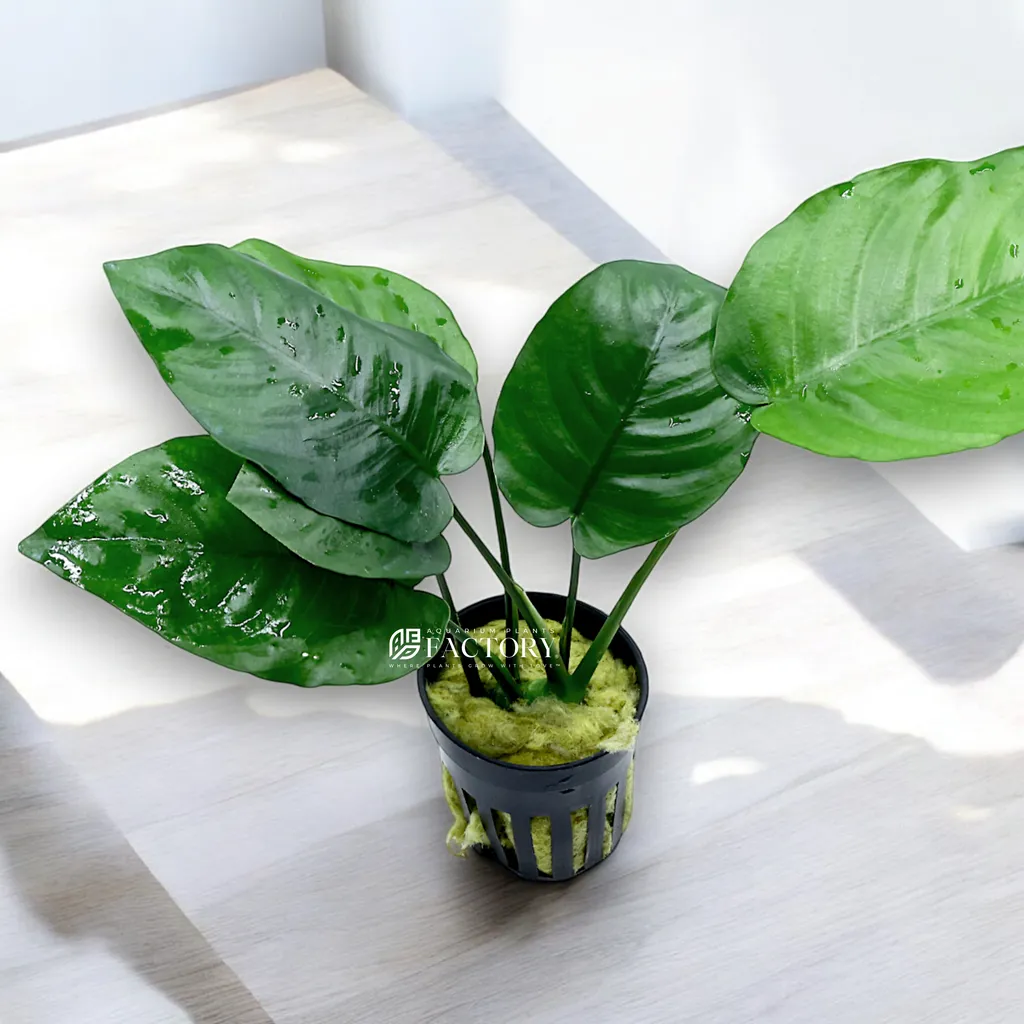 Low lightEpiphyte11.8 in (30 cm)
Anubias Broad Leaf
Anubias barteri var. barteri 'Broad Leaf'
Low light · Epiphyte
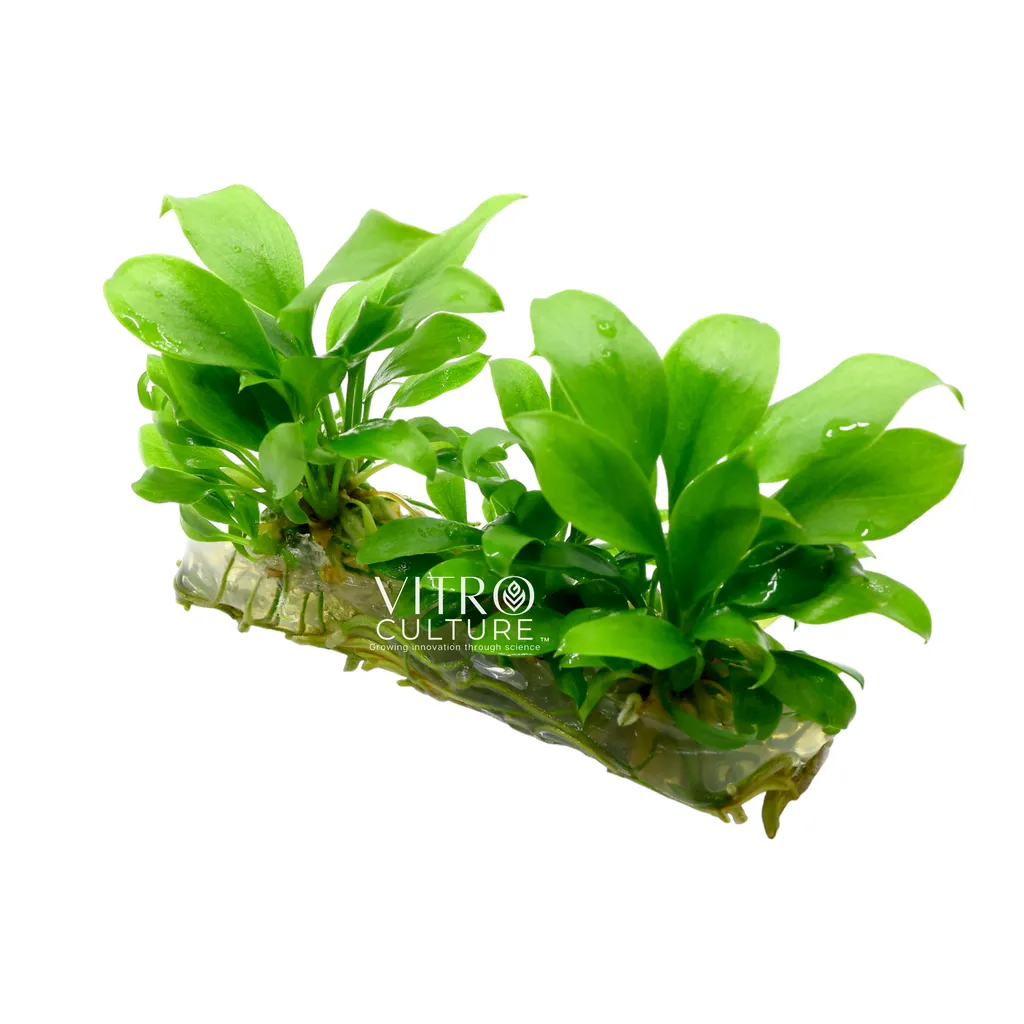 Low lightEpiphyte11.8 in (30 cm)
Anubias gilletii
Low light · Epiphyte
- Low lightEpiphyte11.8 in (30 cm)
Bucephalandra goliath
Low light · Epiphyte
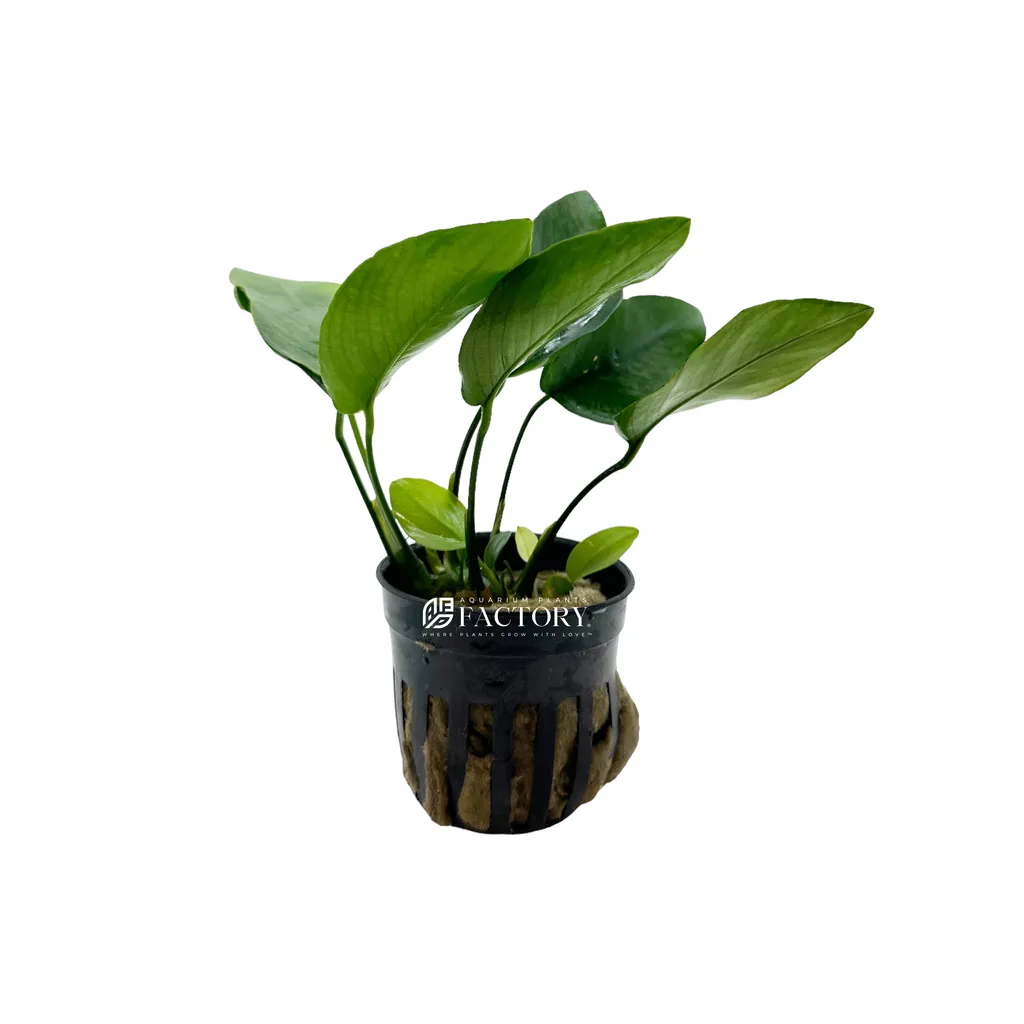 Low lightEpiphyte13.8 in (35 cm)
Anubias barteri
Low light · Epiphyte
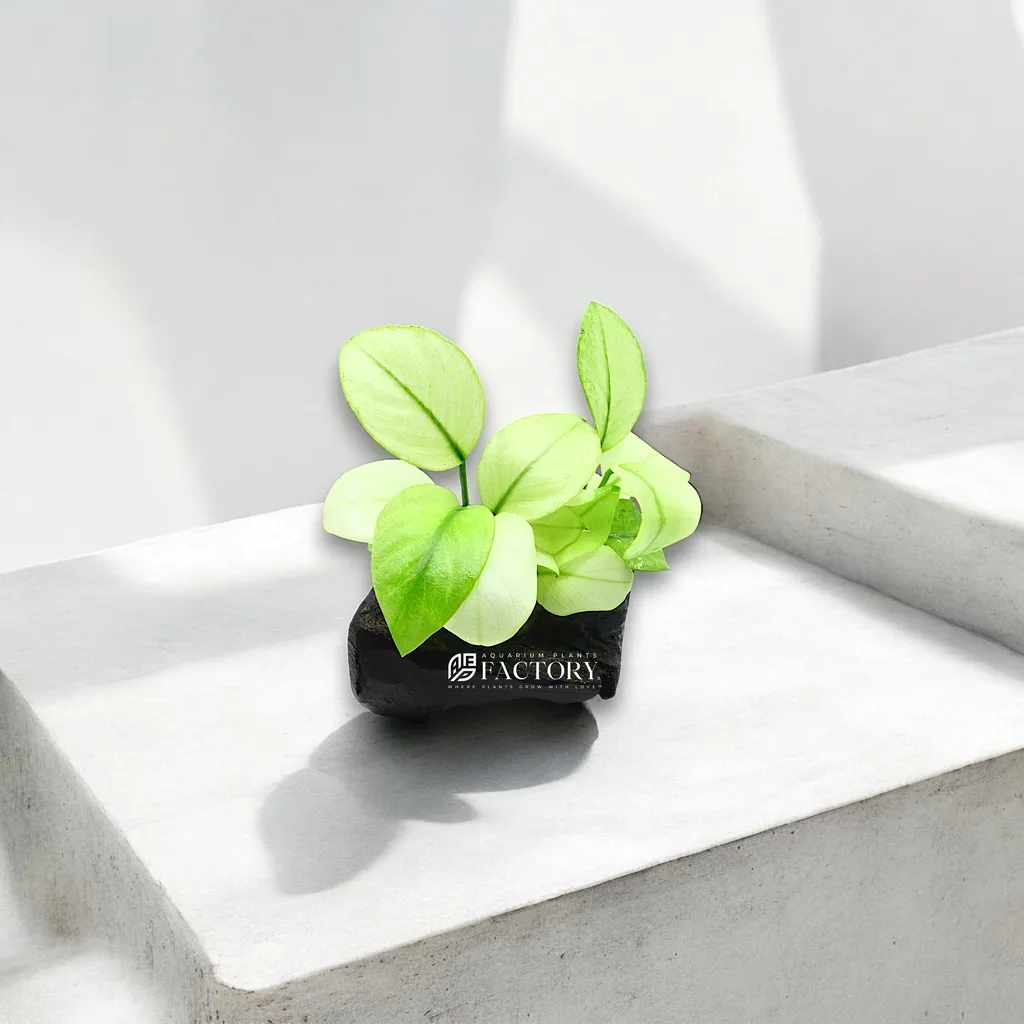 Medium lightEpiphyte9.8 in (25 cm)
Anubias Broad White
Anubias barteri 'Broad White'
Medium light · Epiphyte
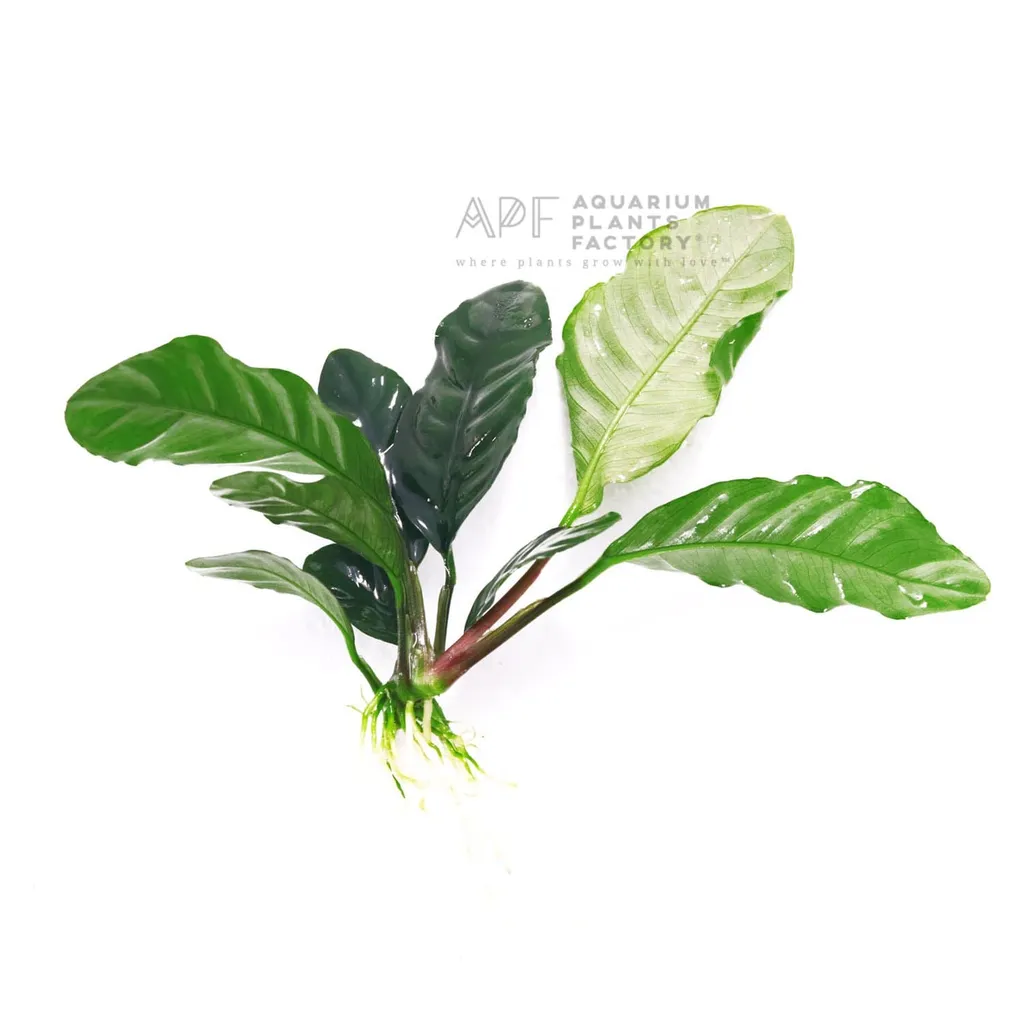 Low lightEpiphyte9.8 in (25 cm)
Anubias coffeefolia
Anubias barteri var. coffeefolia
Low light · Epiphyte