Goldflake angelfish
Apolemichthys xanthopunctatus
Also known as Gold-spangled Angelfish, Golden Spotted Angelfish
SaltwaterFish
Care at a glance
- Temperature
- 73–81°F
- 23–27°C
- pH
- 8.1–8.4
- Adult size
- 9.8 in
- 25 cm
- Minimum tank
- 125 gal
- 475 L
- Temperament
- Mostly peaceful
- Social behavior
- Solitary
- Tankmates
- With caution
- Swim level
- Middle
- Difficulty
- Medium
- Breeding
- Hard
- Rarity
- Rare
- Reef safe
- Reef safe with caution
- Family
- Pomacanthidae
- Origin
- Central Pacific
Overview
The goldflake angelfish is a large grazing angelfish for a big, mature saltwater tank. It suits a keeper with a little experience.
Did you know
The goldflake angelfish's tiny home range kept wild exports scarce and prices high. Breeders made it an early target, and captive-bred juveniles from Bali now reach hobbyists alongside the occasional wild import.
Caring for the goldflake angelfish
Give the goldflake angelfish a mature tank of at least 125 gal (475 L), with generous rockwork and open swimming room. It is a steady grazer that spends most of its time in the middle of the tank.
Keep the water at 73 to 81°F (23 to 27°C) and a pH of 8.1 to 8.4. Wild fish can be slow to feed at first. Captive-bred ones take pellets and frozen foods straight away.
The goldflake angelfish is solitary and mostly peaceful, but choose its tank mates with caution. It is considered one of the safer large angels around corals. Some adults still learn to pick at zoanthids, fleshy LPS and clam mantles, so watch it in a reef. Breeding it is hard.
Good to know
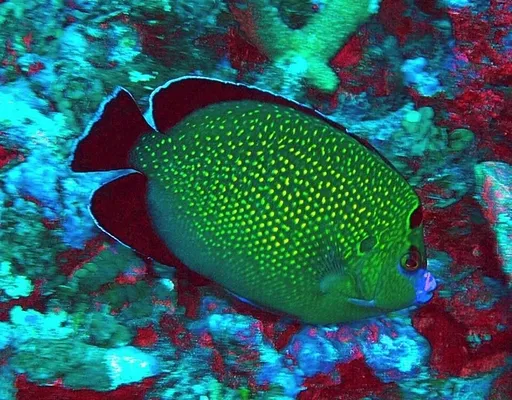
Apolemichthys xanthopunctatus belongs to the family Pomacanthidae, and it also goes by gold-spangled angelfish and golden spotted angelfish. Adults wear gold-flecked scales with blue lips and black, blue-edged fins. Juveniles carry a dark eye bar and a spot on the forehead, and both fade as the fish matures.
In the wild
The goldflake angelfish is native to a small slice of the central Pacific. Its range runs from Micronesia and the Caroline Islands east to the Gilbert, Phoenix, Line and northern Cook islands. It lives on outer reef slopes and lagoon patch reefs, working coral and rubble cover at moderate depths.
Common questions
What size tank does a goldflake angelfish need?
A goldflake angelfish needs at least 125 gal (475 L). It spends most of its time in the middle.
What temperature and pH does a goldflake angelfish need?
A goldflake angelfish is comfortable at 73–81°F (23–27°C) with a pH of 8.1–8.4.
What does a goldflake angelfish eat?
A goldflake angelfish is a steady grazer. Captive-bred fish take pellets and frozen foods straight away, while wild fish can be slow to feed at first.
How big does a goldflake angelfish get?
An adult goldflake angelfish reaches about 9.8 in (25 cm).
Related species
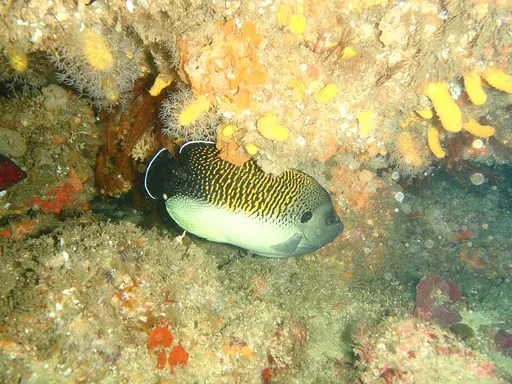 9.8 in (25 cm)151 gal (570 L)72–79°F (22–26°C)
Tiger angelfish
Apolemichthys kingi
9.8 in (25 cm) · 151 gal (570 L)
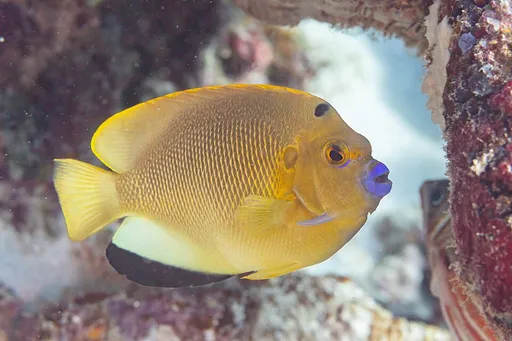 10.2 in (26 cm)100 gal (380 L)73–81°F (23–27°C)
Flagfin angelfish
Apolemichthys trimaculatus
10.2 in (26 cm) · 100 gal (380 L)
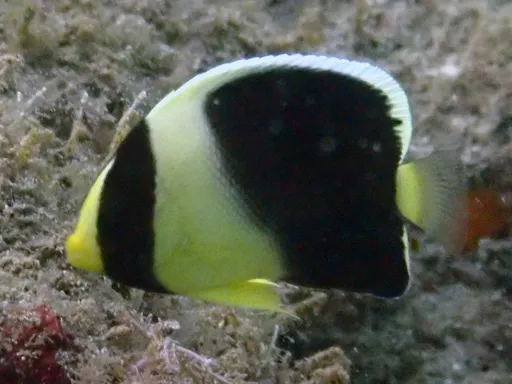 7.9 in (20 cm)125 gal (475 L)72–81°F (22–27°C)
Red Sea angelfish
Apolemichthys xanthotis
7.9 in (20 cm) · 125 gal (475 L)
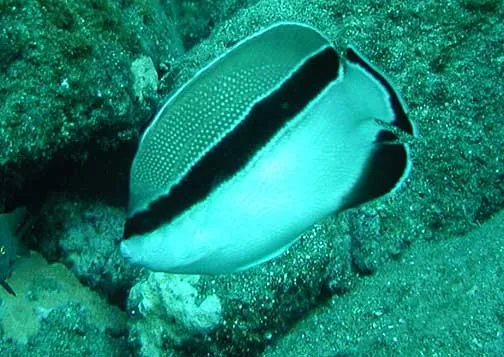 7.1 in (18 cm)90 gal (340 L)73–79°F (23–26°C)
Bandit angelfish
Apolemichthys arcuatus
7.1 in (18 cm) · 90 gal (340 L)
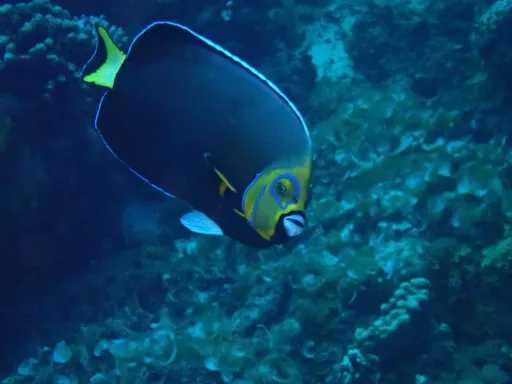 9.8 in (25 cm)198 gal (750 L)72–79°F (22–26°C)
Conspicuous angelfish
Chaetodontoplus conspicillatus
9.8 in (25 cm) · 198 gal (750 L)
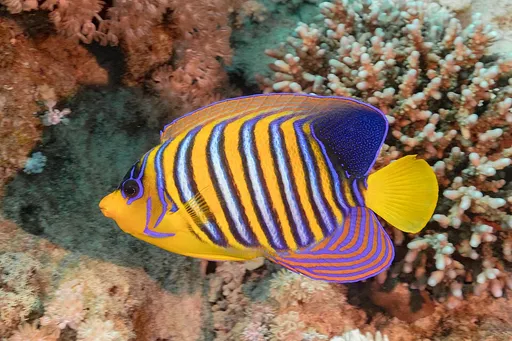 9.8 in (25 cm)124 gal (470 L)73–81°F (23–27°C)
Regal angelfish
Pygoplites diacanthus
9.8 in (25 cm) · 124 gal (470 L)