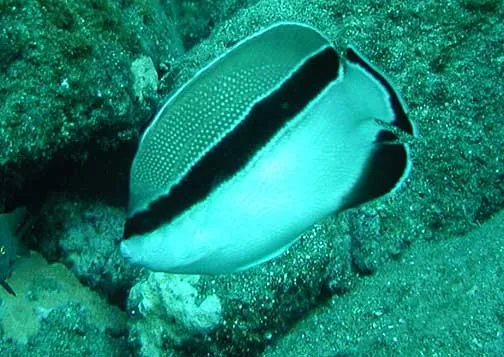
Bandit angelfish
Apolemichthys arcuatus
Also known as Black Bandit Angelfish, Banded Angelfish, Black-banded Angelfish, Hawaiian Bandit Angelfish
SaltwaterFish
Care at a glance
- Temperature
- 73–79°F
- 23–26°C
- pH
- 8.1–8.4
- Adult size
- 7.1 in
- 18 cm
- Minimum tank
- 90 gal
- 340 L
- Temperament
- Mostly peaceful
- Social behavior
- Solitary
- Tankmates
- With caution
- Swim level
- Middle
- Difficulty
- Difficult
- Breeding
- Hard
- Rarity
- Very rare
- Reef safe
- Reef safe with caution
- Family
- Pomacanthidae
- Origin
- Hawaiian Islands and Johnston Atoll, on deep reef slopes and drop-offs.
Overview
The bandit angelfish is a demanding, expensive angel that swims in the middle of a saltwater tank. It is a fish for experienced keepers.
Did you know
The bandit angelfish is caught by divers working unusually deep Hawaiian slopes. That is a big part of why it carries such a high price tag.
Caring for the bandit angelfish
Give a bandit angelfish a calm, mature and established tank of at least 90 gal (340 L). It likes cooler, dim conditions, with the water at 73 to 79°F (23 to 26°C) and a pH of 8.1 to 8.4.
Wild-caught sponge feeders can be slow to adapt to aquarium foods. Coax it onto sponge-based angelfish foods, mysis and a variety of meaty items.
The bandit angelfish is mostly peaceful, but choose its tank mates with caution and house only one per tank. It nips clam mantles and stony and soft corals. Treat it as reef safe only with caution, or keep it in a fish-only tank with live rock (FOWLR).
Breeding it is hard. Specialist breeders have reared it, but only in small numbers.
Good to know
The bandit angelfish is a member of the family Pomacanthidae, with Desmoholacanthus arcuatus recorded as a synonym. It wears a bold black stripe through the eye and along the body on a pale gray ground. It also goes by black bandit angelfish, banded angelfish and Hawaiian bandit angelfish.
In the wild
The bandit angelfish is endemic to the Hawaiian Islands and Johnston Atoll. It lives on deep reef slopes and drop-offs, in deeper water than most collected angels and often below normal diving depth. Wild fish feed heavily on sponges. Its endemic range and deep habitat make it rare.
Common questions
What size tank does a bandit angelfish need?
A bandit angelfish needs at least 90 gal (340 L). It spends most of its time in the middle.
What temperature and pH does a bandit angelfish need?
A bandit angelfish is comfortable at 73–79°F (23–26°C) with a pH of 8.1–8.4.
What does a bandit angelfish eat?
A bandit angelfish eats sponge-based angelfish foods, mysis and a variety of meaty items. Wild-caught fish can be slow to adapt, so coax them onto these foods.
How big does a bandit angelfish get?
An adult bandit angelfish reaches about 7.1 in (18 cm).
How does a bandit angelfish breed?
A bandit angelfish is hard to breed. Specialist breeders have reared it, but only in small numbers.
Related species
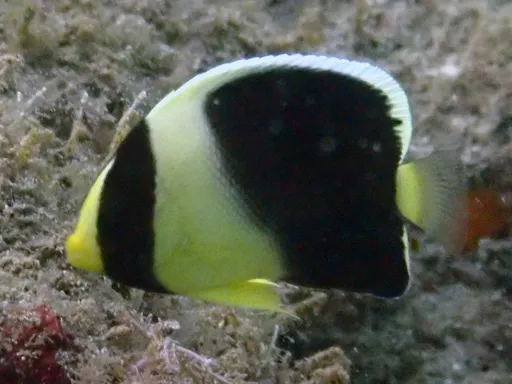 7.9 in (20 cm)125 gal (475 L)72–81°F (22–27°C)
Red Sea angelfish
Apolemichthys xanthotis
7.9 in (20 cm) · 125 gal (475 L)
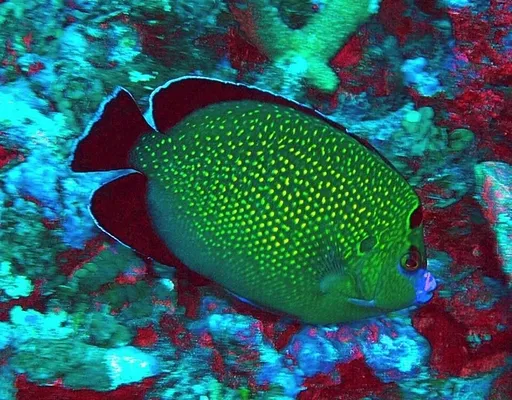 9.8 in (25 cm)125 gal (475 L)73–81°F (23–27°C)
Goldflake angelfish
Apolemichthys xanthopunctatus
9.8 in (25 cm) · 125 gal (475 L)
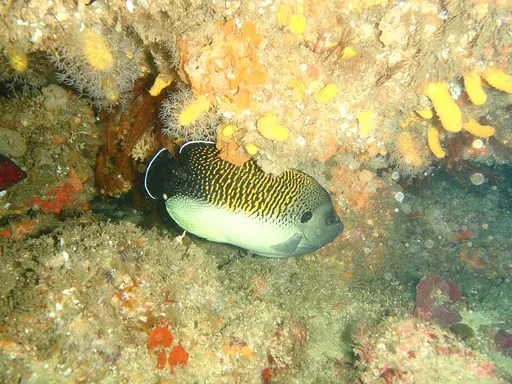 9.8 in (25 cm)151 gal (570 L)72–79°F (22–26°C)
Tiger angelfish
Apolemichthys kingi
9.8 in (25 cm) · 151 gal (570 L)
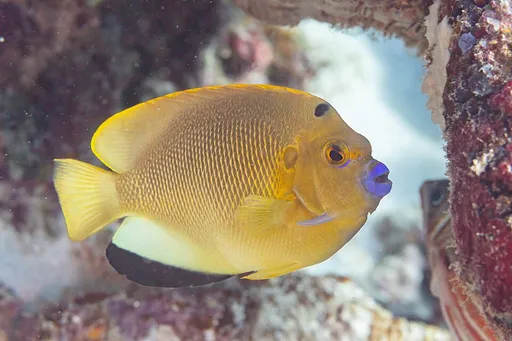 10.2 in (26 cm)100 gal (380 L)73–81°F (23–27°C)
Flagfin angelfish
Apolemichthys trimaculatus
10.2 in (26 cm) · 100 gal (380 L)
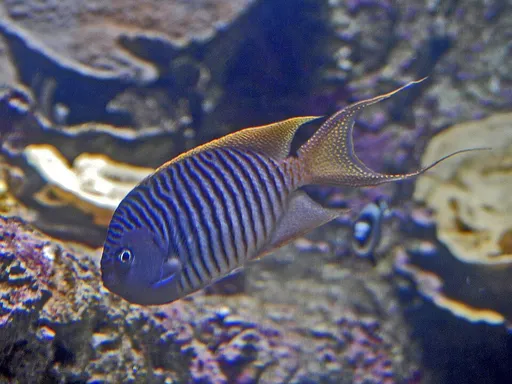 7.1 in (18 cm)106 gal (400 L)72–79°F (22–26°C)
Swallowtail angelfish
Genicanthus melanospilos
7.1 in (18 cm) · 106 gal (400 L)
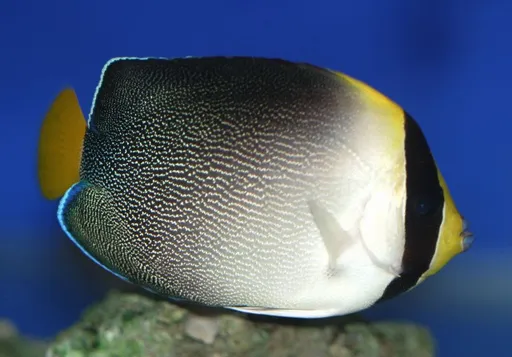 7.1 in (18 cm)66 gal (250 L)75–81°F (24–27°C)
Vermiculated angelfish
Chaetodontoplus mesoleucus
7.1 in (18 cm) · 66 gal (250 L)