Flagfin angelfish
Apolemichthys trimaculatus
Also known as Threespot Angelfish, Three-spot Angelfish
SaltwaterFish
Care at a glance
- Temperature
- 73–81°F
- 23–27°C
- pH
- 8.1–8.4
- Adult size
- 10.2 in
- 26 cm
- Minimum tank
- 100 gal
- 380 L
- Temperament
- Mostly peaceful
- Social behavior
- Solitary
- Tankmates
- With caution
- Swim level
- Middle
- Difficulty
- Difficult
- Breeding
- Hard
- Rarity
- Common
- Reef safe
- Reef safe with caution
- Family
- Pomacanthidae
- Origin
- Indo-Pacific, from East Africa to Samoa, north to southern Japan and south to Australia
Overview
Flagfin angelfish are mostly peaceful once settled in, though shy and slow to come out at first, and they do not tolerate other angelfish. Feed a sponge-based angelfish preparation along with spirulina and marine algae several times a day; this species leans on sponge in its natural diet more than most, and it is not a fish for a young, understocked tank. Reef keepers should treat it with caution, not confidence: a hungry flagfin will pick at soft and stony corals and clam mantles, so it does best in a fish-only or FOWLR setup.
In the wild
Flagfin angelfish live on Indo-Pacific lagoon and seaward reefs from East Africa to Samoa, usually near coral growth from about 3 to 60 meters. Juveniles are secretive and stay below 25 meters, while adults form small, loose groups at moderate depth. A tank needs to be well established with a strong algae film and good water movement, since this species arrives shy and needs a head start of food already growing on the rock.
Good to know
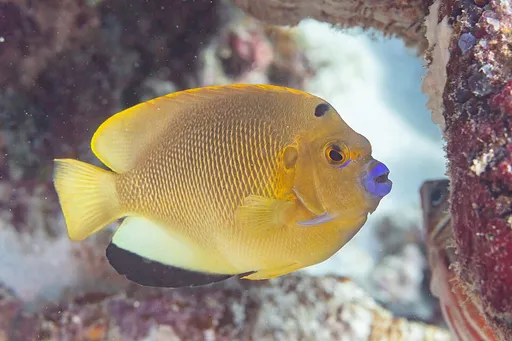
Apolemichthys trimaculatus reaches about 26 cm. It has a bright yellow body with blue-edged scales, blue lips, and the dark spots near the eyes and forehead that give the species its threespot and flagfin names, though how many spots show up varies between individual fish and populations. It is shy when first introduced and grows bolder, occasionally sparring with similarly shaped fish, only once it has settled into a tank.
Did you know
A Bali-based angelfish hatchery achieved the first captive-bred flagfin angelfish, notable because wild adults are among the pickiest eaters in the family and can waste away in a new tank if they never learn to accept prepared food.
Common questions
What size tank does a Flagfin angelfish need?
A Flagfin angelfish needs at least 100 gal (380 L). It spends most of its time in the middle.
What temperature and pH does a Flagfin angelfish need?
A Flagfin angelfish is comfortable at 73–81°F (23–27°C) with a pH of 8.1–8.4.
How big does a Flagfin angelfish get?
An adult Flagfin angelfish reaches about 10.2 in (26 cm).
Related species
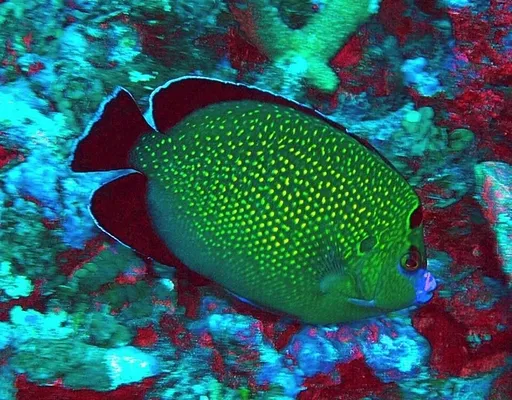 9.8 in (25 cm)125 gal (475 L)73–81°F (23–27°C)
Goldflake angelfish
Apolemichthys xanthopunctatus
9.8 in (25 cm) · 125 gal (475 L)
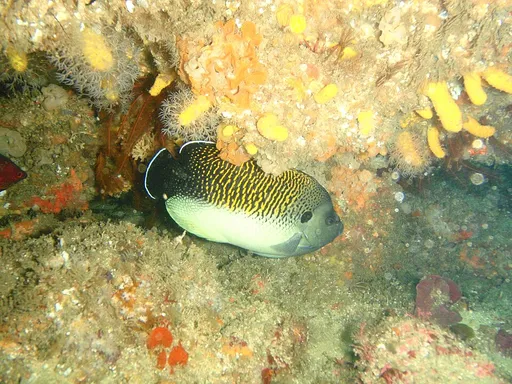 9.8 in (25 cm)151 gal (570 L)72–79°F (22–26°C)
Tiger angelfish
Apolemichthys kingi
9.8 in (25 cm) · 151 gal (570 L)
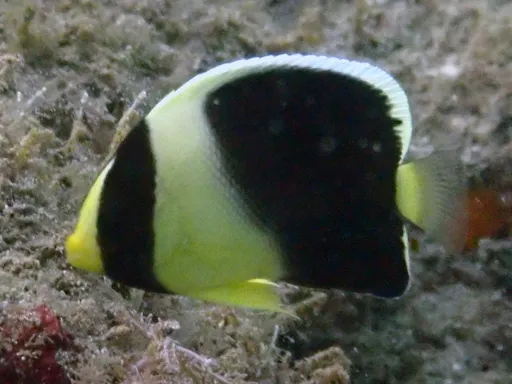 7.9 in (20 cm)125 gal (475 L)72–81°F (22–27°C)
Red Sea angelfish
Apolemichthys xanthotis
7.9 in (20 cm) · 125 gal (475 L)
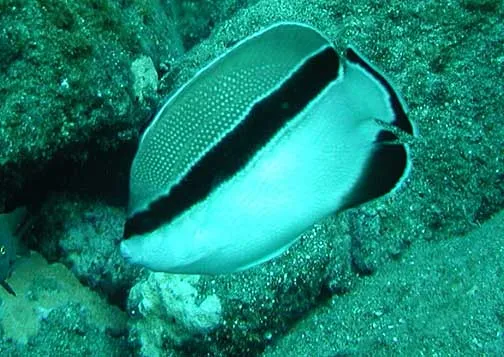 7.1 in (18 cm)90 gal (340 L)73–79°F (23–26°C)
Bandit angelfish
Apolemichthys arcuatus
7.1 in (18 cm) · 90 gal (340 L)
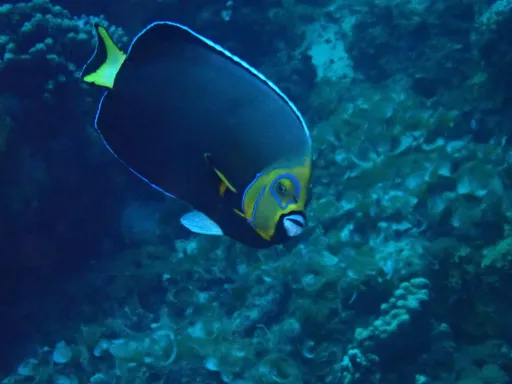 9.8 in (25 cm)198 gal (750 L)72–79°F (22–26°C)
Conspicuous angelfish
Chaetodontoplus conspicillatus
9.8 in (25 cm) · 198 gal (750 L)
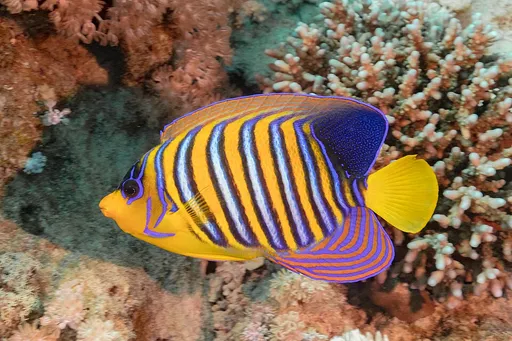 9.8 in (25 cm)124 gal (470 L)73–81°F (23–27°C)
Regal angelfish
Pygoplites diacanthus
9.8 in (25 cm) · 124 gal (470 L)