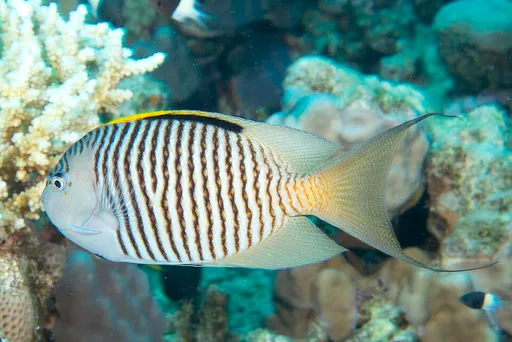
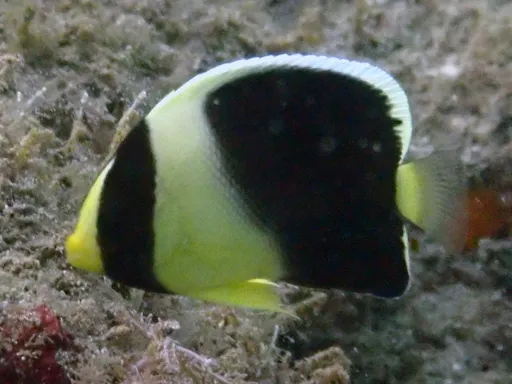
Zebra angelfish
Genicanthus caudovittatus
Also known as Red Sea Swallowtail Angelfish, Zebra Swallowtail Angelfish, Eastern Zebra Angelfish
SaltwaterFish
Care at a glance
- Temperature
- 75–82°F
- 24–28°C
- pH
- 8.1–8.4
- Adult size
- 7.9 in
- 20 cm
- Minimum tank
- 90 gal
- 340 L
- Temperament
- Peaceful
- Social behavior
- Social
- Swim level
- Middle
- Difficulty
- Medium
- Breeding
- Hard
- Rarity
- Common
- Reef safe
- Reef safe
- Family
- Pomacanthidae
- Origin
- Red Sea and the western Indian Ocean south to South Africa, on outer reef slopes.
Overview
Give it at least 340 litres with open water for cruising and some current at 24 to 28 C. It is peaceful and one of the few angels truly safe with corals, so it fits a mixed reef well and can be kept as a male with one or more females. Feed frequent small meals of mysis, enriched brine, and prepared foods to match its planktivorous diet. It picks at sponges and bryozoans but leaves corals and clams alone.
In the wild
The zebra angelfish is a swallowtail angel that hovers in open water above the reef slope picking plankton, unlike the rock-grazing large angels. Males are barred while females are plainer, and the two swim in loose harems. It has long trailing tail lobes that give the swallowtail name. It is calm and coral-safe.
Good to know
Genicanthus caudovittatus reaches about 20 cm and, like all Genicanthus, is a planktivore rather than a sponge or coral feeder. This diet makes the genus the only reliably reef-safe angelfish. Males and females differ in pattern, and females can change into males.
Did you know
Swallowtail angels eat drifting plankton instead of coral, which is why this whole genus is trusted in reef tanks where other angels are not.
Weekly picks
Tank mates
Zebra angelfish is a peaceful, social species that keeps to the middle. These picks share a community profile with it, are safe together in both directions, and overlap on water type, temperature and pH.
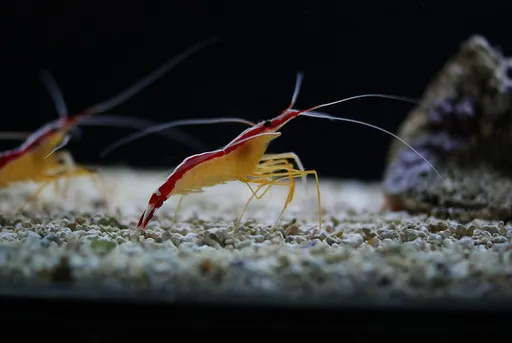
Skunk cleaner shrimp
Lysmata amboinensis
Saltwater2.4 in (6 cm) · 20 gal (75 L)73–81°F (23–27°C)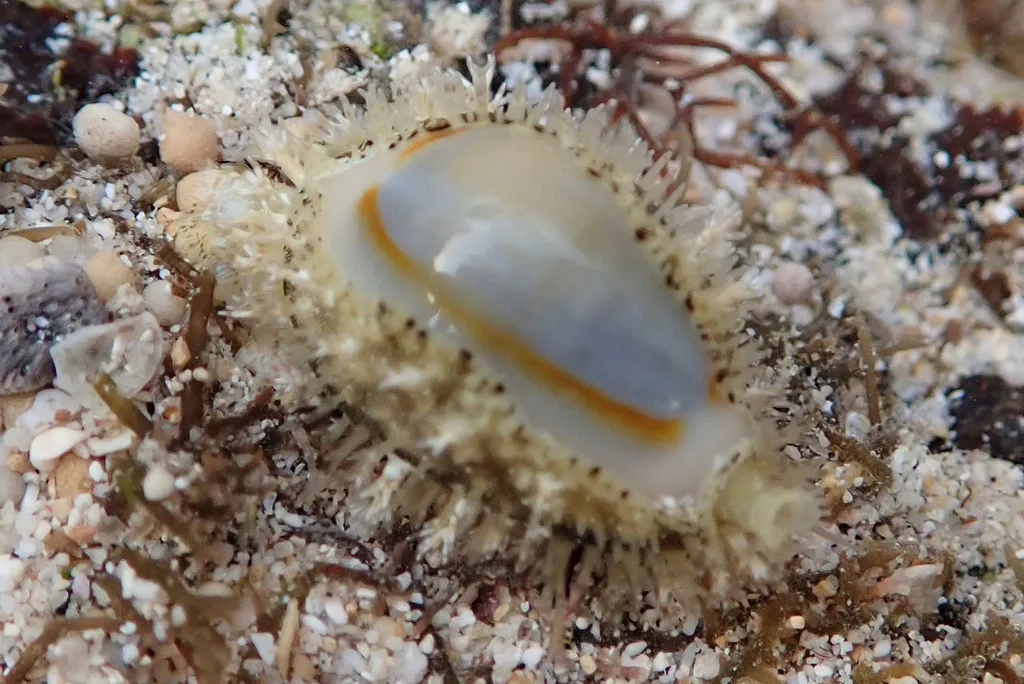
Ring cowrie
Monetaria annulus
Saltwater1.2 in (3 cm) · 20 gal (75 L)75–81°F (24–27°C)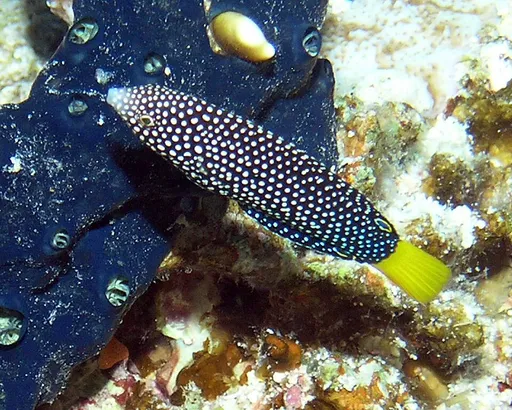
Yellowtail tamarin wrasse
Anampses meleagrides
Saltwater8.7 in (22 cm) · 90 gal (340 L)73–81°F (23–27°C)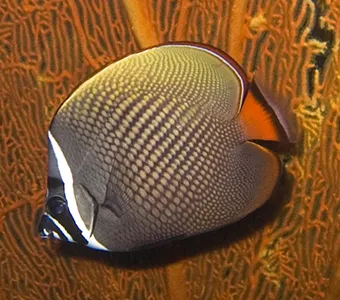
Collare butterflyfish
Chaetodon collare
Saltwater7.1 in (18 cm) · 90 gal (340 L)73–81°F (23–27°C)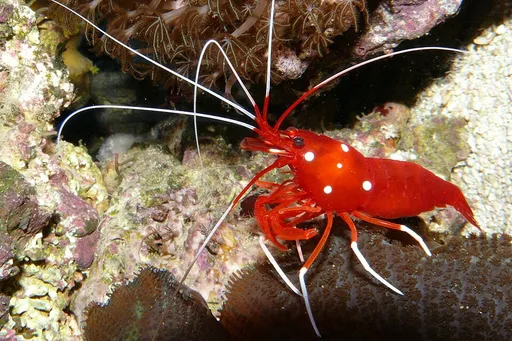
Fire shrimp
Lysmata debelius
Saltwater2.4 in (6 cm) · 20 gal (75 L)72–79°F (22–26°C)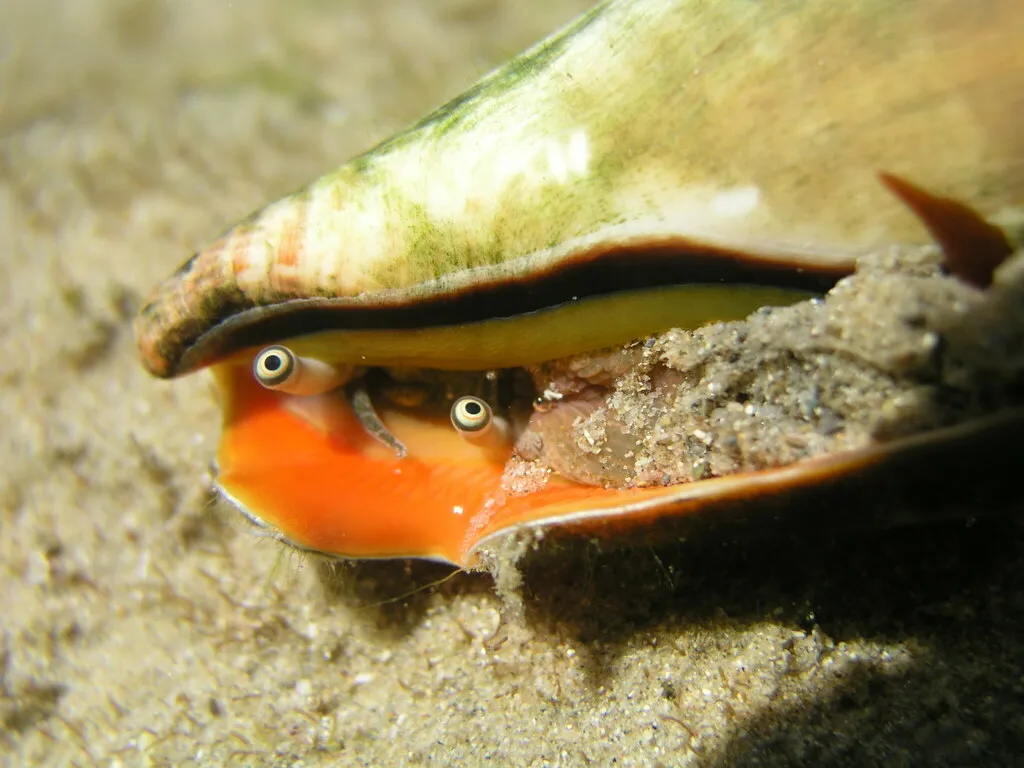
Tiger / strawberry conch
Conomurex luhuanus
Saltwater2.8 in (7 cm) · 20 gal (75 L)75–81°F (24–27°C)
Common questions
What size tank does a Zebra angelfish need?
A Zebra angelfish needs at least 90 gal (340 L). It spends most of its time in the middle.
What temperature and pH does a Zebra angelfish need?
A Zebra angelfish is comfortable at 75–82°F (24–28°C) with a pH of 8.1–8.4.
How big does a Zebra angelfish get?
An adult Zebra angelfish reaches about 7.9 in (20 cm).
Related species
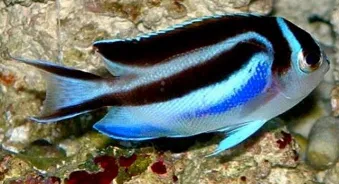 7.1 in (18 cm)85 gal (320 L)72–79°F (22–26°C)
Bellus angelfish
Genicanthus bellus
7.1 in (18 cm) · 85 gal (320 L)
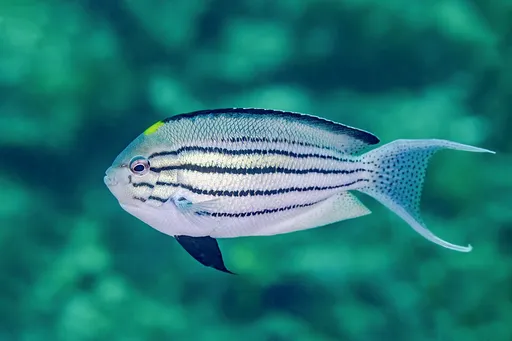 9.8 in (25 cm)124 gal (470 L)72–79°F (22–26°C)
Lamarck's angelfish
Genicanthus lamarck
9.8 in (25 cm) · 124 gal (470 L)
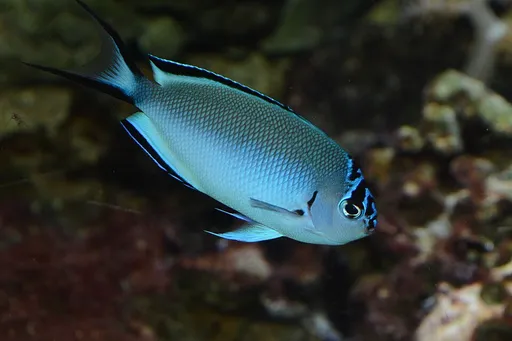 5.9 in (15 cm)79 gal (300 L)72–79°F (22–26°C)
Watanabei angelfish
Genicanthus watanabei
5.9 in (15 cm) · 79 gal (300 L)
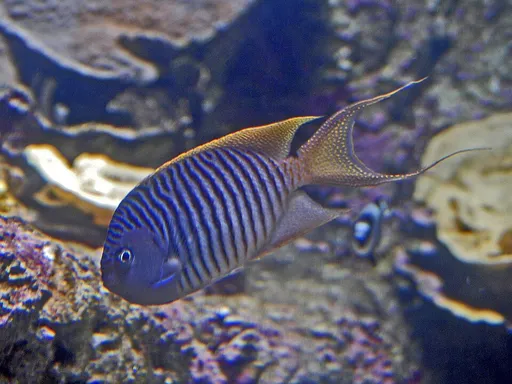 7.1 in (18 cm)106 gal (400 L)72–79°F (22–26°C)
Swallowtail angelfish
Genicanthus melanospilos
7.1 in (18 cm) · 106 gal (400 L)
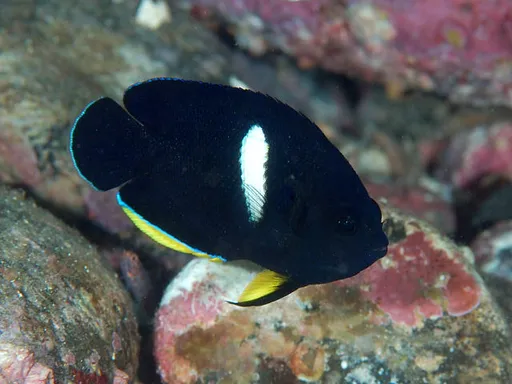 7.9 in (20 cm)70 gal (265 L)72–79°F (22–26°C)
Keyhole angelfish
Centropyge tibicen
7.9 in (20 cm) · 70 gal (265 L)
 7.9 in (20 cm)125 gal (475 L)72–81°F (22–27°C)
Red Sea angelfish
Apolemichthys xanthotis
7.9 in (20 cm) · 125 gal (475 L)