Lamarck's angelfish
Genicanthus lamarck
Also known as Lamarck Angelfish, Blackstriped Angelfish
SaltwaterFish
Care at a glance
- Temperature
- 72–79°F
- 22–26°C
- pH
- 8.1–8.4
- Adult size
- 9.8 in
- 25 cm
- Minimum tank
- 124 gal
- 470 L
- Temperament
- Peaceful
- Social behavior
- Social
- Swim level
- Middle
- Difficulty
- Medium
- Breeding
- Hard
- Rarity
- Common
- Reef safe
- Reef safe
- Family
- Pomacanthidae
- Origin
- Indo-West Pacific, from the Indo-Malayan region to Vanuatu, north to southern Japan and south to the Great Barrier Reef
Overview
Lamarck's angelfish are genuinely peaceful and, as a planktivore, they leave corals, clams, and other invertebrates alone entirely, making this one reef safe. Keep a single fish, a bonded pair, or one male with a harem of females, but never two males together. Feed small meals of mysis, marine algae, and angelfish preparations several times a day in a spacious tank with open water above the rock.
In the wild
Lamarck's angelfish live on Indo-West Pacific reef crests and deep reef slopes, from about 10 to 50 meters, forming harems of three to seven fish that hover together in midwater to feed on plankton. Unlike the large Pomacanthus angels, this is not a fish that hugs the rock looking for food; it wants open swimming room over live rock and a sandy bottom, more like a mid-water reef fish than a grazer.
Good to know
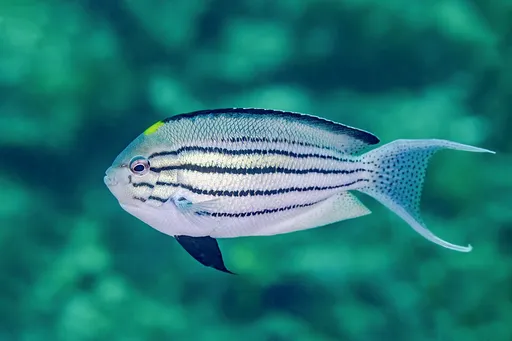
Genicanthus lamarck reaches about 25 cm and is strongly sexually dimorphic: males are almost teardrop-shaped with black pelvic fins, a few stripes radiating from the eye, and long flowing filaments trailing off the tail, while females have white pelvic fins and a broad black band along the top and bottom edges of the body. The species can change sex from female to male, and the two sexes look different enough that they were once mistaken for separate species entirely. It is named for the French naturalist Jean-Baptiste Lamarck.
Did you know
Males and females look so different, a teardrop-shaped male with flowing tail streamers next to a banded, white-finned female, that the species was first captive-bred only in 2017, at an aquarium in New York, well over a century after it was first described.
Weekly picks
Tank mates
Lamarck's angelfish is a peaceful, social species that keeps to the middle. These picks share a community profile with it, are safe together in both directions, and overlap on water type, temperature and pH.
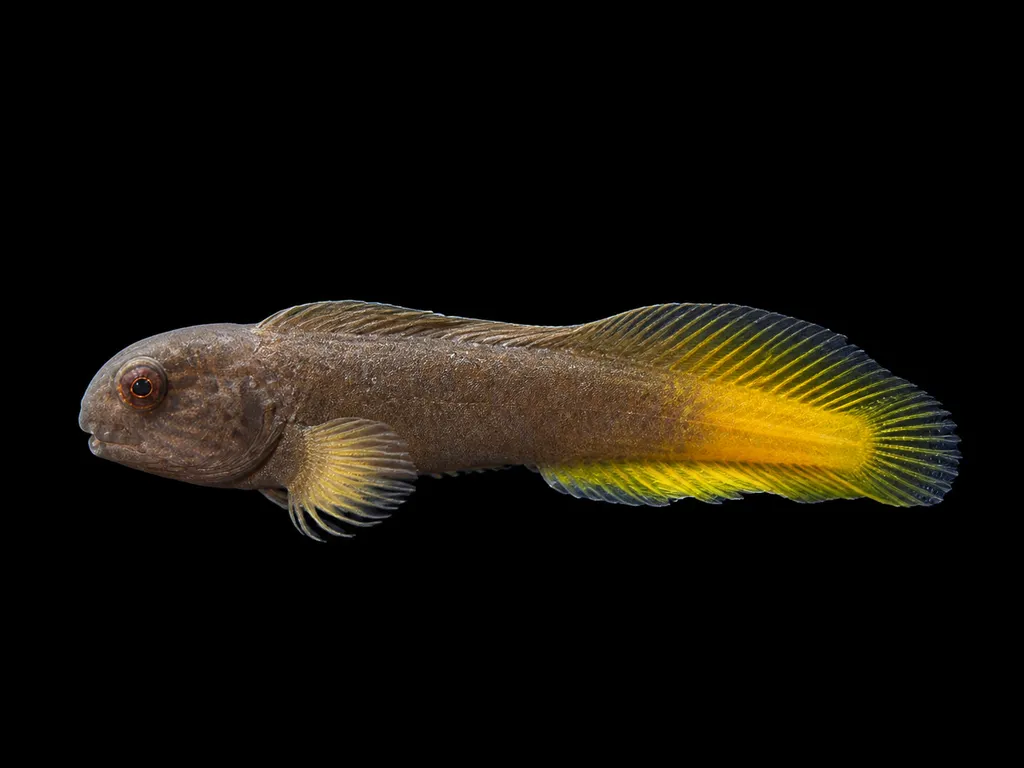
Flametail blenny
Enchelyurus flavipes
Saltwater3 in (7.5 cm) · 29 gal (110 L)72–79°F (22–26°C)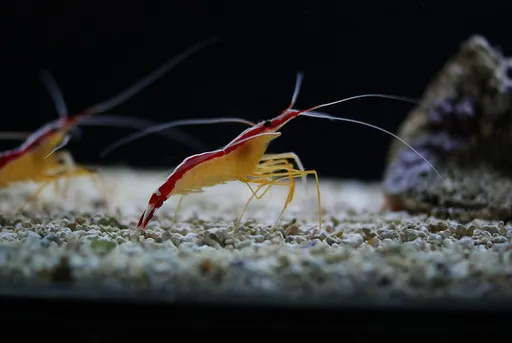
Skunk cleaner shrimp
Lysmata amboinensis
Saltwater2.4 in (6 cm) · 20 gal (75 L)73–81°F (23–27°C)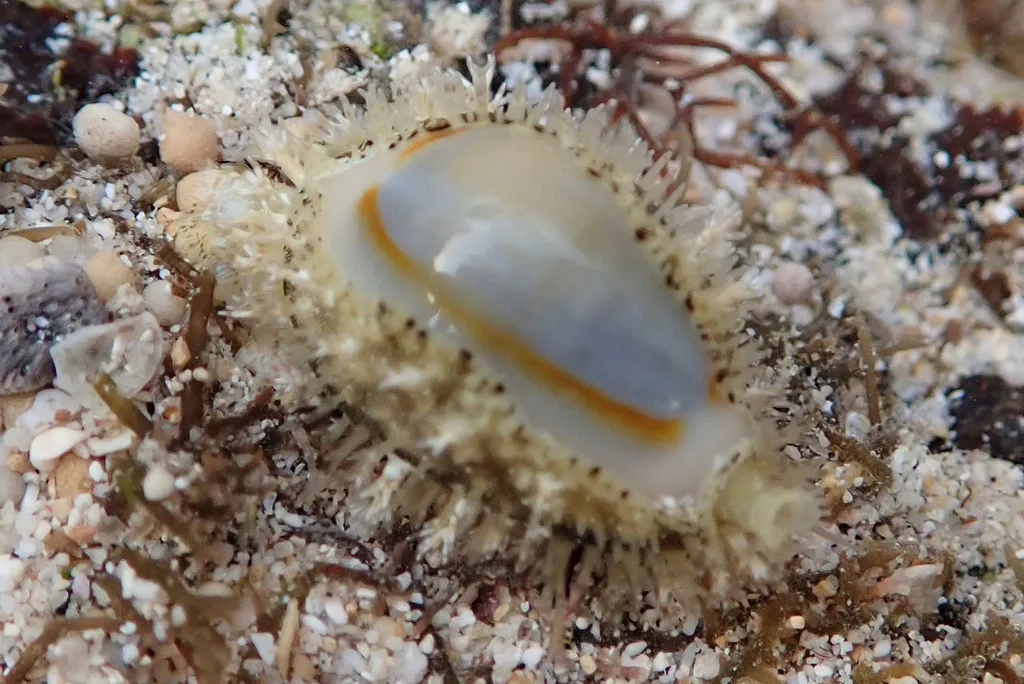
Ring cowrie
Monetaria annulus
Saltwater1.2 in (3 cm) · 20 gal (75 L)75–81°F (24–27°C)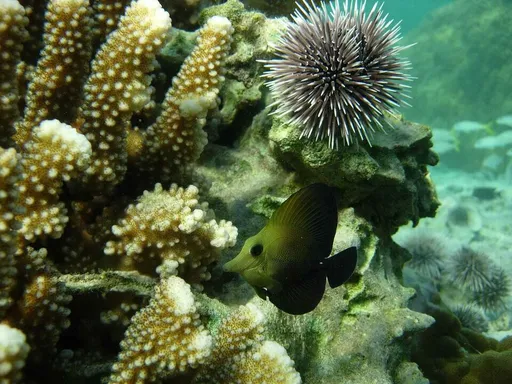
Black tang
Zebrasoma rostratum
Saltwater8.3 in (21 cm) · 119 gal (450 L)75–81°F (24–27°C)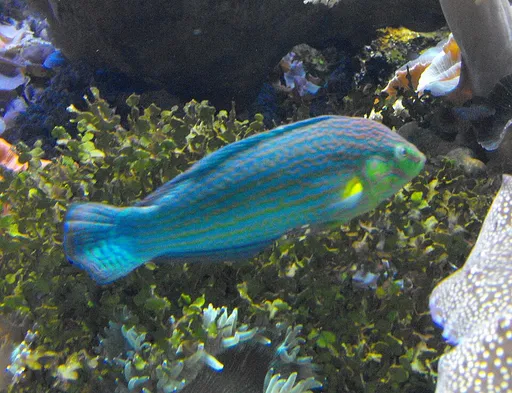
Melanurus wrasse
Halichoeres melanurus
Saltwater5.5 in (14 cm) · 100 gal (380 L)72–79°F (22–26°C)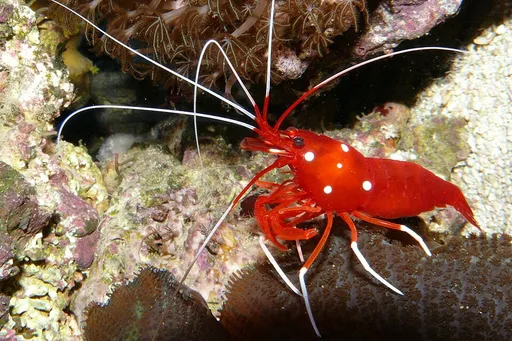
Fire shrimp
Lysmata debelius
Saltwater2.4 in (6 cm) · 20 gal (75 L)72–79°F (22–26°C)
Common questions
What size tank does a Lamarck's angelfish need?
A Lamarck's angelfish needs at least 124 gal (470 L). It spends most of its time in the middle.
What temperature and pH does a Lamarck's angelfish need?
A Lamarck's angelfish is comfortable at 72–79°F (22–26°C) with a pH of 8.1–8.4.
How big does a Lamarck's angelfish get?
An adult Lamarck's angelfish reaches about 9.8 in (25 cm).
Related species
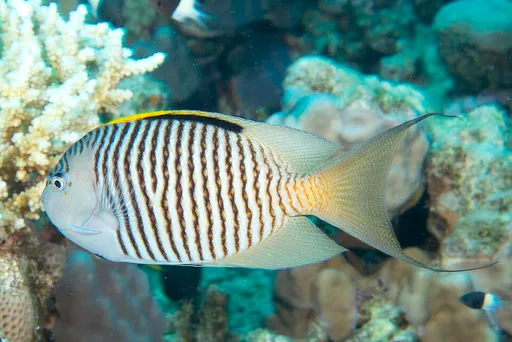 7.9 in (20 cm)90 gal (340 L)75–82°F (24–28°C)
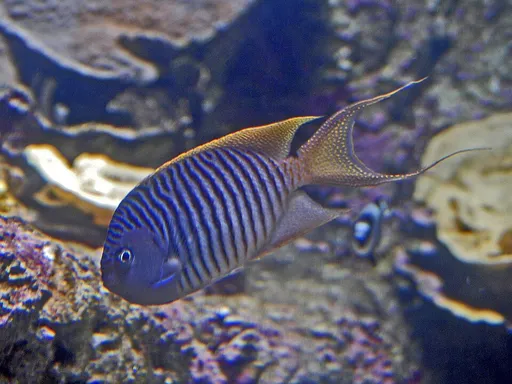
Zebra angelfish
Genicanthus caudovittatus
7.9 in (20 cm) · 90 gal (340 L)
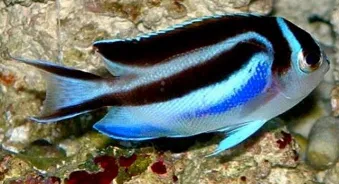 7.1 in (18 cm)85 gal (320 L)72–79°F (22–26°C)
Bellus angelfish
Genicanthus bellus
7.1 in (18 cm) · 85 gal (320 L)
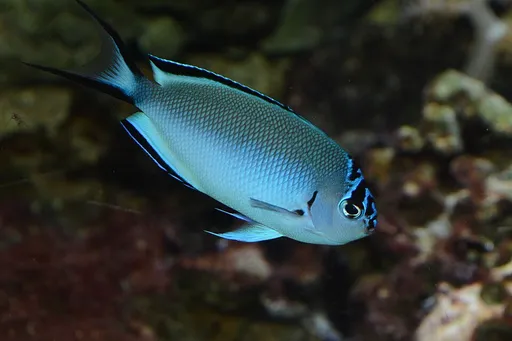 5.9 in (15 cm)79 gal (300 L)72–79°F (22–26°C)
Watanabei angelfish
Genicanthus watanabei
5.9 in (15 cm) · 79 gal (300 L)
 7.1 in (18 cm)106 gal (400 L)72–79°F (22–26°C)
Swallowtail angelfish
Genicanthus melanospilos
7.1 in (18 cm) · 106 gal (400 L)
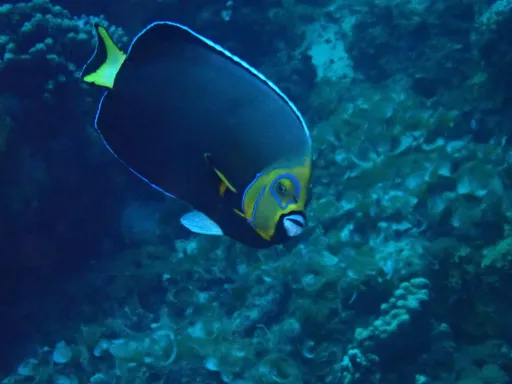 9.8 in (25 cm)198 gal (750 L)72–79°F (22–26°C)
Conspicuous angelfish
Chaetodontoplus conspicillatus
9.8 in (25 cm) · 198 gal (750 L)
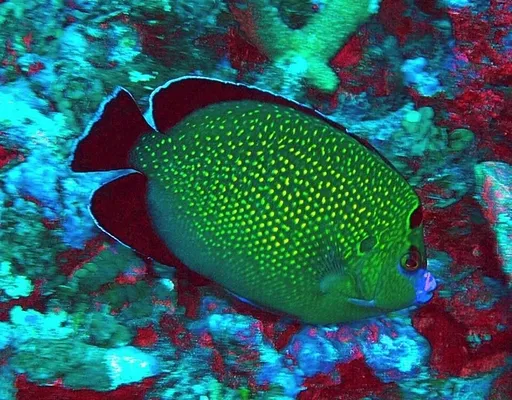 9.8 in (25 cm)125 gal (475 L)73–81°F (23–27°C)
Goldflake angelfish
Apolemichthys xanthopunctatus
9.8 in (25 cm) · 125 gal (475 L)