Watanabei angelfish
Genicanthus watanabei
Also known as Watanabe's Angelfish, Blackedged Angelfish
SaltwaterFish
Care at a glance
- Temperature
- 72–79°F
- 22–26°C
- pH
- 8.1–8.4
- Adult size
- 5.9 in
- 15 cm
- Minimum tank
- 79 gal
- 300 L
- Temperament
- Peaceful
- Social behavior
- Social
- Swim level
- Middle
- Difficulty
- Medium
- Breeding
- Hard
- Rarity
- Common
- Reef safe
- Reef safe
- Family
- Pomacanthidae
- Origin
- Pacific, from Taiwan to the Tuamotu Islands, north to the Ryukyu Islands and south to New Caledonia and the Austral Islands
Overview
Watanabei angelfish are peaceful and, as a planktivore, leave corals and other invertebrates alone, making this one of the easier reef-safe angelfish to place in a mixed tank. They do best as a male-female pair or a small harem rather than alone. Feed enriched brine shrimp, mysis, and marine algae several times a day, since they will not graze algae off the rock the way a Pomacanthus would.
In the wild
Watanabei angelfish live on current-swept Pacific outer reef slopes and drop-offs, from about 21 to 81 meters, from Taiwan to the Tuamotu Islands. They hover in open water above the rock to feed on plankton rather than grazing the reef itself. A tank should give this fish open swimming room above the live rock, steady current, and plenty of places to retreat to on the rockwork.
Good to know
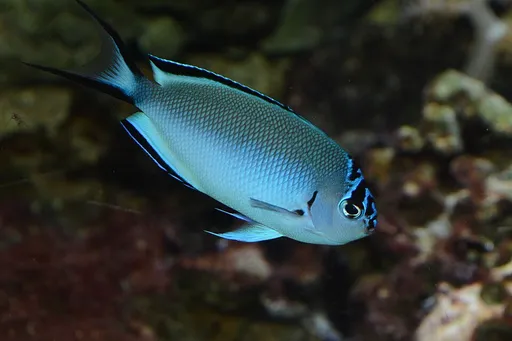
Genicanthus watanabei is the smallest Genicanthus angel in this group, reaching only about 15 cm. Males are pale blue with eight black stripes across the lower two-thirds of the body, while females are pale blue with a black bar above the eye and a scatter of spots on the forehead instead of stripes. It is a dedicated planktivore with almost none of the rock-grazing behavior seen in the large Pomacanthus angels.
Did you know
It was the second Genicanthus species anyone ever captive-bred, reared by an aquarist at a public aquarium in Hawaii not long after the very first breakthrough with its rare cousin, the masked angelfish.
Weekly picks
Tank mates
Watanabei angelfish is a peaceful, social species that keeps to the middle. These picks share a community profile with it, are safe together in both directions, and overlap on water type, temperature and pH.
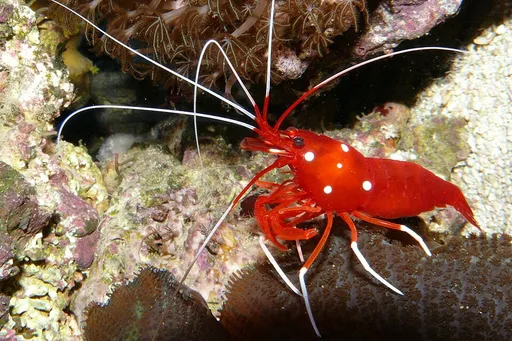
Fire shrimp
Lysmata debelius
Saltwater2.4 in (6 cm) · 20 gal (75 L)72–79°F (22–26°C)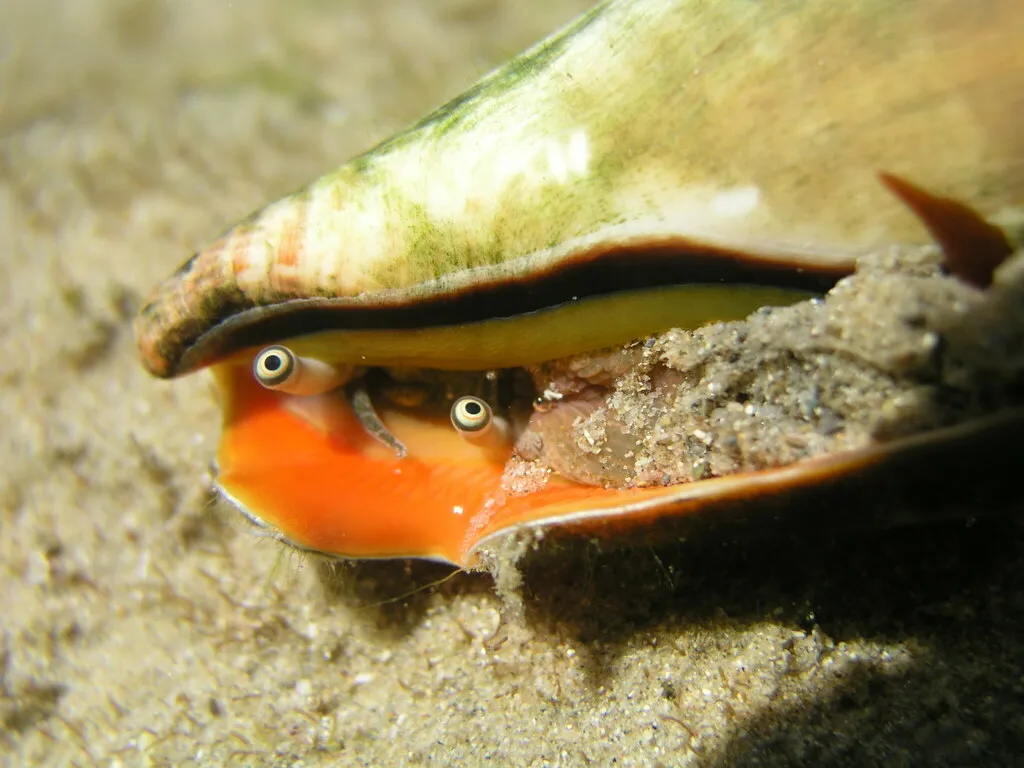
Tiger / strawberry conch
Conomurex luhuanus
Saltwater2.8 in (7 cm) · 20 gal (75 L)75–81°F (24–27°C)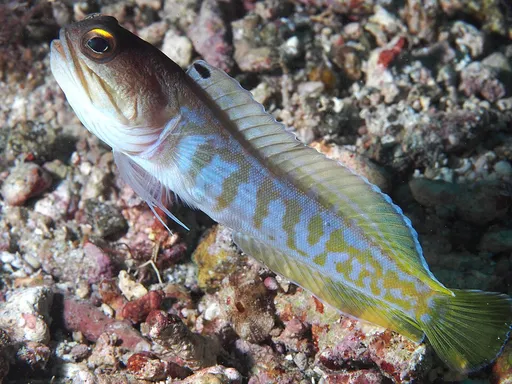
Gold-specs jawfish
Opistognathus randalli
Saltwater3.9 in (10 cm) · 30 gal (115 L)73–81°F (23–27°C)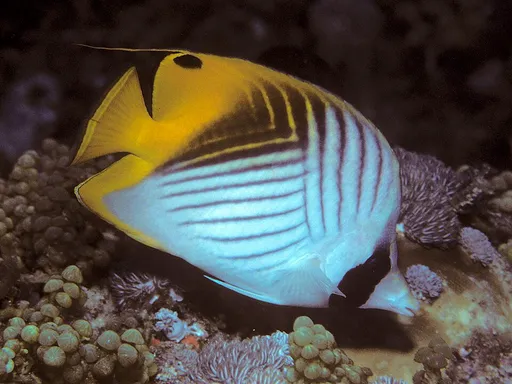
Threadfin butterflyfish
Chaetodon auriga
Saltwater9.1 in (23 cm) · 79 gal (300 L)75–81°F (24–27°C)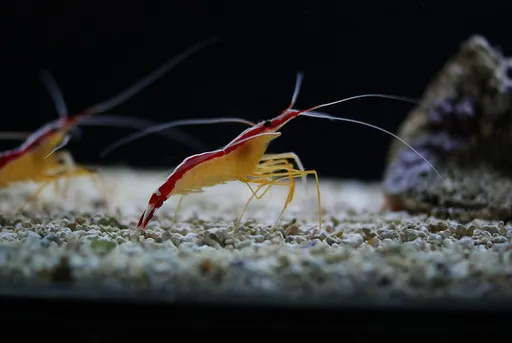
Skunk cleaner shrimp
Lysmata amboinensis
Saltwater2.4 in (6 cm) · 20 gal (75 L)73–81°F (23–27°C)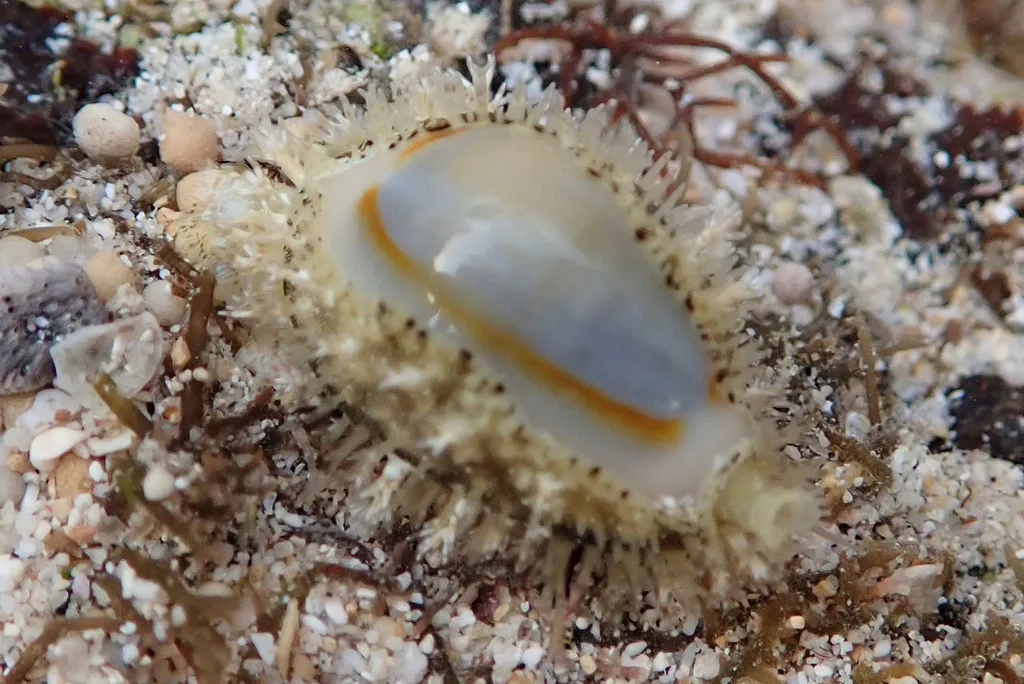
Ring cowrie
Monetaria annulus
Saltwater1.2 in (3 cm) · 20 gal (75 L)75–81°F (24–27°C)
Common questions
What size tank does a Watanabei angelfish need?
A Watanabei angelfish needs at least 79 gal (300 L). It spends most of its time in the middle.
What temperature and pH does a Watanabei angelfish need?
A Watanabei angelfish is comfortable at 72–79°F (22–26°C) with a pH of 8.1–8.4.
How big does a Watanabei angelfish get?
An adult Watanabei angelfish reaches about 5.9 in (15 cm).
Related species
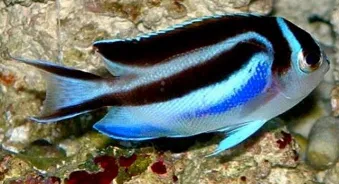 7.1 in (18 cm)85 gal (320 L)72–79°F (22–26°C)
Bellus angelfish
Genicanthus bellus
7.1 in (18 cm) · 85 gal (320 L)
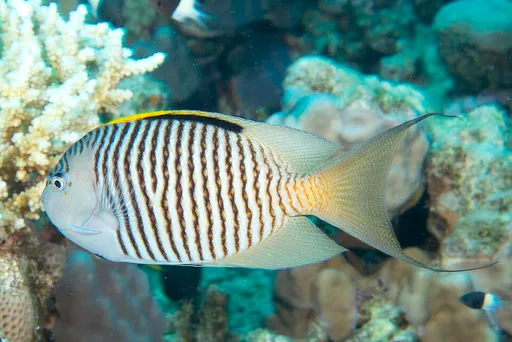 7.9 in (20 cm)90 gal (340 L)75–82°F (24–28°C)
Zebra angelfish
Genicanthus caudovittatus
7.9 in (20 cm) · 90 gal (340 L)
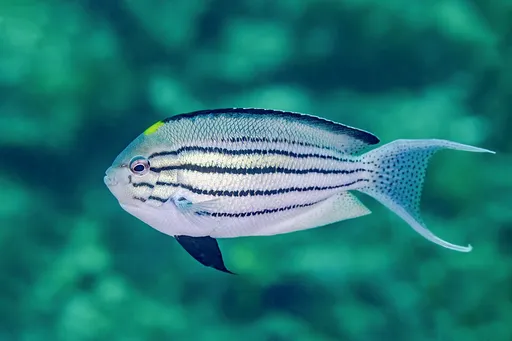 9.8 in (25 cm)124 gal (470 L)72–79°F (22–26°C)
Lamarck's angelfish
Genicanthus lamarck
9.8 in (25 cm) · 124 gal (470 L)
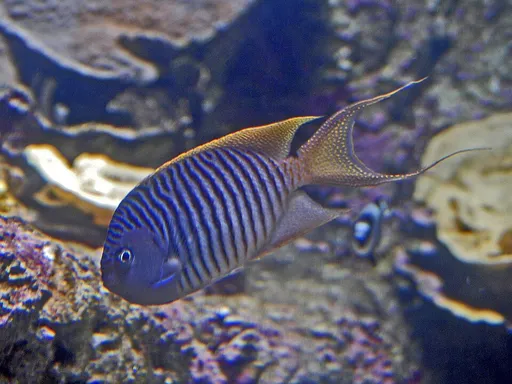 7.1 in (18 cm)106 gal (400 L)72–79°F (22–26°C)
Swallowtail angelfish
Genicanthus melanospilos
7.1 in (18 cm) · 106 gal (400 L)
 5.9 in (15 cm)55 gal (210 L)72–81°F (22–27°C)
Bicolor angelfish
Centropyge bicolor
5.9 in (15 cm) · 55 gal (210 L)
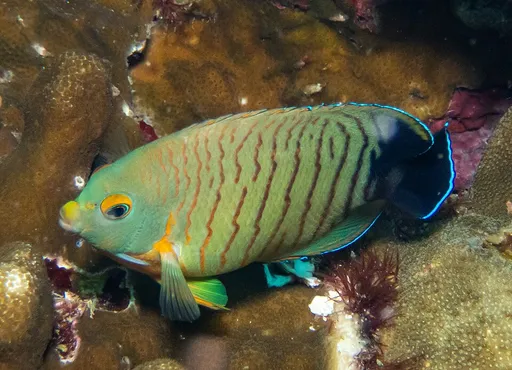 5.9 in (15 cm)55 gal (210 L)72–79°F (22–26°C)
Eibli angelfish
Centropyge eibli
5.9 in (15 cm) · 55 gal (210 L)