Cherub angelfish
Centropyge argi
Also known as Pygmy Angelfish, Atlantic Pygmy Angelfish, Cherubfish
SaltwaterFish
Care at a glance
- Temperature
- 72–82°F
- 22–28°C
- pH
- 8.1–8.4
- Adult size
- 2.8 in
- 7 cm
- Minimum tank
- 29 gal
- 110 L
- Temperament
- Mostly peaceful
- Social behavior
- Solitary
- Own kind
- One male per tank
- Tankmates
- With caution
- Swim level
- Bottom
- Difficulty
- Easy
- Breeding
- Hard
- Rarity
- Common
- Reef safe
- Reef safe with caution
- Family
- Pomacanthidae
- Origin
- Western Atlantic and Caribbean, from Bermuda and the Gulf of Mexico south to the northern coast of South America
Overview
A tiny, hardy dwarf angel that is one of the more reef-tolerant Centropyge and well suited to nano and small reef systems. Despite its size it is feisty and territorial, especially toward other dwarf angels, so keep just one unless the tank is large enough for a mated pair introduced together. It grazes on algae and accepts prepared foods readily, making it easy to feed.
In the wild
Cherub angels live on rubble zones and coral reefs of the western Atlantic and Caribbean, typically at moderate depth among live rock and crevices. They are secretive grazers that stay close to cover, darting between holes in the rockwork. In the aquarium they want plenty of mature live rock with algae growth to graze and abundant hiding spots.
Good to know
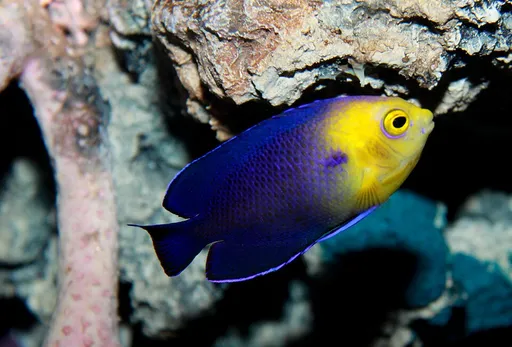
Centropyge argi is one of the smallest marine angelfish, reaching only about 6 to 7 cm. It is a deep blue fish with a bright yellow-orange face and chest. Like most Centropyge it is a protogynous hermaphrodite, living in small harems where the dominant individual becomes male, and can change sex if the male is removed.
Did you know
One of the few marine angelfish that has been bred in captivity, though rearing the tiny larvae remains difficult; it is also a good algae grazer that helps keep rockwork clean.
Common questions
What size tank does a Cherub angelfish need?
A Cherub angelfish needs at least 29 gal (110 L). It spends most of its time in the bottom.
What temperature and pH does a Cherub angelfish need?
A Cherub angelfish is comfortable at 72–82°F (22–28°C) with a pH of 8.1–8.4.
How big does a Cherub angelfish get?
An adult Cherub angelfish reaches about 2.8 in (7 cm).
Related species
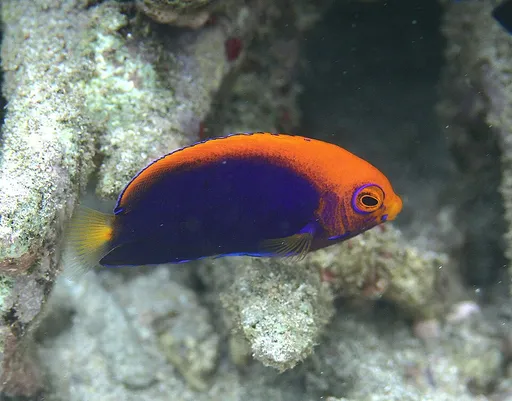 3.1 in (8 cm)29 gal (110 L)72–79°F (22–26°C)
African flameback angelfish
Centropyge acanthops
3.1 in (8 cm) · 29 gal (110 L)
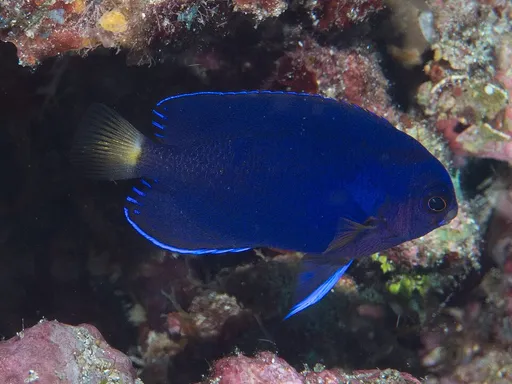 2.8 in (7 cm)53 gal (200 L)75–81°F (24–27°C)
Fisher's angelfish
Centropyge fisheri
2.8 in (7 cm) · 53 gal (200 L)
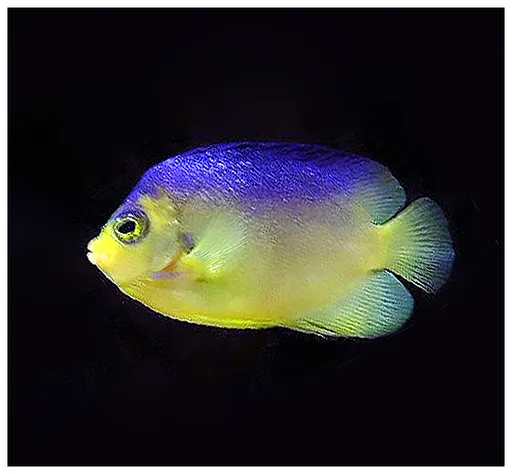 3.5 in (9 cm)55 gal (210 L)72–79°F (22–26°C)
Colin's angelfish
Centropyge colini
3.5 in (9 cm) · 55 gal (210 L)
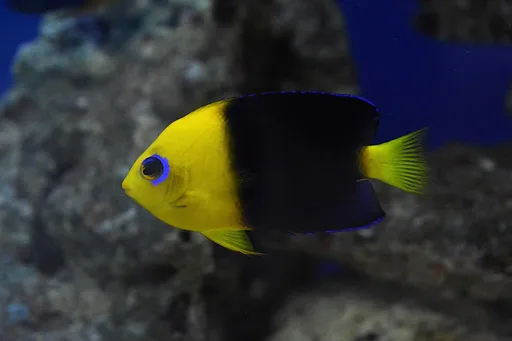 3.5 in (9 cm)70 gal (265 L)75–81°F (24–27°C)
Joculator angelfish
Centropyge joculator
3.5 in (9 cm) · 70 gal (265 L)
 3.5 in (9 cm)70 gal (265 L)75–81°F (24–27°C)
Multicolor angelfish
Centropyge multicolor
3.5 in (9 cm) · 70 gal (265 L)
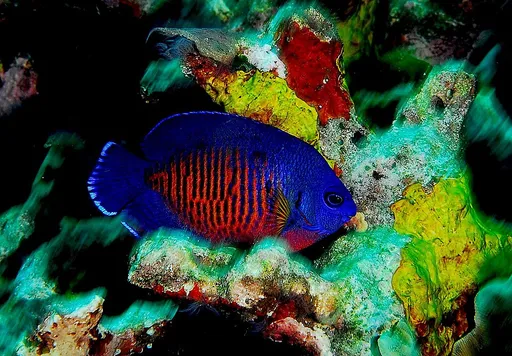 3.9 in (10 cm)50 gal (190 L)72–79°F (22–26°C)
Coral beauty angelfish
Centropyge bispinosa
3.9 in (10 cm) · 50 gal (190 L)