African flameback angelfish
Centropyge acanthops
Also known as African Pygmy Angelfish, Orangeback Angelfish, Jumping Bean Angelfish
SaltwaterFish
Care at a glance
- Temperature
- 72–79°F
- 22–26°C
- pH
- 8.1–8.4
- Adult size
- 3.1 in
- 8 cm
- Minimum tank
- 29 gal
- 110 L
- Temperament
- Mostly peaceful
- Social behavior
- Solitary
- Own kind
- One male per tank
- Tankmates
- With caution
- Swim level
- Bottom
- Difficulty
- Easy
- Breeding
- Hard
- Rarity
- Common
- Reef safe
- Reef safe with caution
- Family
- Pomacanthidae
- Origin
- Western Indian Ocean, along the East African coast from Somalia and Kenya south to South Africa, including Madagascar and Mauritius
Overview
A small, active, hardy dwarf angel that is easy to feed and suited to smaller reef and fish-only systems. It is semi-aggressive and defends a territory, and once settled it can bully more docile fish or kill other dwarf angels in a small tank, so keep only one. It grazes algae and takes prepared foods well.
In the wild
African flamebacks live on rubble slopes and coral reefs of the western Indian Ocean, often on deeper rubble zones with scattered live rock. Like other dwarf angels they are shy grazers that keep close to cover and dart between crevices. In the aquarium they want mature live rock with algae to graze and plenty of hiding spots to feel secure.
Good to know
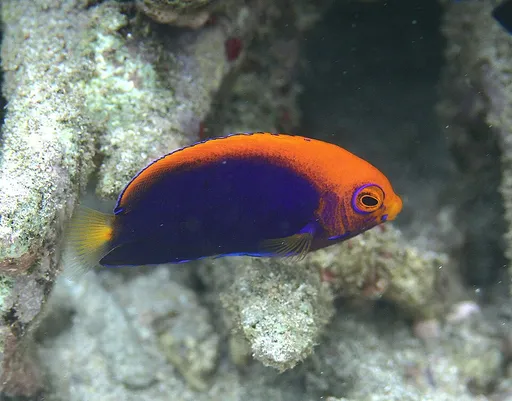
Centropyge acanthops is a small dwarf angel reaching about 8 cm, deep blue on the body with a bright orange-red back and dorsal fin and a yellow tail. It is closely related to the flame-colored dwarf angels and, like other Centropyge, is a protogynous hermaphrodite that lives in small harems with a single dominant male.
Did you know
Its restless darting between rocks earns it the nickname jumping bean angelfish, and it is one of the smaller and more affordable dwarf angels from the African coast.
Common questions
What size tank does an African flameback angelfish need?
An African flameback angelfish needs at least 29 gal (110 L). It spends most of its time in the bottom.
What temperature and pH does an African flameback angelfish need?
An African flameback angelfish is comfortable at 72–79°F (22–26°C) with a pH of 8.1–8.4.
How big does an African flameback angelfish get?
An adult African flameback angelfish reaches about 3.1 in (8 cm).
Related species
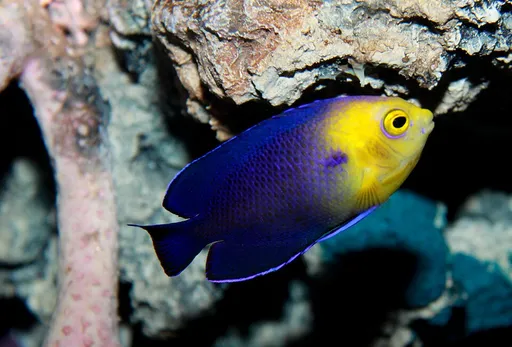 2.8 in (7 cm)29 gal (110 L)72–82°F (22–28°C)
Cherub angelfish
Centropyge argi
2.8 in (7 cm) · 29 gal (110 L)
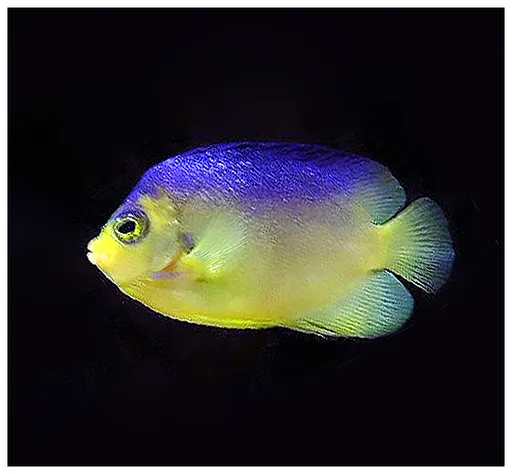 3.5 in (9 cm)55 gal (210 L)72–79°F (22–26°C)
Colin's angelfish
Centropyge colini
3.5 in (9 cm) · 55 gal (210 L)
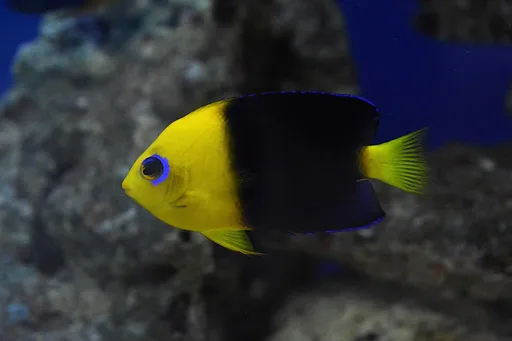 3.5 in (9 cm)70 gal (265 L)75–81°F (24–27°C)
Joculator angelfish
Centropyge joculator
3.5 in (9 cm) · 70 gal (265 L)
 3.5 in (9 cm)70 gal (265 L)75–81°F (24–27°C)
Multicolor angelfish
Centropyge multicolor
3.5 in (9 cm) · 70 gal (265 L)
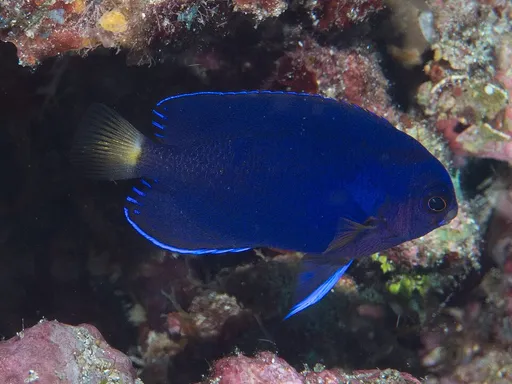 2.8 in (7 cm)53 gal (200 L)75–81°F (24–27°C)
Fisher's angelfish
Centropyge fisheri
2.8 in (7 cm) · 53 gal (200 L)
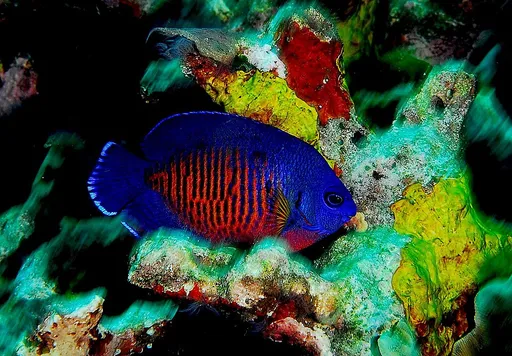 3.9 in (10 cm)50 gal (190 L)72–79°F (22–26°C)
Coral beauty angelfish
Centropyge bispinosa
3.9 in (10 cm) · 50 gal (190 L)