Strawberry rasbora
Boraras naevus
FreshwaterFish
Care at a glance
- Temperature
- 73–81°F
- 23–27°C
- pH
- 5.0–7.0
- Adult size
- 0.8 in
- 2 cm
- Minimum tank
- 11 gal
- 40 L
- Temperament
- Peaceful
- Social behavior
- Shoaling
- Swim level
- Middle
- Difficulty
- Medium
- Breeding
- Medium
- Rarity
- Common
- Family
- Cyprinidae
- Origin
- Southern peninsular Thailand (Tapi river drainage)
Overview
Keep them in a group of 8 to 10 or more, since this is a strict schooler that gets nervous and loses color in smaller numbers. They are peaceful fish that hold to the middle and upper water column, in a tank of 40 liters or larger. Water should sit between 23 and 27 C, soft, and acidic to neutral at a pH of 5 to 7, and they react badly to swings, so only add them to a mature, fully cycled tank and go slow on changes. Feed small foods their mouths can manage, like crushed flake, micro pellets, and frozen daphnia or baby brine. Pair them only with tiny calm species and shrimp, since anything large or boisterous will outcompete or eat them.
In the wild
Strawberry rasboras come from slow blackwater streams and swampy pools in the Tapi river drainage of southern peninsular Thailand. The water there is soft, acidic, and stained dark by leaf litter, with dim light filtered through overhanging plants. To match that, give them a densely planted tank of at least 40 liters with a dark substrate, leaf litter on the bottom, and gentle flow. Keep the water warm at 23 to 27 C, soft, and acidic with a pH from 5 to 7, and keep the lighting low.
Good to know
This is a tiny cyprinid in the family Cyprinidae, one of the dwarf rasboras in the genus Boraras. Adults reach only about 2 cm, so they stay small their whole lives. They are egg scatterers with no parental care, dropping eggs among fine plants and moss. Most fish you find for sale are tank bred for the trade.
Did you know
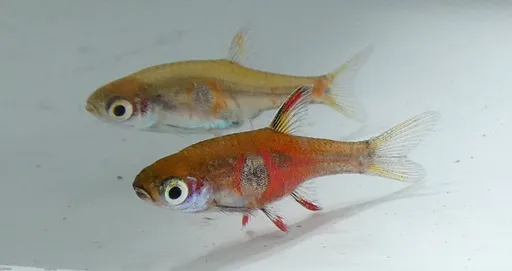
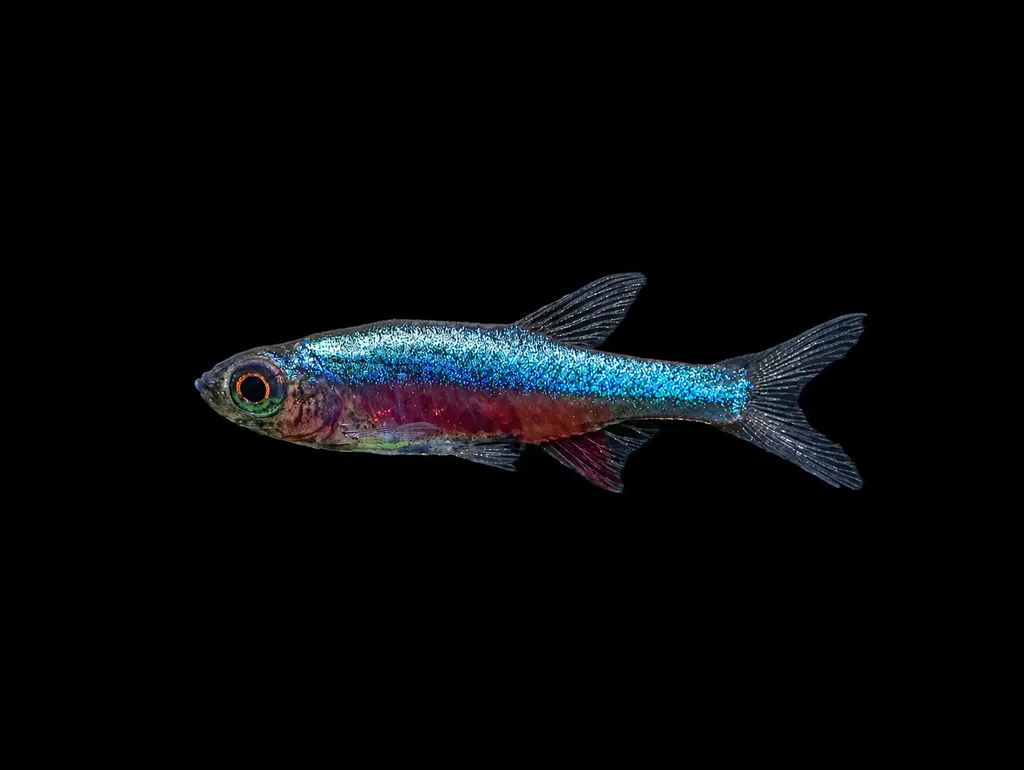
The males carry a bold red body with a single dark blotch on the side, which is where the naevus name comes from, since it means birthmark or mole in Latin. The species was only formally described in 2011, so it is a fairly recent arrival in the hobby compared to its better known cousins.
Weekly picks
Tank mates
Strawberry rasbora is a peaceful, shoaling species that keeps to the middle. These picks share a community profile with it, are safe together in both directions, and overlap on water type, temperature and pH.
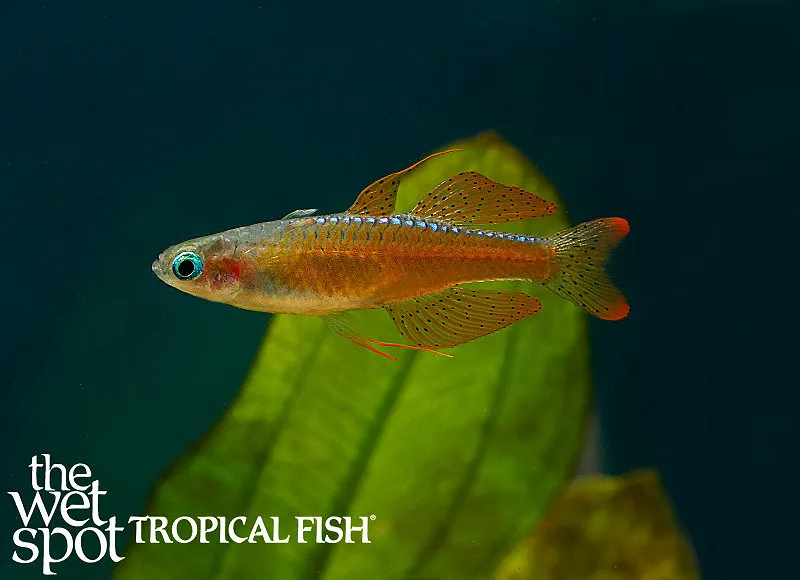
Red neon blue-eye
Pseudomugil luminatus
Freshwater1.4 in (3.5 cm) · 11 gal (40 L)72–81°F (22–27°C)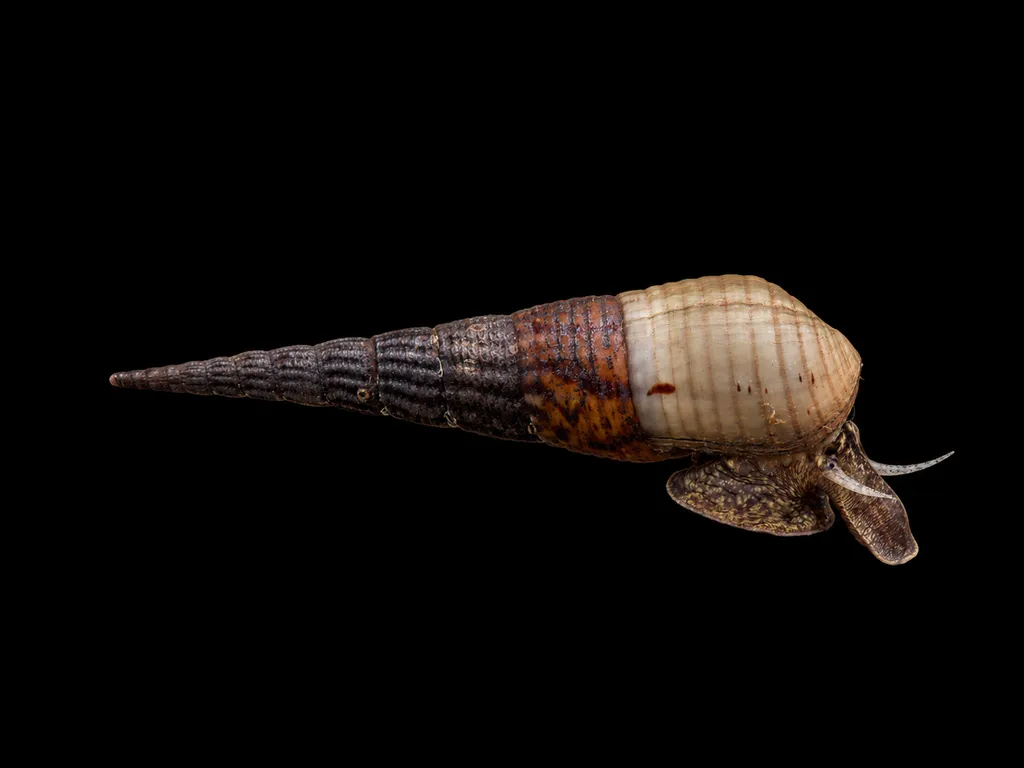
Chopstick snail
Stenomelania torulosa
Freshwater2 in (5 cm) · 11 gal (40 L)73–82°F (23–28°C)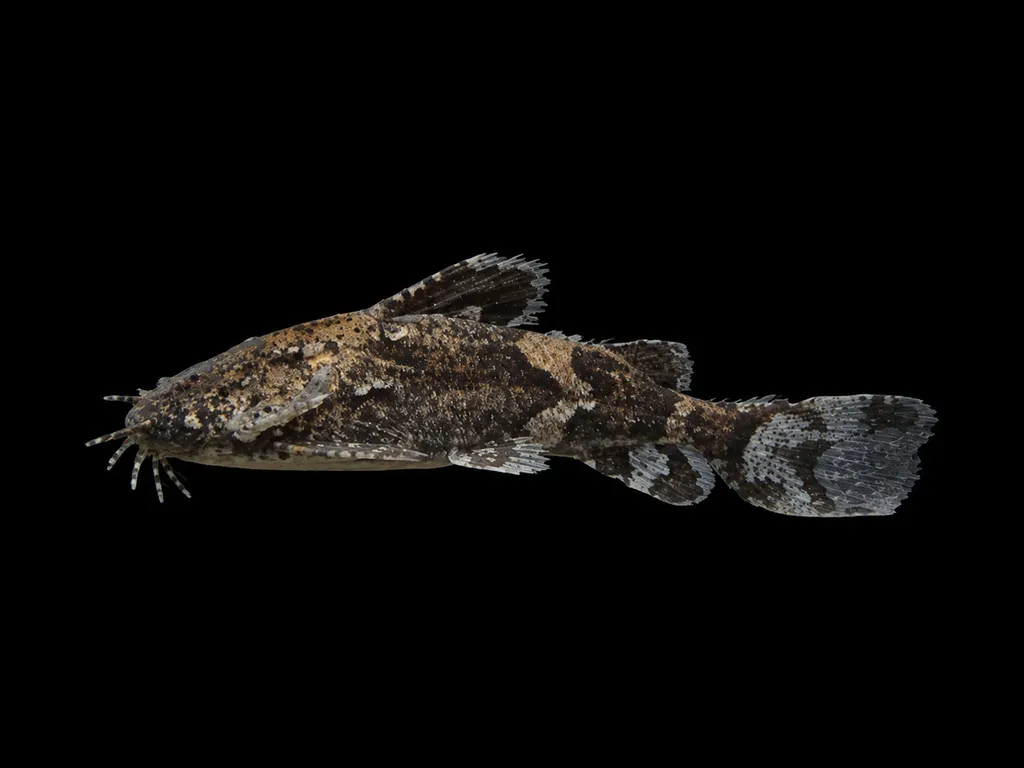
Burmese mini moth catfish
Hara minuscula
Freshwater1.2 in (3 cm) · 11 gal (40 L)68–79°F (20–26°C)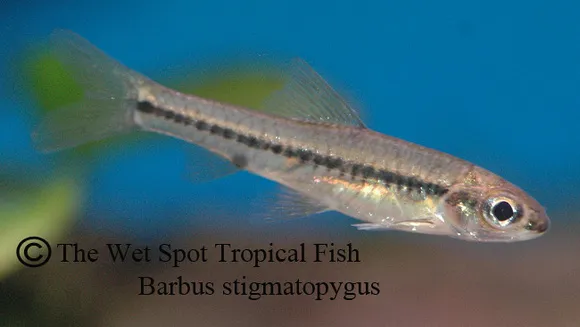
Blackspot dwarf barb
Enteromius stigmatopygus
Freshwater1.4 in (3.5 cm) · 11 gal (40 L)72–81°F (22–27°C)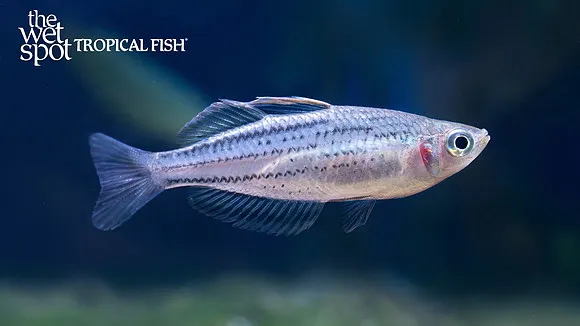
Green panchax
Aplocheilus blockii
Freshwater2 in (5 cm) · 11 gal (40 L)72–82°F (22–28°C)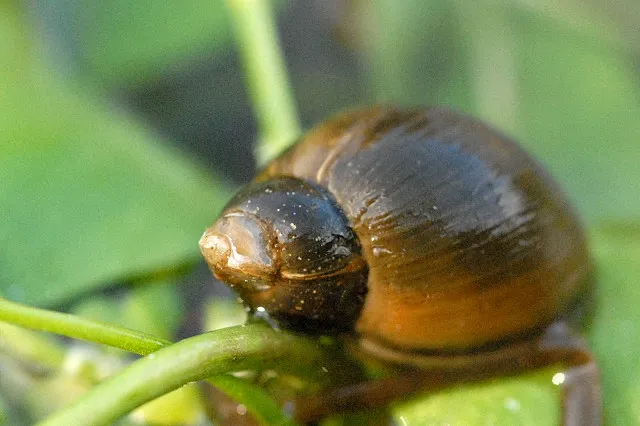
Wandering snail
Ampullaceana balthica
Freshwater0.8 in (2 cm) · 11 gal (40 L)50–84°F (10–29°C)
Common questions
What size tank does a Strawberry rasbora need?
A Strawberry rasbora needs at least 11 gal (40 L). It spends most of its time in the middle.
What temperature and pH does a Strawberry rasbora need?
A Strawberry rasbora is comfortable at 73–81°F (23–27°C) with a pH of 5.0–7.0.
How big does a Strawberry rasbora get?
An adult Strawberry rasbora reaches about 0.8 in (2 cm).
Does a Strawberry rasbora need a group?
Yes. A Strawberry rasbora is a shoaling species and should be kept in a group, not singly.
Related species
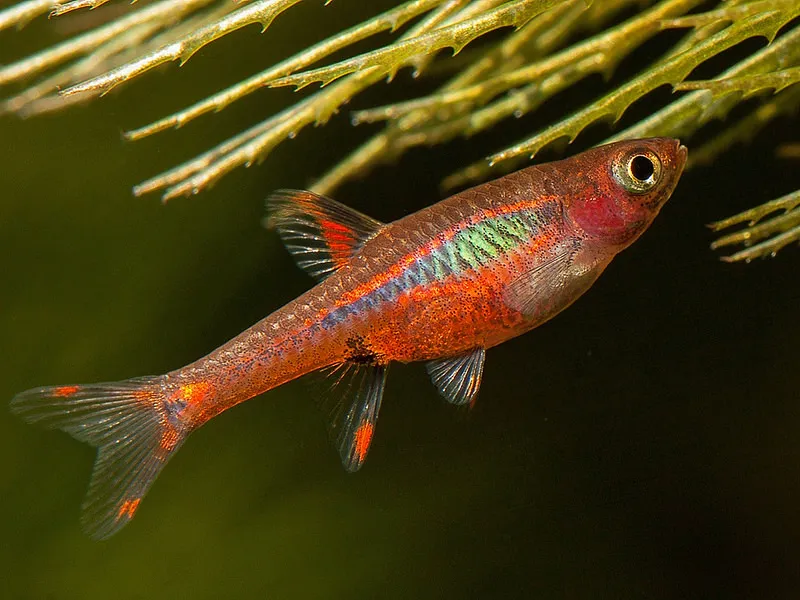 0.8 in (2 cm)7 gal (25 L)72–82°F (22–28°C)
Chili rasbora
Boraras brigittae
0.8 in (2 cm) · 7 gal (25 L)
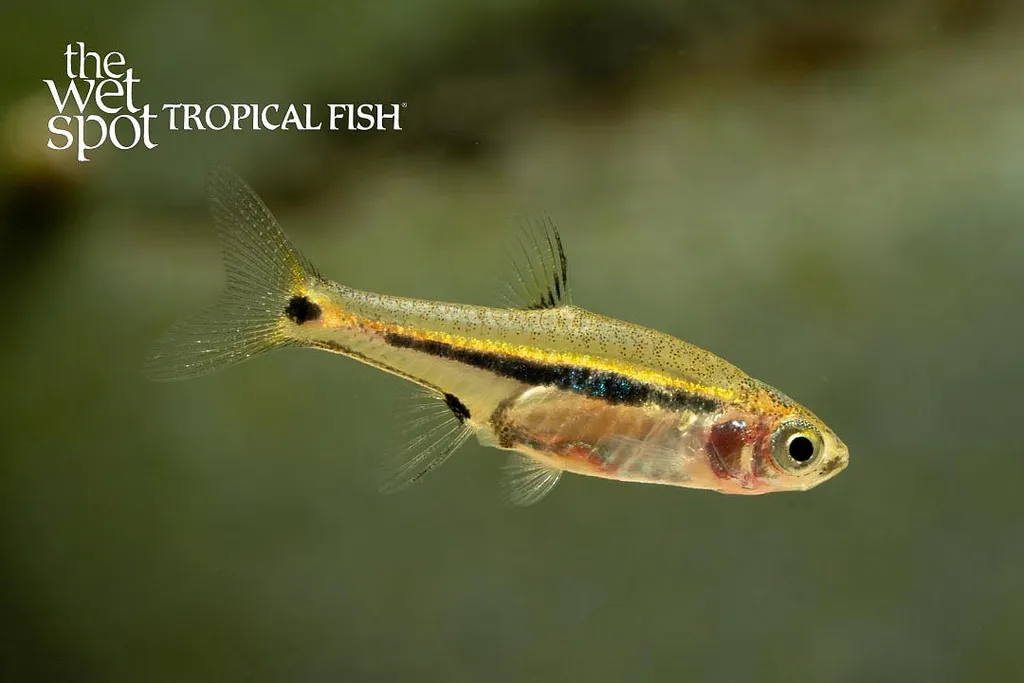
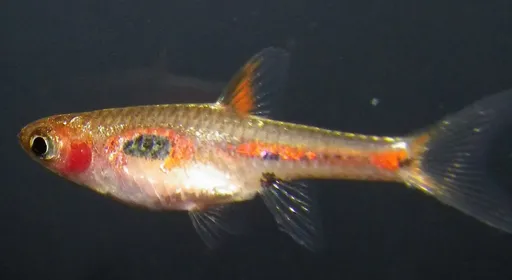 0.8 in (2 cm)11 gal (40 L)72–81°F (22–27°C)
Phoenix rasbora
Boraras merah
0.8 in (2 cm) · 11 gal (40 L)
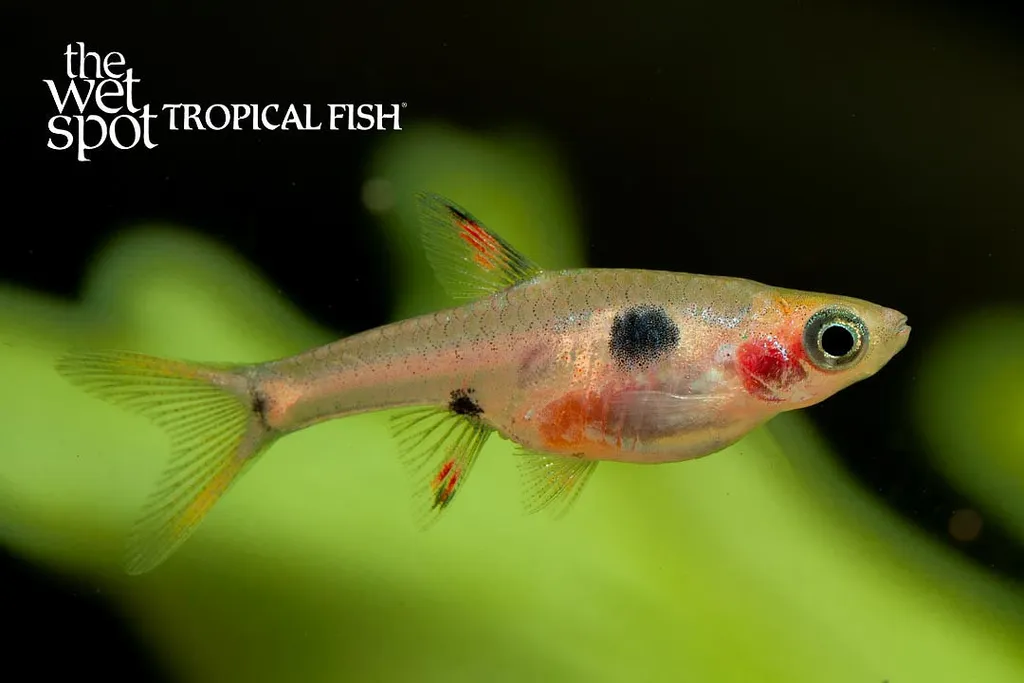
 0.6 in (1.6 cm)11 gal (40 L)73–81°F (23–27°C)
Exclamation-point rasbora
Boraras urophthalmoides
0.6 in (1.6 cm) · 11 gal (40 L)
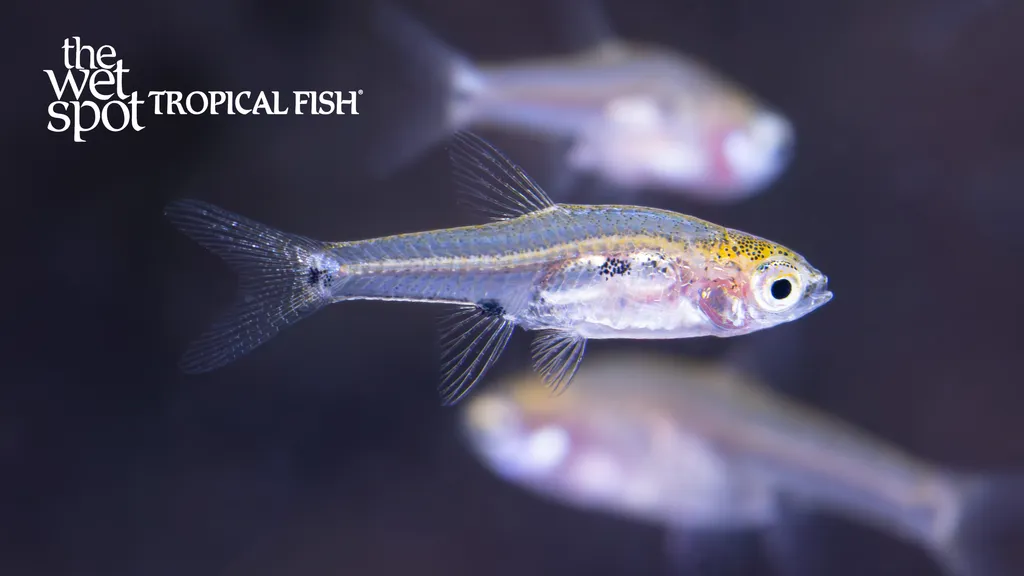
 1 in (2.5 cm)7 gal (25 L)72–82°F (22–28°C)
Dwarf rasbora
Boraras maculatus
1 in (2.5 cm) · 7 gal (25 L)
 0.6 in (1.5 cm)8 gal (30 L)72–79°F (22–26°C)
Micro rasbora
Boraras micros
0.6 in (1.5 cm) · 8 gal (30 L)
 0.8 in (2 cm)12 gal (45 L)73–79°F (23–26°C)
Blue axelrodi rasbora
Sundadanio axelrodi
0.8 in (2 cm) · 12 gal (45 L)