Spotted blue-eye
Pseudomugil gertrudae
Also known as Gertrudae Rainbow
FreshwaterFish
Care at a glance
- Temperature
- 70–82°F
- 21–28°C
- pH
- 6.0–7.5
- Adult size
- 1.5 in
- 3.8 cm
- Minimum tank
- 17 gal
- 65 L
- Temperament
- Peaceful
- Social behavior
- Schooling
- Swim level
- Middle
- Difficulty
- Medium
- Breeding
- Medium
- Rarity
- Rare
- Family
- Pseudomugilidae
- Origin
- Australia, Aru Islands
Overview
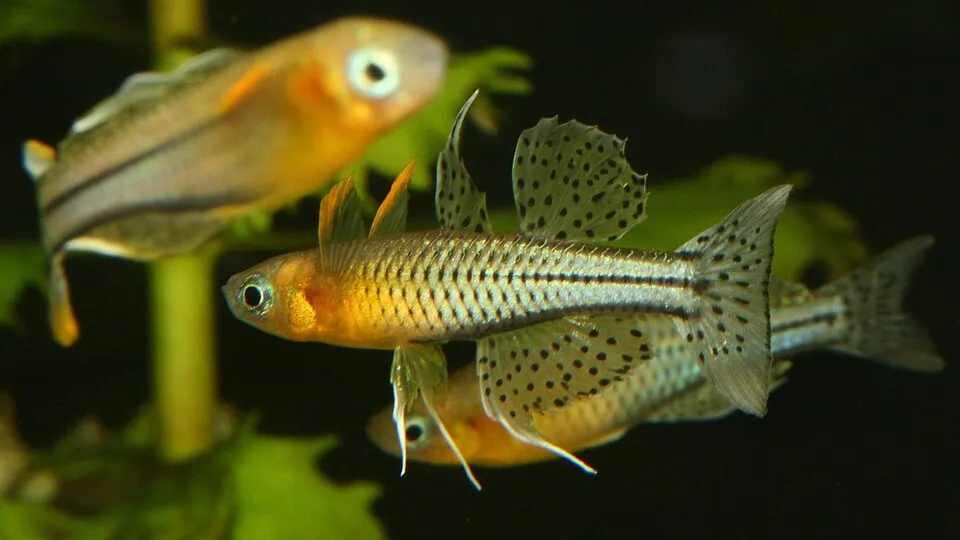
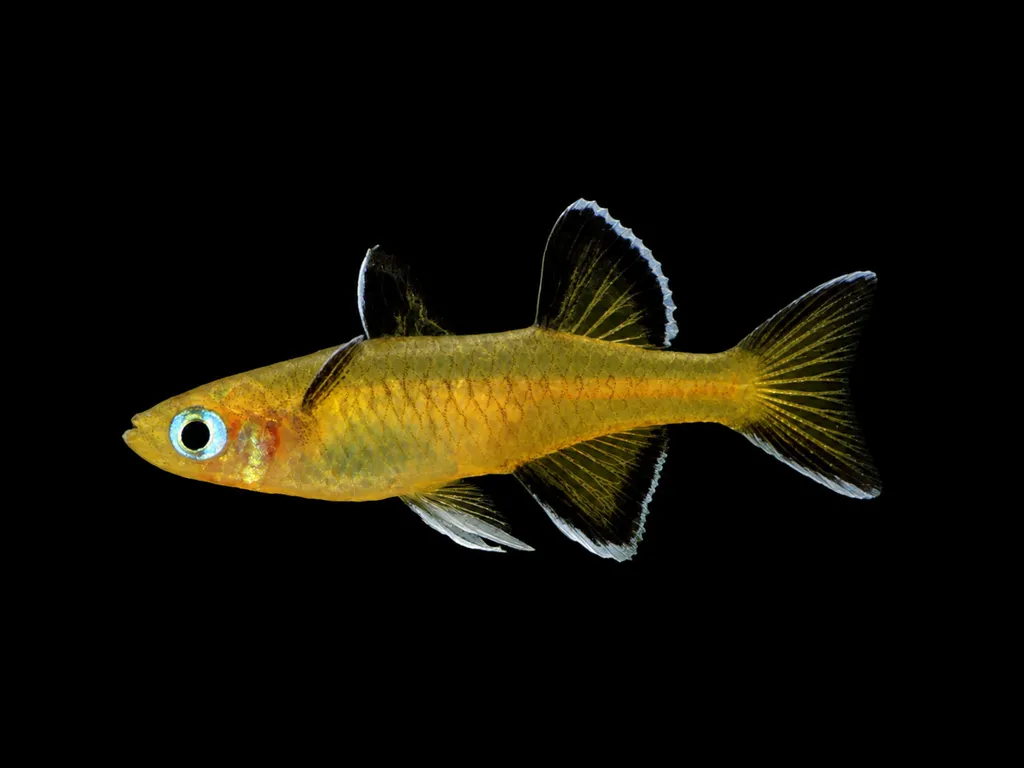
Spotted blue-eyes are tiny, gentle fish that do best in a group of eight or more, where the males constantly flick and spread their spotted fins in display. They swim in the middle and upper water and need equally small, calm tankmates, or a species-only tank of their own, since anything bigger will outcompete or eat them. Feed small foods often, such as crushed flake, frozen cyclops, daphnia, and baby brine shrimp. They love soft, slightly acidic water thick with fine and floating plants. Aim for a tank around 65 liters or larger.
In the wild
This little blue-eye lives across northern Australia and the Aru Islands, in soft, tannin-stained pools, swamps, and slow streams full of plants. The water runs acidic to neutral and soft, matching a pH of about 6 to 7.5 and a temperature between 21 and 28 degrees Celsius. Recreate it with dark substrate, leaf litter or wood for a gentle tea color, dense fine-leaved and floating plants, and calm, clean water.
Good to know
Pseudomugil gertrudae belongs to the blue-eye family Pseudomugilidae and is one of the smallest at about 3.8 centimeters. Males carry rows of dark spots across clear, feathered fins that they raise in display. It scatters small eggs among fine plants and mops over a long spawning period, and while it needs small first foods and steady water, keepers rate its breeding as moderate, easier than many of its relatives. Parents give no care and will eat their own eggs.
Did you know
Spotted blue-eyes come in several regional forms with different fin patterns and spot counts, and keepers often keep the strains apart to preserve them. Despite being under four centimeters long, the males put on near-constant fin displays.
Weekly picks
Tank mates
Spotted blue-eye is a peaceful, schooling species that keeps to the middle. These picks share a community profile with it, are safe together in both directions, and overlap on water type, temperature and pH.
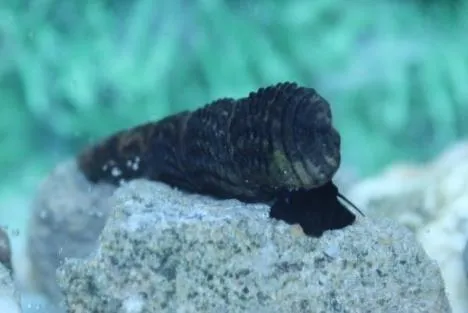
White spotted rabbit snail
Tylomelania towutica
Freshwater4.3 in (11 cm) · 16 gal (60 L)75–84°F (24–29°C)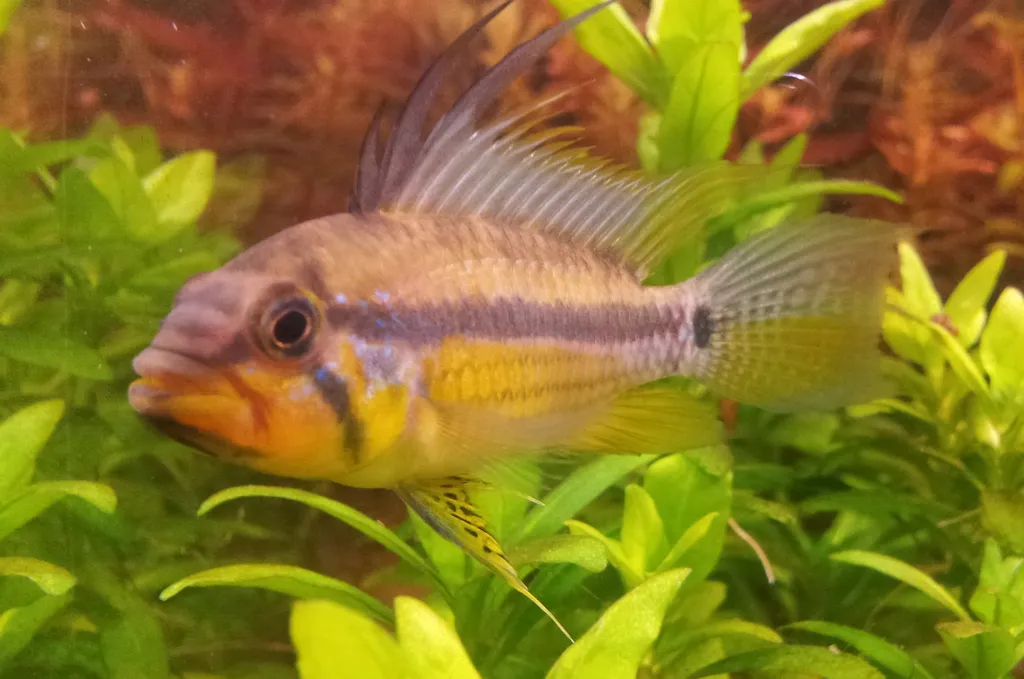
Allpahuayo dwarf cichlid
Apistogramma allpahuayo
Freshwater2 in (5 cm) · 16 gal (60 L)75–82°F (24–28°C)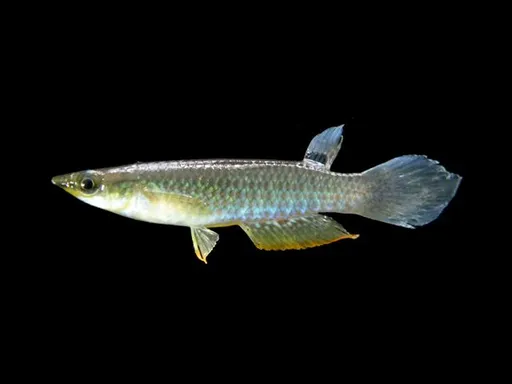
Blue panchax
Aplocheilus panchax
Freshwater3.5 in (9 cm) · 20 gal (75 L)72–82°F (22–28°C)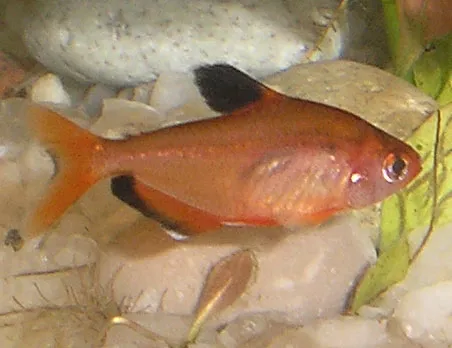
Serpae tetra
Hyphessobrycon eques
Freshwater1.8 in (4.5 cm) · 17 gal (65 L)68–82°F (20–28°C)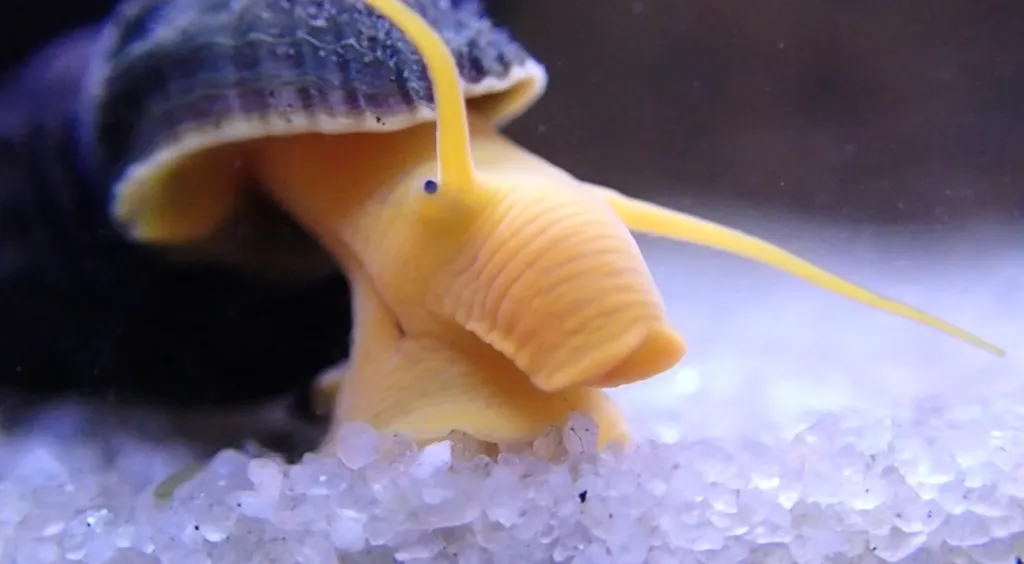
Gold rabbit snail
Tylomelania gemmifera
Freshwater2.8 in (7 cm) · 16 gal (60 L)75–82°F (24–28°C)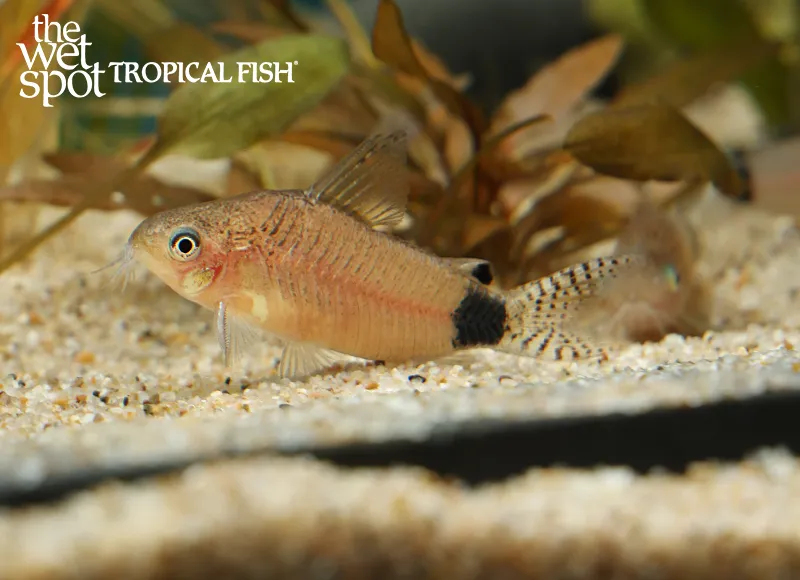
Guapore cory
Gastrodermus guapore
Freshwater2 in (5 cm) · 16 gal (60 L)72–82°F (22–28°C)
Common questions
What size tank does a Spotted blue-eye need?
A Spotted blue-eye needs at least 17 gal (65 L). It spends most of its time in the middle.
What temperature and pH does a Spotted blue-eye need?
A Spotted blue-eye is comfortable at 70–82°F (21–28°C) with a pH of 6.0–7.5.
How big does a Spotted blue-eye get?
An adult Spotted blue-eye reaches about 1.5 in (3.8 cm).
Does a Spotted blue-eye need a group?
Yes. A Spotted blue-eye is a schooling species and should be kept in a group, not singly.
Related species
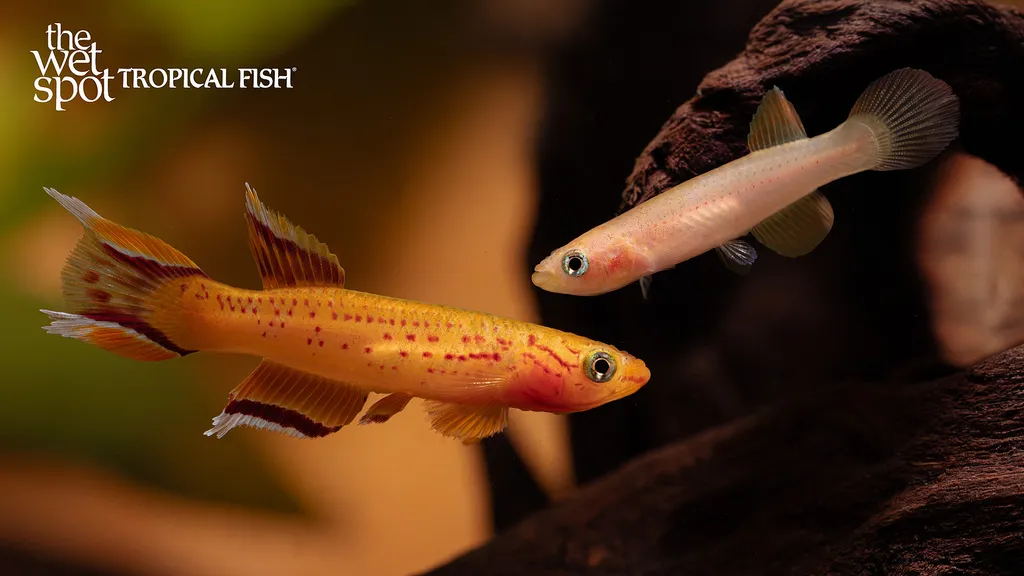
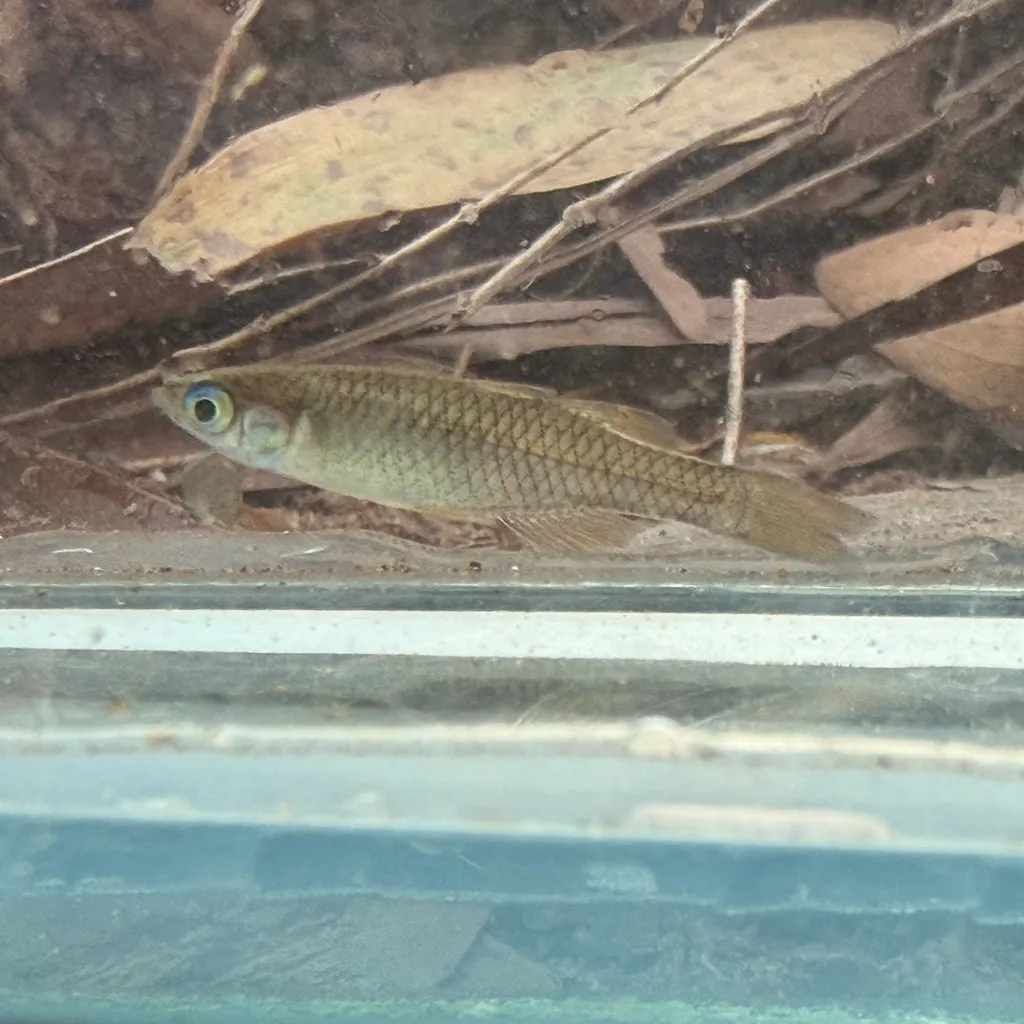 2.2 in (5.5 cm)20 gal (75 L)77–90°F (25–32°C)
Delicate blue-eye
Pseudomugil tenellus
2.2 in (5.5 cm) · 20 gal (75 L)
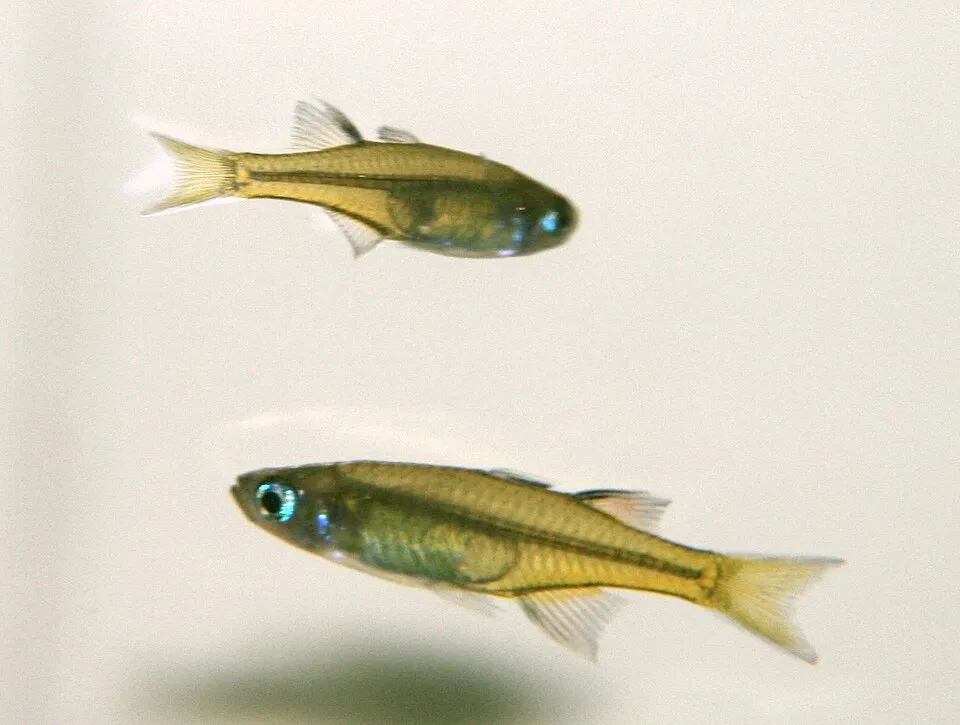
 2.2 in (5.5 cm)22 gal (85 L)75–82°F (24–28°C)
Forktail blue-eye
Pseudomugil furcatus
2.2 in (5.5 cm) · 22 gal (85 L)
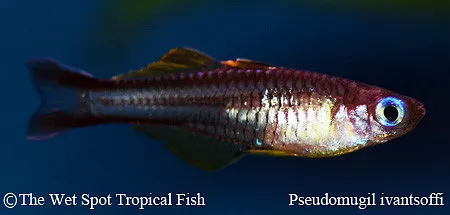
 2.8 in (7 cm)25 gal (95 L)68–79°F (20–26°C)
Pacific blue-eye
Pseudomugil signifer
2.8 in (7 cm) · 25 gal (95 L)
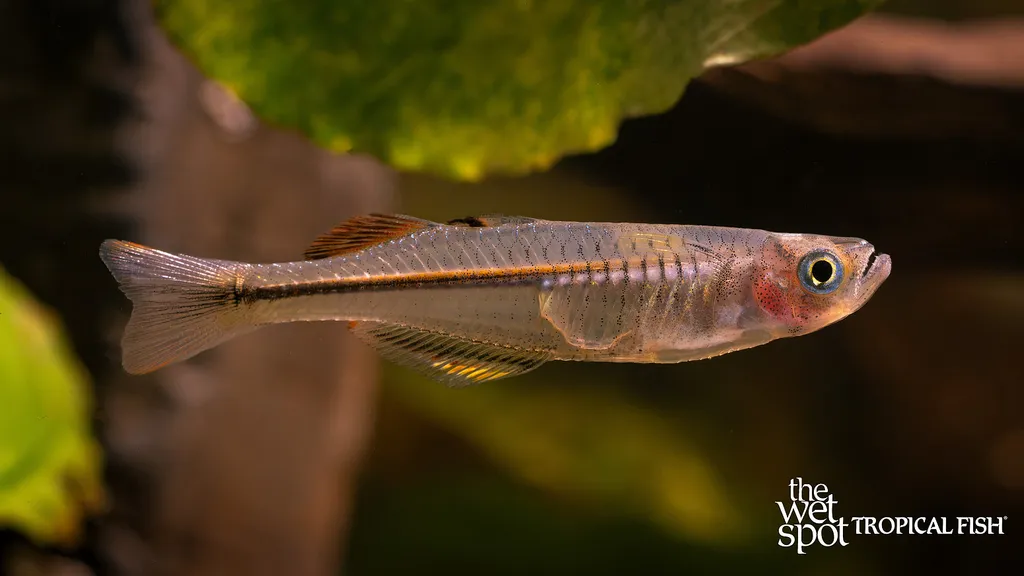
 1.6 in (4 cm)11 gal (40 L)75–82°F (24–28°C)
Ivantsoff's blue-eye
Pseudomugil ivantsoffi
1.6 in (4 cm) · 11 gal (40 L)
 1.6 in (4 cm)11 gal (40 L)75–82°F (24–28°C)
Transparent blue-eye
Pseudomugil pellucidus
1.6 in (4 cm) · 11 gal (40 L)
 1.4 in (3.5 cm)11 gal (40 L)68–82°F (20–28°C)
Honey blue-eye
Pseudomugil mellis
1.4 in (3.5 cm) · 11 gal (40 L)