Delicate blue-eye
Pseudomugil tenellus
FreshwaterFish
Care at a glance
- Temperature
- 77–90°F
- 25–32°C
- pH
- 6.0–7.5
- Adult size
- 2.2 in
- 5.5 cm
- Minimum tank
- 20 gal
- 75 L
- Temperament
- Peaceful
- Social behavior
- Schooling
- Swim level
- Middle
- Difficulty
- Medium
- Breeding
- Hard
- Rarity
- Rare
- Family
- Pseudomugilidae
- Origin
- Australia, New Guinea
Overview
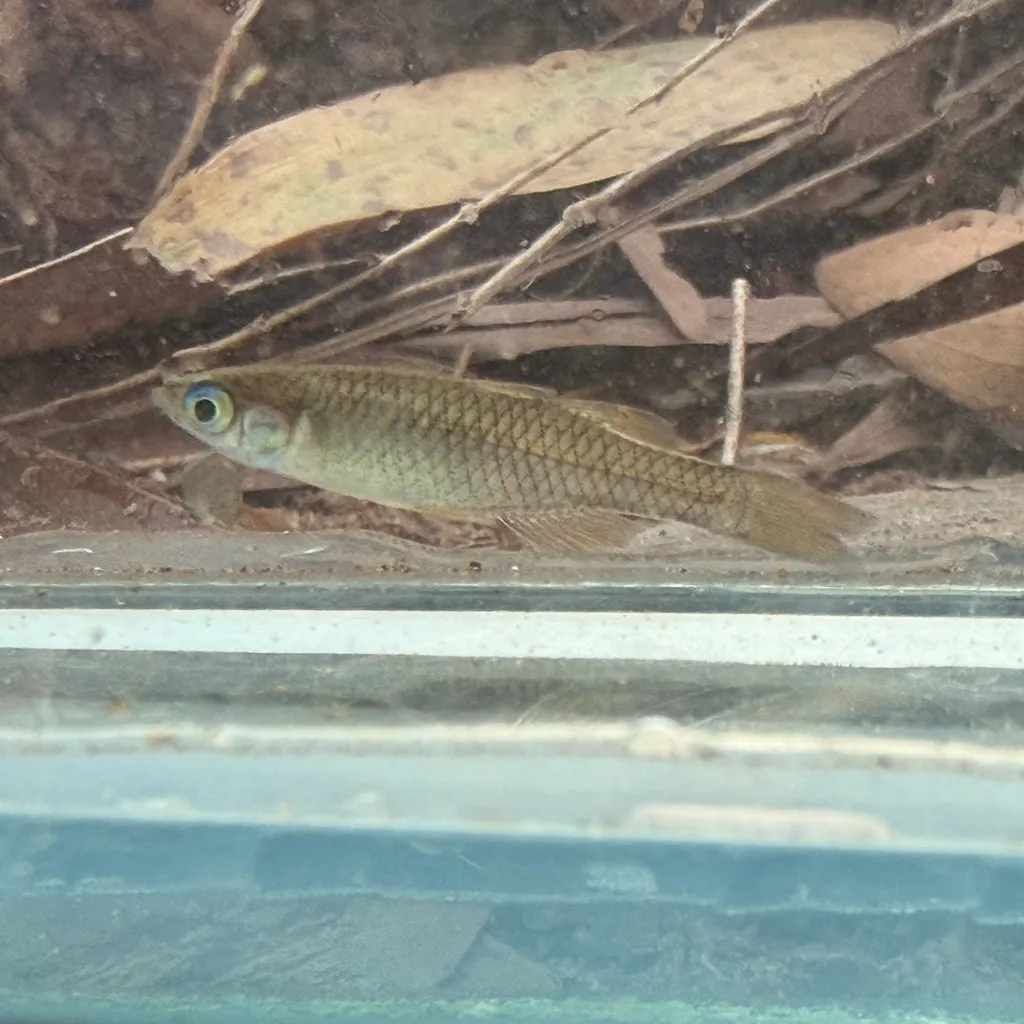
Delicate blue-eyes are small, peaceful fish that feel secure in a group of eight or more, where the males flick their fins and show off their pale blue eyes and yellow-edged finnage. They occupy the middle and upper water and belong with other tiny, gentle species that will not outcompete them at feeding time. Because they are little, offer small foods such as micro pellet, crushed flake, frozen cyclops, and baby brine shrimp several times a day. They enjoy warm, soft, slightly acidic water and appreciate fine-leaved plants to weave through. Aim for a tank around 75 liters or larger.
In the wild
This blue-eye lives in the tropical north, across the Top End of Australia and into southern New Guinea, in clear, warm streams, lagoons, and swampy pools among dense vegetation. Those waters run soft and slightly acidic to neutral, which fits a pH of about 6 to 7.5 and a warm temperature between 25 and 32 degrees Celsius. Recreate it with soft light, plenty of fine and floating plants, some leaf litter or wood, and calm, clean water with only gentle movement.
Good to know
Pseudomugil tenellus is a blue-eye in the family Pseudomugilidae and reaches only about 5.5 centimeters. The name tenellus means delicate or tender, a fair description of this slight, short-lived fish. Males display to each other and to females with raised, spread fins rather than fighting. Like other blue-eyes it scatters small eggs among fine plants and roots over a long spawning window, giving no parental care, and the tiny fry need very small first foods, which makes breeding hard.
Did you know
Blue-eyes get their common name from the bright, reflective blue ring around the eye, which stands out even on such a small fish. Males show off by flaring their fins at each other in brief, harmless standoffs through the day.
Weekly picks
Tank mates
Delicate blue-eye is a peaceful, schooling species that keeps to the middle. These picks share a community profile with it, are safe together in both directions, and overlap on water type, temperature and pH.
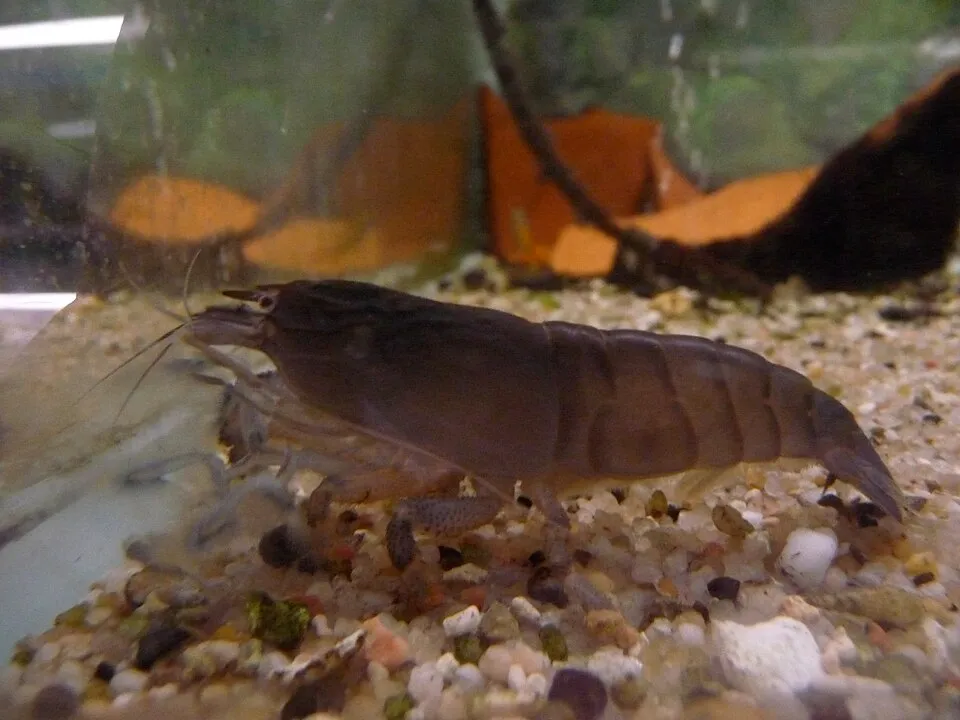
Vampire shrimp
Atya gabonensis
Freshwater5.1 in (13 cm) · 20 gal (75 L)75–82°F (24–28°C)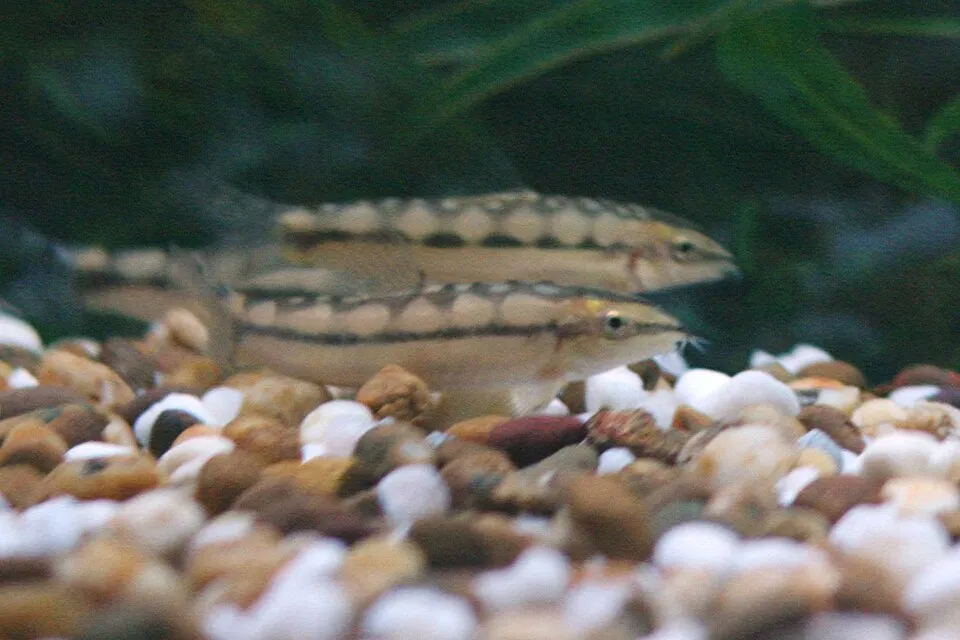
Dwarf botia
Ambastaia sidthimunki
Freshwater2.4 in (6 cm) · 20 gal (75 L)68–86°F (20–30°C)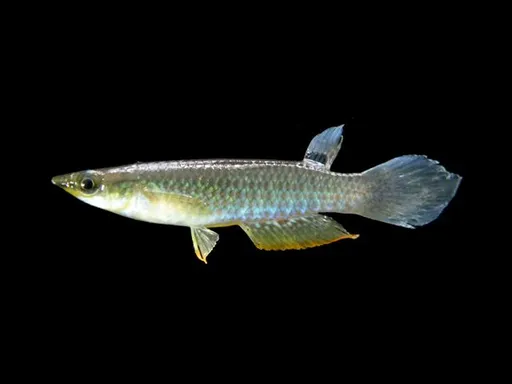
Blue panchax
Aplocheilus panchax
Freshwater3.5 in (9 cm) · 20 gal (75 L)72–82°F (22–28°C)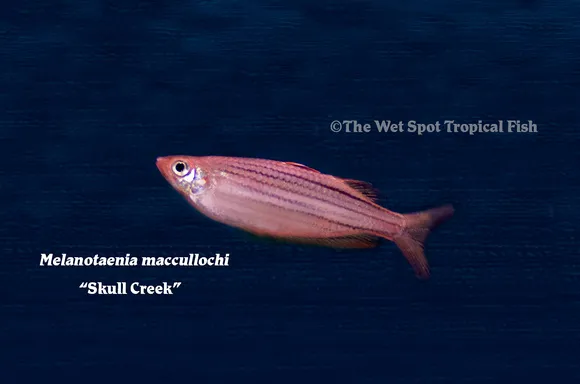
Sahul rainbowfish
Melanotaenia sahulensis
Freshwater2.2 in (5.5 cm) · 20 gal (75 L)75–86°F (24–30°C)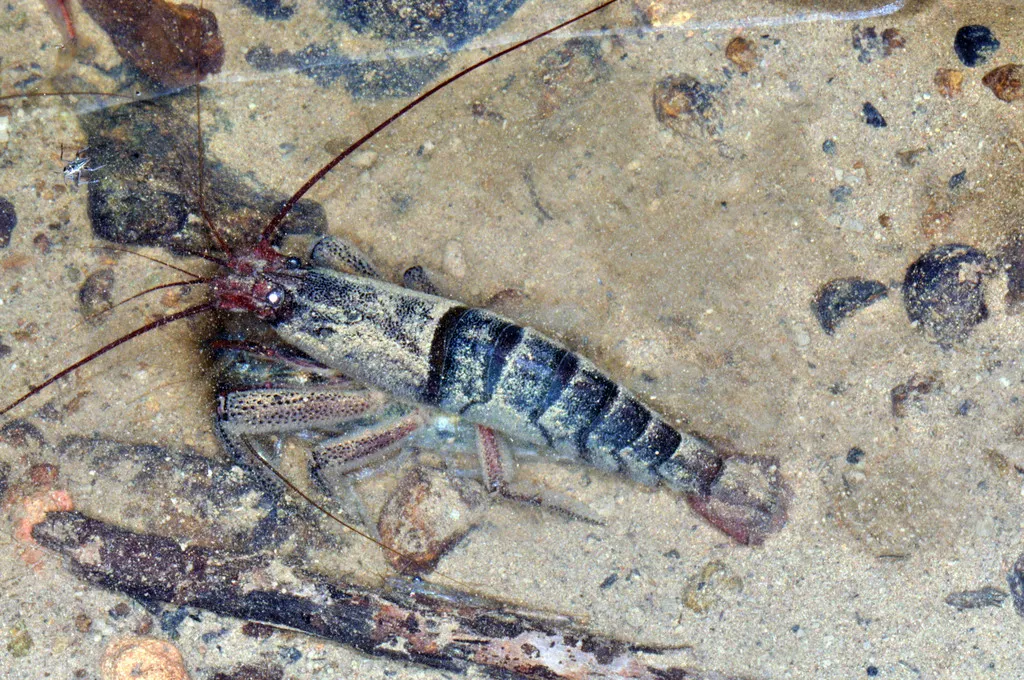
Marble wood shrimp
Atya scabra
Freshwater3.9 in (10 cm) · 20 gal (75 L)73–82°F (23–28°C)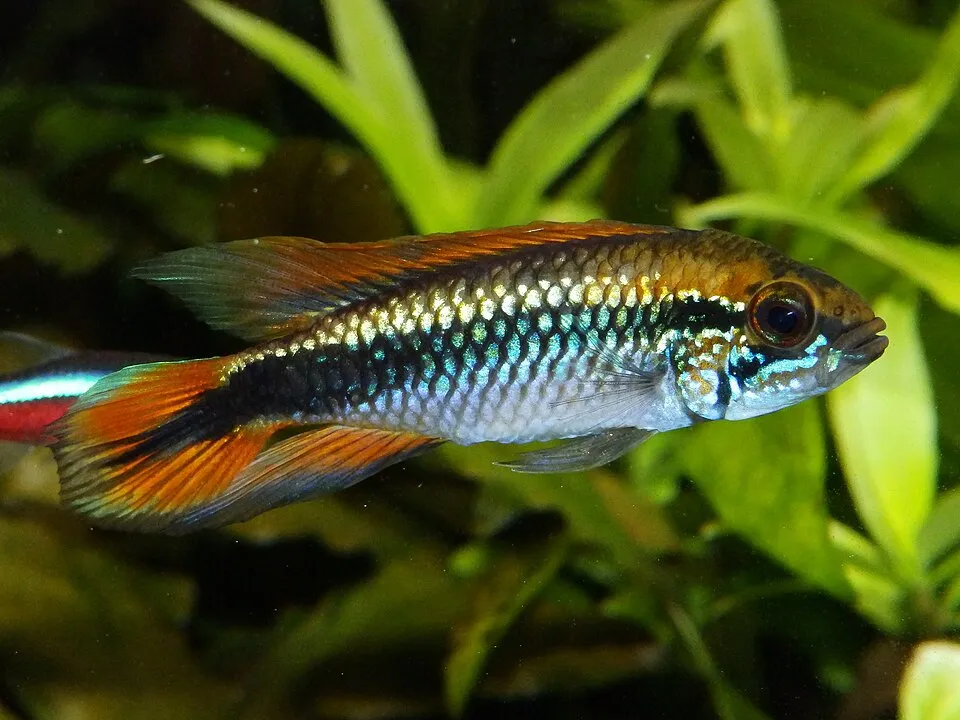
Agassiz's dwarf cichlid
Apistogramma agassizii
Freshwater3.5 in (9 cm) · 20 gal (75 L)72–84°F (22–29°C)
Common questions
What size tank does a Delicate blue-eye need?
A Delicate blue-eye needs at least 20 gal (75 L). It spends most of its time in the middle.
What temperature and pH does a Delicate blue-eye need?
A Delicate blue-eye is comfortable at 77–90°F (25–32°C) with a pH of 6.0–7.5.
How big does a Delicate blue-eye get?
An adult Delicate blue-eye reaches about 2.2 in (5.5 cm).
Does a Delicate blue-eye need a group?
Yes. A Delicate blue-eye is a schooling species and should be kept in a group, not singly.
Related species
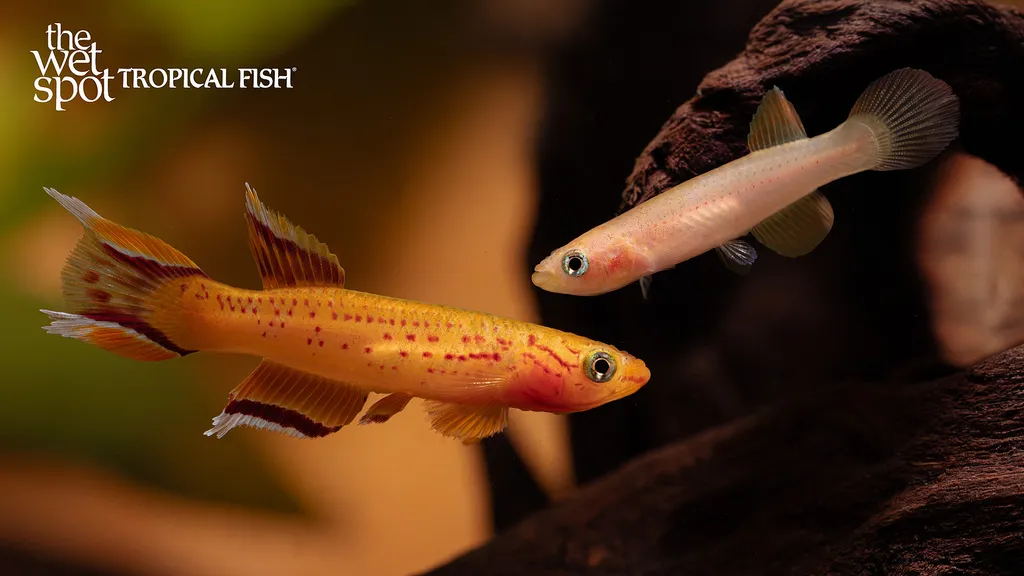 2.2 in (5.5 cm)22 gal (85 L)75–82°F (24–28°C)
Forktail blue-eye
Pseudomugil furcatus
2.2 in (5.5 cm) · 22 gal (85 L)
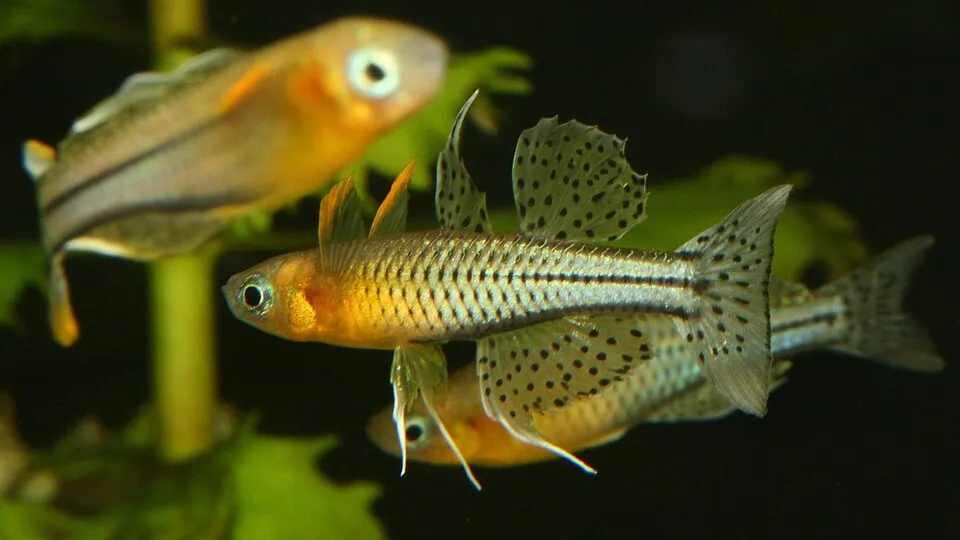
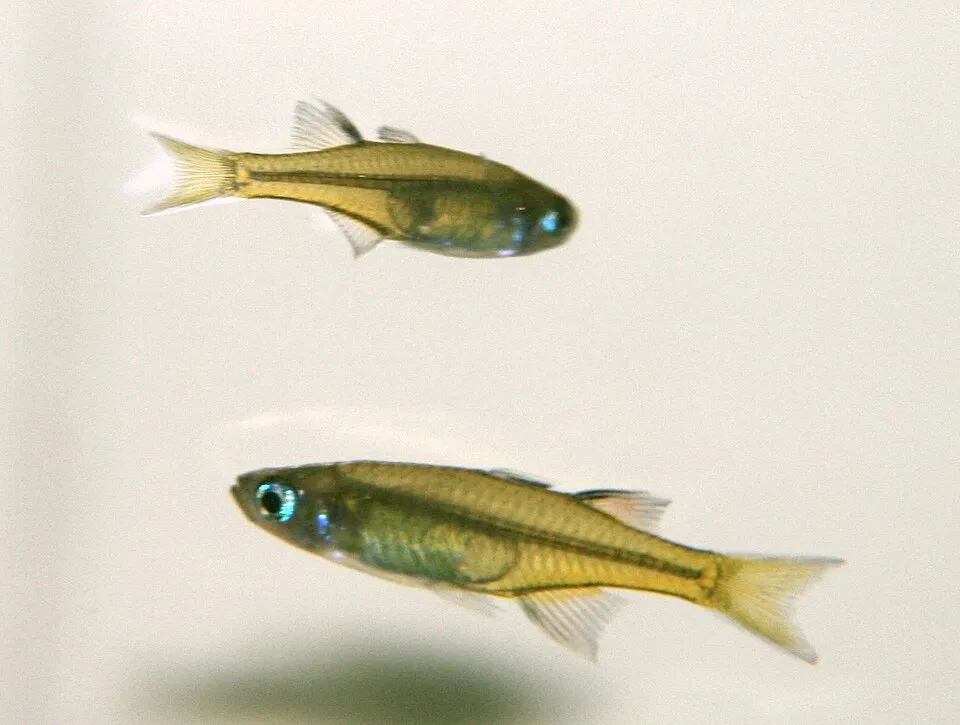 2.8 in (7 cm)25 gal (95 L)68–79°F (20–26°C)
Pacific blue-eye
Pseudomugil signifer
2.8 in (7 cm) · 25 gal (95 L)
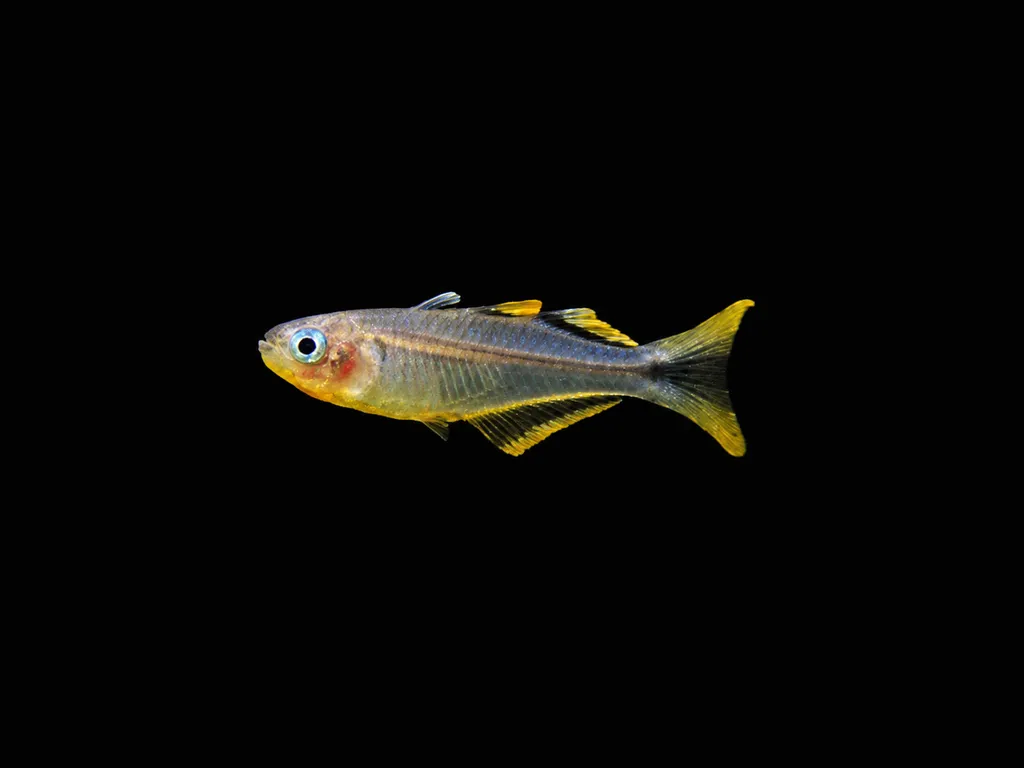
 1.5 in (3.8 cm)17 gal (65 L)70–82°F (21–28°C)
Spotted blue-eye
Pseudomugil gertrudae
1.5 in (3.8 cm) · 17 gal (65 L)
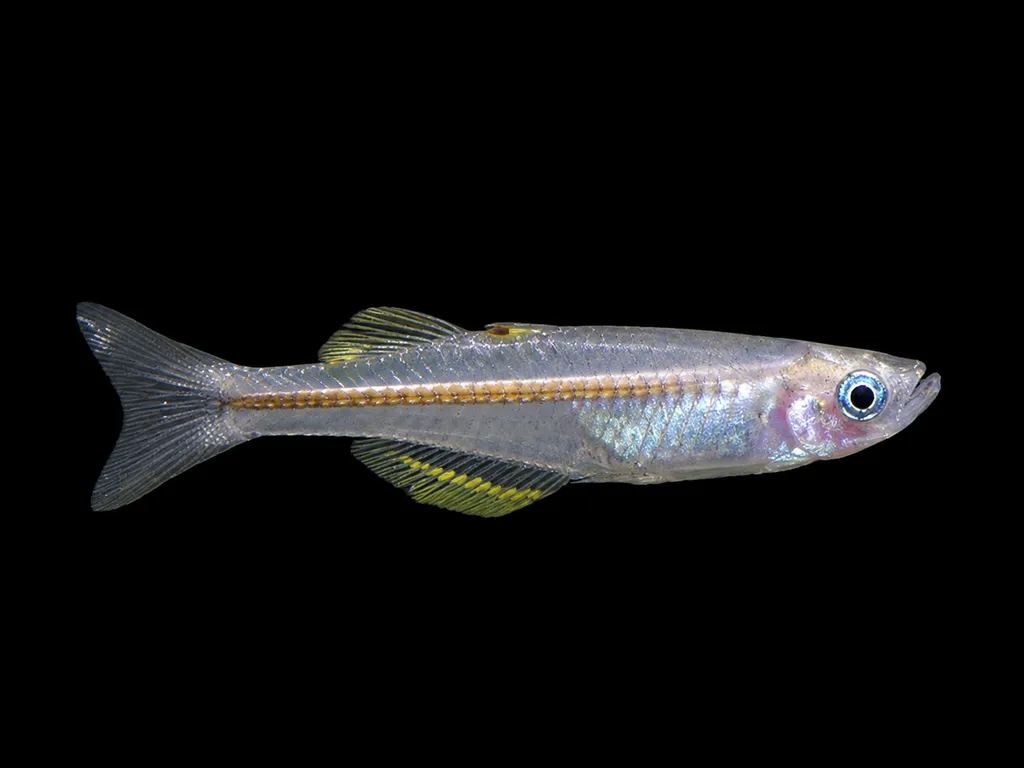
 2 in (5 cm)11 gal (40 L)75–82°F (24–28°C)
Popondetta blue-eye
Pseudomugil connieae
2 in (5 cm) · 11 gal (40 L)
 1.8 in (4.5 cm)15 gal (55 L)79–86°F (26–30°C)
New Guinea blue-eye
Pseudomugil novaeguineae
1.8 in (4.5 cm) · 15 gal (55 L)
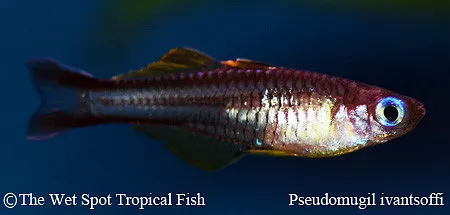 1.6 in (4 cm)11 gal (40 L)75–82°F (24–28°C)
Ivantsoff's blue-eye
Pseudomugil ivantsoffi
1.6 in (4 cm) · 11 gal (40 L)