New Guinea rainbowfish
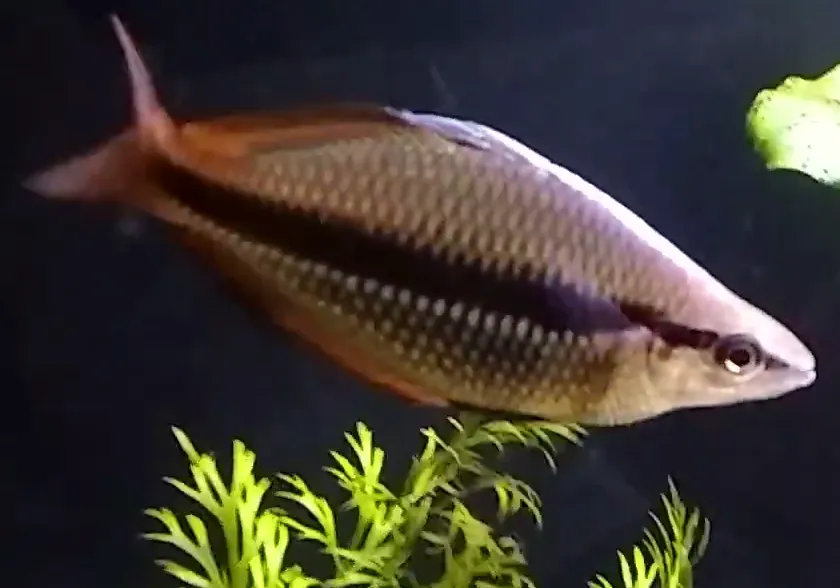
Melanotaenia affinis
Also known as Northern Blue Rainbow
FreshwaterFish
Care at a glance
- Temperature
- 68–86°F
- 20–30°C
- pH
- 7.0–8.0
- Adult size
- 4.7 in
- 12 cm
- Minimum tank
- 30 gal
- 115 L
- Temperament
- Peaceful
- Social behavior
- Schooling
- Swim level
- Middle
- Difficulty
- Easy
- Breeding
- Hard
- Rarity
- Common
- Family
- Melanotaeniidae
- Origin
- New Guinea
Overview
This is an active schooling fish, so keep six or more in a tank of at least 115 liters, and a longer footprint is better than a tall one. They cruise the middle of the tank and stay peaceful, which makes them good for a larger community of similar-sized fish. They tolerate a broad range, from around 20 up to 30 C and pH 7 to 8. Feed a varied diet of quality flake, small pellets, and frozen foods to bring out color.
In the wild
The New Guinea rainbowfish lives in clear, flowing rivers and streams across New Guinea, often in fairly hard, alkaline water. These are open, well-oxygenated waters with current. Give them a long tank with good flow, room to swim, and a pH on the neutral to alkaline side. They handle a wide temperature range, so heating is rarely a problem.
Good to know
This is a member of the rainbowfish family, Melanotaeniidae, reaching about 12 cm as an adult. Like other rainbows, it's an egg scatterer that hangs eggs on fine plants over a long spawning period rather than in one batch. Males develop deeper color and a taller body than females. With good care they commonly live around five years.
Did you know
Male rainbowfish do something most aquarium fish don't. They flash a bright stripe down the forehead that flickers on and off during courtship and feeding, almost like a switch. The display is strongest first thing in the morning, which is when they usually spawn.
Weekly picks
Tank mates
New Guinea rainbowfish is a peaceful, schooling species that keeps to the middle. These picks share a community profile with it, are safe together in both directions, and overlap on water type, temperature and pH.
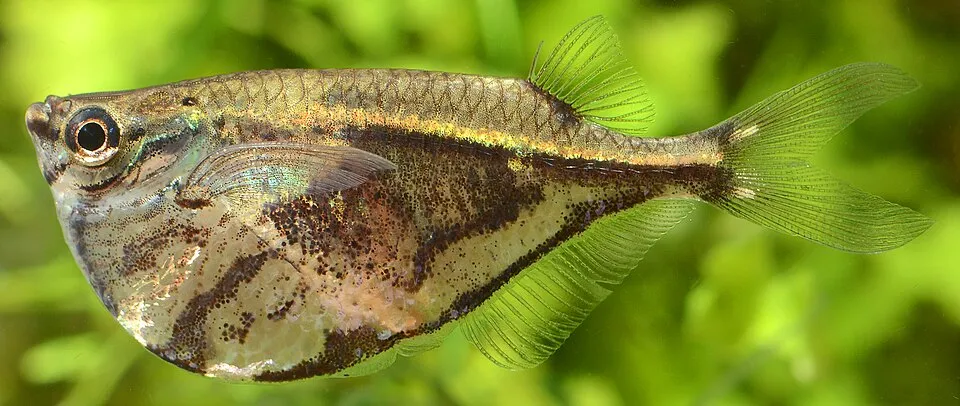
Marbled hatchetfish
Carnegiella strigata
Freshwater1.6 in (4 cm) · 32 gal (120 L)68–82°F (20–28°C)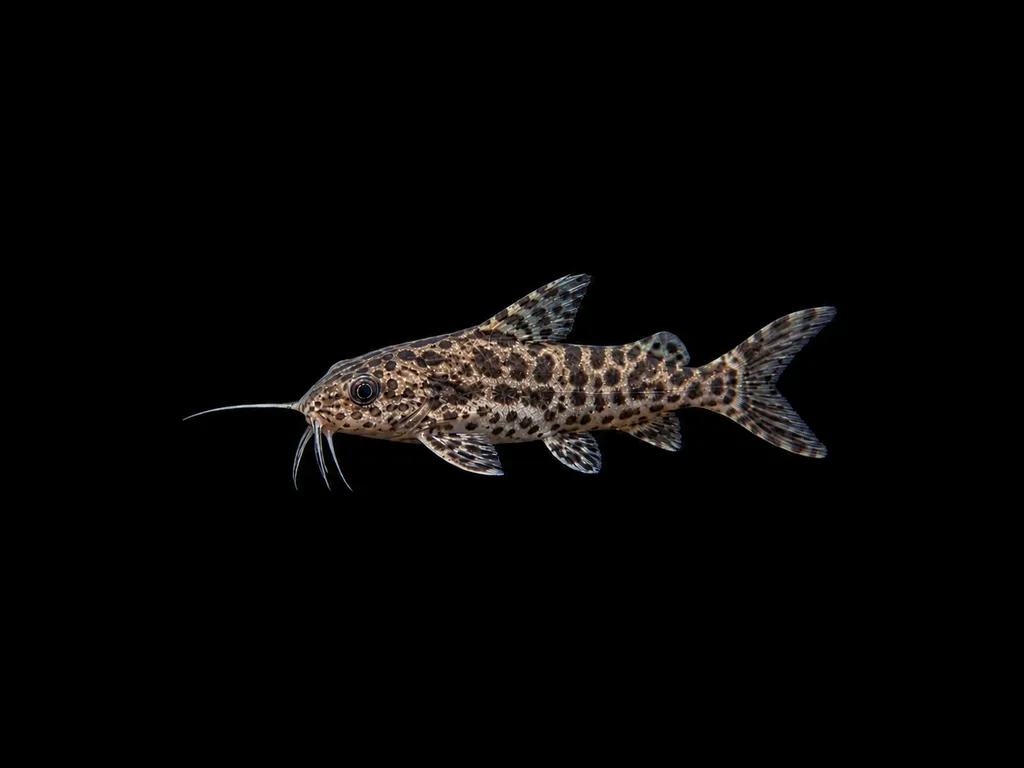
Bugeye squeaker
Synodontis contractus
Freshwater3.9 in (10 cm) · 30 gal (114 L)72–79°F (22–26°C)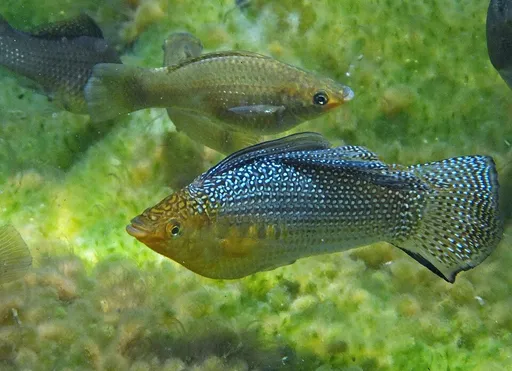
Giant sailfin molly
Poecilia velifera
FreshwaterBrackish5.9 in (15 cm) · 30 gal (113 L)75–82°F (24–28°C)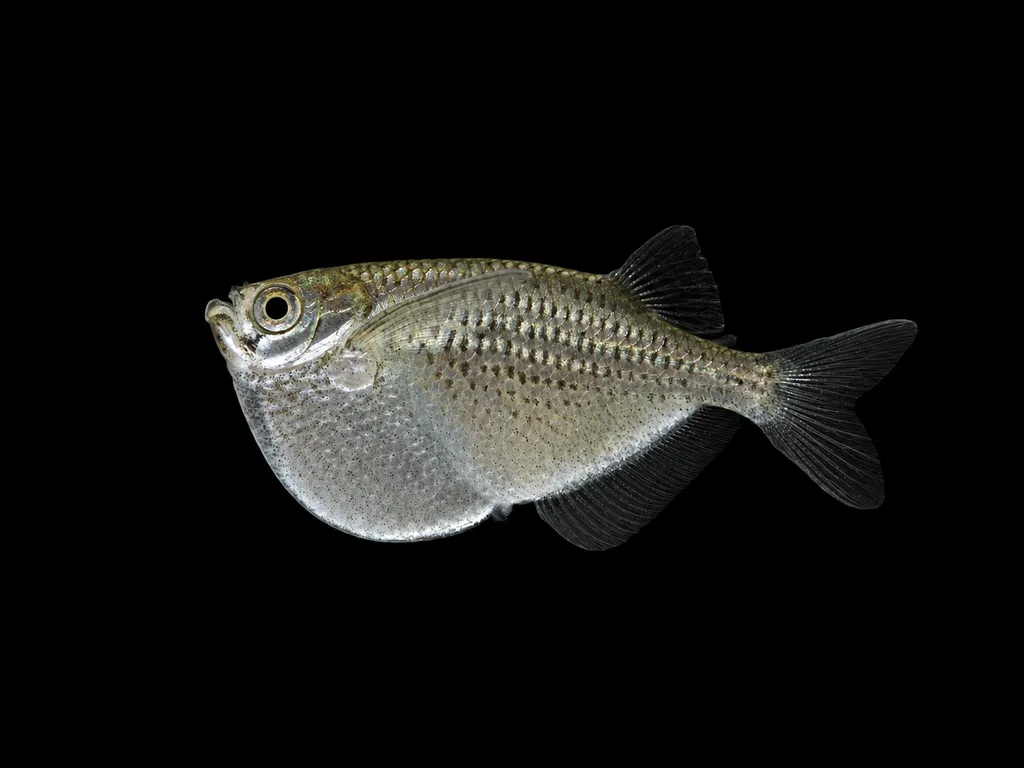
Silver hatchetfish
Gasteropelecus levis
Freshwater1.4 in (3.5 cm) · 30 gal (112 L)73–82°F (23–28°C)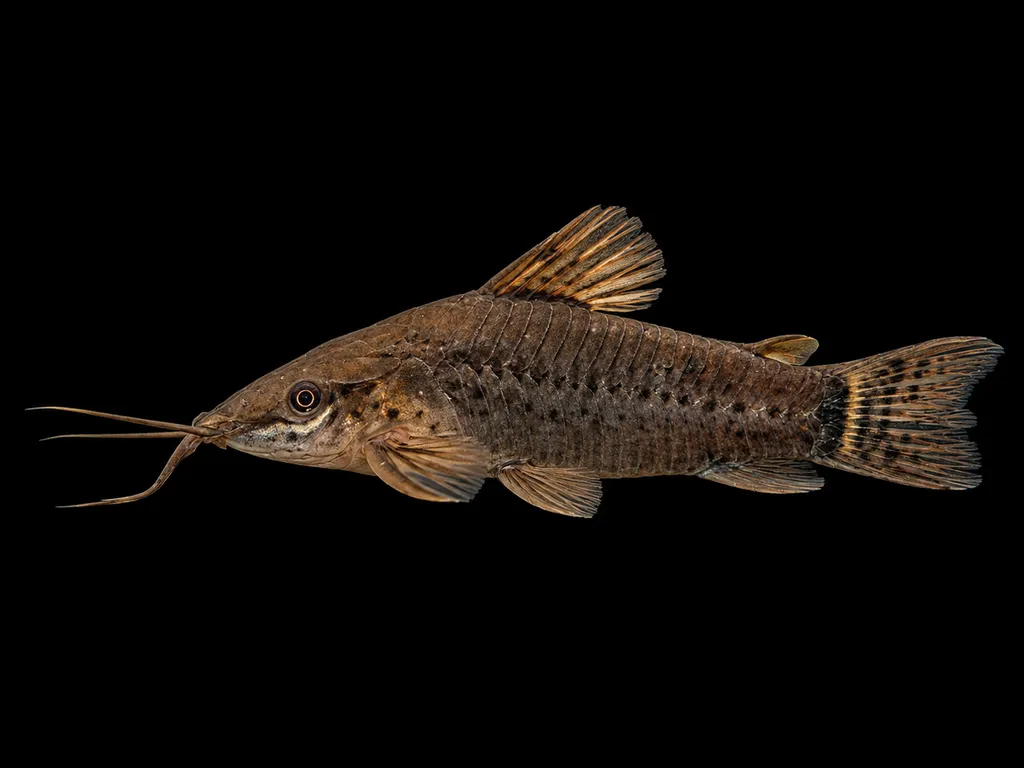
Panama hoplo
Hoplosternum punctatum
Freshwater3.1 in (8 cm) · 30 gal (115 L)72–79°F (22–26°C)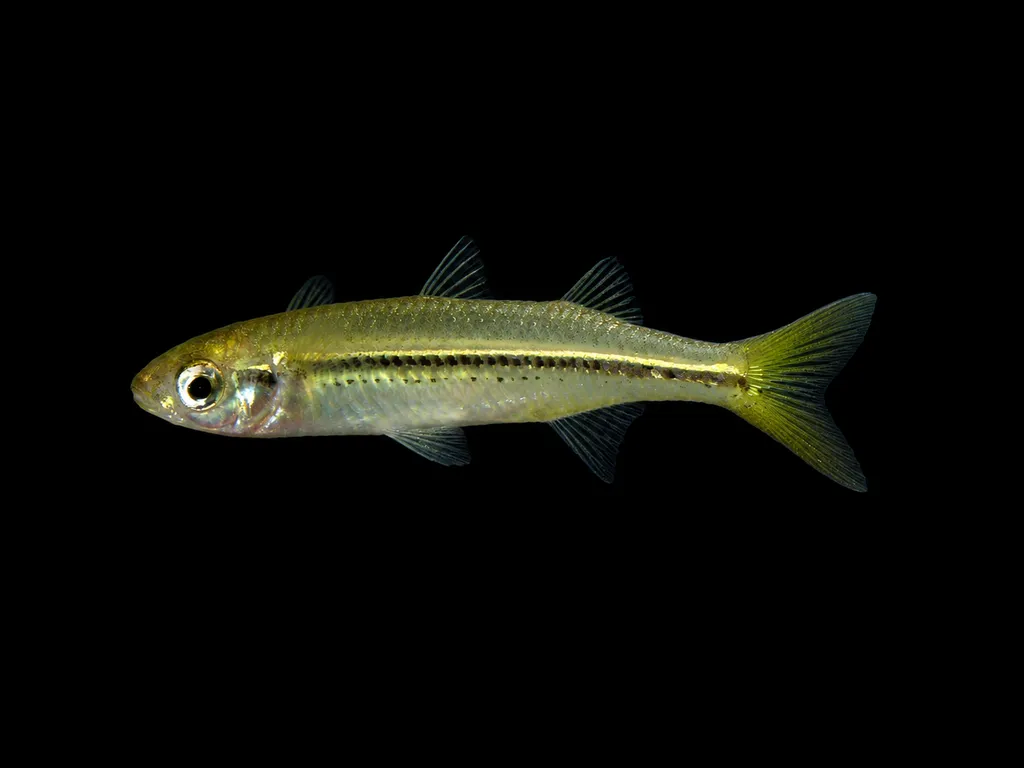
Kubuna hardyhead
Craterocephalus randi
Freshwater3.1 in (8 cm) · 30 gal (112 L)72–82°F (22–28°C)
Common questions
What size tank does a New Guinea rainbowfish need?
A New Guinea rainbowfish needs at least 30 gal (115 L). It spends most of its time in the middle.
What temperature and pH does a New Guinea rainbowfish need?
A New Guinea rainbowfish is comfortable at 68–86°F (20–30°C) with a pH of 7.0–8.0.
How big does a New Guinea rainbowfish get?
An adult New Guinea rainbowfish reaches about 4.7 in (12 cm).
Does a New Guinea rainbowfish need a group?
Yes. A New Guinea rainbowfish is a schooling species and should be kept in a group, not singly.
Related species
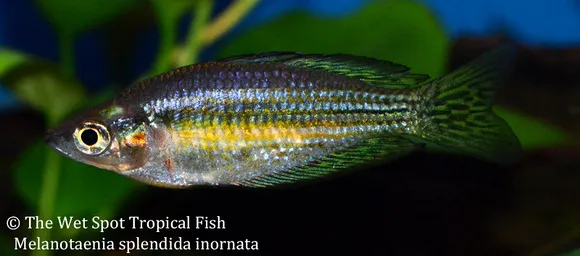 4.7 in (12 cm)53 gal (200 L)72–86°F (22–30°C)
Checkered rainbowfish
Melanotaenia splendida inornata
4.7 in (12 cm) · 53 gal (200 L)
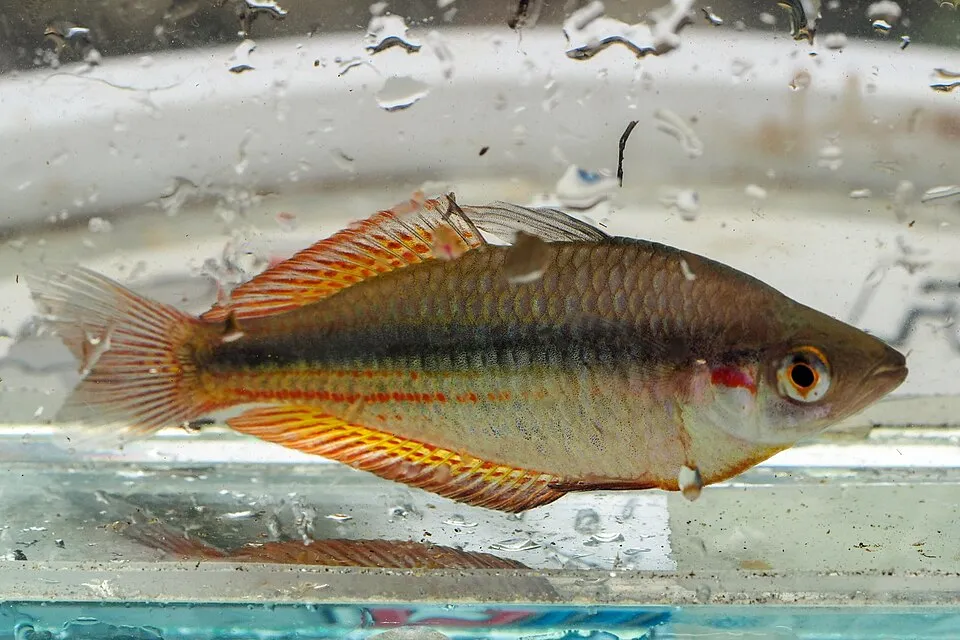 4.7 in (12 cm)30 gal (115 L)64–82°F (18–28°C)
Duboulayi's rainbowfish
Melanotaenia duboulayi
4.7 in (12 cm) · 30 gal (115 L)
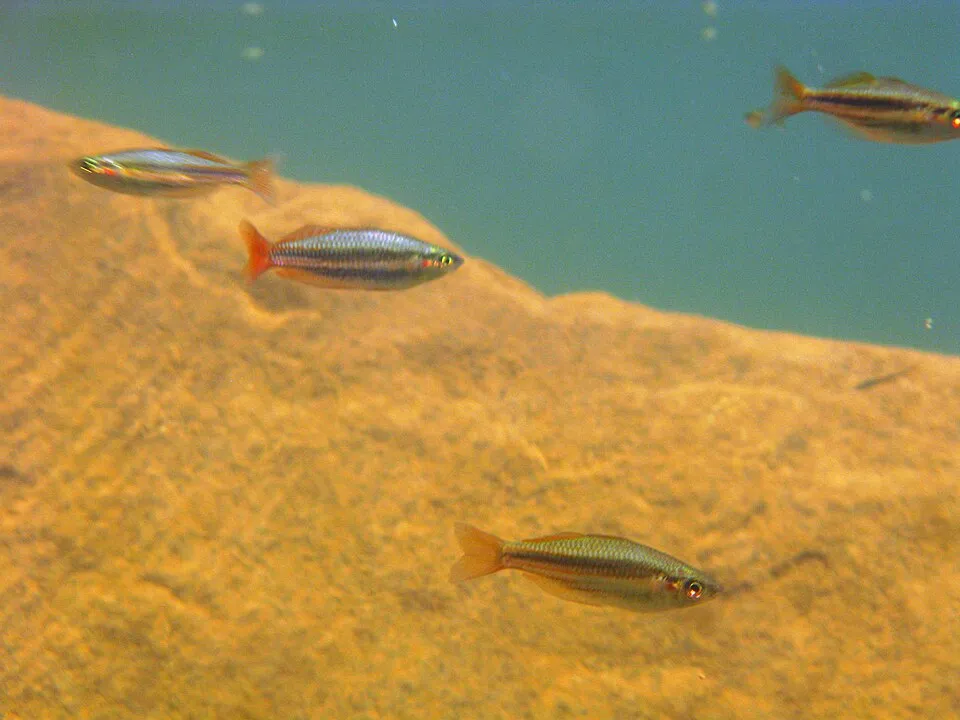 4.7 in (12 cm)30 gal (115 L)72–81°F (22–27°C)
Western rainbowfish
Melanotaenia australis
4.7 in (12 cm) · 30 gal (115 L)
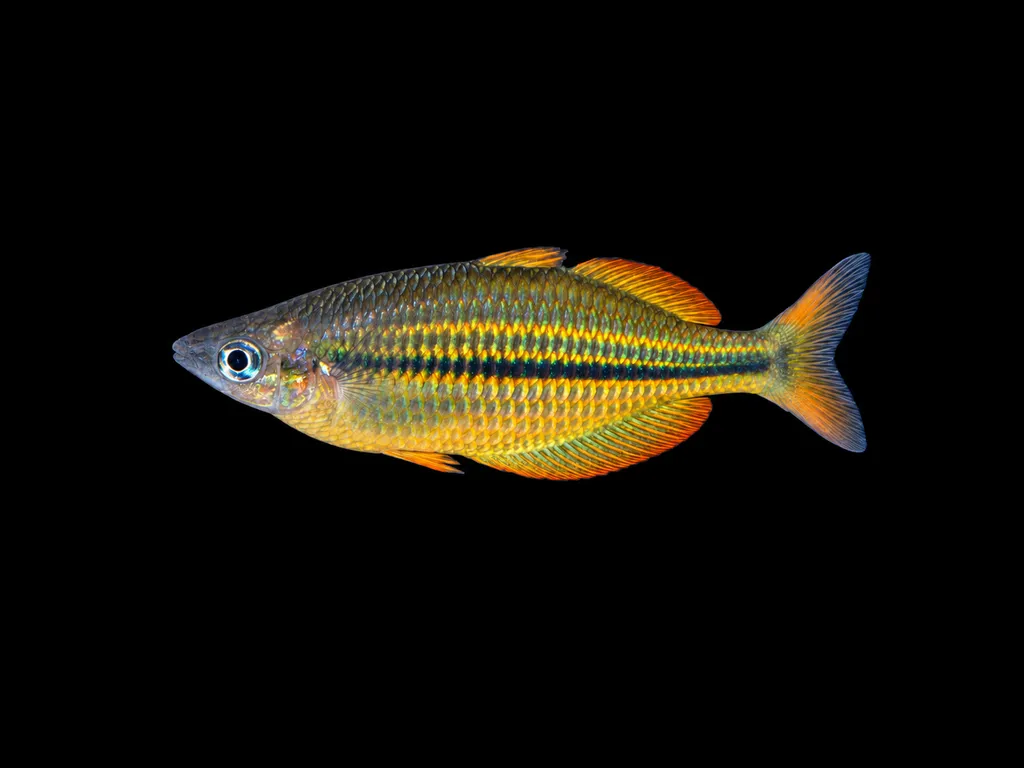 4.6 in (11.7 cm)42 gal (160 L)77–86°F (25–30°C)
Ammer rainbowfish
Melanotaenia ammeri
4.6 in (11.7 cm) · 42 gal (160 L)
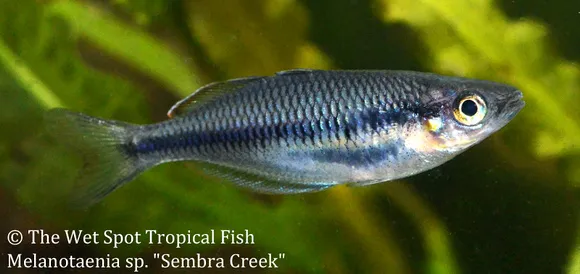 4.6 in (11.7 cm)42 gal (160 L)75–84°F (24–29°C)
Sembra rainbowfish
Melanotaenia sembrae
4.6 in (11.7 cm) · 42 gal (160 L)
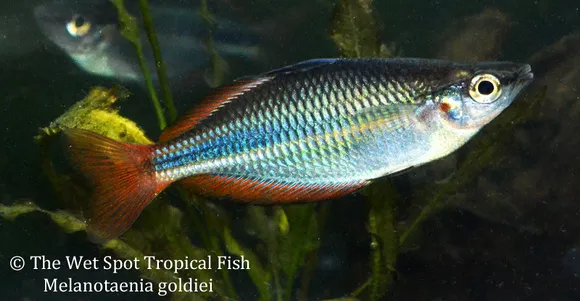 5.1 in (13 cm)53 gal (200 L)75–86°F (24–30°C)
Goldie River rainbowfish
Melanotaenia goldiei
5.1 in (13 cm) · 53 gal (200 L)