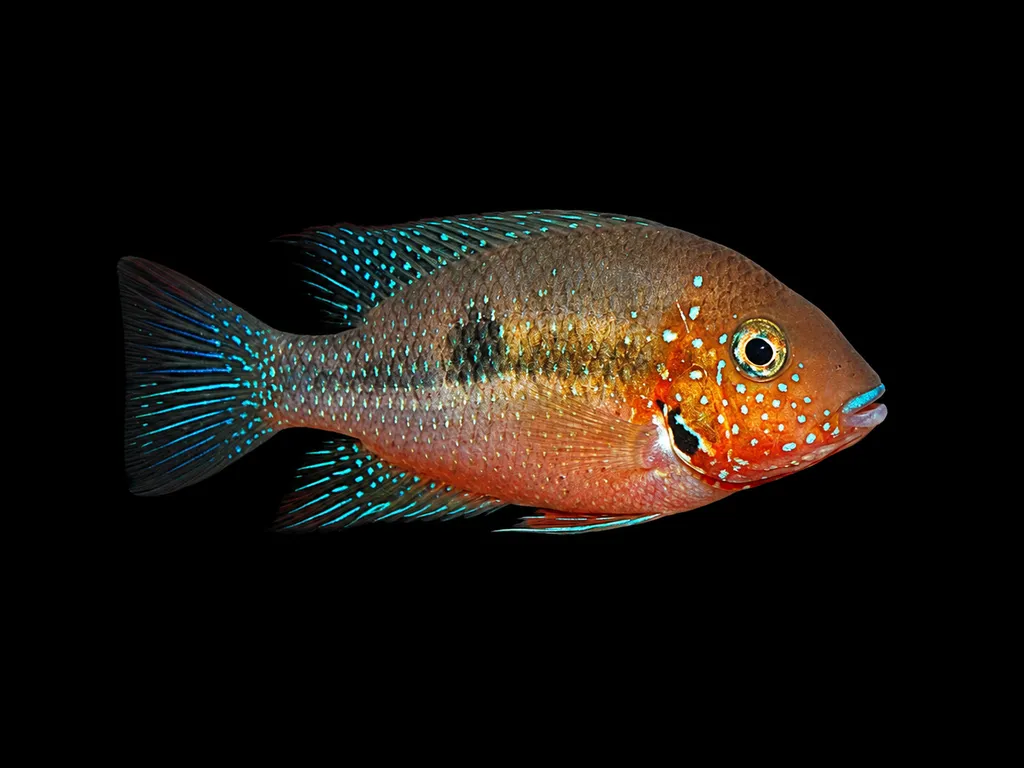
Firemouth cichlid
Thorichthys meeki
FreshwaterFish
Care at a glance
- Temperature
- 73–82°F
- 23–28°C
- pH
- 6.5–8.0
- Adult size
- 5.9 in
- 15 cm
- Minimum tank
- 30 gal
- 115 L
- Temperament
- Mostly peaceful
- Social behavior
- Social
- Swim level
- Bottom
- Difficulty
- Easy
- Breeding
- Easy
- Rarity
- Very common
- Family
- Cichlidae
- Origin
- Atlantic slope of Central America (Mexico, Belize, Guatemala)
Overview
A pair does fine in a tank of 115 liters or more, but if you want them gregarious in a group of eight or more, you will need a much larger setup. They are mostly peaceful for a Central American cichlid and spend their time near the bottom, sifting sand and patrolling their patch. Keep the water at 23 to 28 C with a pH from 6.5 to 8, on a soft sandy floor with rocks and driftwood. Feed sinking pellets, frozen foods, and the occasional vegetable matter. They turn territorial when breeding and will eat much smaller fish or shrimp, so pick tankmates of similar size that can hold their own.
In the wild
Firemouth cichlids come from the warm lowland rivers, lagoons, and pools of the Atlantic slope of Central America, across Mexico, Belize, and Guatemala. They are sand-sifters that work over soft bottoms looking for food, so give them a soft sandy substrate with smooth rocks and some driftwood to break up the layout. A tank of at least 115 liters suits a pair, with more space if you want a group. Keep the water between 23 and 28 C with a pH from 6.5 to 8, which covers the range they handle in the wild.
Good to know
This is a Central American cichlid in the family Cichlidae, reaching about 15 cm as an adult. It is a biparental substrate spawner that breeds readily, with both parents guarding the eggs and fry on a cleaned flat surface or in a pit. A healthy adult can live several years. Most fish in the trade are tank-bred.
Did you know
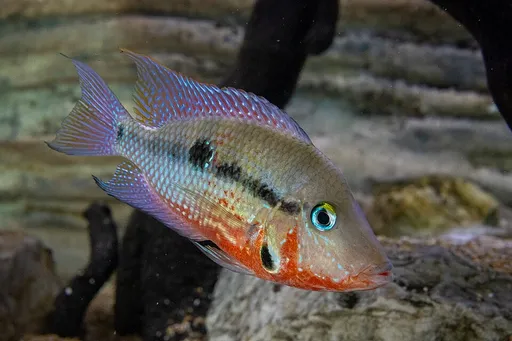
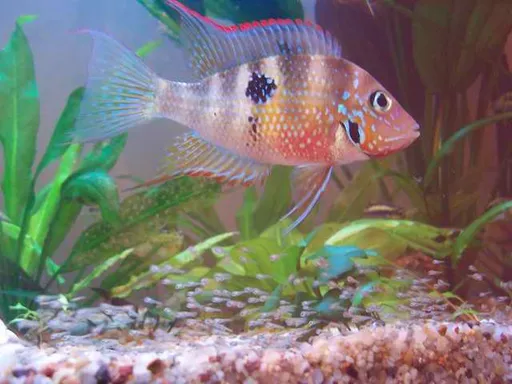
The name comes from the bright red throat and belly the males flash during display. When a male wants to warn off a rival or impress a female, he drops his lower jaw, flares his gill covers, and puffs out that red patch to look as large and threatening as he can. Most of the time it is bluff, and the two fish size each other up without ever making contact.
Weekly picks
Tank mates
Firemouth cichlid is a mostly peaceful, social species that keeps to the bottom. These picks share a community profile with it, are safe together in both directions, and overlap on water type, temperature and pH.
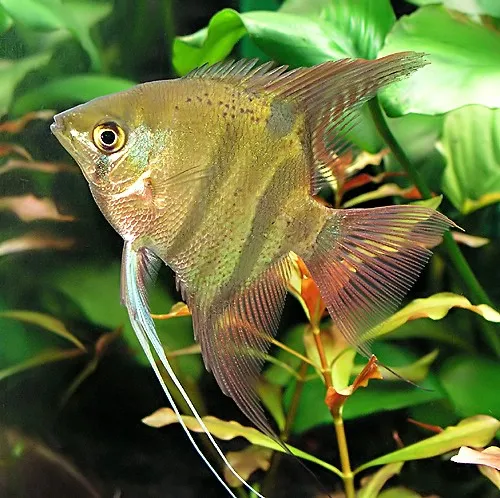
Roman nose angelfish
Pterophyllum leopoldi
Freshwater3.9 in (10 cm) · 30 gal (115 L)72–84°F (22–29°C)
Redfin halfbeak
Nomorhamphus ebrardtii
Freshwater3.5 in (9 cm) · 29 gal (110 L)75–81°F (24–27°C)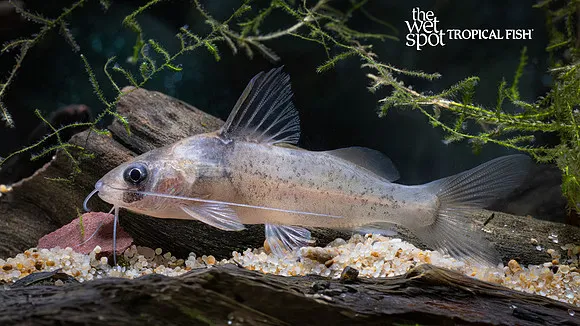
Imitator catfish
Brachyrhamdia imitator
Freshwater2.2 in (5.5 cm) · 30 gal (112 L)73–82°F (23–28°C)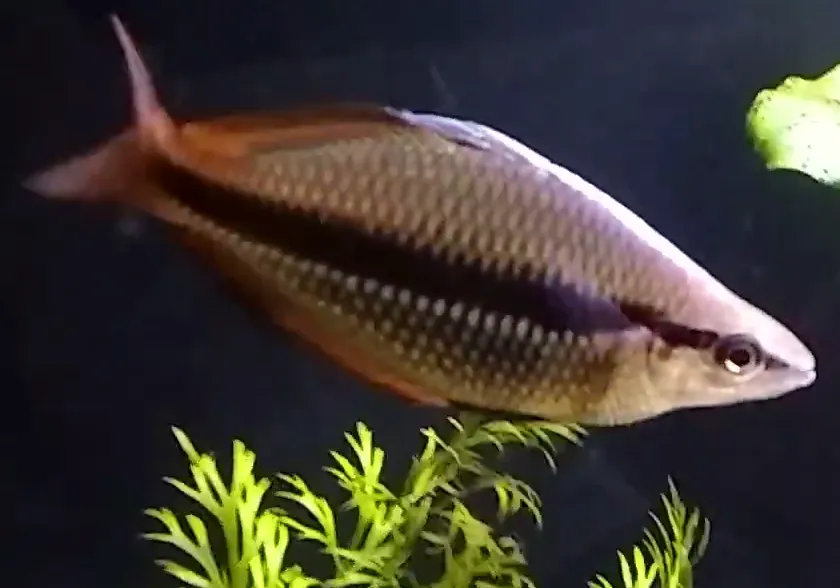
New Guinea rainbowfish
Melanotaenia affinis
Freshwater4.7 in (12 cm) · 30 gal (115 L)68–86°F (20–30°C)
Spotfin hatchetfish
Thoracocharax stellatus
Freshwater3.5 in (9 cm) · 26 gal (100 L)73–82°F (23–28°C)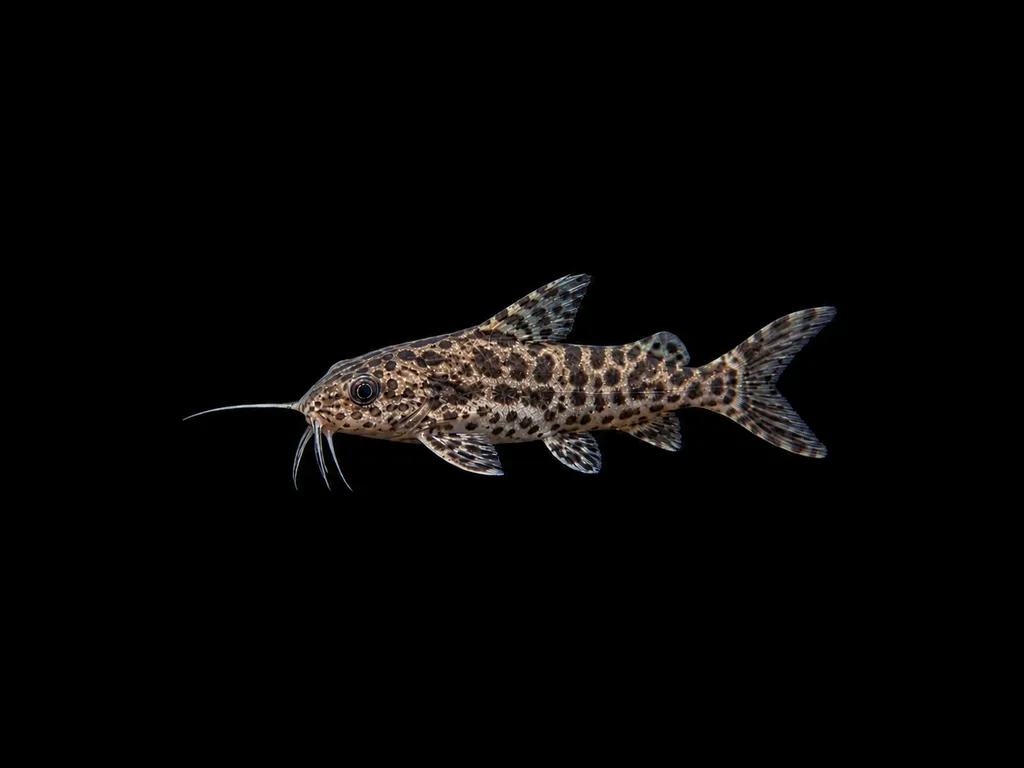
Bugeye squeaker
Synodontis contractus
Freshwater3.9 in (10 cm) · 30 gal (114 L)72–79°F (22–26°C)
Common questions
What size tank does a Firemouth cichlid need?
A Firemouth cichlid needs at least 30 gal (115 L). It spends most of its time in the bottom.
What temperature and pH does a Firemouth cichlid need?
A Firemouth cichlid is comfortable at 73–82°F (23–28°C) with a pH of 6.5–8.0.
How big does a Firemouth cichlid get?
An adult Firemouth cichlid reaches about 5.9 in (15 cm).
Related species
 5.9 in (15 cm)53 gal (200 L)75–82°F (24–28°C)
Ellioti cichlid
Thorichthys maculipinnis
5.9 in (15 cm) · 53 gal (200 L)
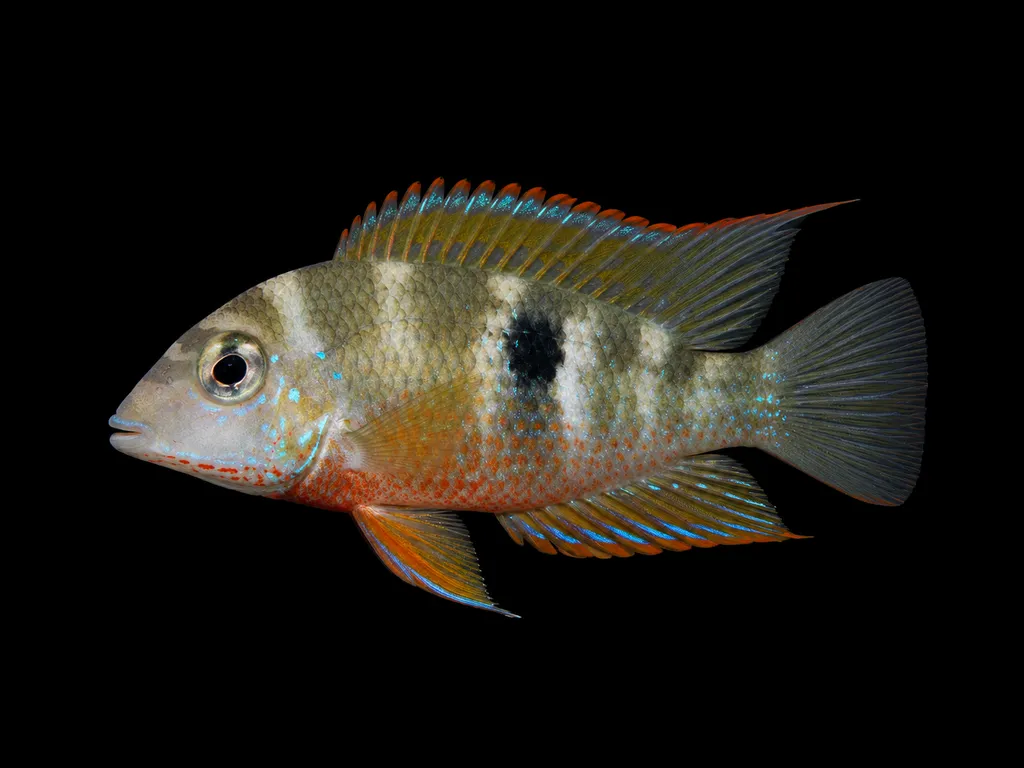 6.7 in (17 cm)66 gal (250 L)75–84°F (24–29°C)
Callolepis firemouth
Thorichthys callolepis
6.7 in (17 cm) · 66 gal (250 L)
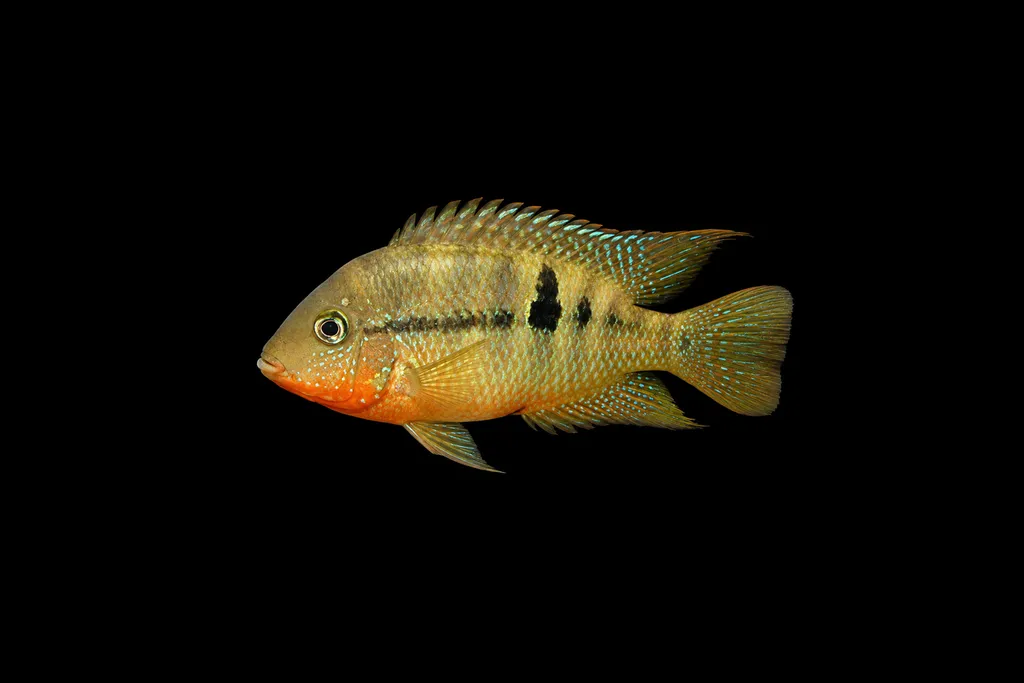 6.7 in (17 cm)66 gal (250 L)75–84°F (24–29°C)
Yellow firemouth
Thorichthys affinis
6.7 in (17 cm) · 66 gal (250 L)
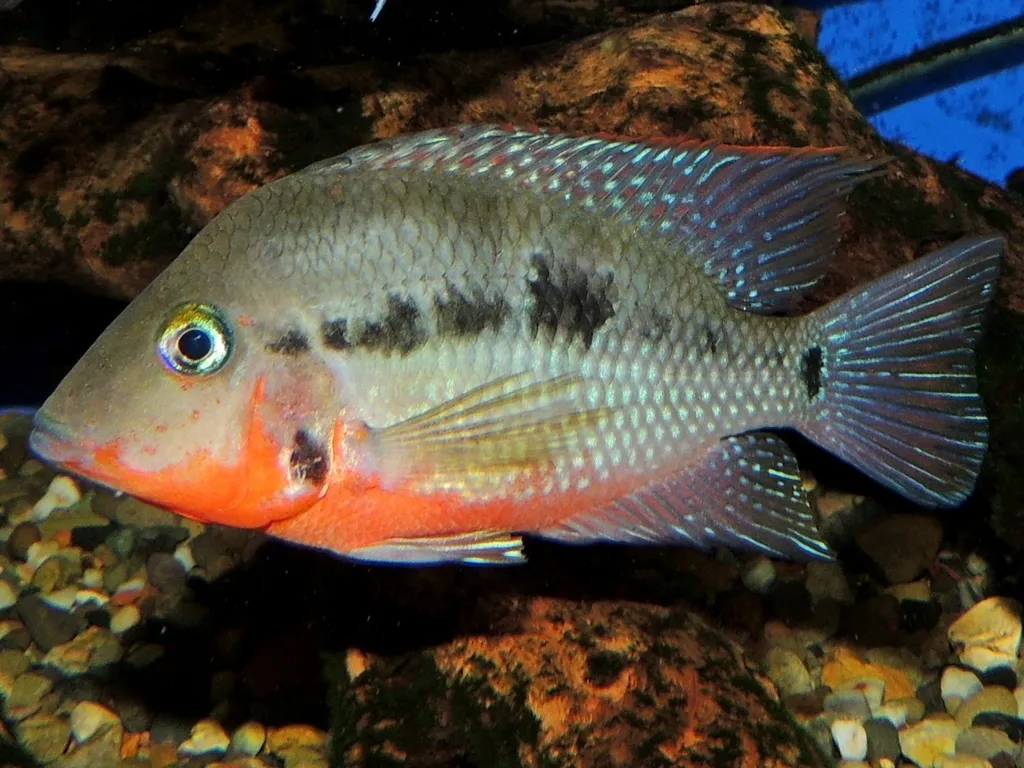 6.7 in (17 cm)66 gal (250 L)75–84°F (24–29°C)
Yellow-cheek firemouth
Thorichthys helleri
6.7 in (17 cm) · 66 gal (250 L)
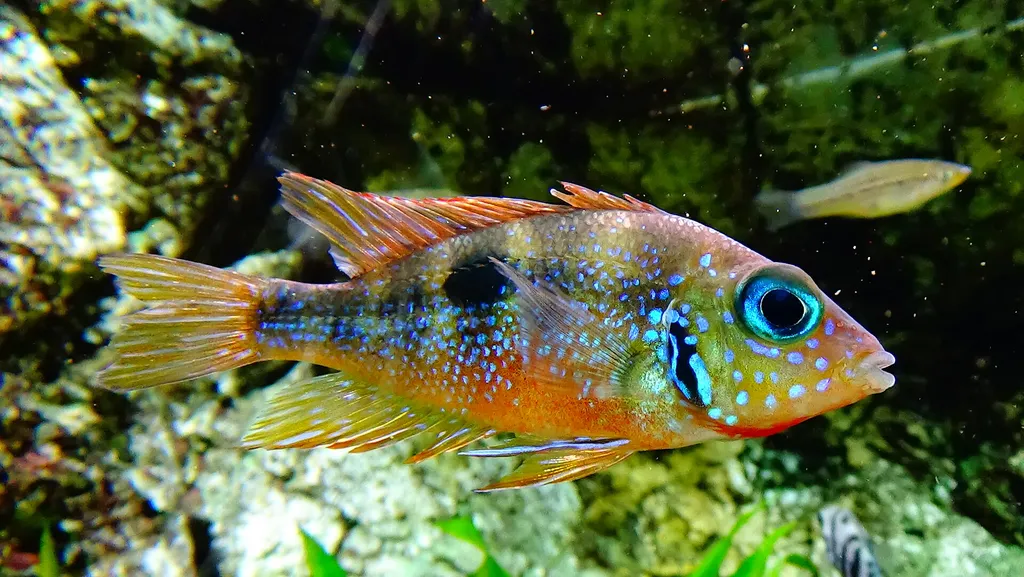 7.1 in (18 cm)66 gal (250 L)75–84°F (24–29°C)
Blue flash firemouth
Thorichthys aureus
7.1 in (18 cm) · 66 gal (250 L)
 4.7 in (12 cm)53 gal (200 L)75–84°F (24–29°C)
Mixteco cichlid
Thorichthys panchovillai
4.7 in (12 cm) · 53 gal (200 L)