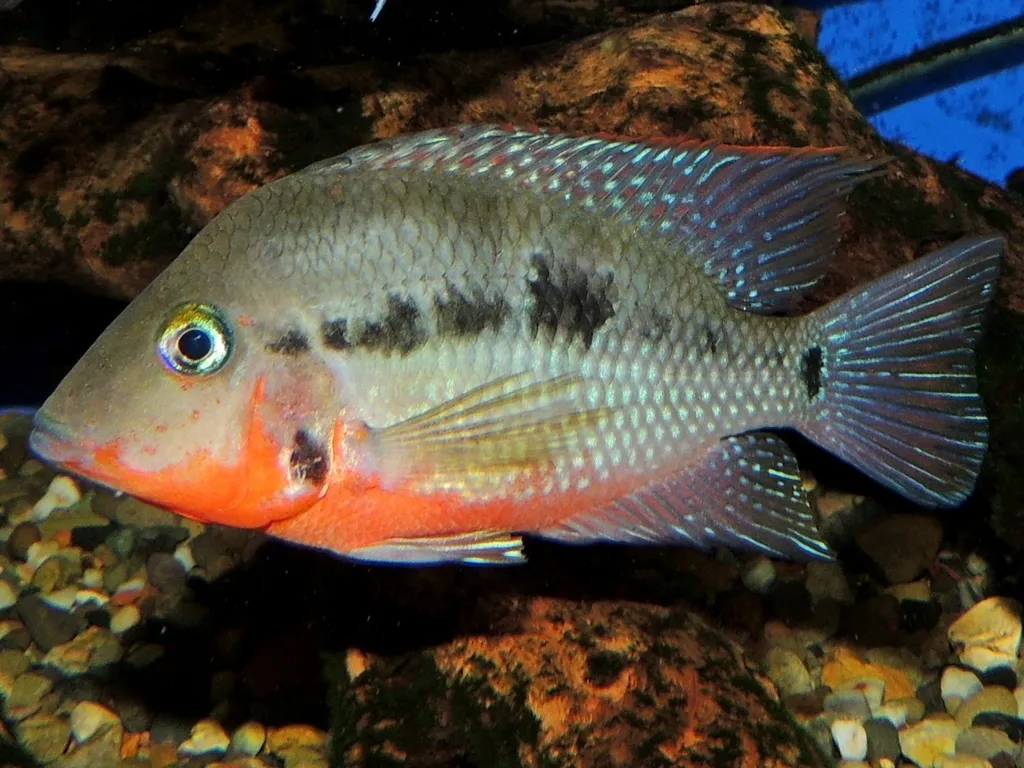
Yellow-cheek firemouth
Thorichthys helleri
Also known as Helleri cichlid
FreshwaterFish
Care at a glance
- Temperature
- 75–84°F
- 24–29°C
- pH
- 7.0–8.2
- Adult size
- 6.7 in
- 17 cm
- Minimum tank
- 66 gal
- 250 L
- Temperament
- Mostly peaceful
- Social behavior
- Solitary
- Tankmates
- With caution
- Swim level
- Bottom
- Diet
- Omnivore
- Difficulty
- Medium
- Breeding
- Substrate spawner · Medium
- Rarity
- Rare
- Family
- Cichlidae
- Origin
- Atlantic slope, southern Mexico
Overview
The yellow-cheek firemouth is a firemouth relative that stays low in the tank, sifting sand and grazing. It is a step up from the easiest fish.
Did you know
Yellow-cheek firemouths and the rest of the firemouth group settle disputes by bluff. A fish flares its gill covers to show off large dark eyespots. That makes its head look far bigger and more threatening than an actual fight would prove.
Caring for the yellow-cheek firemouth
Give a yellow-cheek firemouth or a pair at least 66 gal (250 L), with a soft sand floor it can sift. Add planted margins, driftwood and some flat stones for spawning. It settles best in a planted tank with cover.
Keep the water warm and neutral to hard, at 75 to 84°F (24 to 29°C) and a pH of 7.0 to 8.2. Thorichthys are sensitive to poor water and react badly to nitrate and stale water. Keep up steady filtration and regular water changes.
Feed sinking pellets, frozen bloodworm and brine shrimp, and some vegetable matter. Keep it singly or as a single pair, since it pairs off and defends a patch at breeding time. It is mostly peaceful and rarely does real damage. Choose tank mates with some care, and avoid pushy cichlids that will stress it.
It is a biparental substrate spawner. A pair cleans a surface and lays its eggs in the open, and both parents guard the fry. Breeding it is of moderate difficulty.
Good to know
Thorichthys helleri is a cichlid in the family Cichlidae, colored lemon and turquoise with a red-edged dorsal fin. Its genus name comes from a Greek word for leaping.
In the wild
The yellow-cheek firemouth lives in weedy, clear rivers and pools on the Atlantic slope of southern Mexico, over sand and among plants.
Common questions
What size tank does a yellow-cheek firemouth need?
A yellow-cheek firemouth needs at least 66 gal (250 L). It spends most of its time in the bottom.
What temperature and pH does a yellow-cheek firemouth need?
A yellow-cheek firemouth is comfortable at 75–84°F (24–29°C) with a pH of 7.0–8.2.
What does a yellow-cheek firemouth eat?
A yellow-cheek firemouth eats sinking pellets, frozen bloodworm and brine shrimp, and some vegetable matter.
How big does a yellow-cheek firemouth get?
An adult yellow-cheek firemouth reaches about 6.7 in (17 cm).
How does a yellow-cheek firemouth breed?
A yellow-cheek firemouth is a biparental substrate spawner. A pair cleans a surface and lays its eggs in the open, and both parents guard the fry. Breeding it is moderately difficult.
Related species
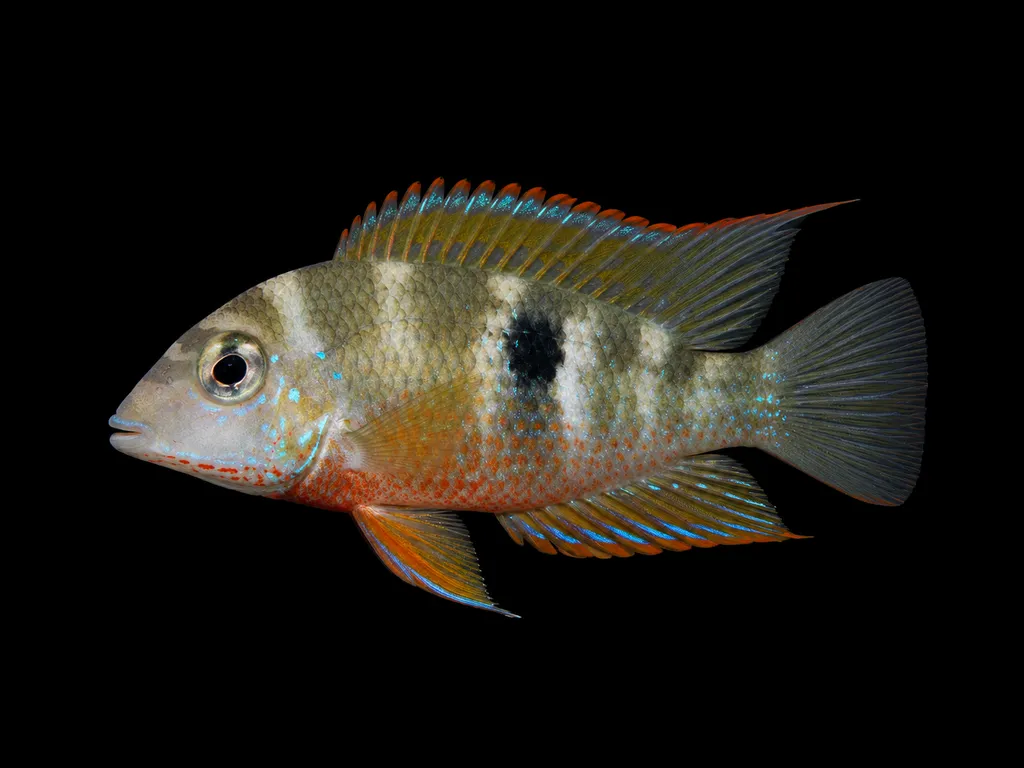 6.7 in (17 cm)66 gal (250 L)75–84°F (24–29°C)
Callolepis firemouth
Thorichthys callolepis
6.7 in (17 cm) · 66 gal (250 L)
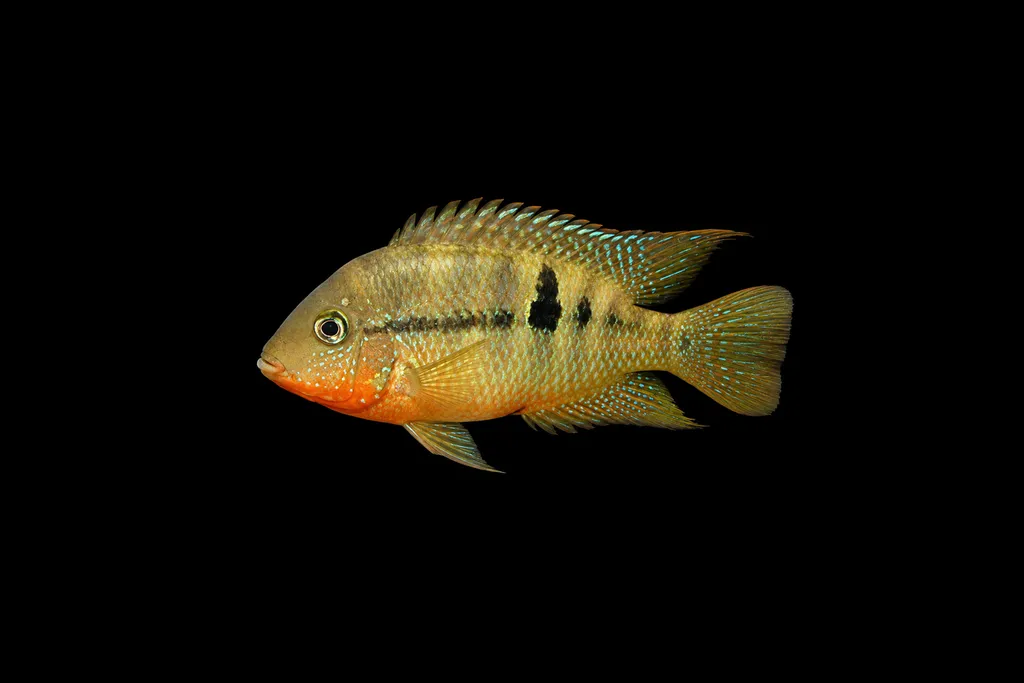 6.7 in (17 cm)66 gal (250 L)75–84°F (24–29°C)
Yellow firemouth
Thorichthys affinis
6.7 in (17 cm) · 66 gal (250 L)
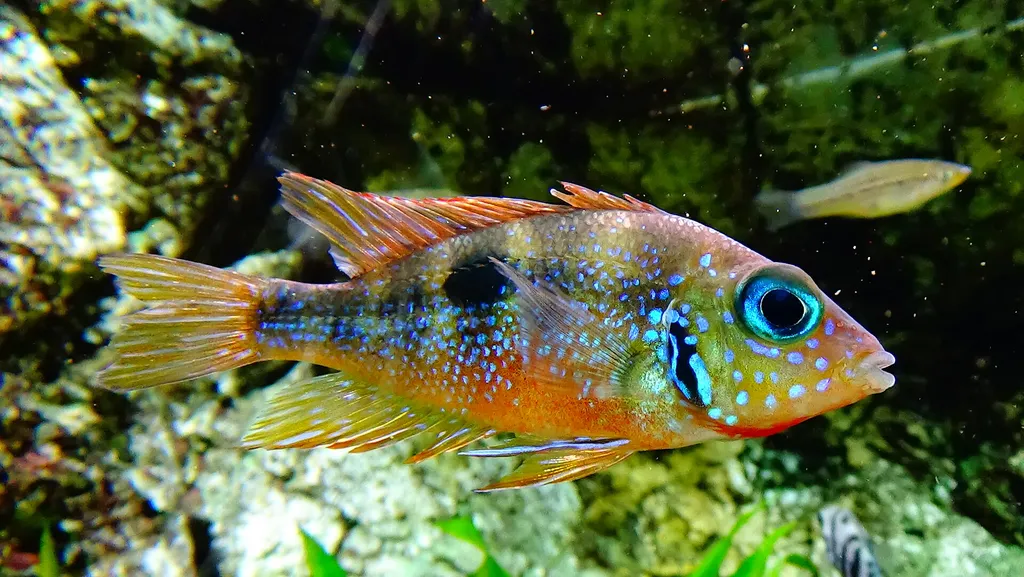 7.1 in (18 cm)66 gal (250 L)75–84°F (24–29°C)
Blue flash firemouth
Thorichthys aureus
7.1 in (18 cm) · 66 gal (250 L)
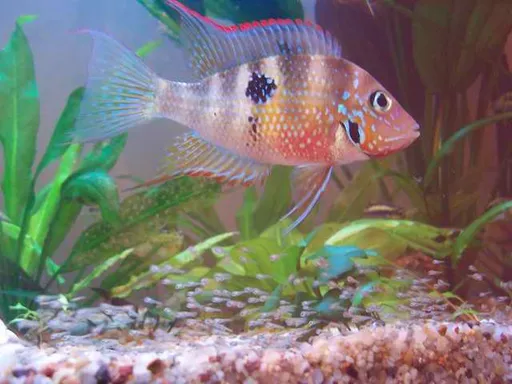 5.9 in (15 cm)53 gal (200 L)75–82°F (24–28°C)
Ellioti cichlid
Thorichthys maculipinnis
5.9 in (15 cm) · 53 gal (200 L)
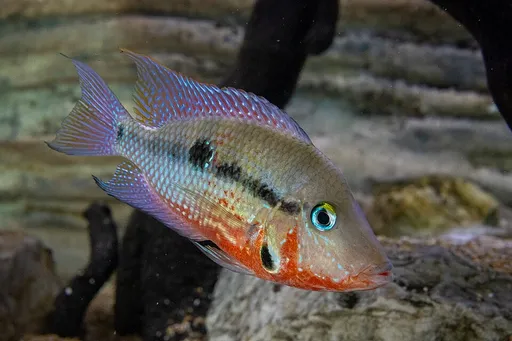 5.9 in (15 cm)30 gal (115 L)73–82°F (23–28°C)
Firemouth cichlid
Thorichthys meeki
5.9 in (15 cm) · 30 gal (115 L)
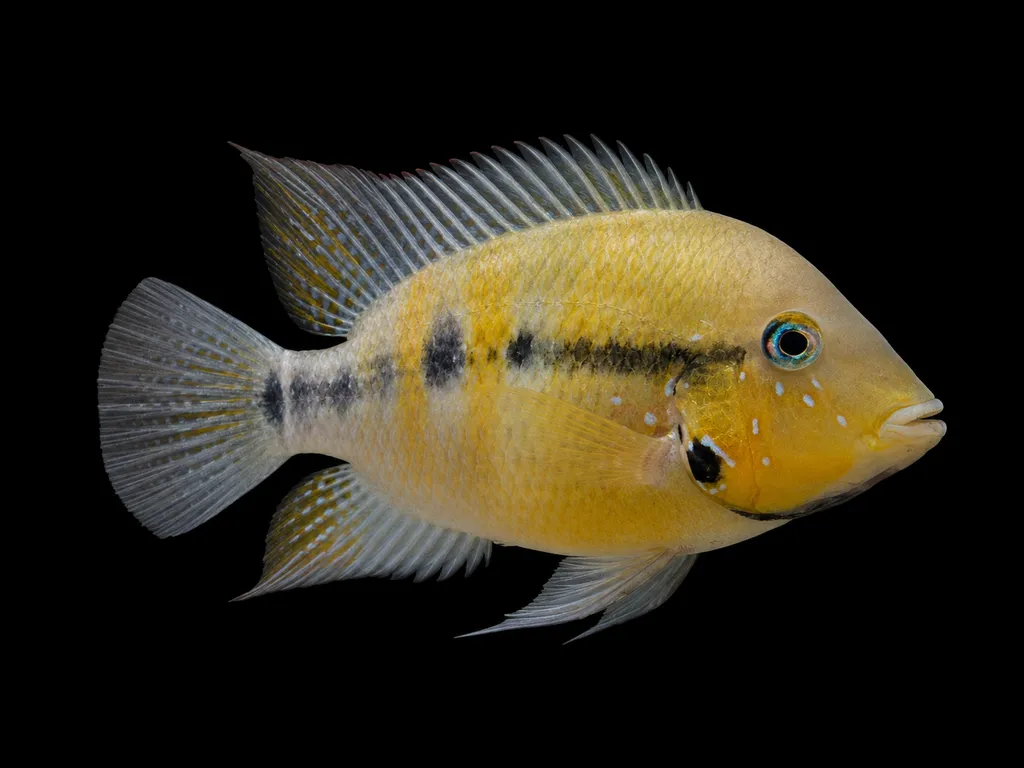 7.9 in (20 cm)66 gal (250 L)75–84°F (24–29°C)
Blackgullet firemouth
Thorichthys pasionis
7.9 in (20 cm) · 66 gal (250 L)