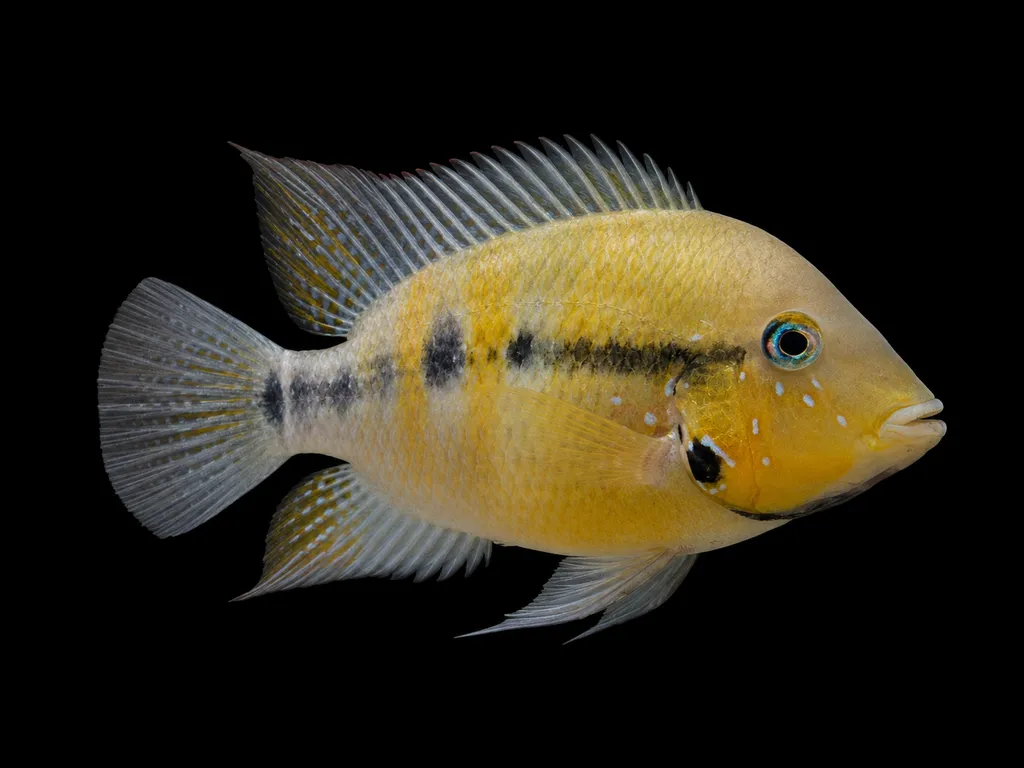
Blackgullet firemouth
Thorichthys pasionis
Also known as Pasionis cichlid, Yellow meeki, Yellow firemouth cichlid
FreshwaterFish
Care at a glance
- Temperature
- 75–84°F
- 24–29°C
- pH
- 7.0–8.2
- Adult size
- 7.9 in
- 20 cm
- Minimum tank
- 66 gal
- 250 L
- Temperament
- Mostly peaceful
- Social behavior
- Solitary
- Tankmates
- With caution
- Swim level
- Bottom
- Difficulty
- Medium
- Breeding
- Substrate spawner · Medium
- Rarity
- Rare
- Family
- Cichlidae
- Origin
- Usumacinta basin, Mexico and Guatemala
Overview
The blackgullet firemouth is a larger, yellow-toned relative of the common firemouth. It keeps the family's mild manners and showy threat display, and it is best with a little experience.
Did you know
Like other firemouths, the blackgullet firemouth defends itself with bluff. It flares its gill covers and throat outward to look far bigger than it is.
Caring for the blackgullet firemouth
Give a blackgullet firemouth at least 66 gal (250 L), with a soft sand floor. Add driftwood, roots, flat stones and hiding places for cover and spawning surfaces.
Keep the water warm and neutral to hard, at 75 to 84°F (24 to 29°C) and a pH of 7.0 to 8.2. Feed quality pellets plus frozen and live foods such as bloodworm and brine shrimp to keep its color up.
It forms pairs rather than groups, so plan on a single fish or a bonded pair. It stays near the bottom, sifting sand and grazing, and is peaceful for a cichlid. It does defend a spawning site, so choose tank mates with some caution. Small to medium Central American cichlids or peaceful South American fish work well.
It is a substrate spawner that forms pairs. Breeding it is moderately difficult.
Good to know
The blackgullet firemouth is a member of the cichlid family. Its name pasionis comes from the Rio de la Pasion, the river where the first specimens were collected. Where the common firemouth flashes a red throat, this species shows a dark, blackish one, which gives it the blackgullet name.
In the wild
The blackgullet firemouth lives in slow backwaters and channels of the Usumacinta system in southern Mexico and Guatemala. It is found over sand and among sunken wood.
Common questions
What size tank does a blackgullet firemouth need?
A blackgullet firemouth needs at least 66 gal (250 L). It spends most of its time in the bottom.
What temperature and pH does a blackgullet firemouth need?
A blackgullet firemouth is comfortable at 75–84°F (24–29°C) with a pH of 7.0–8.2.
What does a blackgullet firemouth eat?
A blackgullet firemouth eats quality pellets plus frozen and live foods such as bloodworm and brine shrimp. These foods help keep its color up.
How big does a blackgullet firemouth get?
An adult blackgullet firemouth reaches about 7.9 in (20 cm).
How does a blackgullet firemouth breed?
The blackgullet firemouth is a substrate spawner that forms pairs, using wood, roots or flat stones as spawning surfaces. Breeding it is moderately difficult.
Related species
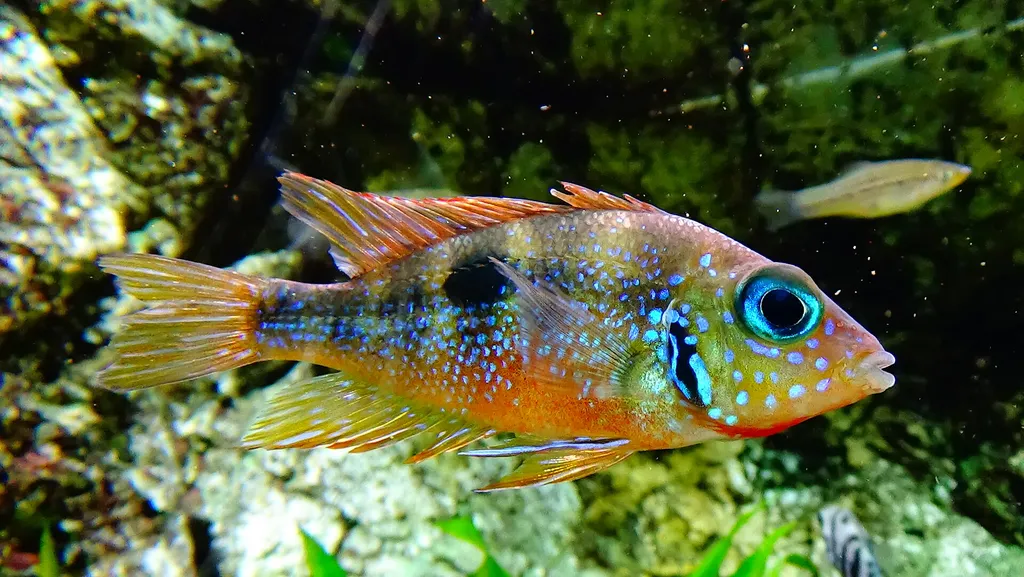 7.1 in (18 cm)66 gal (250 L)75–84°F (24–29°C)
Blue flash firemouth
Thorichthys aureus
7.1 in (18 cm) · 66 gal (250 L)
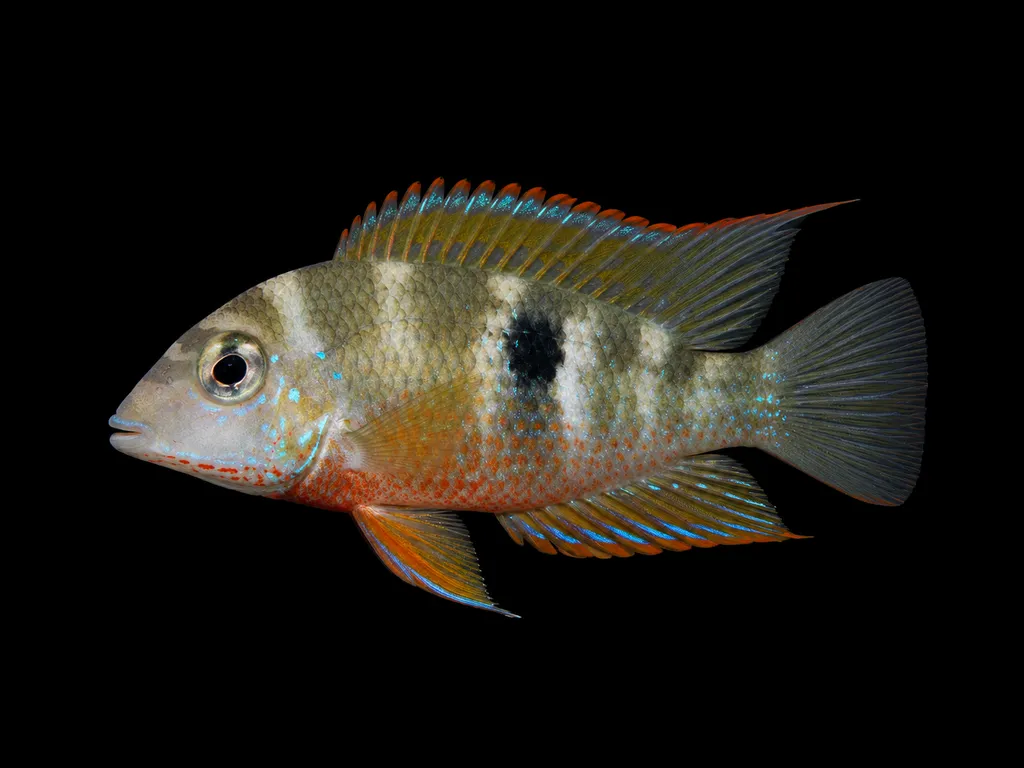 6.7 in (17 cm)66 gal (250 L)75–84°F (24–29°C)
Callolepis firemouth
Thorichthys callolepis
6.7 in (17 cm) · 66 gal (250 L)
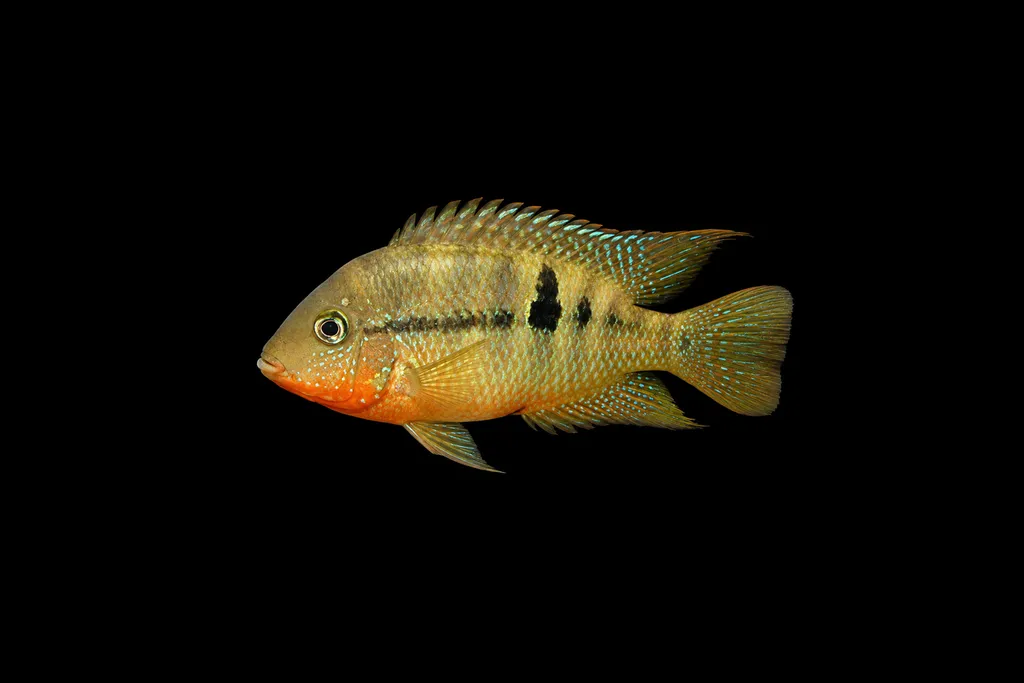 6.7 in (17 cm)66 gal (250 L)75–84°F (24–29°C)
Yellow firemouth
Thorichthys affinis
6.7 in (17 cm) · 66 gal (250 L)
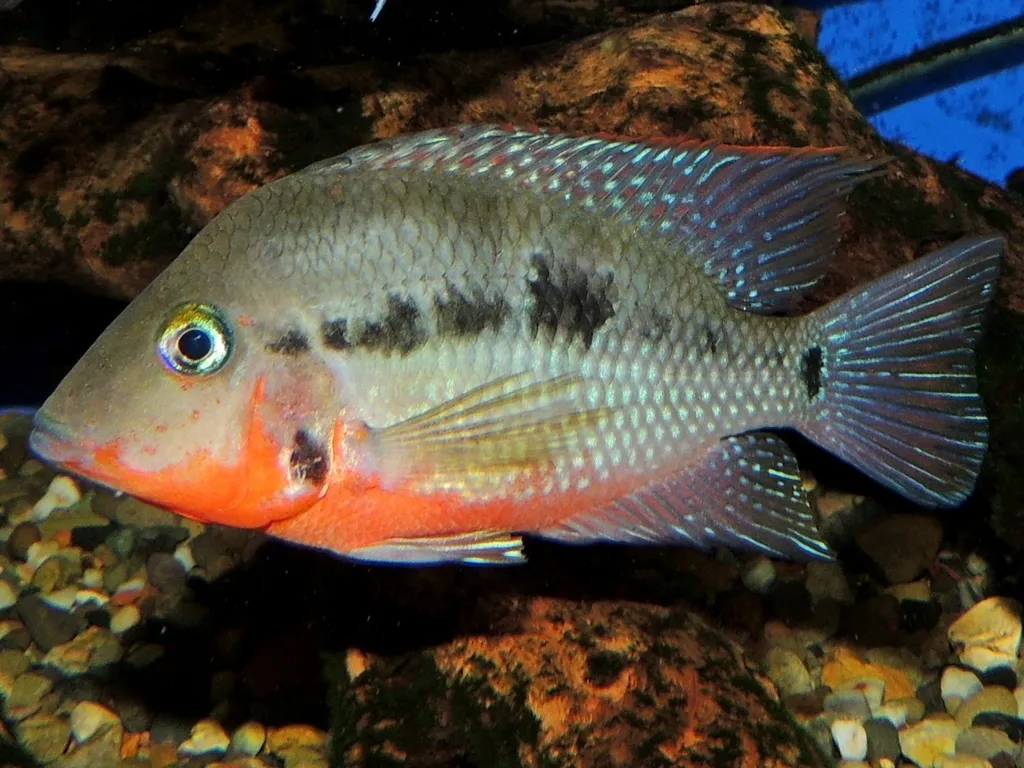 6.7 in (17 cm)66 gal (250 L)75–84°F (24–29°C)
Yellow-cheek firemouth
Thorichthys helleri
6.7 in (17 cm) · 66 gal (250 L)
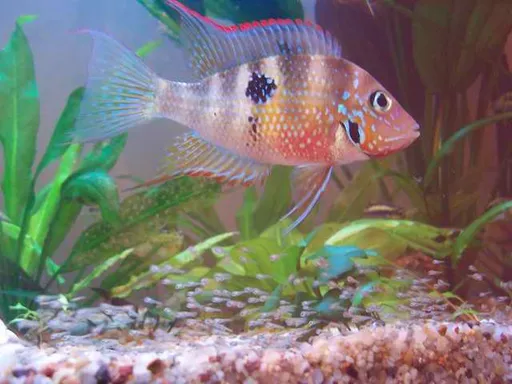 5.9 in (15 cm)53 gal (200 L)75–82°F (24–28°C)
Ellioti cichlid
Thorichthys maculipinnis
5.9 in (15 cm) · 53 gal (200 L)
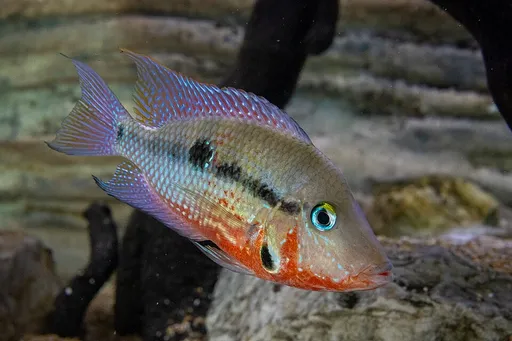 5.9 in (15 cm)30 gal (115 L)73–82°F (23–28°C)
Firemouth cichlid
Thorichthys meeki
5.9 in (15 cm) · 30 gal (115 L)