Lake Tebera rainbowfish
Melanotaenia herbertaxelrodi
Also known as Yellow rainbowfish, Yellow rainbow
FreshwaterFish
Care at a glance
- Temperature
- 68–79°F
- 20–26°C
- pH
- 7.0–8.0
- Adult size
- 3.5 in
- 9 cm
- Minimum tank
- 25 gal
- 95 L
- Temperament
- Peaceful
- Social behavior
- Schooling
- Swim level
- Middle
- Difficulty
- Medium
- Breeding
- Hard
- Rarity
- Rare
- Family
- Melanotaeniidae
- Origin
- New Guinea
Overview
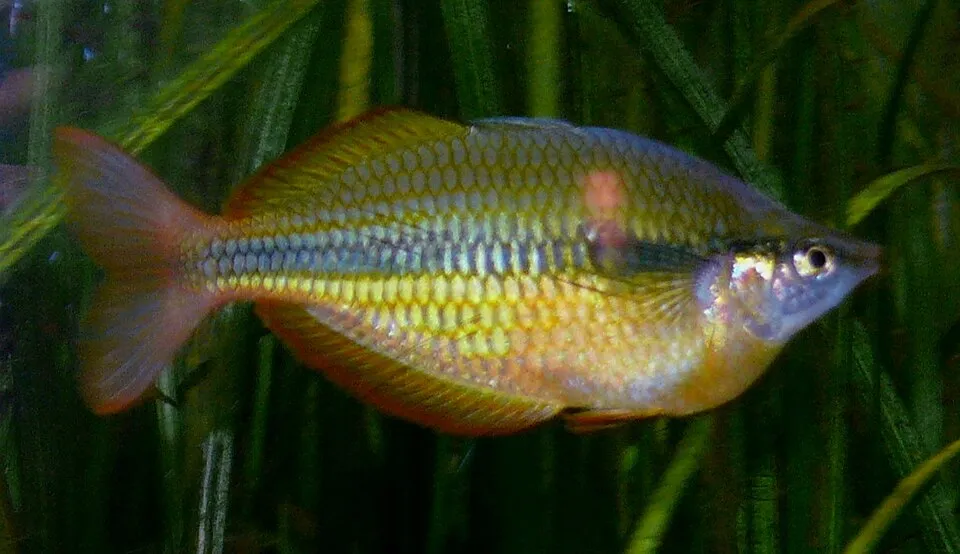
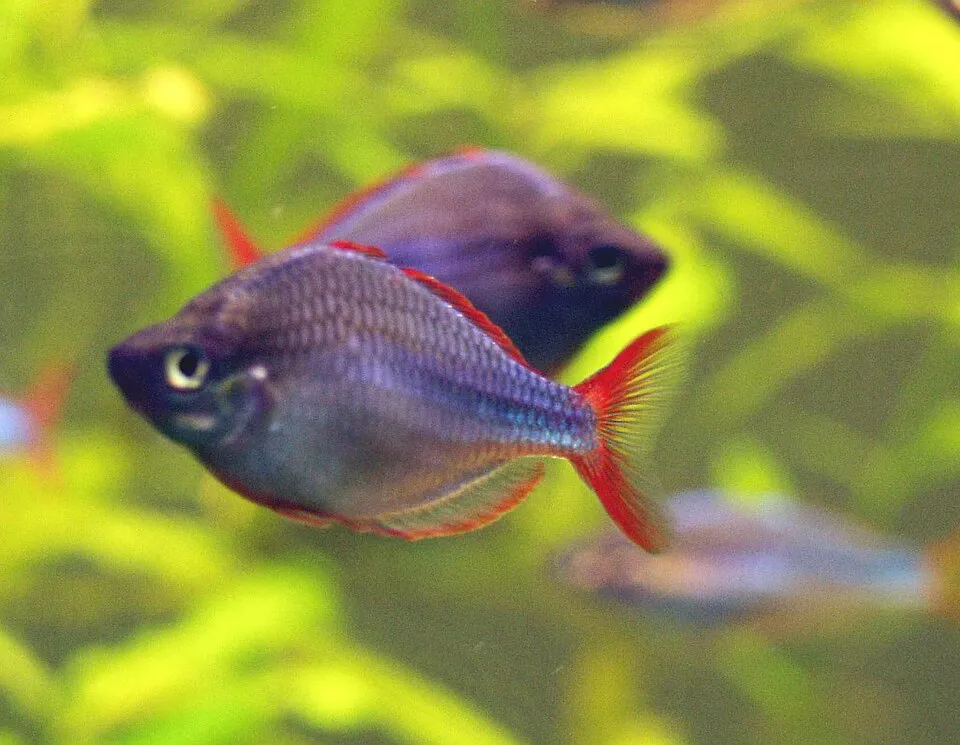
Lake Tebera rainbowfish are peaceful, medium-small rainbows that do best in a group of six or more, where males take on the yellow body and dark midline stripe that set the species apart. They keep to the middle of the tank and get along with other calm community fish. Color and confidence build with a settled group and good feeding, so offer varied meals of flake or small pellet, frozen bloodworms, daphnia, and brine shrimp. Plant the sides and back and leave open swimming space. Aim for a tank around 95 liters or larger.
In the wild
This rainbowfish is native to Lake Tebera in the highlands of Papua New Guinea, a warm, clear lake with neutral to alkaline, moderately hard water. Those conditions match a pH of about 7 to 8 and a temperature between 20 and 26 degrees Celsius. Recreate the habitat with a fine substrate, wood and rock, plenty of hardy plants around the margins, and clean, gently flowing water.
Good to know
Melanotaenia herbertaxelrodi is a member of Melanotaeniidae and reaches about 9 centimeters. Males carry a golden-yellow body crossed by a dark lengthwise stripe, while females are plainer and slimmer. Like its relatives it is a continuous egg-scatterer, dropping a few eggs a day onto fine plants and spawning mops over a long spell, then leaving them. The slow-growing fry make breeding hard for most keepers.
Did you know
The species is named after Herbert R. Axelrod, the American publisher whose books and magazines helped popularize the aquarium hobby. Like several highland rainbowfish, it is known from only one lake.
Weekly picks
Tank mates
Lake Tebera rainbowfish is a peaceful, schooling species that keeps to the middle. These picks share a community profile with it, are safe together in both directions, and overlap on water type, temperature and pH.
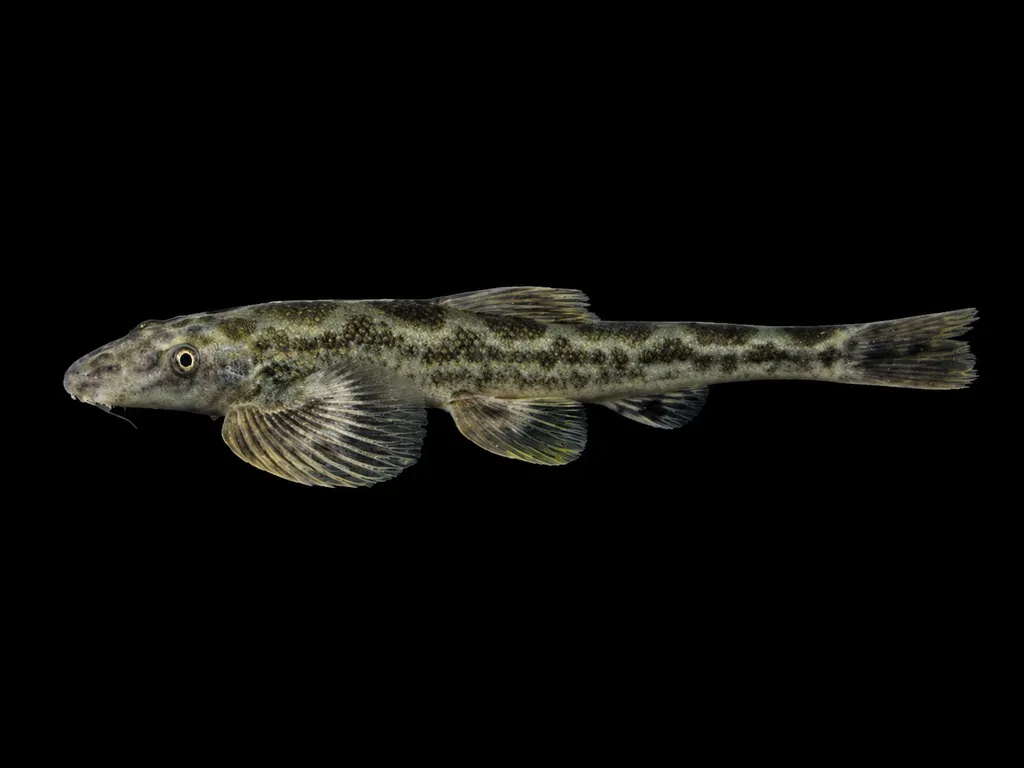
Burmese stone loach
Balitora burmanica
Freshwater3.9 in (10 cm) · 25 gal (95 L)68–79°F (20–26°C)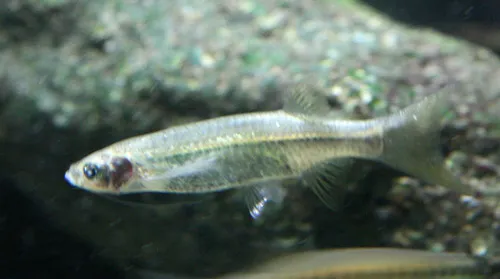
Striped flying barb
Esomus metallicus
Freshwater3 in (7.5 cm) · 24 gal (90 L)72–79°F (22–26°C)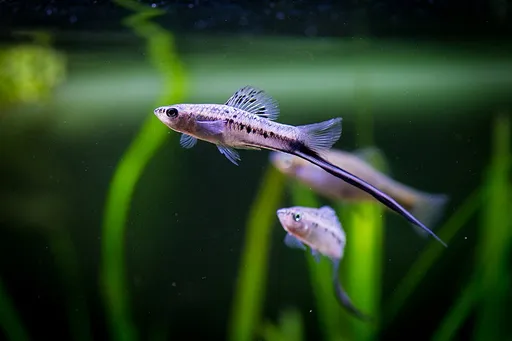
Sheepshead swordtail
Xiphophorus birchmanni
Freshwater2.8 in (7 cm) · 24 gal (90 L)68–81°F (20–27°C)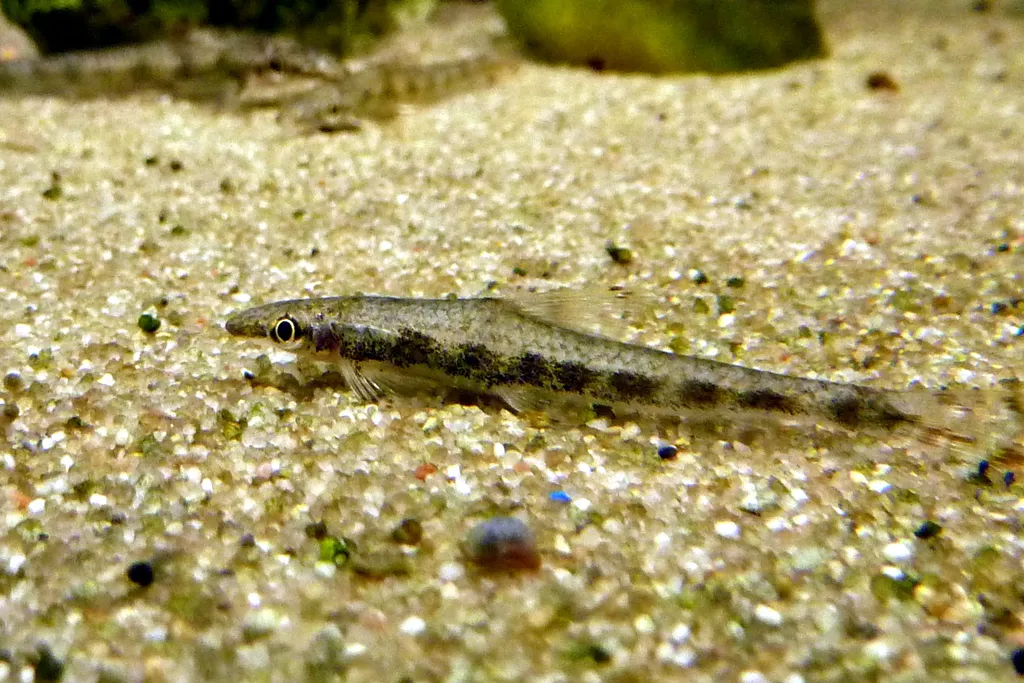
River stone carp
Psilorhynchus sucatio
Freshwater3.1 in (8 cm) · 26 gal (100 L)64–79°F (18–26°C)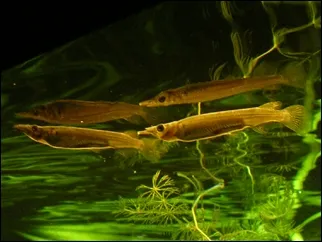
Wrestling halfbeak
Dermogenys pusilla
FreshwaterBrackish2.8 in (7 cm) · 25 gal (95 L)75–82°F (24–28°C)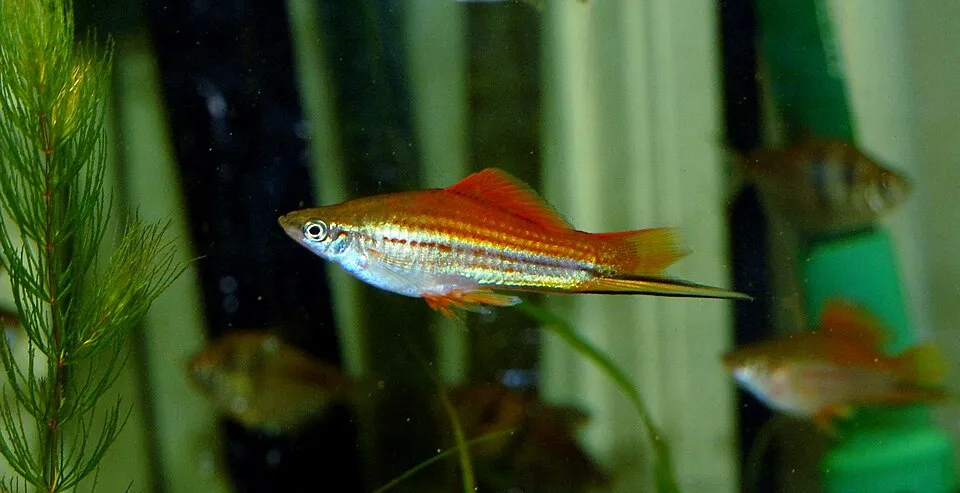
Green swordtail
Xiphophorus hellerii
Freshwater5.9 in (15 cm) · 24 gal (90 L)68–82°F (20–28°C)
Common questions
What size tank does a Lake Tebera rainbowfish need?
A Lake Tebera rainbowfish needs at least 25 gal (95 L). It spends most of its time in the middle.
What temperature and pH does a Lake Tebera rainbowfish need?
A Lake Tebera rainbowfish is comfortable at 68–79°F (20–26°C) with a pH of 7.0–8.0.
How big does a Lake Tebera rainbowfish get?
An adult Lake Tebera rainbowfish reaches about 3.5 in (9 cm).
Does a Lake Tebera rainbowfish need a group?
Yes. A Lake Tebera rainbowfish is a schooling species and should be kept in a group, not singly.
Related species
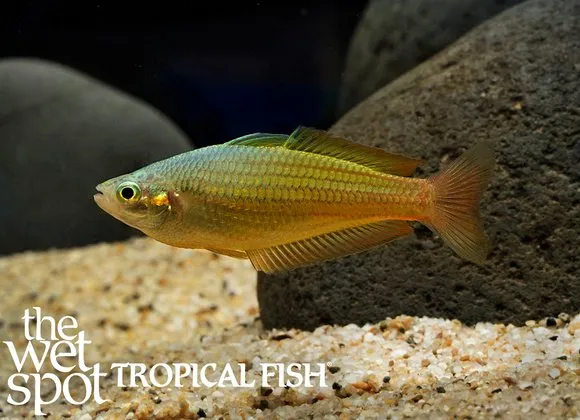 3.5 in (9 cm)29 gal (110 L)75–84°F (24–29°C)
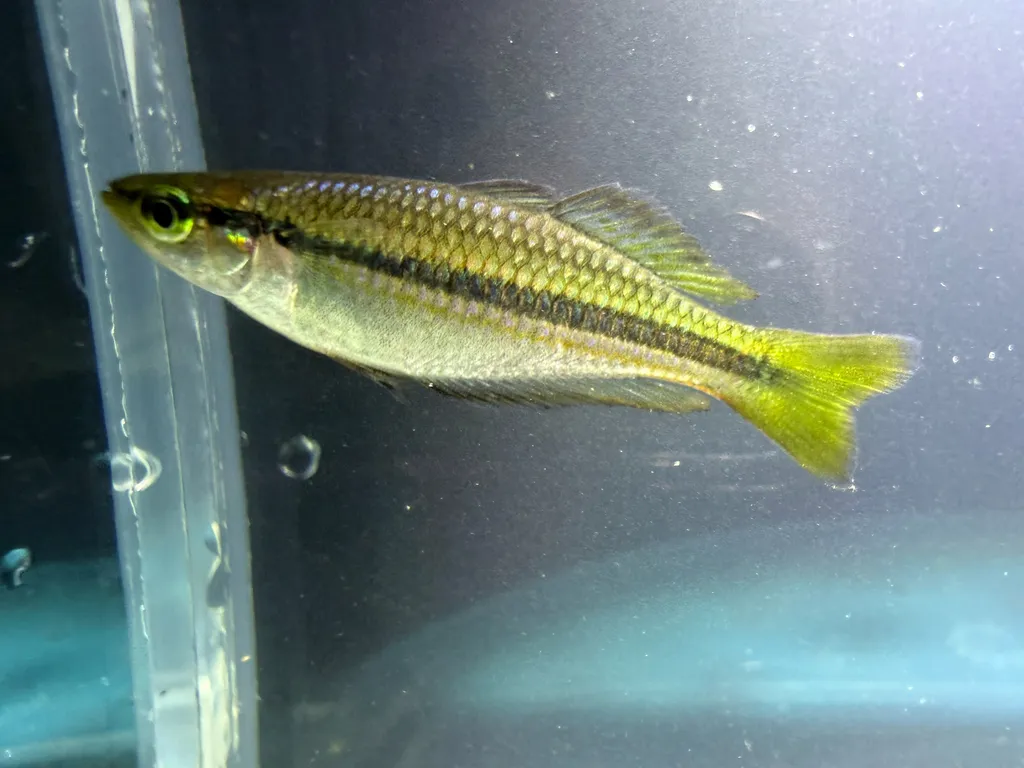
Gary Lange's rainbowfish
Melanotaenia garylangei
3.5 in (9 cm) · 29 gal (110 L)
 3.9 in (10 cm)32 gal (120 L)72–82°F (22–28°C)
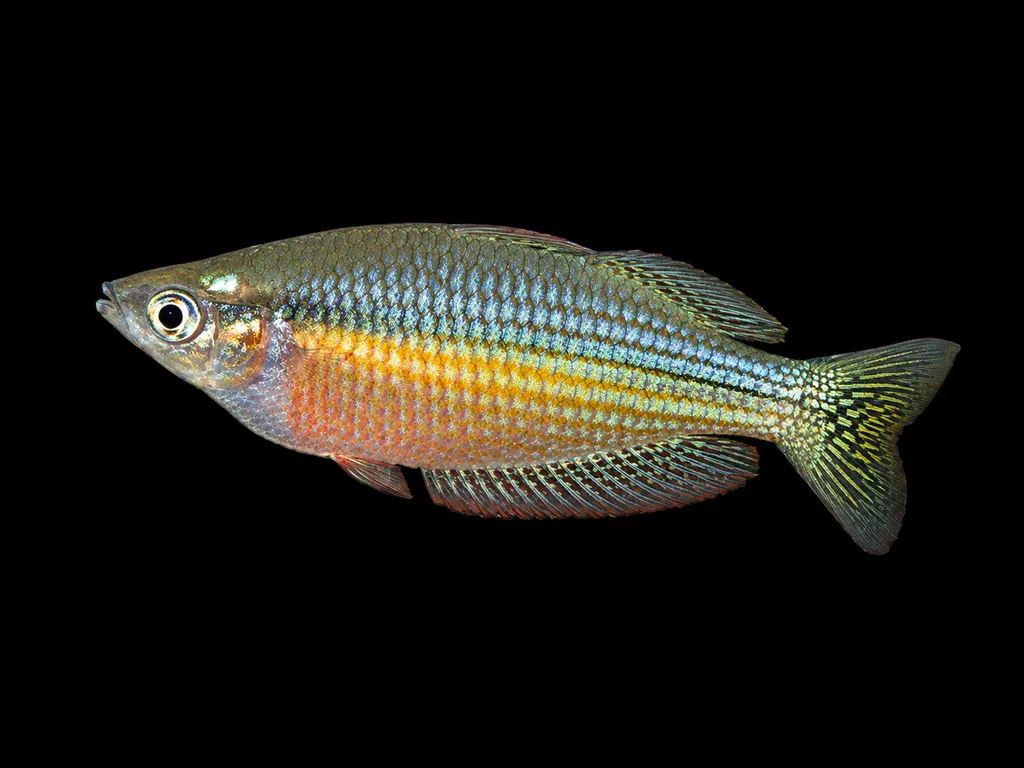
Black-banded rainbowfish
Melanotaenia nigrans
3.9 in (10 cm) · 32 gal (120 L)
 3.9 in (10 cm)42 gal (160 L)64–86°F (18–30°C)
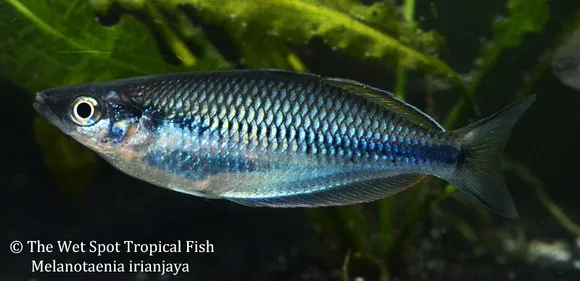
Desert rainbowfish
Melanotaenia splendida tatei
3.9 in (10 cm) · 42 gal (160 L)
 3.9 in (10 cm)42 gal (160 L)75–84°F (24–29°C)
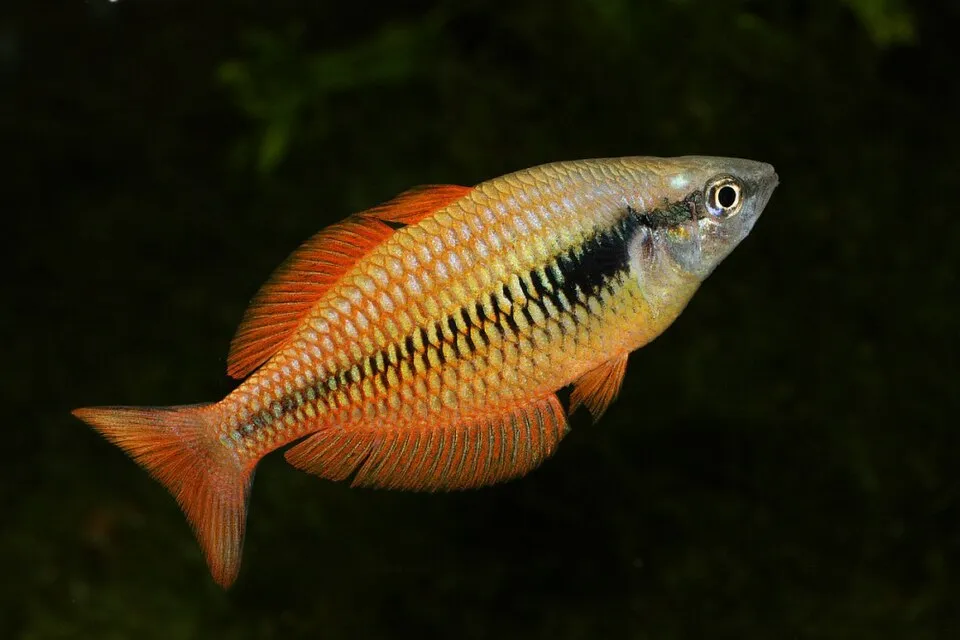
Irian Jaya rainbowfish
Melanotaenia irianjaya
3.9 in (10 cm) · 42 gal (160 L)
 3.1 in (8 cm)29 gal (110 L)72–79°F (22–26°C)
Lake Kurumoi rainbowfish
Melanotaenia parva
3.1 in (8 cm) · 29 gal (110 L)
 3.1 in (8 cm)29 gal (110 L)73–82°F (23–28°C)
Neon rainbowfish
Melanotaenia praecox
3.1 in (8 cm) · 29 gal (110 L)