Pacific blue-eye (neon)
Pseudomugil cyanodorsalis
Also known as Neon blue-eye, Blueback blue-eye
BrackishFish
Care at a glance
- Temperature
- 72–82°F
- 22–28°C
- pH
- 7.0–8.5
- Adult size
- 1.4 in
- 3.5 cm
- Minimum tank
- 12 gal
- 45 L
- Temperament
- Peaceful
- Social behavior
- Schooling
- Swim level
- Middle
- Difficulty
- Medium
- Breeding
- Medium
- Rarity
- Common
- Family
- Pseudomugilidae
- Origin
- Coastal northern Australia (WA, NT, Queensland), possibly southern New Guinea
Overview
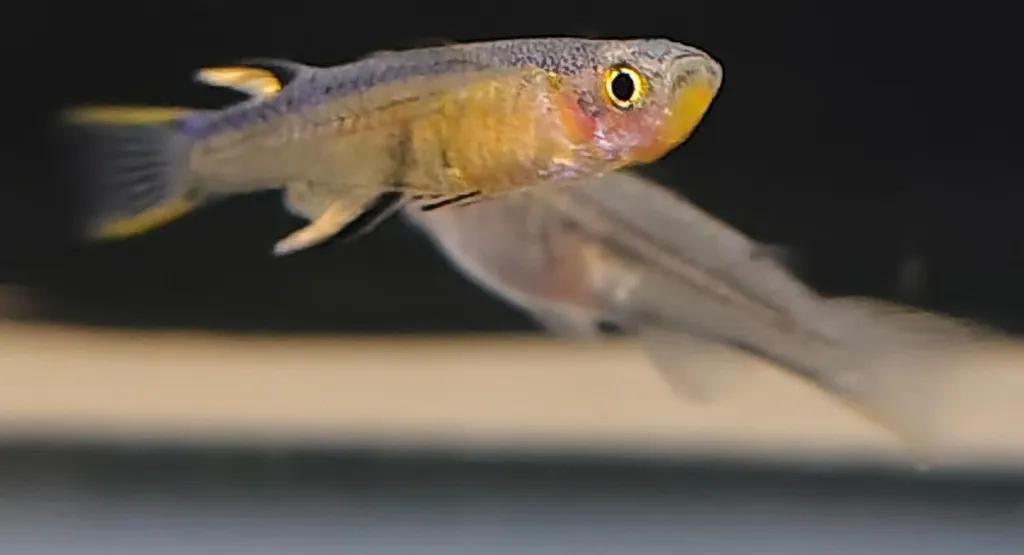
Keep them in a colony of 8 to 10 or more, in a tank of 45 liters or up, since the males show their best color when competing for attention. They are peaceful but timid middle swimmers that get outcompeted easily, so skip the general community tank and pair them only with small, gentle, salt-tolerant species. Hold the water warm, about 22 to 28 C, brackish, and at a pH of 7 to 8.5, on a tank that is already established. Feed small live or frozen foods like daphnia, moina, baby brine, and microworm. They are strong jumpers, so a tight cover is a must.
In the wild
Pacific blue-eyes come from coastal northern Australia, in tidal creeks and mangrove edges across Western Australia, the Northern Territory, and Queensland, and possibly southern New Guinea. These are warm, salty backwaters where fresh and sea water meet. To match that, give them a mature, well-planted tank of 45 liters or more with steady flow, good oxygenation, and brackish water, roughly 1 teaspoon of marine salt per 10 liters. Keep them warm, around 22 to 28 C, with a pH from 7 to 8.5.
Good to know
This is a tiny rainbowfish in the family Pseudomugilidae, topping out around 3.5 cm. It is euryhaline, meaning it handles a wide range of salinity, from about 25 to 50 percent seawater down to pure fresh in wild-collected fish. It is an egg scatterer with no parental care, and breeders raise eggs on spawning mops in a dedicated tank.
Did you know
Opinions split on whether they actually need salt. Wild fish live in brackish water and color up best there, but stock collected from the wild can adapt to pure freshwater and even breed in it. Either way, give them a mature, stable tank, since a fresh setup is the fastest way to lose such a small fish.
Common questions
What size tank does a Pacific blue-eye (neon) need?
A Pacific blue-eye (neon) needs at least 12 gal (45 L). It spends most of its time in the middle.
What temperature and pH does a Pacific blue-eye (neon) need?
A Pacific blue-eye (neon) is comfortable at 72–82°F (22–28°C) with a pH of 7.0–8.5.
How big does a Pacific blue-eye (neon) get?
An adult Pacific blue-eye (neon) reaches about 1.4 in (3.5 cm).
Does a Pacific blue-eye (neon) need a group?
Yes. A Pacific blue-eye (neon) is a schooling species and should be kept in a group, not singly.
Related species
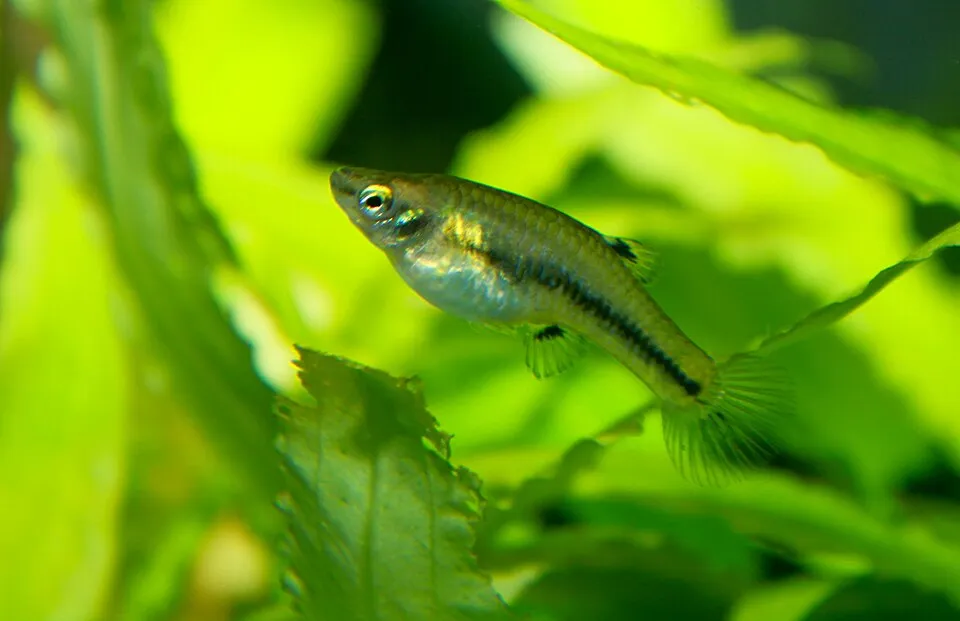 1.4 in (3.5 cm)5 gal (20 L)68–79°F (20–26°C)
Least killifish
Heterandria formosa
1.4 in (3.5 cm) · 5 gal (20 L)
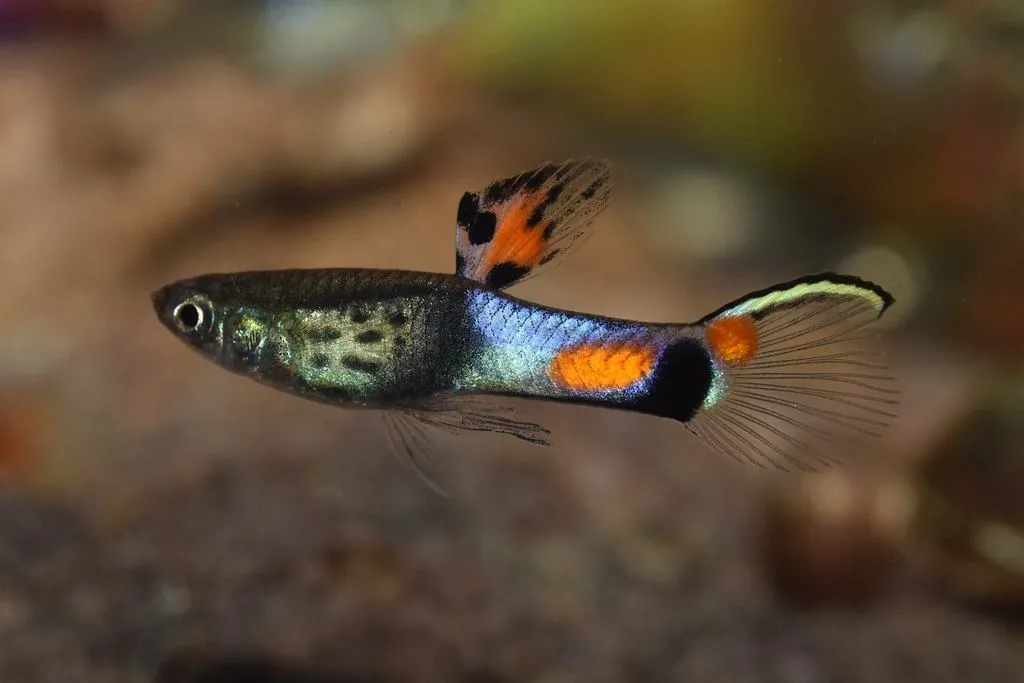 1.6 in (4 cm)5 gal (20 L)72–86°F (22–30°C)
Endler's livebearer
Poecilia wingei
1.6 in (4 cm) · 5 gal (20 L)
 2 in (5 cm)15 gal (55 L)75–82°F (24–28°C)
Melanzona guppy
Poecilia parae
2 in (5 cm) · 15 gal (55 L)
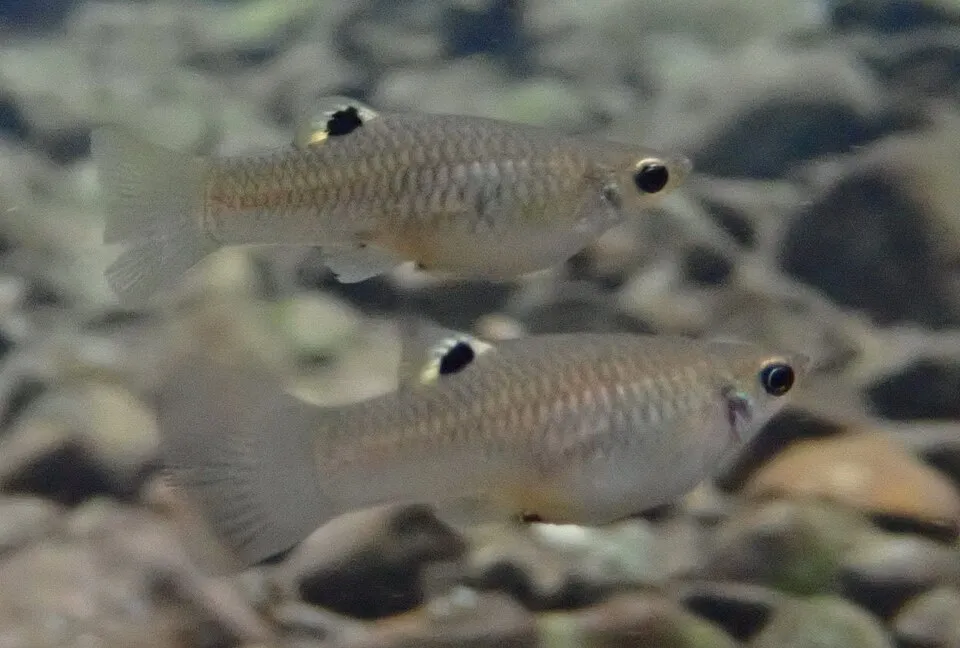 2.4 in (6 cm)16 gal (60 L)77–86°F (25–30°C)
Cauca molly
Poecilia caucana
2.4 in (6 cm) · 16 gal (60 L)
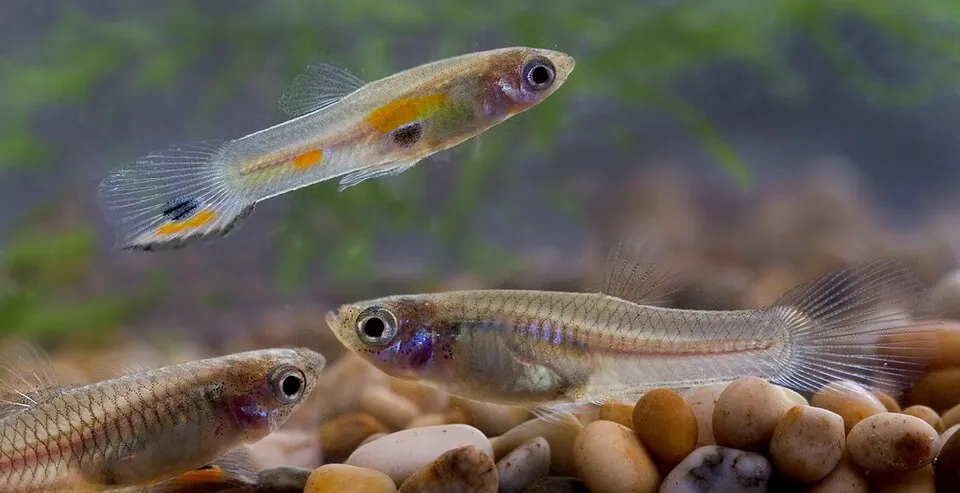 2.4 in (6 cm)13 gal (50 L)64–82°F (18–28°C)
Guppy
Poecilia reticulata
2.4 in (6 cm) · 13 gal (50 L)
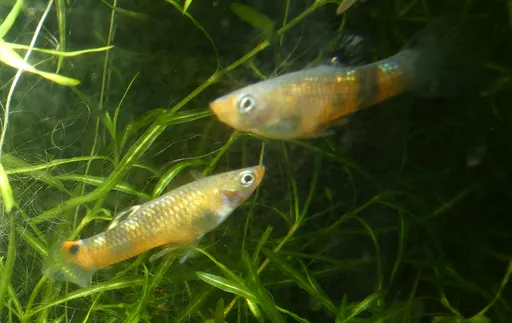 1.6 in (4 cm)16 gal (60 L)72–82°F (22–28°C)
Scarlet livebearer
Micropoecilia picta
1.6 in (4 cm) · 16 gal (60 L)