Parkinson's rainbowfish
Melanotaenia parkinsoni
Also known as Port Moresby Rainbow, Parkinsoni rainbowfish
FreshwaterFish
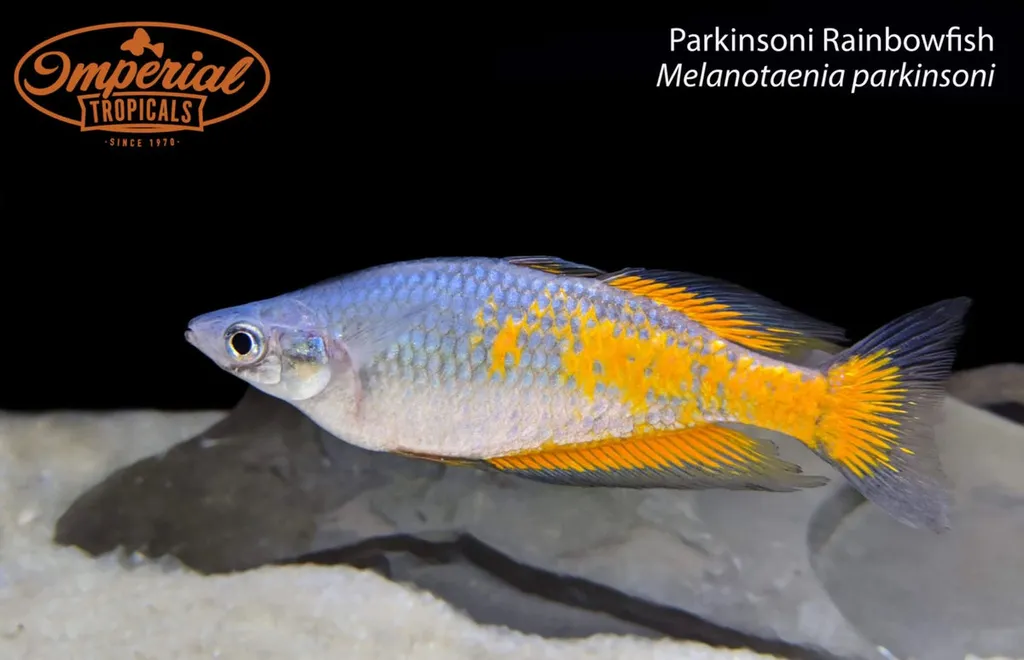
Care at a glance
- Temperature
- 75–82°F
- 24–28°C
- pH
- 7.0–8.0
- Adult size
- 4.3 in
- 11 cm
- Minimum tank
- 53 gal
- 200 L
- Temperament
- Mostly peaceful
- Social behavior
- Schooling
- Swim level
- Middle
- Difficulty
- Easy
- Breeding
- Egg depositor · Medium
- Rarity
- Common
- Family
- Melanotaeniidae
- Origin
- Southeastern Papua New Guinea (Kemp Welsh River to Milne Bay)
Overview
Parkinson's rainbowfish is a large, active schooling fish for the middle of a big community tank. It is easy to keep.
Did you know
Male Parkinson's rainbowfish spar by flaring at each other, flashing color and spreading their fins to settle who looks best. In a big group, the sparring shows most at feeding time and as the morning light comes up. It does no real damage and settles down once the pecking order is sorted.
Caring for the Parkinson's rainbowfish
Keep Parkinson's rainbowfish in a group of six or more, in a tank of 53 gal (200 L) or larger. They are large and active, so a tank around four feet long gives them the length they need. Leave plenty of open horizontal space down the middle, and push the planting to the back and sides.
Keep the water hard and alkaline, at 75 to 82°F (24 to 28°C) and a pH of 7.0 to 8.0. They need good oxygenation, and some current from the filter or a powerhead suits them. Feed quality flakes and pellets with frozen foods such as brine shrimp and daphnia to bring out their color.
Parkinson's rainbowfish are mostly peaceful but on the pushy side. The school can intimidate shy, slow tank mates at feeding time. Pick tank mates that are robust and quick enough to hold their own, and skip the timid ones.
Breeding them is of medium difficulty. They lay their eggs onto fine-leaved plants over a stretch of days and give them no care. The fry are tiny at hatching and need very small first foods.
Good to know
Parkinson's rainbowfish is a member of the rainbowfish family Melanotaeniidae. Tank-bred stock turns up in the trade alongside wild-line fish. It is also known as the Port Moresby rainbow.
In the wild
Parkinson's rainbowfish come from clear, fast-running streams in southeastern Papua New Guinea, between the Kemp Welsh River and Milne Bay. That water is hard, alkaline and well oxygenated.
Weekly picks
Tank mates
The Parkinson's rainbowfish is a mostly peaceful, schooling species that keeps to the middle. These picks share a community profile with it, are safe together in both directions, and overlap on water type, temperature and pH.
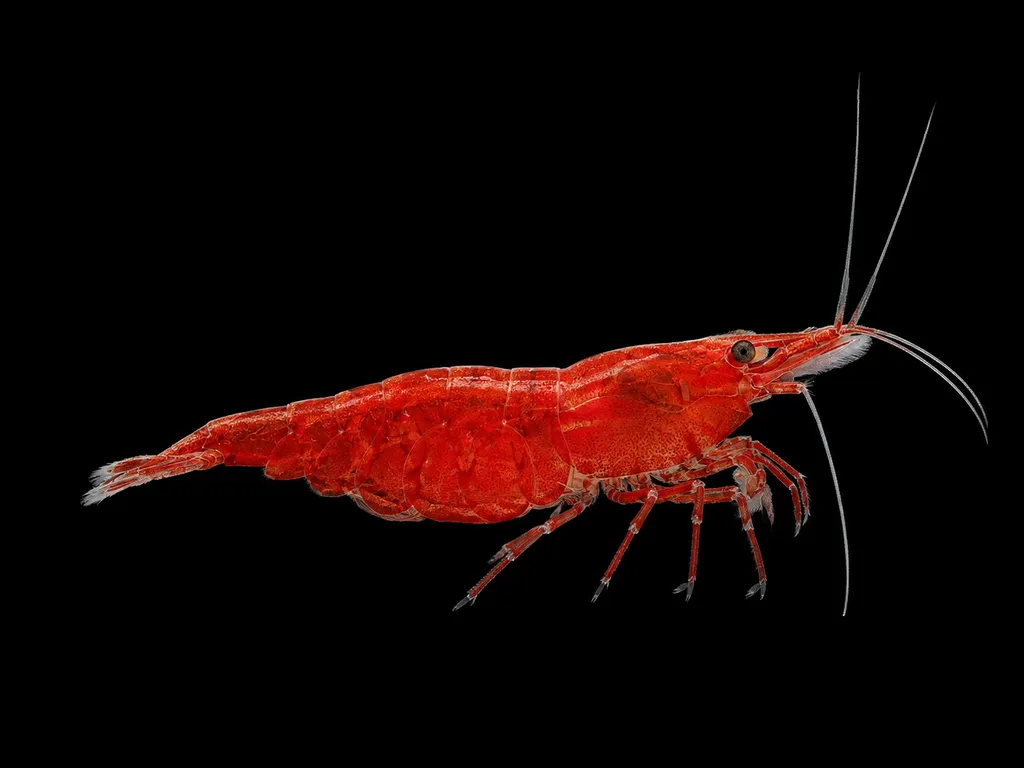
Neocaridina shrimp
Neocaridina davidi
Freshwater1.6 in (4 cm) · 5 gal (19 L)59–84°F (15–29°C)
Guppy
Poecilia reticulata
FreshwaterBrackish2.4 in (6 cm) · 10 gal (38 L)64–82°F (18–28°C)
Neon tetra
Paracheirodon innesi
Freshwater1.5 in (3.8 cm) · 11 gal (40 L)70–77°F (21–25°C)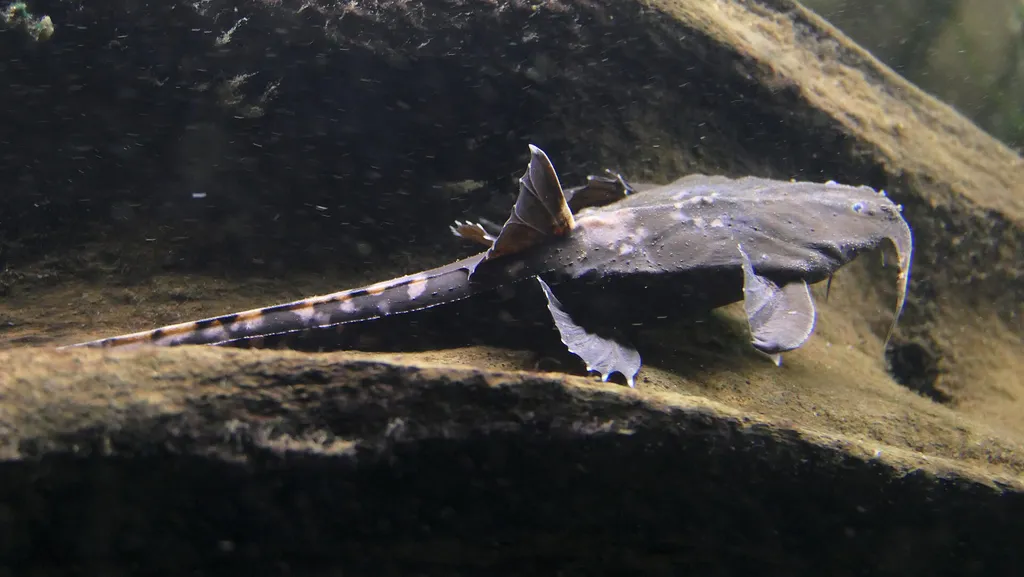
Whiptail banjo catfish
Platystacus cotylephorus
FreshwaterBrackish12.6 in (32 cm) · 53 gal (200 L)73–82°F (23–28°C)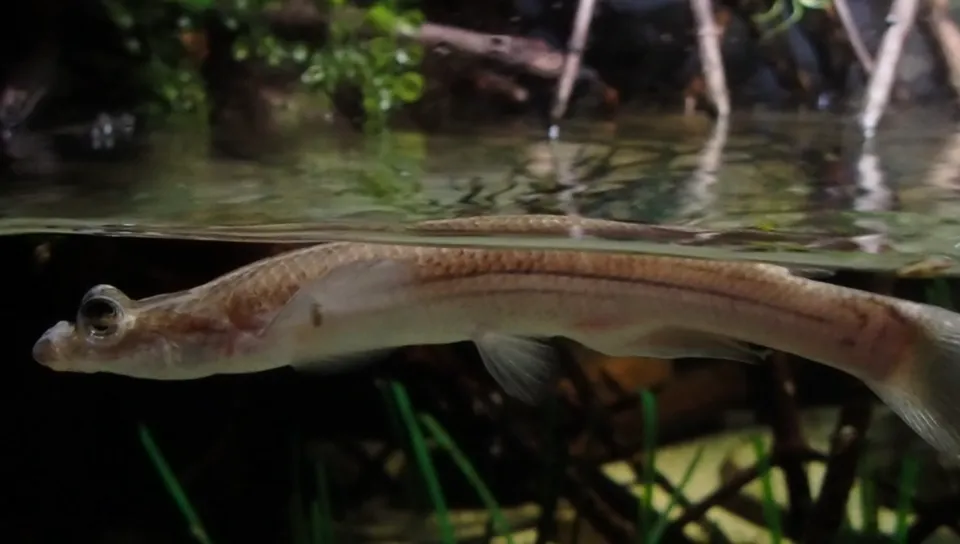
Largescale four-eyed fish
Anableps anableps
FreshwaterBrackish11.8 in (30 cm) · 70 gal (265 L)77–88°F (25–31°C)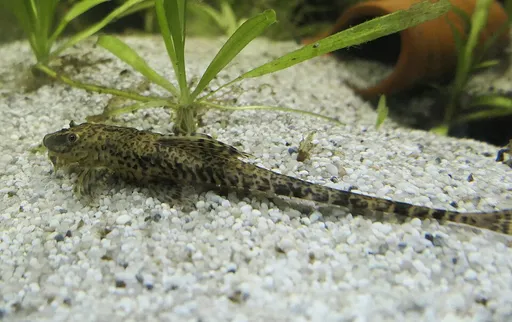
Red lizard whiptail
Rineloricaria lanceolata
Freshwater3.9 in (10 cm) · 24 gal (90 L)77–82°F (25–28°C)
Common questions
What size tank does a Parkinson's rainbowfish need?
A Parkinson's rainbowfish needs at least 53 gal (200 L). It spends most of its time in the middle.
What temperature and pH does a Parkinson's rainbowfish need?
A Parkinson's rainbowfish is comfortable at 75–82°F (24–28°C) with a pH of 7.0–8.0.
What does a Parkinson's rainbowfish eat?
A Parkinson's rainbowfish eats quality flakes and pellets. Frozen foods such as brine shrimp and daphnia bring out its color.
How big does a Parkinson's rainbowfish get?
An adult Parkinson's rainbowfish reaches about 4.3 in (11 cm).
Does a Parkinson's rainbowfish need a group?
Yes. A Parkinson's rainbowfish is a schooling species and should be kept in a group, not singly.
How does a Parkinson's rainbowfish breed?
Parkinson's rainbowfish lay their eggs onto fine-leaved plants over a stretch of days and give them no care. The tiny fry need very small first foods, and breeding is of medium difficulty.
Related species
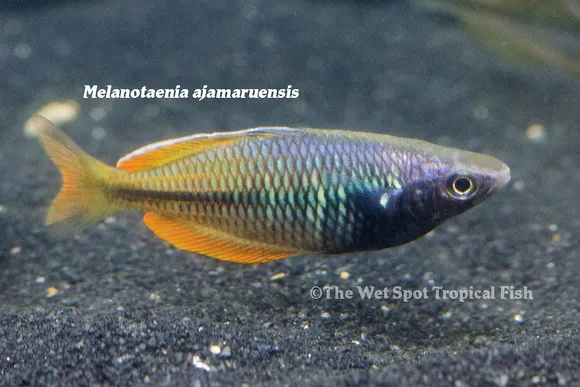 4.3 in (11 cm)42 gal (160 L)75–84°F (24–29°C)
Ajamaru Lakes rainbowfish
Melanotaenia ajamaruensis
4.3 in (11 cm) · 42 gal (160 L)
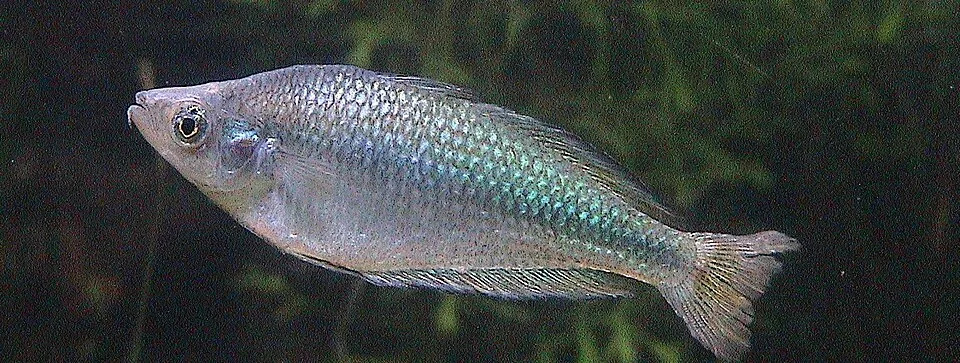 4.3 in (11 cm)30 gal (115 L)68–77°F (20–25°C)
Australian rainbowfish
Melanotaenia fluviatilis
4.3 in (11 cm) · 30 gal (115 L)
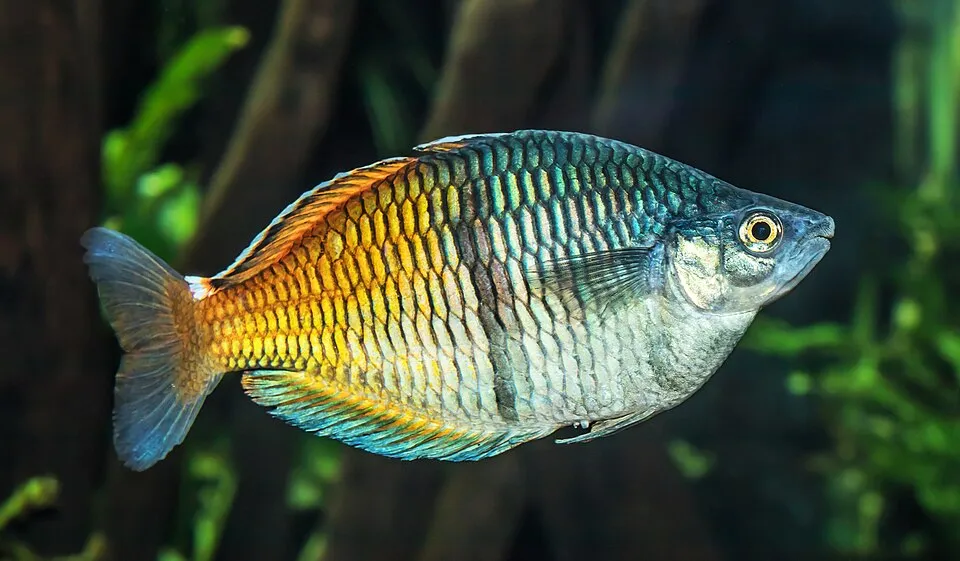 4.3 in (11 cm)29 gal (108 L)81–86°F (27–30°C)
Boeseman's rainbowfish
Melanotaenia boesemani
4.3 in (11 cm) · 29 gal (108 L)
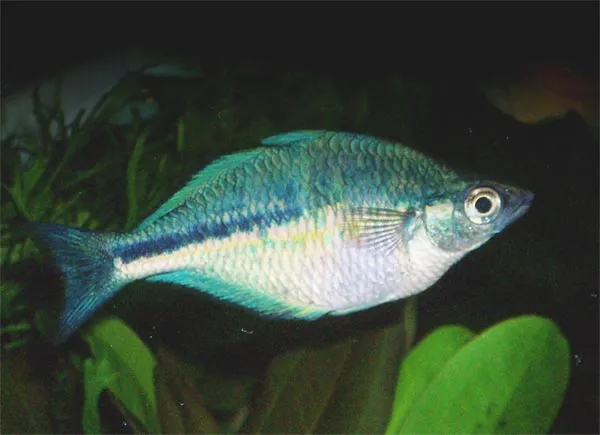 4.3 in (11 cm)29 gal (110 L)68–77°F (20–25°C)
Lake Kutubu rainbowfish
Melanotaenia lacustris
4.3 in (11 cm) · 29 gal (110 L)
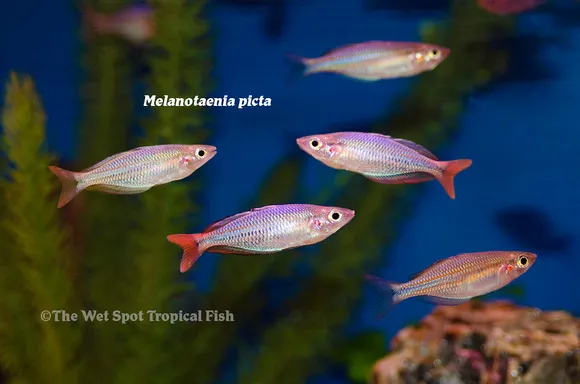 4.2 in (10.7 cm)29 gal (110 L)77–86°F (25–30°C)
Painted rainbowfish
Melanotaenia picta
4.2 in (10.7 cm) · 29 gal (110 L)
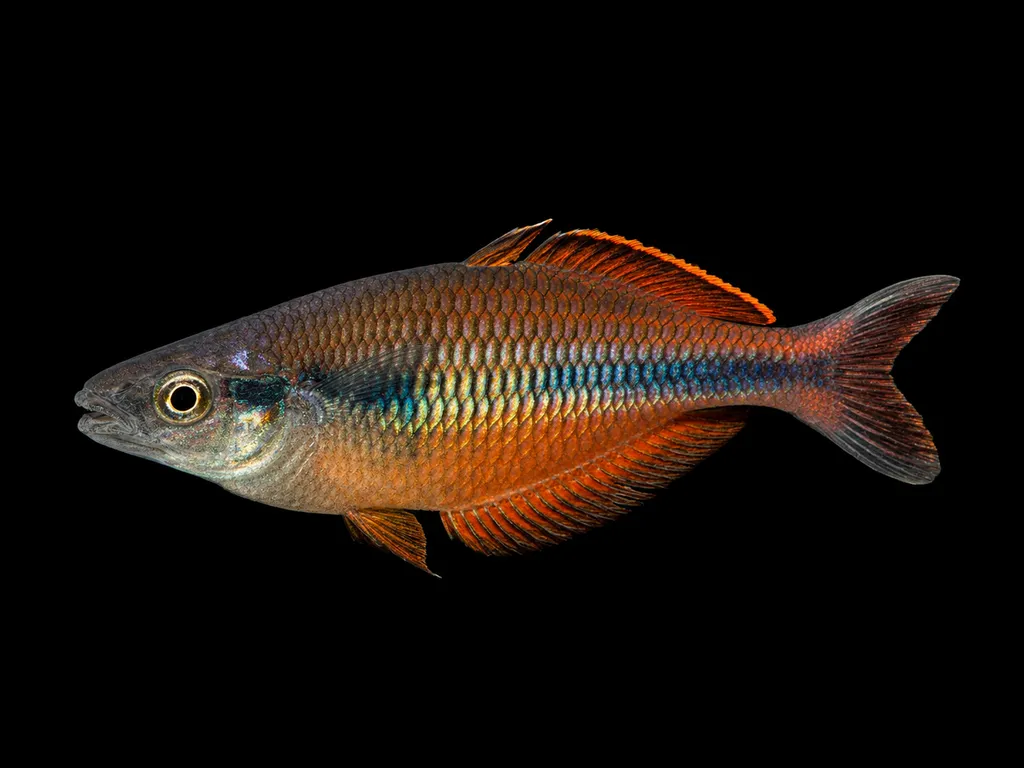 4.2 in (10.6 cm)42 gal (160 L)75–84°F (24–29°C)
Klasio rainbowfish
Melanotaenia klasioensis
4.2 in (10.6 cm) · 42 gal (160 L)