Whiptail banjo catfish
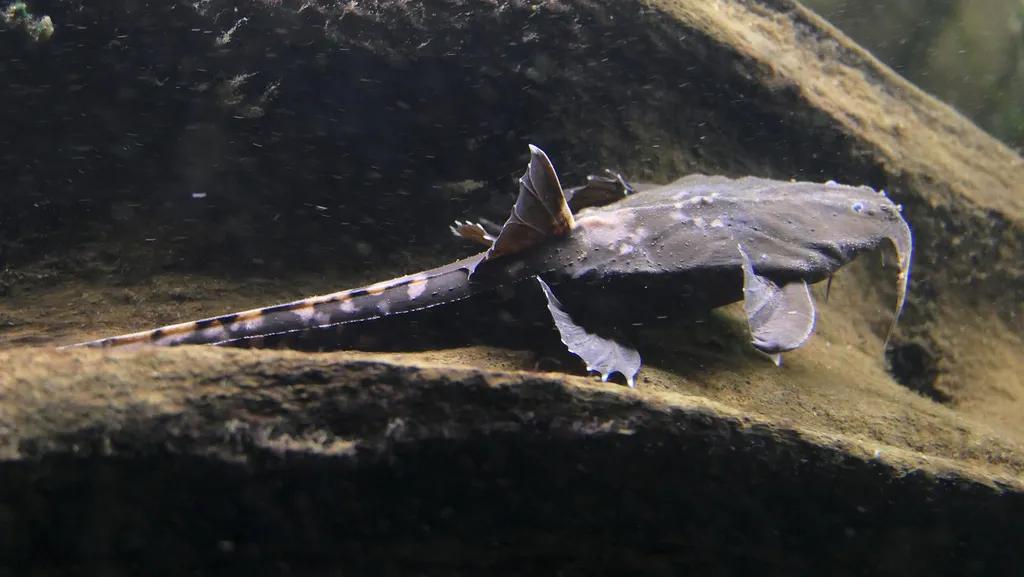
Platystacus cotylephorus
Also known as Banded banjo catfish, Eel-tail banjo
FreshwaterBrackishFish
Care at a glance
- Temperature
- 73–82°F
- 23–28°C
- pH
- 6.8–8.0
- Adult size
- 12.6 in
- 32 cm
- Minimum tank
- 53 gal
- 200 L
- Temperament
- Peaceful
- Social behavior
- Solitary
- Swim level
- Bottom
- Diet
- Carnivore
- Difficulty
- Medium
- Breeding
- Egg carrier
- Rarity
- Rare
- Family
- Aspredinidae
- Origin
- Coastal rivers and estuaries of northern South America
Overview
The whiptail banjo catfish is a large, calm, long-tailed catfish for a soft-bottomed freshwater or brackish tank. It is best with a little experience.
Did you know
A brooding female whiptail banjo catfish looks studded with her clutch. Each egg sits on a short, fleshy stalk rooted in the spongy skin of her underside.
Caring for the whiptail banjo catfish
Give the whiptail banjo catfish a long tank of at least 53 gal (200 L) with a deep bed of soft sand or fine mud. By day it lies half buried, and at night it forages slowly. Keep the light low rather than using bright, open decor, and keep the flow gentle.
Keep the water at 73 to 82°F (23 to 28°C) with a neutral to hard pH of 6.8 to 8.0. A little marine salt suits it and broadens its comfort range. Feed meaty sinking foods after dark, such as earthworms, frozen bloodworm, prawn and mussel.
It is peaceful and will not harass tank mates, but anything small enough to swallow may vanish overnight. It is best kept singly.
The female carries her eggs on her belly until they hatch. The species is thought to spawn in brackish water, and confirmed aquarium breeding is exceptionally rare.
Good to know
The whiptail banjo catfish is one of the larger members of Aspredinidae, the banjo catfishes, with a long, eel-like tail. Its species name, cotylephorus, means cup-bearing and describes how brooding females carry their eggs. It is also sold as the banded banjo catfish or the eel-tail banjo.
In the wild
The whiptail banjo catfish works muddy, turbid bottoms in the coastal rivers and estuaries of northern South America. It is often found near river mouths where fresh water meets the tide, and it readily enters low-salinity brackish water.
Weekly picks
Tank mates
The whiptail banjo catfish is a peaceful, solitary species that keeps to the bottom. These picks share a community profile with it, are safe together in both directions, and overlap on water type, temperature and pH.
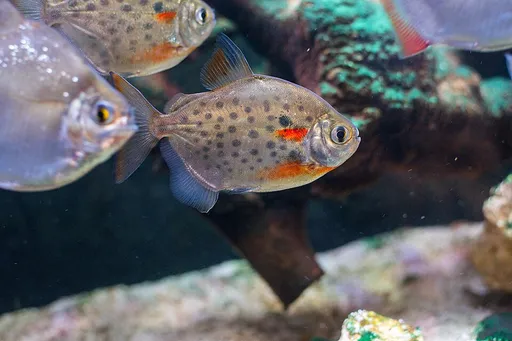
Spotted silver dollar
Metynnis lippincottianus
Freshwater5.5 in (14 cm) · 53 gal (200 L)73–81°F (23–27°C)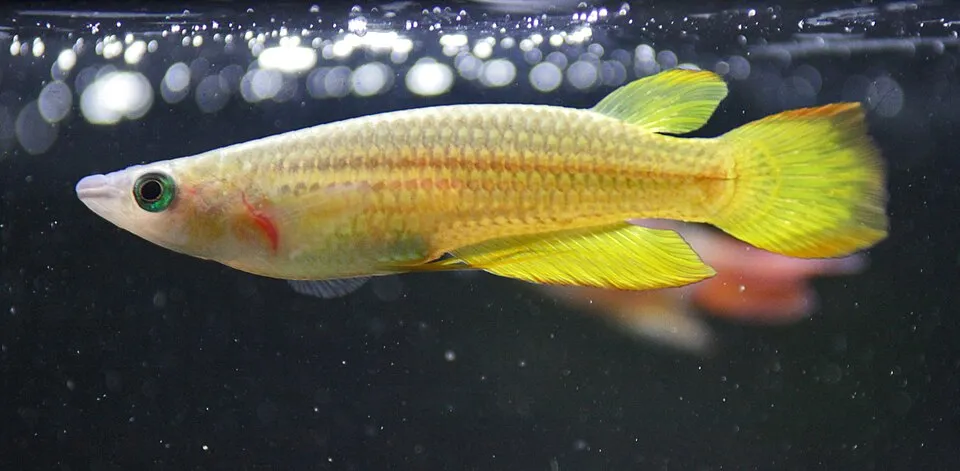
Striped panchax
Aplocheilus lineatus
Freshwater4.3 in (11 cm) · 30 gal (115 L)72–77°F (22–25°C)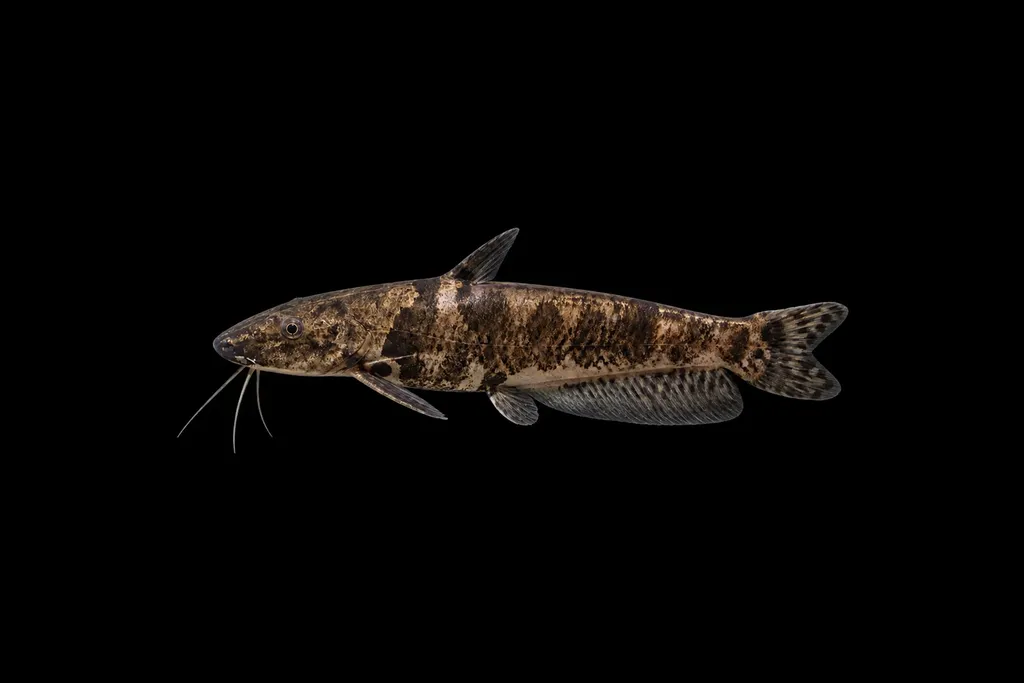
Zamora catfish
Auchenipterichthys thoracatus
Freshwater5.5 in (14 cm) · 53 gal (200 L)73–82°F (23–28°C)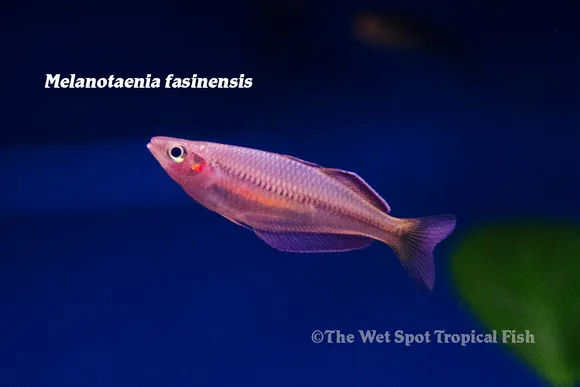
Fasin rainbowfish
Melanotaenia fasinensis
Freshwater5.4 in (13.8 cm) · 53 gal (200 L)75–84°F (24–29°C)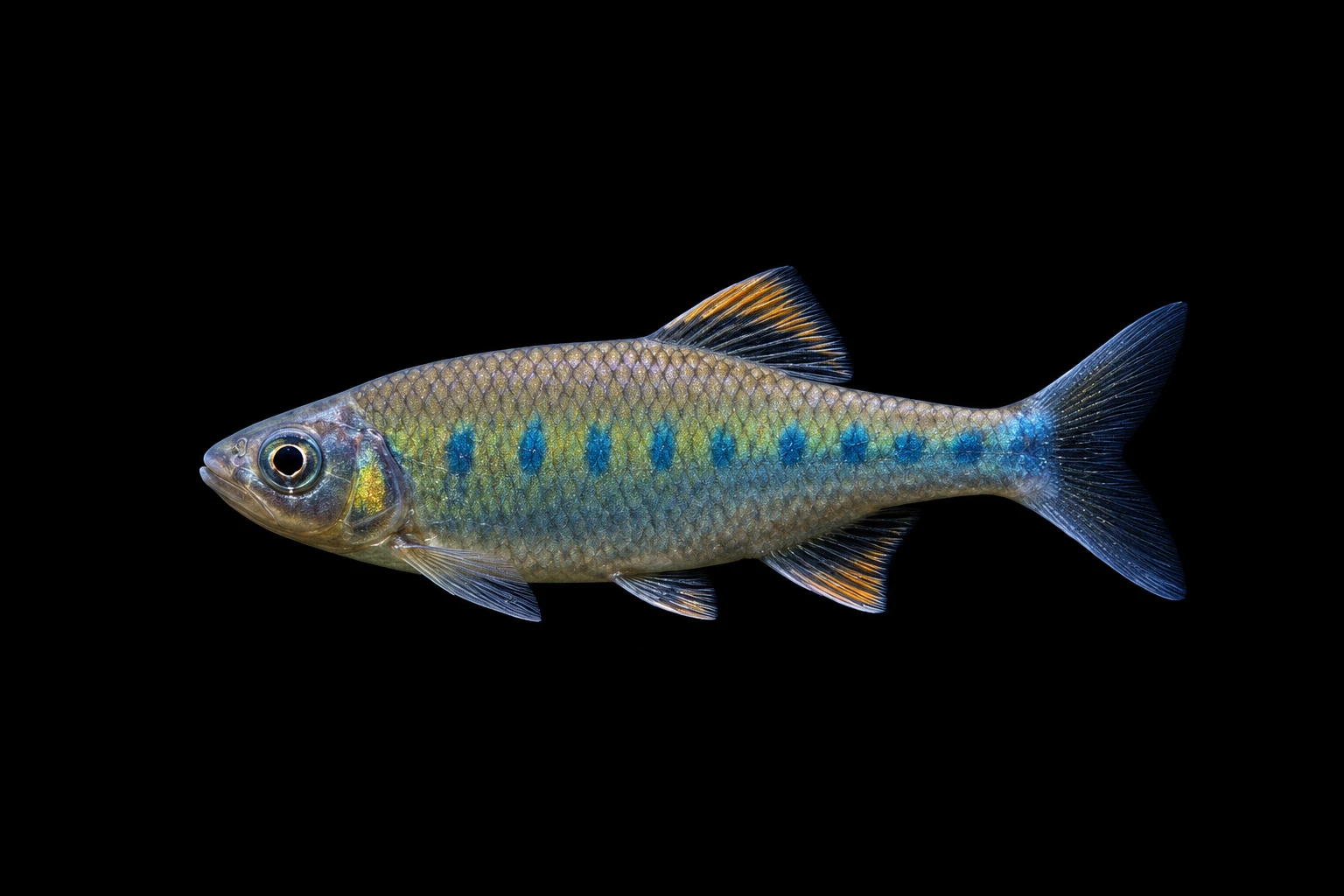
Blue spotted hill trout
Barilius bakeri
Freshwater5.1 in (13 cm) · 53 gal (200 L)64–79°F (18–26°C)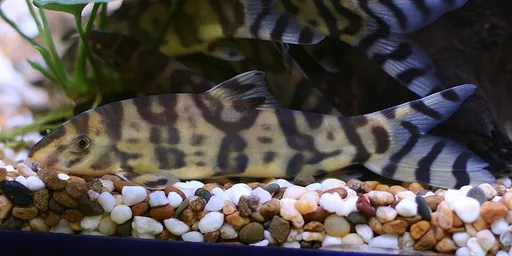
Burmese border loach
Botia histrionica
Freshwater5.1 in (13 cm) · 53 gal (200 L)72–82°F (22–28°C)
Common questions
What size tank does a whiptail banjo catfish need?
A whiptail banjo catfish needs at least 53 gal (200 L). It spends most of its time in the bottom.
What temperature and pH does a whiptail banjo catfish need?
A whiptail banjo catfish is comfortable at 73–82°F (23–28°C) with a pH of 6.8–8.0.
What does a whiptail banjo catfish eat?
A whiptail banjo catfish eats meaty sinking foods, such as earthworms, frozen bloodworm, prawn and mussel. Feed it after dark.
How big does a whiptail banjo catfish get?
An adult whiptail banjo catfish reaches about 12.6 in (32 cm).
Related species
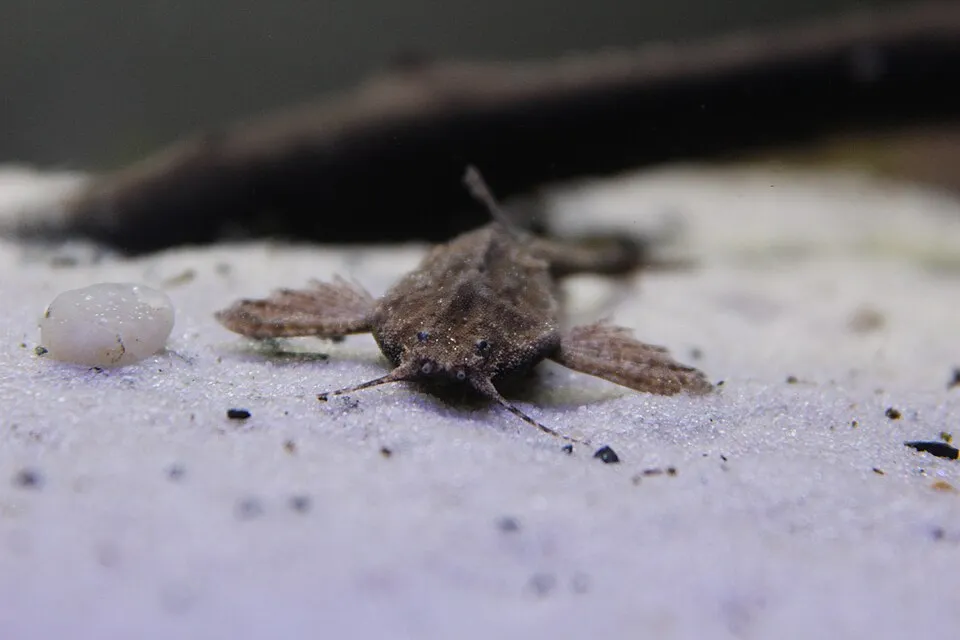 5.9 in (15 cm)25 gal (95 L)72–81°F (22–27°C)
Banjo catfish
Bunocephalus coracoideus
5.9 in (15 cm) · 25 gal (95 L)
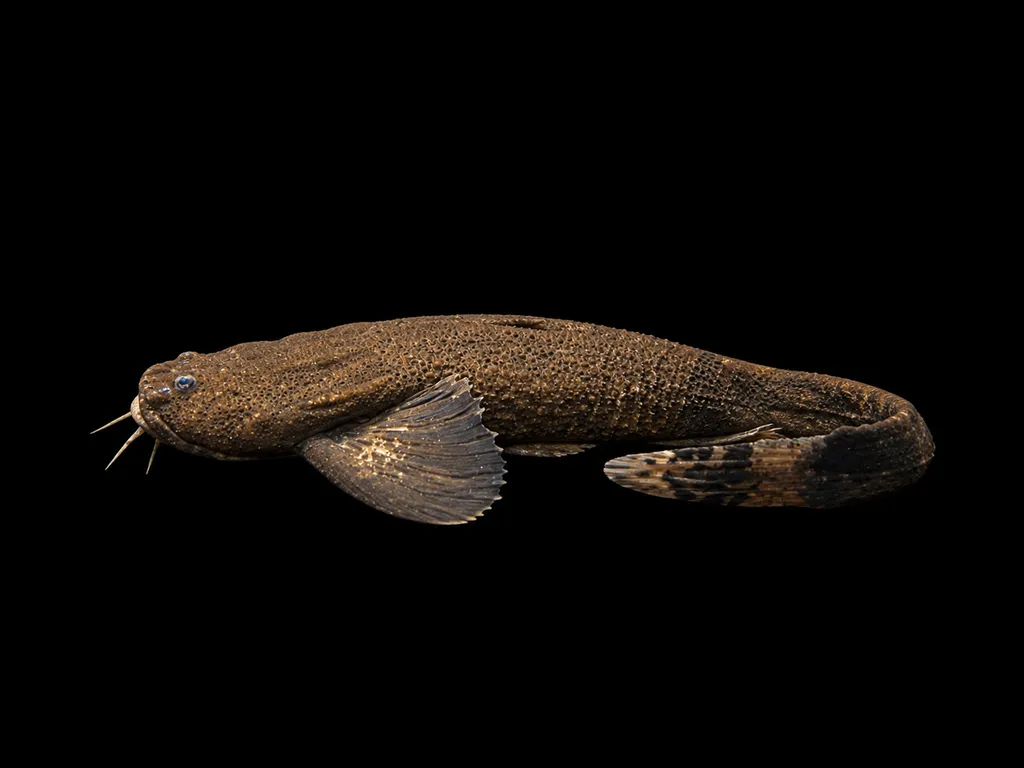 5.1 in (13 cm)30 gal (112 L)73–82°F (23–28°C)
Two-ray banjo catfish
Amaralia hypsiura
5.1 in (13 cm) · 30 gal (112 L)
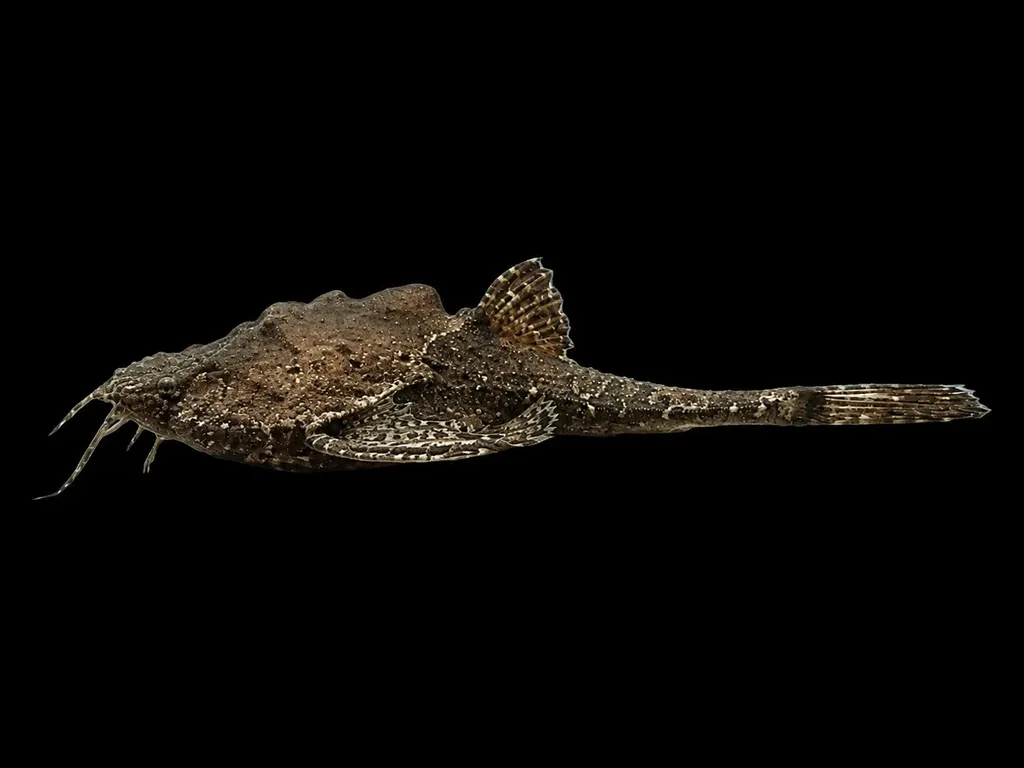 3.9 in (10 cm)21 gal (80 L)73–82°F (23–28°C)
Craggy-head banjo catfish
Bunocephalus verrucosus
3.9 in (10 cm) · 21 gal (80 L)
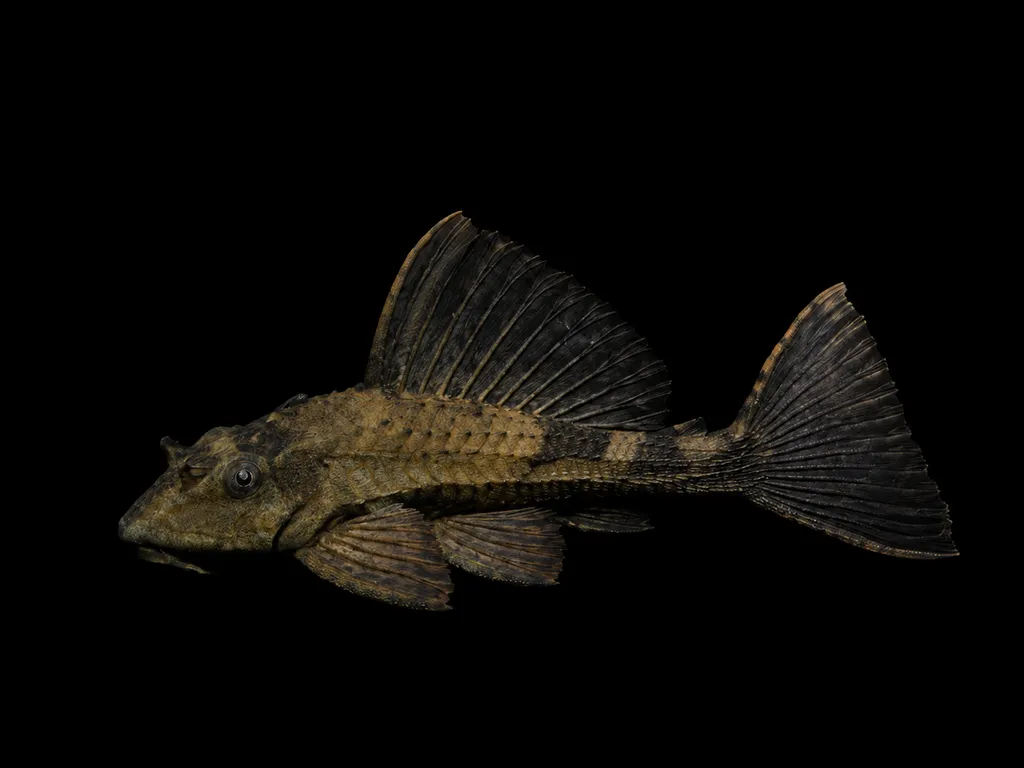 12.6 in (32 cm)119 gal (450 L)77–84°F (25–29°C)
Rhino pleco
Pterygoplichthys scrophus
12.6 in (32 cm) · 119 gal (450 L)
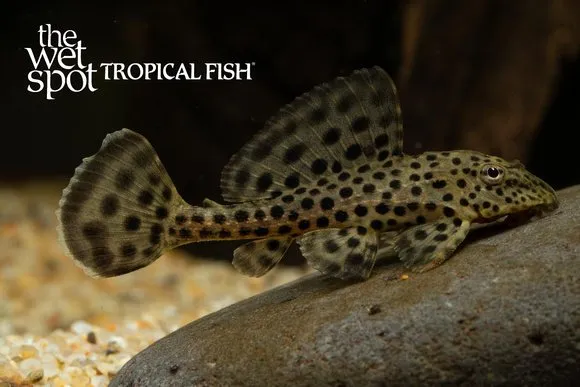 13 in (33 cm)119 gal (450 L)77–84°F (25–29°C)
Imperial ranger pleco
Pterygoplichthys punctatus
13 in (33 cm) · 119 gal (450 L)
 13.4 in (34 cm)53 gal (200 L)73–82°F (23–28°C)
Longmouth pipefish
Doryichthys heterosoma
13.4 in (34 cm) · 53 gal (200 L)