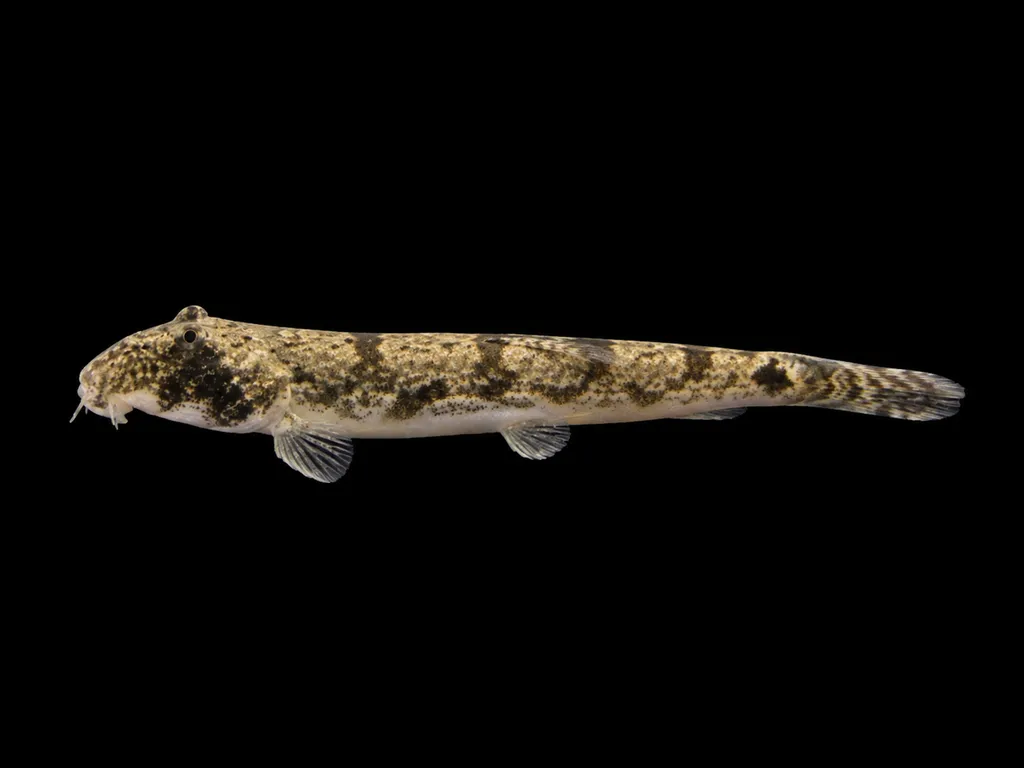
Two-ray banjo catfish
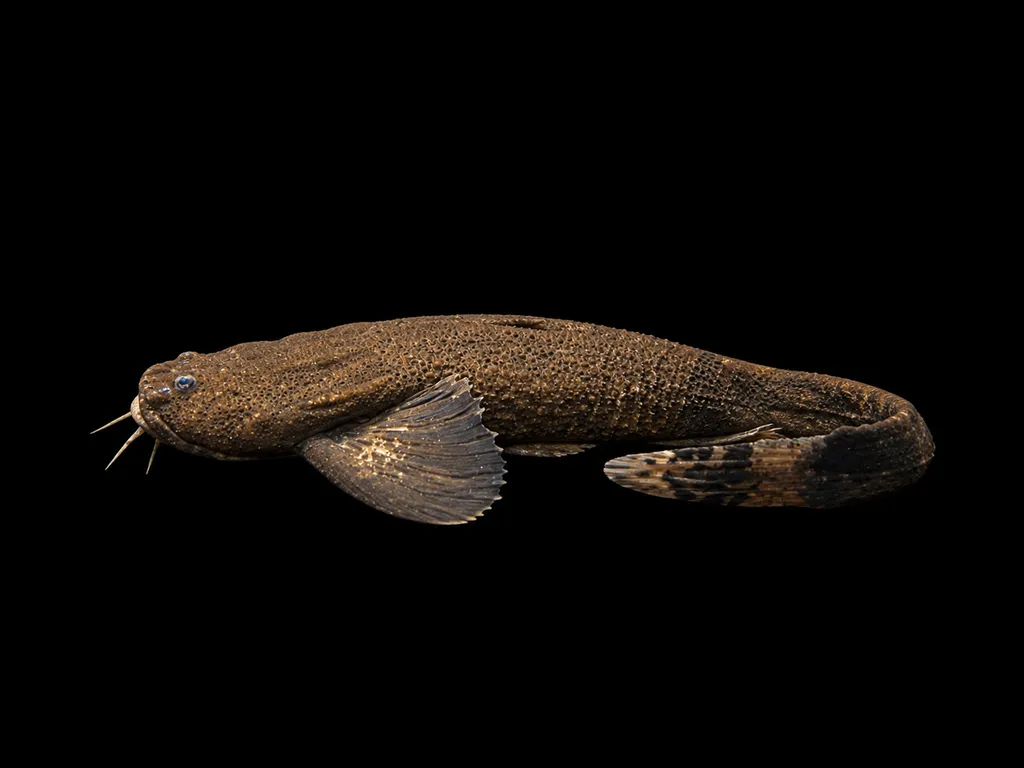
Amaralia hypsiura
Also known as Two rayed banjo cat, Egg-eating banjo
FreshwaterFish
Care at a glance
- Temperature
- 73–82°F
- 23–28°C
- pH
- 6.0–7.5
- Adult size
- 5.1 in
- 13 cm
- Minimum tank
- 30 gal
- 112 L
- Temperament
- Peaceful
- Social behavior
- Solitary
- Swim level
- Bottom
- Diet
- Carnivore
- Difficulty
- Medium
- Breeding
- No record
- Rarity
- Rare
- Family
- Aspredinidae
- Origin
- Amazon basin lowlands
Overview
The two-ray banjo catfish is a secretive, slow-moving catfish that spends the daylight hours buried in soft substrate with only its eyes showing. It suits keepers with a little experience.
Caring for the two-ray banjo catfish
Give the two-ray banjo catfish a tank of at least 30 gal (112 L) with a deep, soft sand or silt bed. Add plenty of leaf litter and driftwood, and keep the light dim and the flow gentle.
Keep the water warm and soft, at 73 to 82°F (23 to 28°C) and a slightly acidic pH of 6.0 to 7.5. After dark, feed meaty sinking foods such as frozen bloodworm, chopped prawn and sinking pellets. Leave the food where it can find it.
It is peaceful and will not chase tank mates. It feeds at night and is easily out-competed, so choose a quiet tank and make sure food reaches it. It is best kept on its own, and it has not been bred in home aquariums.
Good to know
The two-ray banjo catfish belongs to Aspredinidae, the banjo catfish family. It has the flattened head and thin tail that give the group its name. Its trade names include two rayed banjo cat and egg-eating banjo.
In the wild
The two-ray banjo catfish lives in the lowland Amazon basin, over soft mud and leaf litter in slow, tannin-stained water. It surfaces on its own schedule after dark.
Weekly picks
Tank mates
The two-ray banjo catfish is a peaceful, solitary species that keeps to the bottom. These picks share a community profile with it, are safe together in both directions, and overlap on water type, temperature and pH.
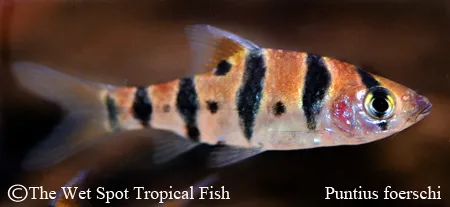
Foersch's barb
Desmopuntius foerschi
Freshwater3.1 in (8 cm) · 29 gal (110 L)73–82°F (23–28°C)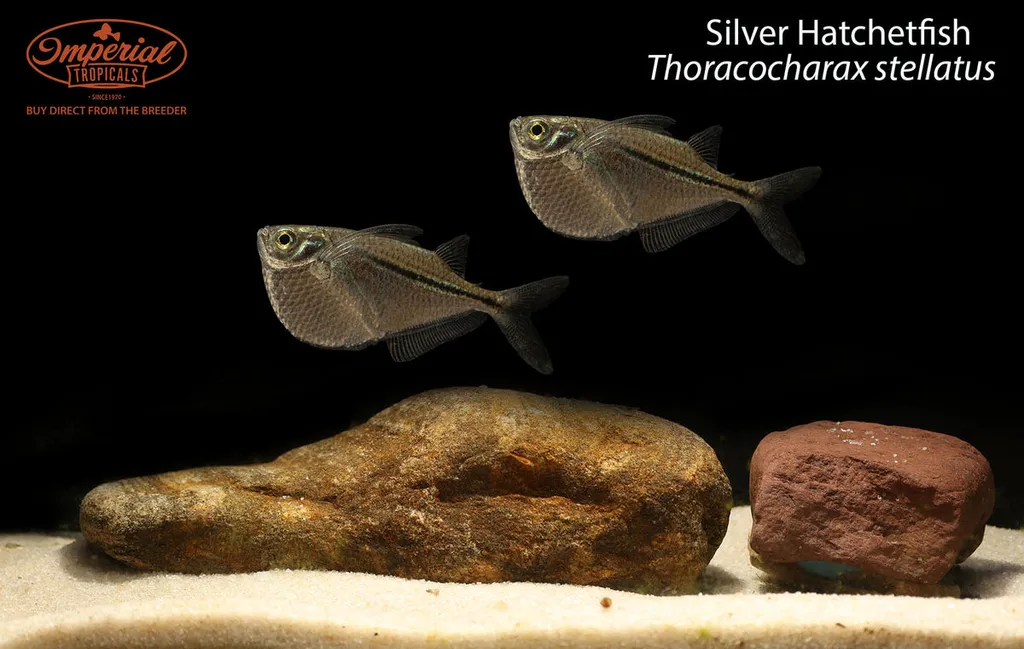
Spotfin hatchetfish
Thoracocharax stellatus
Freshwater3.5 in (9 cm) · 26 gal (100 L)73–82°F (23–28°C)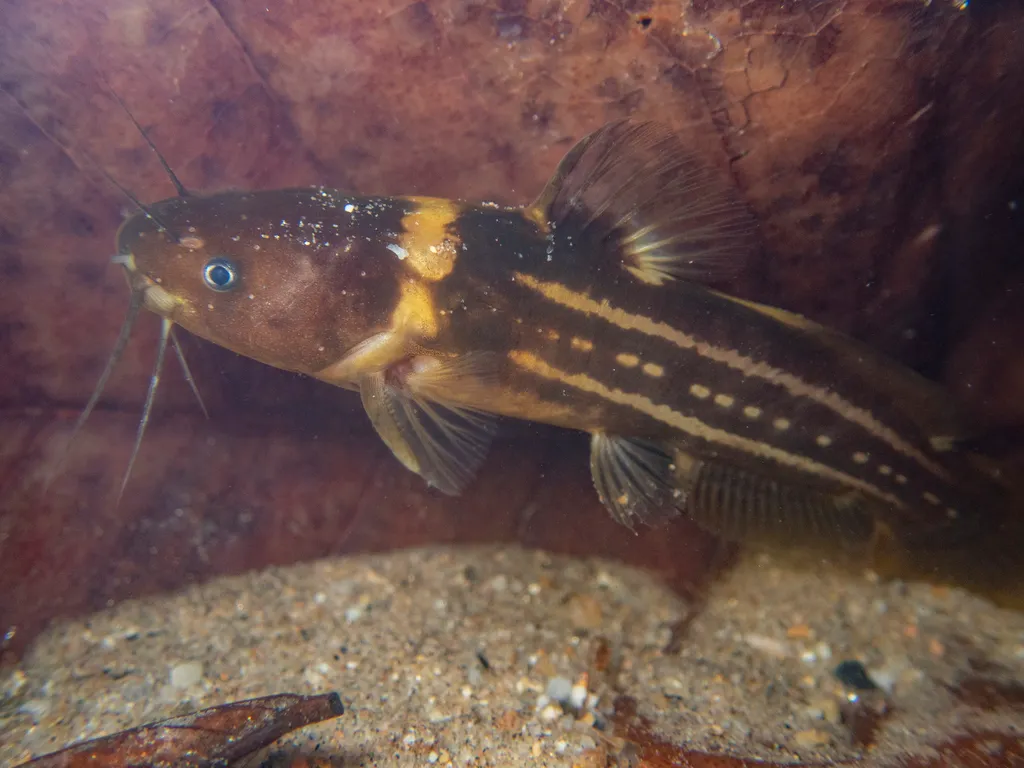
Three-lined bagrid
Tachysurus trilineatus
Freshwater3.1 in (8 cm) · 30 gal (112 L)64–77°F (18–25°C)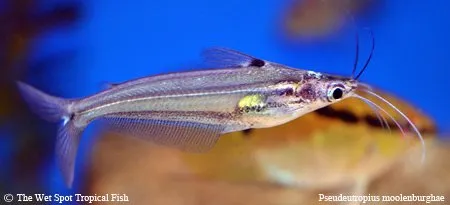
Moolenburgh's glass catfish
Pseudeutropius moolenburghae
Freshwater3.9 in (10 cm) · 30 gal (112 L)73–82°F (23–28°C)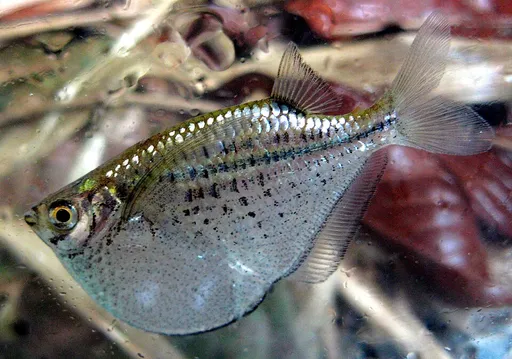
Spotted hatchetfish
Gasteropelecus maculatus
Freshwater3.5 in (9 cm) · 26 gal (100 L)73–82°F (23–28°C)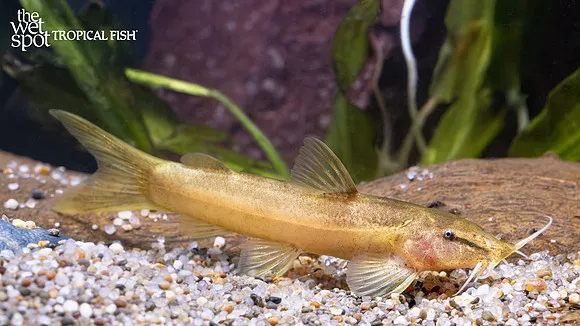
Kuhli cat
Amphilius platychir
Freshwater4.3 in (11 cm) · 30 gal (112 L)68–77°F (20–25°C)
Common questions
What size tank does a two-ray banjo catfish need?
A two-ray banjo catfish needs at least 30 gal (112 L). It spends most of its time in the bottom.
What temperature and pH does a two-ray banjo catfish need?
A two-ray banjo catfish is comfortable at 73–82°F (23–28°C) with a pH of 6.0–7.5.
What does a two-ray banjo catfish eat?
A two-ray banjo catfish takes meaty sinking foods in the tank, such as frozen bloodworm, chopped prawn and sinking pellets. Feed it after dark and leave the food where it can find it.
How big does a two-ray banjo catfish get?
An adult two-ray banjo catfish reaches about 5.1 in (13 cm).
Related species
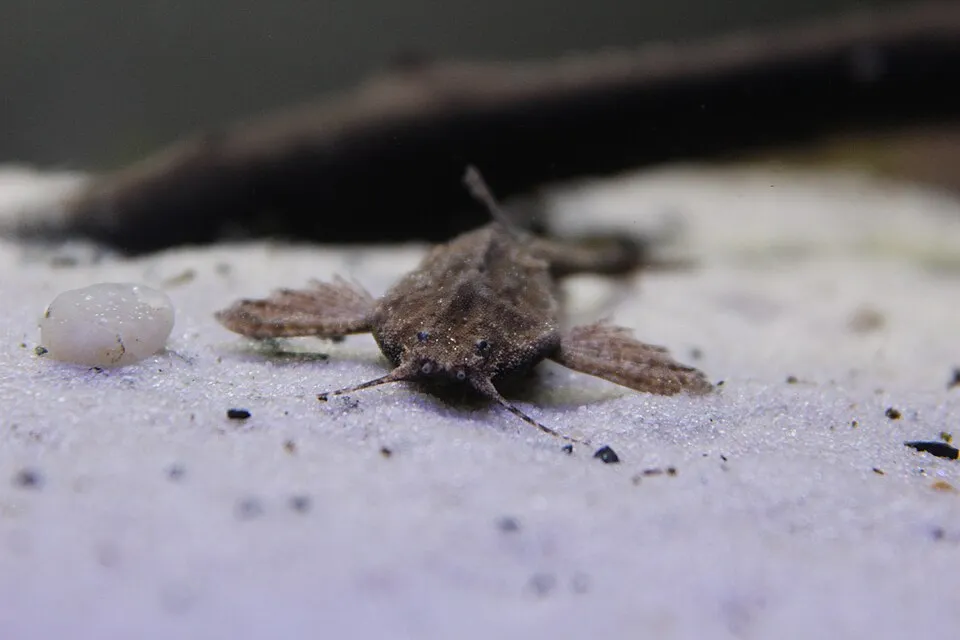 5.9 in (15 cm)25 gal (95 L)72–81°F (22–27°C)
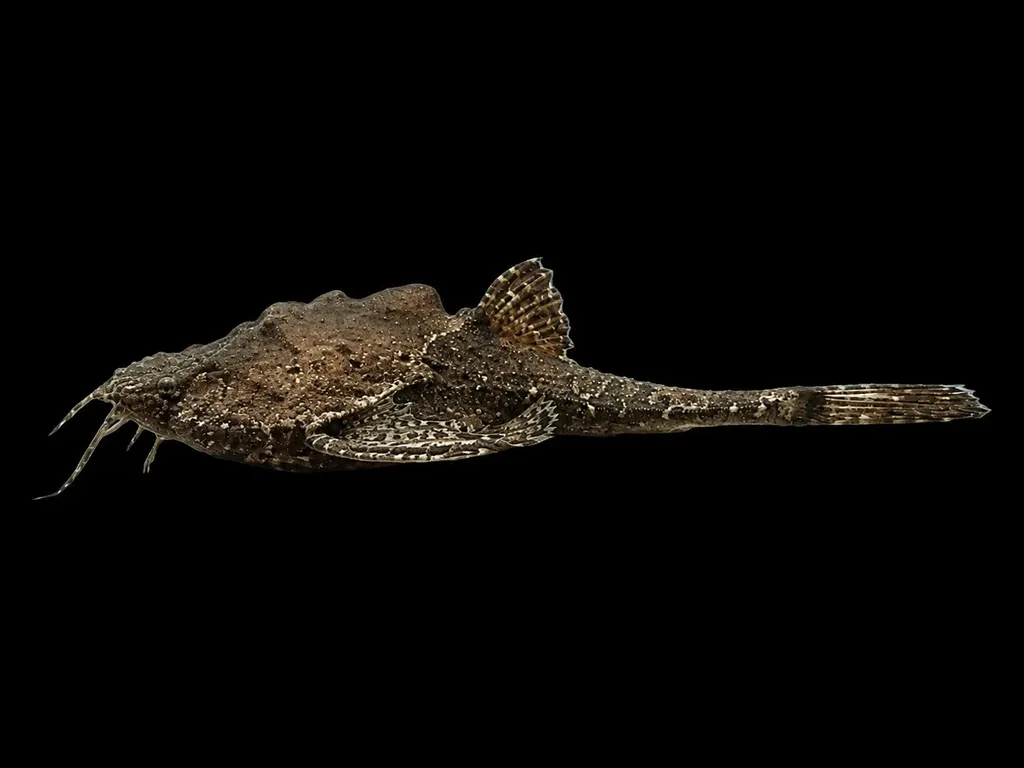
Banjo catfish
Bunocephalus coracoideus
5.9 in (15 cm) · 25 gal (95 L)
 3.9 in (10 cm)21 gal (80 L)73–82°F (23–28°C)
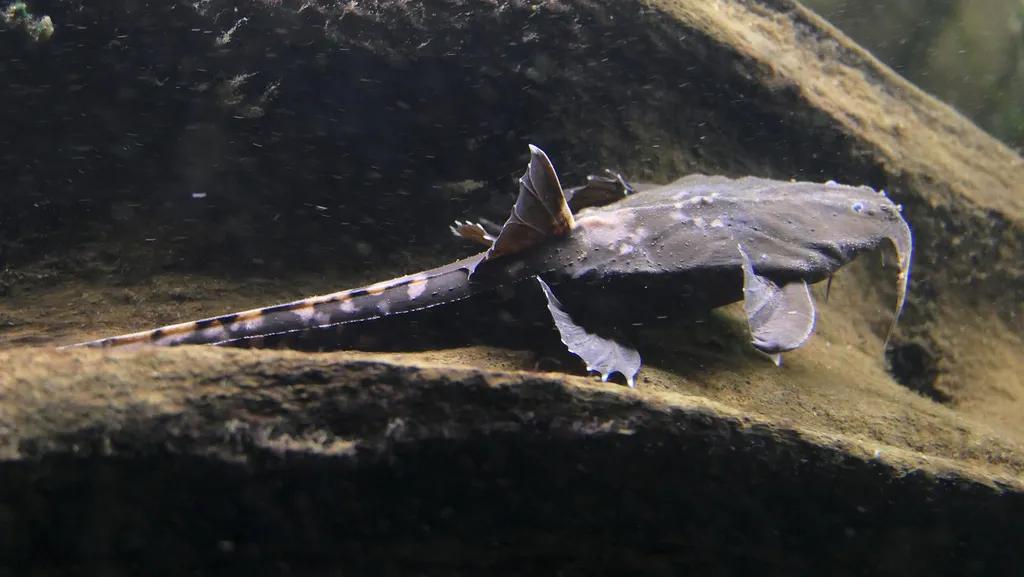
Craggy-head banjo catfish
Bunocephalus verrucosus
3.9 in (10 cm) · 21 gal (80 L)
 12.6 in (32 cm)53 gal (200 L)73–82°F (23–28°C)
Whiptail banjo catfish
Platystacus cotylephorus
12.6 in (32 cm) · 53 gal (200 L)
 5.1 in (13 cm)42 gal (160 L)68–79°F (20–26°C)
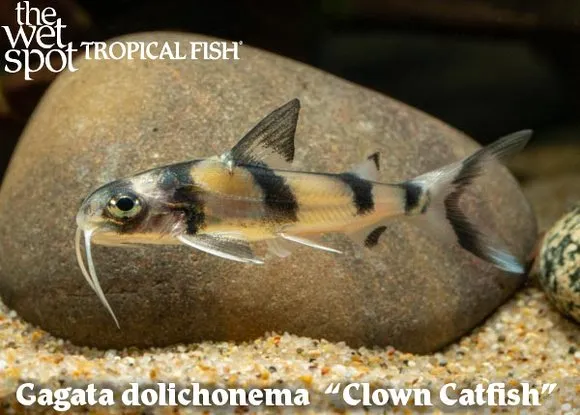
Clown gagata catfish
Gagata dolichonema
5.1 in (13 cm) · 42 gal (160 L)
 5.1 in (13 cm)20 gal (75 L)68–79°F (20–26°C)
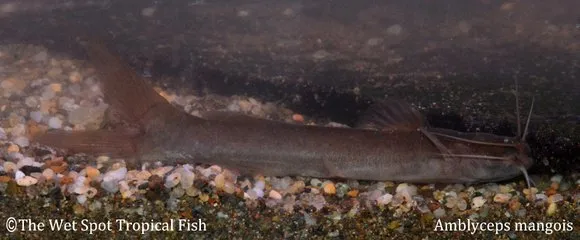
Crevice catfish
Amblyceps mangois
5.1 in (13 cm) · 20 gal (75 L)
 5.1 in (13 cm)42 gal (160 L)70–81°F (21–27°C)
Gongota loach
Canthophrys gongota
5.1 in (13 cm) · 42 gal (160 L)