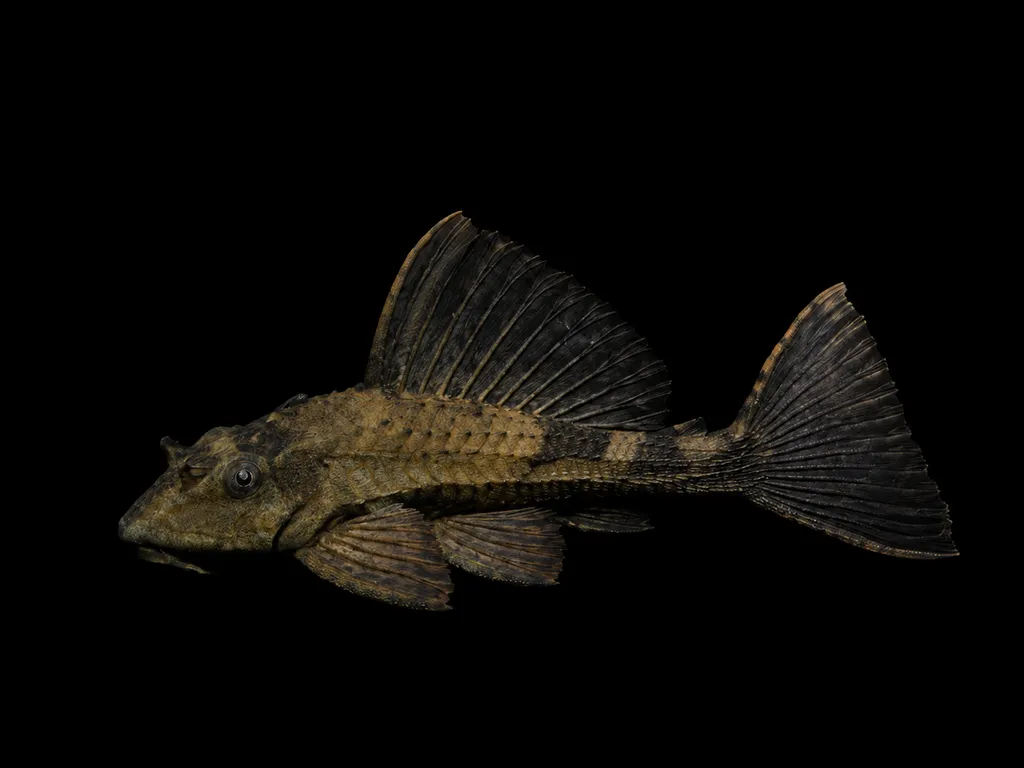
Imperial ranger pleco
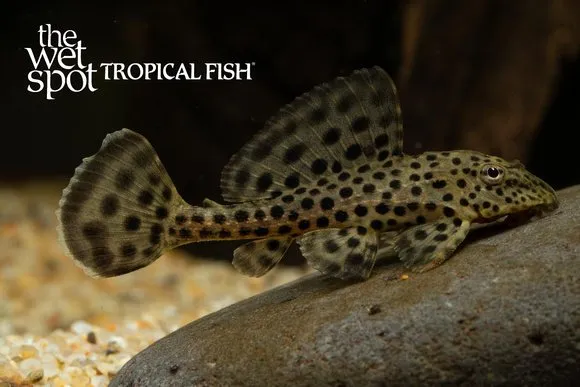
Pterygoplichthys punctatus
Also known as Punctatus sailfin pleco
FreshwaterFish
Care at a glance
- Temperature
- 77–84°F
- 25–29°C
- pH
- 6.0–7.4
- Adult size
- 13 in
- 33 cm
- Minimum tank
- 119 gal
- 450 L
- Temperament
- Peaceful
- Social behavior
- Solitary
- Swim level
- Bottom
- Difficulty
- Easy
- Breeding
- Cave spawner · Hard
- Rarity
- Rare
- Family
- Loricariidae
- Origin
- Madeira basin, Brazil and Bolivia
Overview
The imperial ranger pleco is a big, hardy sailfin pleco with a well-earned janitor reputation. It is easy to care for.
Did you know
The imperial ranger pleco, like other sailfins, carries ten or more rays in its big dorsal fin. A common pleco has only about seven or eight, so counting the rays tells the two apart.
Caring for the imperial ranger pleco
Plan around the imperial ranger pleco's size from the day you buy the small, spotted juvenile. Give it a large tank of at least 119 gal (450 L), with driftwood, open sand and open floor.
It is undemanding about water chemistry. Keep it warm, at 77 to 84°F (25 to 29°C), with a pH of 6.0 to 7.4. Use strong filtration, since a fish this size is a heavy feeder and a heavy waste producer.
It grazes algae and takes vegetables, sinking wafers and pellets. A big adult can flatten soft plants.
Keep it singly, since it has no need for its own kind. It is peaceful with tank mates and suits large, calm community fish. In the wild it spawns in burrows dug into riverbanks. That is very hard to set up at home, so breeding is rated hard.
Good to know
Pterygoplichthys punctatus is a loricariid, also sold as the punctatus sailfin pleco. It is light brown to gray and covered in small dark spots.
In the wild
The imperial ranger pleco comes from the Madeira basin of Brazil and Bolivia. It works slow, warm stretches of lowland river.
Weekly picks
Tank mates
The imperial ranger pleco is a peaceful, solitary species that keeps to the bottom. These picks share a community profile with it, are safe together in both directions, and overlap on water type, temperature and pH.
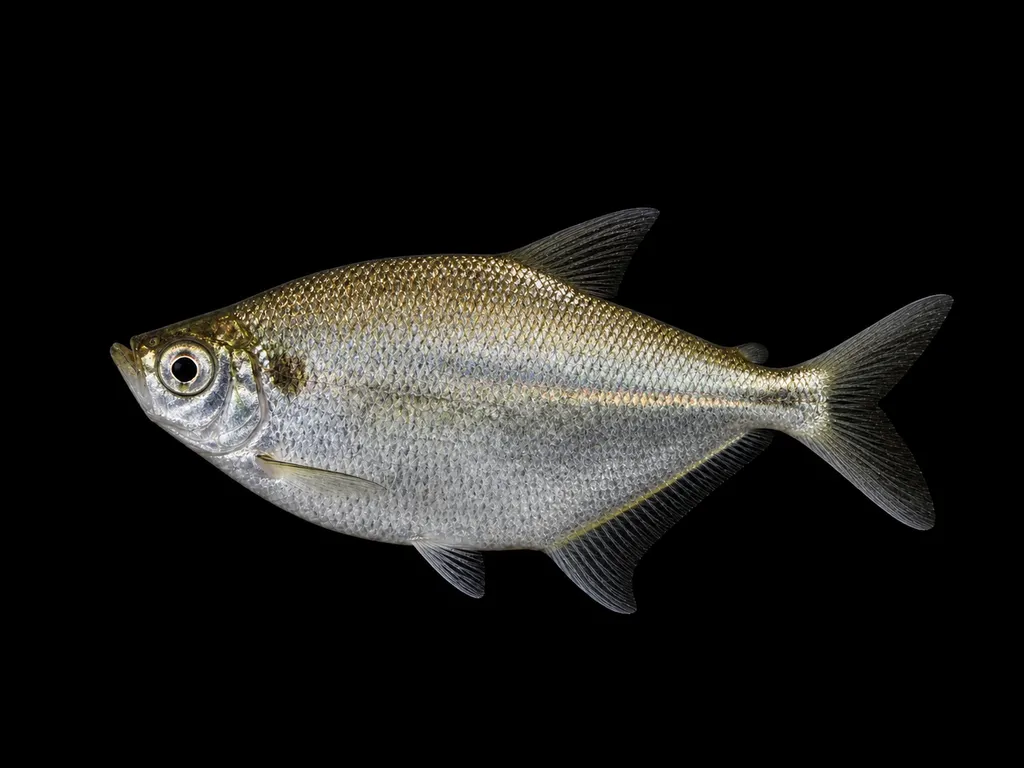
Giant river hatchetfish
Triportheus rotundatus
Freshwater9.8 in (25 cm) · 79 gal (300 L)73–82°F (23–28°C)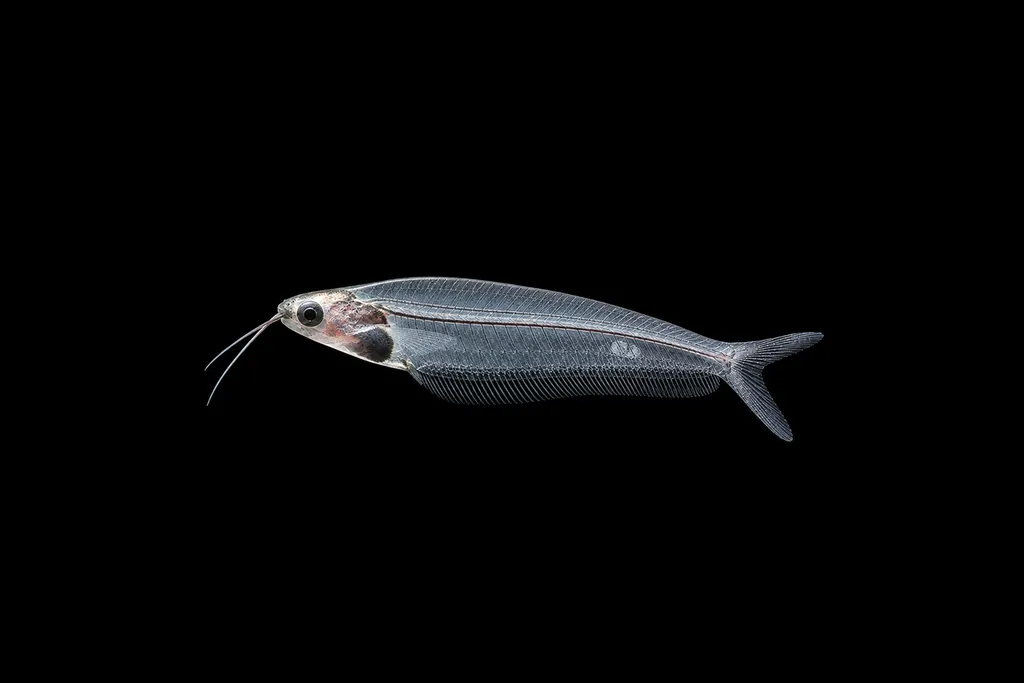
Mekong glass sheatfish
Kryptopterus limpok
Freshwater11.8 in (30 cm) · 119 gal (450 L)73–81°F (23–27°C)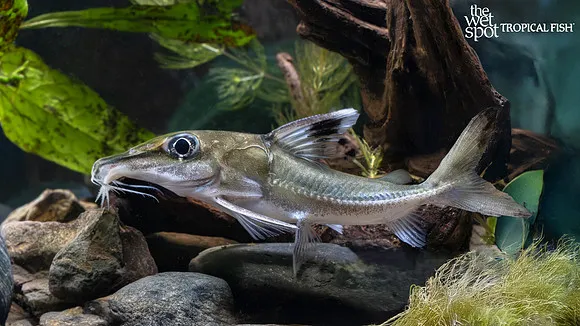
Black-top mouse catfish
Hassar orestis
Freshwater11.8 in (30 cm) · 106 gal (400 L)73–82°F (23–28°C)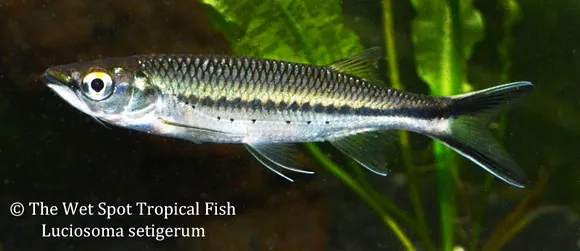
Apollo shark minnow
Luciosoma setigerum
Freshwater11.8 in (30 cm) · 106 gal (400 L)72–81°F (22–27°C)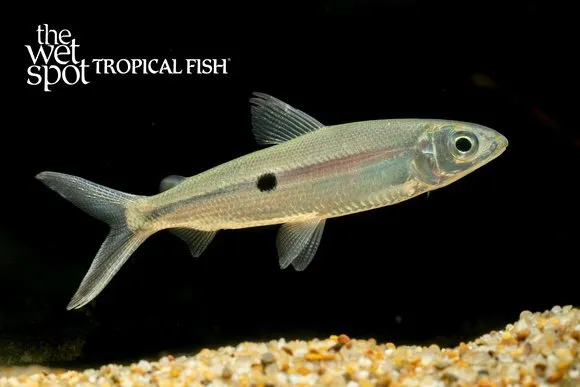
Smallscale hemiodus
Hemiodus microlepis
Freshwater11 in (28 cm) · 159 gal (600 L)75–84°F (24–29°C)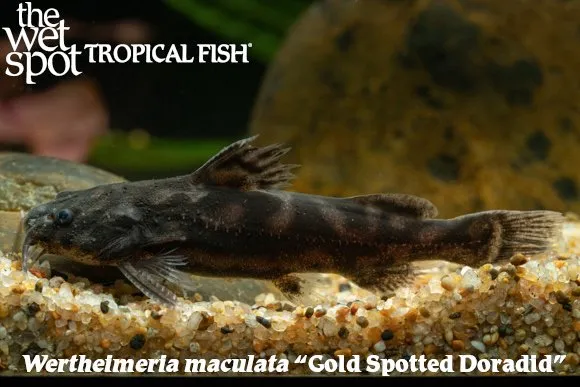
Gold-spotted doradid
Wertheimeria maculata
Freshwater11.8 in (30 cm) · 106 gal (400 L)68–79°F (20–26°C)
Common questions
What size tank does an imperial ranger pleco need?
An imperial ranger pleco needs at least 119 gal (450 L). It spends most of its time in the bottom.
What temperature and pH does an imperial ranger pleco need?
An imperial ranger pleco is comfortable at 77–84°F (25–29°C) with a pH of 6.0–7.4.
What does an imperial ranger pleco eat?
An imperial ranger pleco grazes algae and takes vegetables, sinking wafers and pellets. It is a heavy feeder, and a big adult can flatten soft plants.
How big does an imperial ranger pleco get?
An adult imperial ranger pleco reaches about 13 in (33 cm).
How does an imperial ranger pleco breed?
An imperial ranger pleco spawns in burrows dug into riverbanks in the wild. That is very hard to set up at home, so breeding it is rated hard.
Related species
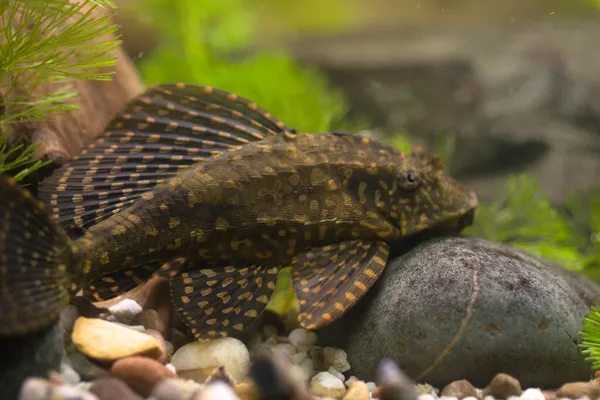
 12.6 in (32 cm)119 gal (450 L)77–84°F (25–29°C)
Rhino pleco
Pterygoplichthys scrophus
12.6 in (32 cm) · 119 gal (450 L)
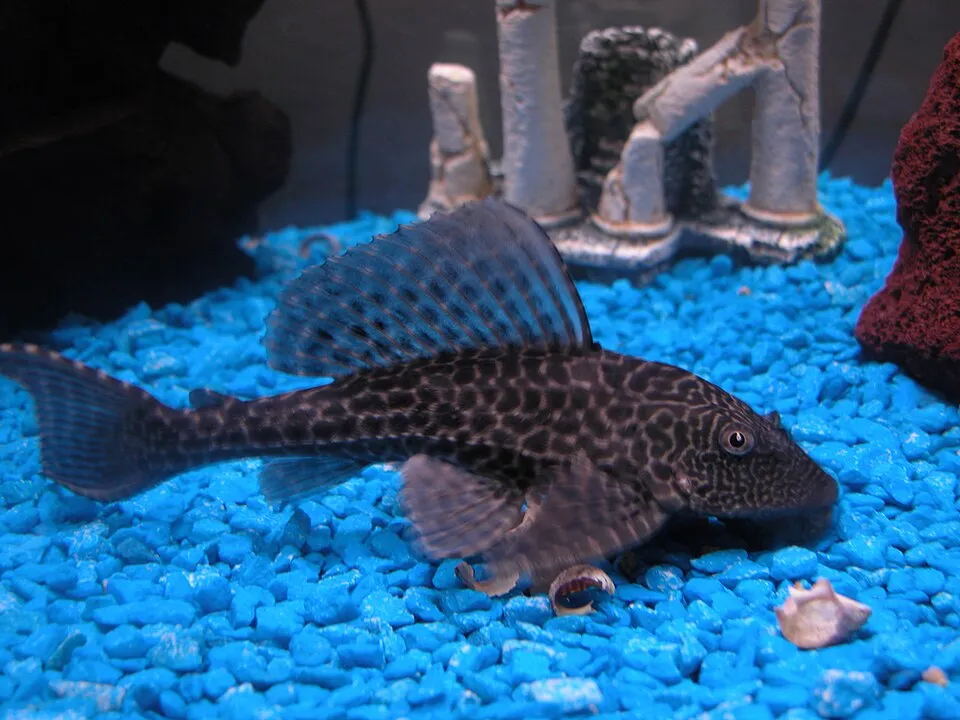
 15.7 in (40 cm)119 gal (450 L)77–84°F (25–29°C)
Gold spot sailfin pleco
Pterygoplichthys joselimaianus
15.7 in (40 cm) · 119 gal (450 L)
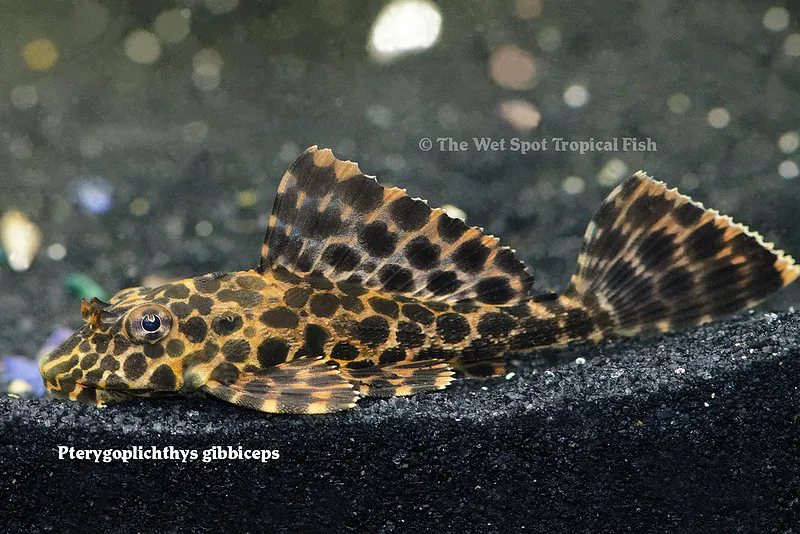
 17.7 in (45 cm)100 gal (380 L)72–84°F (22–29°C)
Amazon sailfin catfish
Pterygoplichthys pardalis
17.7 in (45 cm) · 100 gal (380 L)
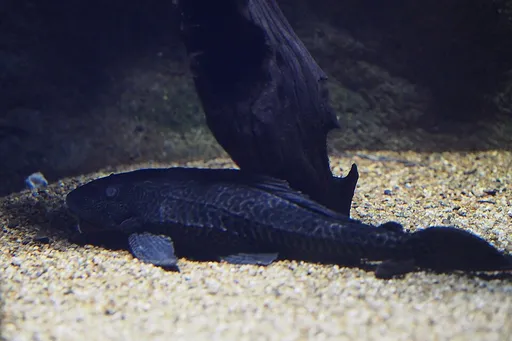
 18.9 in (48 cm)100 gal (380 L)72–86°F (22–30°C)
Leopard sailfin pleco
Pterygoplichthys gibbiceps
18.9 in (48 cm) · 100 gal (380 L)
 17.7 in (45 cm)100 gal (380 L)73–84°F (23–29°C)
Sailfin pleco
Pterygoplichthys disjunctivus
17.7 in (45 cm) · 100 gal (380 L)
 13.4 in (34 cm)119 gal (450 L)77–84°F (25–29°C)
Red fin thresher pleco
Aphanotorulus emarginatus
13.4 in (34 cm) · 119 gal (450 L)