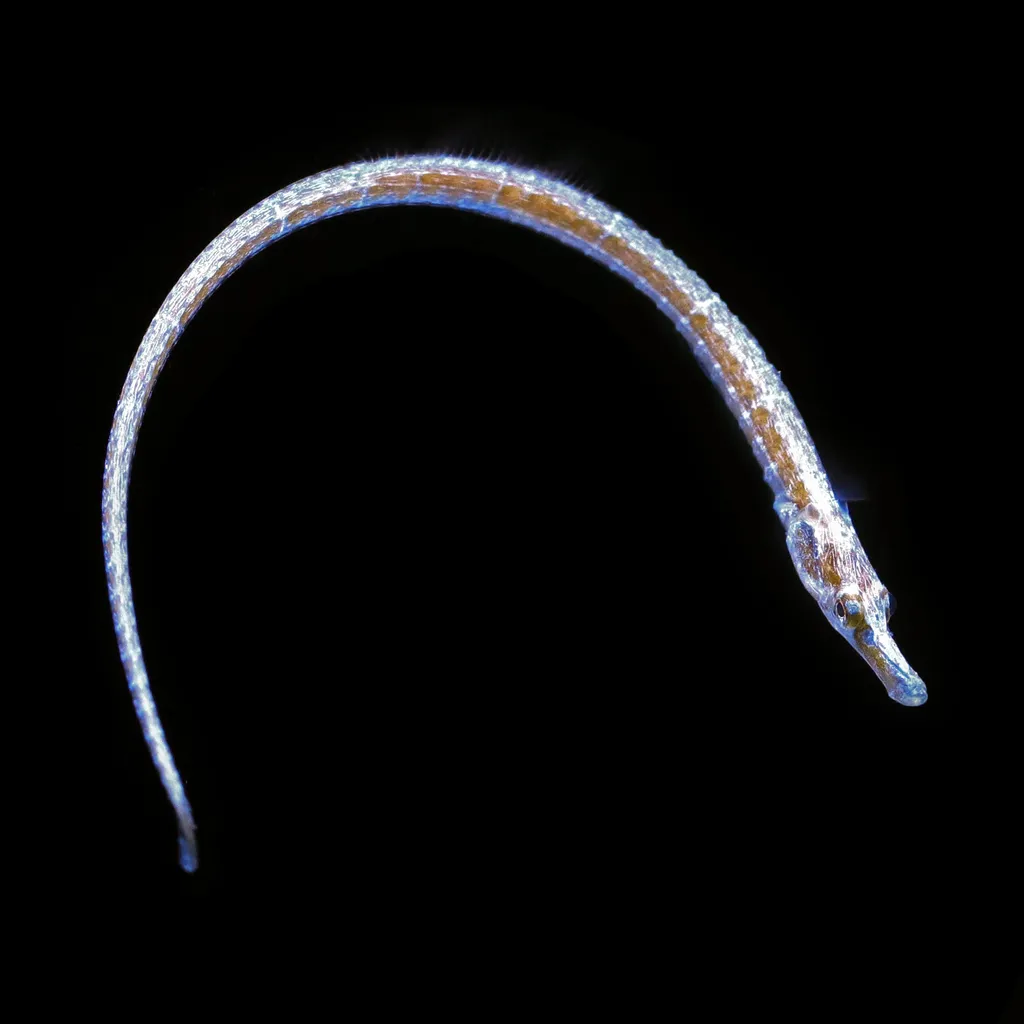
Gulf pipefish
Syngnathus scovelli
Also known as Siphostoma scovelli
SaltwaterFish
Care at a glance
- Temperature
- 68–75°F
- 20–24°C
- pH
- 8.1–8.4
- Adult size
- 7.1 in
- 18 cm
- Minimum tank
- 20 gal
- 76 L
- Temperament
- Peaceful
- Social behavior
- Social
- Tankmates
- With caution
- Swim level
- Bottom
- Diet
- Carnivore
- Difficulty
- Difficult
- Breeding
- Pouch brooder · Medium
- Rarity
- Common
- Reef safe
- Reef safe with caution
- Family
- Syngnathidae
- Origin
- Western Atlantic, Gulf of Mexico to Brazil
Overview
The Gulf pipefish is one of the hardier pipefish and a good match for seahorse systems. It is still a fish for experienced keepers.
Did you know
Courtship runs in reverse for the Gulf pipefish, with females competing for males. That is why it appears so often in research on sex role reversal.
Caring for the Gulf pipefish
Give the Gulf pipefish a quiet tank of at least 20 gal (76 L), with plants and decor near the bottom. It spends its day threaded through them. Keep it as a normal saltwater fish, at 68 to 75°F (20 to 24°C) and a pH of 8.1 to 8.4.
It feeds like any pipefish, so offer frozen mysis, enriched brine shrimp and copepods. Feed adults at least twice a day. It is peaceful and fine alone or in a group. Choose its tank mates with caution, and take the same care before adding it to a reef tank.
Females are the showier sex, larger and more boldly marked, with silvery bars along the lower body rings. Males brood the eggs in a pouch under the tail. Breeding them is moderately hard.
Good to know
Syngnathus scovelli belongs to the family Syngnathidae. In the wild it copes with everything from fresh river water to hypersaline lagoons.
In the wild
The Gulf pipefish lives in seagrass and macroalgae beds of the western Atlantic. Its range runs from Florida and the Gulf of Mexico down the Central and South American coast to Brazil. It sticks to shallow, soft-bottomed bays and estuaries, rarely deeper than a few meters.
Common questions
What size tank does a Gulf pipefish need?
A Gulf pipefish needs at least 20 gal (76 L). It spends most of its time in the bottom.
What temperature and pH does a Gulf pipefish need?
A Gulf pipefish is comfortable at 68–75°F (20–24°C) with a pH of 8.1–8.4.
What does a Gulf pipefish eat?
A Gulf pipefish eats frozen mysis, enriched brine shrimp and copepods. Adults need feeding at least twice a day.
How big does a Gulf pipefish get?
An adult Gulf pipefish reaches about 7.1 in (18 cm).
How can you tell a male Gulf pipefish from a female?
Female Gulf pipefish are the showier sex, larger and more boldly marked than males, with silvery bars along the lower body rings.
How does a Gulf pipefish breed?
Male Gulf pipefish brood the eggs in a pouch under the tail. Breeding them is moderately hard.
Related species
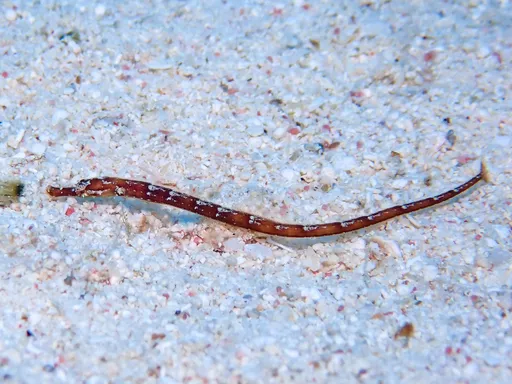 5.9 in (15 cm)20 gal (76 L)68–75°F (20–24°C)
Shortfin pipefish
Cosmocampus elucens
5.9 in (15 cm) · 20 gal (76 L)
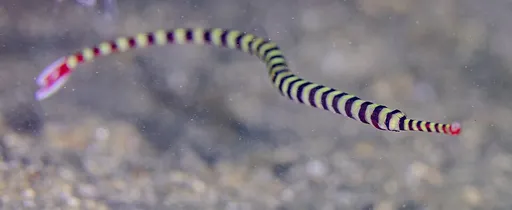 7.5 in (19 cm)53 gal (200 L)75–81°F (24–27°C)
Banded pipefish
Dunckerocampus dactyliophorus
7.5 in (19 cm) · 53 gal (200 L)
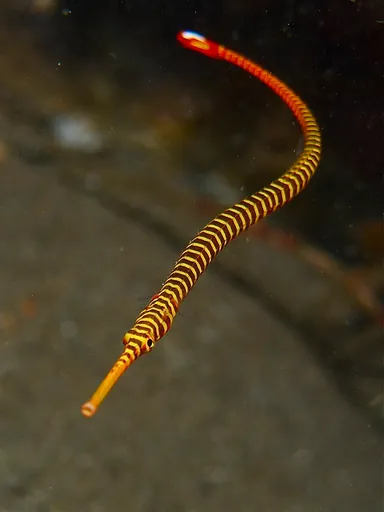 6.3 in (16 cm)53 gal (200 L)72–79°F (22–26°C)
Yellowbanded pipefish
Dunckerocampus pessuliferus
6.3 in (16 cm) · 53 gal (200 L)
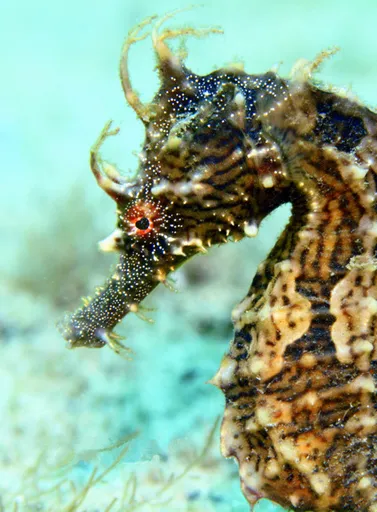 7.1 in (18 cm)29 gal (110 L)68–79°F (20–26°C)
Lined seahorse
Hippocampus erectus
7.1 in (18 cm) · 29 gal (110 L)
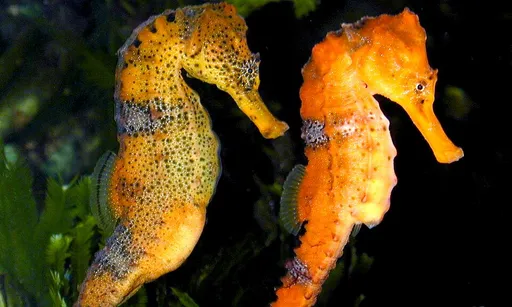 6.7 in (17 cm)29 gal (110 L)72–81°F (22–27°C)
Brazilian seahorse
Hippocampus reidi
6.7 in (17 cm) · 29 gal (110 L)
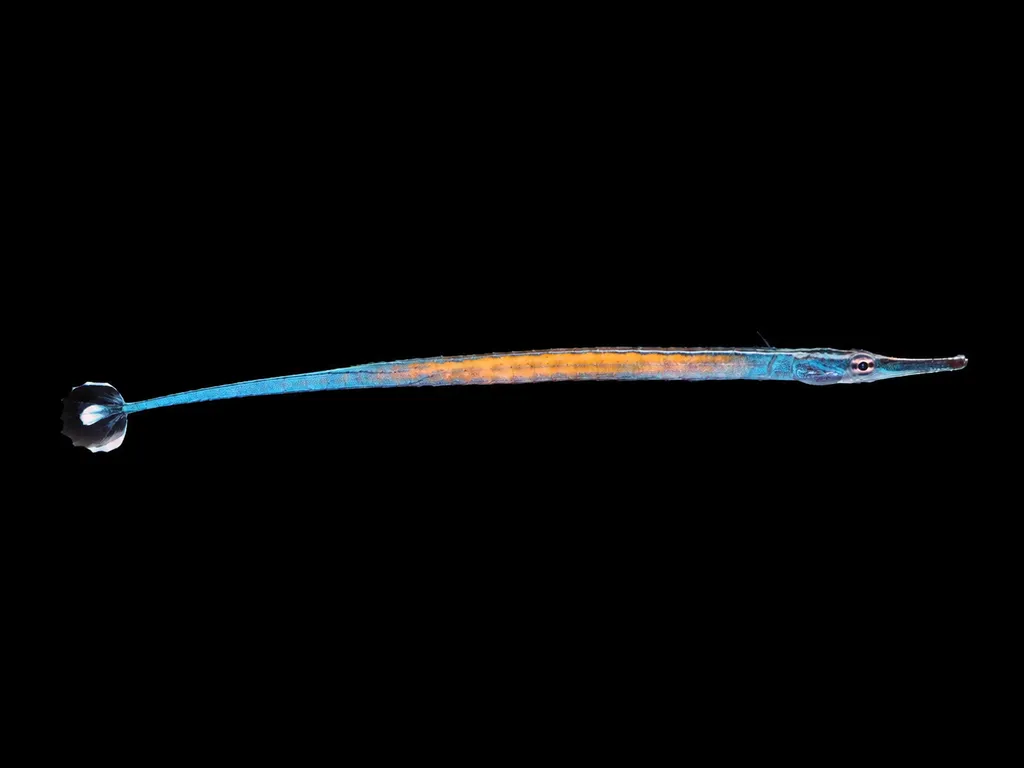 5.5 in (14 cm)50 gal (190 L)72–79°F (22–26°C)
Janss' pipefish
Doryrhamphus janssi
5.5 in (14 cm) · 50 gal (190 L)