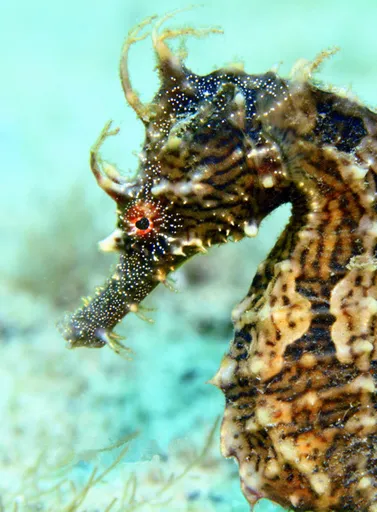
Lined seahorse
Hippocampus erectus
Also known as Northern seahorse, Spotted seahorse, Horse fish, Atlantic seahorse
SaltwaterFish
Care at a glance
- Temperature
- 68–79°F
- 20–26°C
- pH
- 8.0–8.4
- Adult size
- 7.1 in
- 18 cm
- Minimum tank
- 29 gal
- 110 L
- Temperament
- Peaceful
- Social behavior
- Social
- Tankmates
- With caution
- Swim level
- Middle
- Difficulty
- Difficult
- Breeding
- Medium
- Rarity
- Common
- Reef safe
- Reef safe with caution
- Family
- Syngnathidae
- Origin
- Native to the western Atlantic from Canada to the Caribbean, clinging to seagrass, sponges and floating weed in calm water.
Overview
Keep seahorses in a species tank of at least 110 litres that is taller than it is wide, with gentle flow and plenty of hitching posts, at 20 to 26 C and pH 8.0 to 8.4. Buy captive-bred fish and keep them in pairs or small groups, as they are social and slow feeders. Feed enriched frozen mysis shrimp once or twice a day, since they have no stomach and digest food fast. House them only with other slow, docile tankmates, never fast fish that outcompete them or stinging corals and anemones.
In the wild
The lined seahorse is a hardy Atlantic seahorse that grips onto plants and decor with its prehensile tail and hovers upright, sculling with a tiny back fin. It ranges in colour from black and brown to orange and yellow, often with fine pale lines down the neck. It moves slowly and feeds by sucking up tiny prey through its tube snout.
Good to know
Hippocampus erectus was the first seahorse raised commercially for the aquarium trade, and captive-bred stock is now widely available and far hardier than wild fish. As in all seahorses, the male carries the eggs in a belly pouch and gives birth to fully formed young. It tolerates cooler water than tropical seahorses, which helps keep bacterial problems down.
Did you know
Male seahorses become pregnant: the female deposits her eggs into a pouch on the male's belly, where he fertilises and carries them for a couple of weeks before giving birth to dozens of tiny live young.
Common questions
What size tank does a Lined seahorse need?
A Lined seahorse needs at least 29 gal (110 L). It spends most of its time in the middle.
What temperature and pH does a Lined seahorse need?
A Lined seahorse is comfortable at 68–79°F (20–26°C) with a pH of 8.0–8.4.
How big does a Lined seahorse get?
An adult Lined seahorse reaches about 7.1 in (18 cm).
Related species
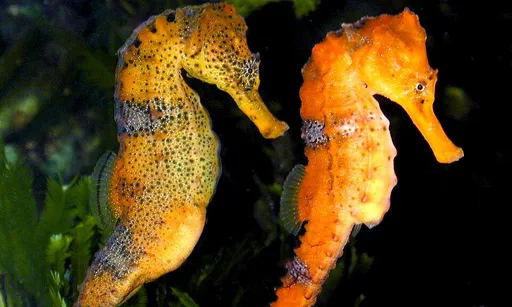 6.7 in (17 cm)29 gal (110 L)72–81°F (22–27°C)
Brazilian seahorse
Hippocampus reidi
6.7 in (17 cm) · 29 gal (110 L)
 7.9 in (20 cm)40 gal (150 L)72–81°F (22–27°C)
Yellow seahorse
Hippocampus kuda
7.9 in (20 cm) · 40 gal (150 L)
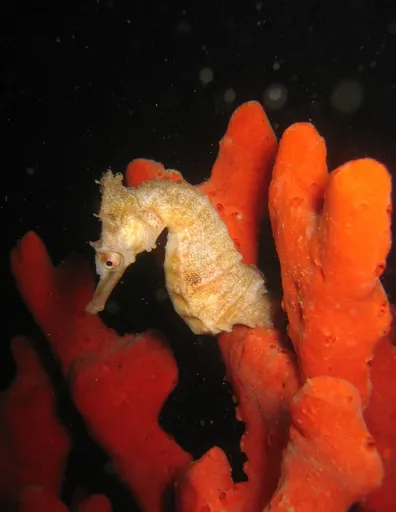 6.3 in (16 cm)30 gal (114 L)68–75°F (20–24°C)
White's seahorse
Hippocampus whitei
6.3 in (16 cm) · 30 gal (114 L)
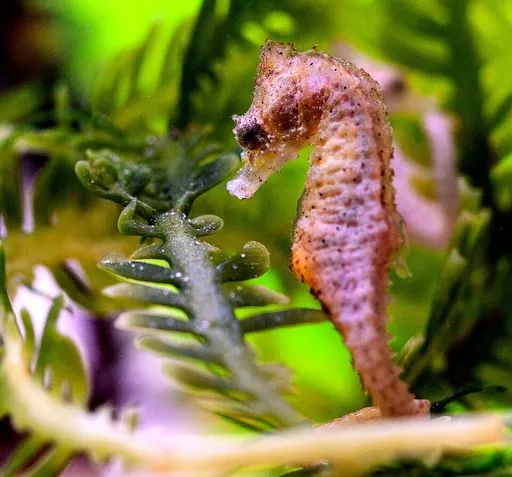 1.4 in (3.5 cm)5 gal (20 L)68–79°F (20–26°C)
Dwarf seahorse
Hippocampus zosterae
1.4 in (3.5 cm) · 5 gal (20 L)
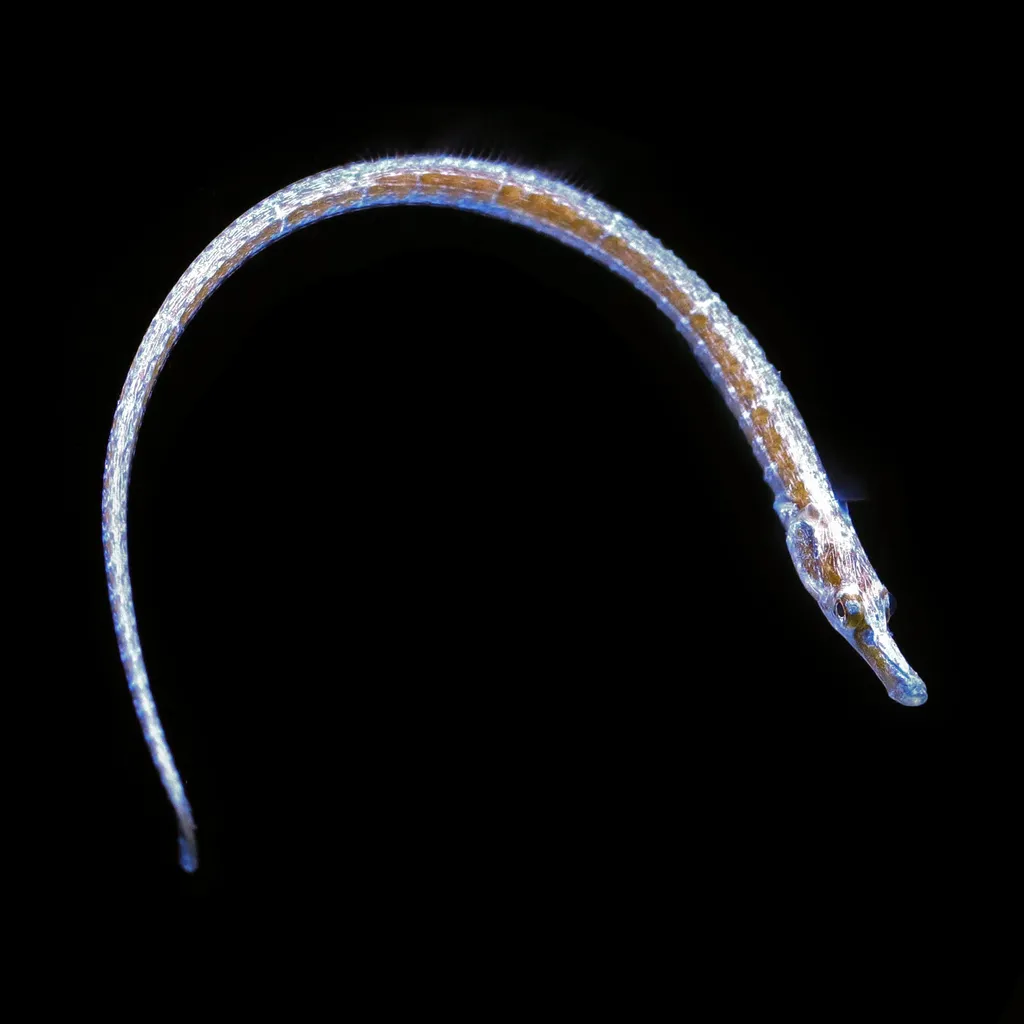 7.1 in (18 cm)20 gal (76 L)68–75°F (20–24°C)
Gulf pipefish
Syngnathus scovelli
7.1 in (18 cm) · 20 gal (76 L)
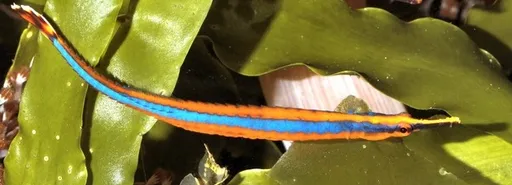 2.8 in (7 cm)26 gal (100 L)75–81°F (24–27°C)
Bluestripe pipefish
Doryrhamphus excisus
2.8 in (7 cm) · 26 gal (100 L)