Banded pipefish
Dunckerocampus dactyliophorus
Also known as Ringed pipefish, Doryrhamphus dactyliophorus, Dragon pipefish, Harlequin pipefish
SaltwaterFish
Care at a glance
- Temperature
- 75–81°F
- 24–27°C
- pH
- 8.0–8.4
- Adult size
- 7.5 in
- 19 cm
- Minimum tank
- 53 gal
- 200 L
- Temperament
- Mostly peaceful
- Social behavior
- Social
- Tankmates
- With caution
- Swim level
- Bottom
- Diet
- Carnivore
- Difficulty
- Difficult
- Breeding
- Egg carrier · Hard
- Rarity
- Common
- Reef safe
- Reef safe with caution
- Family
- Syngnathidae
- Origin
- Native to the Indo-Pacific, living in caves and under ledges on reefs and often seen hovering upside down in shaded spots.
Overview
The banded pipefish is a slim, mostly peaceful reef fish for a mature tank with plenty of caves. It is a fish for experienced keepers only.
Caring for the banded pipefish
Keep banded pipefish in a mature tank of at least 53 gal (200 L), with abundant live rock and caves. If you can, add a refugium that breeds copepods. Hold the water at 75 to 81°F (24 to 27°C) and a pH of 8.0 to 8.4.
The challenge is feeding, because they hunt tiny live copepods and amphipods. They often need a steady supply, plus training onto small frozen mysis and enriched foods. They are easily starved.
Keep them only with peaceful, slow tank mates, never fast feeders or aggressive fish. A banded pipefish can live alone, but pairs suit it best, and two males will squabble. In a reef tank, add it with caution.
As in seahorses, the male broods the eggs. He carries them attached under his tail rather than in a closed pouch. Breeding it is hard.
Good to know
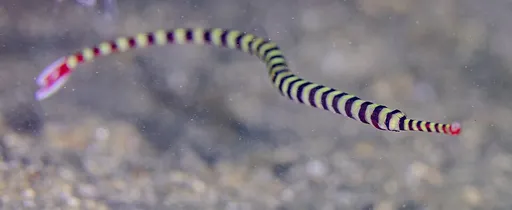
Dunckerocampus dactyliophorus was long listed as Doryrhamphus dactyliophorus, and it is one of the larger reef pipefishes. It is a slim, snake-like relative of the seahorse, ringed in bold red and white bands, with a small red paddle-shaped tail. That bright banding is thought to advertise that it cleans parasites off other fish. It moves with a gentle rippling of its fins and is completely harmless to handle.
In the wild
The banded pipefish lives on reefs across the Indo-Pacific, in caves and under ledges in shaded spots. It hovers there, often head-down, and picks tiny prey off the rock.
Common questions
What size tank does a banded pipefish need?
A banded pipefish needs at least 53 gal (200 L). It spends most of its time in the bottom.
What temperature and pH does a banded pipefish need?
A banded pipefish is comfortable at 75–81°F (24–27°C) with a pH of 8.0–8.4.
What does a banded pipefish eat?
A banded pipefish hunts tiny live copepods and amphipods. It often needs a steady supply of them, plus training onto small frozen mysis and enriched foods.
How big does a banded pipefish get?
An adult banded pipefish reaches about 7.5 in (19 cm).
How does a banded pipefish breed?
A male banded pipefish broods the eggs, carrying them attached under his tail rather than in a closed pouch. Breeding it is hard.
Related species
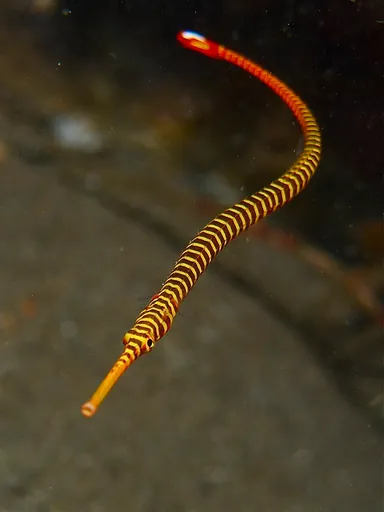 6.3 in (16 cm)53 gal (200 L)72–79°F (22–26°C)
Yellowbanded pipefish
Dunckerocampus pessuliferus
6.3 in (16 cm) · 53 gal (200 L)
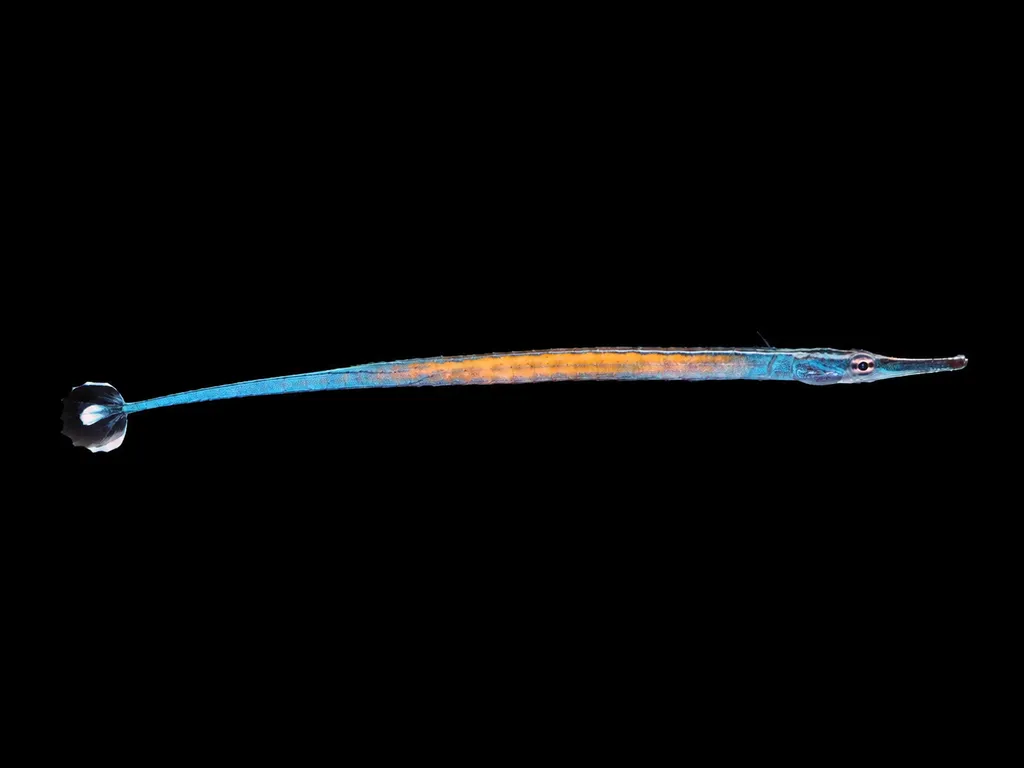 5.5 in (14 cm)50 gal (190 L)72–79°F (22–26°C)
Janss' pipefish
Doryrhamphus janssi
5.5 in (14 cm) · 50 gal (190 L)
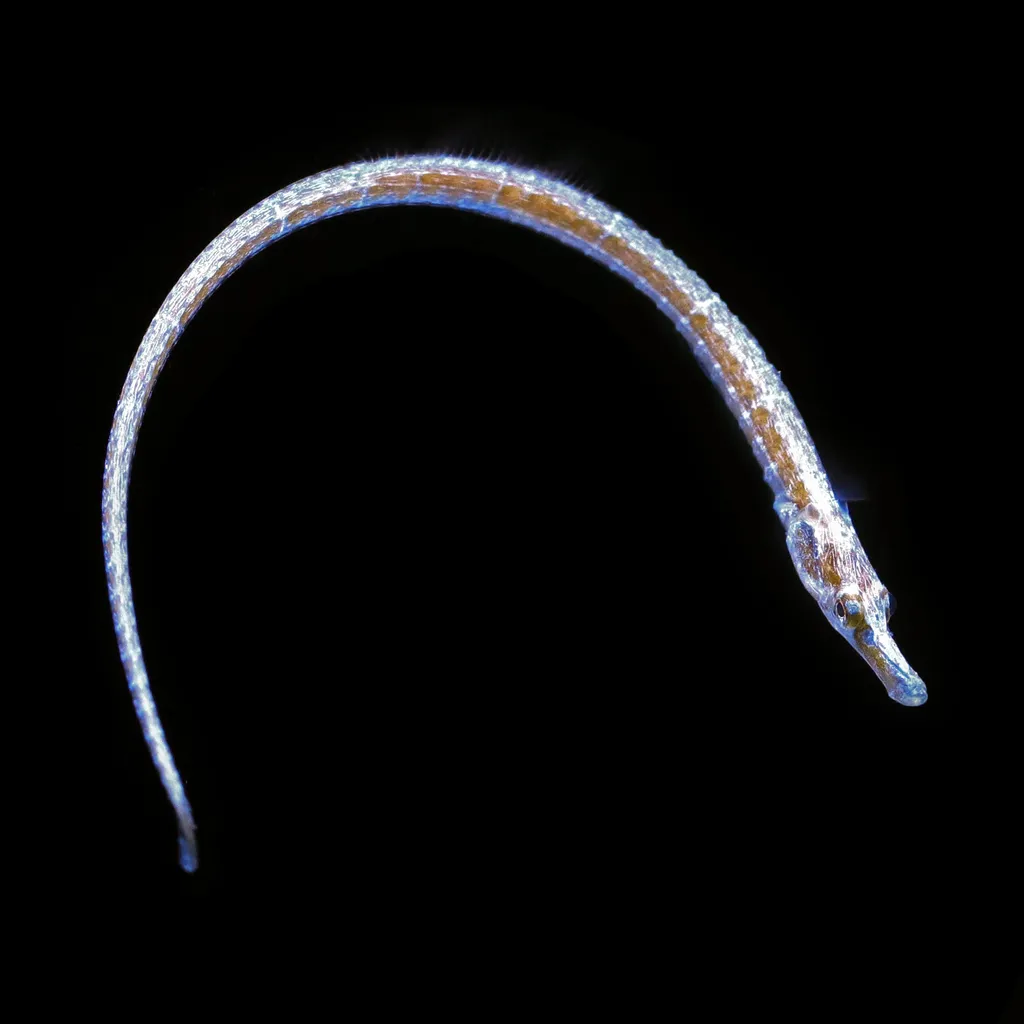 7.1 in (18 cm)20 gal (76 L)68–75°F (20–24°C)
Gulf pipefish
Syngnathus scovelli
7.1 in (18 cm) · 20 gal (76 L)
 5.9 in (15 cm)20 gal (76 L)68–75°F (20–24°C)
Shortfin pipefish
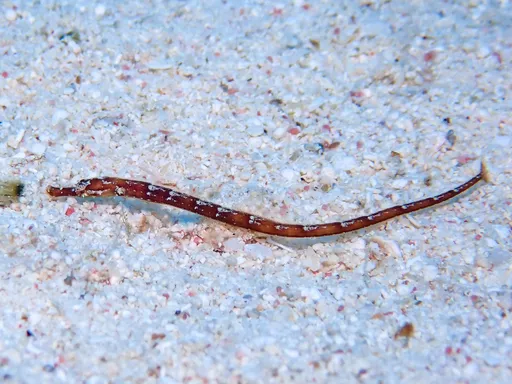
Cosmocampus elucens
5.9 in (15 cm) · 20 gal (76 L)
 3.1 in (8 cm)30 gal (114 L)72–79°F (22–26°C)
Narrowstripe pipefish
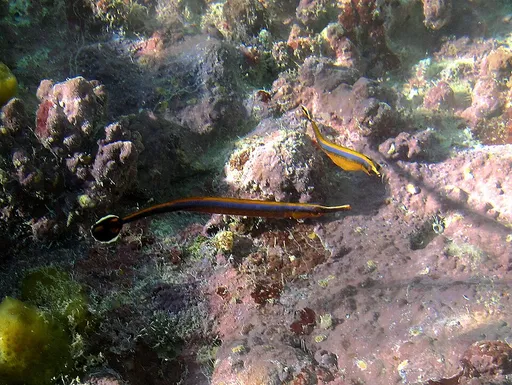
Doryrhamphus bicarinatus
3.1 in (8 cm) · 30 gal (114 L)
 7.9 in (20 cm)40 gal (150 L)72–81°F (22–27°C)
Yellow seahorse
Hippocampus kuda
7.9 in (20 cm) · 40 gal (150 L)