African freshwater pipefish
Enneacampus ansorgii
Also known as African pipefish
FreshwaterFish
Care at a glance
- Temperature
- 75–82°F
- 24–28°C
- pH
- 6.0–7.5
- Adult size
- 5.5 in
- 14 cm
- Minimum tank
- 32 gal
- 120 L
- Temperament
- Mostly peaceful
- Social behavior
- Social
- Tankmates
- With caution
- Swim level
- Bottom
- Difficulty
- Medium
- Breeding
- No record
- Rarity
- Very rare
- Family
- Syngnathidae
- Origin
- West Africa
Overview
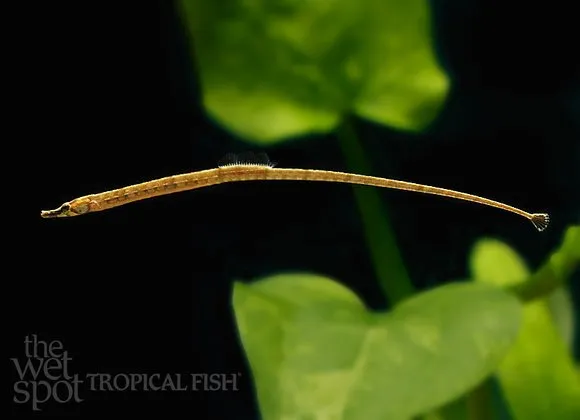
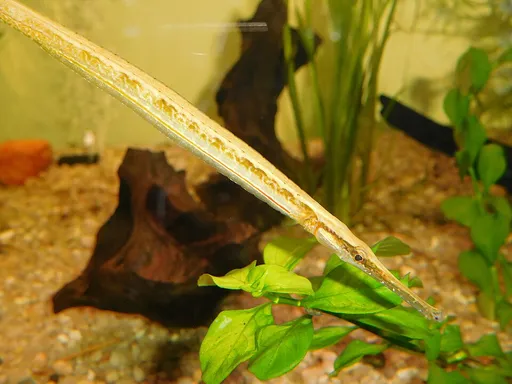
These slender pipefish do best in a small group of their own kind rather than alone, and they are slow, deliberate feeders that get outcompeted by fast tankmates. Keep them only with calm, gentle species and nothing large enough to harass them. The hardest part of their care is food. Most will take only live or freshly thawed foods such as small shrimp, blackworms, and mysis, and many need live food to get started. They spend their time near the bottom among plants and roots, so give them a densely planted tank with fine substrate and gentle flow. A tank of around 120 liters suits a small group.
In the wild
Enneacampus ansorgii comes from coastal freshwater and slightly brackish rivers and creeks in West Africa, where it lives among submerged plants and leaf litter in warm, gently flowing water. Recreate this with heavy planting, some tangled roots or branches for cover, fine sand, and calm flow kept between 24 and 28 degrees Celsius. A soft, slightly acidic to neutral pH in the range of 6 to 7.5 suits it well. Mature, stable water quality matters, since pipefish react badly to swings and to pollutants.
Good to know
The African freshwater pipefish belongs to Syngnathidae, the family that includes seahorses and pipefish, and reaches about 14 centimeters. Like its relatives it has a long, ringed, armored body and a small tube snout it uses to suck in tiny prey. Reproduction follows the syngnathid pattern of male pregnancy: the female transfers eggs to a brood pouch under the male's tail, where he fertilizes and carries them until fully formed young are released. Large males can brood several hundred offspring, though aquarium breeding is rarely documented.
Did you know
In pipefish and their seahorse cousins it is the male that becomes pregnant, carrying the developing eggs in a pouch beneath his tail and releasing tiny, fully formed young when they are ready.
Common questions
What size tank does an African freshwater pipefish need?
An African freshwater pipefish needs at least 32 gal (120 L). It spends most of its time in the bottom.
What temperature and pH does an African freshwater pipefish need?
An African freshwater pipefish is comfortable at 75–82°F (24–28°C) with a pH of 6.0–7.5.
How big does an African freshwater pipefish get?
An adult African freshwater pipefish reaches about 5.5 in (14 cm).
Related species
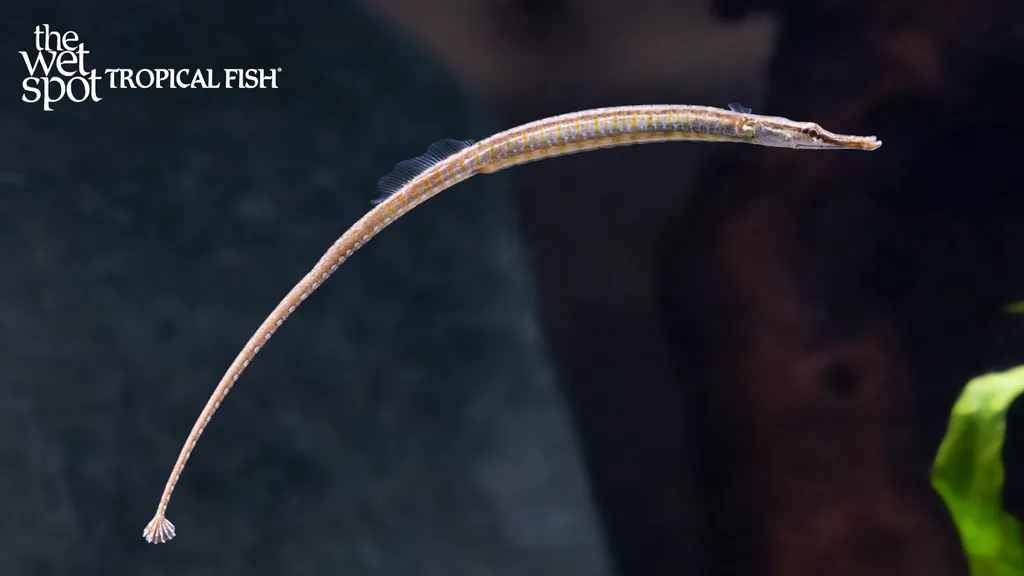 5.9 in (15 cm)32 gal (120 L)75–82°F (24–28°C)
Freshwater pipefish
Doryichthys martensii
5.9 in (15 cm) · 32 gal (120 L)
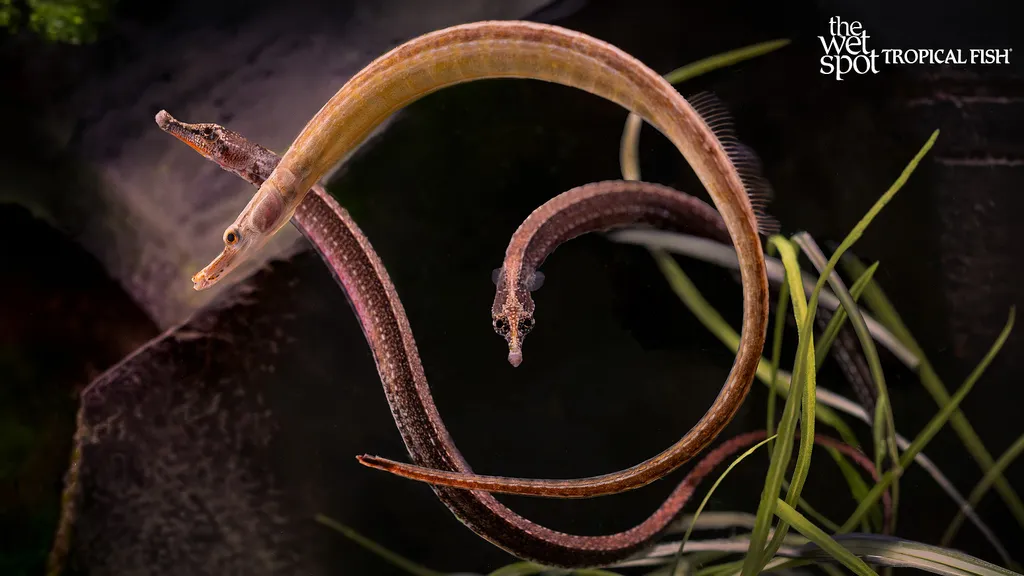 7.5 in (19 cm)32 gal (120 L)72–81°F (22–27°C)
Barhead pipefish
Microphis leiaspis
7.5 in (19 cm) · 32 gal (120 L)
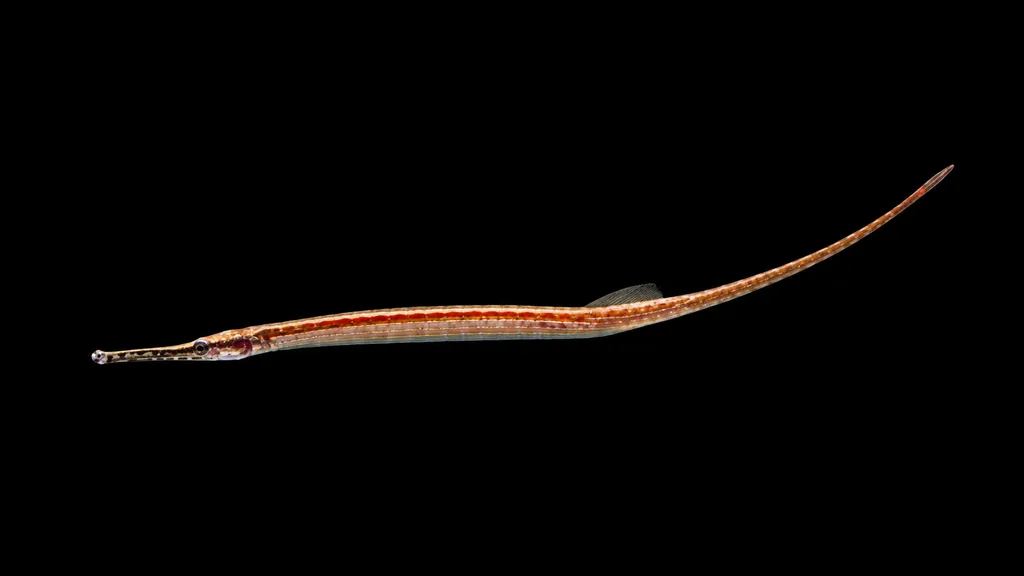 7.9 in (20 cm)32 gal (120 L)75–82°F (24–28°C)
African red-striped pipefish
Microphis aculeatus
7.9 in (20 cm) · 32 gal (120 L)
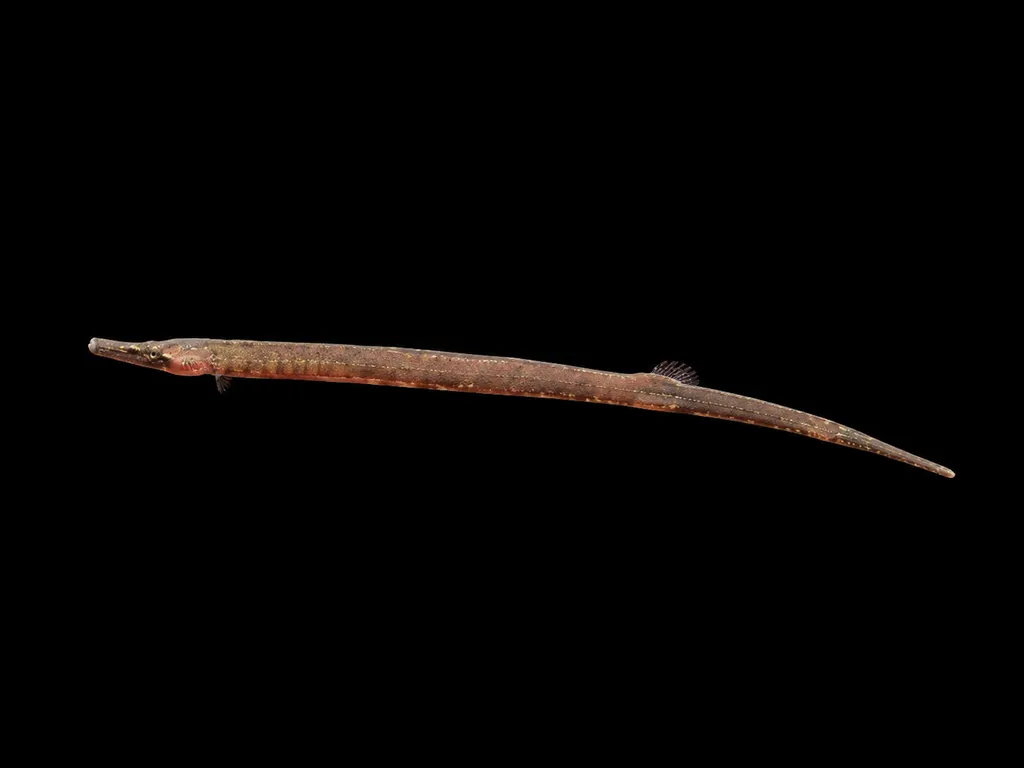
 8.7 in (22 cm)32 gal (120 L)75–82°F (24–28°C)
Opossum pipefish
Microphis brachyurus
8.7 in (22 cm) · 32 gal (120 L)
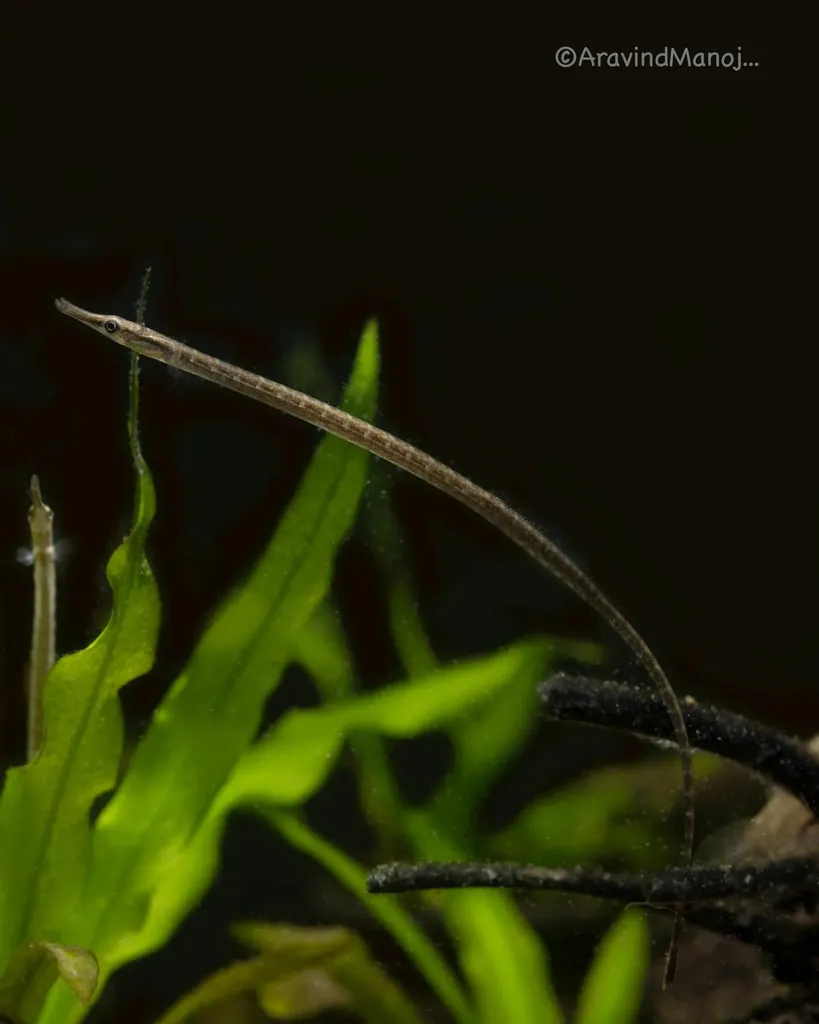
 5.9 in (15 cm)21 gal (80 L)75–84°F (24–29°C)
Red belly pipefish
Hippichthys heptagonus
5.9 in (15 cm) · 21 gal (80 L)
 6.7 in (17 cm)30 gal (112 L)73–82°F (23–28°C)
Indian brindled pipefish
Microphis cuncalus
6.7 in (17 cm) · 30 gal (112 L)