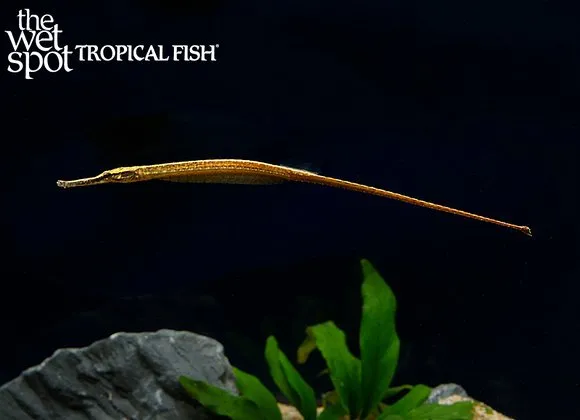
Dora's pipefish
Microphis deokhatoides
Also known as Doryichthys deokhatoides, Deokhata pipefish
FreshwaterFish
Care at a glance
- Temperature
- 73–82°F
- 23–28°C
- pH
- 6.5–7.5
- Adult size
- 7.1 in
- 18 cm
- Minimum tank
- 30 gal
- 112 L
- Temperament
- Peaceful
- Social behavior
- Social
- Tankmates
- With caution
- Swim level
- Bottom
- Diet
- Carnivore
- Difficulty
- Difficult
- Breeding
- Hard
- Rarity
- Rare
- Family
- Syngnathidae
- Origin
- Rivers of the Malay Peninsula and western Indonesia
Overview
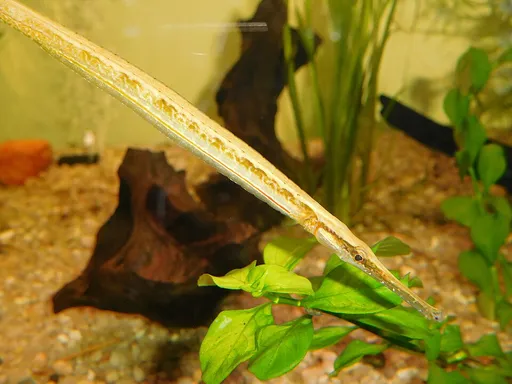
Dora's pipefish is a slow, gentle freshwater pipefish for a mature planted tank. It is a specialist fish for experienced keepers.
Did you know
Dora's pipefish is a poor swimmer that feeds by drawing prey into a long tubular snout.
Caring for the Dora's pipefish
Give Dora's pipefish a mature, heavily planted tank of at least 30 gal (112 L), which suits a small group. It needs that tank set up as its life support before it arrives. Use dense, fine-leaved and floating plants, tangles of wood or root, and gentle, well-filtered flow it can hold station in. It drifts low among the plants.
Keep the water warm, at 73 to 82°F (23 to 28°C), with a pH of 6.5 to 7.5. A biologically mature tank with an established micro-fauna helps keep this fussy feeder supplied between meals.
It eats only tiny moving prey and is easily starved. Plan on a steady supply of live and frozen micro-foods, such as newly hatched brine shrimp, copepods, small mosquito larvae and Mysis.
Dora's pipefish is gentle and social, and it is best kept as a small group of its own kind. It is easily outcompeted, so choose tank mates with great care, or leave them out in favor of a species tank.
As in all pipefish and seahorses, the male becomes pregnant. He carries the eggs on his underside until the fully formed young hatch out and swim free. Captive breeding is difficult and rarely achieved.
Good to know
Microphis deokhatoides is a fully freshwater pipefish of the Syngnathidae, the seahorse and pipefish family. It is still often traded under its older name, Doryichthys deokhatoides, and it is a delicate import.
In the wild
Microphis deokhatoides comes from rivers of the Malay Peninsula and western Indonesia. It drifts along weedy, slow-moving margins and among submerged roots.
Common questions
What size tank does a Dora's pipefish need?
A Dora's pipefish needs at least 30 gal (112 L). It spends most of its time in the bottom.
What temperature and pH does a Dora's pipefish need?
A Dora's pipefish is comfortable at 73–82°F (23–28°C) with a pH of 6.5–7.5.
What does a Dora's pipefish eat?
Dora's pipefish eats only tiny moving prey. Give it a steady supply of live and frozen micro-foods, such as newly hatched brine shrimp, copepods, small mosquito larvae and Mysis.
How big does a Dora's pipefish get?
An adult Dora's pipefish reaches about 7.1 in (18 cm).
How does a Dora's pipefish breed?
The male Dora's pipefish becomes pregnant, carrying the eggs on his underside until the fully formed young hatch out. Captive breeding is difficult and rarely achieved.
Related species
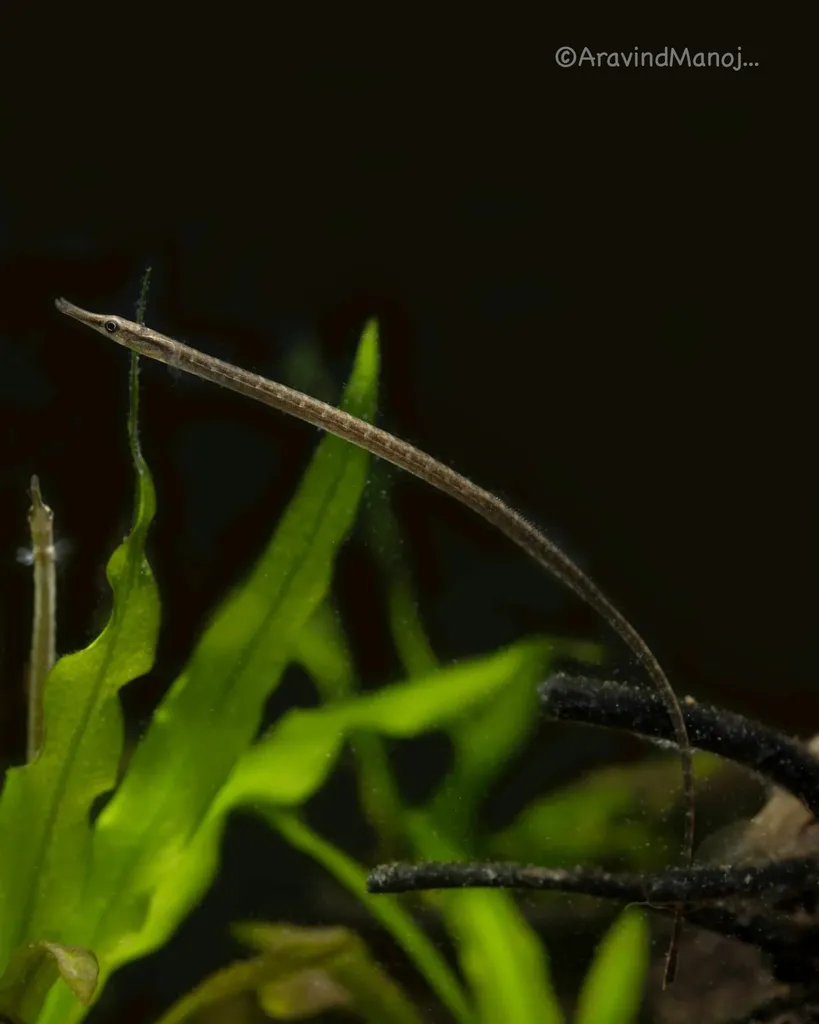 6.7 in (17 cm)30 gal (112 L)73–82°F (23–28°C)
Indian brindled pipefish
Microphis cuncalus
6.7 in (17 cm) · 30 gal (112 L)
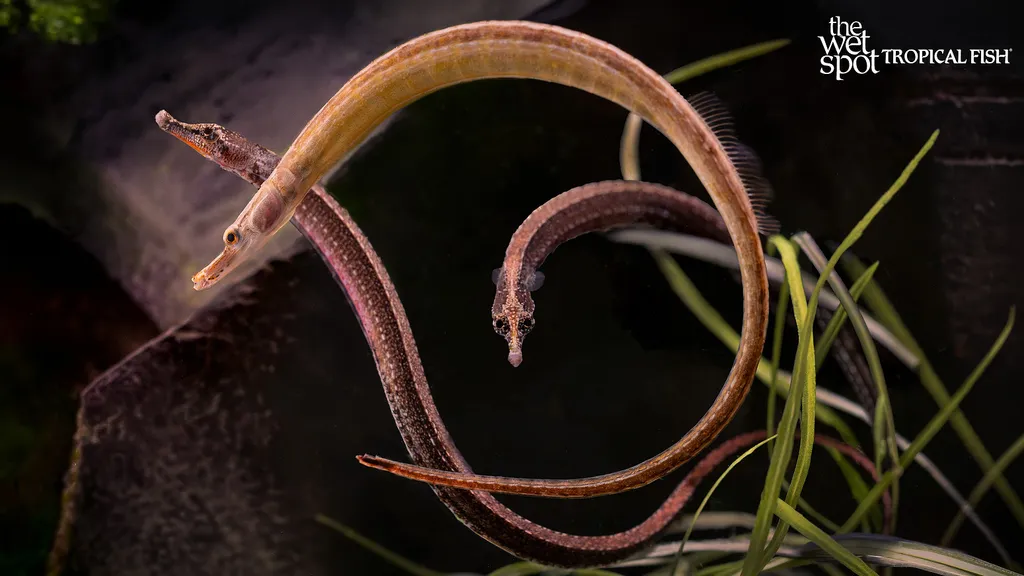 7.5 in (19 cm)32 gal (120 L)72–81°F (22–27°C)
Barhead pipefish
Microphis leiaspis
7.5 in (19 cm) · 32 gal (120 L)
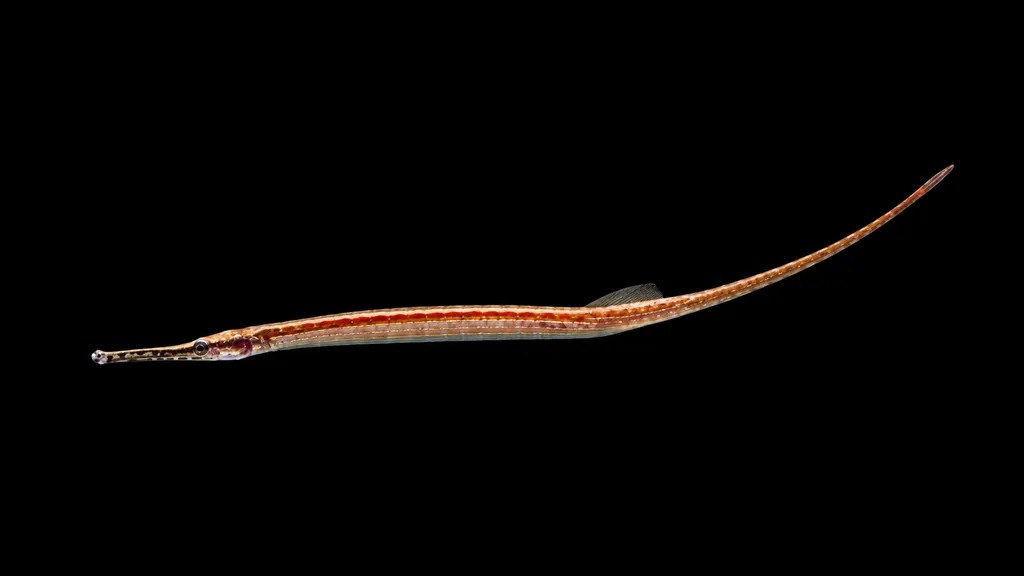 7.9 in (20 cm)32 gal (120 L)75–82°F (24–28°C)
African red-striped pipefish
Microphis aculeatus
7.9 in (20 cm) · 32 gal (120 L)
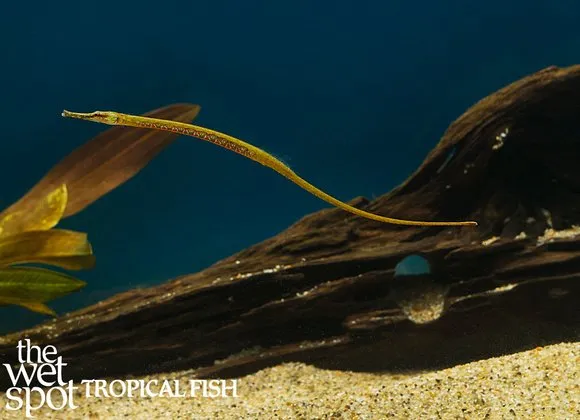
 8.7 in (22 cm)32 gal (120 L)75–82°F (24–28°C)
Opossum pipefish
Microphis brachyurus
8.7 in (22 cm) · 32 gal (120 L)
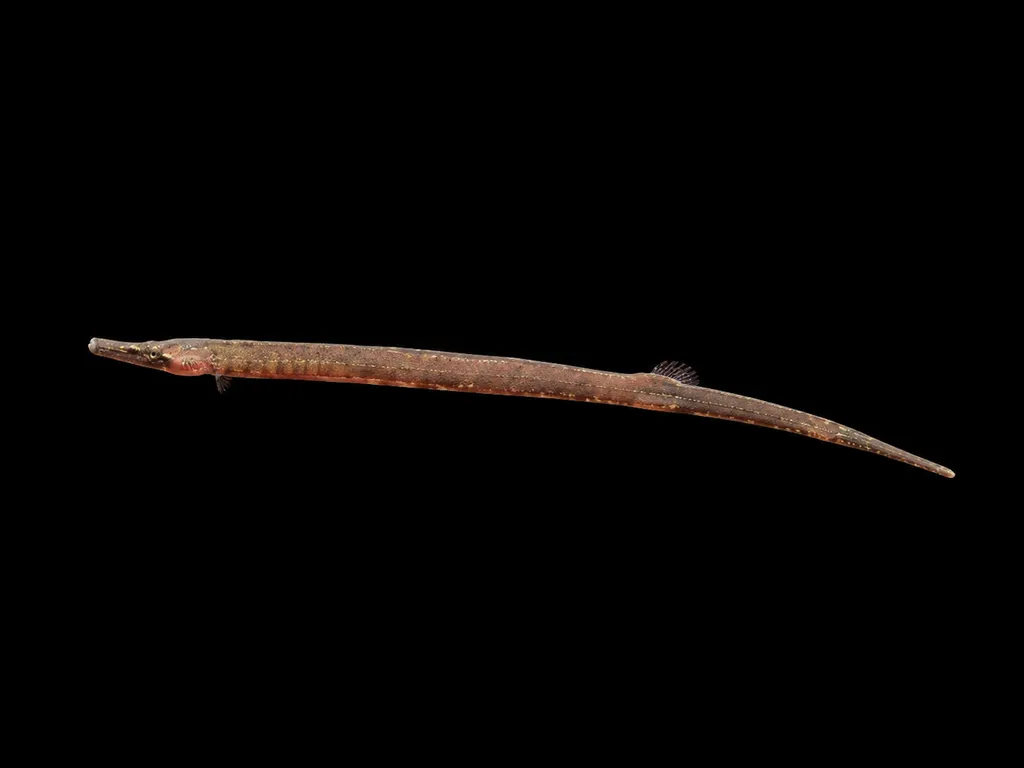
 5.9 in (15 cm)20 gal (75 L)77–82°F (25–28°C)
Rainbow belly pipefish
Microphis deocata
5.9 in (15 cm) · 20 gal (75 L)
 5.9 in (15 cm)21 gal (80 L)75–84°F (24–29°C)
Red belly pipefish
Hippichthys heptagonus
5.9 in (15 cm) · 21 gal (80 L)