Rainbow belly pipefish
Microphis deocata
Also known as Deocata pipefish, Rainbowbelly pipefish, Indian royal green pipefish
FreshwaterFish
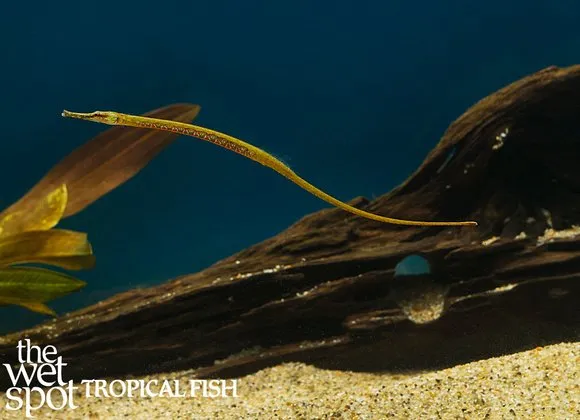
Care at a glance
- Temperature
- 77–82°F
- 25–28°C
- pH
- 6.8–7.8
- Adult size
- 5.9 in
- 15 cm
- Minimum tank
- 20 gal
- 75 L
- Temperament
- Mostly peaceful
- Social behavior
- Social
- Tankmates
- With caution
- Swim level
- Middle
- Diet
- Carnivore
- Difficulty
- Difficult
- Breeding
- Pouch brooder · Hard
- Rarity
- Rare
- Family
- Syngnathidae
- Origin
- Ganges and Brahmaputra basins, northern India and Bangladesh
Overview
The rainbow belly pipefish is a freshwater pipefish for a calm, mature tank of its own. It is a fish for experienced keepers.
Did you know
The rainbow belly pipefish reverses the usual showy sex, so the female wears the ornament. It is a fold-out flap along her belly that flashes neon blue and orange in courtship.
Caring for the rainbow belly pipefish
Keep a pair or a small group of rainbow belly pipefish in at least 20 gal (75 L). Plant the tank heavily, with tall stem plants, fine sand and some tangled roots. Keep both the filtration and the flow very gentle.
Hold the water at 77 to 82°F (25 to 28°C) with a pH of 6.8 to 7.8. As with all pipefish, mature and stable water is essential.
They feed slowly on live foods such as baby brine shrimp, daphnia and small blackworms. Few accept frozen food, so plan on a steady supply of live food.
The rainbow belly pipefish is mostly peaceful and does fine alone or in a group. It cannot compete with quick tank mates, so choose any companions with caution.
German bred fish appear in the trade now and then, and they settle in better than wild imports. The male broods the eggs in a pouch under his trunk and releases fully formed young. Breeding them is hard.
Good to know
The rainbow belly pipefish, Microphis deocata, belongs to Syngnathidae, the seahorse and pipefish family. It is one of the few pipefish that spends its entire life in pure freshwater. Like its relatives, it wears bony armor rings and sucks in tiny prey through its tube snout. The species is assessed as Near Threatened because of habitat decline in its home rivers.
In the wild
The rainbow belly pipefish comes from clear, weedy streams and pools in the Ganges and Brahmaputra basins. These lie at the foot of the Himalayas, in northern India and Bangladesh. It hangs almost motionless among dense vegetation in slow, warm water.
Common questions
What size tank does a rainbow belly pipefish need?
A rainbow belly pipefish needs at least 20 gal (75 L). It spends most of its time in the middle.
What temperature and pH does a rainbow belly pipefish need?
A rainbow belly pipefish is comfortable at 77–82°F (25–28°C) with a pH of 6.8–7.8.
What does a rainbow belly pipefish eat?
A rainbow belly pipefish eats live foods such as baby brine shrimp, daphnia and small blackworms, and it feeds slowly. Few accept frozen food, so it needs a steady live supply.
How big does a rainbow belly pipefish get?
An adult rainbow belly pipefish reaches about 5.9 in (15 cm).
How can you tell a male rainbow belly pipefish from a female?
Males have a brood pouch under the trunk, where they carry the eggs. Females have no pouch.
How does a rainbow belly pipefish breed?
Rainbow belly pipefish males brood the eggs in a pouch under the trunk and release fully formed young. Breeding them is hard.
Related species
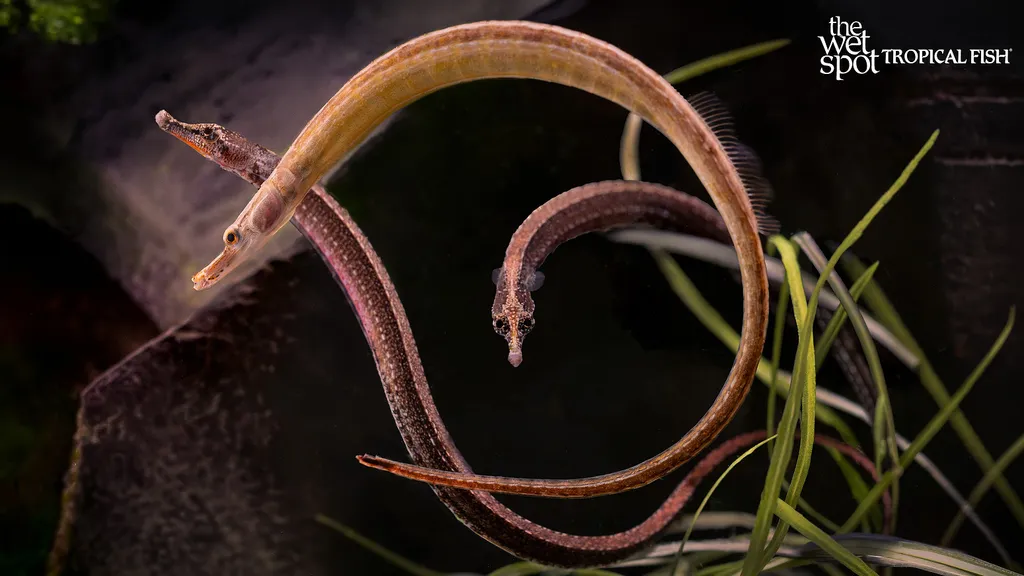 7.5 in (19 cm)32 gal (120 L)72–81°F (22–27°C)
Barhead pipefish
Microphis leiaspis
7.5 in (19 cm) · 32 gal (120 L)
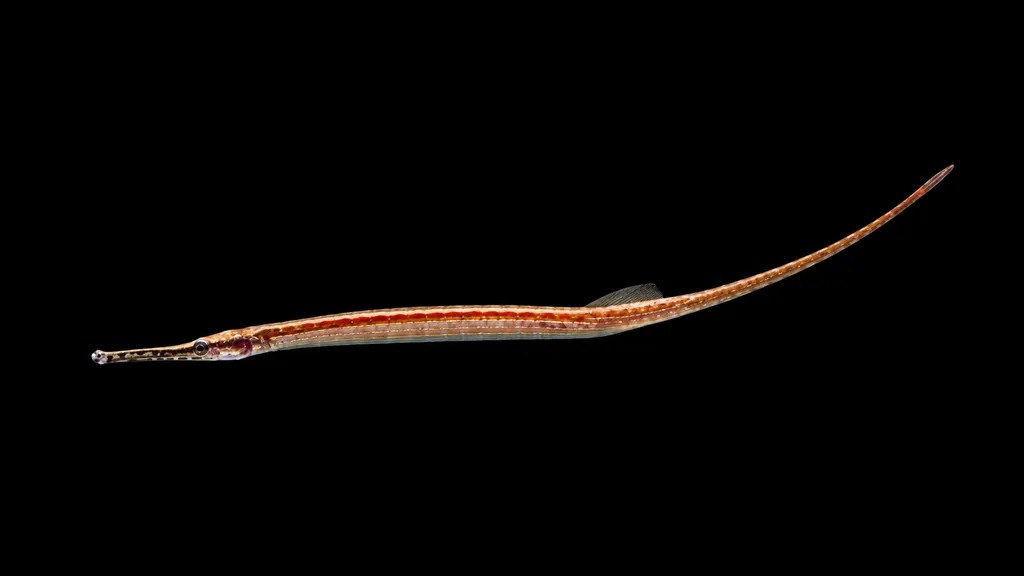 7.9 in (20 cm)32 gal (120 L)75–82°F (24–28°C)
African red-striped pipefish
Microphis aculeatus
7.9 in (20 cm) · 32 gal (120 L)
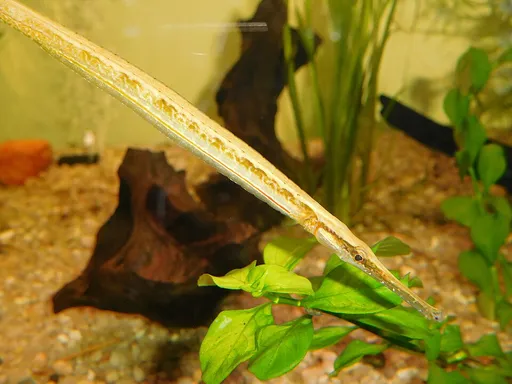 8.7 in (22 cm)32 gal (120 L)75–82°F (24–28°C)
Opossum pipefish
Microphis brachyurus
8.7 in (22 cm) · 32 gal (120 L)
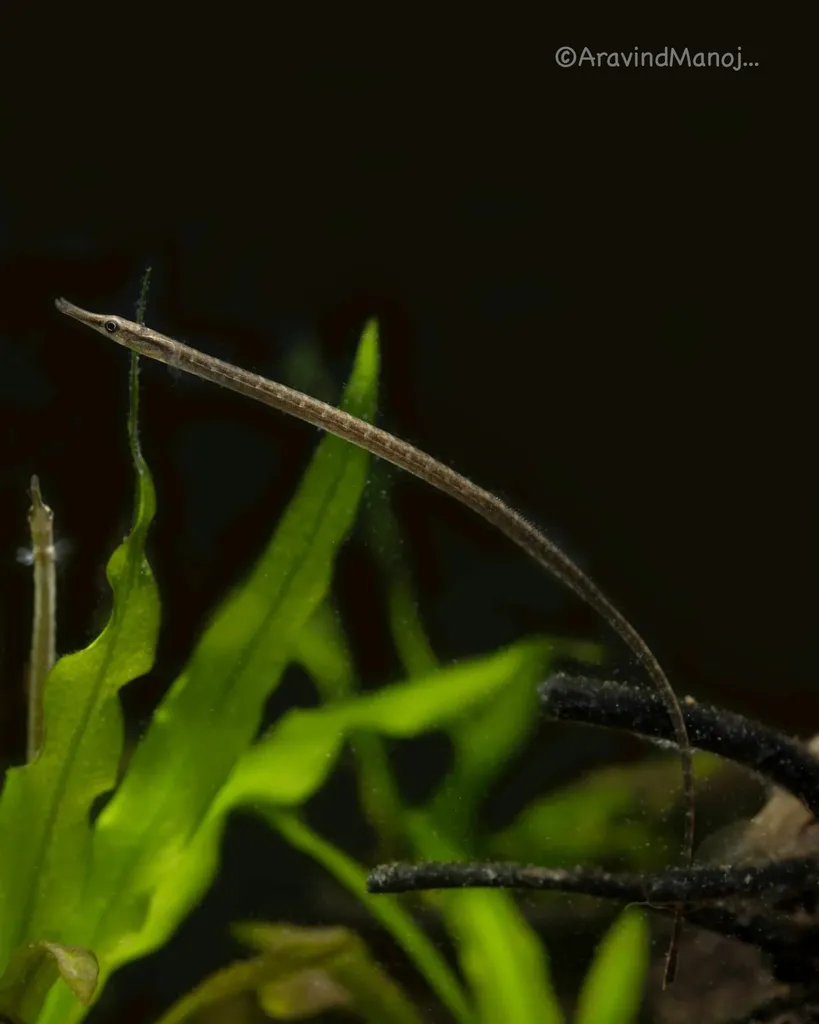 6.7 in (17 cm)30 gal (112 L)73–82°F (23–28°C)
Indian brindled pipefish
Microphis cuncalus
6.7 in (17 cm) · 30 gal (112 L)
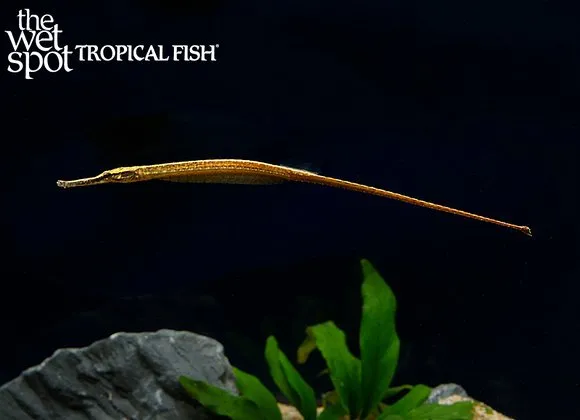 7.1 in (18 cm)30 gal (112 L)73–82°F (23–28°C)
Dora's pipefish
Microphis deokhatoides
7.1 in (18 cm) · 30 gal (112 L)
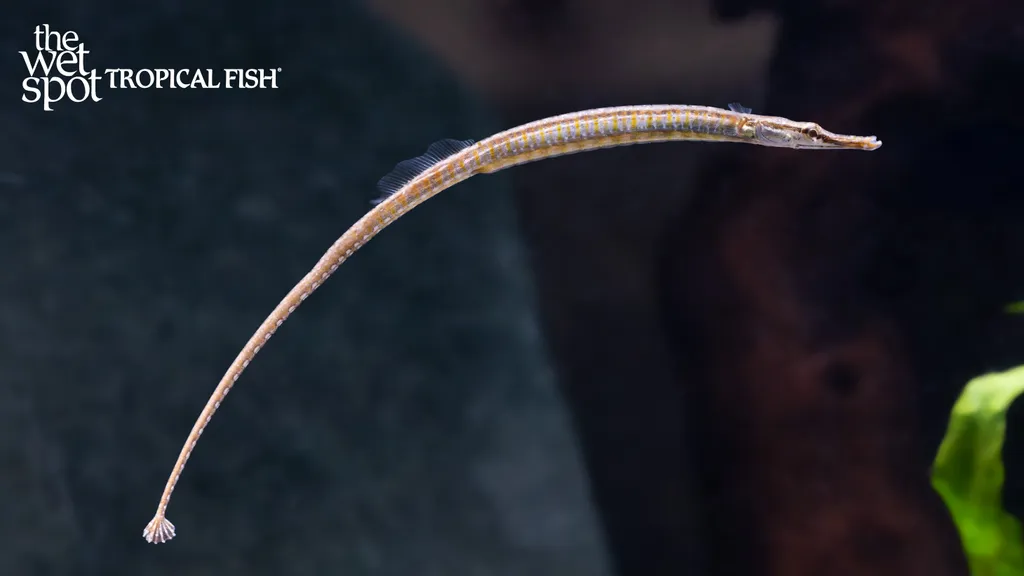 5.9 in (15 cm)32 gal (120 L)75–82°F (24–28°C)
Freshwater pipefish
Doryichthys martensii
5.9 in (15 cm) · 32 gal (120 L)