Giant freshwater prawn
Macrobrachium spinipes
Also known as Macrobrachium rosenbergii, Malaysian giant prawn, Blue claw prawn
FreshwaterBrackishShrimp
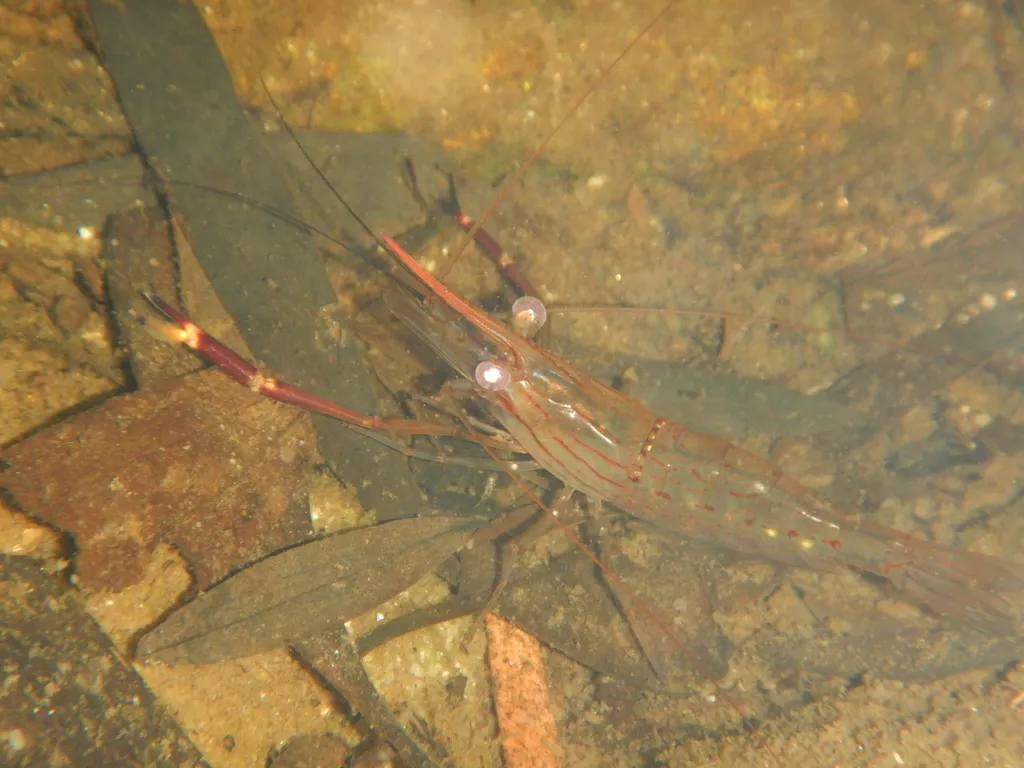
Care at a glance
- Temperature
- 75–86°F
- 24–30°C
- pH
- 7.0–8.5
- Adult size
- 12.6 in
- 32 cm
- Minimum tank
- 53 gal
- 200 L
- Temperament
- Aggressive
- Social behavior
- Solitary
- Tankmates
- With caution
- Swim level
- Bottom
- Diet
- Omnivore
- Difficulty
- Medium
- Breeding
- Hard
- Rarity
- Common
- Family
- Palaemonidae
- Origin
- Rivers and estuaries from India to New Guinea
Overview
The giant freshwater prawn is a huge, predatory bottom dweller for a large tank of its own. It suits a keeper with some experience and a lot of room.
Did you know
The giant freshwater prawn is farmed by the million for food. Only after decades of aquaculture did scientists split the eastern stock off from the western one as its own species.
Caring for the giant freshwater prawn
Keep the giant freshwater prawn on its own, or at most as a single pair, in 53 gal (200 L) or more. Fit a tight lid. Give it open floor space, a soft sand or fine gravel floor, and plenty of wood and rock to break up sight lines. Add sturdy hiding spots where it can molt.
Keep the water hard and warm, at 75 to 86°F (24 to 30°C) with a pH of 7.0 to 8.5. It can live in fresh or brackish water. It is a large, messy feeder, so good filtration and steady oxygen matter.
It spends its time on the bottom, walking the substrate and scavenging. Feed it well on sinking pellets, mussel, prawn, earthworms and the occasional vegetable, since a hungry one is even more likely to grab a fish.
It treats most tank mates as food, so do not trust it with anything small enough to catch. Mature males carry enormous claws that can approach twice their body length.
It is hard to breed in captivity. Females release their larvae into salty estuary water, and the tiny larvae cannot develop in pure fresh water. Almost all tank specimens are farm raised or wild caught.
Good to know
Macrobrachium spinipes belongs to the palaemonid prawns and is one of the giants of the group, with males weighing over half a kilogram. For years it was farmed around the world as Macrobrachium rosenbergii.
In the wild
The giant freshwater prawn ranges through warm lowland rivers and estuaries from India east to New Guinea. It moves between fresh and brackish water over its life.
Common questions
What size tank does a giant freshwater prawn need?
A giant freshwater prawn needs at least 53 gal (200 L). It spends most of its time in the bottom.
What temperature and pH does a giant freshwater prawn need?
A giant freshwater prawn is comfortable at 75–86°F (24–30°C) with a pH of 7.0–8.5.
What does a giant freshwater prawn eat?
A giant freshwater prawn eats sinking pellets, mussel, prawn, earthworms and the occasional vegetable. Feed it well, since a hungry one is even more likely to grab a fish.
How big does a giant freshwater prawn get?
An adult giant freshwater prawn reaches about 12.6 in (32 cm).
How can you tell a male giant freshwater prawn from a female?
Males grow enormous claws once mature, and these can approach twice their body length.
How does a giant freshwater prawn breed?
A giant freshwater prawn is hard to breed in captivity. Females release their larvae into salty estuary water, and the tiny larvae cannot develop in pure fresh water. Almost all tank specimens are farm raised or wild caught.
Related species
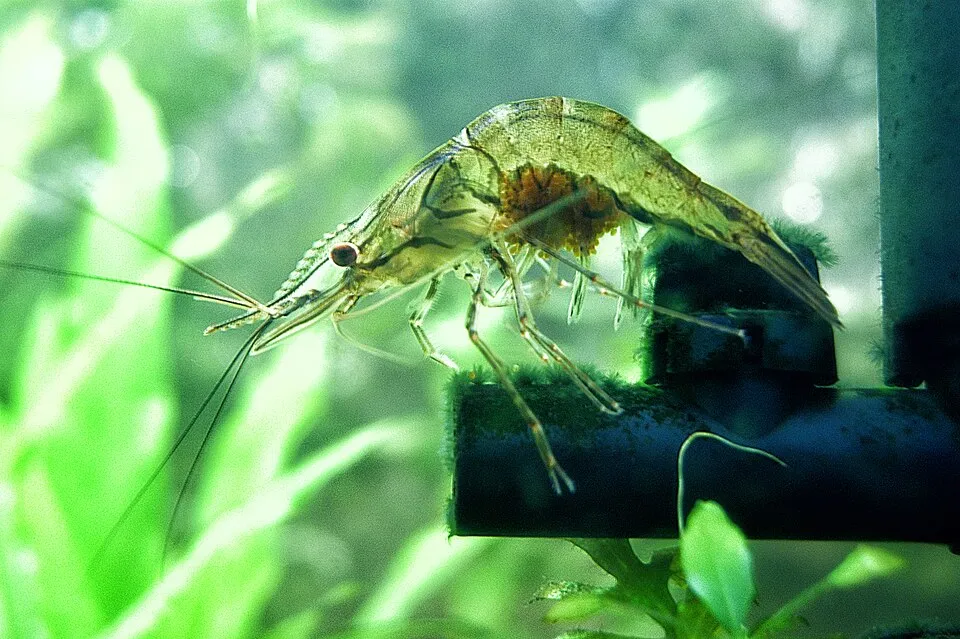 2.4 in (6 cm)16 gal (60 L)75–86°F (24–30°C)
Riceland prawn
Macrobrachium lanchesteri
2.4 in (6 cm) · 16 gal (60 L)
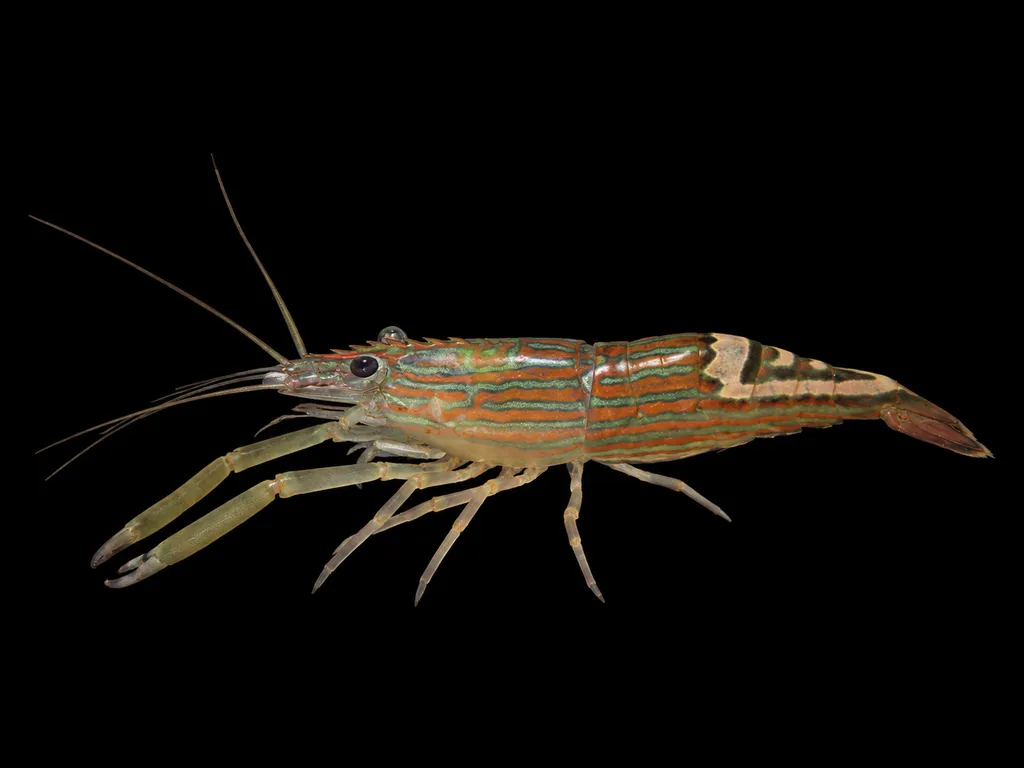 3.9 in (10 cm)20 gal (75 L)75–82°F (24–28°C)
Lollipop prawn
Macrobrachium gracilirostre
3.9 in (10 cm) · 20 gal (75 L)
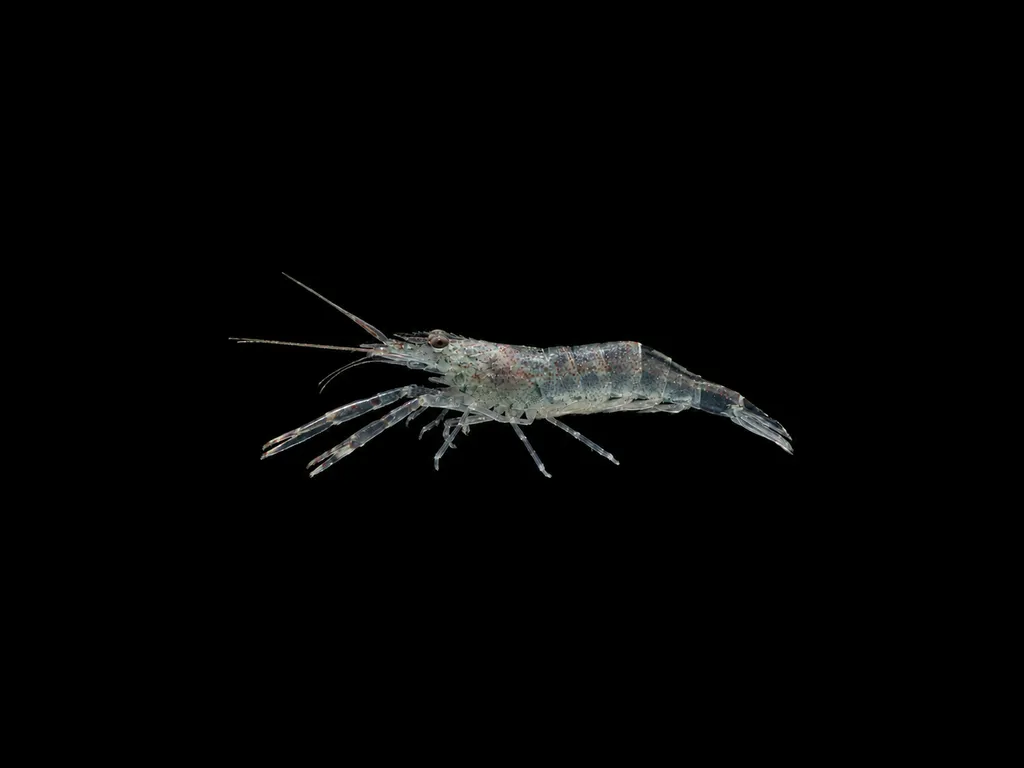 2.8 in (7 cm)11 gal (40 L)72–82°F (22–28°C)
Taiwanese long claw prawn
Macrobrachium placidulum
2.8 in (7 cm) · 11 gal (40 L)
 1.6 in (4 cm)5 gal (20 L)64–84°F (18–29°C)
Ghost shrimp
Palaemon paludosus
1.6 in (4 cm) · 5 gal (20 L)