Cryptocoryne walkeri
Also known as Cryptocoryne 'Sri Lanka'
FreshwaterRosetteRunnersRhizome division
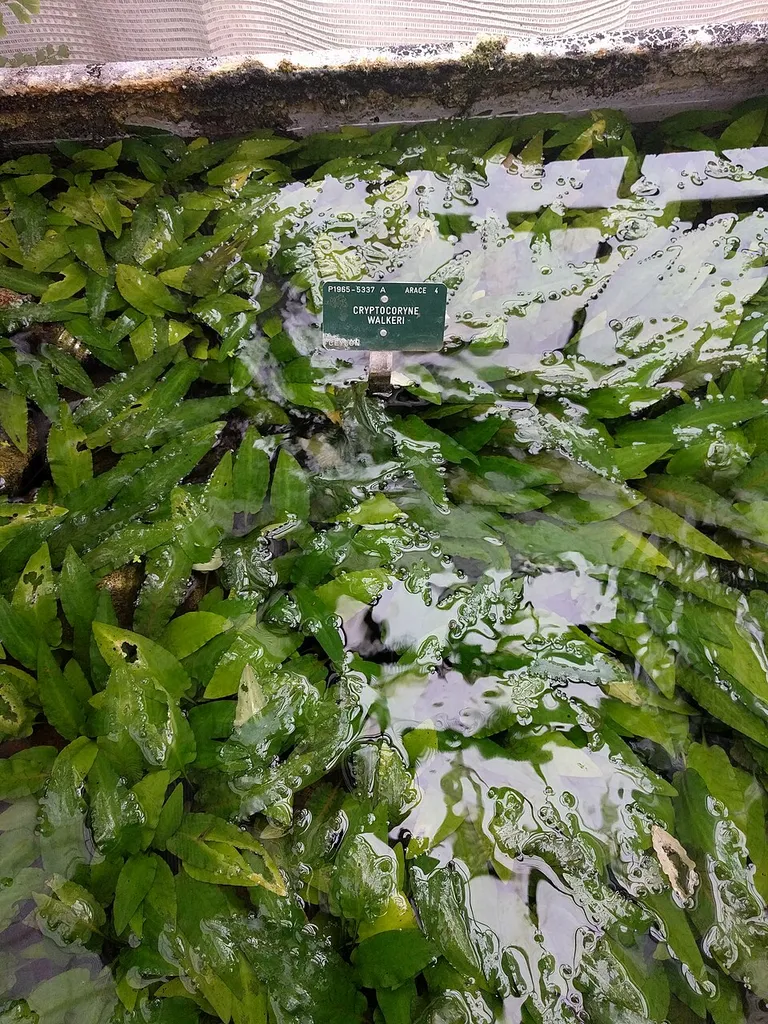
Care at a glance
- Light
- Low light
- CO2
- CO₂ beneficial
- Temperature
- 72–82°F
- 22–28°C
- Max height
- 9.8 in
- 25 cm
- Growth rate
- Slow
- Placement
- Midground
- Type
- Rosette
- pH
- 6.0–7.5
- Hardness
- 2–15 dGH
- Spread
- 7.9 in (20 cm)
- Nutrient uptake
- Root feeder
- Growth region
- Submersed or emersed
- Difficulty
- Easy
- Family
- Araceae
- Origin
- Sri Lanka
Overview
A reliable beginner midground crypt for low light with no CO2 required, though CO2 and richer dosing tighten and speed up growth. Feed through the roots with tabs or nutrient substrate and plant the crown just clear of the soil. It is slow to settle and may take several months before it starts throwing daughter plants on runners, so be patient and avoid replanting, which can set off crypt melt. Its more rigid, upright habit makes it useful as a structural midground accent rather than a low carpet.
In the wild
Cryptocoryne walkeri grows in slow streams, rivers and marshes in Sri Lanka, living emersed along the banks and submersed when water rises. Unlike the bushy wendtii types it tends toward a more upright, rigid rosette of green to olive lance-shaped leaves. The form long sold as 'Lutea' is a slightly smaller, sturdier selection of the same species.
Good to know
The accepted name is Cryptocoryne walkeri Schott, and Kew treats it as a fairly broad species that absorbs several former names. Cryptocoryne lutea is now considered a synonym, along with infraspecific names such as var. legroi and var. lutea. As an aroid it reproduces in the wild through a hooded spathe rather than a true flower.
Did you know
Did you know the familiar 'Lutea' you see in shops is just C. walkeri under an old name? It was once thought to be a separate species, Cryptocoryne lutea, but it is now folded into the broader and rather variable C. walkeri.
Related plants
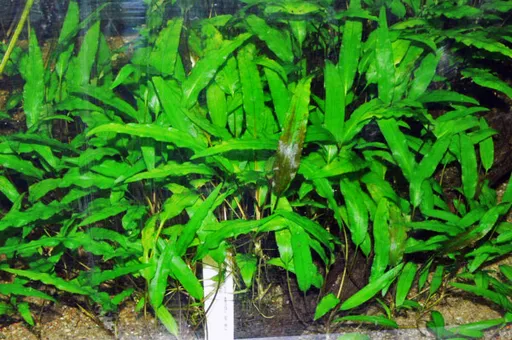 Low lightMidground9.8 in (25 cm)
Cryptocoryne wendtii
Low light · Midground
- Low lightMidground9.8 in (25 cm)
Cryptocoryne cordata
Low light · Midground
- Low lightMidground9.8 in (25 cm)
Cryptocoryne spiralis Jwala
Cryptocoryne spiralis 'Jwala'
Low light · Midground
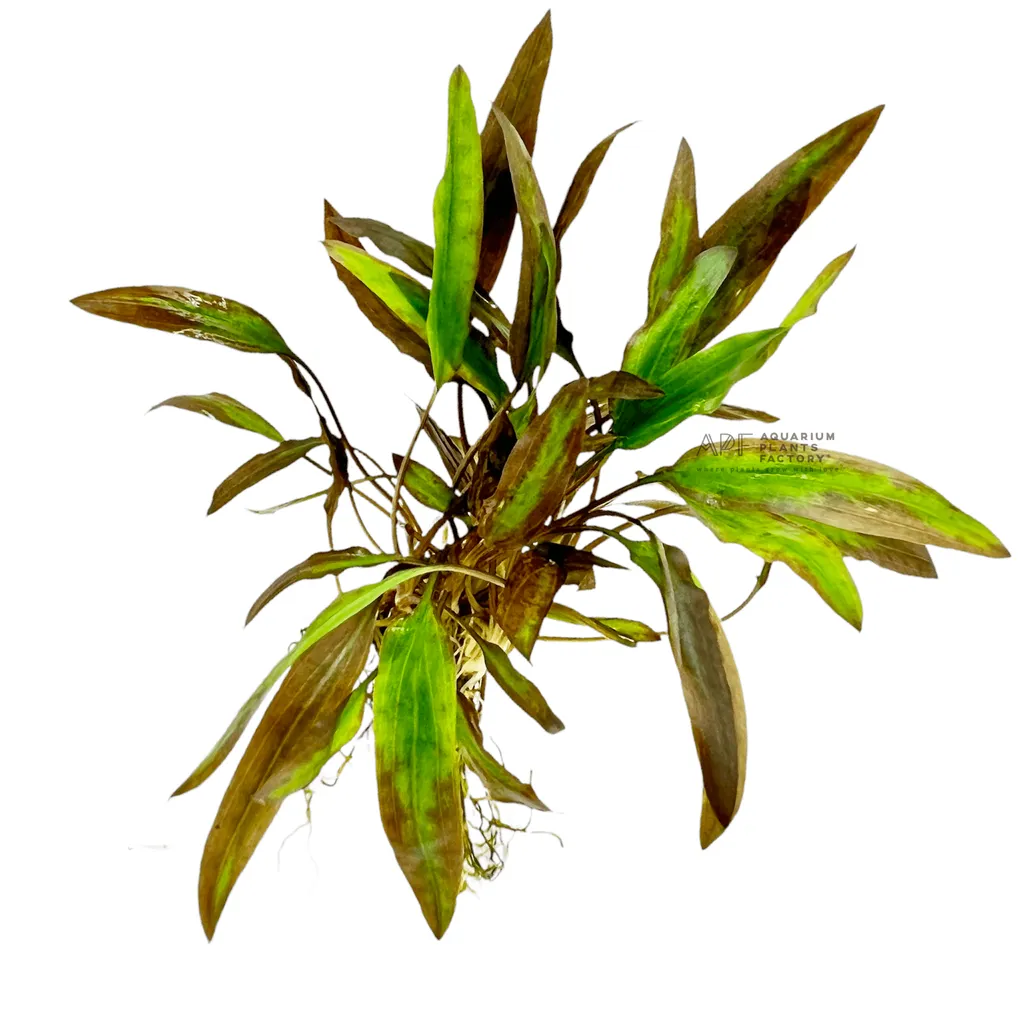 Medium lightMidground11.8 in (30 cm)
Cryptocoryne affinis
Medium light · Midground
- Medium lightMidground11.8 in (30 cm)
Cryptocoryne spiralis Tiger
Cryptocoryne spiralis 'Tiger'
Medium light · Midground
- Low lightMidground11.8 in (30 cm)
Cryptocoryne undulata Broad Leaves
Cryptocoryne undulata 'Broad Leaves'
Low light · Midground