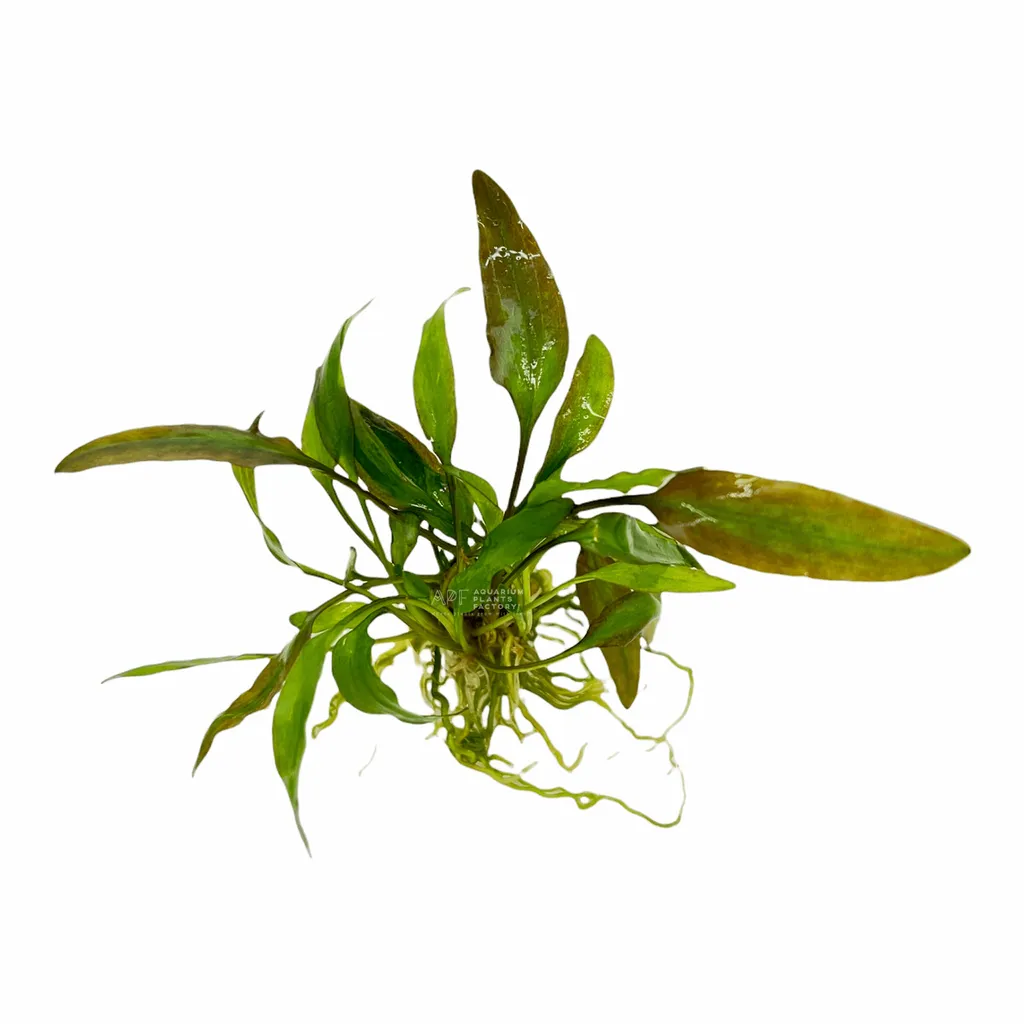
Brookweed
Samolus valerandi
Also known as Seaside brookweed, Water cabbage, Water pimpernel, Thin-leaf brookweed
FreshwaterBrackishRosettedivisionseeds
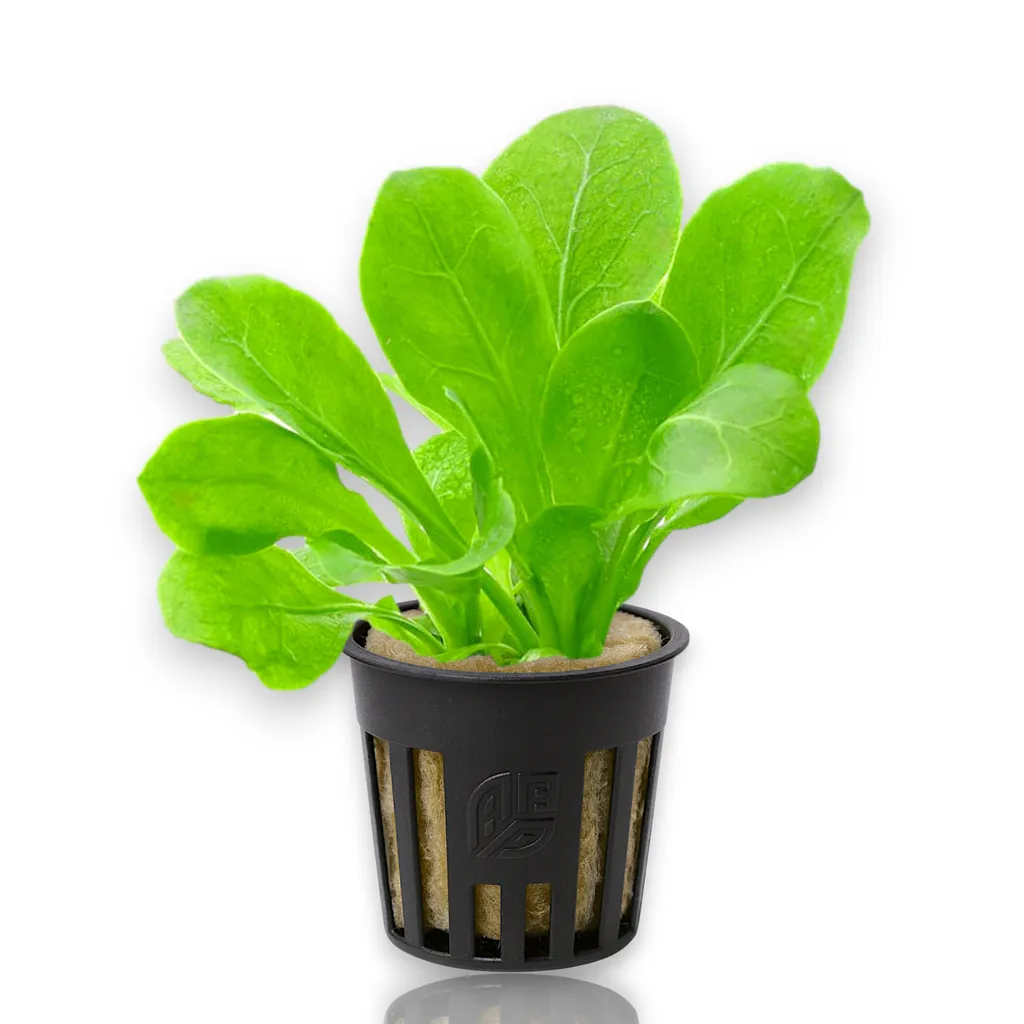
Care at a glance
- Light
- High light
- CO2
- CO₂ beneficial
- Temperature
- 59–79°F
- 15–26°C
- Max height
- 5.9 in
- 15 cm
- Growth rate
- Slow
- Placement
- Foreground
- Type
- Rosette
- pH
- 6.5–8.0
- Hardness
- 6–20 dGH
- Spread
- 5.9 in (15 cm)
- Nutrient uptake
- Root feeder
- Growth region
- Submersed or emersed
- Difficulty
- Difficult
- Family
- Primulaceae
- Origin
- Native to damp, often calcareous or coastal ground across Europe, Asia, Africa, and North America.
Overview
Brookweed grows slowly underwater and needs strong light, a nutrient-rich substrate, and cooler water below about 26 C to hold up as a submerged plant. It tolerates hard and even slightly brackish water, which suits coastal biotope tanks. Use it in the foreground and understand that it may only last a limited time fully submerged.
In the wild
Brookweed forms a low rosette of spoon-shaped, light green leaves when grown underwater. In shallow water or on damp ground it sends up a stem with small white flowers. It naturally favors damp, mineral-rich and often coastal soils.
Good to know
Samolus valerandi is a member of the primrose family, Primulaceae, and is one of very few salt-tolerant plants in that group. It has an unusually wide natural range spanning several continents. The species can grow as a land plant, a marsh plant, or fully submerged.
Did you know
It is one of the rare members of the primrose family that tolerates salt, which is why it turns up in coastal marshes and brackish biotope tanks.
Related plants
- Medium lightMidground7.9 in (20 cm)
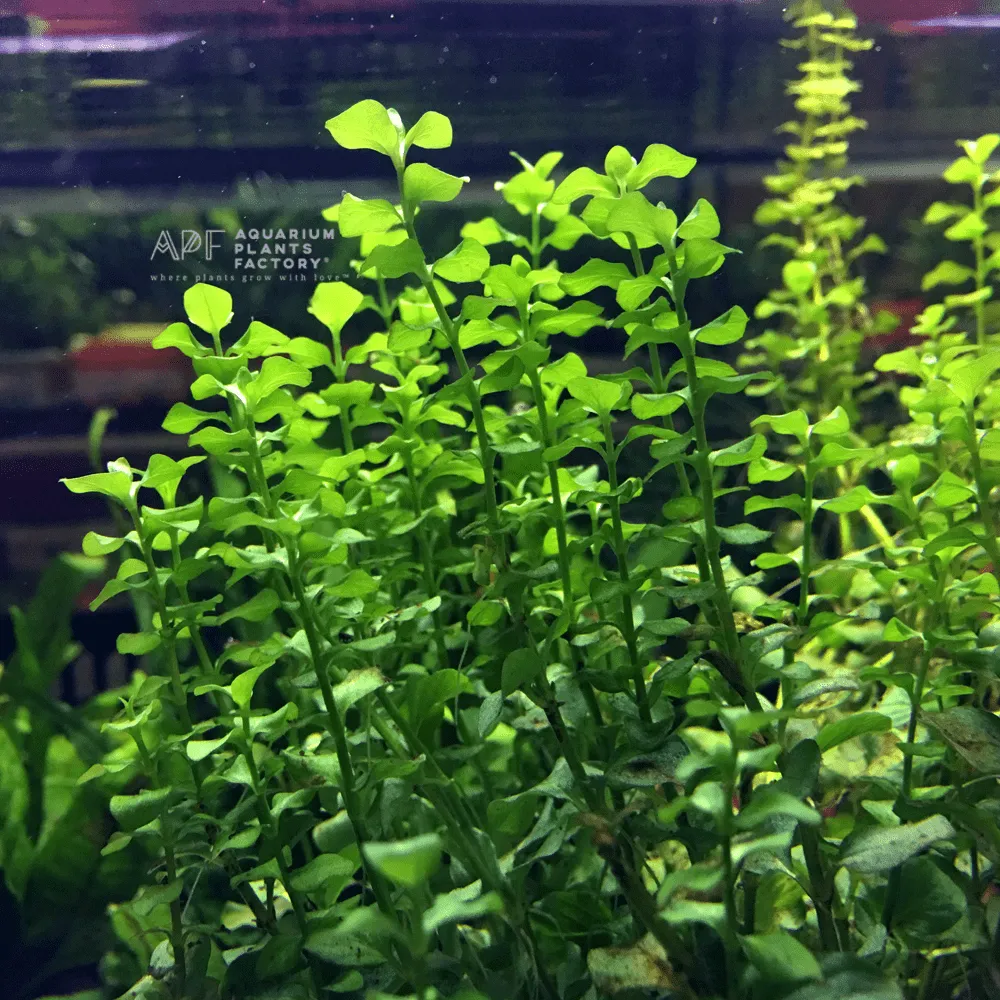
Lysimachia parvifolia Red
Lysimachia parvifolia 'Red'
Medium light · Midground
 Medium lightMidground11.8 in (30 cm)
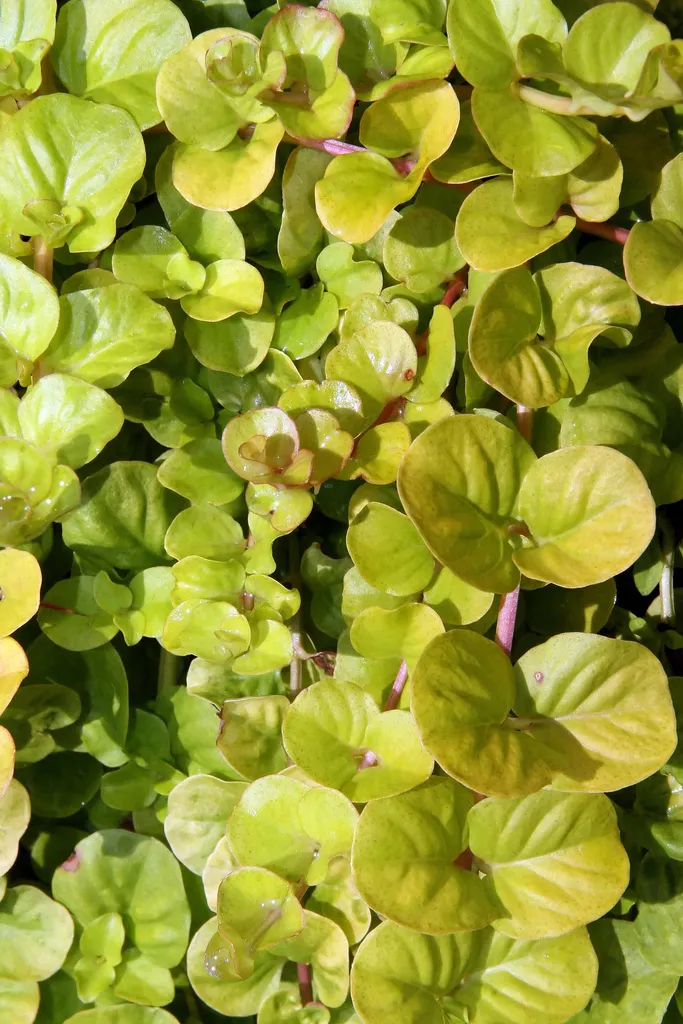
Creeping jenny
Lysimachia nummularia
Medium light · Midground
 Medium lightMidground11.8 in (30 cm)
Creeping jenny Aurea
Lysimachia nummularia 'Aurea'
Medium light · Midground
 High lightMidground15.7 in (40 cm)
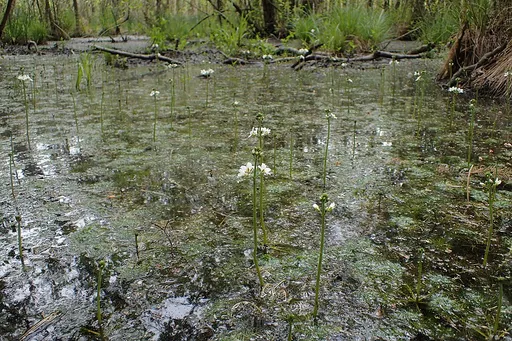
Water violet
Hottonia palustris
High light · Midground
 Low lightForeground5.9 in (15 cm)
Cryptocoryne willisii
Cryptocoryne × willisii
Low light · Foreground
- Medium lightForeground5.1 in (13 cm)
Cryptocoryne albida Red
Cryptocoryne albida 'Red'
Medium light · Foreground