One species · 4 forms
Ludwigia inclinata
Also known as Jussiaea inclinata, Ludwigia inclinata 'Red', Ludwigia inclinata 'Crystal'
FreshwaterStemCuttingsSide shoots
Care at a glance
- Light
- High light
- CO2
- CO₂ required
- Temperature
- 64–86°F
- 18–30°C
- Max height
- 19.7 in
- 50 cm
- Growth rate
- Fast
- Placement
- Midground
- Type
- Stem
- pH
- 4.5–7.0
- Spread
- 3.1 in (8 cm)
- Nutrient uptake
- Root + water column
- Growth region
- Submersed or emersed
- Difficulty
- Difficult
- Family
- Onagraceae
- Origin
- Southern Mexico and the West Indies to Bolivia and Brazil
Pick a form
Every form on this page needs strong light, injected CO2 and soft water.
Overview
Ludwigia inclinata is a demanding red stem plant for the midground of large tanks, where it looks best in front of pale green bushy plants. Flowgrow reports stems growing 30 to 40 cm in one week under intense light with liquid fertilizer.
Did you know
Small tetras may help spread Ludwigia inclinata. A 2020 study in Brazil's Pantanal grew its seedlings from the droppings of four wild characins. One of the four was the red-eye tetra sold in fish stores.
Caring for Ludwigia inclinata
Ludwigia inclinata needs strong light, CO2 at 25 to 40 mg/L, soft water and steady iron and micronutrient dosing. Low CO2 or weak light turns the lower leaves green before they drop.
Each stem bends over at the surface and branches along the floating part, so cut the top and replant it. Topping a stem makes the rooted base push side shoots from its nodes.
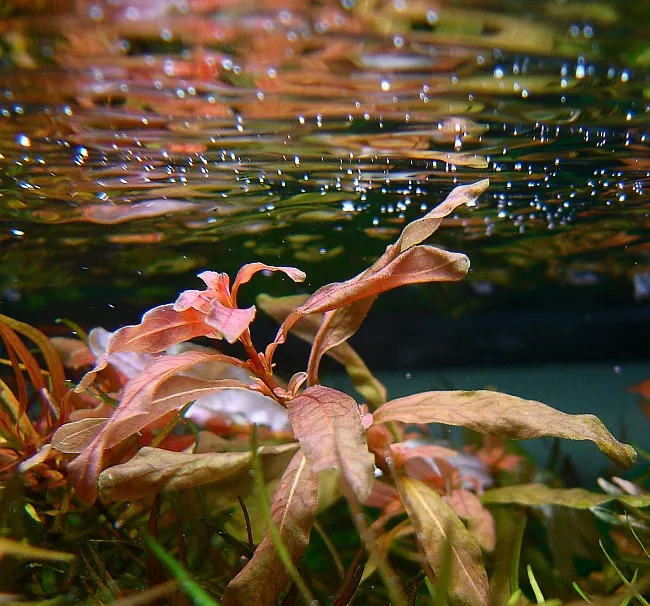
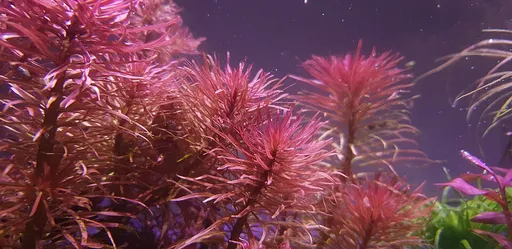
Plain Ludwigia inclinata grows opposite, fairly broad, wavy leaves in gold, orange and red on thick stems. Cuba, Meta and Pantanal belong to var. verticillata, which sets narrow leaves in whorls around the stem. Meta carries about eleven leaves to a whorl, each about 5 cm long and 2 mm wide.
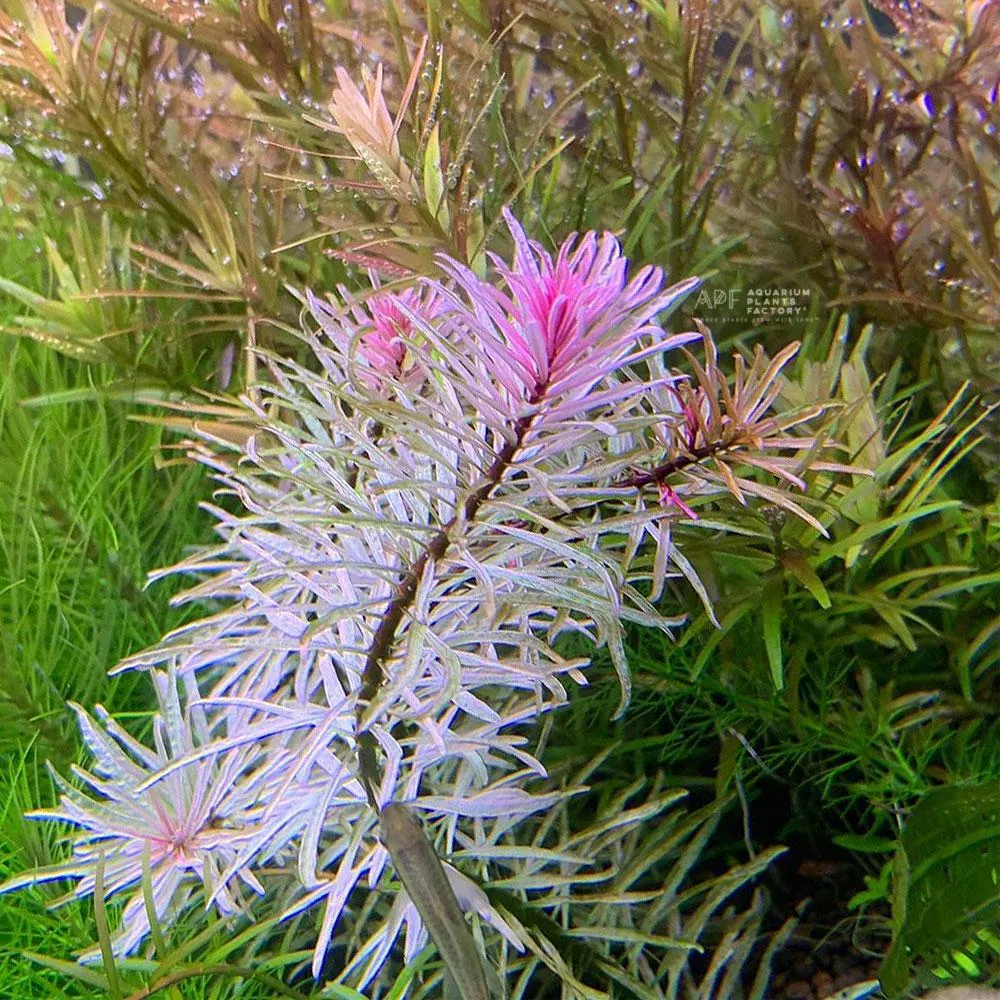
Cuba comes from the Isla de la Juventud off Cuba, and Meta from the Meta department of central Colombia. Pantanal was collected in the Pantanal wetlands of southwestern Brazil. White is a mutant of Cuba that hobbyists in Germany were growing by 2017, with near-white to pale pink whorls.
Pantanal is one of the most demanding stem plants in the hobby, and it does best in soft water under 3 dKH. Its whorls turn deep pink to blood red under strong light. Meta forgives more than Pantanal, with fine orange-red whorls in water below about 4 dKH. Cuba twists orange to red under strong light and CO2. It falls back to broad, sparse green leaves when light, CO2 or nutrients run short. Lean nitrate and phosphate doses redden the shoot tips of every form. White grows more slowly than the red forms, since its pale leaves carry little chlorophyll.
Good to know
Ludwigia inclinata belongs to the Onagraceae, the evening primrose family. Linnaeus the Younger described it as Jussiaea inclinata in 1782, and it moved to Ludwigia in 1894. Flowgrow files the broad-leaved plain form as 'Red'. Kew's Plants of the World Online counts var. verticillata as plain Ludwigia inclinata, though shops still sell the whorled forms under the variety name. It is the only Ludwigia known to carry two leaf arrangements.
In the wild
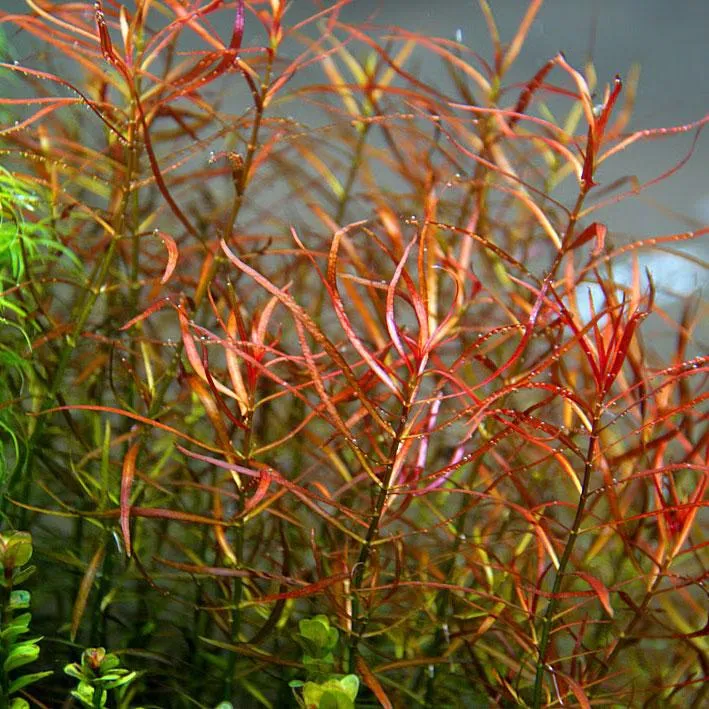
Ludwigia inclinata ranges from southern Mexico and the West Indies to Bolivia and Brazil. It grows emersed in bogs and submersed in fast rivers and seasonal streams. Pantanal plants in Brazil form underwater beds of long, wavy red leaves during the floods. It flowers as the water falls, and on drying mud it turns into a land form with thick stems and short, oval green leaves.
Common questions
Why is my Ludwigia White turning green?
Nursery stems of Ludwigia White arrive green, and the white and pink show only on submersed growth. A green shoot that appears later has reverted to Cuba, and Aquasabi reports that it does not turn white again. Cut green shoots out early, since they grow faster, and take cuttings only from white tops.
Why is my Ludwigia Pantanal losing its color?
Iron shortage shows up fast in Ludwigia Pantanal as pale or white new growth and shrinking leaves. Dose iron steadily and keep every parameter stable.
How should I trim Ludwigia Cuba?
Cut stumps of Ludwigia Cuba tend to blacken and rot. Pull the whole stem, keep the best top section and replant it instead of trimming in place. Meta branches little, so thicken a Meta group the same way, by replanting tops.
Does Ludwigia inclinata need to be planted in the substrate?
Yes. Strip the leaves from the lower part of each stem, then push the stems into the substrate one at a time, a little apart.
Does Ludwigia inclinata need CO2?
Yes. Ludwigia inclinata needs injected CO2 to grow well, and it usually struggles without it.
How much light does Ludwigia inclinata need?
Ludwigia inclinata needs high light from a strong planted-tank LED. In weaker light its stems stretch and drop their lower leaves.
Does Ludwigia inclinata need root tabs?
They help. Ludwigia inclinata takes nutrients through both its roots and its leaves. Root tabs near its roots and a liquid fertilizer cover both.
How do you propagate Ludwigia inclinata?
Ludwigia inclinata propagates by cuttings and side shoots. Cut off the top of a stem and replant it, and the stump left behind grows new shoots. Cut a side shoot off once it has a few leaves and plant it on its own.
How tall does Ludwigia inclinata grow?
Ludwigia inclinata grows to about 19.7 in (50 cm) tall. It grows fast, so expect to trim it often.
Related plants
 High lightMidground19.7 in (50 cm)
Ludwigia arcuata
High light · Midground
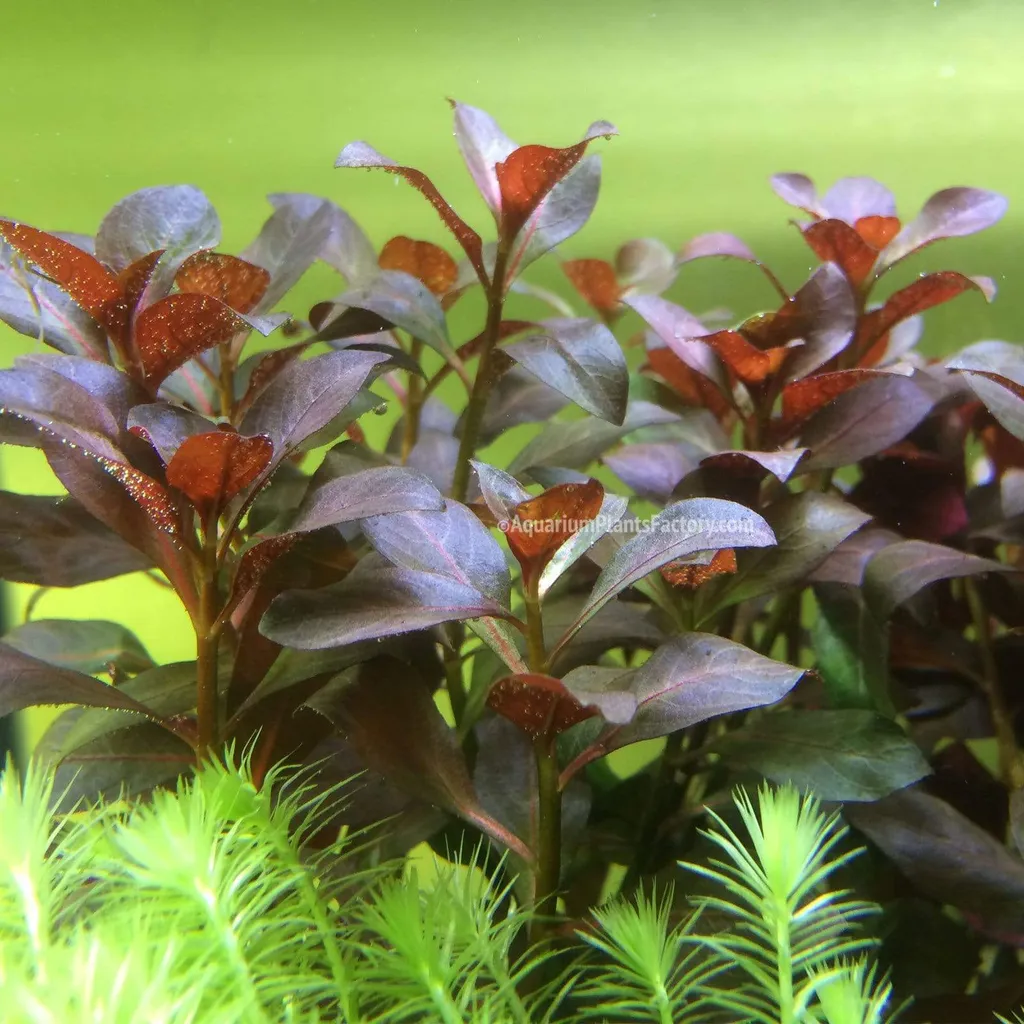 Medium lightMidground19.7 in (50 cm)
Ludwigia Rubin
Ludwigia repens 'Rubin'
Medium light · Midground
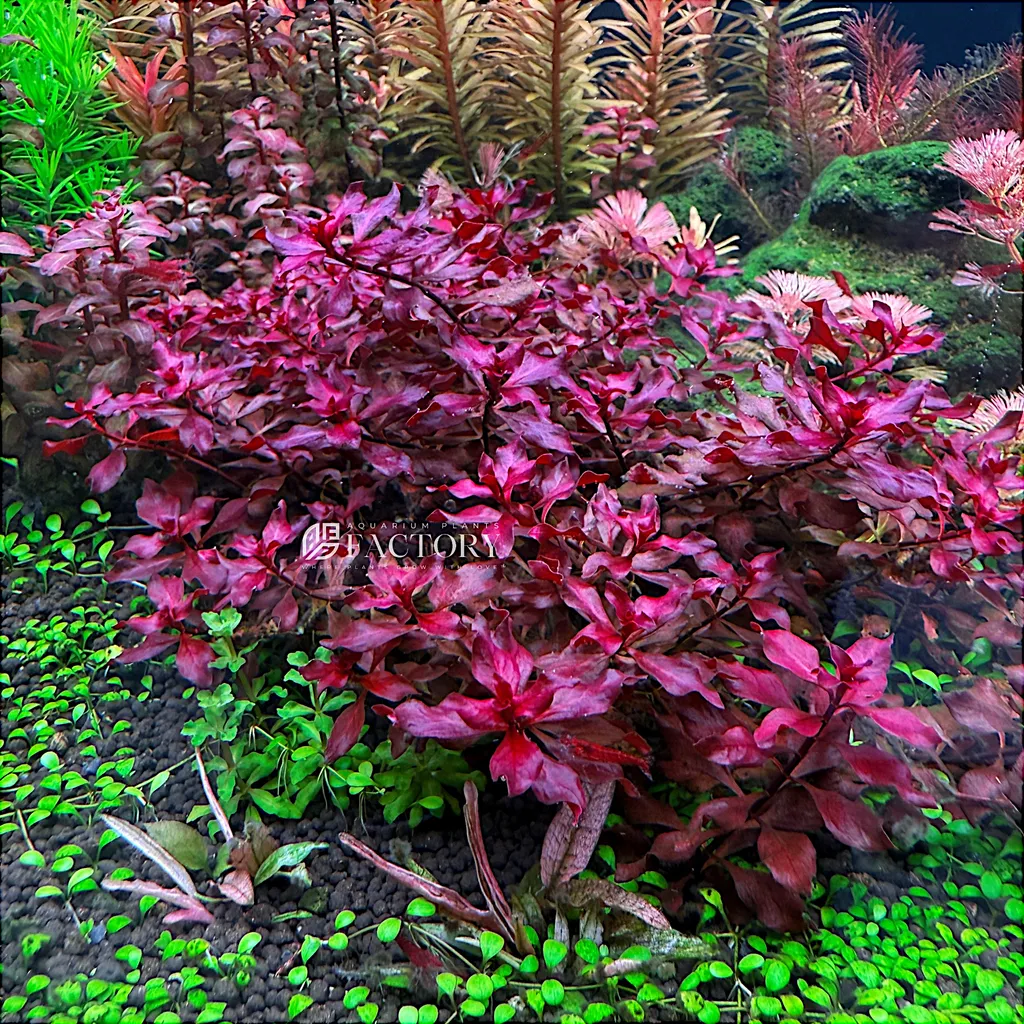 High lightMidground19.7 in (50 cm)
Ludwigia super red
Ludwigia palustris 'Super Red'
High light · Midground
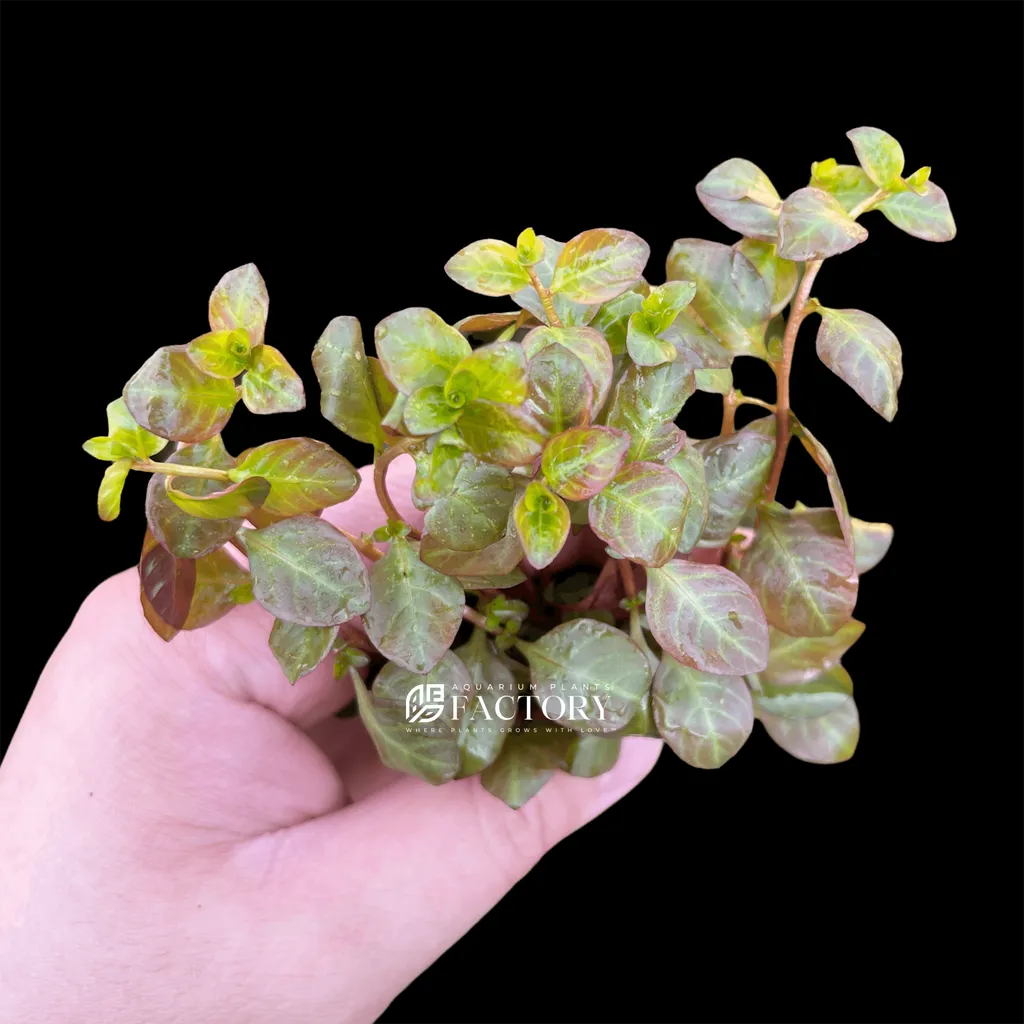 High lightMidground15.7 in (40 cm)
Ludwigia ovalis Pink
Ludwigia ovalis 'Pink'
High light · Midground
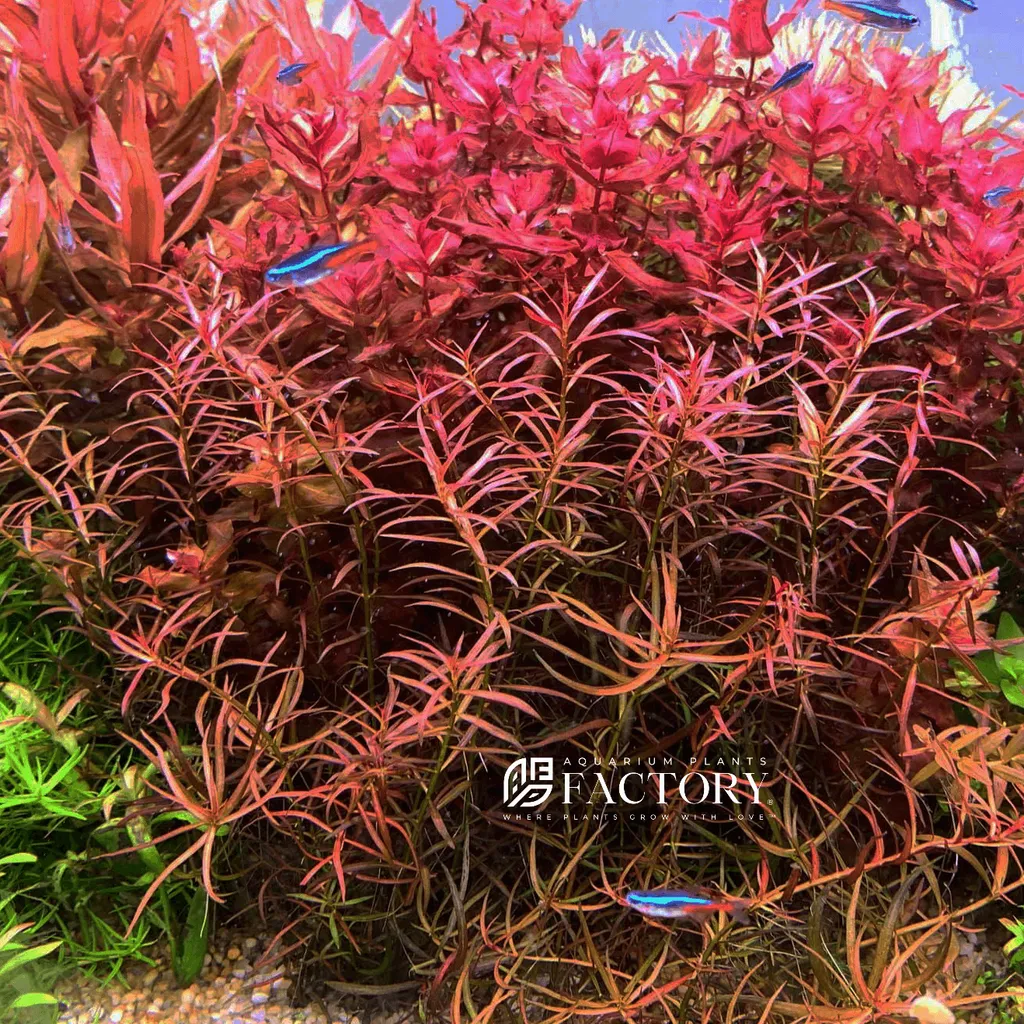 High lightMidground11.8 in (30 cm)
Ludwigia brevipes
High light · Midground
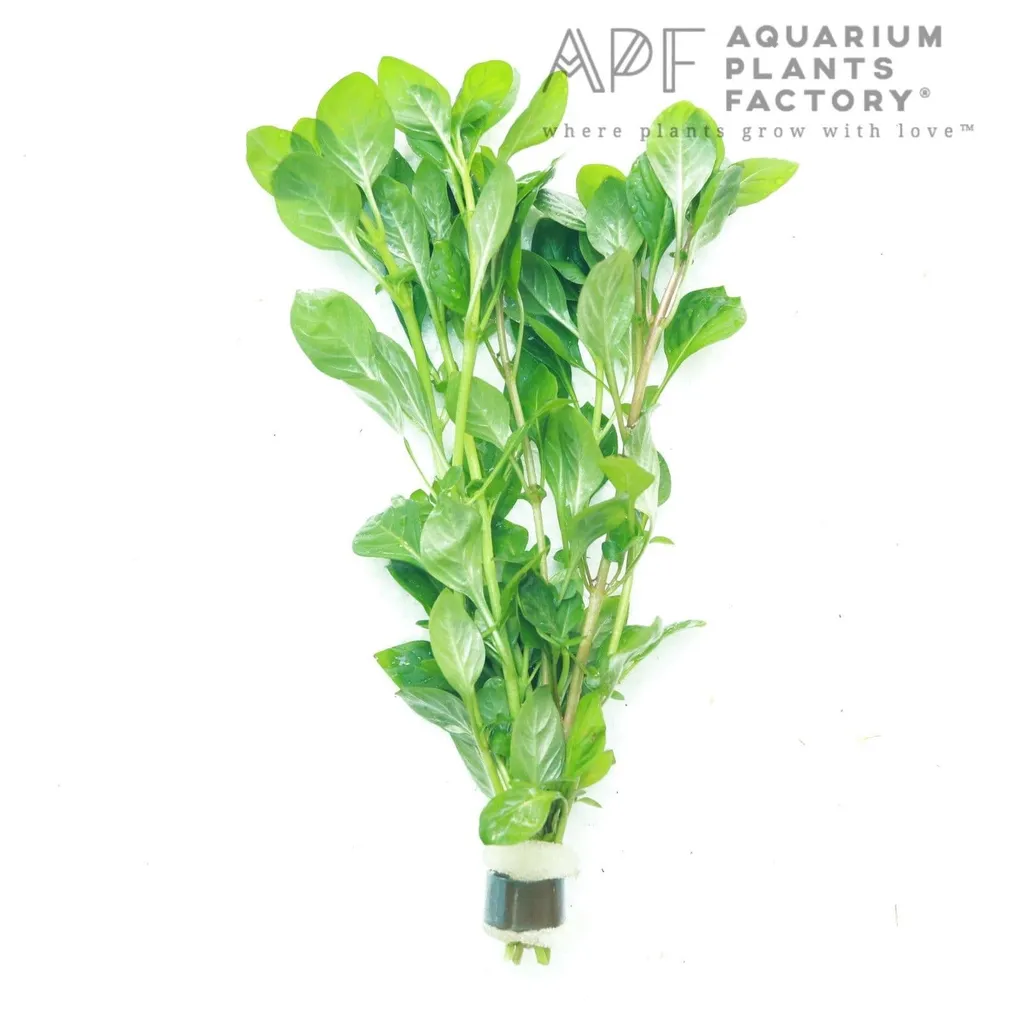 Medium lightMidground11.8 in (30 cm)
Ludwigia palustris Green
Ludwigia palustris 'Green'
Medium light · Midground