Ranunculus
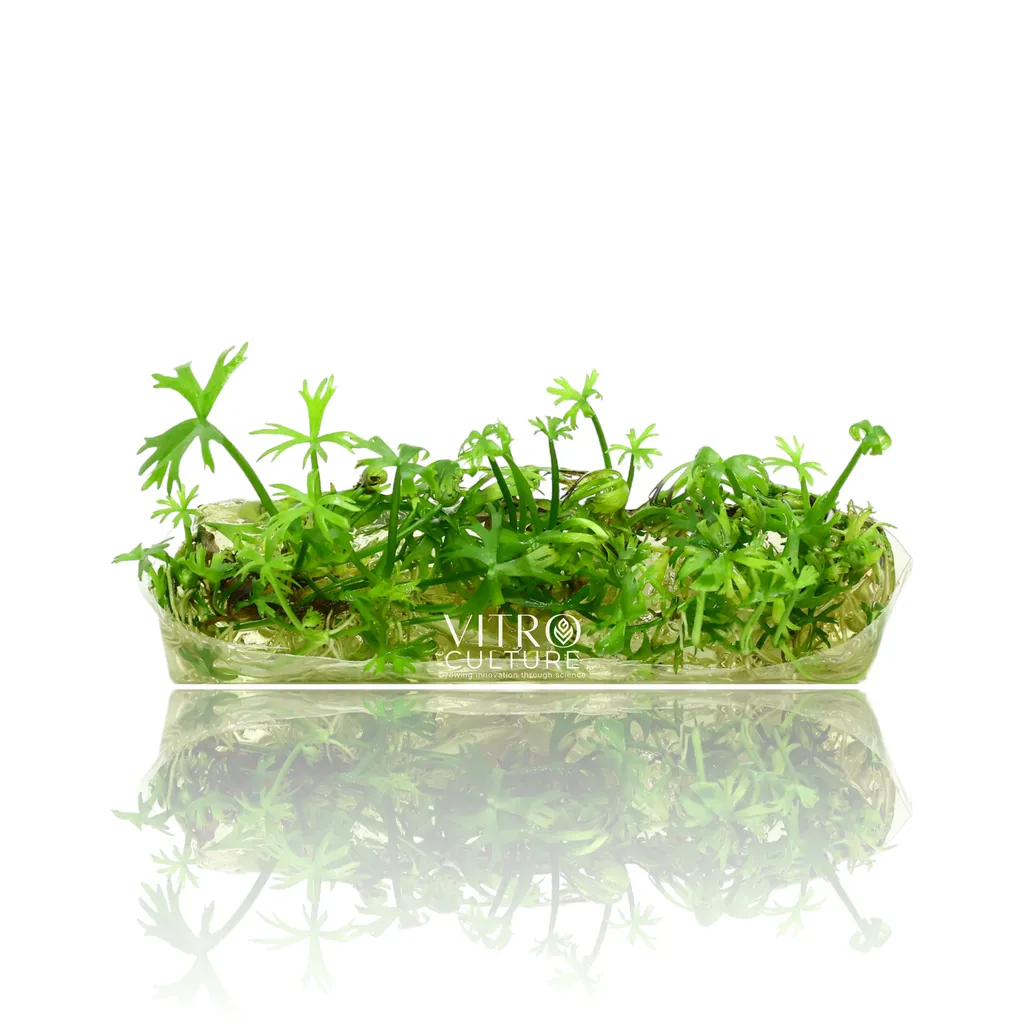
Ranunculus inundatus
Also known as River buttercup, Umbrella grass, Inundated buttercup, River plate
FreshwaterRhizomeRunnersRhizome division
Care at a glance
- Light
- High light
- CO2
- CO₂ beneficial
- Temperature
- 59–82°F
- 15–28°C
- Max height
- 3.9 in
- 10 cm
- Growth rate
- Medium
- Placement
- Foreground
- Type
- Rhizome
- pH
- 5.0–8.0
- Hardness
- 2–14 dGH
- Spread
- 7.9 in (20 cm)
- Nutrient uptake
- Root feeder
- Growth region
- Submersed or emersed
- Difficulty
- Medium
- Family
- Ranunculaceae
- Origin
- Southeastern Australia (New South Wales, Victoria, South Australia)
Overview
Ranunculus is a creeping rhizome plant that spreads by runners into a foreground carpet. It is rated medium in difficulty.
Did you know
Ranunculus inundatus is a genuine buttercup and one of very few Ranunculus grown underwater. That makes this delicate, umbrella-leaved carpet plant a close relative of the yellow meadow buttercups found in fields across the world.
Caring for Ranunculus
Push the roots into the foreground substrate and keep the rhizome at the surface or just under it, with the growing tip uncovered. Ranunculus usually sulks for a few weeks after planting before it settles and sends out lateral runners.
Give it high light, which keeps the umbrella leaves short and compact. In low light the stalks stretch and the plant loses its scale. It is a root feeder, so a nutrient-rich substrate or root tabs matter, and it grows faster with CO2. It handles 59 to 82°F (15 to 28°C).
It grows at a moderate pace, and you do not top and replant it like a stem. Snip off the daughter plants along the runners once they have roots and replant them. You can also cut the rhizome into pieces with several leaves each.
Good to know
Ranunculus inundatus is in the family Ranunculaceae, which is unusual among aquarium plants. Its creeping rhizome runs along or just below the substrate and throws up rooted leaf stalks at each node. Deeply divided, three-lobed leaves on long petioles give it the umbrella-grass look. They also separate it from the round-leaved Hydrocotyle it is often compared to.
In the wild
Ranunculus inundatus is an amphibious perennial from the coast and tablelands of southeastern Australia, across New South Wales, Victoria and South Australia. It creeps over wet mud and through the shallows of ponds, dams and slow rivers, spreading widely by rhizomes. It tolerates seasonal drying and can carpet boggy ground several meters across.
Common questions
Does Ranunculus need to be planted in the substrate?
Yes. Push the roots into the substrate and keep the rhizome at the surface or just under it, with the growing tip uncovered.
Does Ranunculus need CO2?
No, but it helps. Ranunculus can grow without injected CO2, and added CO2 makes it grow faster.
How much light does Ranunculus need?
Ranunculus needs high light from a strong planted-tank LED.
Does Ranunculus need root tabs?
Yes. Ranunculus draws much of its food through its roots. Push root tabs in near it, or grow it in a nutrient-rich soil.
How do you propagate Ranunculus?
Ranunculus propagates by runners and rhizome division. New plants grow along its runners. Cut one free once it has roots and plant it. Cut the rhizome into pieces with several leaves each, then tie or plant each piece.
How tall does Ranunculus grow?
Ranunculus grows to about 3.9 in (10 cm) tall. It grows at a moderate pace.
Related plants
- Low lightForeground3.1 in (8 cm)
Schismatoglottis prietoi
Low light · Foreground
 Low lightEpiphyte3.9 in (10 cm)
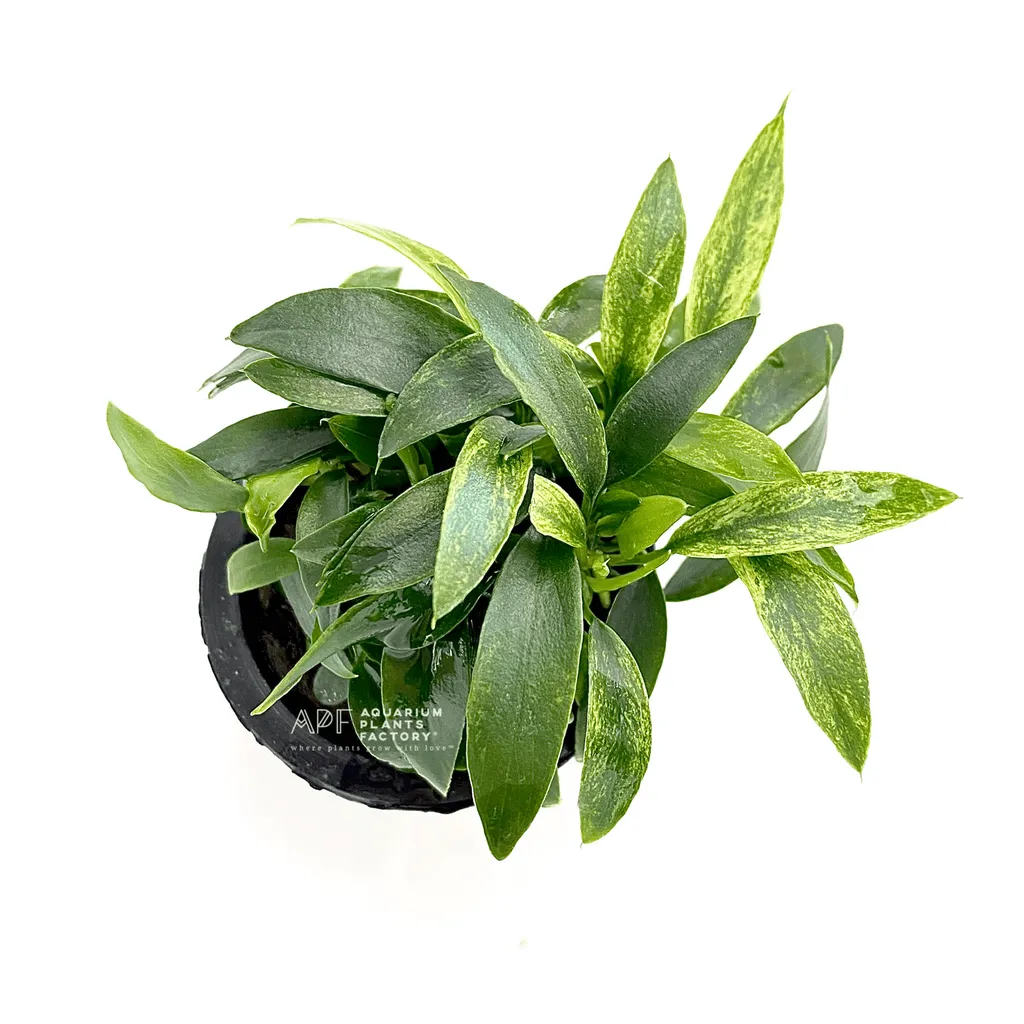
Anubias Chili Jalapeno
Anubias 'Chili Jalapeno'
Low light · Epiphyte
 Low lightMidground3.9 in (10 cm)
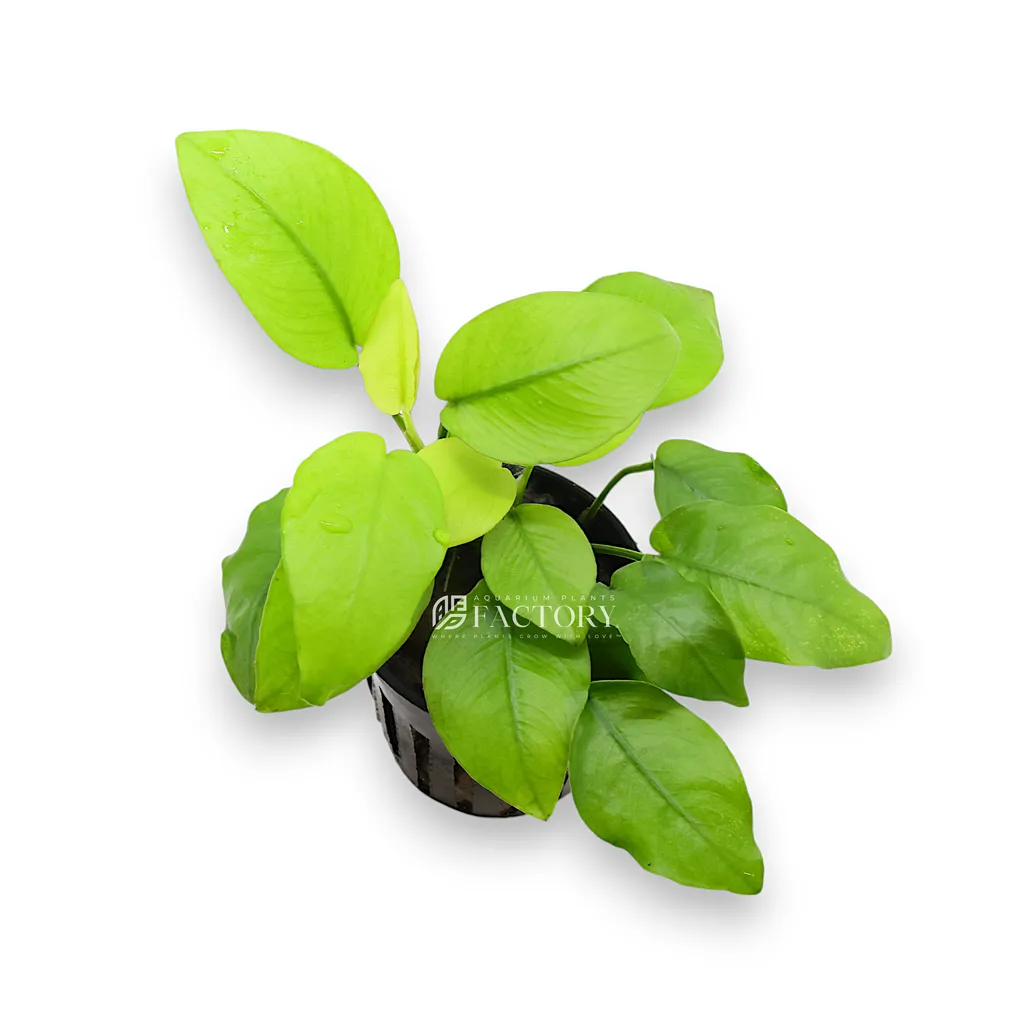
Anubias golden nana
Anubias barteri var. nana 'Golden'
Low light · Midground
 Low lightEpiphyte3.9 in (10 cm)
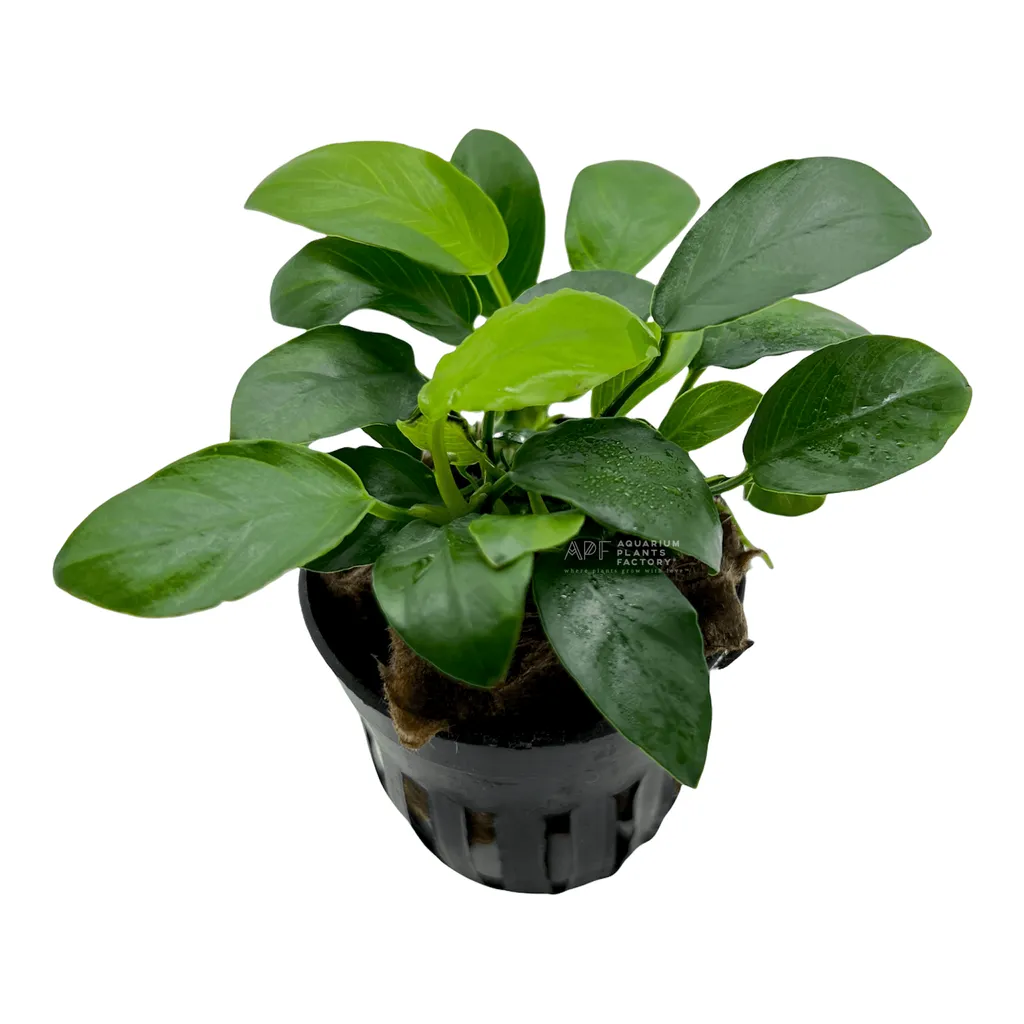
Anubias nana Paxing
Anubias barteri var. nana 'Paxing'
Low light · Epiphyte
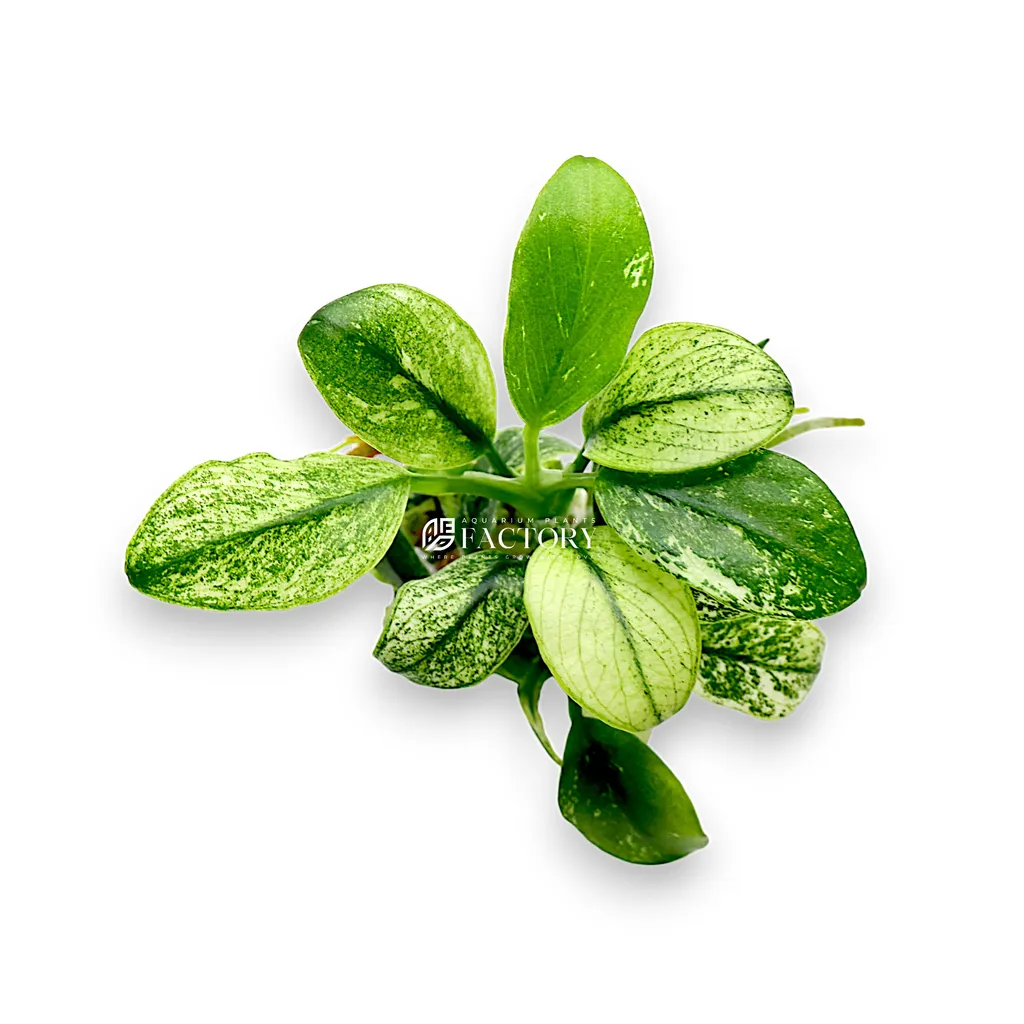 Medium lightMidground3.9 in (10 cm)
Anubias pinto
Anubias barteri var. nana 'Pinto'
Medium light · Midground
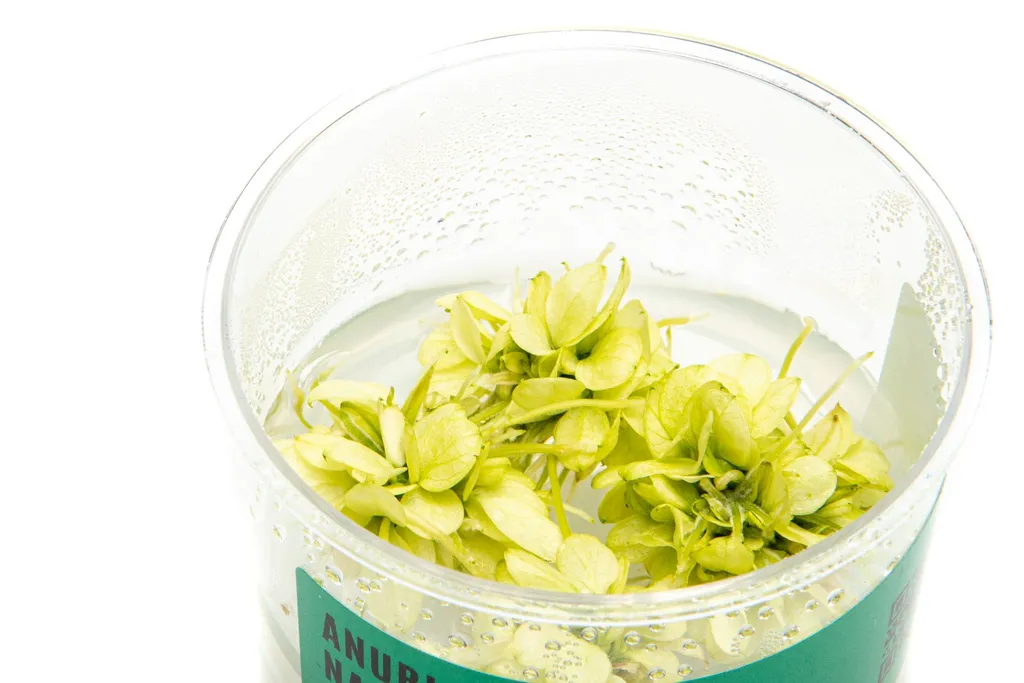 Medium lightEpiphyte3.9 in (10 cm)
Anubias Snow White
Anubias barteri var. nana 'Snow White'
Medium light · Epiphyte