Staurogyne Porto Velho
Staurogyne sp. 'Porto Velho'
Also known as Staurogyne sp. Manaus, Hygrophila sp. Roraima, Porto Velho staurogyne
FreshwaterCarpetingCuttingsSide shoots
Care at a glance
- Light
- High light
- CO2
- CO₂ beneficial
- Temperature
- 68–82°F
- 20–28°C
- Max height
- 3.1 in
- 8 cm
- Growth rate
- Medium
- Placement
- Foreground
- Type
- Carpeting
- pH
- 5.0–7.5
- Hardness
- 0–30 dGH
- Spread
- 3.9 in (10 cm)
- Nutrient uptake
- Root + water column
- Growth region
- Submersed or emersed
- Difficulty
- Medium
- Family
- Acanthaceae
- Origin
- Brazil (Rondonia and Roraima)
Overview
Staurogyne Porto Velho is a small creeping stem plant that hugs the substrate like ivy, grown as a dense, low carpet in the foreground. It is more demanding than Staurogyne repens and rates medium difficulty.
Did you know
Staurogyne Porto Velho is one of the most popular new foreground plants in the United States and Japan. It is still botanically unnamed, and it is almost never grown in Europe.
Caring for Staurogyne Porto Velho
Split Staurogyne Porto Velho into small clumps and push each one into a rich substrate with tweezers, leaving gaps for it to fill. It feeds through both roots and leaves, so add root tabs and a liquid fertilizer.
Give it high light and CO2 to keep it compact and draw out its purplish color. Without CO2 it grows more upright and more slowly. It handles 68 to 82°F (20 to 28°C).
It grows at a moderate pace. Trim across the top and replant the head cuttings and side shoots to thicken the carpet.
Good to know
Staurogyne Porto Velho belongs to the family Acanthaceae, as a close relative of Staurogyne repens and, more distantly, of Hygrophila. It was first thought to be a Hygrophila, and material traded as Hygrophila sp. 'Roraima' appears to be the same plant. Its narrow, lance-shaped leaves run grayish to olive green with purplish undertones, and the stems can flush reddish purple under strong light.
In the wild
Staurogyne Porto Velho comes from the western Brazilian states of Rondonia and Roraima, near Porto Velho, the capital of Rondonia. The trade name is taken from that city. It grows along shaded stream and river margins in the Amazon basin.
Common questions
Does Staurogyne Porto Velho need to be planted in the substrate?
Yes. Split it into small clumps and push each one into the substrate with tweezers, leaving gaps for it to fill.
Does Staurogyne Porto Velho need CO2?
No, but it helps. Staurogyne Porto Velho can grow without injected CO2, and added CO2 makes it grow faster.
How much light does Staurogyne Porto Velho need?
Staurogyne Porto Velho needs high light from a strong planted-tank LED. In weaker light it grows upward instead of spreading across the substrate.
Does Staurogyne Porto Velho need root tabs?
They help. Staurogyne Porto Velho takes nutrients through both its roots and its leaves. Root tabs near its roots and a liquid fertilizer cover both.
How do you propagate Staurogyne Porto Velho?
Staurogyne Porto Velho propagates by cuttings and side shoots. Cut off the top of a stem and replant it, and the stump left behind grows new shoots. Cut a side shoot off once it has a few leaves and plant it on its own.
How tall does Staurogyne Porto Velho grow?
Staurogyne Porto Velho grows to about 3.1 in (8 cm) tall. It grows at a moderate pace.
Related plants
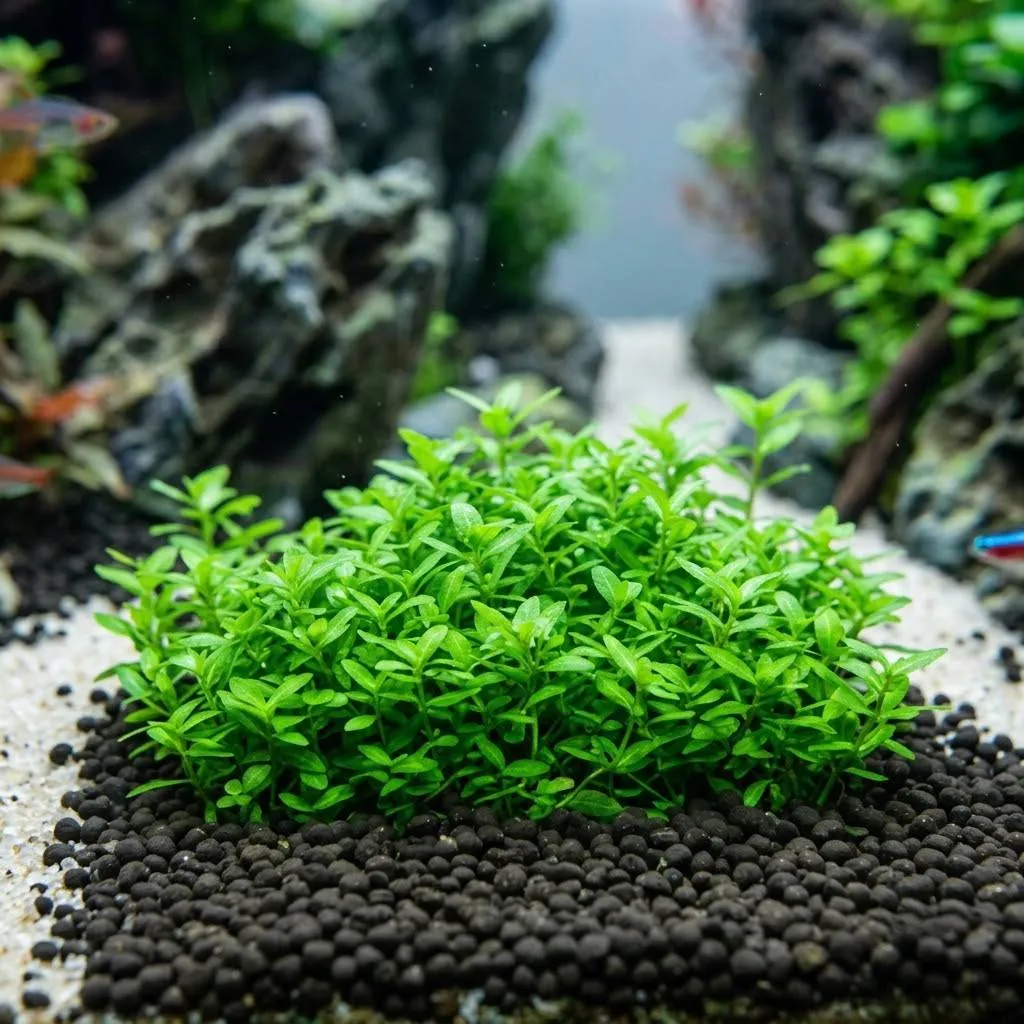 Medium lightForeground3.9 in (10 cm)
Staurogyne repens
Medium light · Foreground
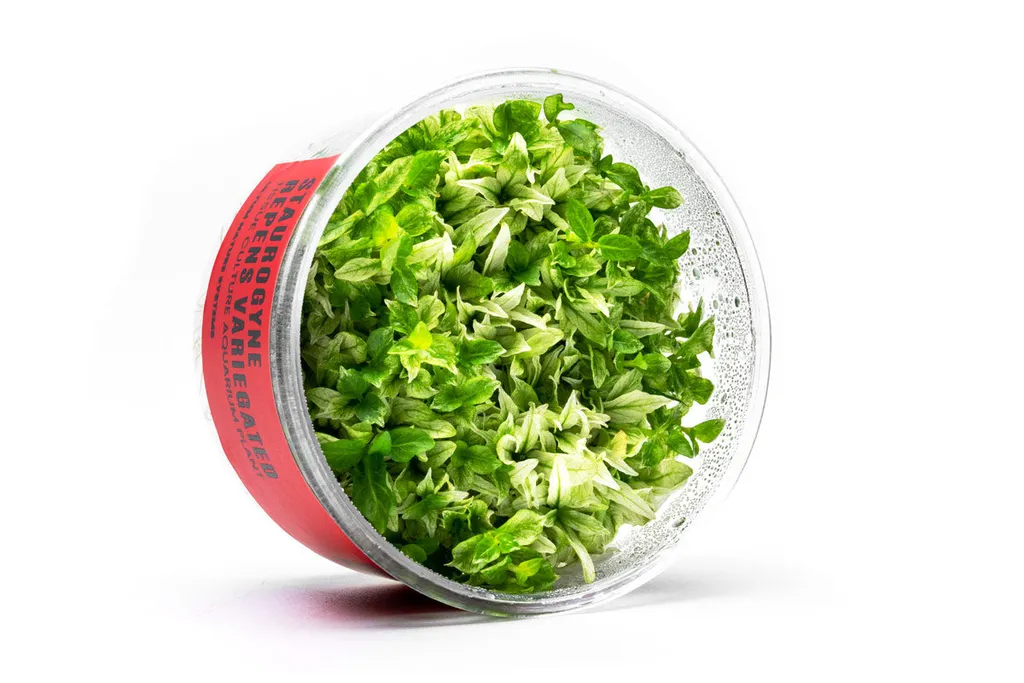 Medium lightForeground3.9 in (10 cm)
Staurogyne repens Variegated
Staurogyne repens 'Variegated'
Medium light · Foreground
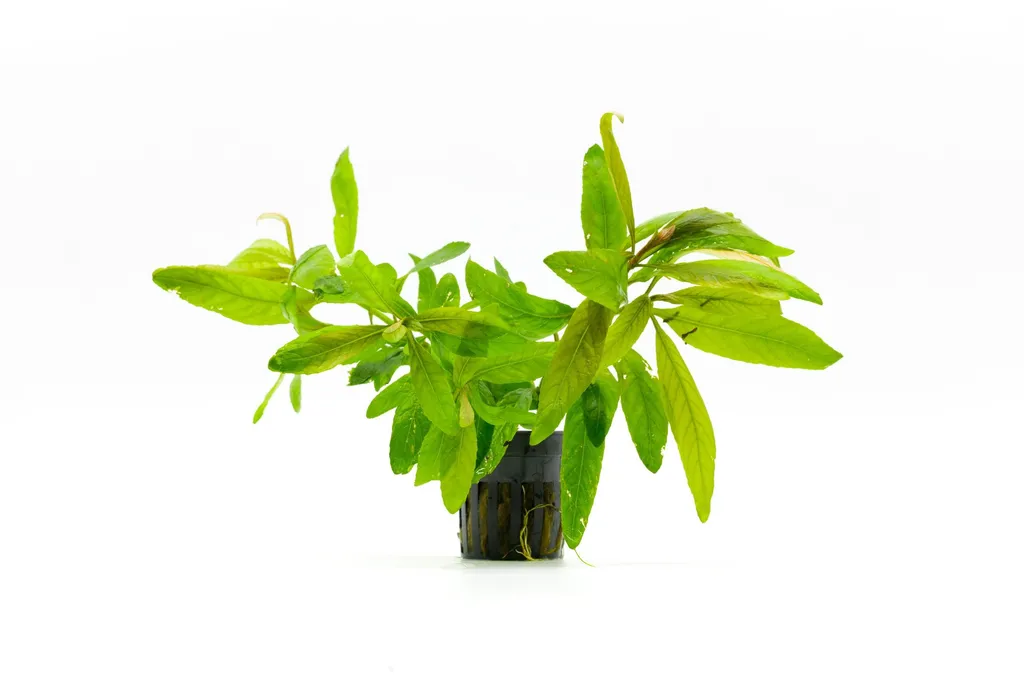 Medium lightMidground5.9 in (15 cm)
Staurogyne Bihar
Staurogyne sp. 'Bihar'
Medium light · Midground
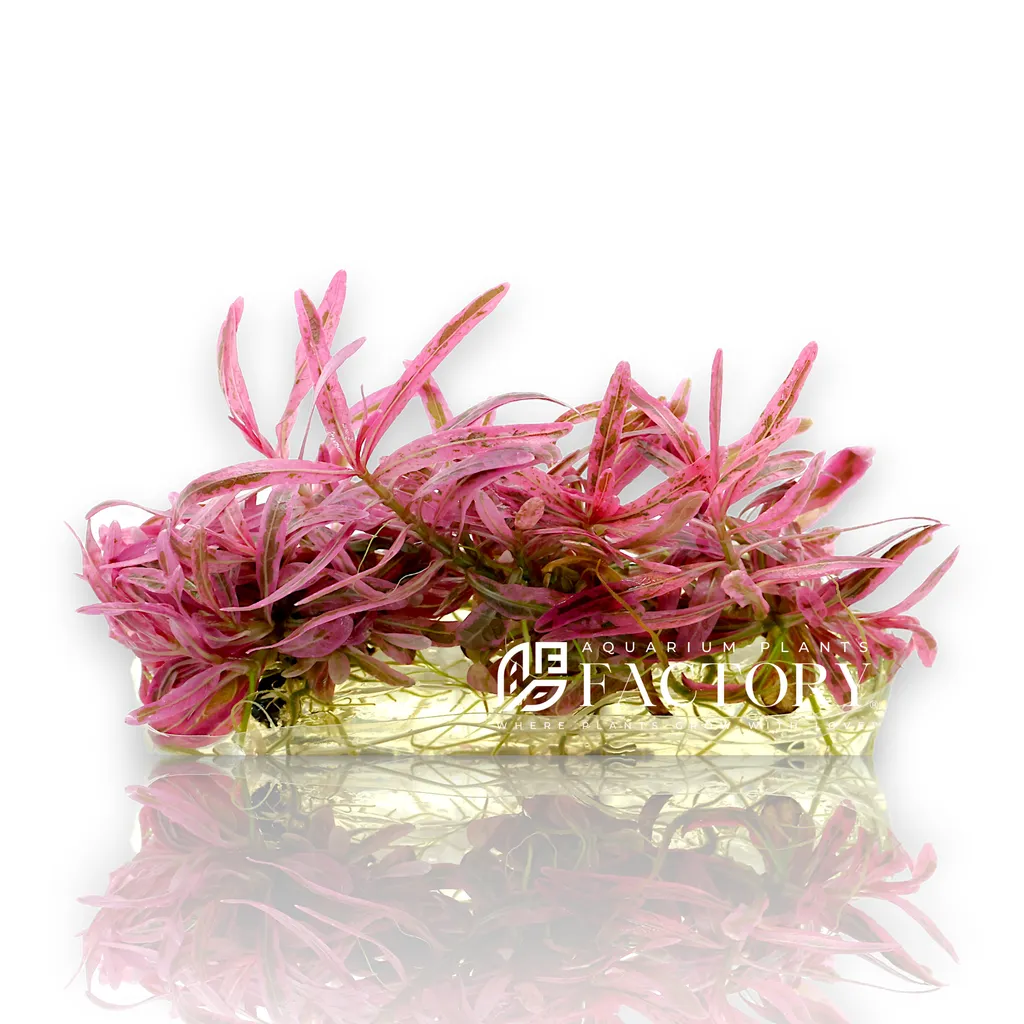 High lightForeground3.9 in (10 cm)
Hygrophila Chai
Hygrophila lancea 'Chai'
High light · Foreground
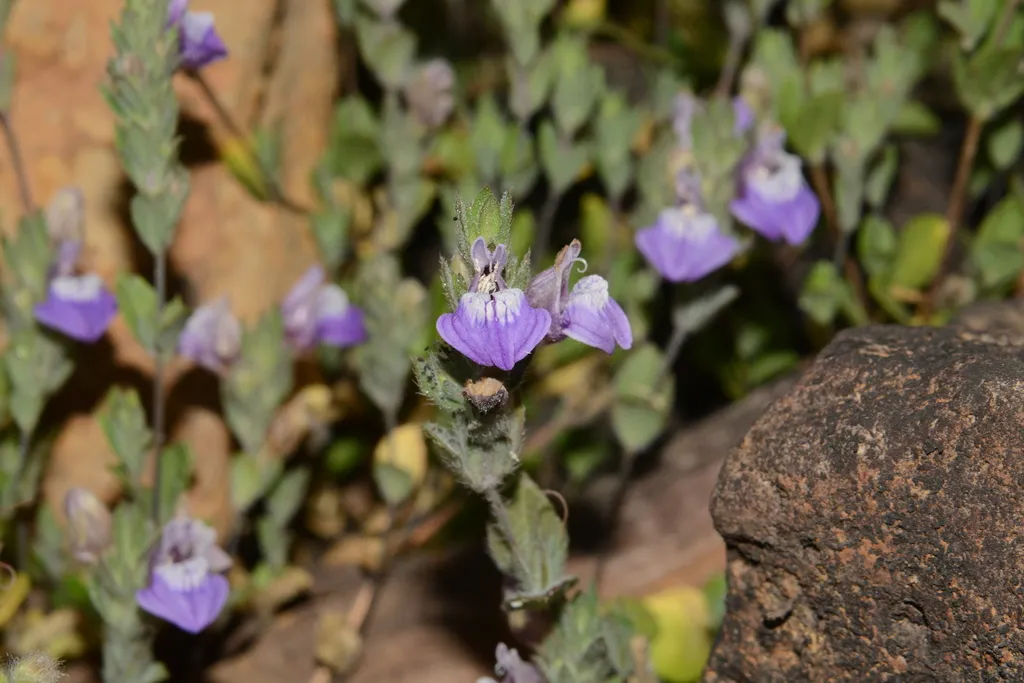 Medium lightForeground5.9 in (15 cm)
Hygrophila serpyllum
Medium light · Foreground
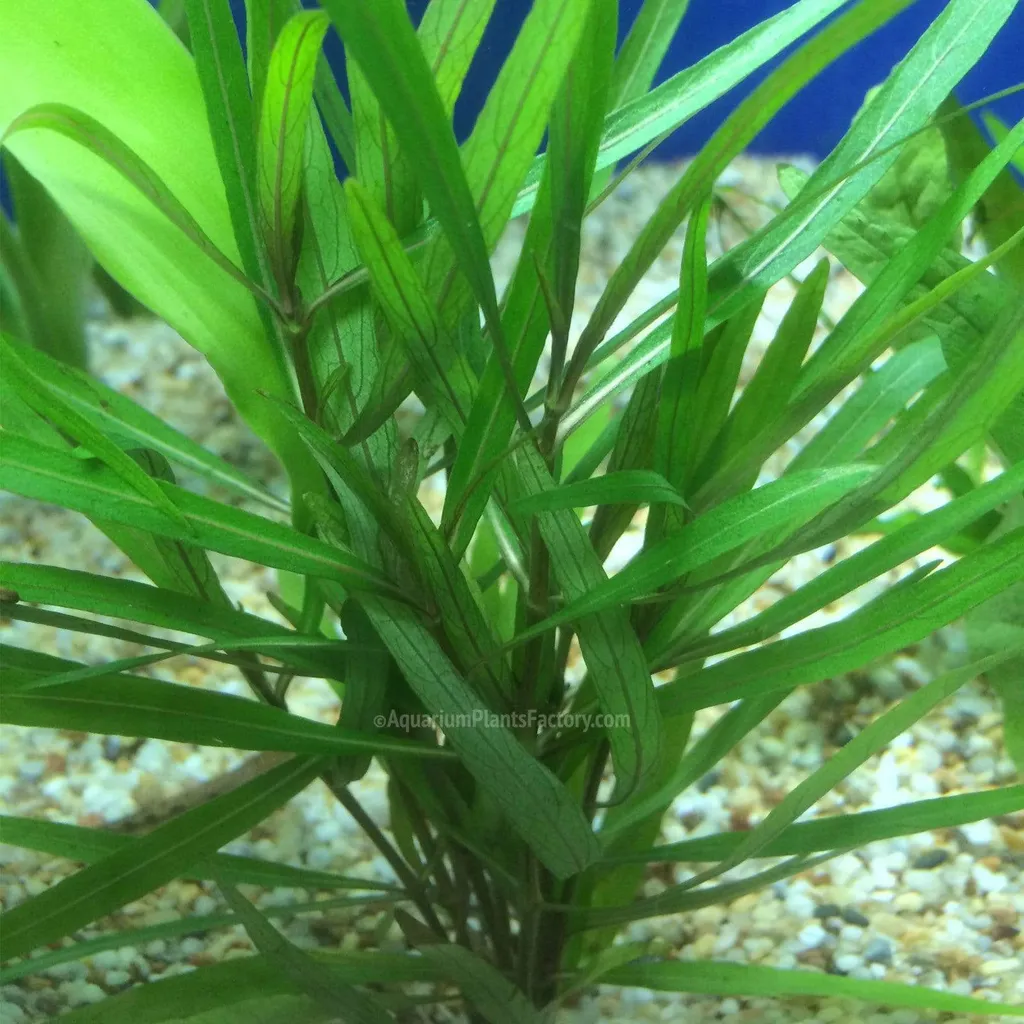 High lightMidground7.9 in (20 cm)
Hygrophila Araguaia
Hygrophila lancea 'Araguaia'
High light · Midground