Pogostemon stellatus
Also known as Eusteralis stellata, Star Pogostemon, Water Star, Pogostemon stellatus Octopus, Pogostemon stellatus 'Narrow Leaf'
FreshwaterStemCuttingsSide shoots
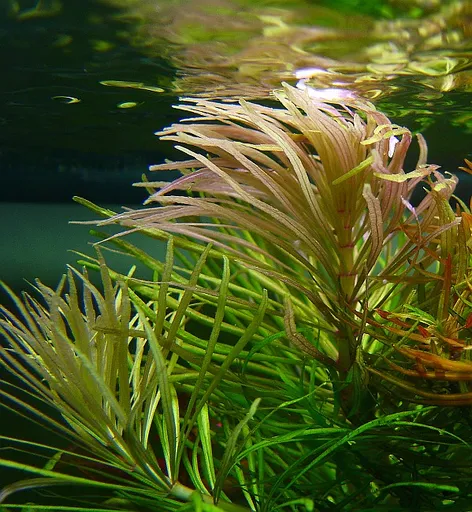
Care at a glance
- Light
- High light
- CO2
- CO₂ required
- Temperature
- 72–82°F
- 22–28°C
- Max height
- 23.6 in
- 60 cm
- Growth rate
- Medium
- Placement
- Background
- Type
- Stem
- pH
- 6.0–7.0
- Hardness
- 3–12 dGH
- Spread
- 3.9 in (10 cm)
- Nutrient uptake
- Root + water column
- Growth region
- Submersed or emersed
- Difficulty
- Difficult
- Family
- Lamiaceae
- Origin
- Asia and Australia
Overview
Pogostemon stellatus is a showpiece stem plant for the background. It is genuinely demanding, rated difficult, and not a beginner plant.
Did you know
Pogostemon stellatus shares its genus with patchouli, the mint relative whose oil scents perfumes and incense.
Caring for Pogostemon stellatus
Strip the lower leaves and plant the stems one at a time, with space to bush out. Shops usually sell emersed-grown stems, which look compact and unremarkable until they convert. Expect a frustrating melt-and-reconvert phase while they switch to submersed growth.
Pogostemon stellatus needs strong light, pressurized CO2 and a steady supply of nitrate, phosphate and micronutrients. Feed the roots with root tabs and the water with a liquid fertilizer. It handles 72 to 82°F (22 to 28°C) and a pH of 6 to 7.
It grows at a moderate pace, and trimmed tops replant as new stems. Pale or stunted leaves usually signal a shortfall in micronutrients or CO2. It can also stall unexpectedly even when the parameters look right.
Good to know
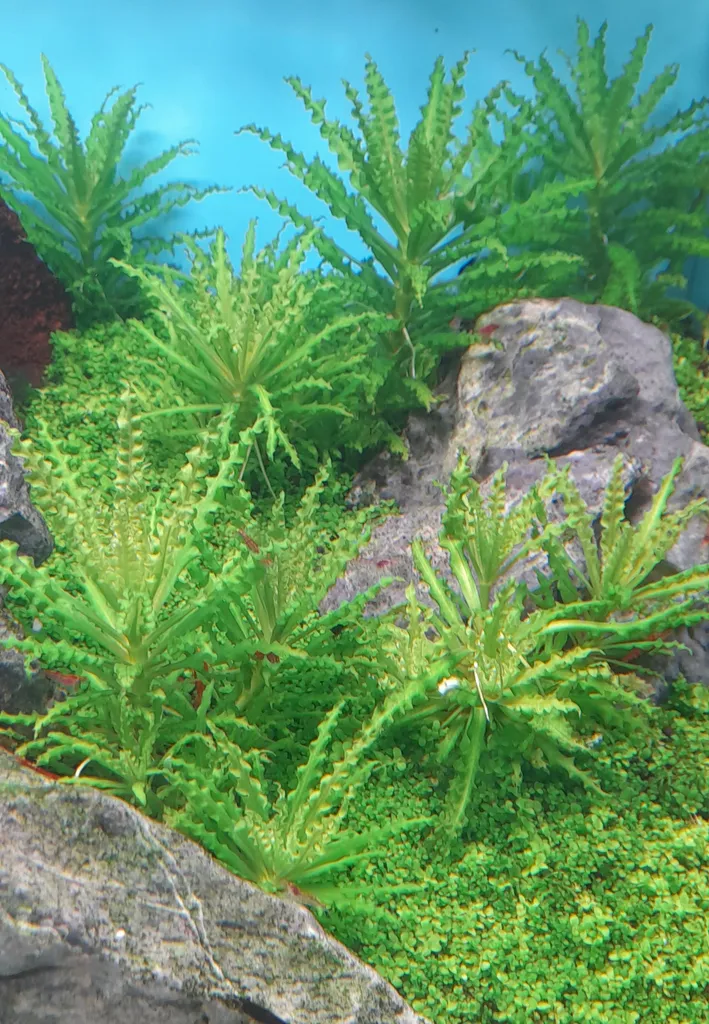
Pogostemon stellatus belongs to the mint family, Lamiaceae. It was formerly placed in the genus Eusteralis, which is still its most common trade synonym. Submersed stems carry narrow leaves in dense whorls, the star or octopus arrangement behind its names. Under good conditions it flushes pink, purple and orange, and its color and leaf form change markedly between the emersed and submersed forms.
In the wild
Pogostemon stellatus grows in seasonally wet habitats, marshes and rice fields across tropical Asia and into northern Australia. It lives partly emersed in soft, nutrient-rich marshland.
Common questions
Does Pogostemon stellatus need to be planted in the substrate?
Yes. Strip the leaves from the lower part of each stem, then push the stems into the substrate one at a time, a little apart.
Does Pogostemon stellatus need CO2?
Yes. Pogostemon stellatus needs injected CO2 to grow well, and it usually struggles without it.
How much light does Pogostemon stellatus need?
Pogostemon stellatus needs high light from a strong planted-tank LED. In weaker light its stems stretch and drop their lower leaves.
Does Pogostemon stellatus need root tabs?
They help. Pogostemon stellatus takes nutrients through both its roots and its leaves. Root tabs near its roots and a liquid fertilizer cover both.
How do you propagate Pogostemon stellatus?
Pogostemon stellatus propagates by cuttings and side shoots. Cut off the top of a stem and replant it, and the stump left behind grows new shoots. Cut a side shoot off once it has a few leaves and plant it on its own.
How tall does Pogostemon stellatus grow?
Pogostemon stellatus grows to about 23.6 in (60 cm) tall. It grows at a moderate pace.
Related plants
- High lightBackground23.6 in (60 cm)
Pogostemon stellatus Broad Leaf
Pogostemon stellatus 'Broad Leaf'
High light · Background
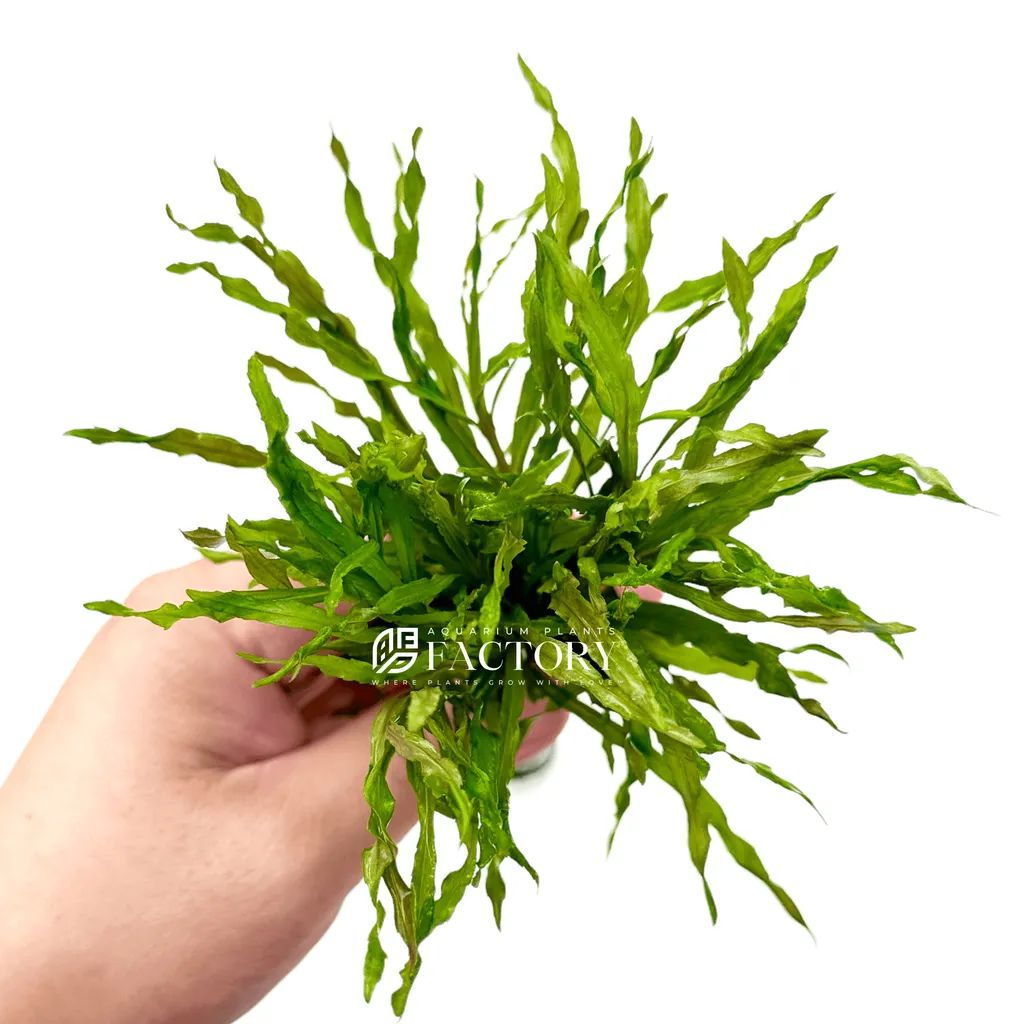 High lightBackground17.7 in (45 cm)
Pogostemon Dassen
Pogostemon stellatus 'Dassen'
High light · Background
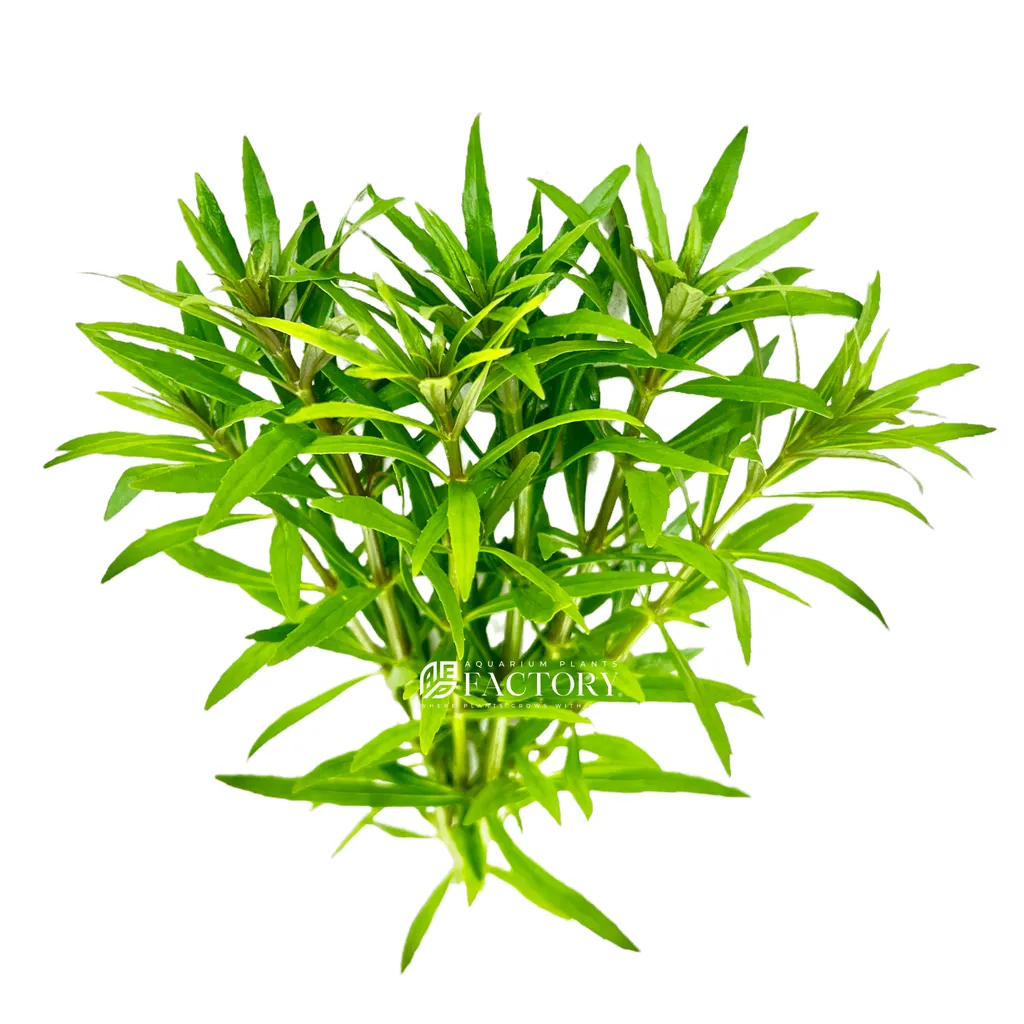 Medium lightBackground15.7 in (40 cm)
Pogostemon quadrifolius
Medium light · Background
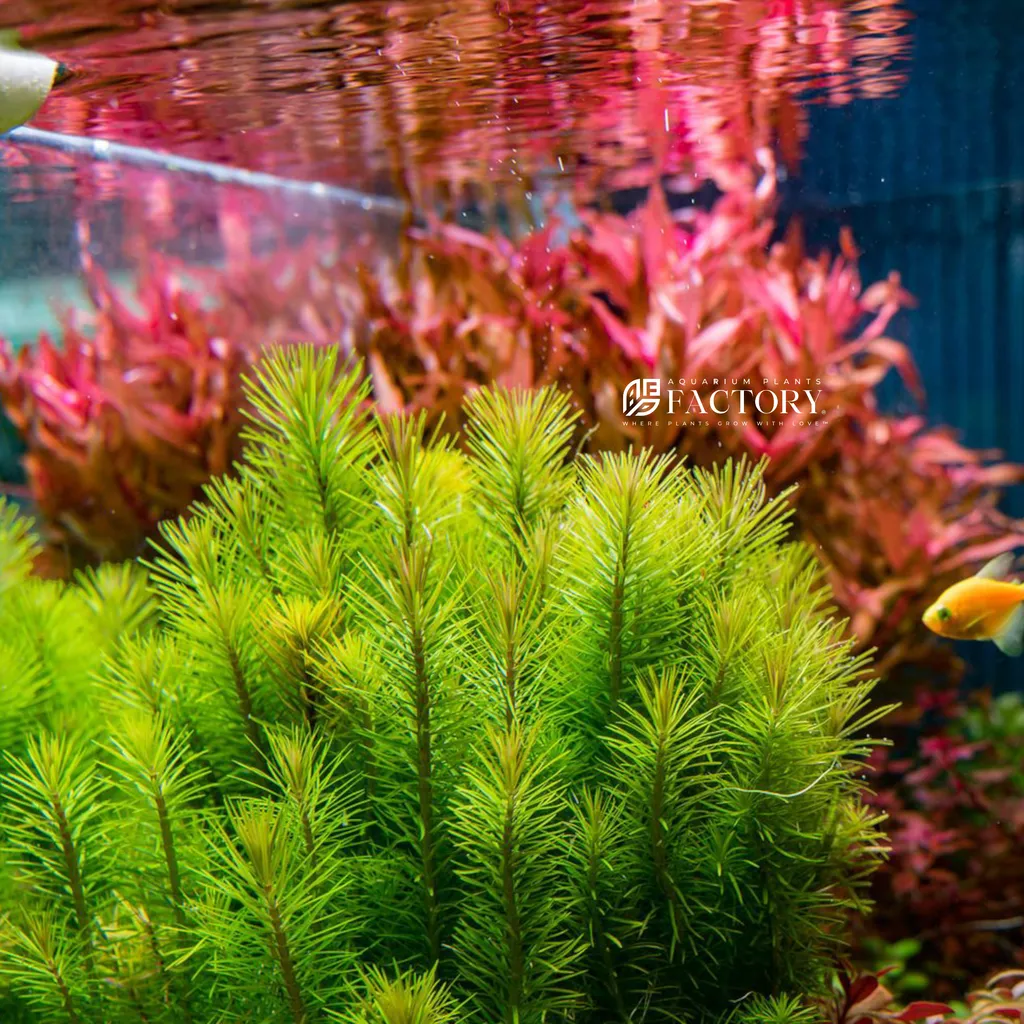 High lightMidground9.8 in (25 cm)
Pogostemon erectus
Pogostemon deccanensis
High light · Midground
 High lightForeground3.1 in (8 cm)
Pogostemon helferi
High light · Foreground
 Medium lightMidground9.8 in (25 cm)
Pogostemon sampsonii
Medium light · Midground