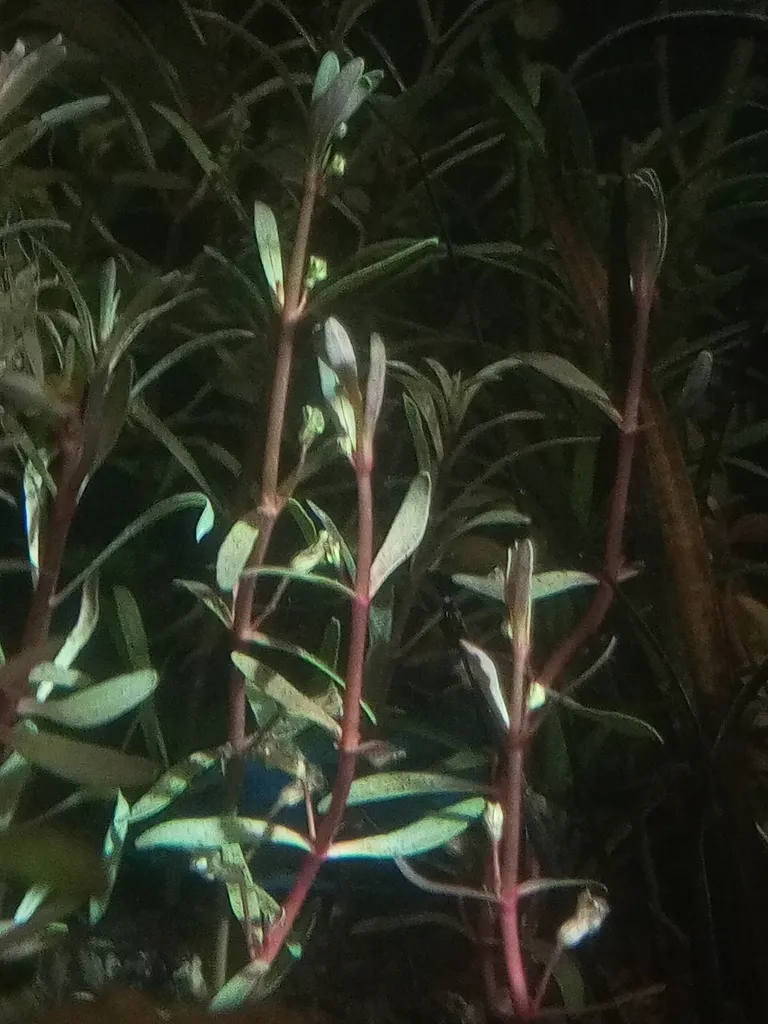
Cuphea anagalloidea
Also known as Rotala sp. Araguaia, Rotala Araguaia
FreshwaterStemCuttingsSide shoots
Care at a glance
- Light
- High light
- CO2
- CO₂ required
- Temperature
- 68–79°F
- 20–26°C
- Max height
- 11.8 in
- 30 cm
- Growth rate
- Medium
- Placement
- Midground
- Type
- Stem
- pH
- 4.5–7.0
- Hardness
- 0–12 dGH
- Spread
- 1.2 in (3 cm)
- Nutrient uptake
- Root + water column
- Growth region
- Submersed or emersed
- Difficulty
- Difficult
- Family
- Lythraceae
- Origin
- Brazil (aquarium stock likely from the Rio Araguaia)
Overview
Cuphea anagalloidea is a small, demanding stem plant grown for its intense red. It suits dense groups in the foreground to midground of a nano tank or a Dutch-style street. It is rated difficult and is not a plant for a low-tech setup.
Did you know
For years hobbyists grew Cuphea anagalloidea as Rotala sp. 'Araguaia'. It took until 2010 to identify it as a Cuphea, a genus better known for garden bedding plants than for aquariums.
Caring for Cuphea anagalloidea
Strip the leaves from the lower part of each stem and push the stems in one at a time, a little apart. Cuphea anagalloidea needs soft, acidic water, from pH 4.5 to 7 and 0 to 12 dGH. Keep it at 68 to 79°F (20 to 26°C).
Give it strong light and steady CO2 of around 20 to 40 mg/l. With anything less it turns green and leggy or simply stalls. Feed the water column consistently and keep nitrate modest to push the red. It also takes nutrients through its roots, so root tabs near the stems help.
Growth is medium-paced, and regular topping and replanting keep a group compact and even. Replant the cut tops, and the stumps left behind grow new side shoots. Cut a side shoot off once it has a few leaves and plant it on its own.
Good to know
Cuphea anagalloidea belongs to the family Lythraceae. Its genus holds around 260 species across the American tropics and subtropics, and only a handful of them are aquatic. Submersed shoots are only 1.5 to 2 cm wide. Under strong light the upper leaf surfaces turn bright red to orange-red.
In the wild
Cuphea anagalloidea is endemic to Brazil, scattered across the north, east and southeast of the country. It occurs in states from Para to Minas Gerais, and the aquarium stock most likely came from the Rio Araguaia. It grows amphibiously along river margins, submersed at high water and emersed as levels fall, in soft, acidic water.
Common questions
Does Cuphea anagalloidea need to be planted in the substrate?
Yes. Strip the leaves from the lower part of each stem, then push the stems into the substrate one at a time, a little apart.
Does Cuphea anagalloidea need CO2?
Yes. Cuphea anagalloidea needs injected CO2 to grow well, and it usually struggles without it.
How much light does Cuphea anagalloidea need?
Cuphea anagalloidea needs high light from a strong planted-tank LED. In weaker light its stems stretch and drop their lower leaves.
Does Cuphea anagalloidea need root tabs?
They help. Cuphea anagalloidea takes nutrients through both its roots and its leaves. Root tabs near its roots and a liquid fertilizer cover both.
How do you propagate Cuphea anagalloidea?
Cuphea anagalloidea propagates by cuttings and side shoots. Cut off the top of a stem and replant it, and the stump left behind grows new shoots. Cut a side shoot off once it has a few leaves and plant it on its own.
How tall does Cuphea anagalloidea grow?
Cuphea anagalloidea grows to about 11.8 in (30 cm) tall. It grows at a moderate pace.
Related plants
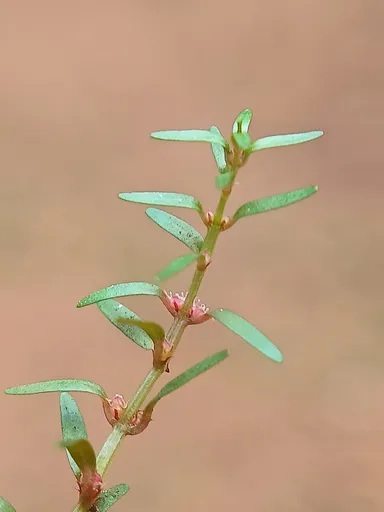 High lightMidground11.8 in (30 cm)
Rotala pusilla
Rotala mexicana
High light · Midground
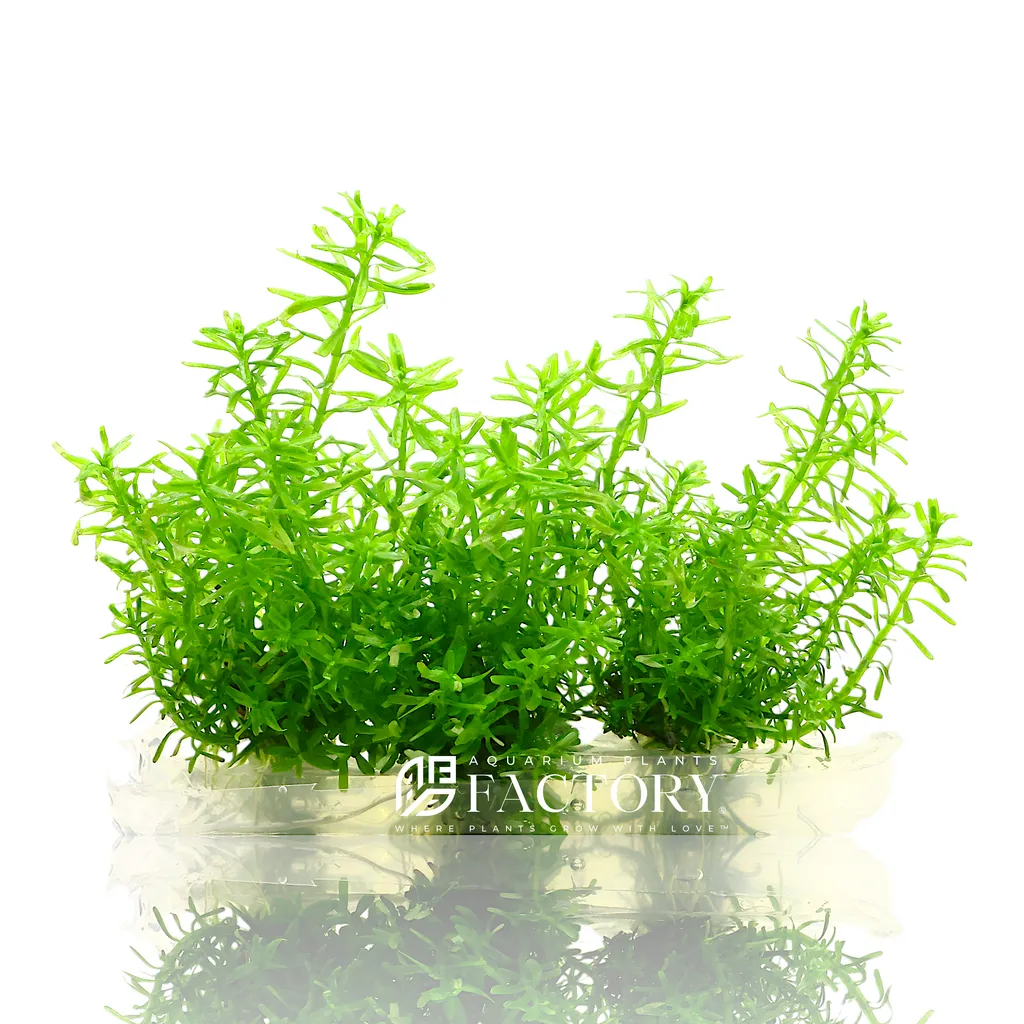 High lightMidground11.8 in (30 cm)
Water hedge
Didiplis diandra
High light · Midground
- High lightMidground11.8 in (30 cm)
Rotala Florida
Rotala ramosior 'Florida'
High light · Midground
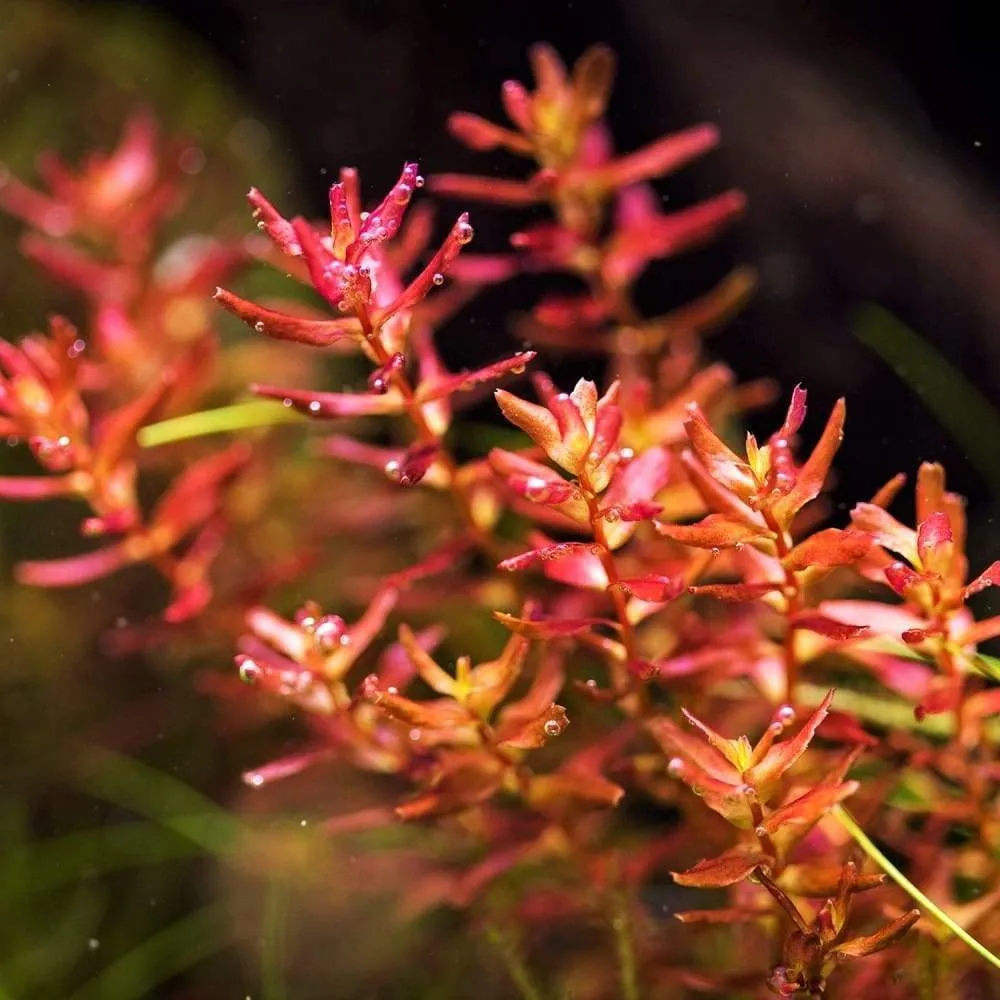 High lightMidground9.8 in (25 cm)
Rotala macrandra Mini Butterfly
Rotala macrandra 'Mini'
High light · Midground
- High lightMidground15.7 in (40 cm)
Rotala Nanjenshan
Rotala sp. 'Nanjenshan'
High light · Midground
- High lightMidground15.7 in (40 cm)
Rotala Sunset
Rotala ramosior 'Sunset'
High light · Midground