Limnophila hippuridoides
Also known as Limnophila aromatica 'Hippuridoides', Purple ambulia, Giant red ambulia
FreshwaterStemCuttingsSide shoots
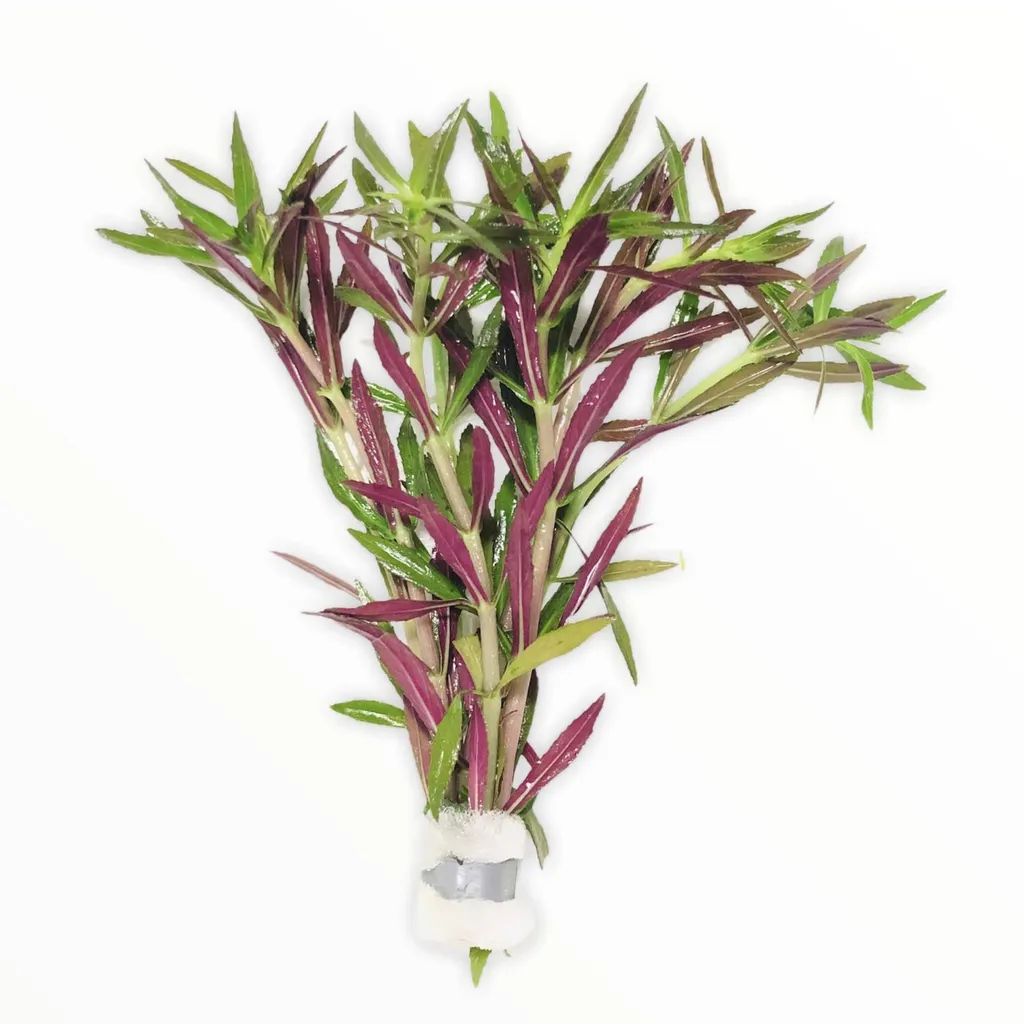
Care at a glance
- Light
- High light
- CO2
- CO₂ beneficial
- Temperature
- 72–82°F
- 22–28°C
- Max height
- 19.7 in
- 50 cm
- Growth rate
- Fast
- Placement
- Background
- Type
- Stem
- pH
- 6.0–7.5
- Hardness
- 2–12 dGH
- Spread
- 3.1 in (8 cm)
- Nutrient uptake
- Root + water column
- Growth region
- Submersed or emersed
- Difficulty
- Medium
- Family
- Plantaginaceae
- Origin
- Malay Peninsula
Overview
Limnophila hippuridoides is a tall, fast-growing stem plant for the background. It rates medium in difficulty.
Did you know
Limnophila hippuridoides is so often sold as Limnophila aromatica that many aquarists never realize they own the wrong plant. It pushes into deeper purple tones than true aromatica does.
Caring for Limnophila hippuridoides
Plant Limnophila hippuridoides in the background and give each stem room, since this fast grower spreads sideways. Strip the lower leaves before pushing each stem into the substrate.
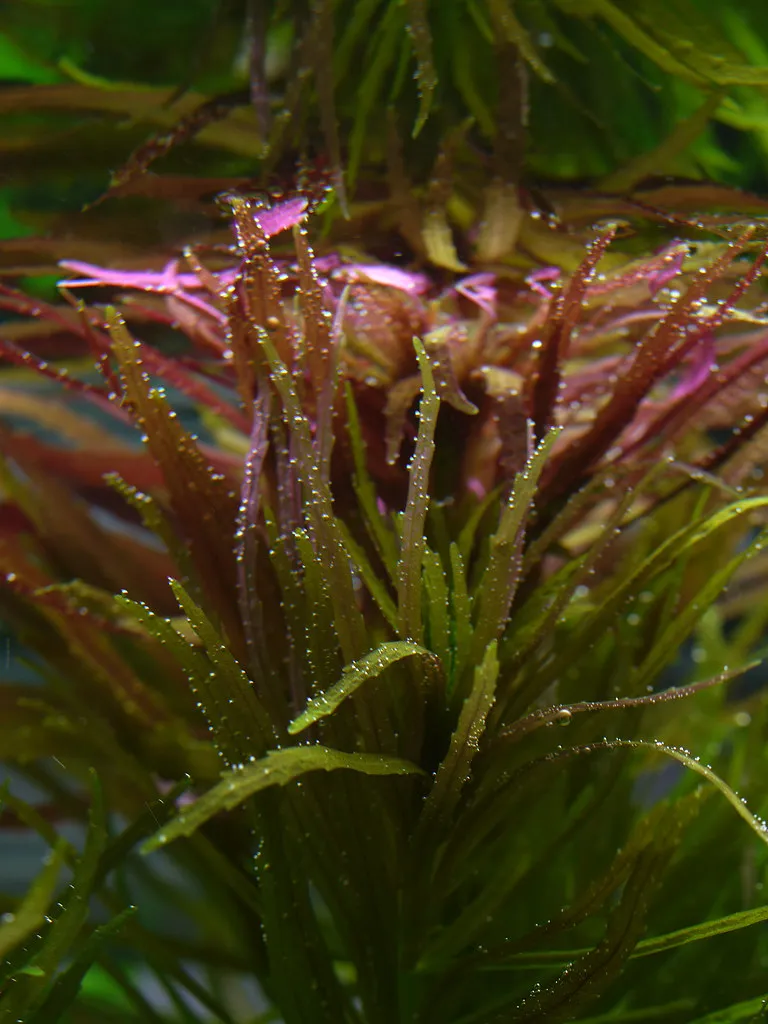
Strong light, good CO2 and full NPK plus iron turn it dark red to purple. Under weak light it stays green and leggy. It feeds heavily from the substrate as well as the water column, so use root tabs along with a liquid fertilizer.
It usually arrives in its green emersed form and colors up once it converts to submersed growth. Trim and replant the tops often, and cut side shoots free once they have a few leaves. Keep it at 72 to 82°F (22 to 28°C).
Good to know
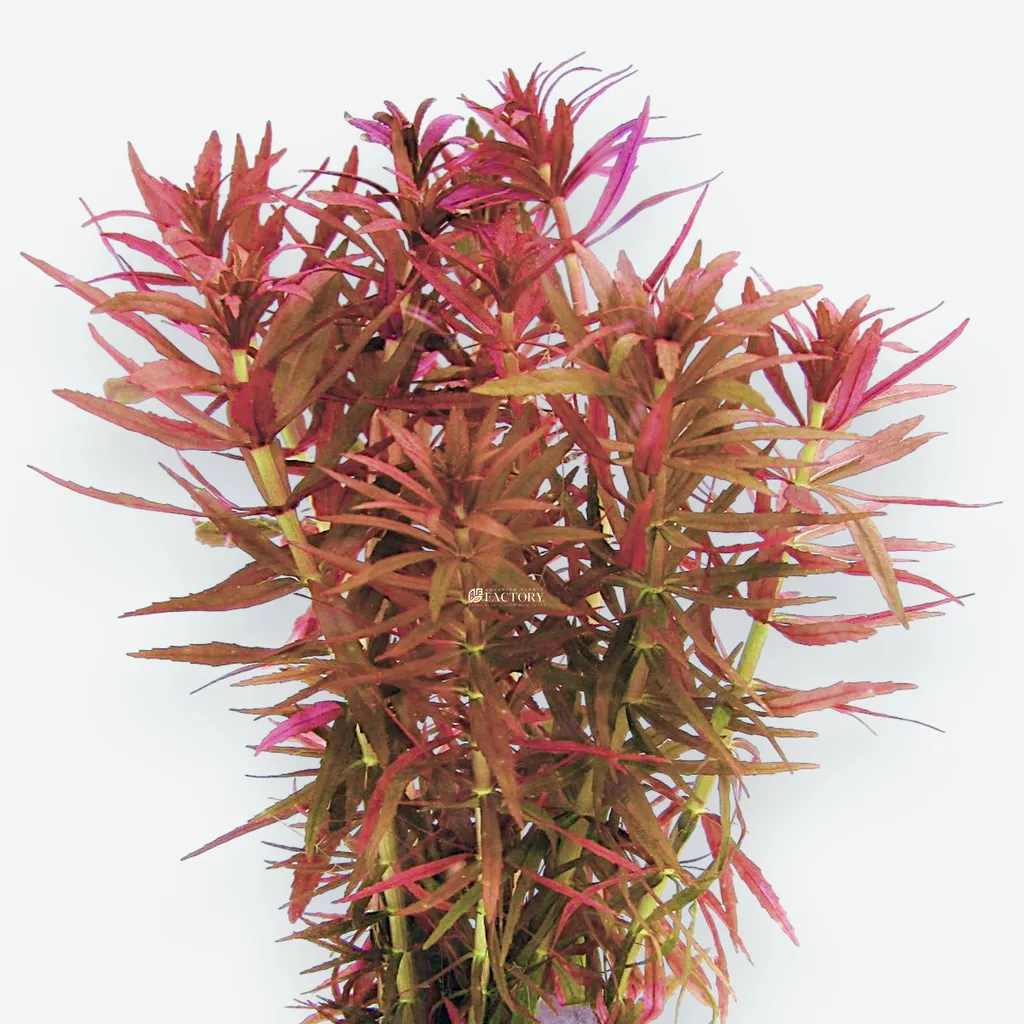
Limnophila hippuridoides belongs to the family Plantaginaceae. It is a distinct species, closely related to Limnophila aromatica. Underwater it forms tall, upright stems with whorls of 6 to 8 narrow leaves at each node, over an extensive root system. Its leaves tend toward darker reds, with purple undersides.
In the wild
Limnophila hippuridoides is a marshweed from the Malay Peninsula. It grows in wet and marshy ground.
Common questions
Does Limnophila hippuridoides need to be planted in the substrate?
Yes. Strip the leaves from the lower part of each stem, then push the stems into the substrate one at a time, a little apart.
Does Limnophila hippuridoides need CO2?
No, but it helps. Limnophila hippuridoides can grow without injected CO2, and added CO2 makes it grow faster.
How much light does Limnophila hippuridoides need?
Limnophila hippuridoides needs high light from a strong planted-tank LED. In weaker light its stems stretch and drop their lower leaves.
Does Limnophila hippuridoides need root tabs?
They help. Limnophila hippuridoides takes nutrients through both its roots and its leaves. Root tabs near its roots and a liquid fertilizer cover both.
How do you propagate Limnophila hippuridoides?
Limnophila hippuridoides propagates by cuttings and side shoots. Cut off the top of a stem and replant it, and the stump left behind grows new shoots. Cut a side shoot off once it has a few leaves and plant it on its own.
How tall does Limnophila hippuridoides grow?
Limnophila hippuridoides grows to about 19.7 in (50 cm) tall. It grows fast, so expect to trim it often.
Related plants
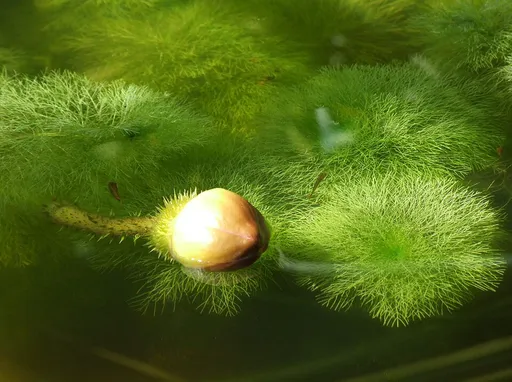 High lightBackground19.7 in (50 cm)
Giant ambulia
Limnophila aquatica
High light · Background
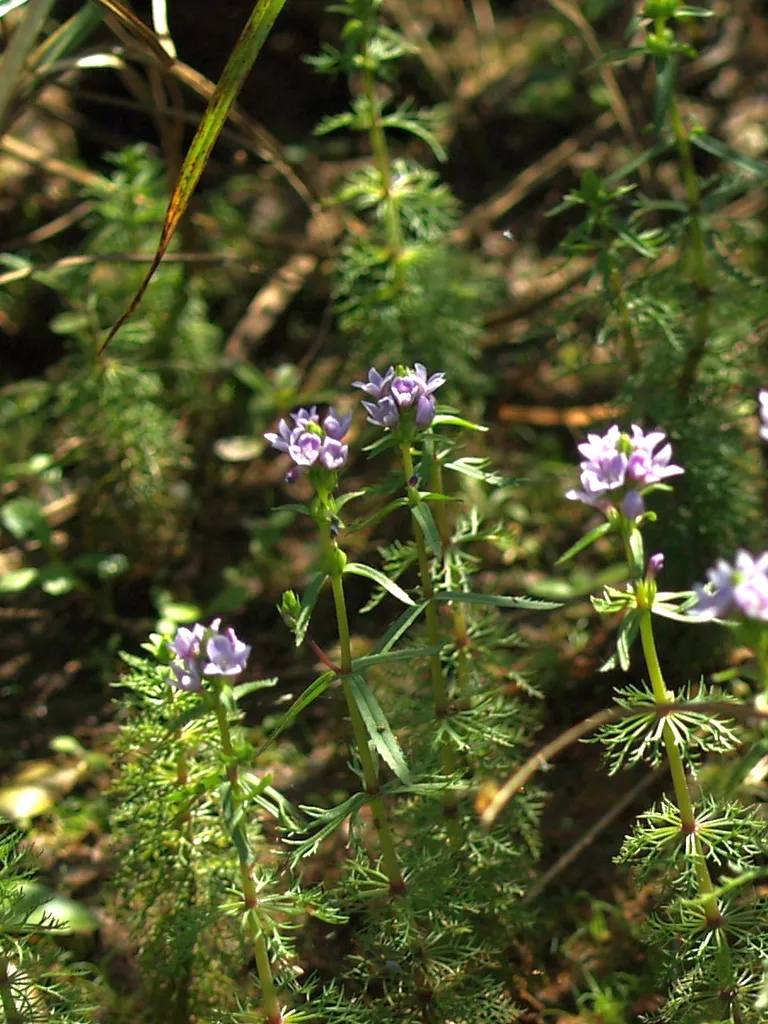 Medium lightBackground19.7 in (50 cm)
Limnophila heterophylla
Medium light · Background
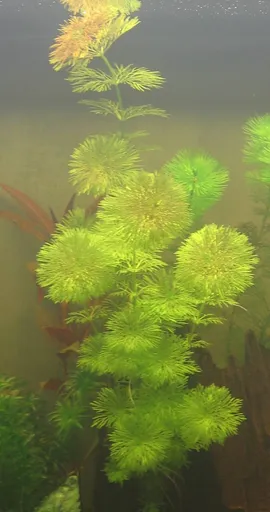 Low lightBackground15.7 in (40 cm)
Ambulia
Limnophila sessiliflora
Low light · Background
 High lightBackground15.7 in (40 cm)
Limnophila aromatica
High light · Background
 High lightBackground11.8 in (30 cm)
Limnophila Belem
Limnophila sp. 'Belem'
High light · Background
 Medium lightMidground23.6 in (60 cm)
Limnophila rugosa
Medium light · Midground